

1998: The BTCC’s greatest season?
Frozen almost perfectly within the timeframe of a complete decade, the Super Touring era remains the celebrated high watermark for the British Touring Car Championship. But when specifically did it peak?
‘Super Touring’ was a term coined mid-decade but is generally accepted to cover the whole period. From 1991, when TOCA’s single 2-litre category replaced the old, traditional and confusing multi-class format, all the way through to 2000, when ever-rising unsustainable costs and technical sophistication brought the sunset down on a golden era.
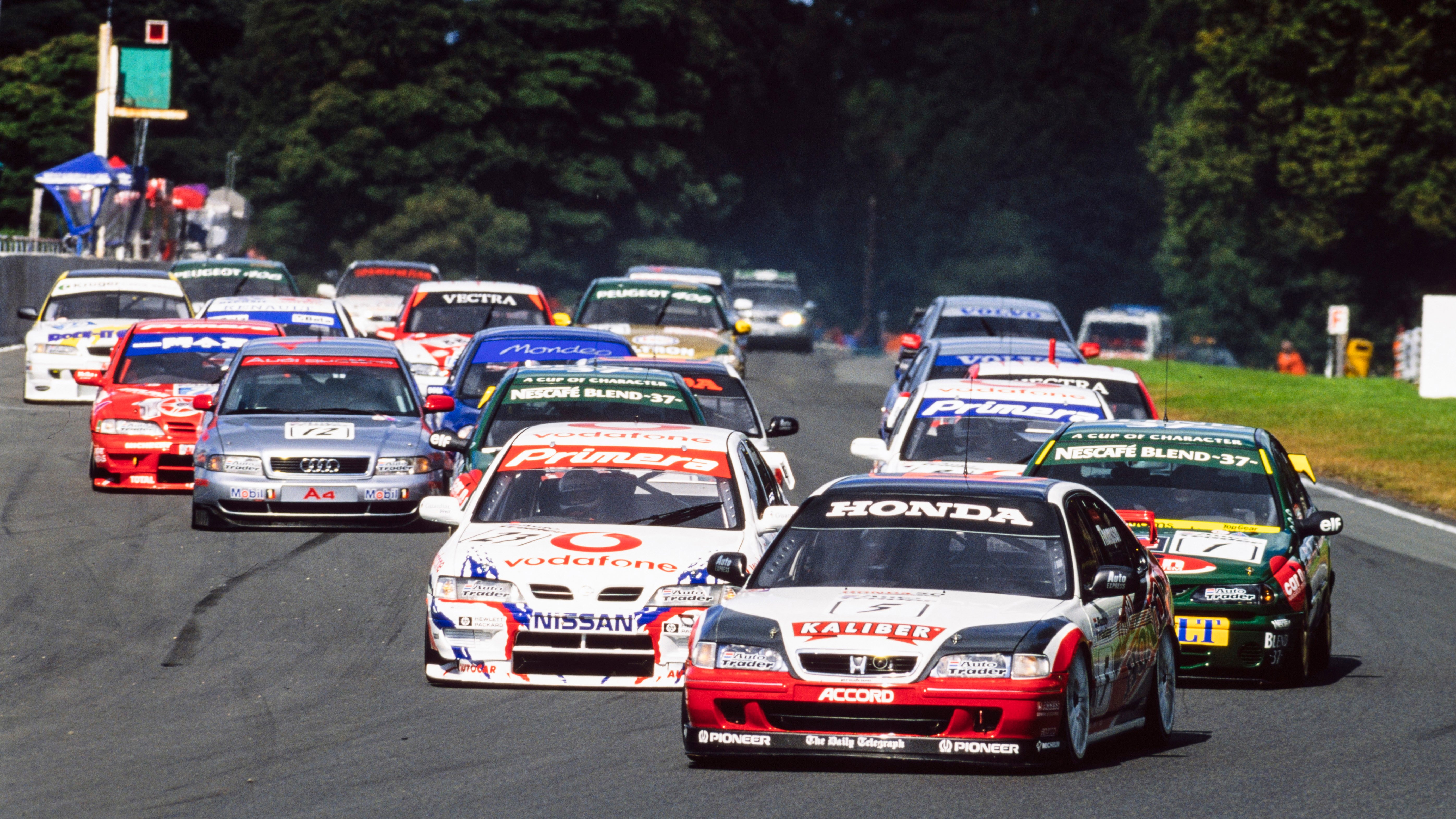
So, which was the best season? Let’s face it, most of them were pretty awesome, thanks to grids packed with major manufacturer-backed teams and drivers with serious international pedigree rubbing doors with popular and local established specialists.
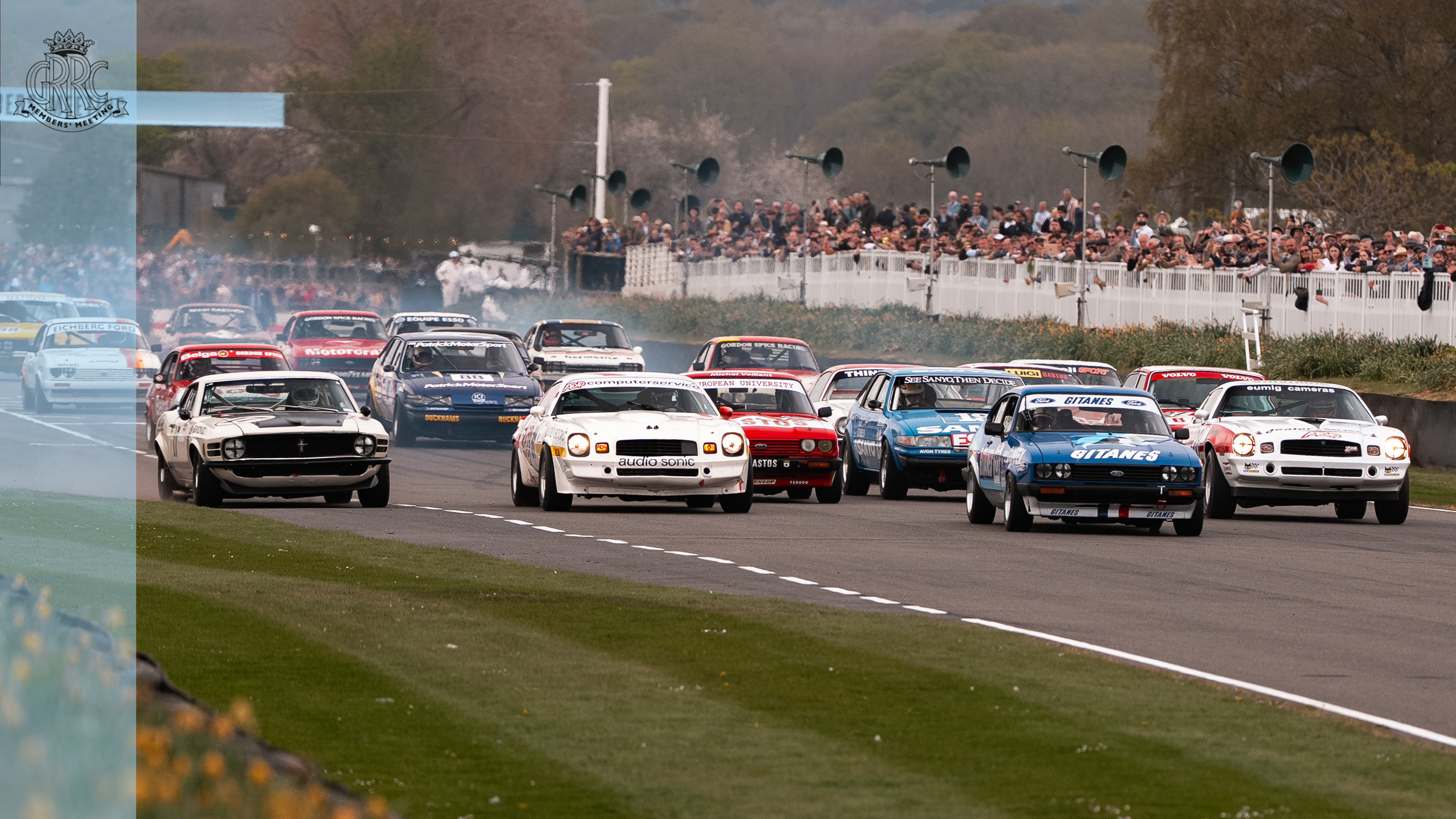
If you were there at the time, you’ll have your view. But ahead of the 83rd Members’ Meeting presented by Audrain Motorsport — and what promises to be an unforgettable celebration of the Super Touring era — we’ve drawn a ring around one year we reckon peeks just above the rest: the 1998 BTCC campaign.
Look at the width… and quality
By 1998, the BTCC’s reputation as arguably the most competitive motorsport series not only in Europe but also the entire world was fully mature. Manufacturers — and the public, trackside in large numbers and via the BBC’s excellent TV coverage — just couldn’t get enough of the rough n’ tumble soap-opera drama.
Nine manufacturers remained committed: one fewer than in 1994 and ’95, but still deeply impressive. And just consider the quality.
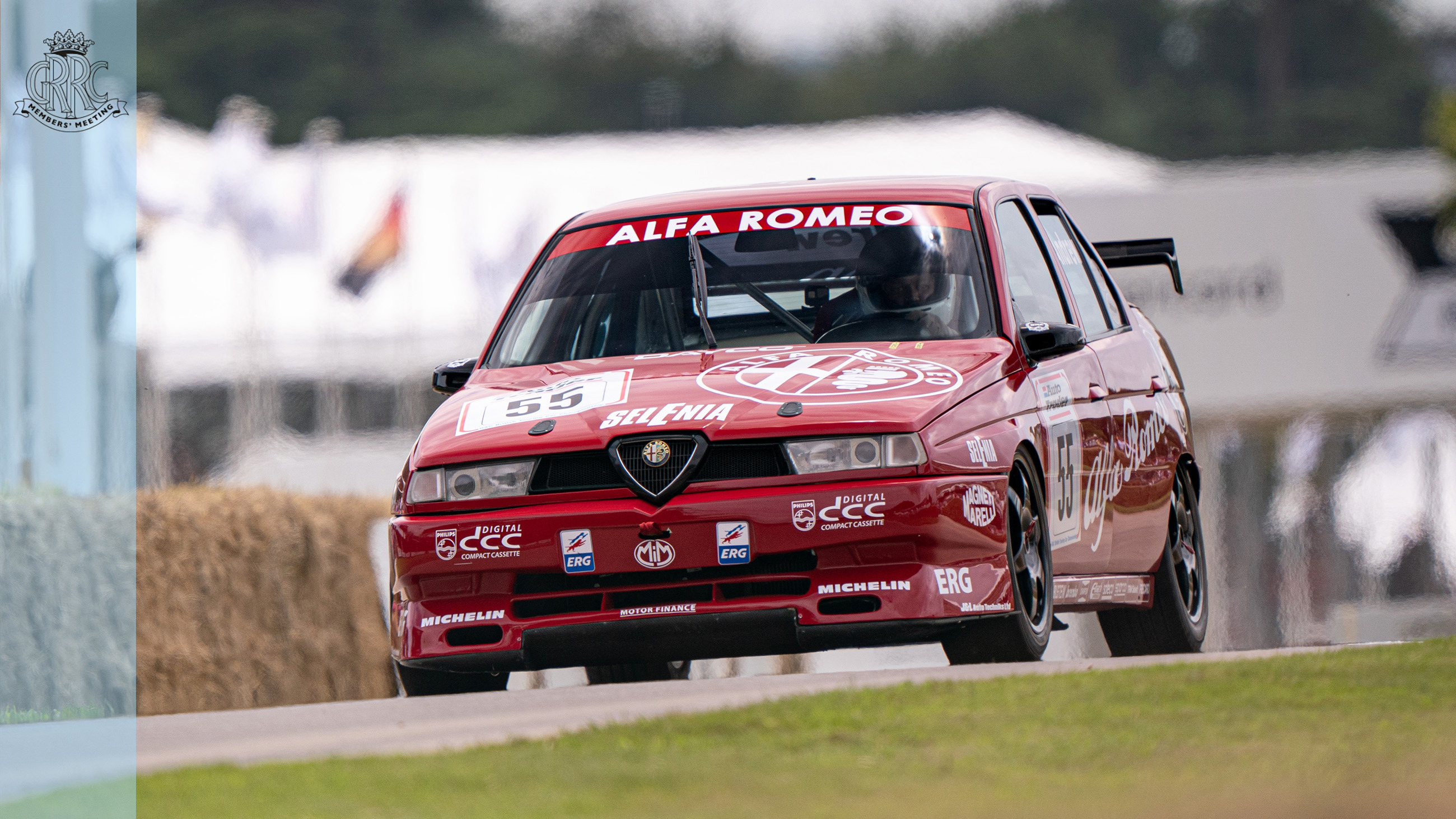
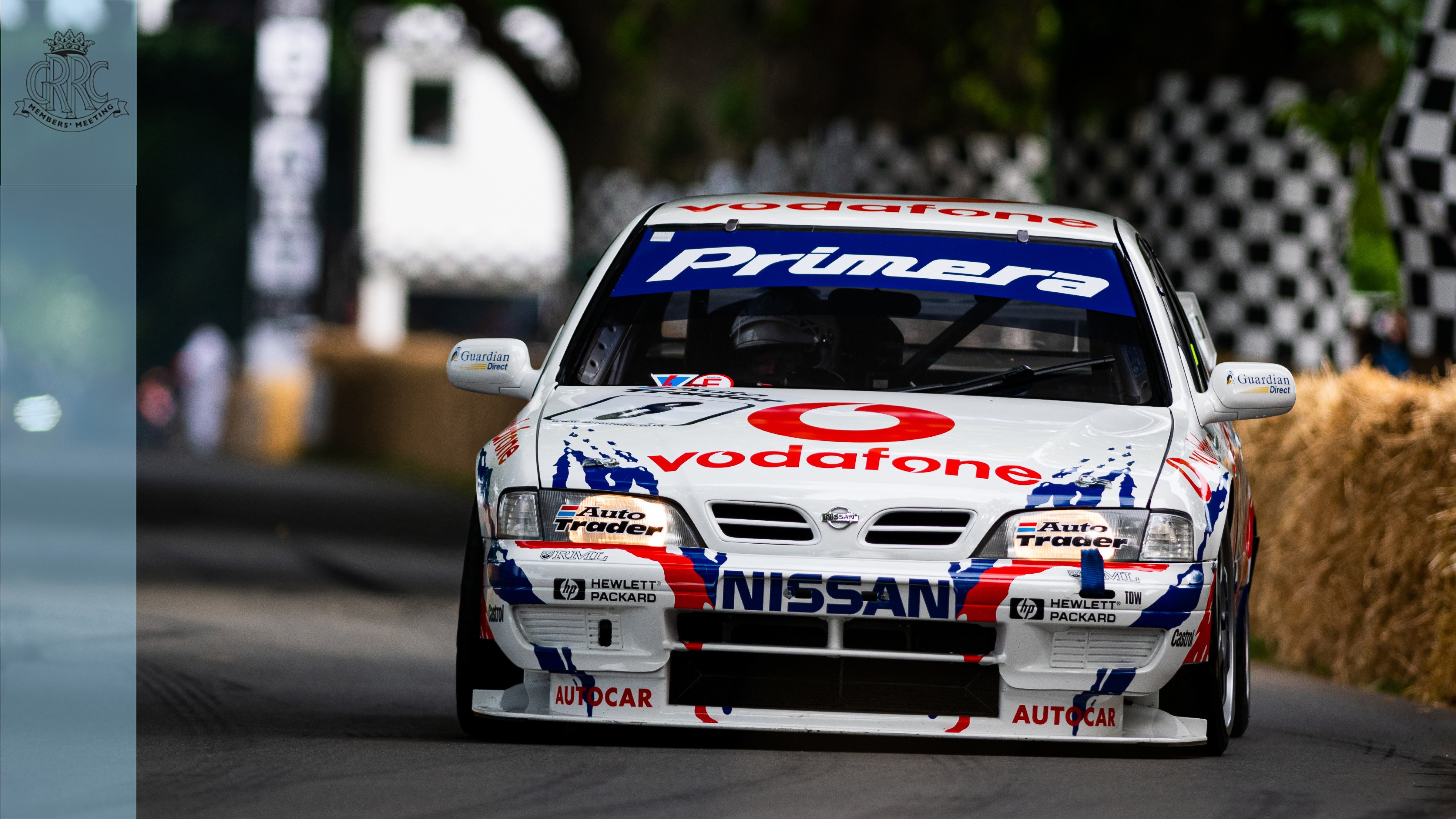
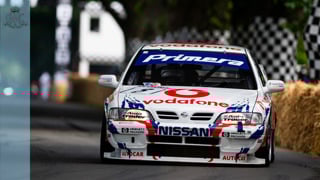
Volvos run by Tom Walkinshaw Racing and driven by eventual champion Rickard Rydell and Formula 1 veteran Gianni Morbidelli — a flourish of Italian stardust right there; the Ray Mallock Nissan Primeras of Anthony Reid and David Leslie; Yvan Muller in an Audi; Alain Menu and Jason Plato in the Williams-run Renault Lagunas. Then there was James Thompson and Peter Kox in the Hondas, and Tim Harvey and Paul Radisich in the Peugeots, while the Vauxhall attack had transferred to the new Triple Eight concern for John Cleland and team co-founder Derek Warwick.
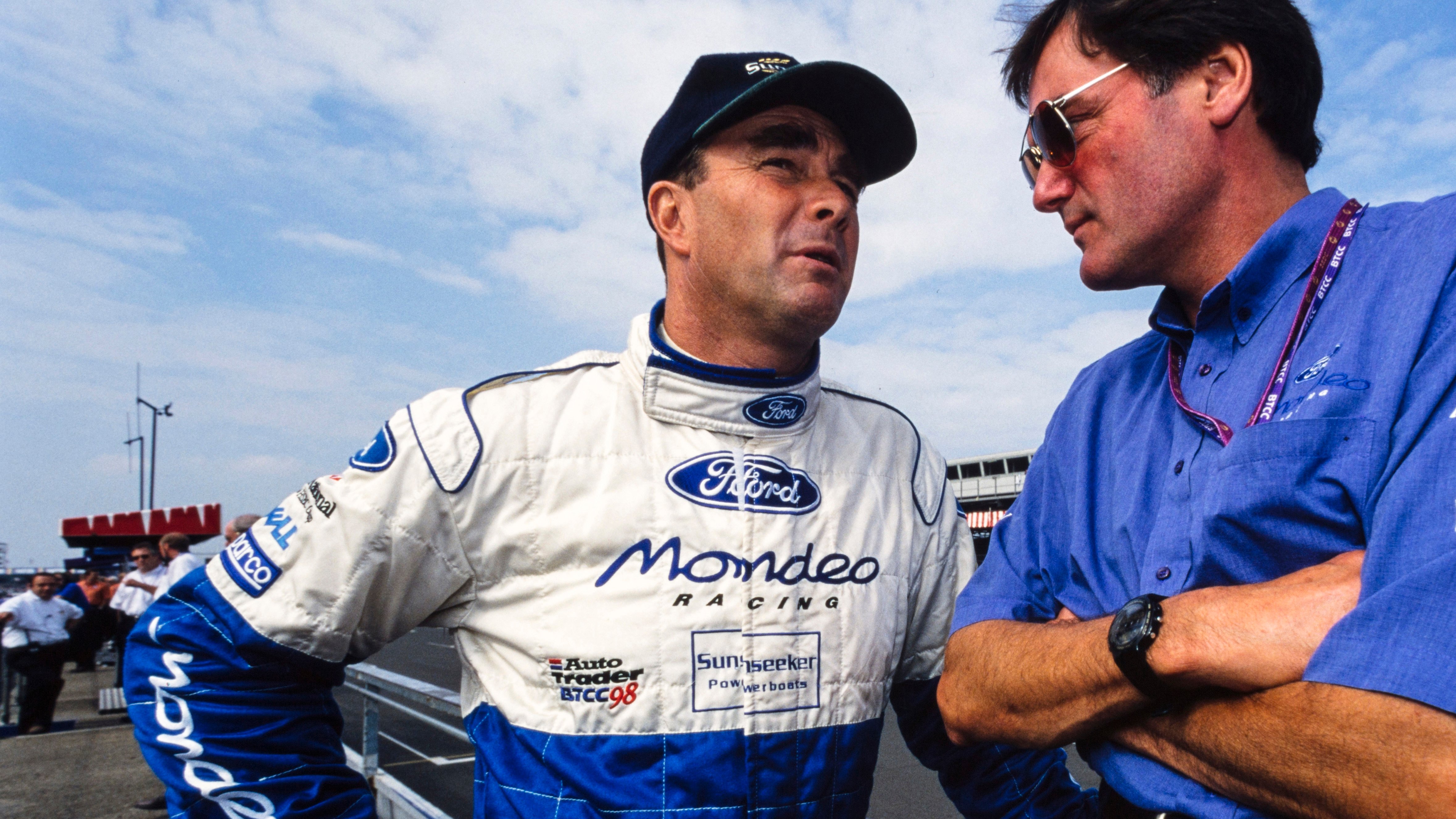
Alfa Romeo added another pinch of international glitter with another ex-F1 star Nicola Larini and rising tin-top hero Fabrizio Giovinardi. Then there was the West Surrey Racing Ford Mondeos, featuring the first 2-litre Champion, Will Hoy, and Kiwi ace Craig Baird — plus a third car for a very special guest star: a certain 1992 F1 World Champion, running the red number 55 in homage to his single-digit signature. Three years after his ignominious F1 exit with McLaren, Nigel Mansell was still a major box-office draw.
New format changes the game
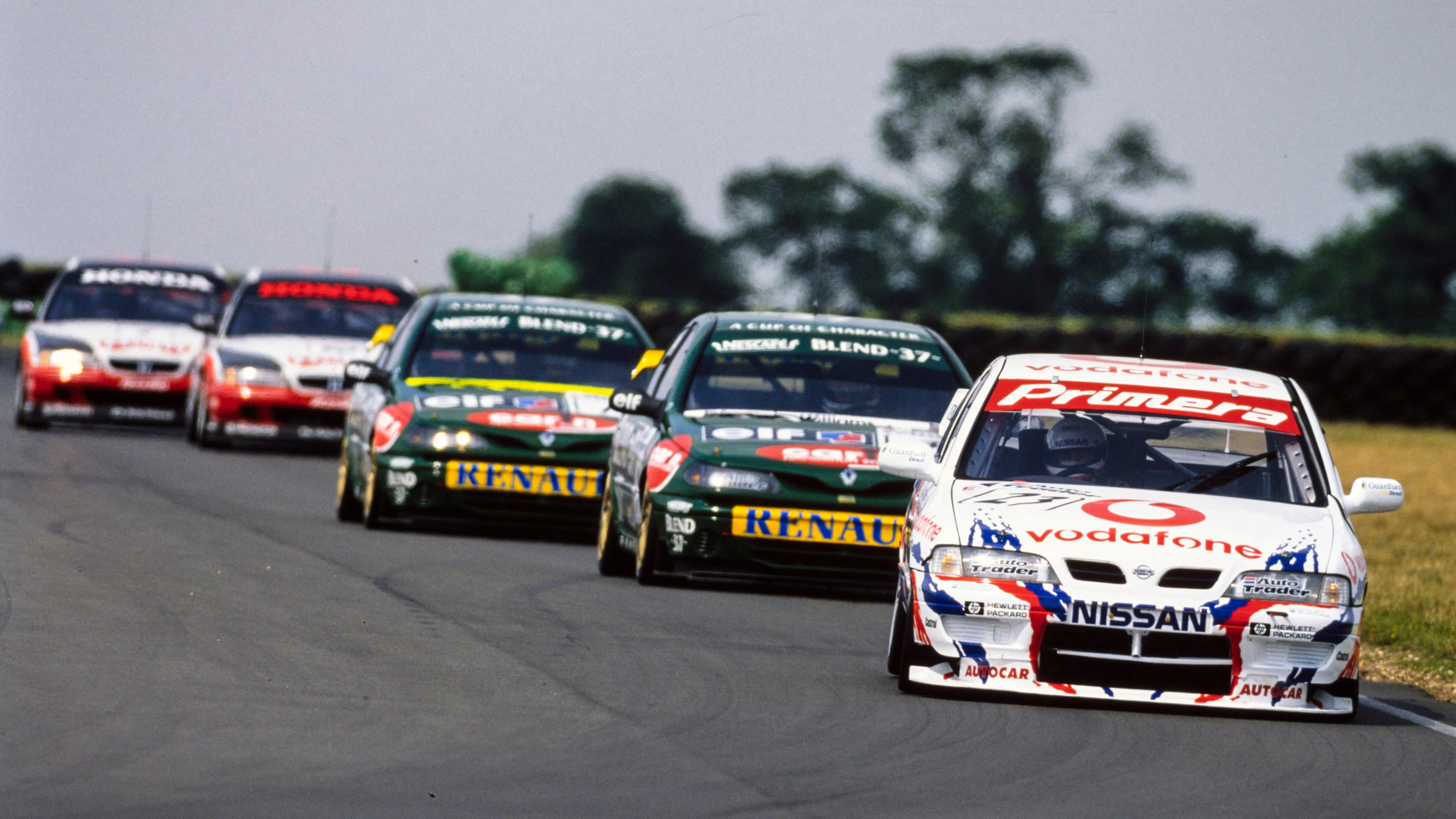
Following his domination of the 1997 season, the hot money was on Alain Menu to keep the momentum going in the now green Nescafé Blend 37-liviered Laguna. Except it didn’t turn out that way. The Swiss won only three races in what turned out to be his final season with the Williams-run Renault team.
The irony was his record-breaking campaign the year before had helped trigger a major shift in the BTCC format. Series chief Alan Gow has always hated processional, predictable racing — that’s not what the public want to see from the BTCC. So, for 1998 there would be a sprint race and a feature that would be 25 per cent longer, and include for the first time a mandatory pitstop in which at least two tyres had to be changed for each car. One-shot qualifying was also in, to add further jeopardy.
Rydell vs Reid
The pressure of the new qualifying format caught out Menu straight away on the opening weekend at Thruxton, when he cut the chicane on his single lap and was forced to start at the back of the grid for the sprint. That was won by Rydell in TWR’s S40 Volvo, and although Menu bounced back to beat the Swede via a fantastic pass in the feature, the tone was set for the season. Rydell won five times in total to wrap up his only BTCC title.
But he didn’t have it all his own way, not by a long shot. Instead of Menu, Anthony Reid emerged as his main challenger as the RML Nissans began to hit their stride. Reid ended up with more wins than the Champion (seven) and notched up an impressive 11 pole positions to run Rydell close.
On the face of it, both were the most mild-mannered of rivals. But you know that old cliché about the red mist descending when the visor goes down… The rivalry is best remembered for the spark that lit at Brands Hatch in August, when Reid gave Rydell a love-tap through Druids, just to unsettle the Volvo and allow the Nissan to steal a decisive lead. The ‘afters’ made for typical BTCC gold.
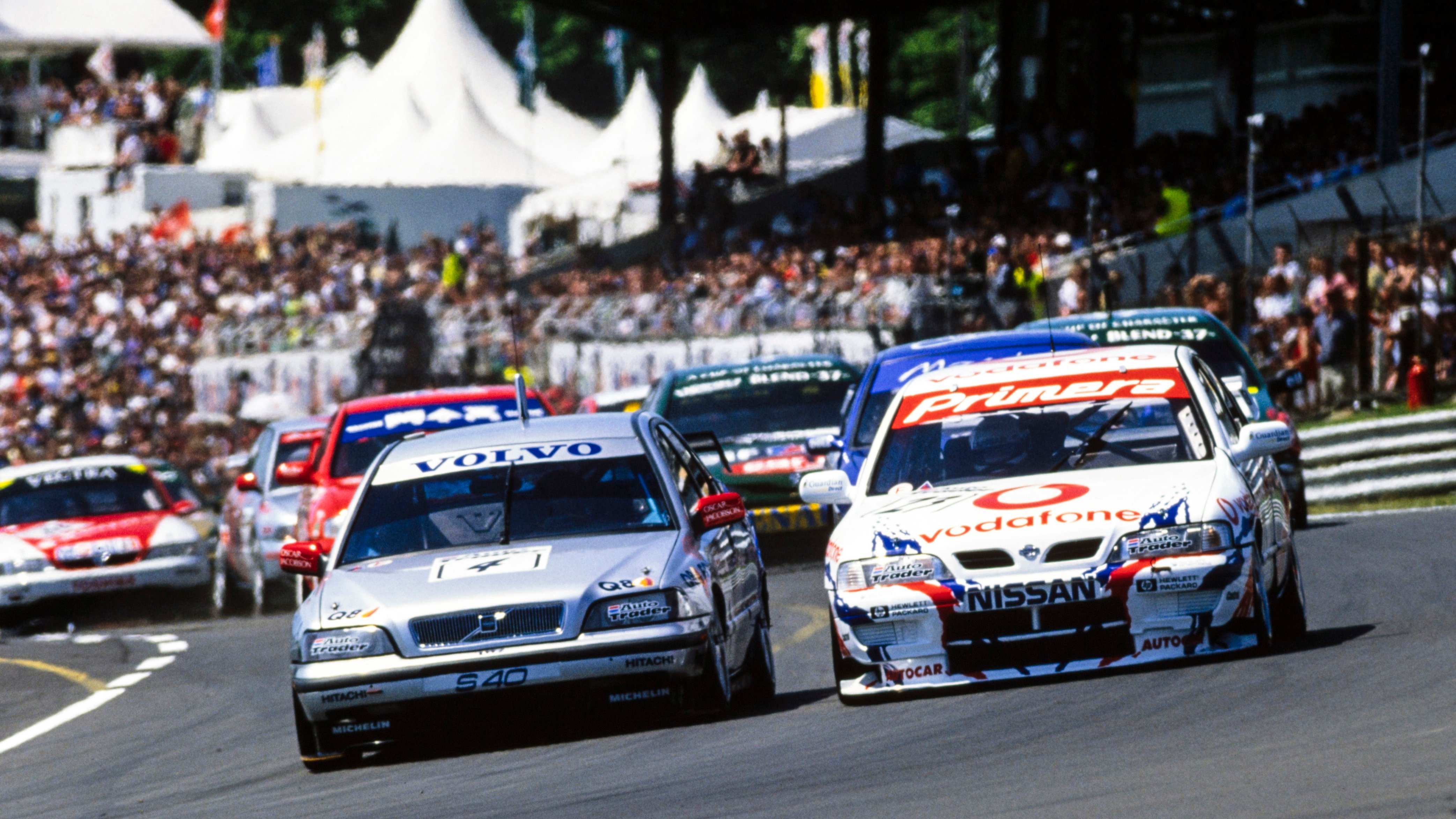
The onboard TV camera caught Rydell’s fury as he came to a halt in parc ferme, ripping off his seat belts and scrambling from the S40. He then strode over to the open door of Reid’s Nissan, reached inside and briefly throttled the surprised Scot.
“He didn’t brake and ran straight into the back of me,” Rydell said in a stony post-race interview. “I almost ran straight off the circuit.” Reid appeared a little shaken by the reaction — but was also quietly defiant. “Touring car racing is very tough, the most competitive series in the world,” he said. “I’m surprised he should get upset because I passed him…”
Was that a twinkle in the eye? Reid doubled down, describing the moment as a “typical racing incident”. “I wouldn’t say I hit him,” he added. (He did!) “These things happen.”
More often than not during the Super Touring era. And when they did erupt, even the calmest and most measured drivers sometimes couldn’t help but lose their rag.
Mansell’s marvellous cameo
But while the Reid vs Rydell rivalry in 1998 measures among the BTCC’s best, it was the appearances by Mansell that really stole the show, including one in particular that’s still remembered today as perhaps the BTCC’s greatest race.
He’d never said the r-word — ‘retirement’ — when the brief, unhappy spell at McLaren came to a juddering stop early in 1995. Sure enough, Ford pulled the coup of hiring the great man for three rounds of the 1998 BTCC, five years after his infamous crash into the Starkeys Bridge parapet in a Mondeo in the 1993 TOCA Shootout.
To his credit, Mansell took his part-BTCC campaign seriously. Following a brief shakedown at MIRA, he spent three days at a damp Silverstone for a TOCA test and had even headed down to little Pembrey in Wales for a couple of private days. Ever mindful of his status and the soaring expectations of ‘his’ public, he wanted to be ready for his return to Donington Park come June.
From the moment he arrived at the track there was drama. Privateer Mark Lemmer punted him off in the pre-weekend test, then Cleland cheekily removed a wing mirror on the run down to the Old Hairpin in the morning warm-up. Mansell was furious. Cleland basically responded: welcome to touring cars.
He’d qualified an excellent third for the sprint race, but crashed out at Coppice, leaving his mechanics with plenty of work to get him out for the feature. In that race he was only starting down in 19th but a damp track played into the hands of the Mondeo, which wasn’t particularly competitive in the dry. The same was true for Cleland’s Vectra.

“And Mansell takes the lead!”
The conditions were treacherous, going from a drying track to drizzle to heavy rain, and it caught out most of the aces, including Cleland. Running third behind the dominant Nissans of Reid and Leslie, he took a trip through the gravel out of McLeans but survived to race on. The same was not the case for the likes of Harvey, Menu, Hoy, Thompson, Kox, John Bintcliffe in his Audi and more… It was chaos out there.
Then came the pitstops and increasingly heavy rain. Wet-weather tyres were a clear choice for everyone (other than Warwick who gambled on dry tyres and was forced to pit again). The safety car was called upon in the midst of the pitstop window, costing the Nissan duo their big gap to Cleland and the rest. And through it all, WSR had somehow vaulted Mansell up to fourth!
The restart was frantic. Mansell went door to door with Leslie and Cleland, with Muller’s Audi joining the fray, and now Red 55 was second, closing fast on Reid. Under pressure from Mansell, the Primera got away from him at McLeans and skated off into the gravel. ‘Our Nige’ was in the lead!
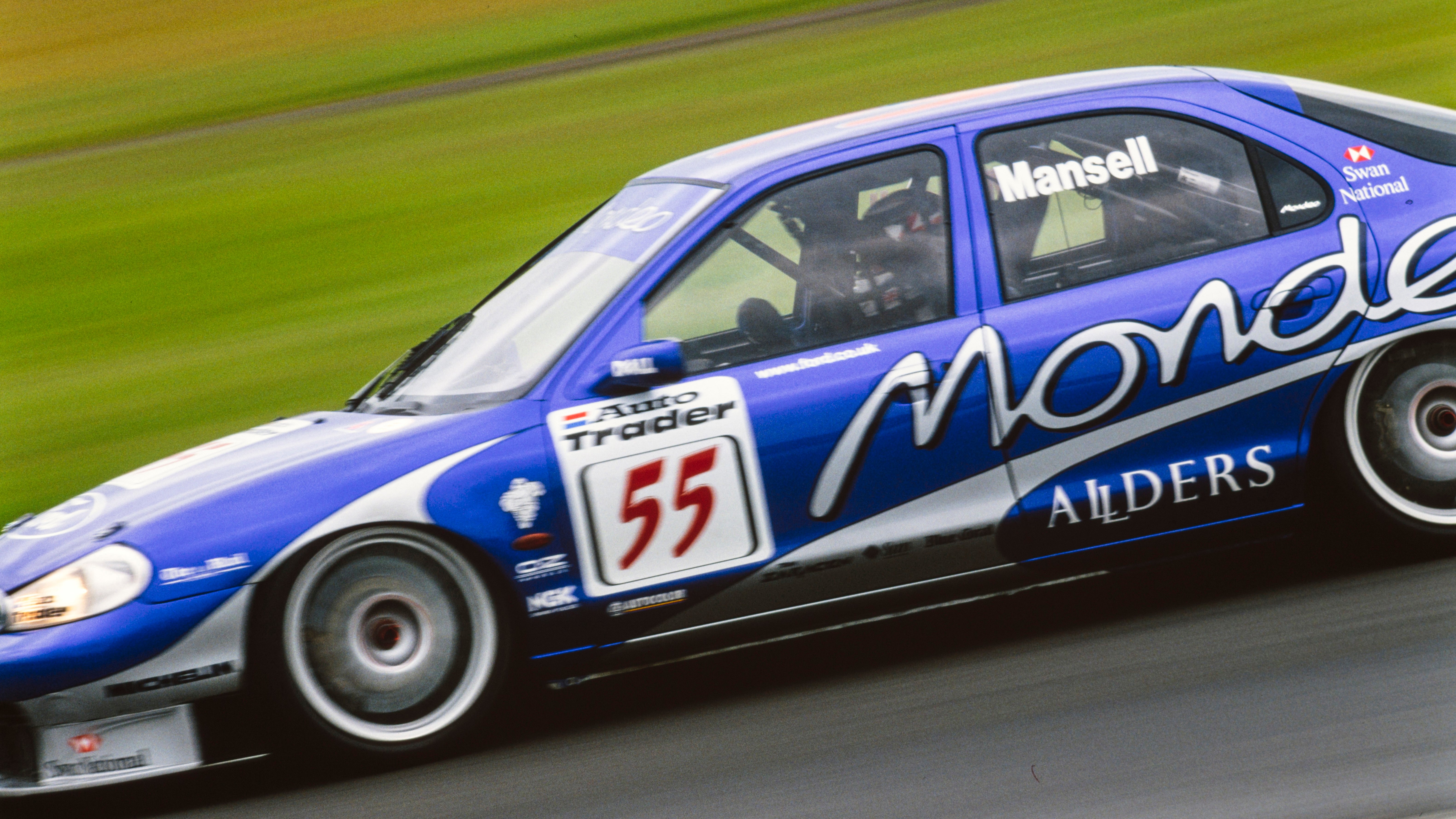
But victory was too much, even for Mansell. Cleland — to the relief of the BTCC regulars who absolutely did not want Mansell to turn up and win — got the better of Red 55 and took one of his best BTCC victories. Leslie passed Mansell, too, while old F1 mucker Warwick mugged him on the finish line. Fourth later became fifth because of a pitlane speeding penalty, but the result didn’t matter. What a race, what a performance.
From Donington, Mansell’s BTCC cameo turned sour. At Brands Hatch he had a couple of crashes out of Druids, one with significant help from a rival. And he had a tantrum on the radio over a pitlane speeding penalty that was captured on his onboard camera.
His third and final appearance, at Silverstone, was strangely forgettable. But it didn’t matter, for we will always have Donington. In what was arguably the BTCC’s best, most competitive Super Touring season, the magic of Mansell had struck gold again.
The 83rd Members' Meeting presented by Audrain Motorsport takes place on the 18th & 19th April 2026. Tickets are on sale now for GRRC Members and Fellows.
You can sign up for the Fellowship now. Click here to find out more.
Images courtesy of Getty Images.
members' meeting
83rd members' meeting
83mm
event coverage
super touring
Super Touring Shoot-Out
BTCC
btcc 1998

Subscribe to Goodwood Road & Racing
Thank you, you’re now subscribed

How many hay bales are used at FOS?
For the last two years, 5,800 bales have been recylced into the biomass energy centre to be used for energy generation