Before the Luce: Ferrari’s misunderstood 308 GT4 | Frankel’s Insight
 Andrew Frankel
I have no idea why I suddenly decided to write a column about a brand-new Ferrari of a kind that had never been seen before which, when launched, attracted a storm of opprobrium for its appearance. Must be the weather…
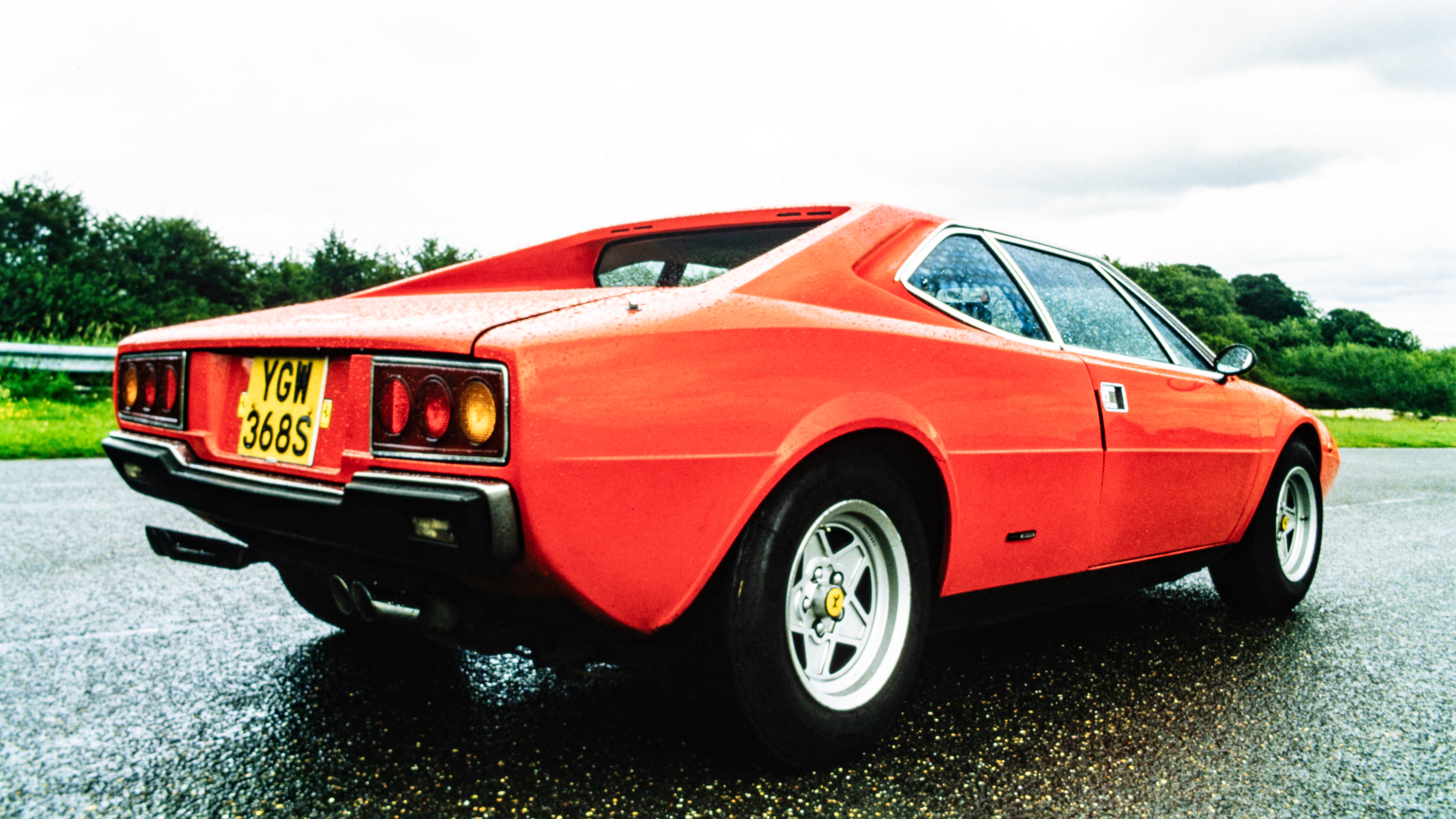
The 308 GT4 first appeared in 1973 and we should probably address the fact that until 1976 it technically wasn’t a Ferrari, but a Dino, because only Ferraris had V12 engines. Which was, of course, cobblers; it was a Ferrari as much as any other.
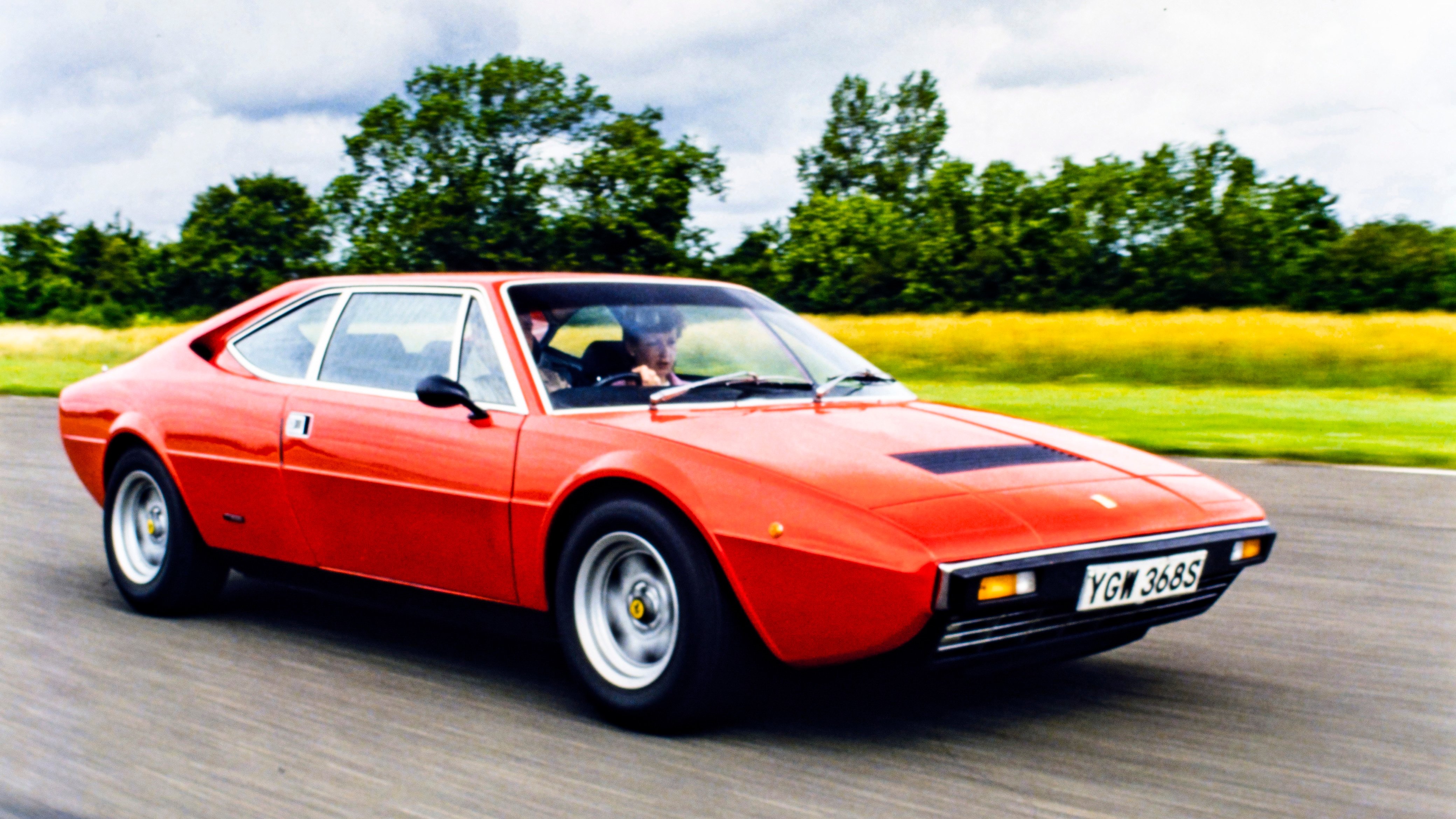
But it was different, in three distinct ways. It wasn’t Ferrari’s first mid-engined road car, because the Boxer was already in production by then, but it was absolutely the first to try to package two additional seats between the engine and cockpit. There wasn’t much space back there, but if you were a small boy faced with the choice of being doubled up in the back of a 308 or lolling about in comparative luxury in just about anything else, you’d take the one from Maranello every single time. It is possible I have some experience in this area.
Something else: it was also the first Ferrari road car to be powered by a V8 engine, and only the second after the 248SP racer with a Ferrari-designed motor of that configuration.
Third, finally and most controversially, it was not designed by Pininfarina, as had all Ferraris for years before. The story is Ferrari fell out with Pininfarina over money and gave the job to Bertone. But there’s more to it than that and we need also to remember the context: Ferrari was owned by Fiat who had already worked with both rival carrozzerias on the Fiat Dino, the coupé being the work of Bertone, the Spider that of Pininfarina.
Personally I preferred the coupé, and having done such a good job on one Ferrari-powered 2+2, it’s perhaps not such a great surprise it was asked to do another.
Of course, it was not a replacement for the Dino 246 GT — that car would come in 1975 with the launch of the 308 GTB. Its purpose was to counter the 2+2 Porsche 911 which the 246 had struggled to keep up with, both on the road and in the showroom. A little more power could have been extracted from the older car’s V6 motor, but once all the emissions equipment had been strapped to it for the vital US market, it would not have had even Dino performance, let alone that of a Ferrari. Hence the new engine.
I digress. That V8, initialled coded F106, was a remarkable motor, surviving in one form or another until the end of the century. It existed in an astonishing number of sizes, as small as 2.0-litres in the Italian market 208s (still the world’s smallest V8 made by a major manufacturer) and as large as 3.5-litres in the F355. There were turbo and non-turbo versions, and engines with two, four and five valves per cylinder.
In wildly adapted form it could be persuaded to give over 811PS (597kW) in qualifying trim in the back of a Lancia LC2, and 485PS (356kW) in a road car, albeit the F40. It may also be the only engine ever to stop production with 2.5 times the number of valves with which it started. But how new was it really, even back in 1973?
Well, you might point out it had exactly the same bore and stroke as the Daytona V12 and Boxer flat 12 and conclude the engines are related. My take is that this was just Ferrari being smart: what worked before would work again and it allowed the possibility of using the same pistons, rods and so on.
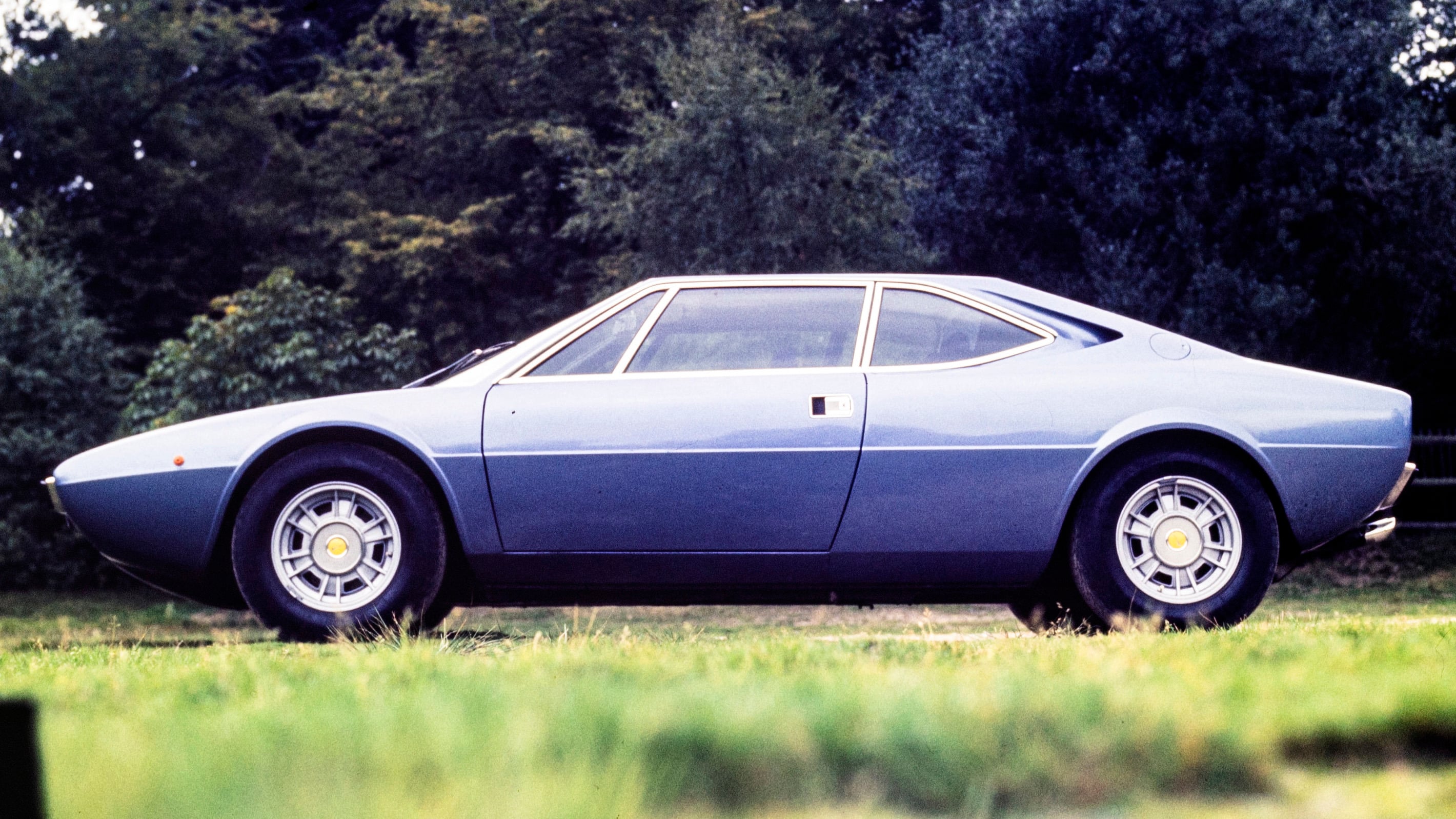
People really did not like the look when it came out. It was styled by Marcello Gandini, whose previous work included both the Lamborghini Countach and at least making a contribution to the largely Giugiaro-penned Miura, but in the face of all those gorgeously curvaceous Ferraris of recent years it appeared angular and awkward. I always liked it, as does my friend Ian Callum, who thought it looked more modern and “has a totality about it”. Then again, Ian always does love a well-executed wedge.
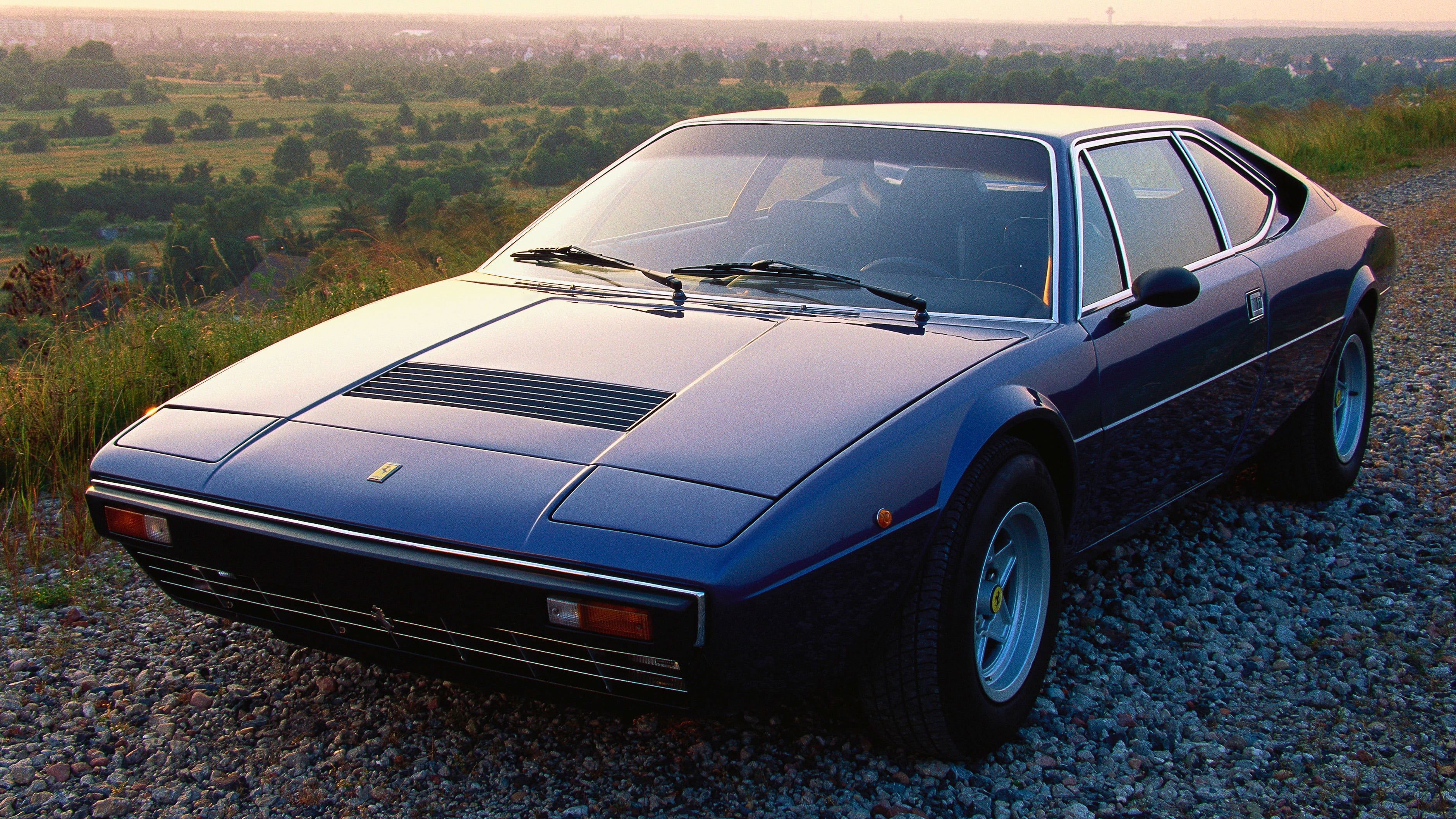
Even when journalists drove it the views were mixed, some acknowledging that, while unquestionably faster than the 246, its sweet nature had gone missing. Some even thought it tricky, which baffles me slightly. The last car I drove before lockdown happened to be a 308 GT4; I spent a day in it, driving it ever harder and it didn’t even nibble, let alone bite.
Indeed, while the two-seat 308 GTB is unquestionably a more classic beauty, it is that car rather than this that needs watching. Because those rear seats did something else for the 308 GT4 that no-one ever talks about: it gave the car a comparatively long wheelbase, long enough indeed to calm its reactions relatively to those of its younger, shorter little sister.
Which is why, over half a century from launch, I still think the 308 GT4 is one of the most misunderstood Ferraris. I wonder if they’ll be saying that about the Luce, too, 50 years from now?
Images courtesy of Getty Images.
road
news
ferrari
308 GT4
frankel's insight