Fiat’s controversial Multipla at 30 | Axon’s Automotive Anorak
Most of the month of February and early March were lost to me after taking an unfortunate tumble while climbing some icy concrete steps outside the Retromobile exhibition complex in Paris.
For my first hospital visit, when a friend arrived to kindly take me there and back for some x-rays, they did so in an early Series 1 Jaguar E-type, probably kindly trying to cheer me up. And although the car was lovely, it proved to be less than ideal transport for a damaged soul with restricted manoeuvrability.
Thankfully, seeing how I’d struggled with the ride to the hospital, my multi-car-owning friend had the common sense to later pick me up for the run home in a more suitable vehicle: a Fiat Multipla.
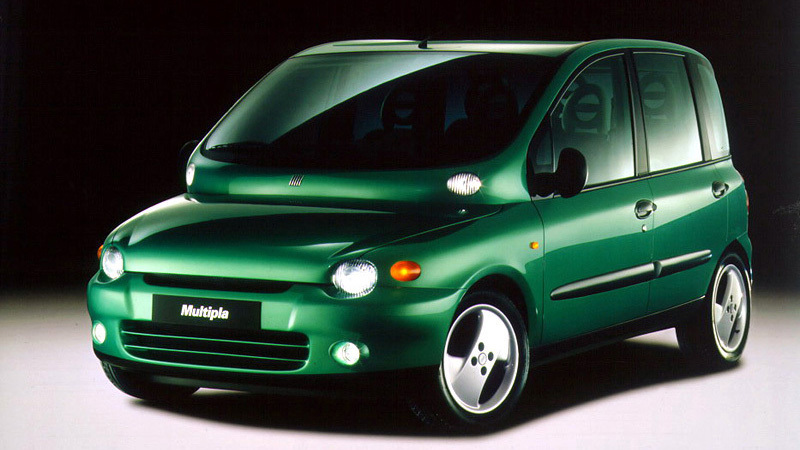
Getting in and out of the upright Multipla was a breeze after the E-type, it being not too low unlike the Jaguar, but also not too high like most modern look-alike SUVs. With its clever Tardis-like interior, the airy Multipla was a pleasure to get into and travel in space with outstanding all-round visibility.
Helped by clever detailing, such as its futuristic sci-fi central instrument cluster with a high-rise gear lever to facilitate a totally flat floor space for the middle front seat passenger, plus easy-to-grab large oval interior door handles resembling a 1990s getto blaster, the Multipla was pure comfort, as opposed to the extreme discomfort caused by the cramped E-type.
The Fiat Multipla caused much debate and head-turning. It was first shown 30 years ago as a concept car at the 1996 Paris Salon to get the public used to the unusual looks of the compact MPV, with the little-changed production example of model introduced in 1998 to much shock.
The brave Fiat was instantly widely acclaimed by the media, it being especially praised by Jeremy Clarkson and named both Top Gear Magazine and TV’s Car Of The Year, but unsurprisingly was largely ignored by the new car buying public who favoured the first of a then-new breed of smaller and lighter MPVs; the worthy but conventional two-box Renault Scenic and Vauxhall/Opel Zafira rivals. By comparison, the Fiat was truly radical in the face of its conservative, stereotypical opposition.
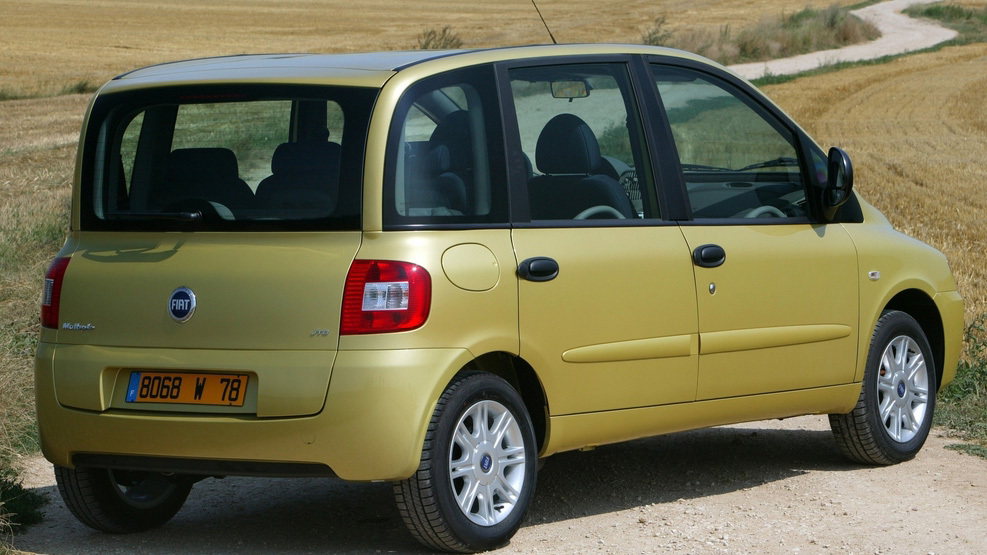
The Multipla’s unexpected twin-module appearance was a radical departure from the sector norm, and recognising its love-or-hate nature, Fiat’s UK importer displayed an uncommon sense of humour at the car’s media launch by placing stickers on the rear windows of all press cars saying “If you think the back’s ugly, wait until you see the front!”
The high and wide Multipla’s unique styling featured deep side glazing made up for around 50 per cent of the car’s side panels to provide a quite extraordinary view of the outside world. The odd bug-faced front end wore a pair of extra high beam driving lamps mounted up high at the base of the large, highly curved windscreen, with unusual colourful large heat-shaped rear lamp units. Power was adequate with a choice of 1.6 petrol or 1.9 diesel engines.
The space-efficient Fiat was unique in offering six passenger seats as standard, cleverly set out in just two rows, a crafty idea only copied later by Honda for its utterly conventional FR-V in 2004. Compact dimensions of just 399cm long, 187cm wide and 167cm high combined with six full adult-sized seats and up to 430 litres of luggage space, with the ability to reposition or remove the three rear seats, made with light weight alloy frames for ease of handling.
The Multipla had the footprint and pricing of a regular mid-size C-Sector hatchback, such as a VW Golf or Ford Focus, but with far better packaging and ingenious versatility. After initial success with a few more ‘daring’ new car buyers, in 2004 Fiat gave the Multipla a more conservative facelift, abandoning the awkward waist-high driving lamps with a more conventional front end. Though less popular with purists, the facelifted Multipla remained unique on the market and survived until 2010. The model has yet to be succeeded.
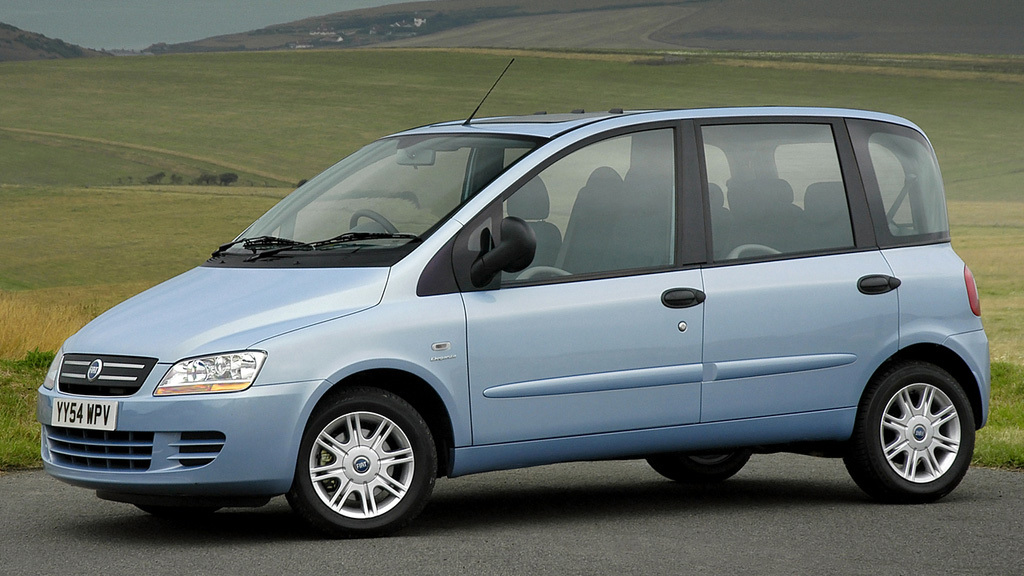
Love it or hate it, the incomparable Fiat Multipla is a guaranteed future classic, especially in its original Series 1 form. By now most surviving examples will have led a hard life, but they were surprisingly robust and seem to last well, although look out for worn transmission problems and electrical faults if searching for a used example.
Despite the original derision to the Fiat’s characteristic styling, the Multipla seemed destined to become collectable as a distinctive modern classic as it is arguably the most sensible and rational new car launched in the last three decades.
As for those hospital trips, the latest x-rays show that my shoulder seems to be healing well, and now thoroughly bored of living life in a sling I should be more on the mend by the time the 83rd Members’ Meeting presented by Audrain Motorsport takes place at Goodwood between 18th-19th April.
road
news
fiat
Multipla
Axon's Automotive Anorak