

Autonomous underwater robots to lead renewed search for missing flight MH370
More than 11 years after Malaysia Airlines Flight MH370 vanished, a new mission will deploy some of the most advanced autonomous underwater robots ever used, marking a decisive new chapter in the effort to solve one of aviation’s most enduring mysteries.
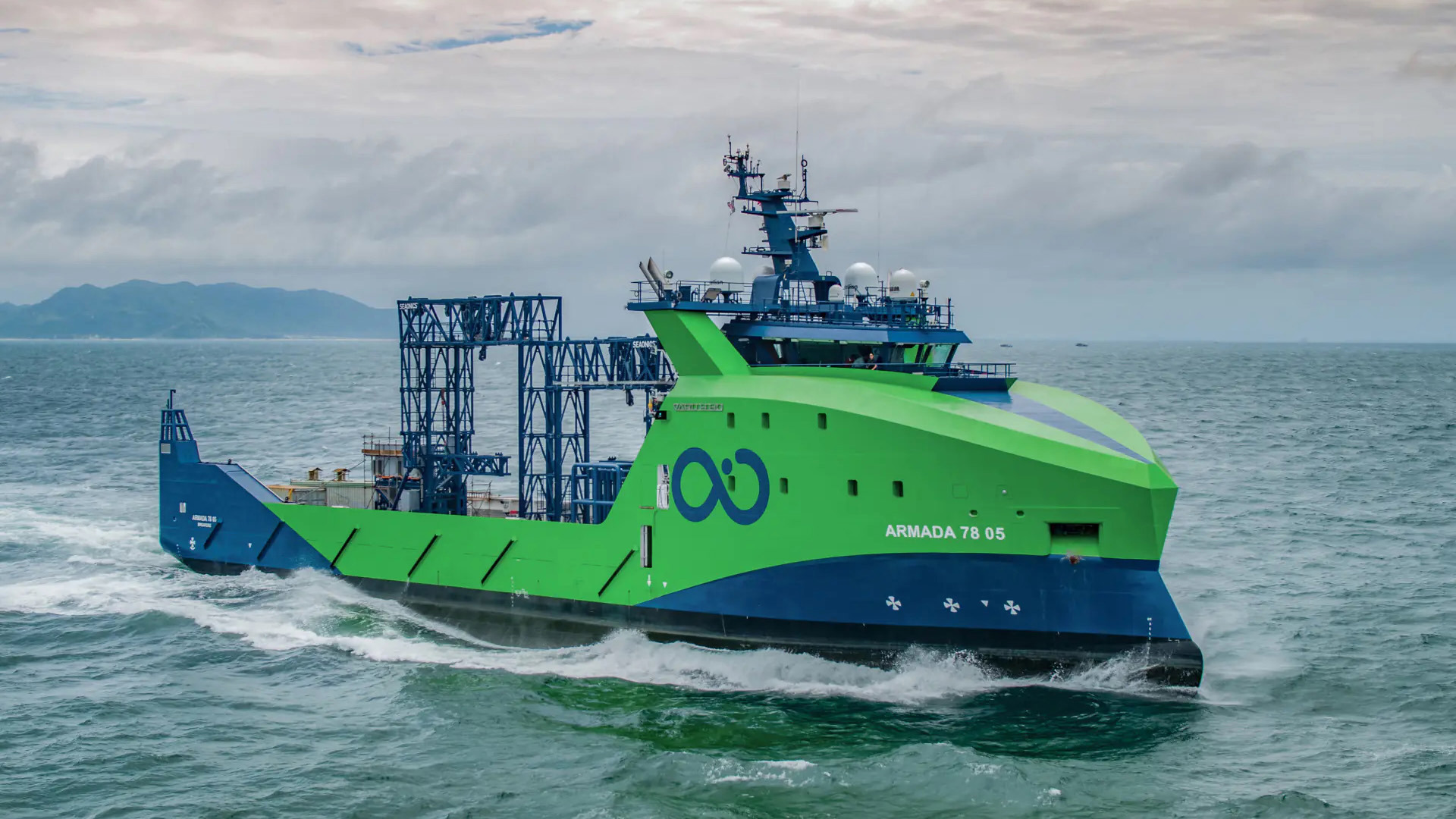
Ocean Infinity, a US and UK-based marine robotics specialist, is preparing a large-scale survey of a 15,000-square-kilometre section of the southern Indian Ocean, and will restart deep-sea operations on 30th December. According to Scientific American, the company will send “swarms of autonomous underwater vehicles” into the search zone, working in coordination with uncrewed surface vessels.
These deep-sea robots can hover just above the seabed and map terrain at depths approaching 6,000 metres, using multibeam sonar, sub-bottom profilers and high-resolution imaging systems. Visitors to the 2025 FOS Future Lab presented by Randox were able to get up close and personal with an underwater drone used to map Ernest Shackleton’s Endurance shipwreck, and it’s hoped that similar technology will help here.
Malaysia’s transport ministry stated Ocean Infinity “will begin a new 55-day search window at the end of the month,” with operations carried out intermittently as sea conditions allow. It added that the targeted seabed zones represent “the highest likelihood of finding the missing aircraft,” although precise coordinates remain undisclosed. The renewed attempt follows Malaysia’s decision to activate a “no find, no fee” agreement with Ocean Infinity. Under the contract, the company will be paid USD $70million (£52million) if it locates wreckage.

Saab's Sabertooth drone, used in the discovery of the Endurance, was on display at FOS Future Lab. Similar technology could be used to help locate MH370.
Image credit: Jack BeasleyOcean Infinity says its upgraded technology can cover more ground, capture finer detail, and do so with a considerably lower carbon footprint than traditional crewed survey ships. The new search will be the third major deep-ocean operation since MH370 disappeared on 8th March 2014 with 239 people on board. Previous multinational efforts charted 120,000 square kilometres of seabed between 2014 and 2017, while Ocean Infinity’s 2018 mission scanned a further 100,000 square kilometres, all without locating the main wreckage.
The southern Indian Ocean remains one of the most hostile and technically demanding regions on Earth for underwater exploration. Steep ridges, volcanic formations, shifting sediments and powerful currents complicate the detection of debris, even for cutting-edge imaging systems. Yet Malaysia’s decision to relaunch the mission signals renewed confidence not only in Ocean Infinity’s maturing robotics capability, but also in the increasingly sophisticated data modelling used to refine the likely impact zone.
Satellite “handshake” signals and debris-drift simulations have been re-examined to define the updated search corridor. As Scientific American notes, Malaysia is “sending ships and robots into one of the planet’s loneliest stretches of ocean” in hopes of resolving an aviation mystery that has cast a shadow over international travel for more than a decade. The 2025 mission represents the most technologically advanced attempt yet to locate the aircraft — and potentially the final opportunity to recover MH370’s story from the deep.

Randox is a global leader in diagnostics, revolutionising patient outcomes through innovative technologies, including its patented biochip technology. This pioneering diagnostic platform allows for the simultaneous detection of multiple biomarkers from a single sample, delivering faster, more accurate, and comprehensive results. Operating in over 145 countries, Randox develops advanced laboratory instruments, high-quality reagents, and innovative testing solutions to improve global healthcare.
Randox Health brings this cutting-edge technology directly to individuals, offering bespoke, preventative health testing programs. With world-class laboratories and personalised health insights, Randox Health enables early detection of a wide range of conditions, helping individuals take control of their health.
Together, Randox and Randox Health are redefining diagnostics and preventative healthcare. For more information, visit www.randox.com and www.randoxhealth.com.
festival of speed
fos
event coverage
future lab
FOS Future Lab
ocean infinity




Subscribe to Goodwood Road & Racing
Thank you, you’re now subscribed

How many hay bales are used at FOS?
For the last two years, 5,800 bales have been recylced into the biomass energy centre to be used for energy generation