

Flying a Spitfire was the trip of a lifetime | Frankel’s Insight
 Andrew Frankel
It’s just one of those things you never imagine happening. There have been times in my career when I have felt blessed beyond my powers of expression to have driven some of the cars I have, but to fly a Spitfire… and for that Spitfire to be an actual World War II veteran, I’m not sure I’ve ever done anything which simply feels less likely.
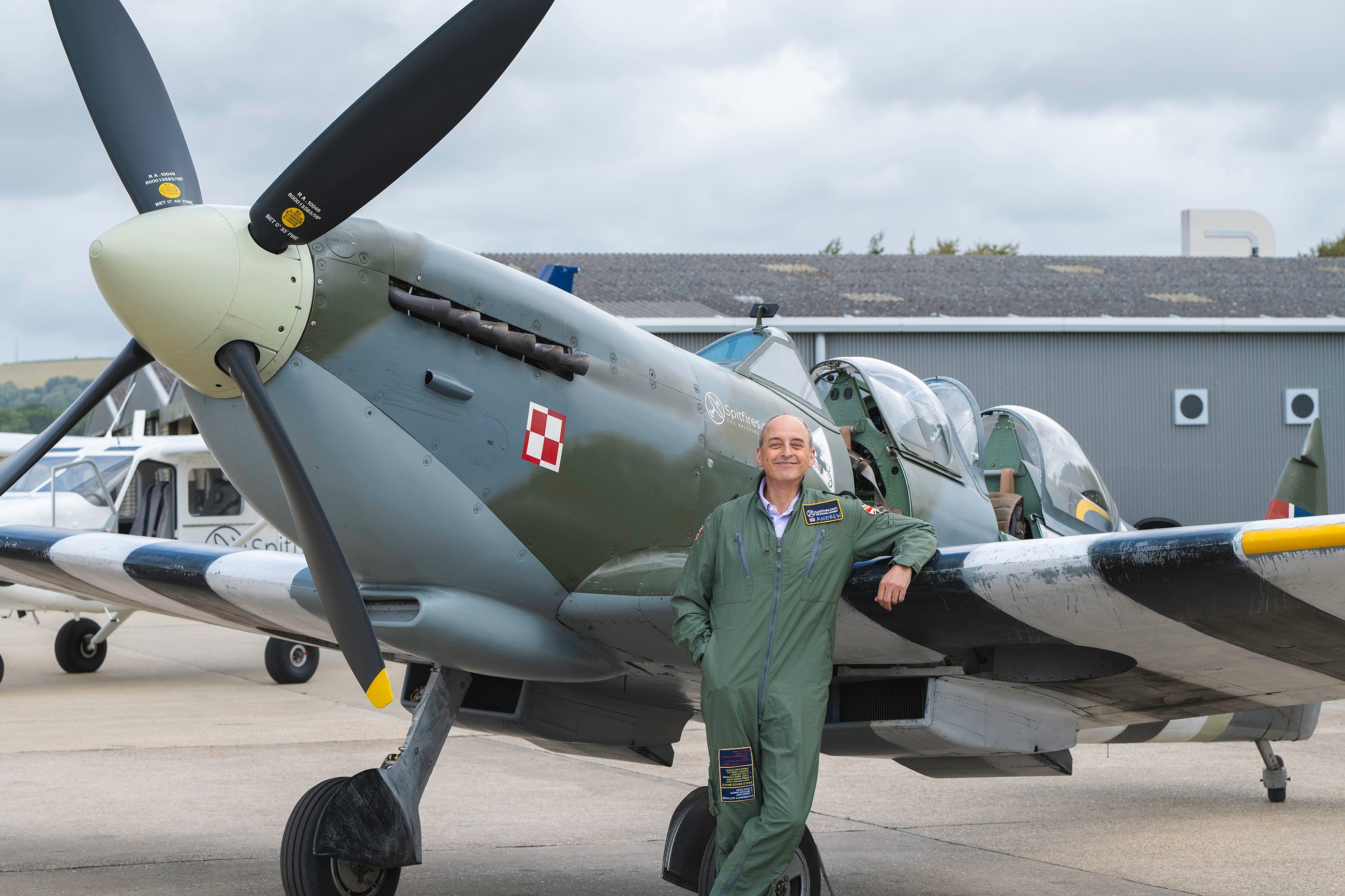
It was thanks to Goodwood or, more specifically, the Goodwood-based Spitfires.com. To experience it yourself is as simple as going on their website and signing up, and you can choose how long you’re up there for, from 30 minutes to well over an hour. At around £100 per minute, it’s not an exactly cheap way of passing the time, but goodness me, it’s worth it.
You don’t just turn up and fly. There are videos you must watch before leaving home, briefings you must have on arrival and a flight suit and helmet for which you must be fitted. You will be asked to repeat all you have learned, almost all of which concerns what you should do in an emergency, it’s all pretty straightforward and all extremely important. That said, the chances of something going wrong are genuinely vanishingly small, but you need to know what to do if it does, which essentially boils down to stay in or get out.
The effect is not to scare the life out of you but, on the contrary, to inspire confidence in both the aircraft you’re now being strapped into and the company that operates and maintains it.
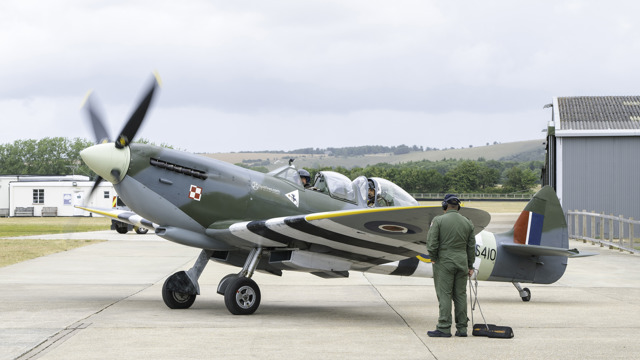
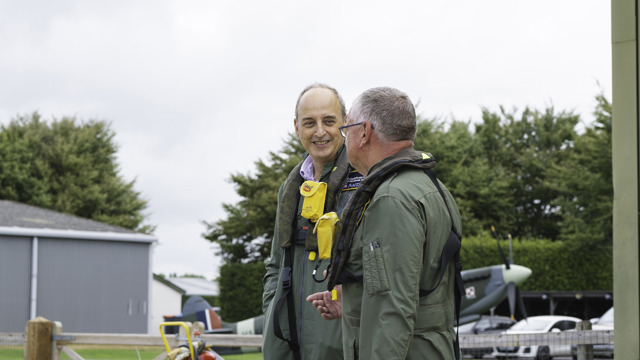
Up front I have one Charlie Huke, an RAF veteran who has flown over 100 different types of aircraft and can fly a Spit in his sleep. I can’t see him because you sit alone in your own cockpit, surrounded by switches, dials and levers, none of which you must touch, at least for now.
The 27-litre, 1,470PS (1,081kW), twin supercharged V12 Merlin (named after Britain’s smallest bird of prey, not a Welsh wizard) fires up and fills all the space between your ears. And now there’s no messing about: the Merlin is designed to be cooled by air hitting it at 200mph minimum, so there’s no dawdling while still on the ground. Waiting just long enough for oil temperature to register, Charlie opens the taps full, the Merlin does it’s inimitable thing and we’re bouncing down a grass strip which is far rougher than it looks from the outside, me watching the joystick jerking around between my legs as he compensates for the crosswinds.
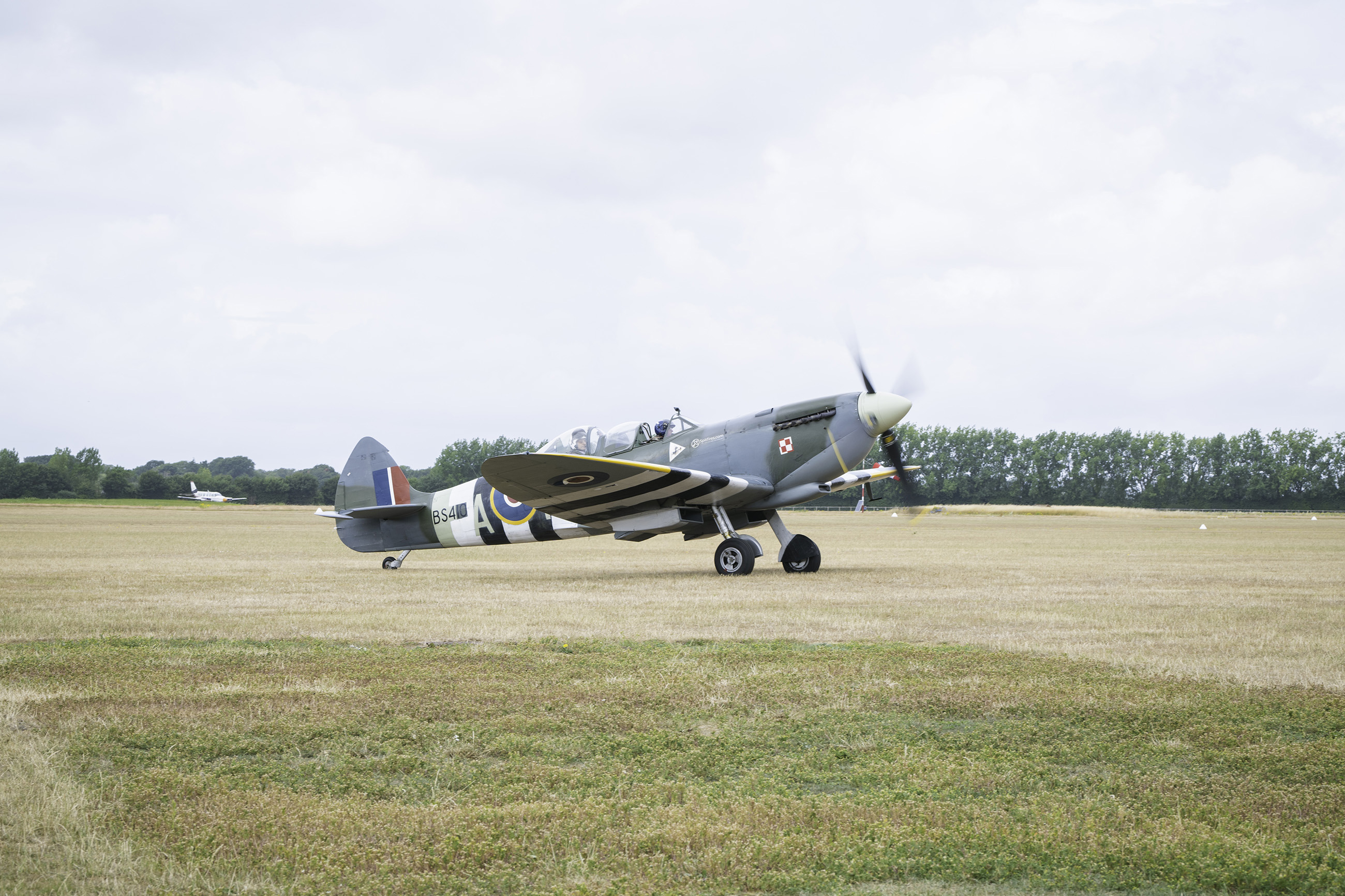
And then we’re in the air, the ride as smooth as a Dreamliner’s, save the vibrations from that fabulous engine. Looking out of my vast Perspex bubble I have perhaps twenty times more visibility than you get in a commercial aircraft. I notice RG Mitchell’s revolutionary elliptic wing that did so much to make the Spitfire loved by those who flew it, and feared by those against whom it flew.
I can see the rolling fields of England and the coastline, too, the very same fields and coastline that, 85 years ago, were seen by men barely more than schoolboys who flew aircraft not at all unlike this into battle against a great, most tyrannical enemy. You cannot come here and do what I am doing without thoughts of them and the sacrifices they made in the summer and autumn of 1940.
‘Your aircraft,’ says the voice in my helmet, wrenching me from my reverie. I place my right hand on the stick, my feet on the rudder pedals and, just to show this is not some elaborate conjuring trick, Charlie raises his hands about his head where, from my vantage point, I can just see the tips of his fingers. It really is me flying this Spitfire.
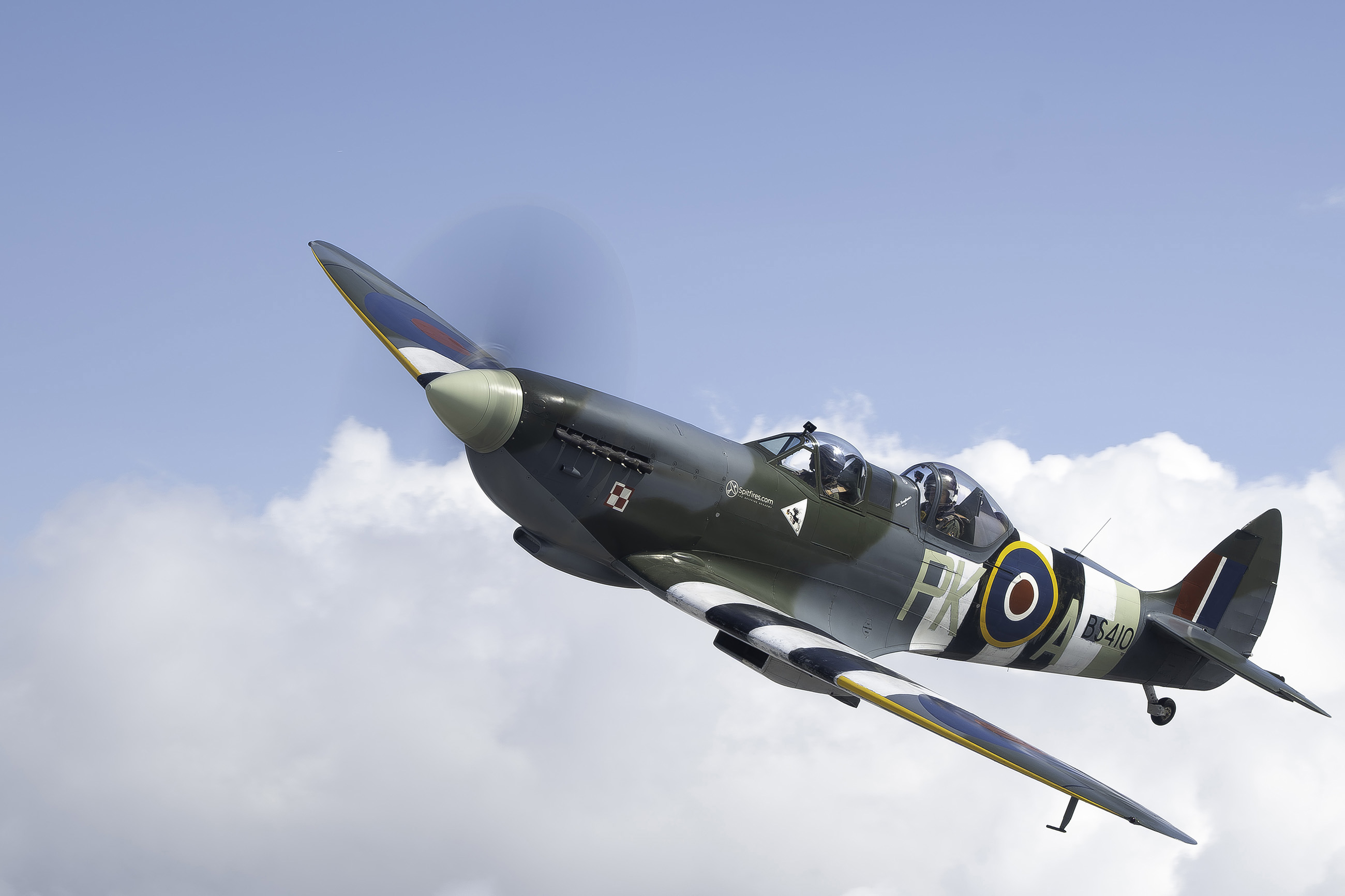
I am no pilot, but here I am. I ask what I can do, and Charlie says we’re in uncontrolled airspace so I can do what I like. I take ‘within reason’ as a given. I push the stick forward and it descends, pull back and the nose rises with my hand. Getting more adventurous I try some turns, coordinating rudder and ailerons and noting how beautifully it answers.
It sounds silly to write it, but the closest comparison I have, at least in the road car domain, is driving my Caterham. It’s that response — its immediacy and its accuracy. It’s an old cliché I know, but there is no better way of describing how it feels than that after a remarkably short period of time, you feel like you’re wearing it.
My last turn points me out to sea and with no objection from Charlie, we thunder out over the Channel for a while before I turn for home. Seeing England laid out before me takes me back again to 1940, and the relief those young men will have felt at seeing its shores again. Charlie takes over and executes a perfect victory roll, just because he can. It is astonishing for its lack of violence.
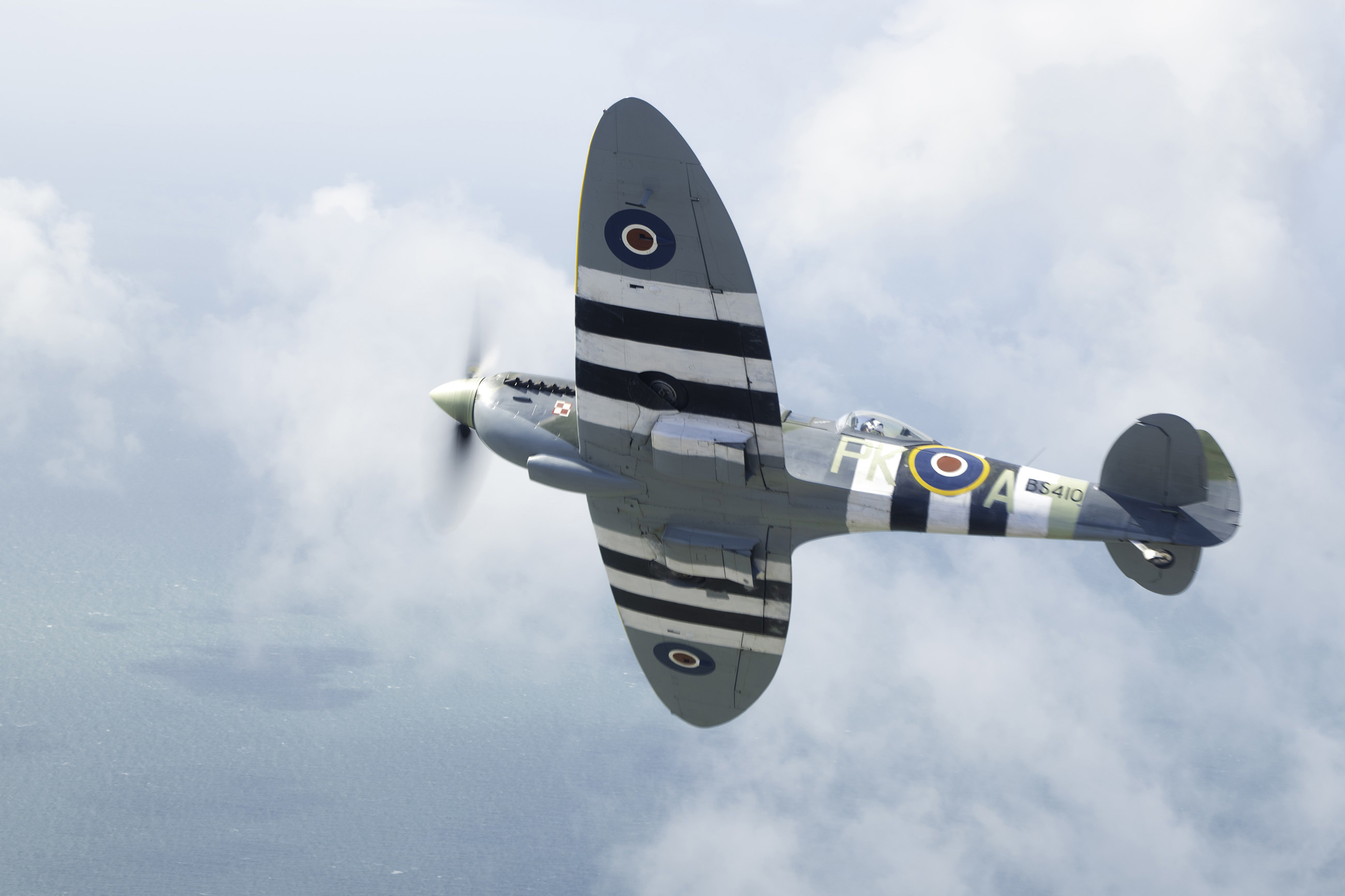
You think it’s going to be like a roller-coaster ride but it’s nothing like that at all. It's spectacular for sure, but most of all it’s just elegant, an aircraft doing what it was born to do.
Minutes later and we’re back on the ground, and if you think I might be aghast it was all over, nothing could be further from the truth. Because I knew then what I know now, that flying a Spitfire is probably less than half the pleasure derived from the experience. Because even better than flying a Spitfire is the knowledge and memories of having flown a Spitfire, and those last not a few minutes but the rest of your days. ‘An experience of a lifetime’ is a rather over-worked phrase, but this time it really, truly is.
revival
event coverage
frankel's insight
Spitfire



Subscribe to Goodwood Road & Racing
Thank you, you’re now subscribed

How many hay bales are used at FOS?
For the last two years, 5,800 bales have been recylced into the biomass energy centre to be used for energy generation