
Jack Brabham’s F1 ‘Indian summer’ of 1970
Jack Brabham was under pressure at home. The doughty Australian and three-time World Champion had survived through a deadly era of motor racing, but a frightening Silverstone testing shunt in the summer of 1969, from which he’d been lucky to emerge with a badly broken ankle, was a stark reminder of diminishing odds. The trouble was that old fire still burned. He didn’t want to stop.
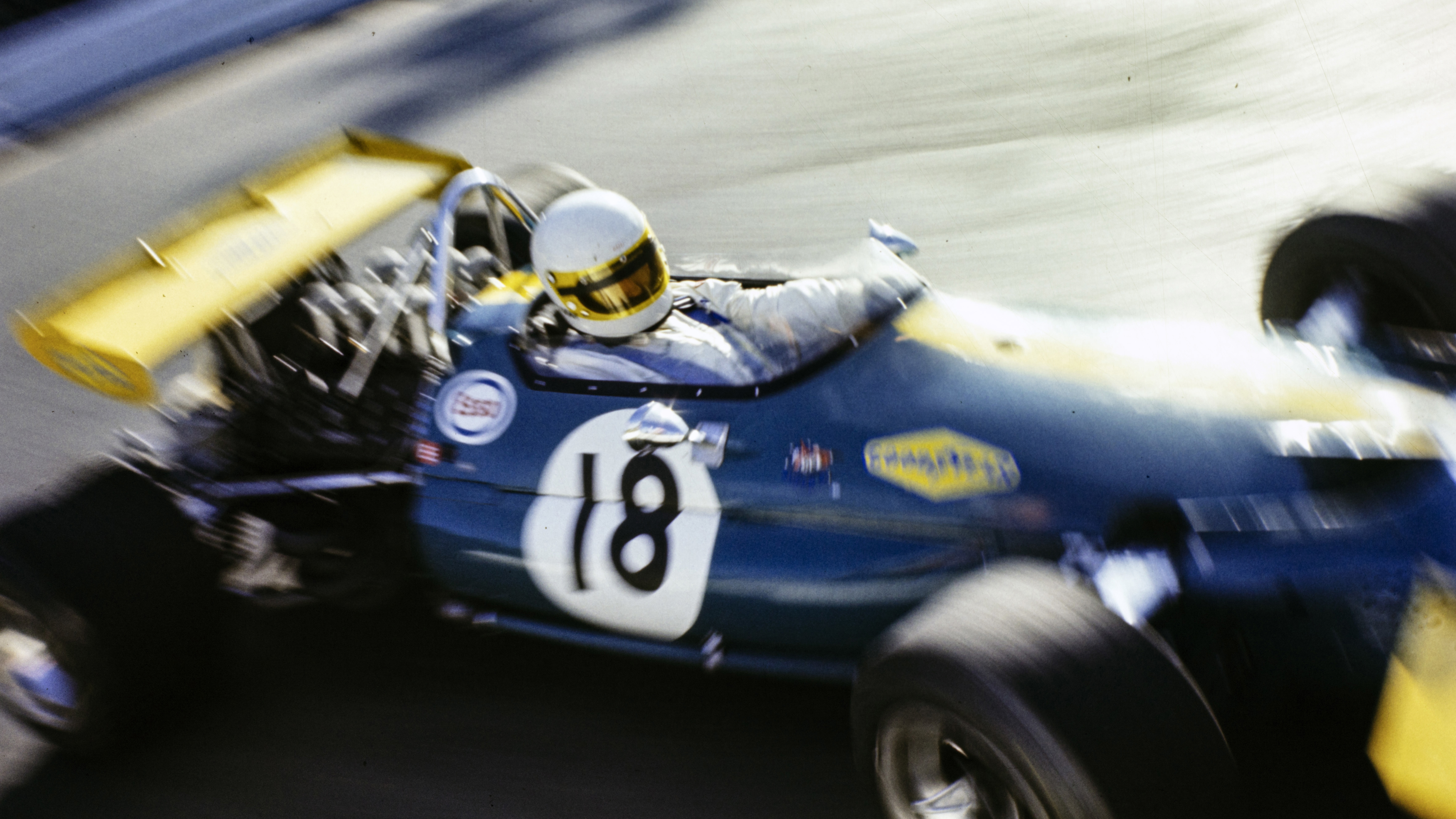
As Goodwood looks forward to celebrating one of the best racing lives at the Revival later this summer, let’s cast back to 1970 and Brabham’s swansong season as a Grand Prix great. Brabham’s ‘Indian summer’, at the ripe age of 44, stands out among the finest of Formula 1 sign-offs. There’s even a case that with a different twist of fate here and there, he might have even pulled off a fourth title.
An about turn on racing plans
The plan hadn’t been for Jack Brabham to race into a third decade. But a late U-turn from a figure familiar to the team forced his hand to hold out on that retirement. Not that he minded, of course…
In the autumn of 1969, Brabham had convinced Jochen Rindt to return to his team with the promise of a first Ron Tauranac F1 monocoque — the Australian designer having stuck to his guns on spaceframes for long enough.
Rindt had gelled with Brabham and the team when he’d joined for 1968, only for chronic unreliability with the latest Repco V8 to drive him away towards Colin Chapman and Lotus. But that was a relationship with little love lost. The Austrian was no fan of what he considered to be Chapman’s cavalier attitude to safety in his lightweight but rapid F1 cars.
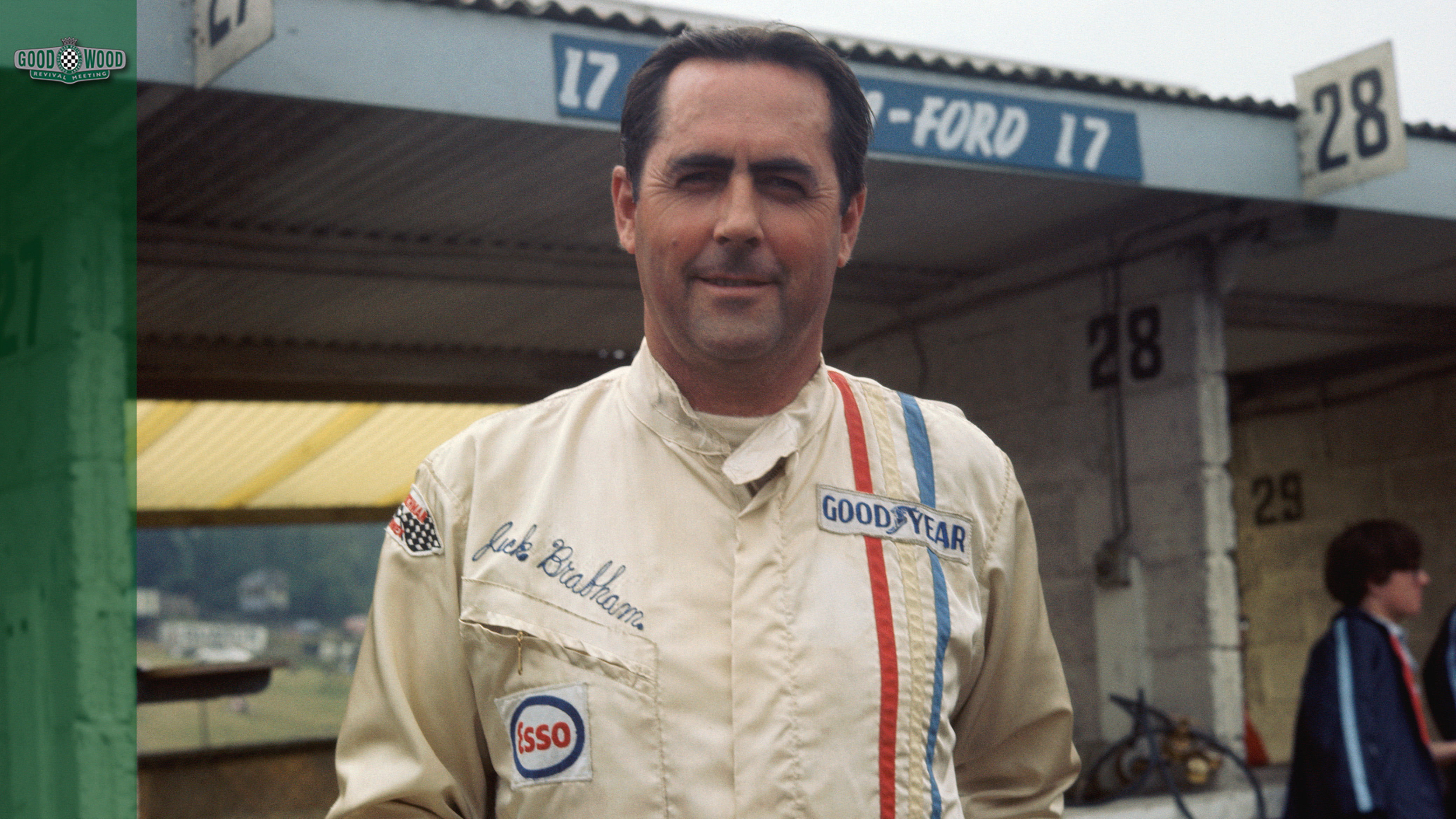
As it was, Lotus was looking strong for 1970. Its Type 49B was still competitive, and there was the new chisel-nosed 72 that would be coming on stream. When Rindt received a counteroffer too good to turn down to remain with Chapman, he asked Brabham to be released from his deal. Rindt’s manager and friend Bernie Ecclestone spelt it out: if you want to win the Championship, stay at Lotus; if you want to stay alive, go back to Brabham. Rindt made his choice.
One last rodeo for Brabham
Rindt’s U-turn actually played into Brabham’s hands, given his reluctance to stop racing. A long phone call convincing wife Betty while at Watkins Glen hadn’t gone well. But he was fired up and ready for what turned into a fitting swansong — particularly as Tauranac’s BT33 looked so promising.
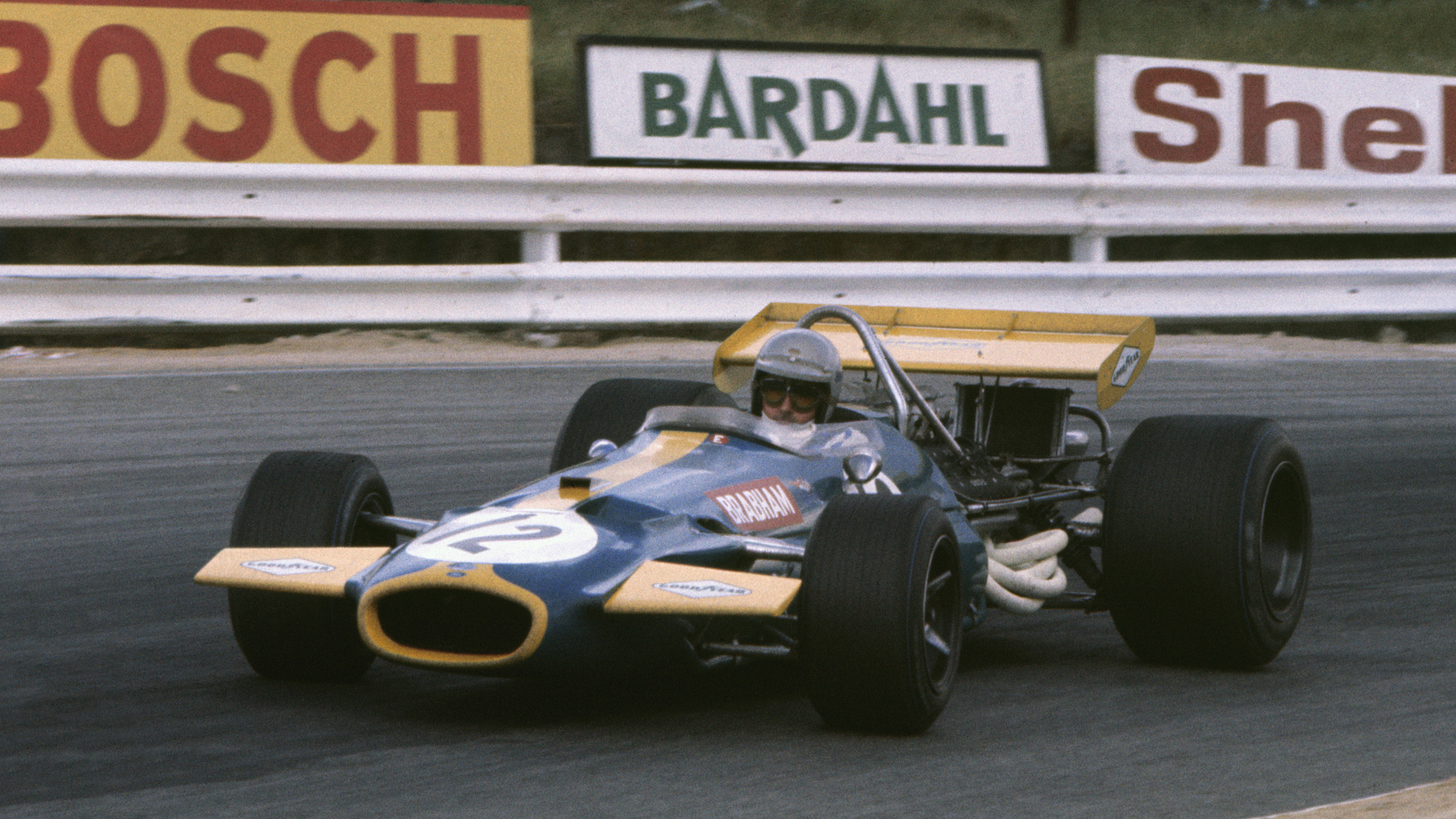
Jack Brabham's final F1 victory came at the South African Grand Prix at Kyalami with the BT33, March 1970.
Image credit: Getty ImagesAmid Mauro Forghieri’s masterful flat-12-powered Ferrari and Chapman’s ‘next big thing’ Type 72, Tauranac’s solid BT33 more than held its end up as the team’s first stress-skinned monocoque F1. First time out at Kyalami, Brabham scored the last of his 14 Grand Prix wins, but it had not been easy.
First, Rindt’s Lotus clobbered him airborne at the first turn. Surprised to be still intact, the Australian got his head down and chased Stewart’s new Tyrrell-run March 701 for the lead, only for the blue car driven by the reigning World Champion to flick a stone into his cheek, leaving a lasting scar. Usually it was the old dirt track racer giving out such treatment.
Last-gasp pain at Monaco…
Increasing deafness from years of screaming racing engines led Brabham to experiment with comical ‘teddy bear’ helmet designs that incorporated ear defenders. But there was nothing funny about his final flourish of form in 1970.
Two races stand out from that final season, both for the wrong reason: last-lap denouements.
The first at Monaco was entirely his own doing. Facing pressure from a fast-closing Rindt and in among backmarkers, Brabham broke character by missing his braking point at Gasworks for the last time and slid into a barrier.
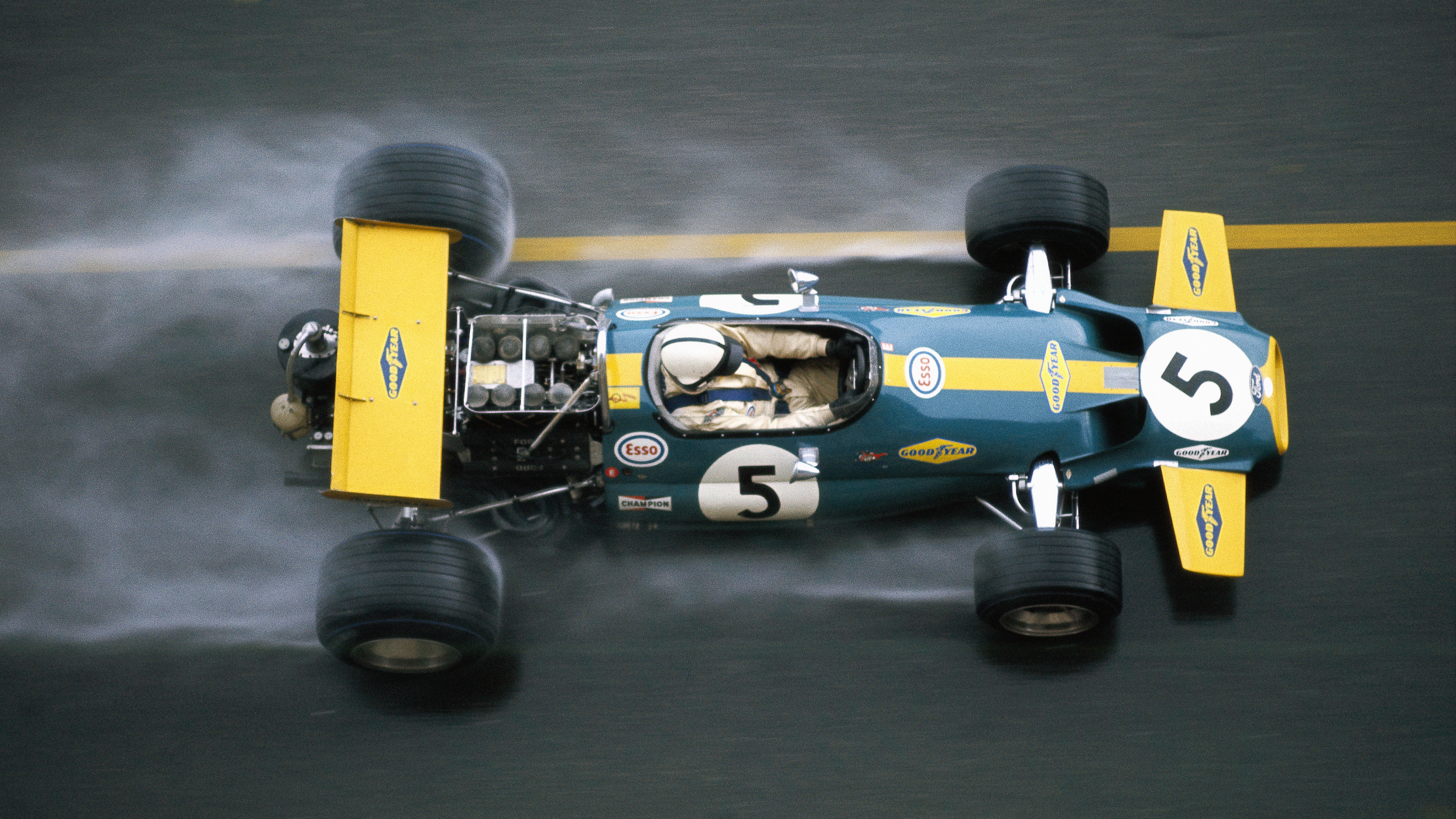
Brabham led much of the 1970 Monaco Grand Prix but ended up finishing second to Lotus' Jochen Rindt.
Image credit: Getty ImagesHe’d inherited the lead when Stewart’s engine failed. “I knew this was probably my last season and my last ever Monaco Grand Prix,” he wrote in his autobiography. “I was pretty happy to ensure I kept the machinery comfortable, took no risks and finished. Perhaps that was always a weakness of mine.”
With hindsight, Brabham wished he’d “built a bigger lead before nursemaid mode.” At half-distance, he led Chris Amon’s Ferrari by three seconds, but now here came Rindt in his Lotus 49. Still, this was Monaco. Overtaking was so difficult, even then.
Backmarkers made life difficult as they entered the closing stages, with Rindt now closing in. More baulking from backmarkers on the final lap, then heading to Gasworks for the final time, Brabham spotted Piers Courage in Frank Williams’s red de Tomaso coasting with a dead engine ahead of him.
“Trying to decide which line to take, I slightly overshot my braking point,” he recalled. “I’d chosen the inside line — of course — but right there… a trail of cement had been laid on spilled oil. My brakes locked up, and I simply failed to take the corner.” The BT33 crumpled into a straw bale. After an almost comical moment with a marshal, who ended up lying flat on the car’s nose in his attempts to help him recover, Brabham still managed to finish second and ensure at this stage he still lead the title standings.
…and more at Brands Hatch
Then later that summer there was the British Grand Prix, where another win slipped as Brabham stuttered out of Stirlings Bend for the final time, again to the benefit of Rindt, as he coasted out of fuel. A traumatic example of finger trouble: the engine had been running full rich and for years Brabham blamed Ron Dennis for not turning down the setting on the grid — only for future Penske mainstay Nick Goozée to admit in 2002 that he was the guilty culprit.
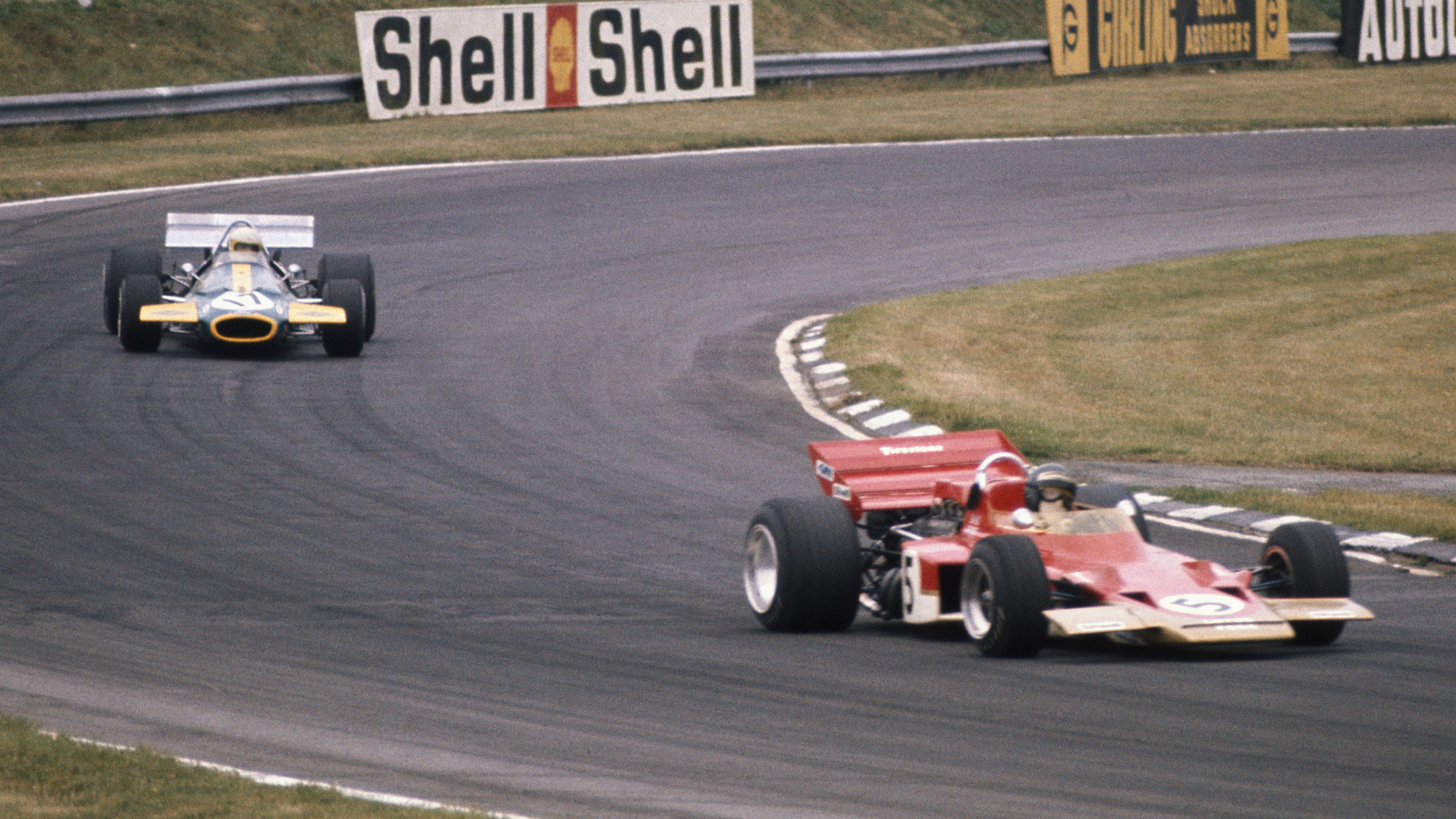
Brabham was passed by Rindt at the final corner of the 1970 British Grand Prix, where the Austrian took his third consecutive win of the season.
Image credit: Getty ImagesAt Brands, Brabham knew a win was essential for his title hopes after three victories for Rindt from the previous four races. They went wheel to wheel after the start, with Rindt gaining the upper hand. Brabham chased him hard for 60 laps. When Rindt made a mistake at Bottom Bend, his old boss pounced, took the lead and left the Lotus in his wake. Rindt had given up on the victory — until those final yards.
“As I went swishing along, engine dead, under the bridge, and out into the main crowd and grandstands’ view at Clearways, everybody just went wild,” Brabham recounted. “I could hear Jochen’s Lotus coming, and then he went by me, his head turning from side to side, heading for the chequered flag. As I coasted past the pits, tucked up under the right-side barrier, I just felt sick and empty.”
A year of terrible loss
So, a title that got away? Had those races not been lost, along with another at Jarama, yes, there’s a case. But in the context of the horrors of that year, it doesn’t matter.
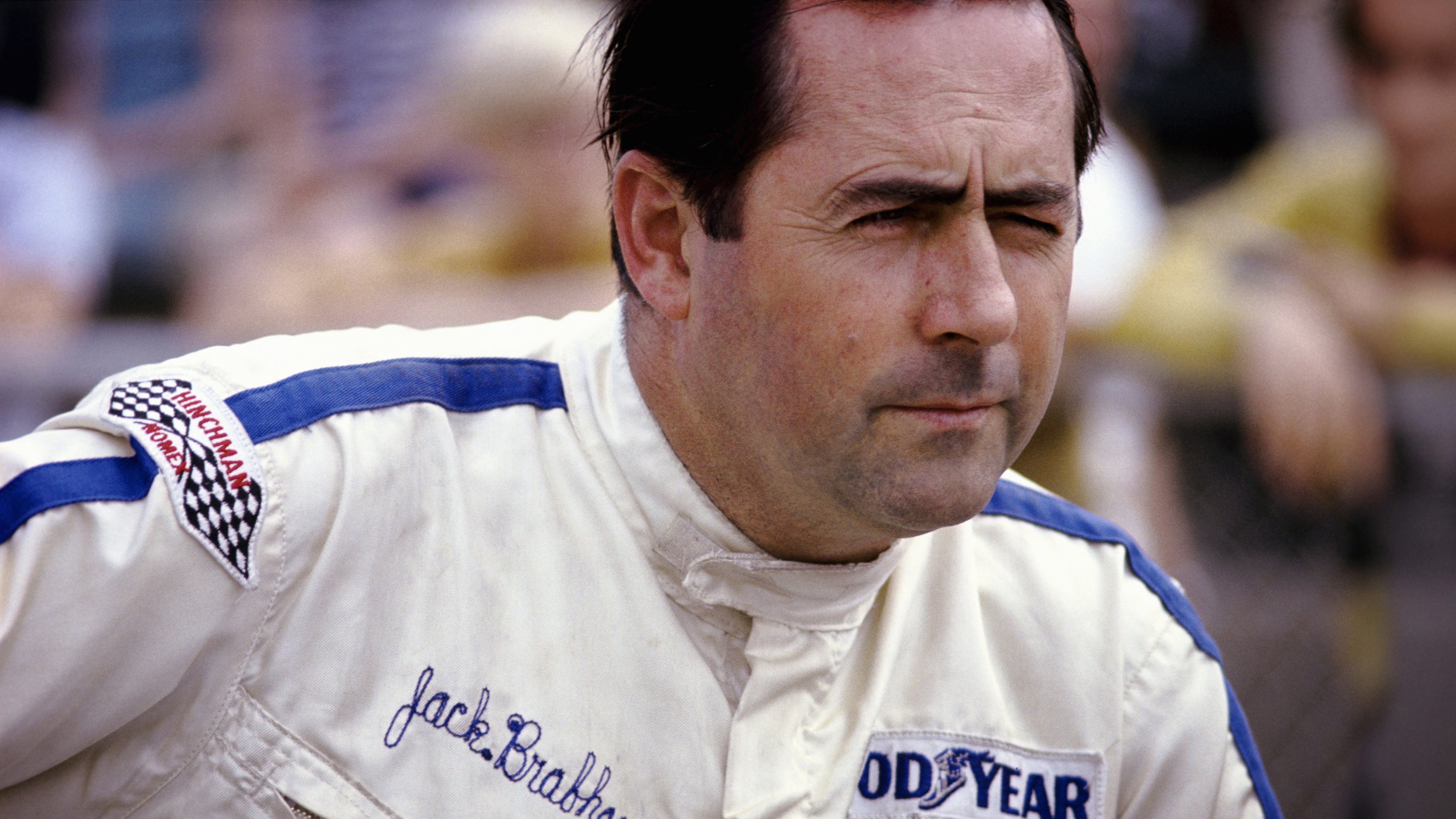
In his final racing campaign, Brabham competed in the Indianapolis 500 for the fourth time, finishing 13th.
Image credit: Getty ImagesThe loss of Piers Courage at Zandvoort, Bruce McLaren in a testing crash at Goodwood and then Rindt in practice at Monza — plus another frightening testing accident for Brabham at the Dutch track — only wound up the family pressure. At 44, he finally called time.
As tragic Rindt was crowned a posthumous World Champion, Brabham relished his final months as a professional racing driver, also enjoying sportscar races with Matra, some F2 appearances and even a last swing at the Indianapolis 500.
He’d survived 23 incredible, eventful years behind the wheel, and now began a second life. Knighted for services to motorsport in 1979, he died aged 88 in 2014 after a long and wonderful life well lived. And that fourth World Championship? Well, of course that would have been a fitting cap to his glory years. But at least he was still around to walk away on his own terms — and with his head held high.
Tickets for the 2026 Goodwood Revival are now on sale. If you’re not already part of the GRRC, you can sign up to the Fellowship today and save ten per cent on your 2026 tickets and grandstand passes, as well as enjoying a whole host of other on-event perks.
Main image courtesy of Getty Images.
formula 1
f1
Jack Brabham
Jack Brabham Celebrations

Subscribe to Goodwood Road & Racing
Thank you, you’re now subscribed

How many hay bales are used at FOS?
For the last two years, 5,800 bales have been recylced into the biomass energy centre to be used for energy generation