
The day Hill beat Schumacher at his own game
Damon Hill vs. Michael Schumacher. So often it felt like an unequal rivalry, and more often than not during their two-season battle across 1994 and ’95 — one of the many to be celebrated at the Goodwood Festival of Speed presented by Mastercard this summer — it was the German wunderkind who held the upper hand.
But there were exceptions, and the most obvious was the 1994 Japanese Grand Prix. It would prove to be the drive of Hill’s life.
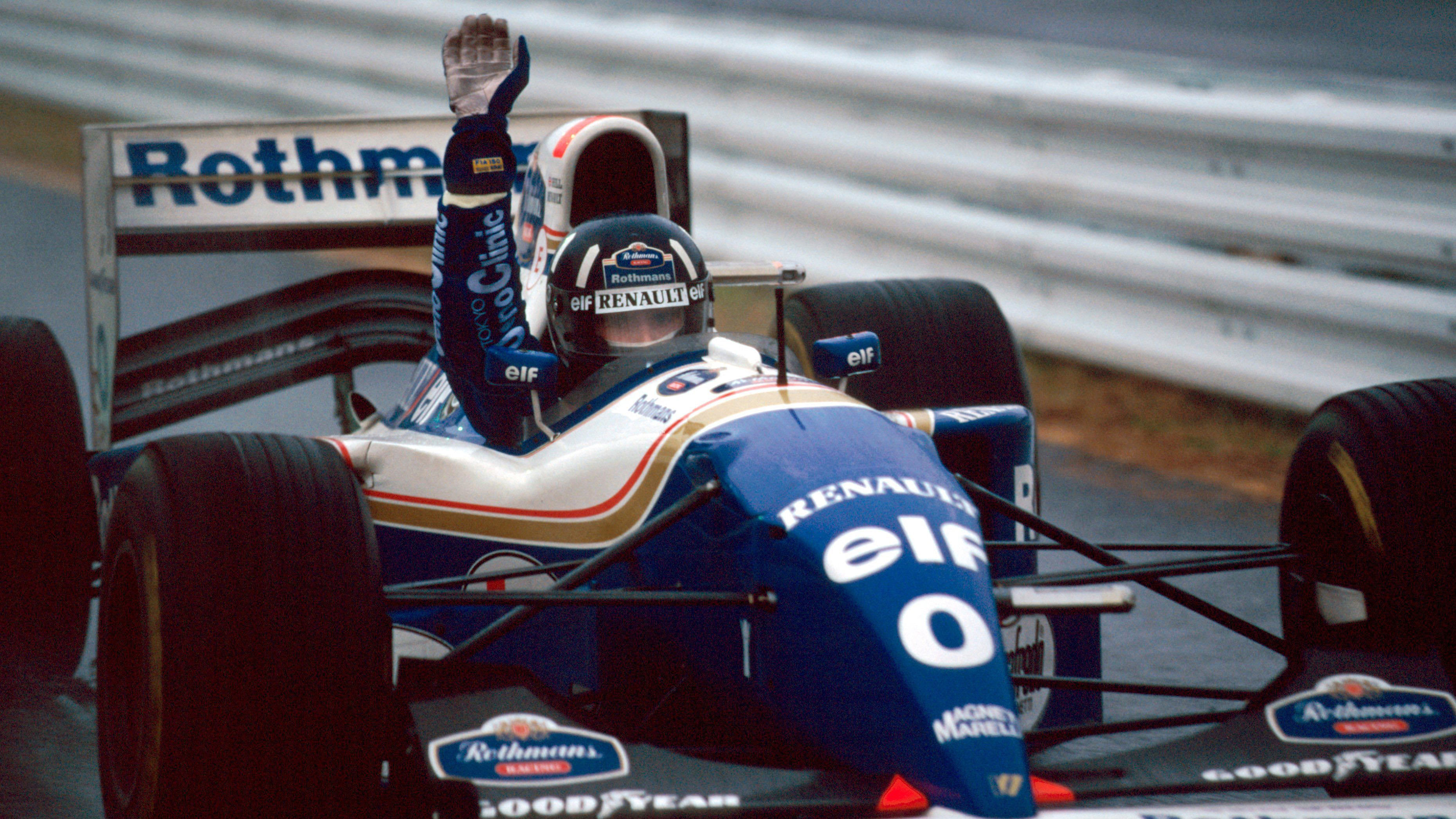
Pre-Suzuka: an uphill struggle
Hill arrived at the penultimate round of the World Championship in a dark mood. The whole season had been difficult and traumatic, especially since the beginning of May when his Williams team-mate Ayrton Senna had been killed at Imola.
Yet through the turmoil Hill had stepped up, in an eery echo of 1968, when his father Graham had found the same kind of strength at Lotus in the wake of Jim Clark’s death. Through the summer of 1994 the dominance of Schumacher and Benetton had been undermined by a series of (largely self-induced) controversies and by October the World Title was no longer a foregone conclusion.
As Schumacher served a two-race ban for ignoring a black flag during the British Grand Prix, Hill made hay by winning both the Italian and Portuguese Grands Prix to close to within a point of the World Championship leader.
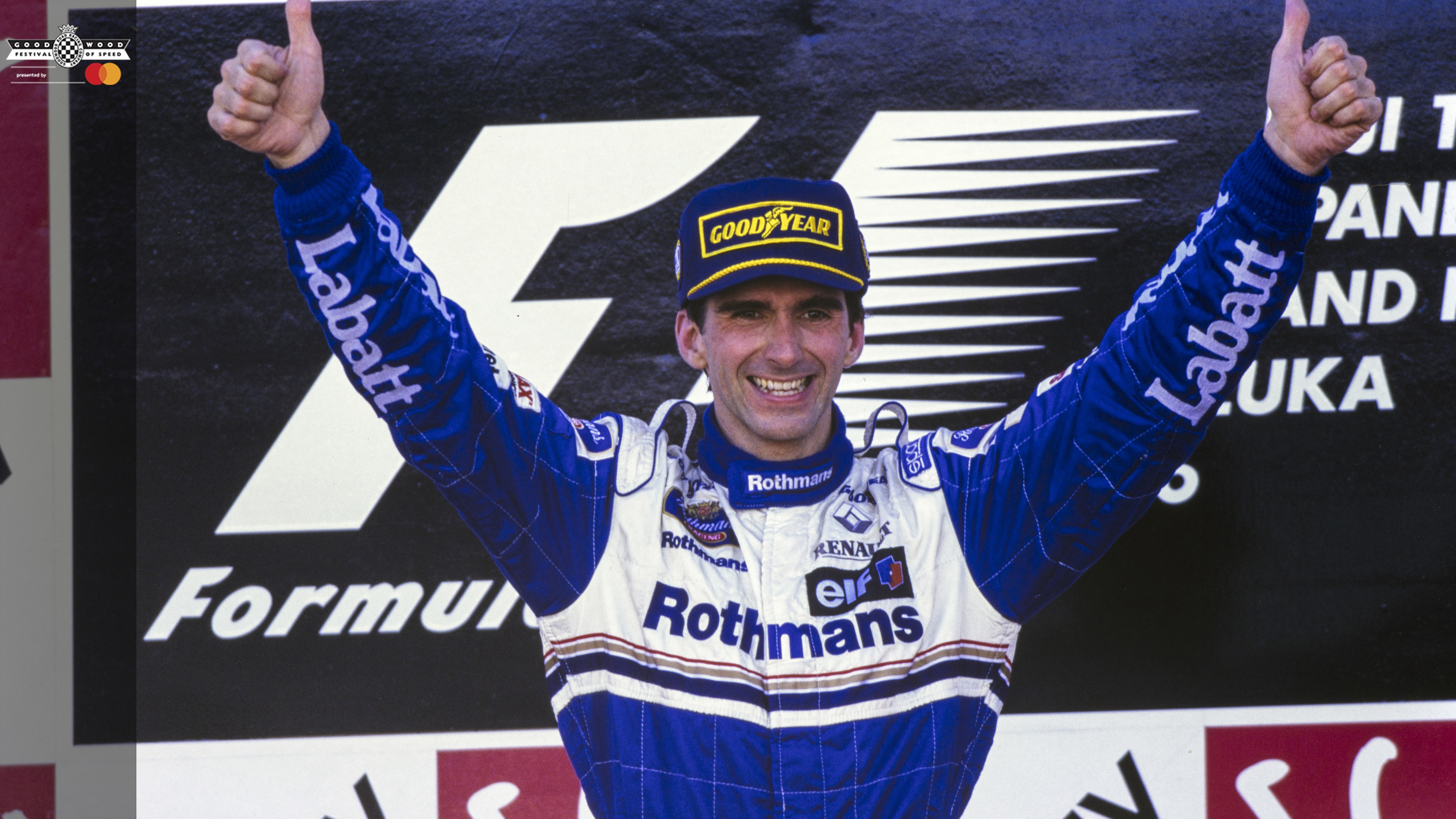
Schumacher returned at Jerez for the European Grand Prix — and put Hill firmly back in his place. Yes, Hill had led the race, but refuelling problems at his first stop left him short, requiring a longer second pit visit. On a heavy fuel load for his final stint, the Williams struggled in the wake of the three-stopping Benetton. By the flag, Schumacher had trounced Hill by nearly 25 seconds.
Stung by the defeat, niggled by Williams’ pitstop troubles and undermined by the team’s insistence on calling back Nigel Mansell from IndyCars to guest in the second FW16, Hill was in a state of exasperation as he landed in Japan. The points gap had widened again: Schumacher on 86, Hill on 81.
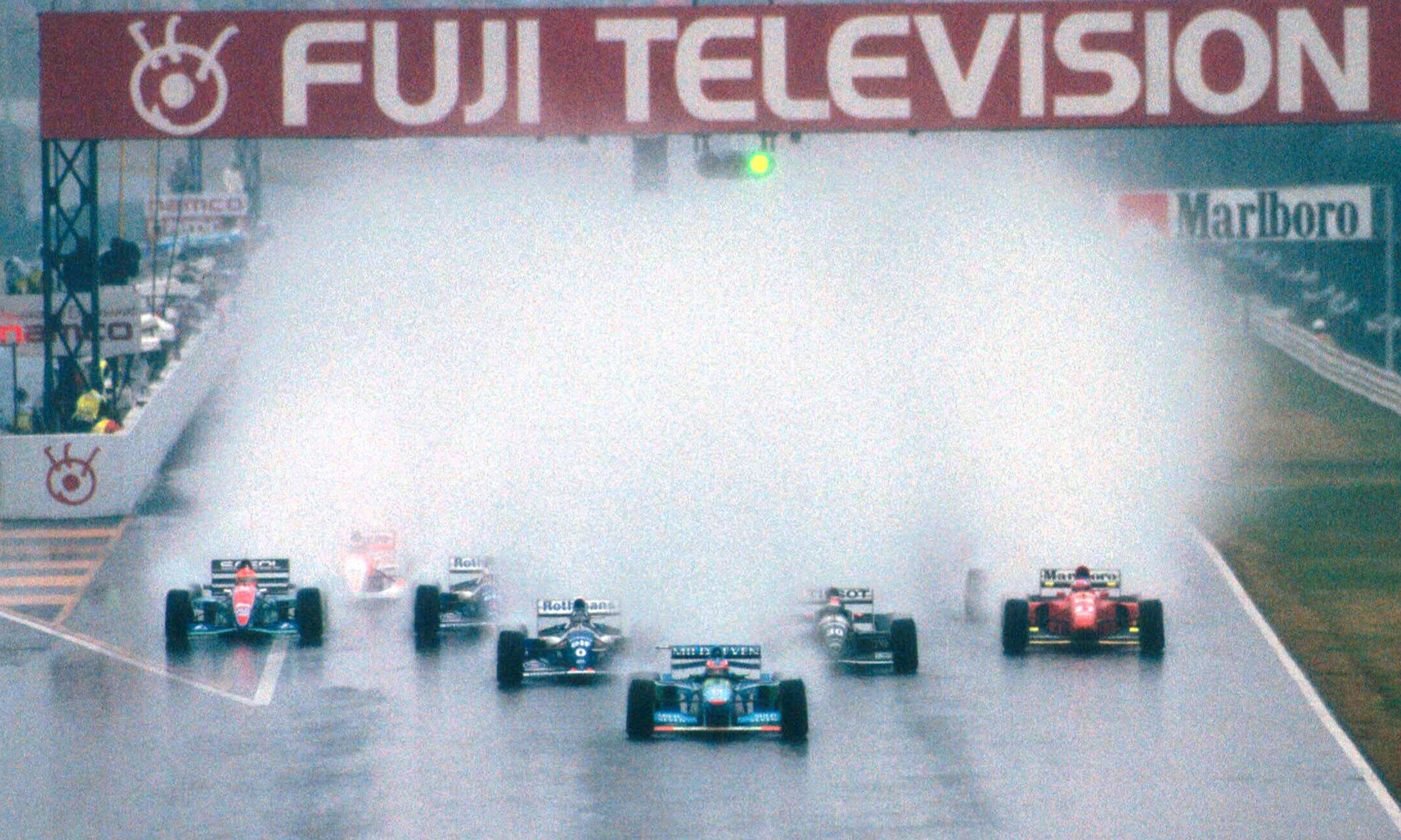
A race in two parts
The gloom wasn’t lifted by qualifying. On the Friday (remember qualifying was run across two days back then) Schumacher was almost half a second quicker than Hill to take provisional pole position, which was then confirmed on Saturday when it was wet and no one could improve their times. It would also rain on race day, and against the usual script, that played into Hill’s hands as he took on and beat the driver generally considered to be F1’s new regenmeister.
Schumacher shot away to lead by 1.7sec at the end of the first lap, but in atrocious weather Hill remained in touch as the Benetton survived a couple of hairy moments, before the safety car was called upon. When racing resumed, again Schumacher pushed to open up a lead over Hill of 6.8sec, only for the race to be stopped when Gianni Morbidelli went off in his Footwork on lap 14 and then Martin Brundle’s McLaren hit the car during his own moment a lap later, injuring a marshal.
That meant the race was restarted as an aggregate two-parter, resuming on countback to the lap when Schumacher held that 6.8sec advantage.
Schumacher now faced a problem for the second part of the race because he found himself committed to a second stop, whereas Hill planned to run long on one. But this was Michael Schumacher. Surely, he was still the favourite to win…
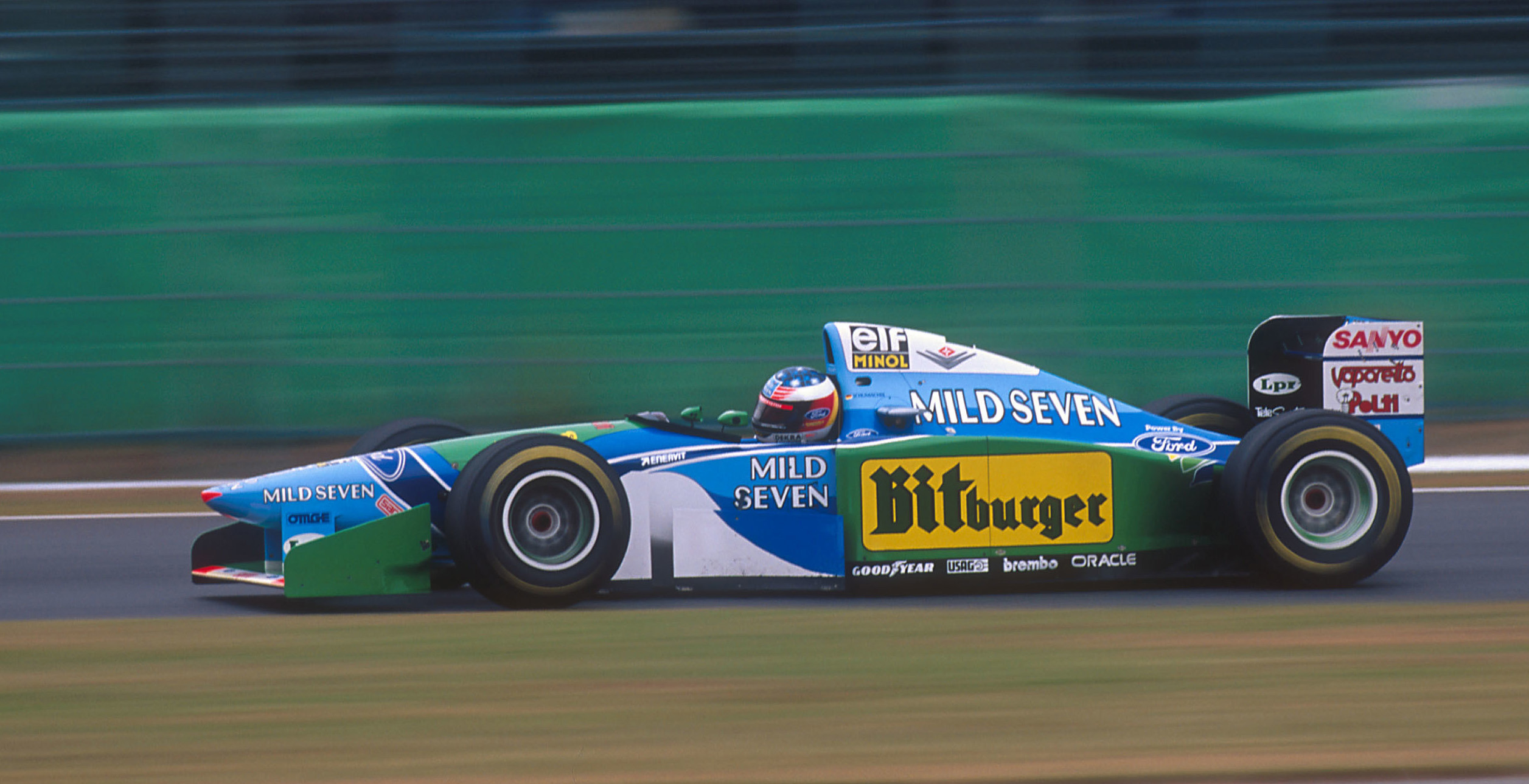
The Benetton duly led from the restart, but was forced in low on fuel on lap 18 and resumed more than 14sec behind the Williams. At this stage it was a surprise that the gap did not come down, Schumacher claiming he was held up by Mika Häkkinen’s McLaren.
Then Hill came in on lap 25 for his one and only stop. A jammed right rear which couldn’t be changed lost him some time, but crucially he resumed ahead of Schumacher. And when Jean Alesi’s Ferrari and team-mate Mansell pitted, Hill found himself back in the lead, at least on the road, and with only three fresh tyres.
Schumacher again put on a spurt to close on the Williams and claim the aggregate lead, but the problem was the commitment to a second stop. In he came on lap 40, rejoining now 14.5sec down on Hill. The chase was on.
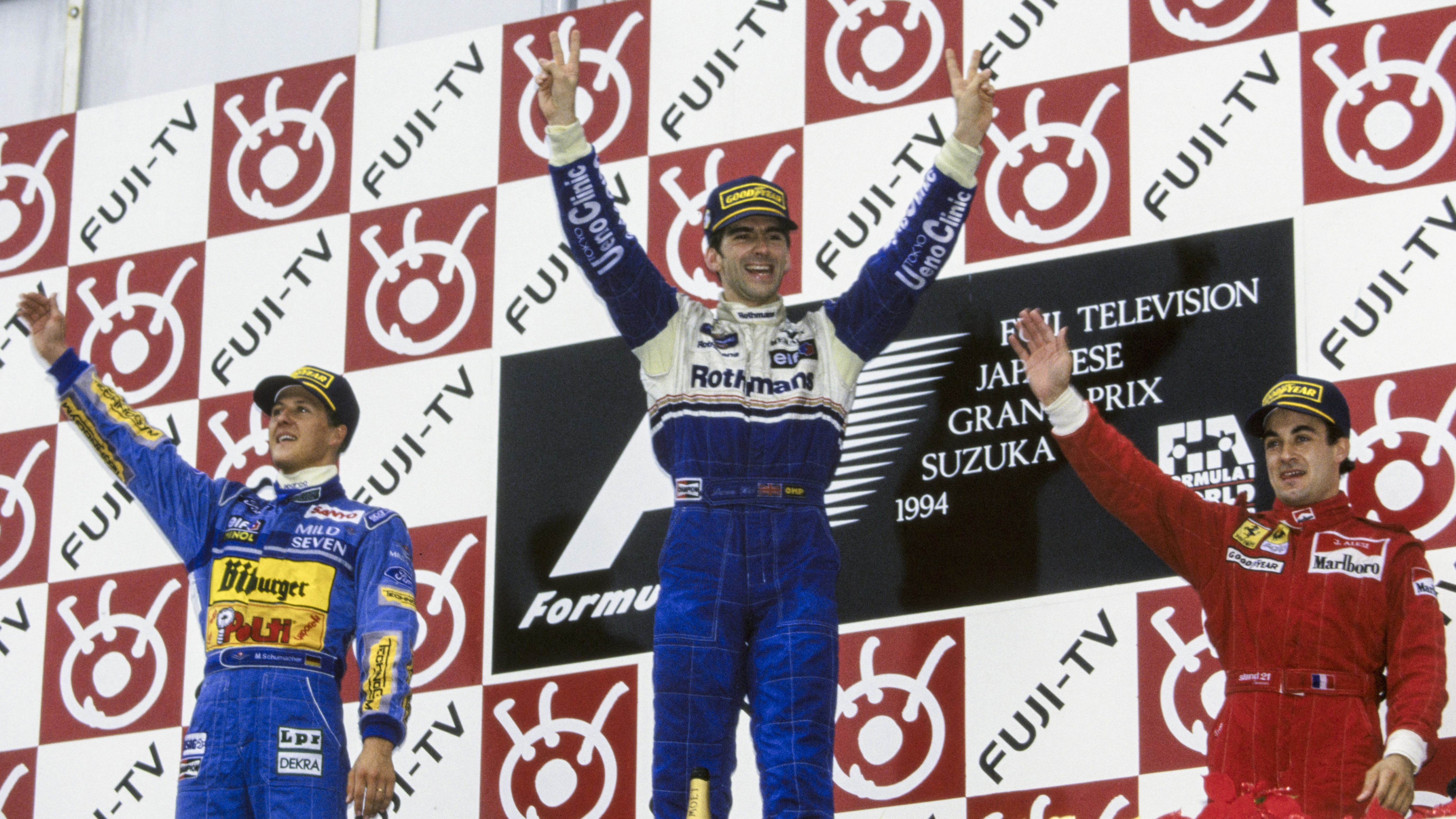
Inevitably, the gap reduced, but then Hill was able to respond to just about keep hold of his aggregate lead. At the beginning of the final lap it was down to 2.457sec in Hill’s favour, but then for the first time since lap 24 the Williams lapped quicker than the Benetton. Hill’s final winning margin was 3.365sec.
They hadn’t run together on track, there had been no wheel-to-wheel competition, but this had been a thrilling duel, and for once Schumacher had come off second-best.
Finding a new level
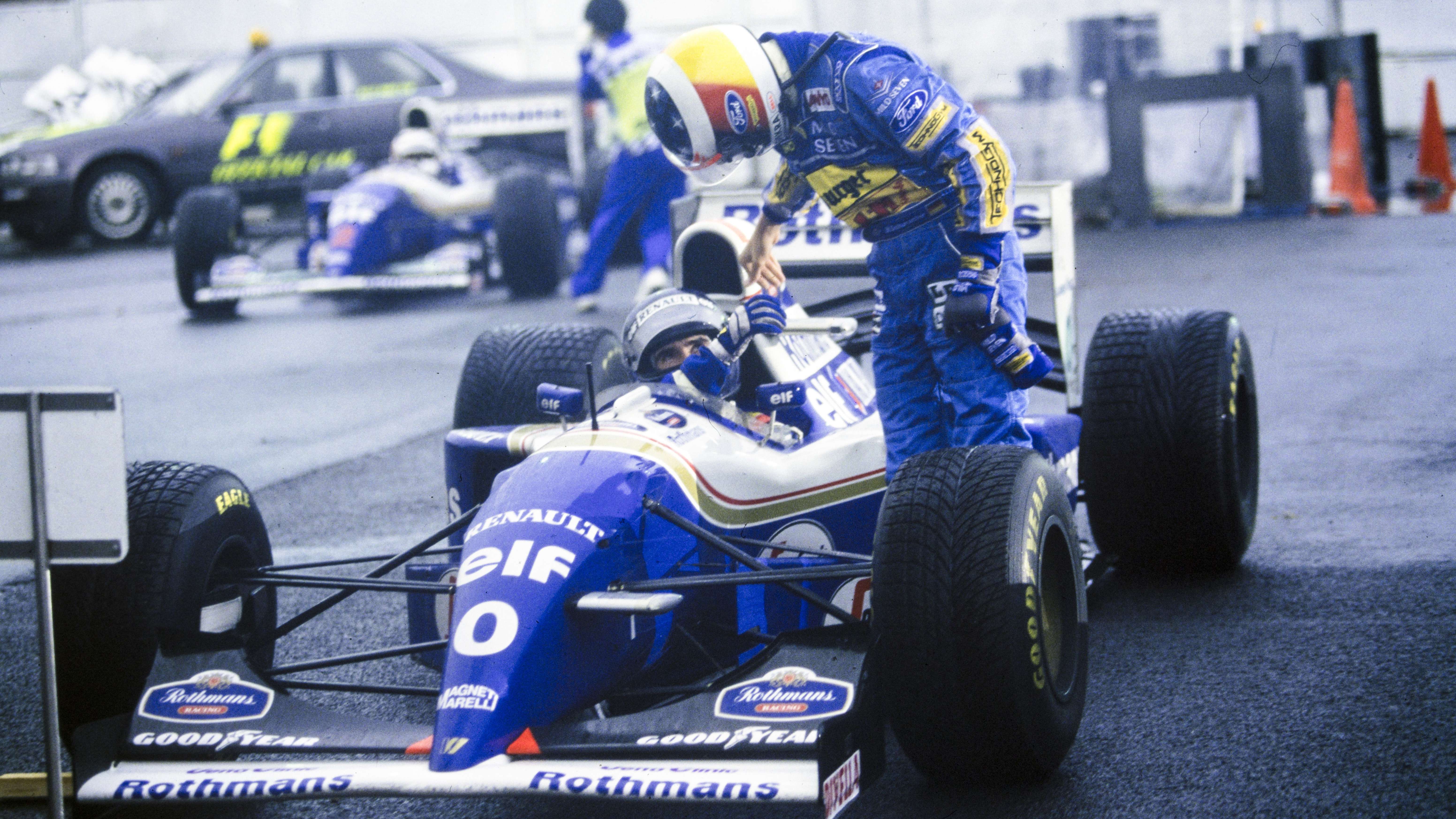
In parc ferme, Schumacher walked across to the Williams and shook Hill’s hand before he emerged from the cockpit. Respect was due.
From Hill’s side, he has since admitted that he rose to the occasion at Suzuka, indicating that the ill-feeling within Williams and the intense pressure of the season changed his mindset. What did it matter anymore? He just had to drive. “I released myself from something,” he has said, before admitting: “I never got to the height I did at Suzuka before, or perhaps ever since.”
Williams technical director Patrick Head has also subsequently made an admission: he didn’t really think Hill had such a drive in him. “Damon just outdrove Michael that day, and not many people did that to Michael in the wet,” he said.
Schumacher’s off day
The race is still one that mystifies Benetton’s Pat Symonds, who was Schumacher’s race engineer back then. He reveals that, for once, Schumacher wasn’t performing at his usually consistent and sky-high best. “That was one of the few times I struggled to get Michael really understanding something,” Symonds said.

“He was highly intelligent, always knew what was going on. But Michael was leading the first part of the race, then Damon led the second part and Michael had to manage that gap because of the aggregated times rule. When Damon went ahead, I was really trying to get Michael to understand that he wasn’t leading, that he'd lost the lead. It was a struggle, it really was. Normally you’d just say to Michael go a little bit faster. This time he just didn’t get it. Really out of character.”
But his next comment reveals that Hill deserves the lion’s share of credit for the result. This wasn’t just about a rare Schumacher off day. “I only think he was driving the thing as fast as it would go,” said Symonds. “I don’t think he had anything left that day. And Damon was bloody quick in that second part of the race.”
A rivalry that lacked equal respect
For most of their time racing together in the mid-1990s, the underlying relationship between Hill and Schumacher was made more awkward by something that was entirely obvious: Schumacher didn’t respect his rival as much as his rival respected him.
“It was quite difficult because I would say Michael didn’t have that much respect for Damon,” Symonds confirmed. “Michael, like all sportsmen, had this incredible self-esteem and they absolutely think they are the best at what they do and no one else gets near them. Michael certainly thought that with Damon.
“Damon didn’t have the sort of pedigree that some of the others had from the lower formulae. If ever Damon beat Michael it was absolutely the car, it wasn’t Damon in Michael’s mind. I think Michael underrated Damon, to be honest.”
A title won on a sour note
The victory allowed Hill to close back to within a point of Schumacher in their battle for the Championship, with just the Australian Grand Prix in Adelaide to come. How it was decided has gone down in folklore, and not in a good way. Once again, Hill raised his game and pushed Schumacher, and this time on a dry track.
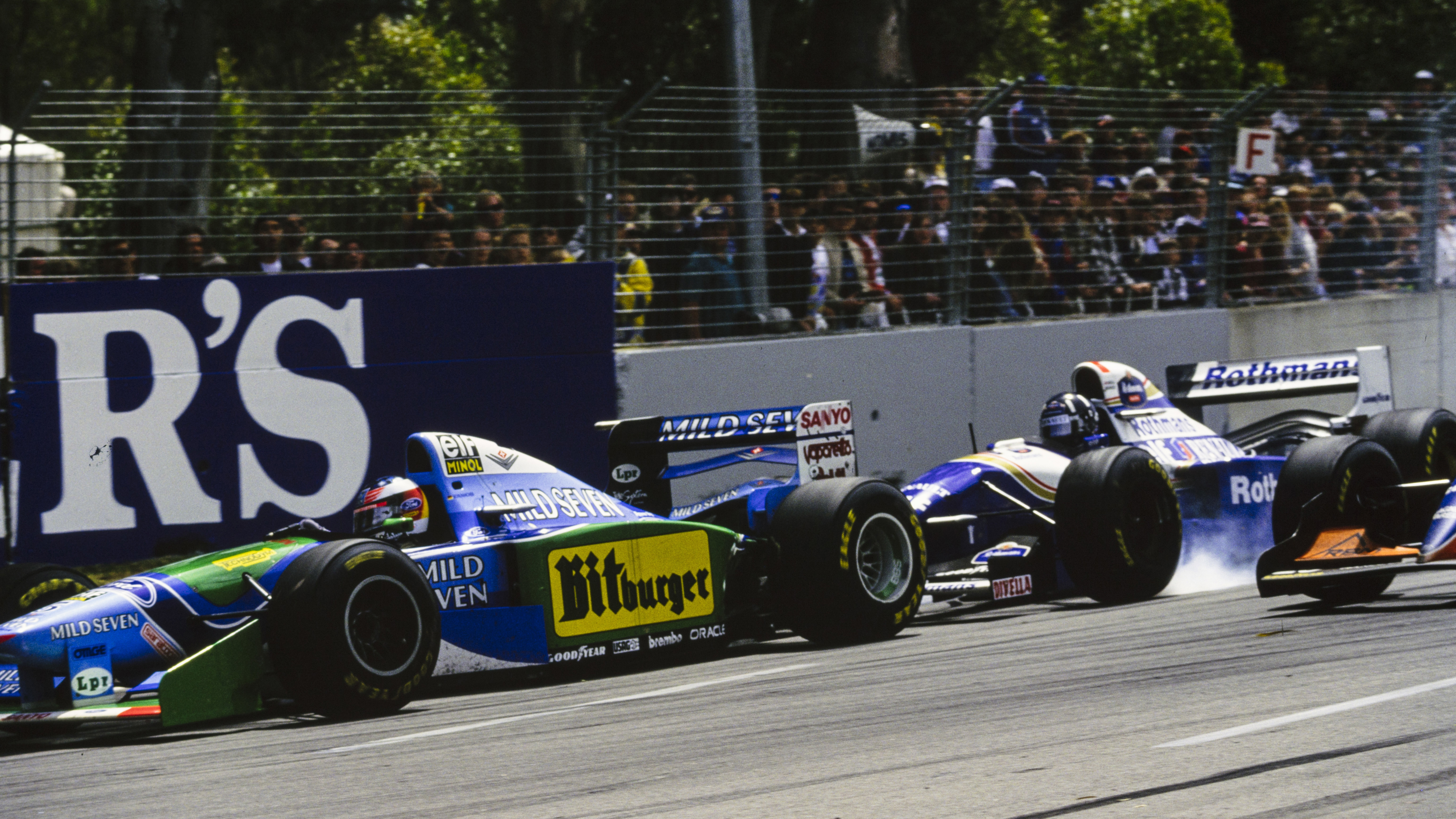
The German, under pressure, went off the circuit and when Hill tried to pass he resorted to what most consider a professional foul. The collision between the pair left the Benetton on the sidelines and the Williams with race-ending suspension damage. Schumacher, clearly the fastest driver of the season, was World Champion, but how he won it would colour his reputation forever after.
In the wake of Australian, Schumacher was conciliatory towards Hill — perhaps not surprising in the awkward circumstances. As recently as the Jerez race he’d been quoted as describing Hill as a “little man” but now claimed a different view: “Earlier in the year I said that I didn’t have the same respect for Damon as I do for some of the others. I have to admit that I was wrong.
“What he has done over the past two races in particular has been a proper and fantastic job. He has been a great rival and I must apologise for what I said.”
He didn’t apologise for driving into Hill though…
As for the rivalry, tension returned and was heightened in 1995 as Hill and Williams struggled in the wake of Schumacher and Benetton’s eminence. But all these years later, Hill can take some solace over the defeats he suffered. He always has Suzuka 1994, and the day he beat Michael Schumacher at his own game.
Tickets are now available for the 2026 Goodwood Festival of Speed. If you’re not already part of the GRRC, you can sign up to the Fellowship today and save ten per cent on your 2026 tickets and grandstand passes, as well as enjoying a whole host of other on-event perks.
Images courtesy of Getty Images.
formula 1
f1
f1 1994
damon hill
michael schumacher
Suzuka
the rivals



Subscribe to Goodwood Road & Racing
Thank you, you’re now subscribed

How many hay bales are used at FOS?
For the last two years, 5,800 bales have been recylced into the biomass energy centre to be used for energy generation