Ducati at 100: A century of speed
Goodwood will celebrate 100 years of Ducati at the 2026 Festival of Speed presented by Mastercard, shining a spotlight on one of the world’s most influential and beloved motorcycle brands with a Balcony moment on Thursday 9th July
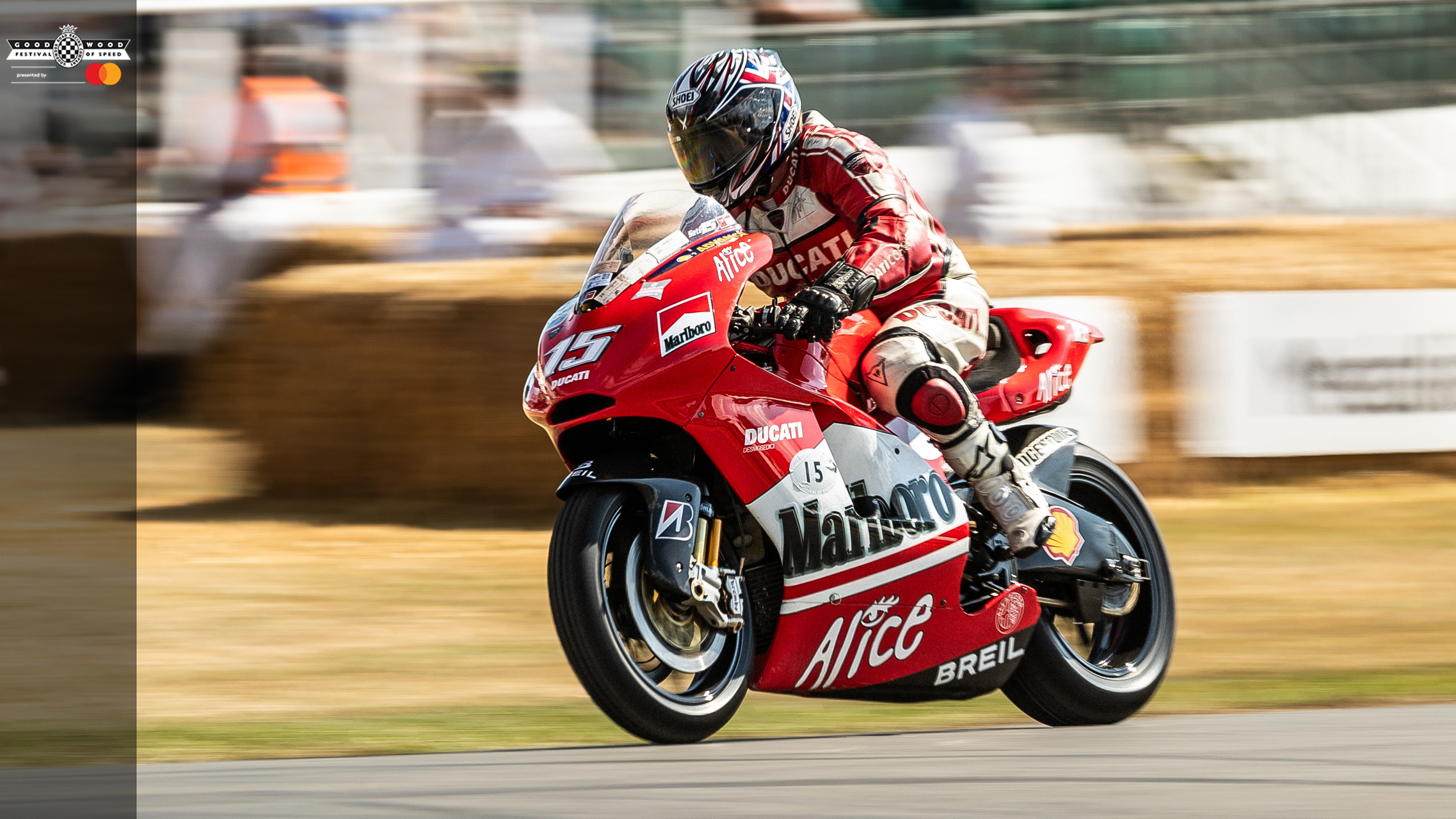
In modern times, the red bikes from Italy have become synonymous with two-wheeled motorsport, claiming more than 50 titles across the world since its arrival as a regular competitor in the World Superbike Championship in 1988. In the 21st century, Ducati has claimed seven MotoGP Manufacturers titles, including six on the spin from 2020-2025.
But this success is a world away from Ducati’s century-old origins…
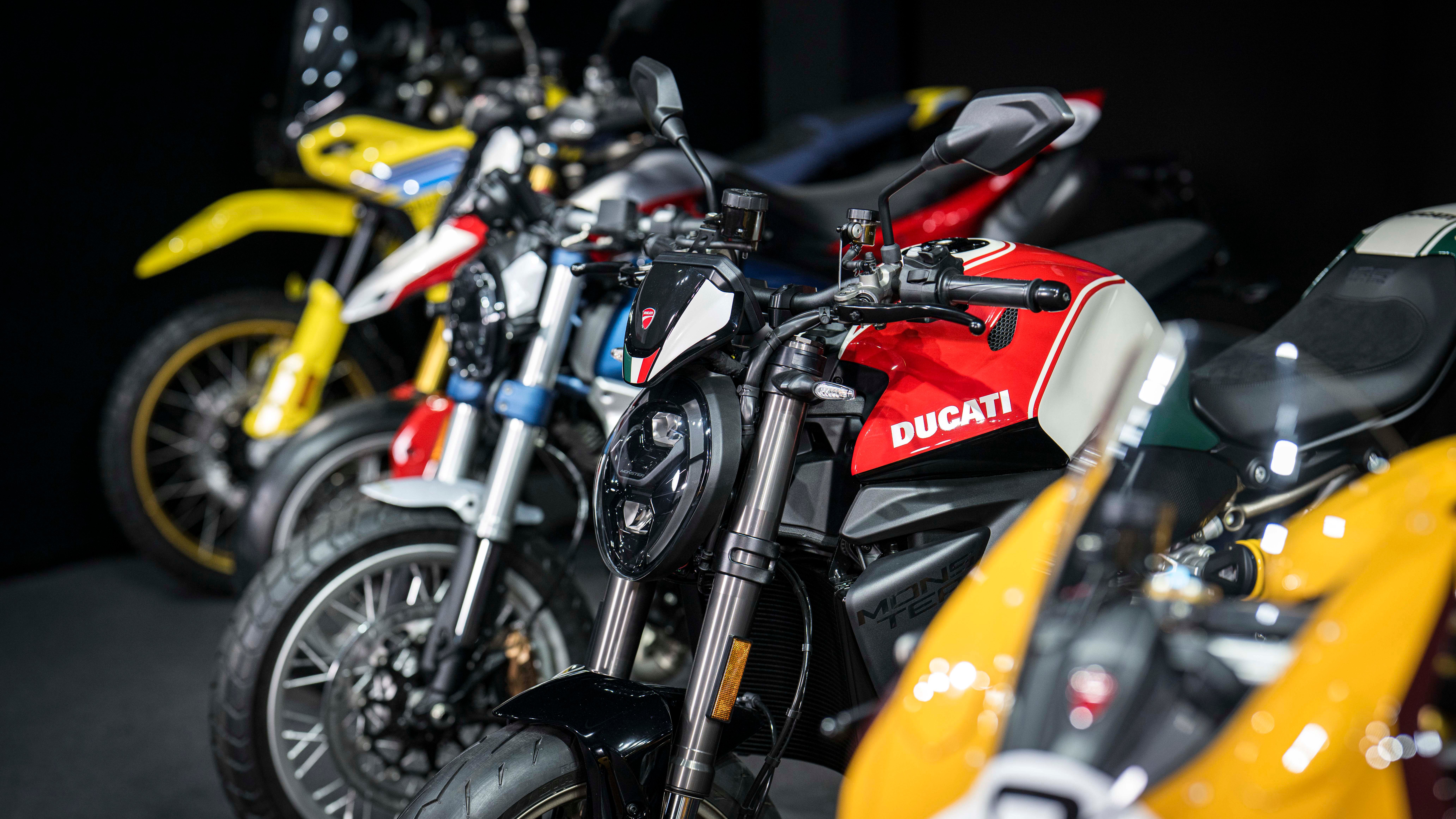
Ducati’s association with motorbikes didn’t begin until 1950, when the four-stroke 60 was first introduced. That bike utilised a version of the 48cc Cucciolo engine, which had previously been developed as a clip-on for motorised bicycles in 1945 — a far cry from the 1,000cc 250PS (184kW) monster currently competing in the MotoGP.
Instead, for nearly a quarter of a century the Ducati name was associated with a short-wave radio transmitter, a technological phenomenon that developed into a hugely successful business. The Borgo Panigale factory became the home of Società Scientifica Radio Brevetti Ducati, but it was a target for Allied bombing during World War II and was destroyed on 12th October 1944.
Ducati celebrates its centenary at the 2026 Festival of Speed
Read more
The motorcycle brand we know today was born from the rubble, energised by a new ambition to get Italy moving again in the wake of the conflict. Stratospheric economic growth fuelled a new affluence among the Italian public, and Ducati’s bicycle motor was the perfect mobiliser for a revitalised nation.
But, as with all things powered by combustion, the quest for simple mobility was soon overtaken by an appetite for speed. Early business for Ducati was slow as cheap cars became readily available on the market, but technological progress continued apace nonetheless.
While still focusing on diminutive 50 and 100cc bikes, Ducati machinery was renowned for breaking speed records throughout the 1950s and achieved plenty of sporting success in Italy and across Europe.
They captured the attention of a certain Mike Hailwood, who rode to the 125 and 250cc ACU Championships atop Ducati machinery in 1960.
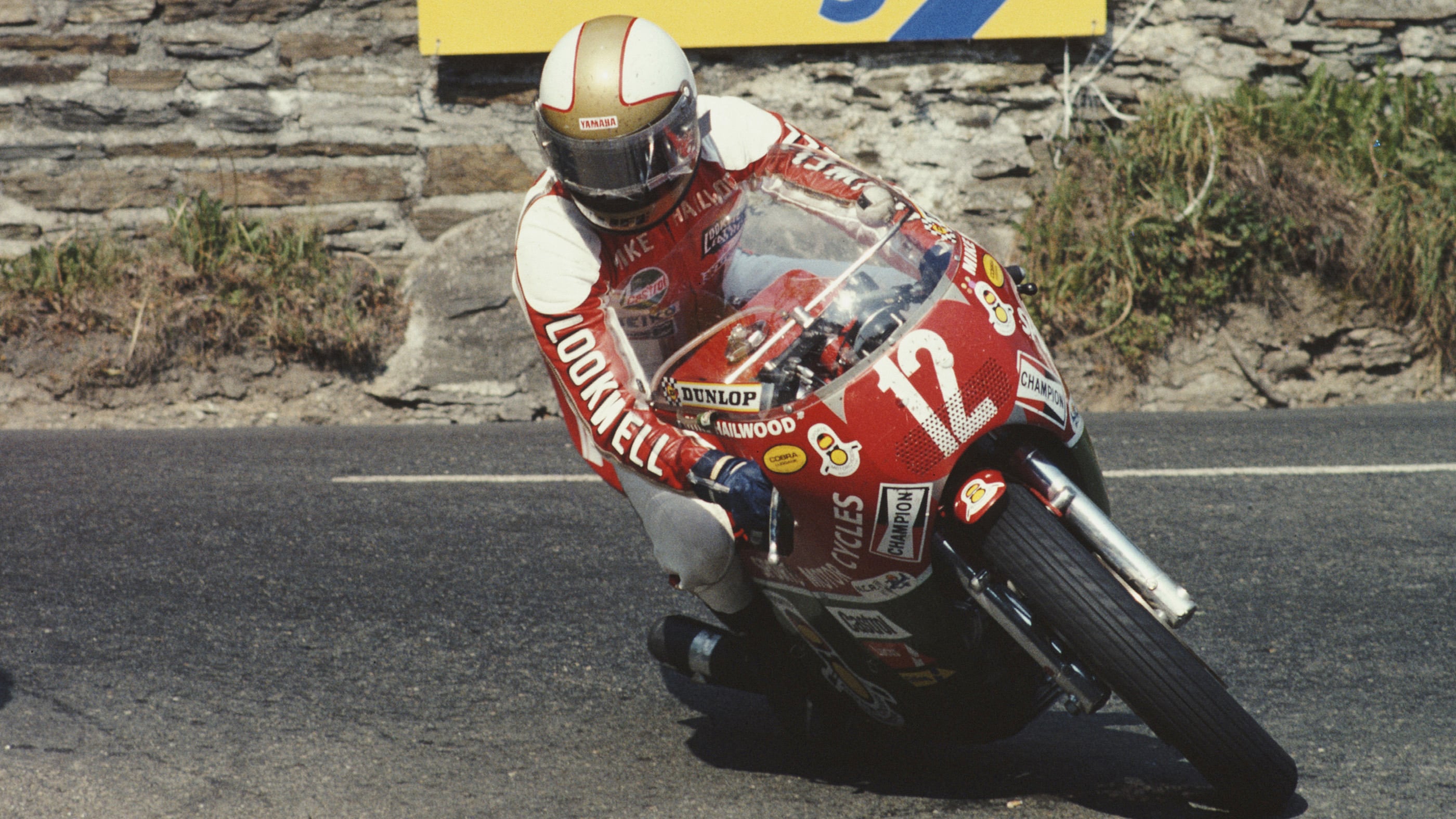
Mike Hailwood made a winning return to the Isle of Man TT in 1978 aboard a Ducati 900 NCR after an 11 year absence.
Image credit: Getty ImagesDucati’s design philosophy was increasingly geared towards performance, and in 1964 the Mach 1 set a new benchmark for the Italian brand. With a 250cc engine it was capable of breaking the 100mph barrier, and was recognised at the time as the fastest 250 production bike on the market. It also brought the marque its first victory at the Isle of Man TT when it triumphed in the 250cc production class in 1969.
By the 1970s, Ducati was beginning to experiment with higher capacity engines, and after several victories in the annual 24 Hours of Montjuic, a new bike was developed in the name of greater motorsport successes.
The Ducati 750 Imola Desmo won at the first attempt at the inaugural Imola 200 in 1972, which was not only a huge moment for the brand, but also for its newly developed V-twin engine. Ducati became a global brand virtually overnight.
Capacity became the name of the game, and the 750 was quickly overshadowed by the 860. While this new, more powerful bike brought further success on the racetrack, its bold styling courtesy of Giorgetto Giugaro stifled sales, and a redesign was deemed necessary to bring it back in line with consumer trends.
It was with a modified version of that engine that Ducati claimed its first World Championship in 1978, when Hailwood won the TT Road Racing title atop a 900 NCR, a Formula 1 specification derivative of a contemporary road bike.
And the success kept on coming; several TT victories came throughout the early 1980s thanks to Tony Rutter’s mastery of the 600 TT2, while the 750cc machinery remained competitive particularly in Italy.
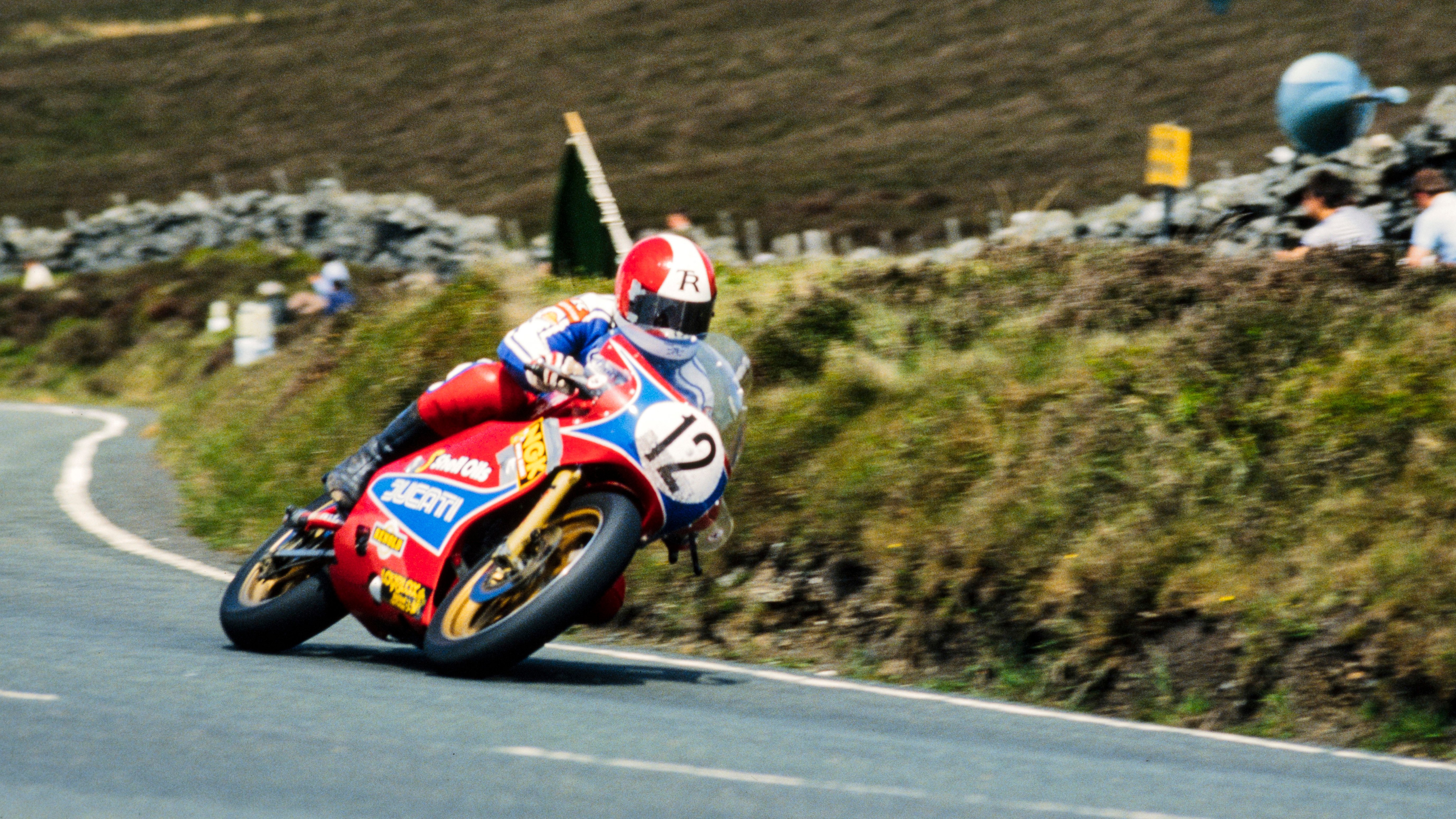
Tony Rutter riding a Ducati at Snaefell Mountain Course at the 1984 Isle of Man TT.
Image credit: Getty ImagesBut the world was evolving. The likes of Honda and Yamaha were stealing a march on the global motorcycle market and Ducati required quick progress to keep up. Motorbikes had become more than simply a means of transport; they were products of passion and lifestyle.
The Desmoquattro engine was the line in the sand that signified the beginning of a new era for the Italian marque. A water-cooled, four-valve motor, Ducati introduced its next-generation engine in 1986 with the experimental 748 IE before making it available on a production bike, the 851, for the first time in 1987.
After a handful of years without any major sporting success, this brand-new V-twin engine re-established Ducati as a dominant force in motorcycle racing. After Baldassarre Monti rode an 851 to the Italian Superbike Championship in 1989, Raymond Roche went one better in 1990 when he claimed Ducati’s first World Superbike Championship.
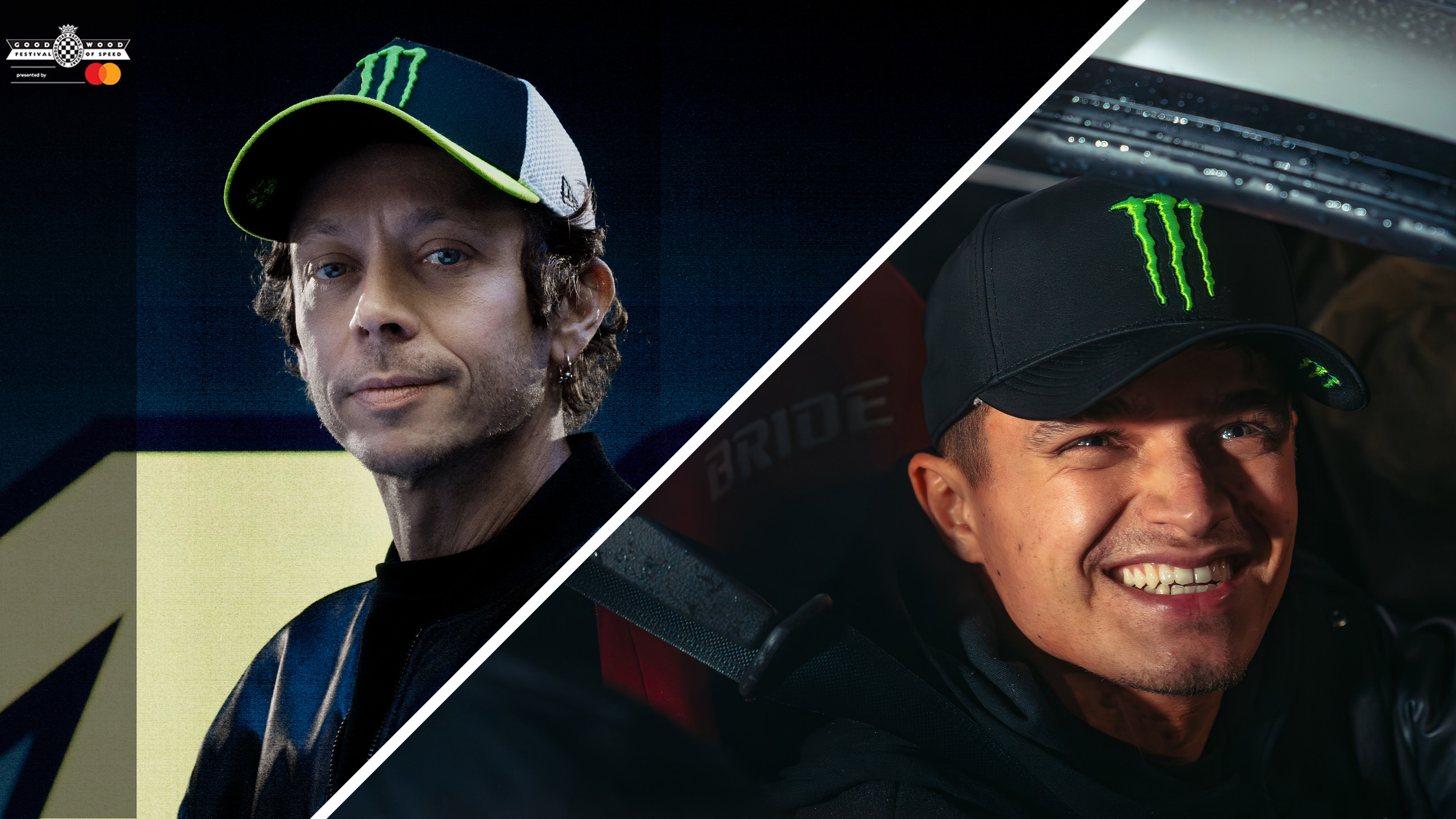
Rossi and Norris set for Monster celebration at Festival of Speed
Read more
That, it turns out, would be the moment that transformed the brand forever.
Ducati made the World Superbike scene its own for much of the next two decades. With Doug Polen, Carl Fogarty, Troy Corser, Troy Bayliss, Neil Hodgson, James Toseland and Carlos Checa, Ducati bikes won 13 World Riders’ titles between 1991 and 2011, while the marque captured 17 World Manufacturers’ crowns all told.
Championships flowed from all directions as Ducati reigned in Britian, Italy, America, Australia, Germany, Austria and France.
The Desmoquattro was the basis for nearly 20 years of remarkable success, as the 851 made way for the 888 before the arrival of the legendary 916. The 996 continued the trend, albeit with the revised Testastretta engine which adjusted the valve angle and massively increased performance potential, before the 999 and 1098 completed that V-twin's remarkable lineage.
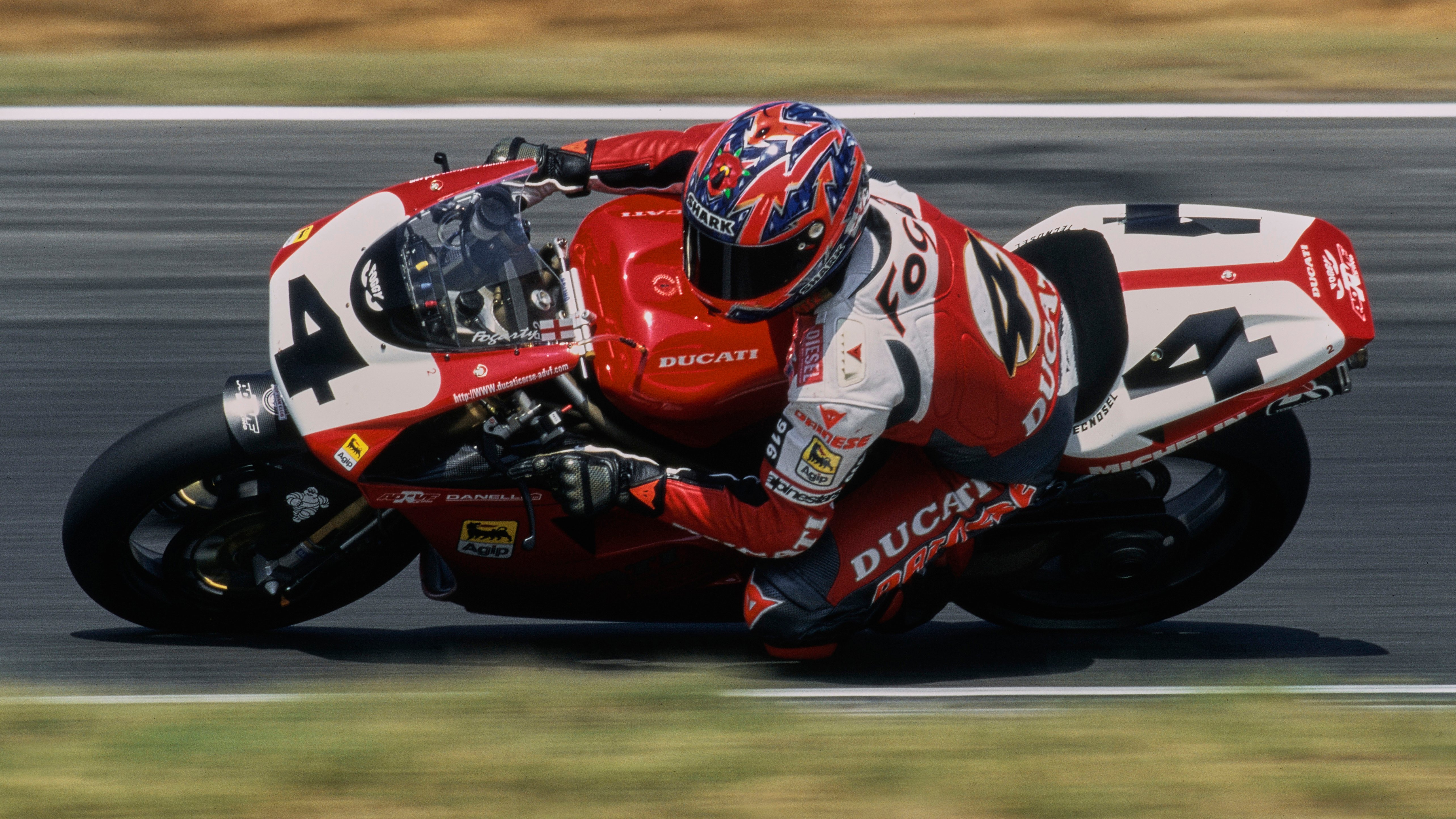
Carl Fogarty rides a Ducati 916 R at the Hockenheimring in the 1997 FIM Superbike World Championship.
Image credit: Getty ImagesSuch was the scope of the brand’s sporting success throughout the 1990s that a new racing division, Ducati Corse, was founded in 1999 to provide a more focused and optimised base from which to go racing.
Alongside its continued success in Superbikes, the formation of a bespoke racing team, along with an impending rule change that saw the long-standing 500cc two-stroke engines replaced by 990cc- four-strokes, opened the door for Ducati to return to Grand Prix racing for the first time since 1972.
Back then, its arch Italian rivals MV Agusta were the undisputed benchmark, led by the legendary Giacomo Agostini. In 2003, it was the mastery of Valentino Rossi that stood between Ducati and MotoGP glory.
Powered by a new V4 engine, the team in red got immediately up to speed, and Loris Capirossi took victory in Catalunya to help Ducati to a second-place finish in the Manufacturers’ standings behind Honda in 2003. The Italian favourite captured more race victories in 2005 and 2006, but it was the arrival of Casey Stoner for 2007 that carried Ducati to the summit.
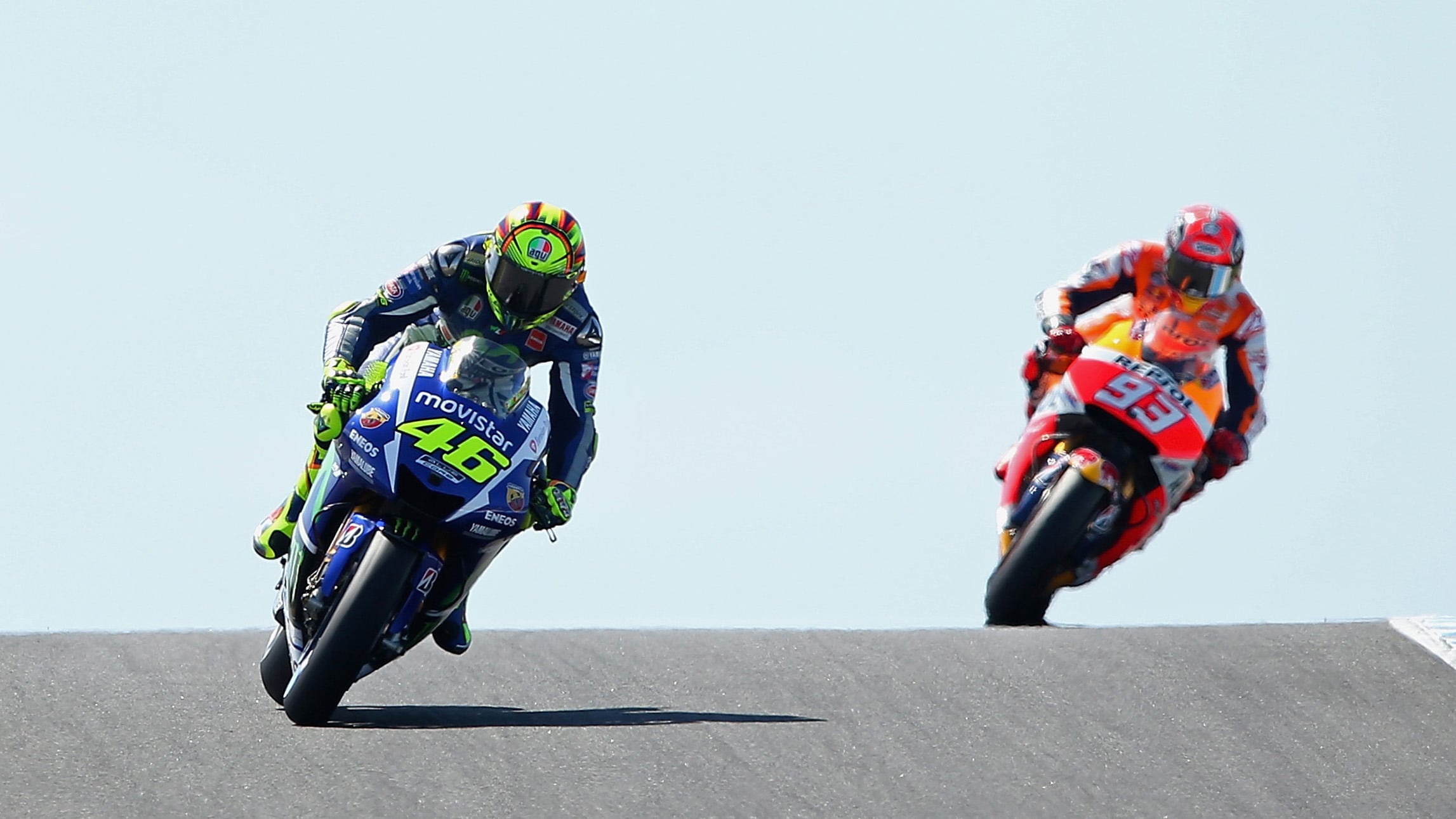
In a remarkable season, Stoner claimed ten Grand Prix wins as he and Ducati dominated all three Championships and finally lifted the Italian brand to the pinnacle of two-wheeled racing.
The Australian came close to making it a double in 2008, but while the red bikes remained a fixture on the MotoGP grid for the next decade, another World Championship remained out of reach.
The drought was ended in 2020, though, when the consistency of the Desmosedici GP20 saw Ducati overthrow Yamaha, Suzuki and KTM to become Constructors’ Champions.
That season signalled the beginning of a new era of dominance for the Italian brand as Ducati remains on a run of six consecutive Constructors’ titles, supplemented by four Teams’ Championships and three Riders’ crowns claimed by Pecco Bagnaia and Marc Márquez.
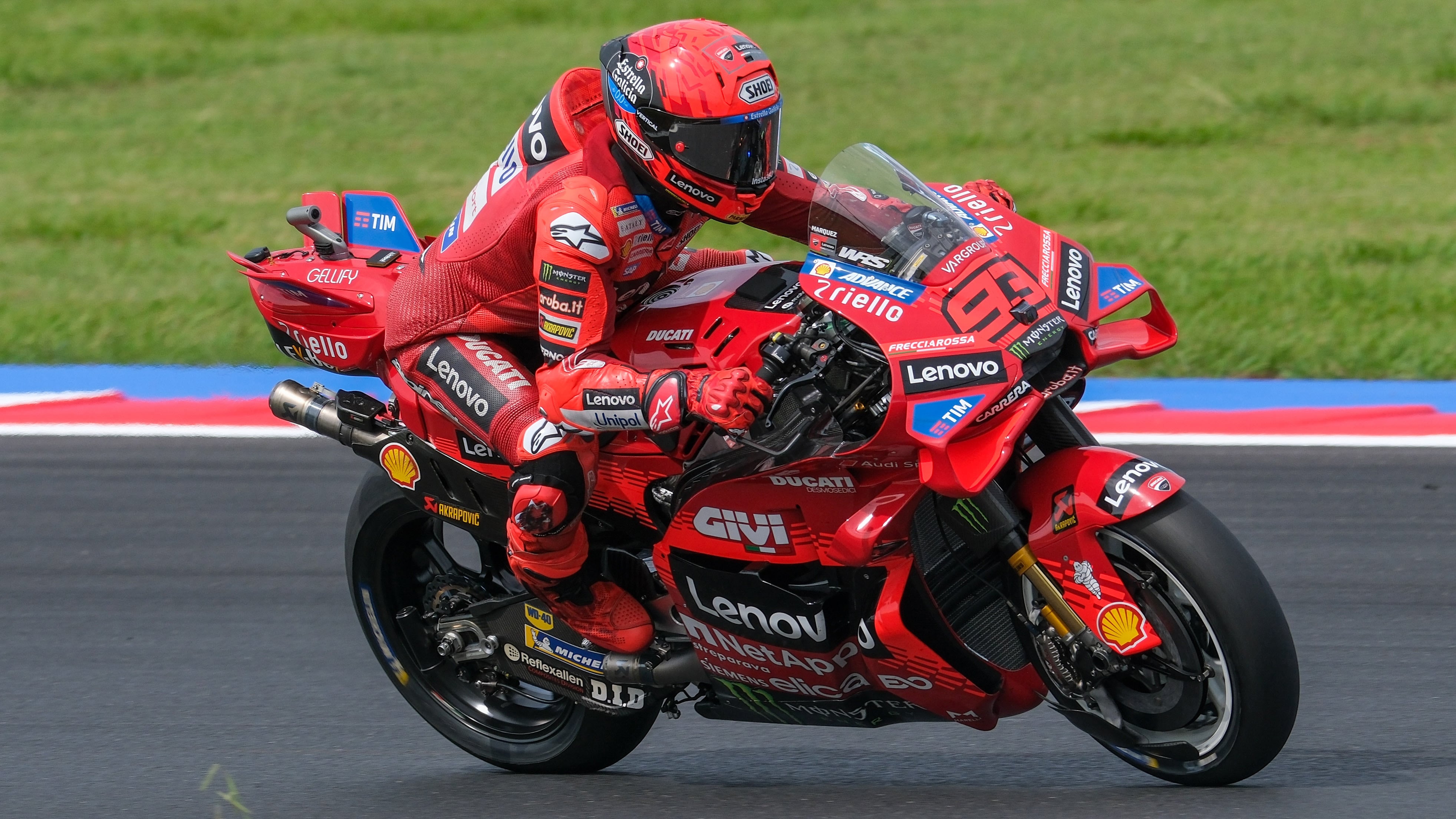
Marc Márquez won the 2025 MotoGP title riding the Ducati Desmosedici GP25.
Image credit: Getty ImagesMeanwhile, Ducati has also enjoyed recent success in Superbikes. Álvaro Bautista claimed back-to-back titles in 2022 and ‘23, completing one of the more dominant seasons in history along the way, while 2026 is currently on course to be another astonishing year for the team, as 26-year-old Nicolò Bulega continues an unbeaten run of 18 straight race wins atop of the Panigale V4 R.
It’s 100 years young for Ducati in 2026. After a century, it’s at its peak both in terms of sporting prowess and commercial success. Motorsport is still a huge part of what makes this brand so popular, but the breadth of machinery — everything from homologation versions of the Panigale and Desmosedici to the beloved Monster and the retro-styled Scrambler — showcases just how far Ducati has grown from those humble 48cc beginnings.
Tickets for the Festival of Speed are limited. Only Thursday admission remains but hospitality packages for all four days are available. Missed out on a ticket for Friday or Saturday? Find out how you can access our sold-out days with one of our new packages.
If you’re not already part of the GRRC, joining the Fellowship means you can save ten per cent on your 2026 tickets and grandstand passes, as well as enjoy a whole host of other on-event perks.
race
historic
ducati