Le Mans ‘66: The story of Ford’s legendary triumph
The stakes have rarely been higher in a motor race than they were for Ford ahead of the 1966 Le Mans 24 Hours. Having thrown a substantial proportion of the company’s budget at the development of the GT40, Henry Ford II could not afford for his ambitious motorsport endeavours to fail.

Having conquered the American automotive market, Ford had grand plans to expand worldwide, and motorsport success was seen as the ideal launch pad. But, following an acrimonious end to negotiations that would have seen Ford complete a buyout of Ferrari, Ford’s attention turned to a new goal.
He made it his mission not just to beat Enzo Ferrari, but to embarrass him, and his battlefield of choice was the Circuit de la Sarthe and the Le Mans 24 Hours.
By 1964, Ferrari had won the Le Mans 24 Hours five times in six years, the Italian marque was an unstoppable force in sportscar racing. The previous year, the legendary Colombo V12 had carried the works Ferrari 250 P to a dominant 16-lap win in the hands of Ludovico Scarfiotti and Lorenzo Bandini.
Behind them were five other Ferrari cars, their closest rivals an experimental Rover-BRM turbine car driven by Graham Hill and Richie Ginther, and an AC Cobra powered by Ford’s 4.7-litre V8, 29 laps behind the winning car.
No less than a miracle was required for Ford to overcome the might of the Prancing Horse.
Enlisting the help of Lola’s owner and designer Eric Broadley, who had made an impact at Le Mans in 1963 with the Mk6 prototype, and Aston Martin stalwart John Wyer, Ford began development of a new car at Lola’s base in Bromley.
The first completed car, GT/101, was unveiled on 1st April 1964. It was powered by an Indianapolis-spec 4.7-litre engine from a Ford Fairlane and was 40 inches tall. The Ford GT40 was born.
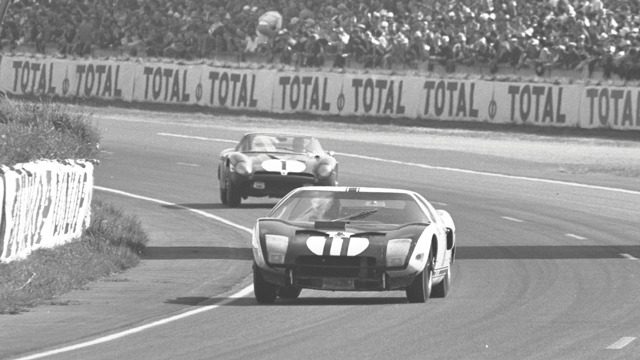
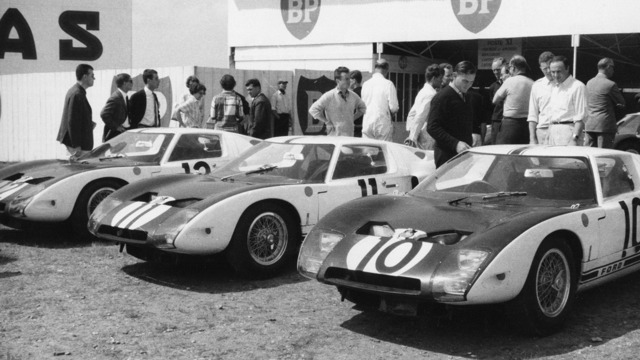
Two weeks later, a pair of GT40s were shipped off to the Circuit de la Sarthe for testing, but the car was still in its very early days of development, so Ford’s first effort at the Le Mans 24 Hours just 11 weeks after unveiling its new racer was never likely to yield any great success.
Three GT40s started the race, the best runner making it 14 hours until a gearbox failure brought Ford’s first efforts to a disappointing end. But it wasn’t all bad news. The GT40 had at least proved to be monumentally fast in the early stages, actually leading the fleet of Ferraris by 40 seconds while covering a record 15 laps during the opening hour.
If Ford could figure out how to make its new car reliable, winning at Le Mans, and a victory over Ferrari, was a possibility.
The ante was raised in 1965. Ford had proven itself a threat to Ferrari and continued to develop at a rapid pace after placing its GT40 programme under the watch of Shelby American.
Now fitted with more powerful 4.7-litre Cobra engines and a more reliable ZF gearbox, it was thought the GT40 would make a major step forward, and victory at Daytona was a positive sign.
But Ford had another ace up its sleeve. Modifications were made to allow the fitment of a new 7.0-litre V8 NASCAR engine developed from a Ford Galaxie block, and two new prototypes were taken to Le Mans for a second attempt at glory.
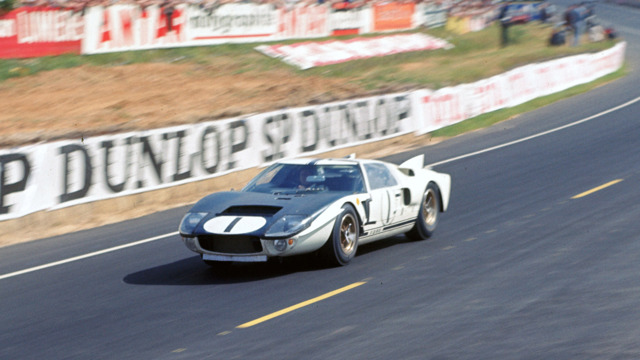
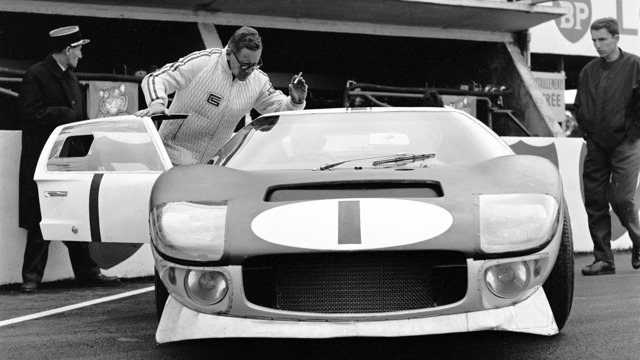
Early signs from the new, more powerful GT40X were good. It was blindingly quick and set a new lap record during practice.
The race, however, was a disaster. In all, six GT40s lined up for the 24-hour race, including two of the new 7.0-litre GT40X cars which had been rushed to the start line, but none of them made it past the seventh hour.
Ferrari, on the other hand, made it six wins in a row at La Sarthe, and seven in the last eight, albeit with a customer NART 250 LM.
Ford’s reputation had taken a severe knock, and to make matters worse, Ferrari announced the sale of a portion of its business to Fiat. There was no two ways about it, the Ford GT40 simply had to beat Ferrari in 1966.
By now, millions of dollars had been spent on the GT40 programme, and Ford went all out in the name of redemption. Preparations for the 1966 Le Mans 24 Hours began mere hours after the 1965 race was over, and work commenced to ensure the GT40X, now known as the Mk2, would finally be victorious.

A comprehensive restructure of Ford’s motorsport operation took place, John Cowley was brought over from NASCAR to lead the team, and Shelby American embarked on a painstaking development program under the supervision of Ford’s Special Vehicle Activity department.
The formation of a Le Mans Committee ensured that no stone would be left unturned in the 11 months ahead of a return to La Sarthe.
Ford also expanded its roster of representative teams. Alongside Shelby, Holman and Moody, Inc. and Alan Mann Racing were allocated works Mk2s for the 1966 Le Mans 24 Hours. In all, 11 GT40s arrived in France for a third attempt at victory. The original 4.7-litre Mk1 cars would continue to race in the new Group 4 5.0-litre class, and the eight 7.0-litre Mk2s in the Group 6 prototype class.
Ferrari meanwhile had amassed its own 11-strong fleet of cars as it sought to continue its unprecedented streak of success. The stage was set for one of history’s most significant races.
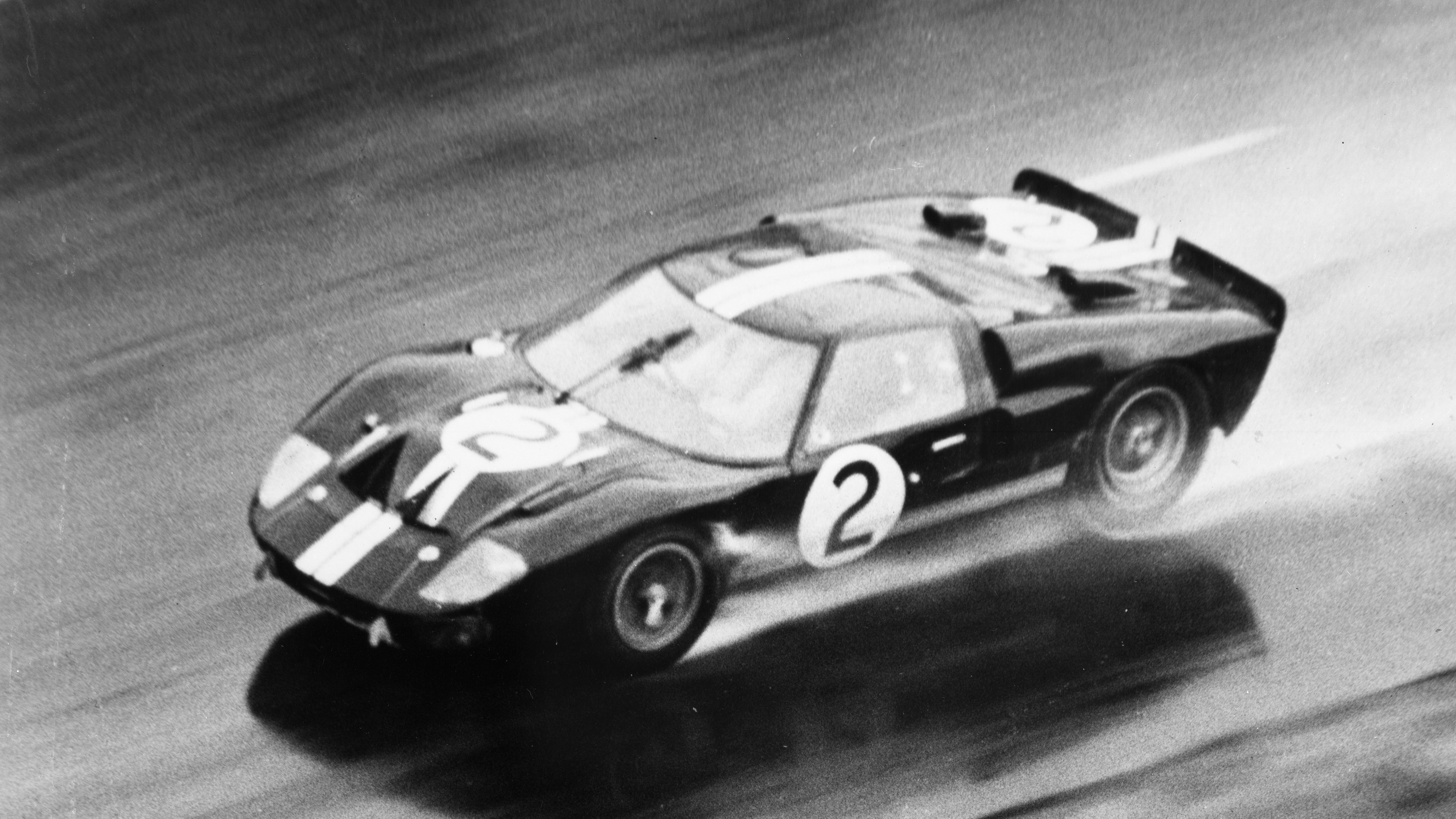
The vastly improved GT40 Mk2 was more robust than in previous years. The engine, which was barely anything more than what a Ford Galaxie customer would expect to find under their bonnet, had undergone extensive testing to perfectly understand the stress it could tolerate over the 24-hour distance. The four-speed manual transmission was engineered to massage the V8 along the torturous Mulsanne Straight. The aerodynamics had been honed to ensure stability as the drivers hit speeds of more than 200mph.
Dominant victories at Daytona and Sebring at the start of 1966 were cause for optimism in the Ford camp, but the challenge of Le Mans was far greater.
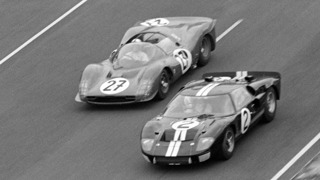
As had been the case in previous years, the GT40 was the fastest car around the 8.364-mile circuit during practice, Dan Gurney’s top effort of 3:30.6 was three seconds quicker than the fastest Ferrari, but it would all come down to whether the Fords could go the distance.
Henry Ford II was the honorary starter for the race on Saturday afternoon, and he waved off his cars as rain began to fall. Despite the tricky conditions the Fords were comfortable at the front in first, second and third positions, with Ferrari just barely clinging on in fourth.
Heavy rain through the night saw the track lined with damaged cars as accidents claimed several victims through the high-speed Esses. At the halfway stage Ford locked out the top six places in the field, but mechanical attrition eventually accounted for the works GT40s of Donohue/Hawkins, Whitmore/Gardner, Andretti/Bianchi and Hill/Muir.
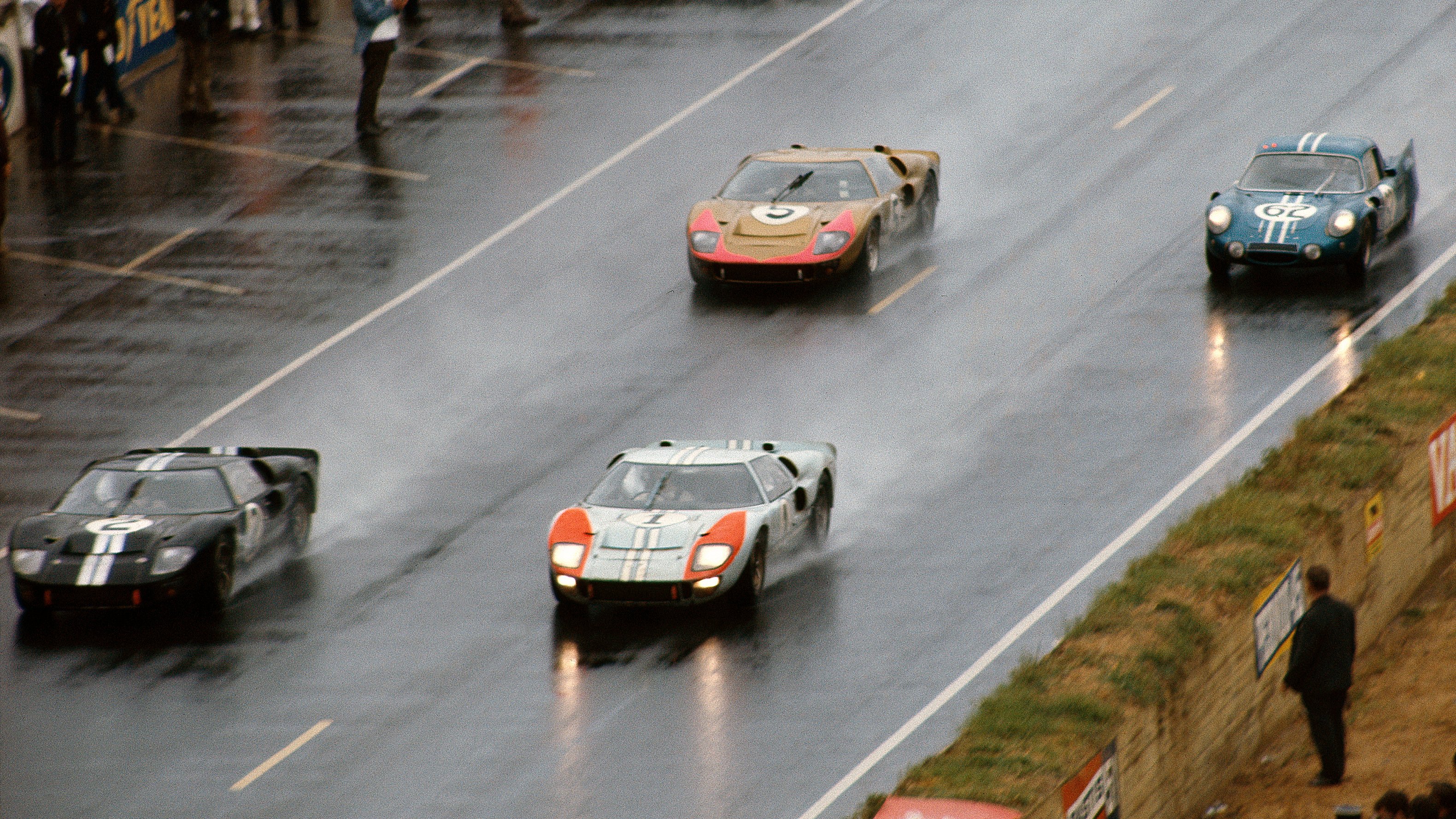
That still left four cars running comfortably at the front, and with Ferrari reeling after a challenging night saw their best runner down in 12th place, Ford gave the order on Sunday morning for them all to slow down, preserve their cars and bring home the most important victory in Le Mans history.
There was more to this story than just the redemption of Ford, however. Claiming such a historic win for the company had become a coveted accolade among the drivers, and Ken Miles in particular felt as though his extensive work as the GT40’s primary test driver had earned him the right to claim the chequered flag.
He and Dan Gurney continued to race hard as the sun rose over the Circuit de la Sarthe. Their decision to push on threatened to scupper all of Ford’s preparations however as Gurney’s car blew a head gasket and retired from the lead.
His demise left only three GT40s left in the race, and although they were now unchallenged out at the front, Henry Ford’s desire to beat Ferrari was insatiable.
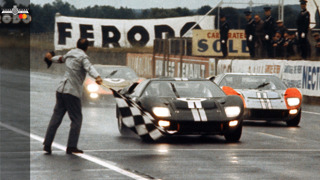
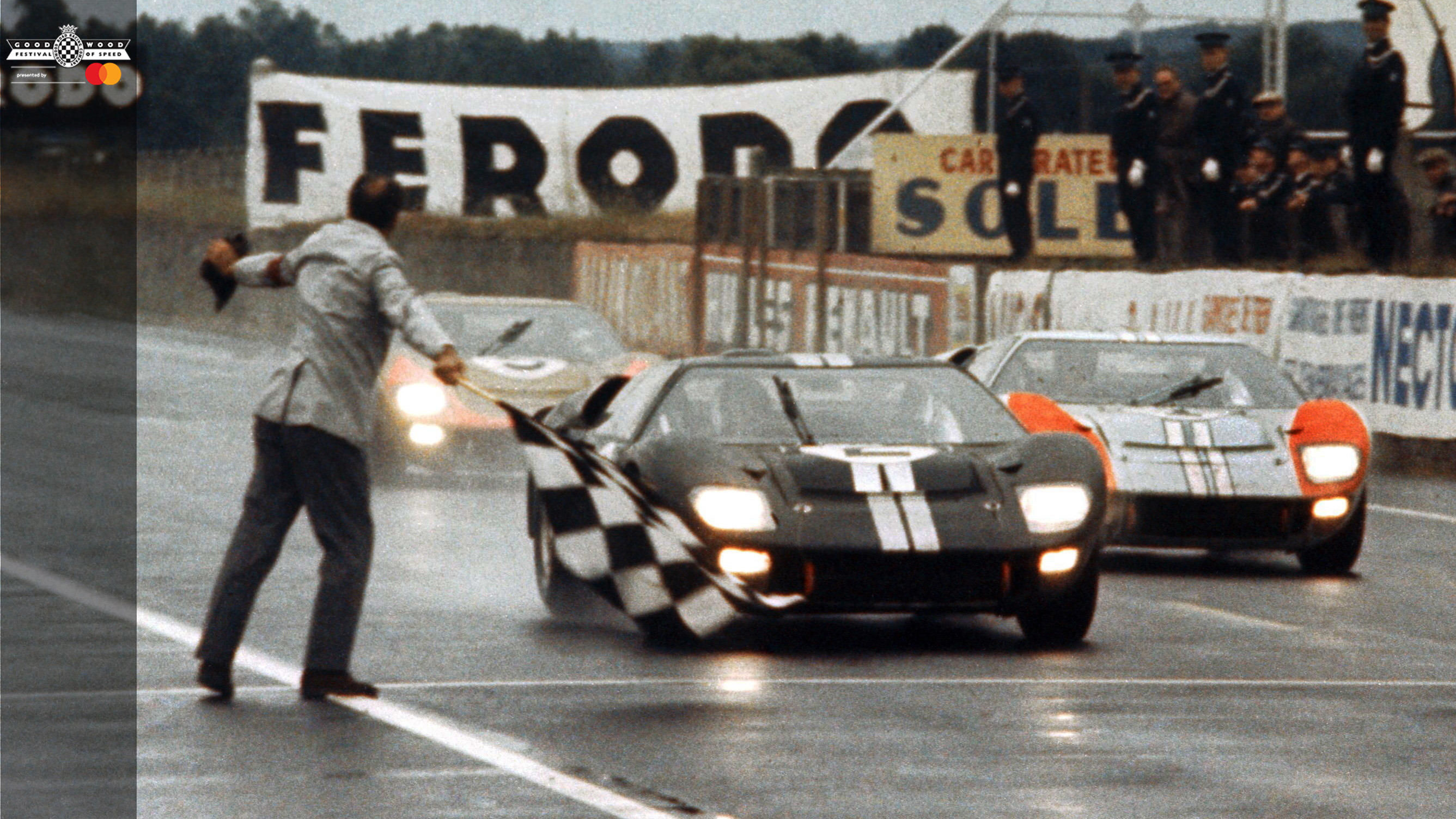
The directive was given for the three remaining cars to orchestrate a formation finish, the ultimate PR stunt to showcase Ford’s remarkable victory. The final six hours of the race saw Ford's three cars slow dramatically and prepare for a momentous moment.
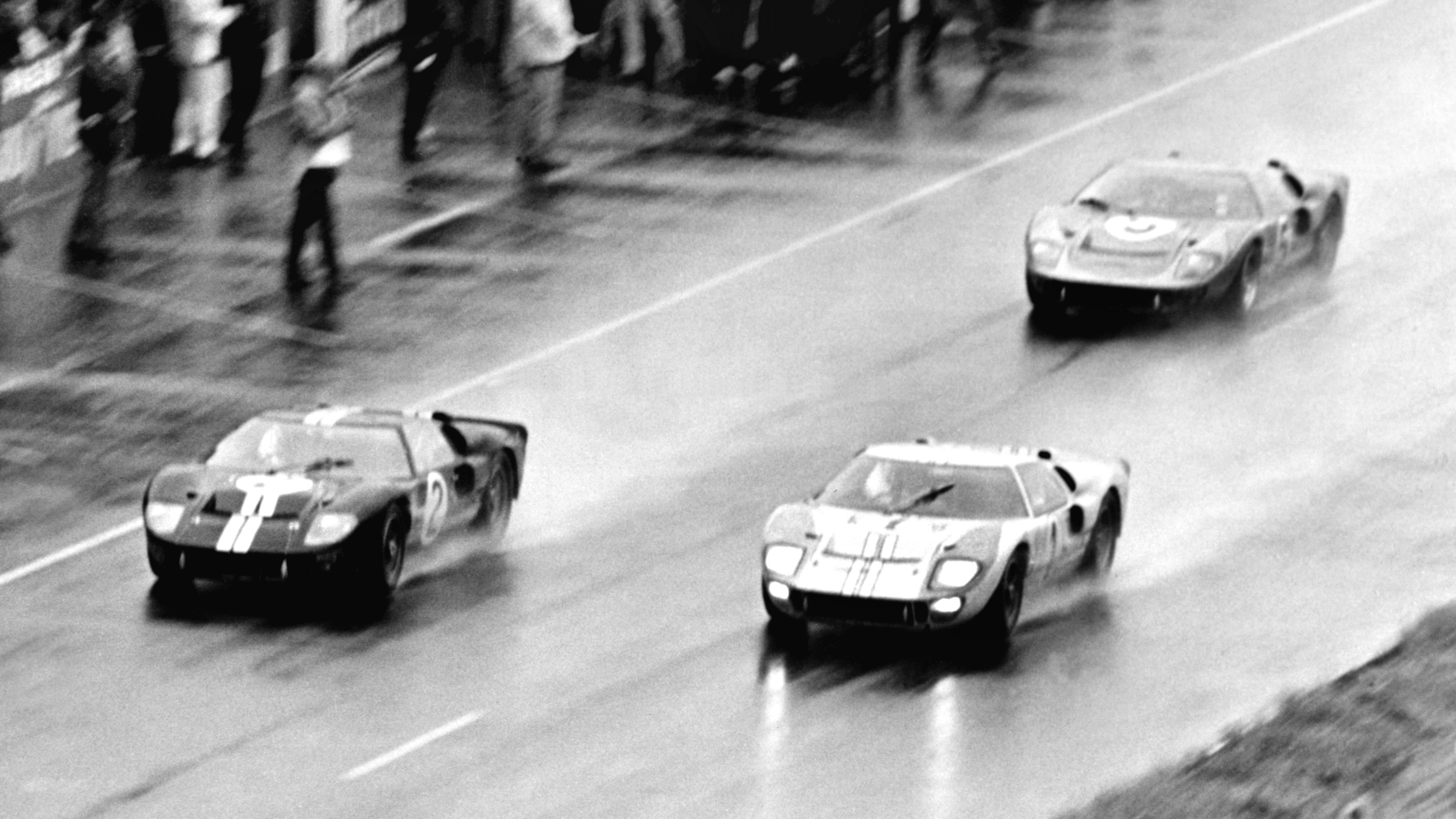
The race itself had run for 24 hours, but Ford’s mission to win at Le Mans, to beat Ferrari, had begun three years earlier. A gruelling and all-consuming pursuit to overcome a seemingly impossible task finally came to an end when the chequered flag flew.
Not only that, but it was also the greatest performance ever registered in the race. The winning car, driven by Bruce McLaren and Chris Amon, completed a record 3,009.3 miles at an average speed of 125.38mph. Ford had beaten Ferrari, and done it better than Ferrari, with a car powered by an engine taken from one of its road cars.
Even the intra-team politics that soured the final result could do nothing to harm the seismic impact of what Henry Ford II and his team had achieved that day in 1966. It will forever remain one of the cornerstone moments in motorsport history.
Tickets are now available for the 2026 Goodwood Festival of Speed. If you’re not already part of the GRRC, you can sign up to the Fellowship today and save ten per cent on your 2026 tickets and grandstand passes, as well as enjoying a whole host of other on-event perks.
race
historic
festival of speed
fos
fos 2026
event coverage
The Rivals
le mans
Le Mans 1966
ford
gt40