Richard Attwood: How Ford ‘blitzed’ Ferrari at Le Mans
The three Ford GT MkIIs that finished first, second and third at the 1966 Le Mans 24 Hours will run together for the first time in more than a decade at the 2026 Festival of Speed presented by Mastercard, and reunite again two months later at the Revival to complete Goodwood’s 60th anniversary celebration of Ford’s legendary success.
The anniversary of Ford’s momentous triumph at the Circuit de la Sarthe coincides nicely with the Festival of Speed theme for 2026, ‘The Rivals — Epic Racing Duels’, as we look back at the fierce battle between Ford and Ferrari that culminated in that 1966 event.
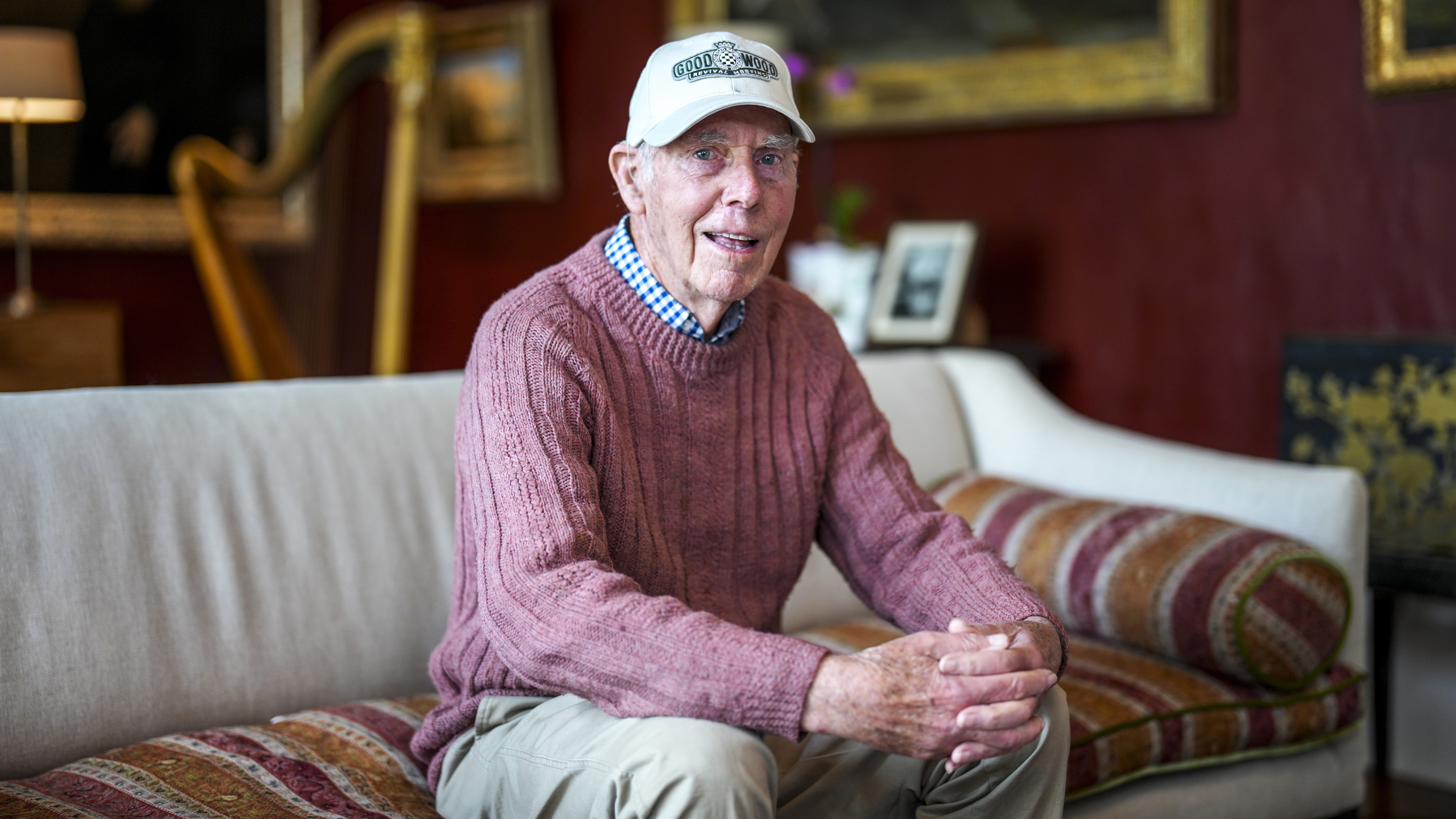
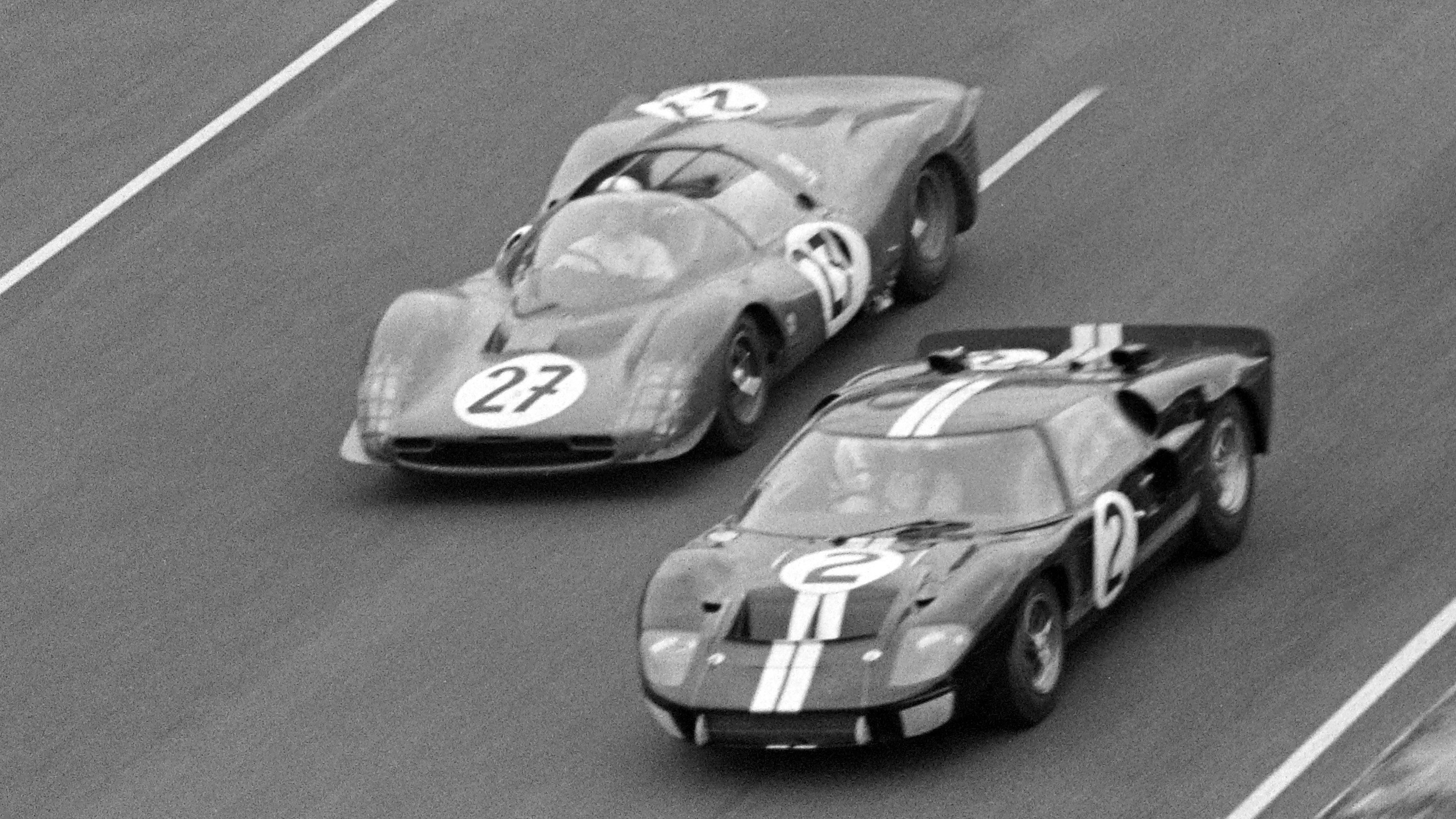
Richard Attwood was racing on that day, for the Maranello Concessionaires alongside David Piper in a Ferrari 365 P2, but he had spent the preceding years ingrained in the Ford GT40 programme.
Alongside Bruce McLaren, Phil Hill, Richie Ginther, Masten Gregory and Jo Schlessor, Attwood was part of Ford’s ill-fated first effort to conquer Le Mans. Three GT40s started the race in 1964, but a fire curtailed the Attwood-Schlessor car in the fifth hour before gearbox trouble ended American hopes.
Another triple retirement followed at Reims and laid bare the work that was needed if Ford wanted to succeed at the pinnacle of endurance racing, and more importantly overcome Ferrari.
We spoke to the 1970 Le Mans 24 Hours winner and Formula 1 racer to find out more about that period, and how much of challenge it was for Ford to finally succeed.
"By 1966 Henry Ford had allocated a limitless budget,” Attwood told us. The GT40 became the be all and end all for the head of the company that had been so infuriated by a failed deal with Enzo Ferrari.
But why did Ford need to throw so much money into the project? Ferrari were just that good.
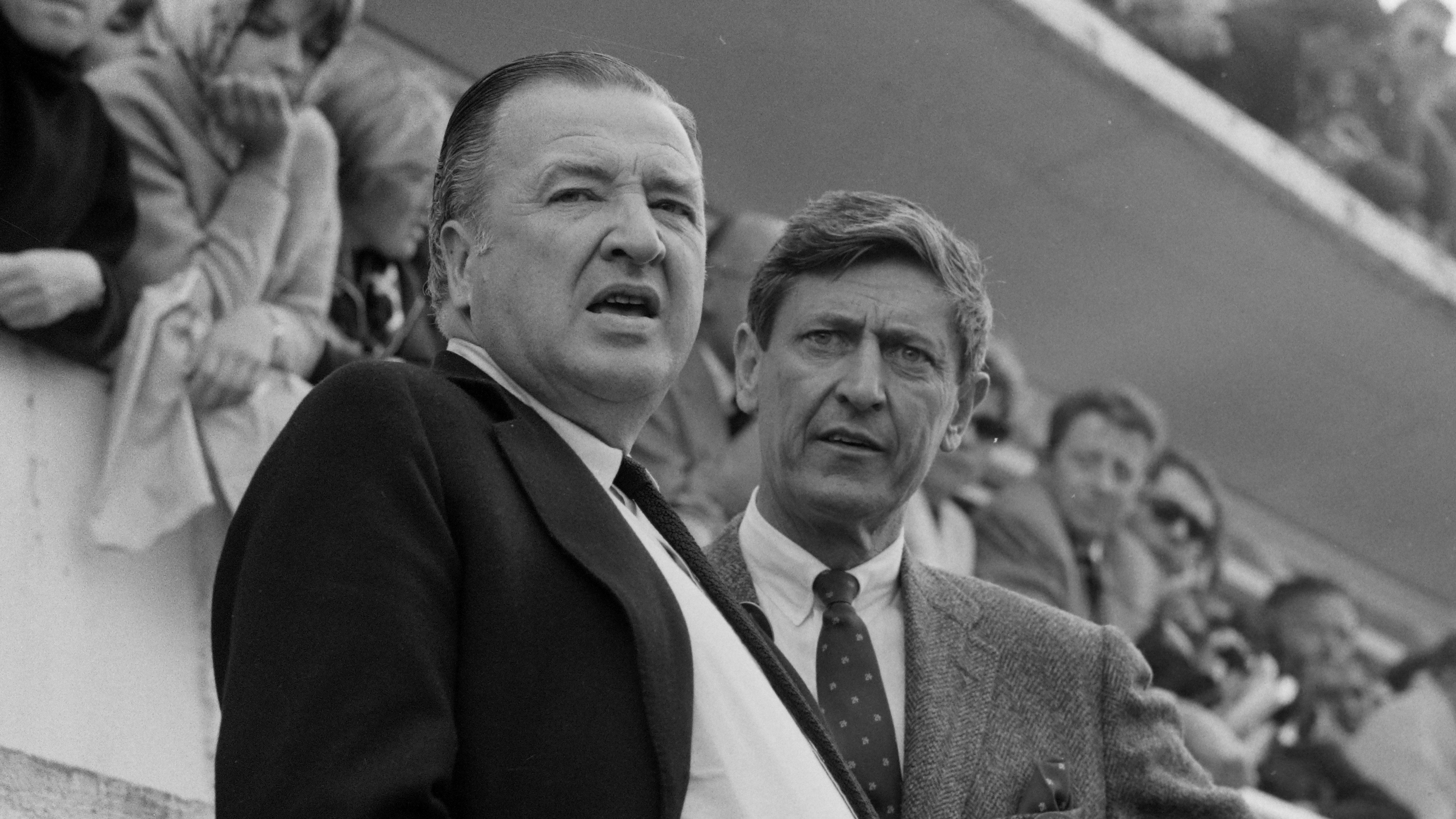
Henry Ford II (left) watches on during the 1966 Le Mans 24 Hours.
Image credit: Getty Images.“They had a wonderful Colombo V12 engine,” Attwood said. “It was like a sewing machine, it could run all day and all night, every night. It was just a magic formula, a magic era for Ferrari, that was the car to have to win Le Mans in that period.”
Ferrari cars had won in seven of the prior eight years before that 1966 event, locking out the podium places five years in a row from 1961-’65. This was a juggernaut that seemed utterly unstoppable, while Ford’s second attempt in ‘65 had all six of its cars retire by the seventh hour. It was going to take more than money to alter those fortunes.
“Le Mans has completely changed from what it was in our day,” Attwood continued. “It was a true endurance race, and no matter what happened on the track or anywhere else, it was a 24-hour running event.”
He refers of course to the idea that even in the face of tragedy, the race would continue unabated until the clock had counted 24 hours.
“Today people wouldn't comprehend that. The danger was much higher, we didn't have barriers everywhere and when people went off the track, they came to a stop against a tree or a building."
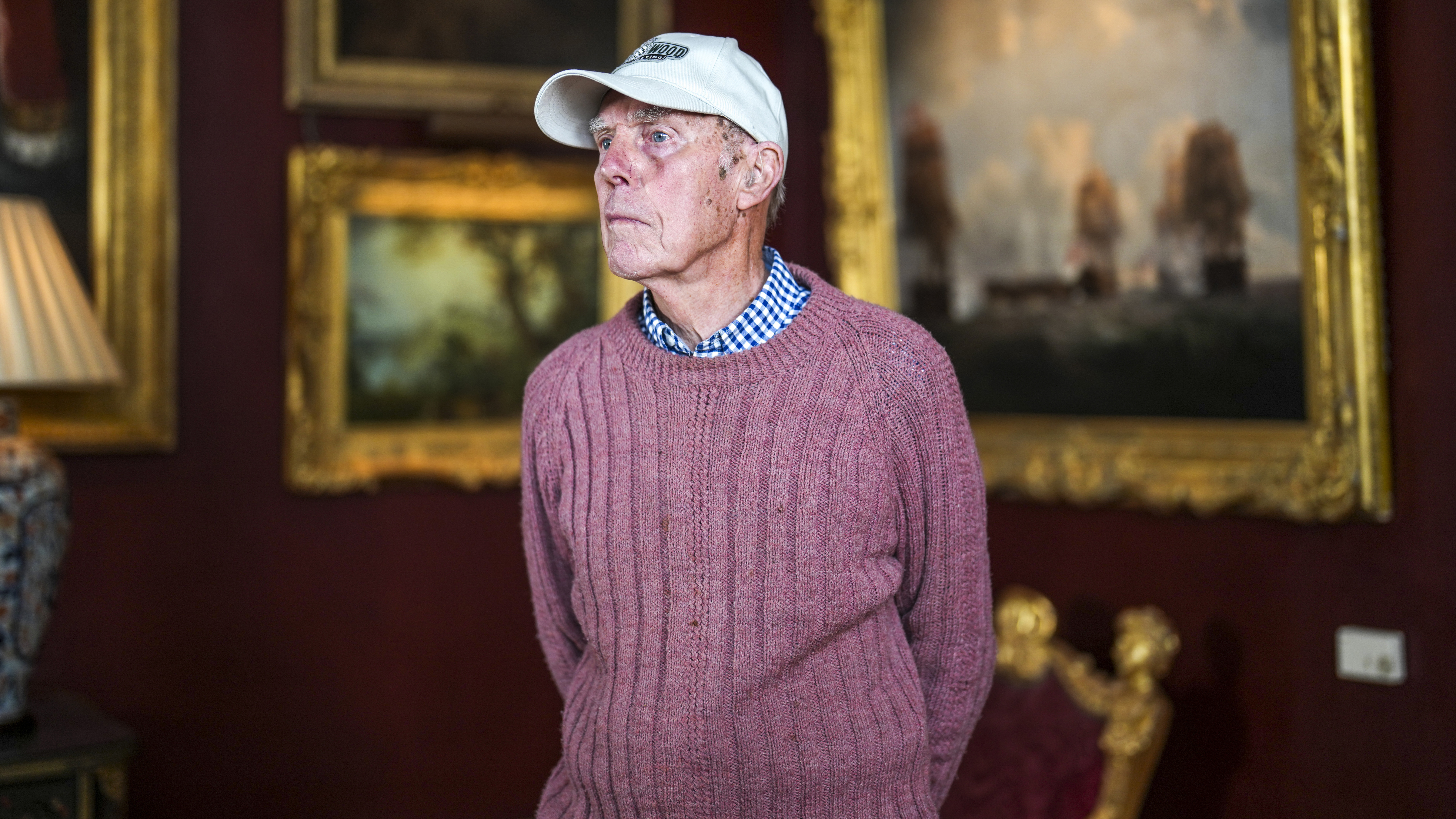
Richard Attwood eventually won Le Mans in 1970, sharing a Porsche 917K with Hans Herrmann.
Image credit: Pete Summers.“It was a proper road circuit. It’s much more of a permanent circuit now, and it’s a much safer race, but it's a different race. Last year six hours, a quarter of the race, was run behind the pace car, that just didn't happen. That's where you see a massive contrast between now and then.”
So, it wasn’t just about Ford building a car that was faster than Ferrari’s, it also needed to be able to survive the world’s most gruelling race.
Money alone clearly wasn’t going to be enough, so Ford employed some brilliant minds to shape a programme that was up to the task. Carroll Shelby introduced a new line of thinking that saw the Ford GT40 transformed into a dominant force.
A sledgehammer to crack a nut... they blitzed Ferrari completely.
Richard Attwood
By 1966, Attwood was regularly racing customer Ferraris with David Piper, but the balance of power was already shifting to the other side of the Atlantic. Under the guidance of Shelby the Ford GT MkII was developed, and this time there would be no mistake.
“Instead of having a 4.7-litre engine, they went to a 7.0-litre,” Attwood recalled. “A sledgehammer to crack a nut if you like, and their cars were totally reliable. They were under stressed really, and they blitzed Ferrari completely.”
Blitzed is the word, but the writing was on the wall when Ford arrived at Daytona in February and dominated the first 24-hour running of the event, with three MkIIs locking out the podium.

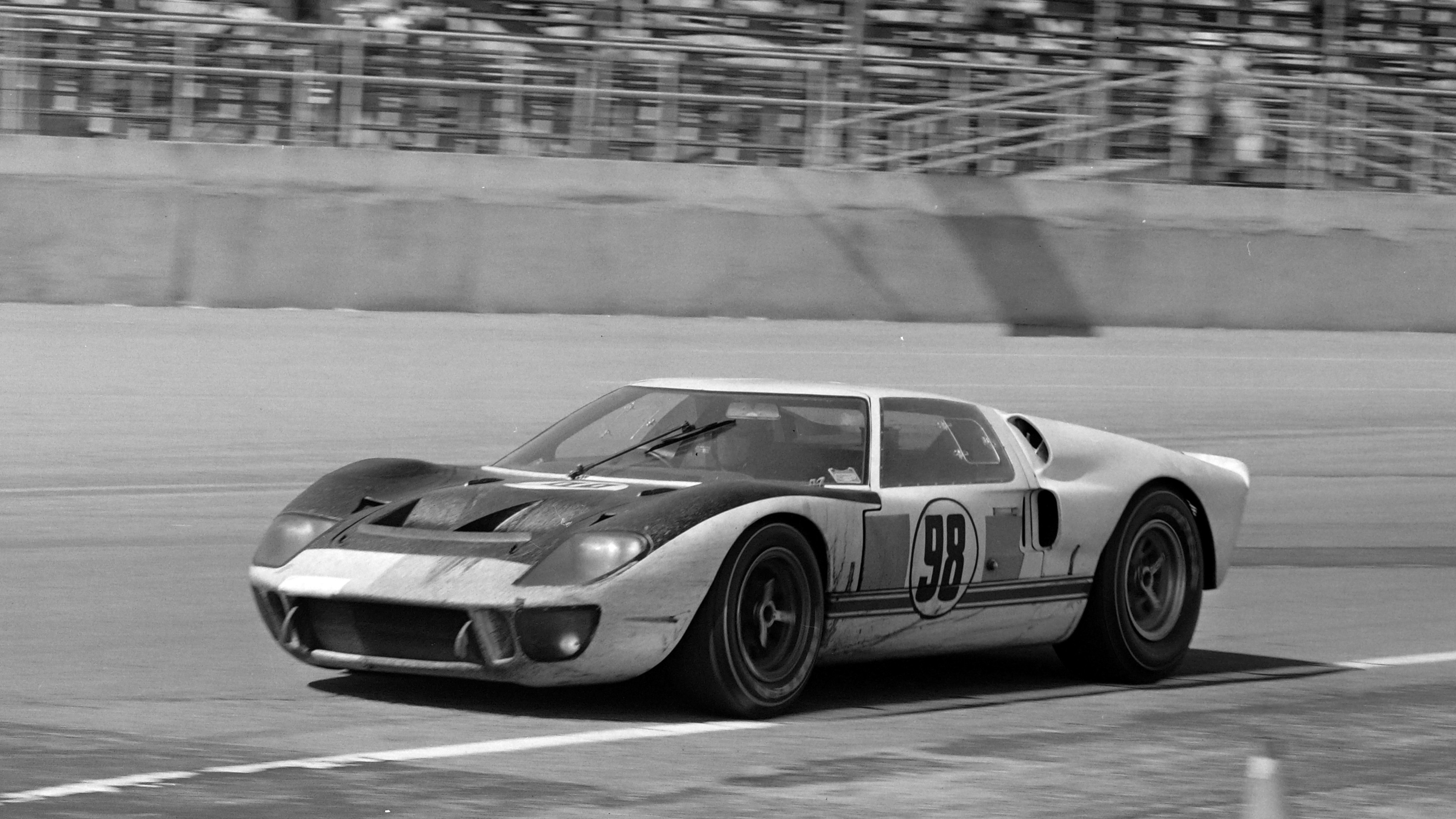
The Ford GT MkII of Ken Miles and Lloyd Ruby went on to win the 1966 Daytona 24 Hours.
Image credit: Getty Images.Another one-two-three finish at Sebring confirmed Ford’s new 7.0-litre configuration was going to be near unstoppable, as the experimental X-1 Roadster lead home a MkII, while a MkI completed the podium to show that even the original 4.7-litre GT40s were becoming more dependable.
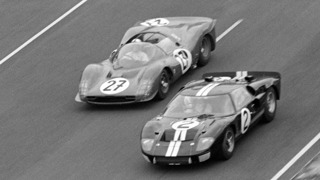
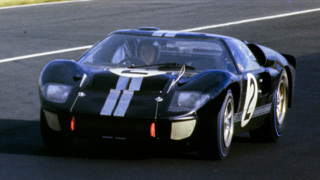
The Ford GT MkIIs were untouchable at Le Mans. They were running first, second, third and fourth at the halfway stage, with two MkIs following behind. The extent of their dominance was augmented by the fact Ferrari suffered its worst race in a decade, its best runner at the same stage was ailing down in 12th.
When the Fords went past you, there were two flames from the twin exhausts coming out the back. It looked like a jet.
Richard Attwood
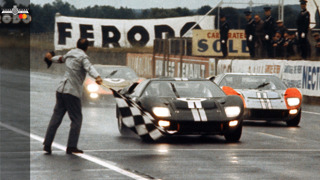
Ultimately, the Fords won at a canter, so far ahead that the leading pair were able to orchestrate a photo finish, 47 laps ahead of the best Ferrari. And that was only the beginning.
A year later the GT MkIVs were rolled out, and while Ferrari put up more of a fight with its new 330 P4, Ford triumphed again at speeds that the FIA felt compelled to address.
Ford stalwart Ken Miles had been killed in a testing accident just two months after the 1966 Le Mans 24 Hours, and the world’s fastest prototype racers were considered too fast and too dangerous.
New regulations limited engine size to 3.0-litres, which effectively banned Ford’s 7.0-litre V8, but a workaround to boost the entry list allowed cars up to 5.0-litres if 50 had been built.
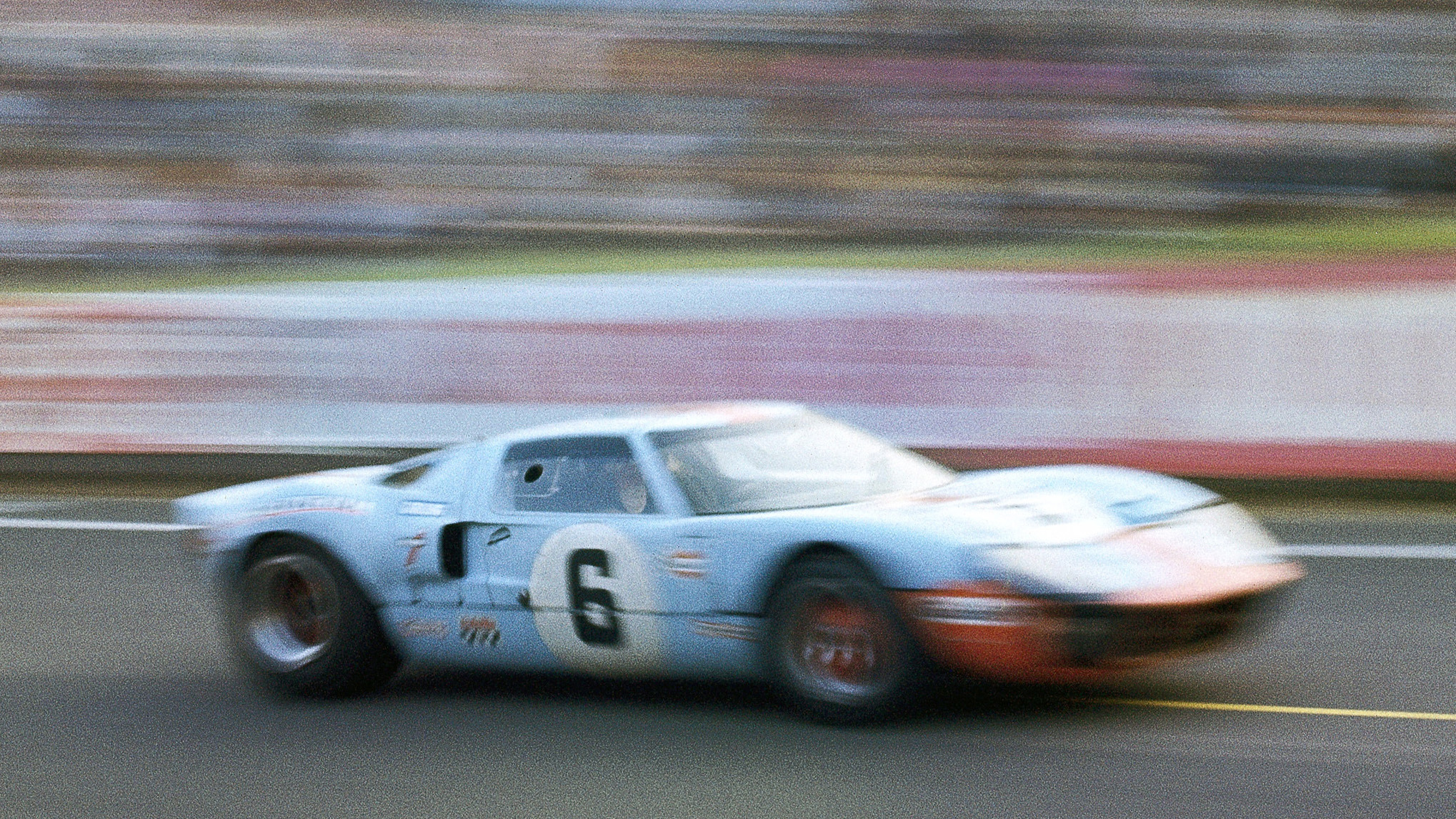
Jacky Ickx and Jackie Oliver wrapped up the GT40's dominance, winning Le Mans with Ford in 1969.
Image credit: Getty Images.Ford, satisfied that it had achieved its goal, withdrew from competition at the end of that ‘67 season, but the original GT40 met the FIA’s new homologation requirement. So, John Wyer took ownership of three MkIs, bored them out to 4.9 litres and took them to go and win at Le Mans again in 1968 and ‘69.
Chassis GT40P/1075, resplendent in its famous Gulf colours, became the third car to win twice at the Circuit de la Sarthe, a remarkable achievement and a further indication of just how special Ford’s creation was.
The GT40 was finally retired at the end of 1969, and Attwood was part of the team that finally stopped Ford’s run of dominance in world endurance racing, when he and Hans Herrmann took the revolutionary Porsche 917K to victory in 1970.
Sportscar racing in the 1960s was defined by one of motorsport’s most intense and significant rivalries between two of the world’s most famous automotive marques. It was a war that altered the future of endurance racing, and spawned one of history’s greatest racing cars.
On his abiding memories of that 1966 race, Attwood recalled: “When the Fords went past you, which they did quite easily, there were two flames from the twin exhausts coming out the back.
“The petrol was still on fire when it came through the exhaust, it looked like a jet really, that was quite extraordinary.”
Tickets for the Festival of Speed and Revival are now on sale. If you’re not already part of the GRRC, joining the Fellowship means you can save ten per cent on your 2026 tickets and grandstand passes, as well as enjoy a whole host of other on-event perks.
race
historic
festival of speed
fos 2026
revival
revival 2026
event coverage
the rivals
ford
ferrari
le mans 1966
interview