The amazing life and times of Ford’s Le Mans ‘66 GT40s
Following a captivating display at the 2026 Festival of Speed presented by Mastercard, the trio of Ford GT40 MkIIs that secured the famous 1-2-3 at Le Mans in 1966 will return to West Sussex to gather at the Goodwood Revival presented by Dunlop.
They’ll reside at Dunlop’s stand in the Earls Court Motor Show, where you'll be able to see them fire up each day for a series of spectacular demonstrations at the Motor Circuit.
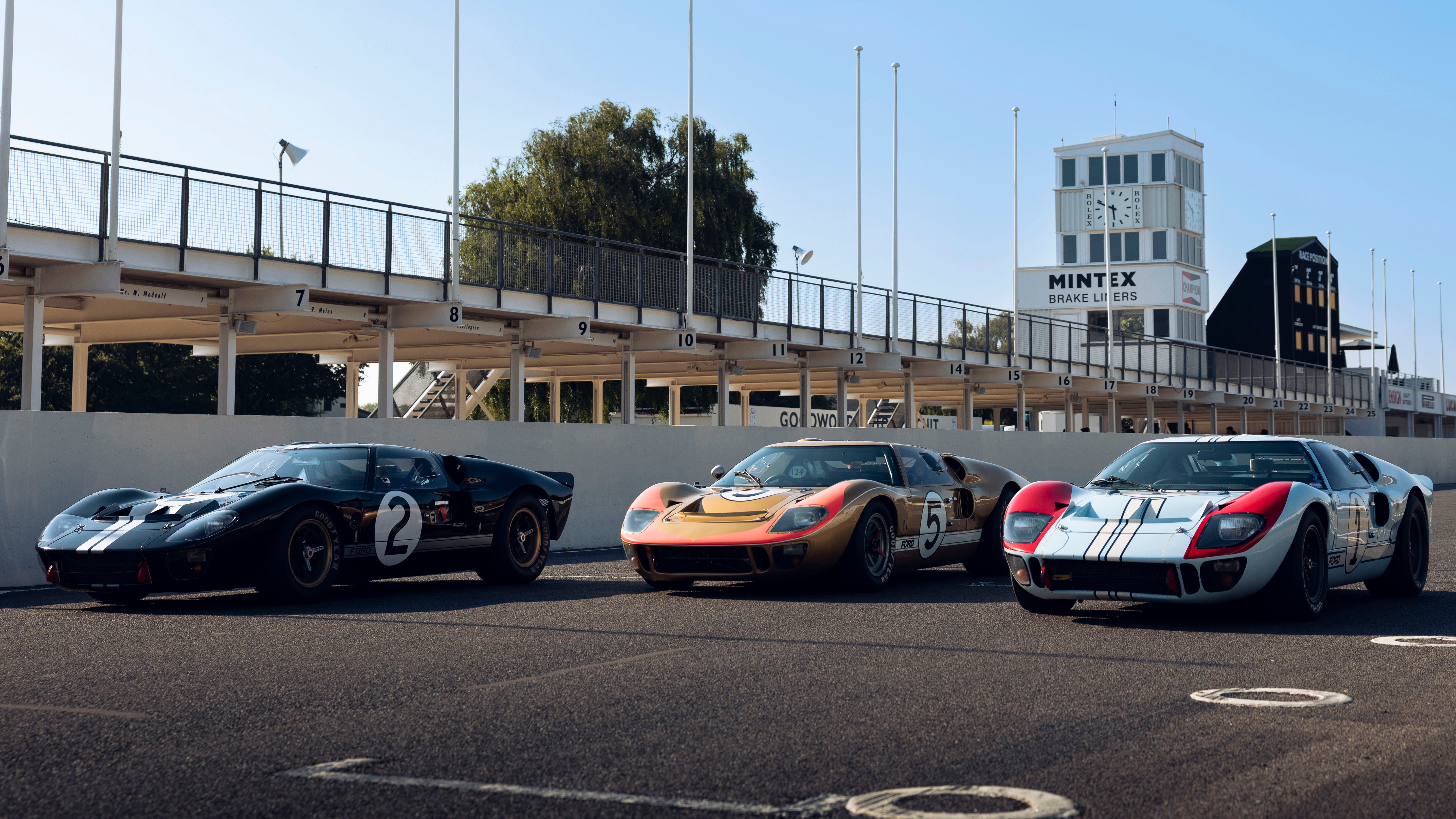
The historic trio are cherished now, but remarkably that wasn’t always the case. Back in 1966, no one considered how precious these cars would become. They were simply racing cars, tools for the job of achieving Ford’s high ambitions at Le Mans. When they won, few gave a thought to historical provenance, and it’s only with blessed hindsight that such cars are now considered near-priceless artefacts — like famous paintings by the great masters.
Today, it would be considered almost criminally careless for a manufacturer to lose track of its Le Mans-winning car, but that’s precisely what happened with Ford after 1966. Let’s track back to find out how, with help from GT40 specialist Ronnie Spain.
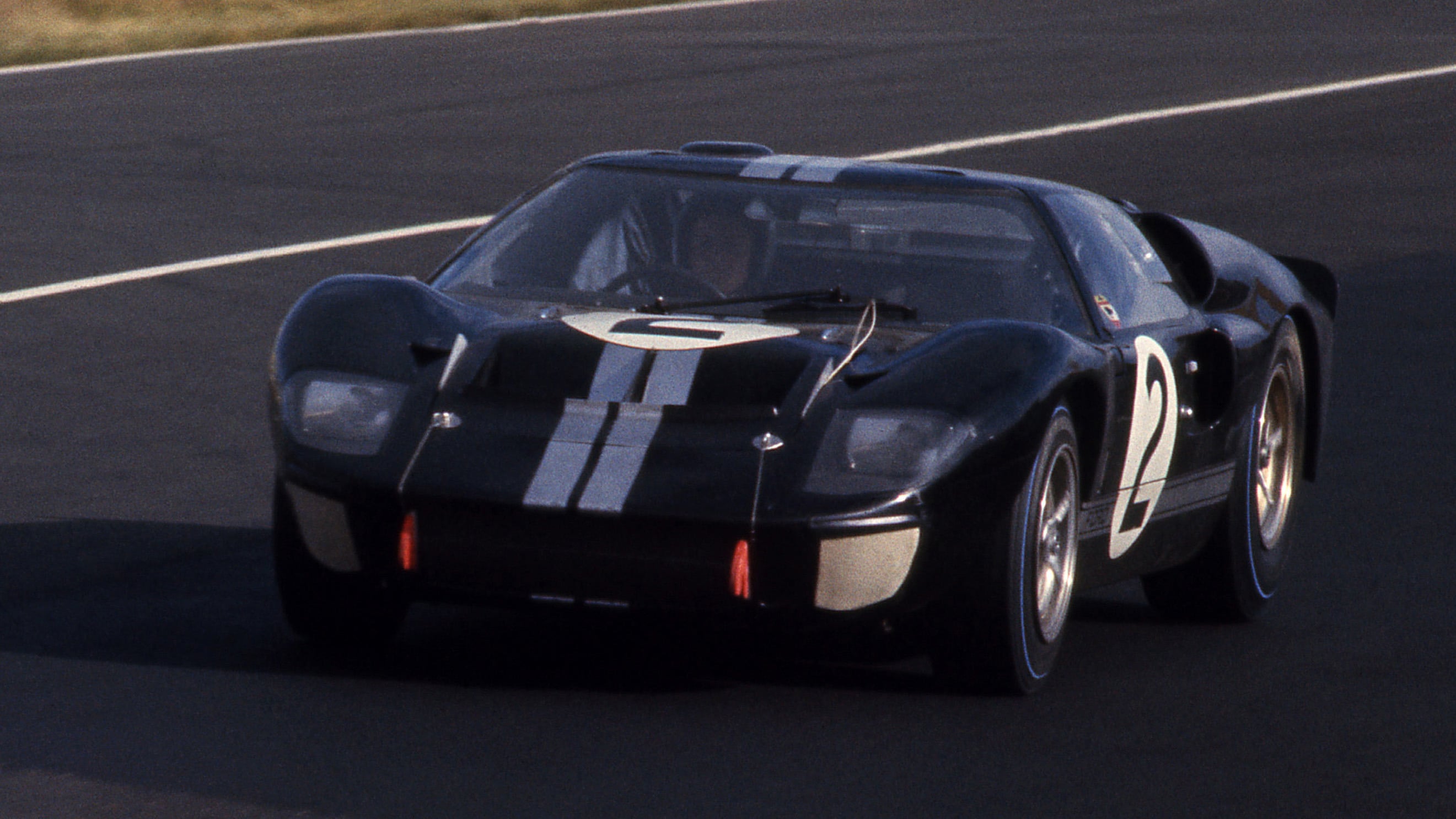
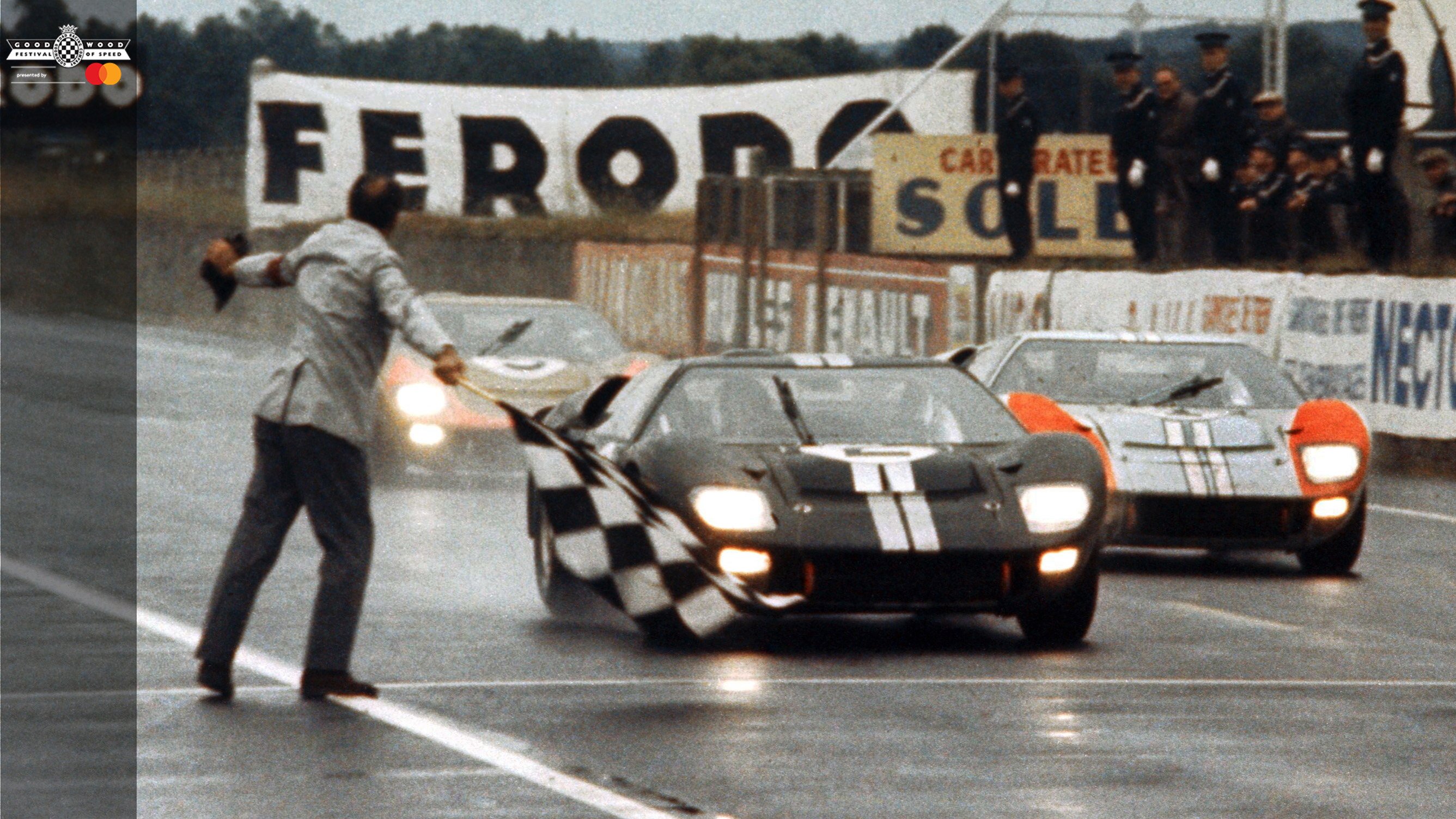
Bruce McLaren and Chris Amon won the 1966 Le Mans with GT40 P/1046.
Image credit: Getty ImagesGT40 P/1046 (1st)
The so-called Kiwi car, the #2 black with silver stripes GT40 driven by Bruce McLaren and Chris Amon was pronounced the winner at Le Mans on 19th June 1966, following the controversial staged 1-2-3 finish. Having started further back on the grid than the sister #1 car, it had therefore covered the greater distance in 24 hours.
GT40 P/1046 was then flown to New York with McLaren and Amon for a press party, before a sequence of events resulted in the car’s hallowed identity becoming lost in a fog of confusion.
It began when a number of other GT40s were made over as clones of the winner for promotional purposes — while Spain, in his book Ultimate Ford GT40: The Definitive History, Volume 1, reports there’s no evidence the real thing was ever actually used for display work at shows during this time…
Instead, it made one more period race start. Run by Shelby American at Le Mans, Holman Moody then took custody of the car and in late-1966 made numerous heavy modifications, which included fitting a roll-cage — the first for a GT40.
The colour scheme was also reversed, to silver with twin narrow back stripes and black sill lines. Lloyd Ruby and Denny Hulme raced it in the 1967 Daytona 24 Hours, only to suffer gearbox trouble. The car was spun into retirement at dawn when a pushrod failed.
Recruited for a display tour around the US in 1968, P/1046 returned to Holman Moody for storage, and then was sold into private ownership. Its identity and significance now seemingly lost, the car ended up stored in a crate in Gent, Belgium for three years. Thank goodness then for Ronnie Spain, who realised what he was looking at when he inspected it for a prospective new owner in 1983.
Restored in the late-1980s, P/1046 has since made anniversary visits to Le Mans and first appeared at the Festival of Speed in 1996. Remarkably, it’s even been used for historic racing — as recently as Le Mans Classic in 2018. But as the Mona Lisa of GT40s, its value will surely preclude further race outings. Careful demos are enough.
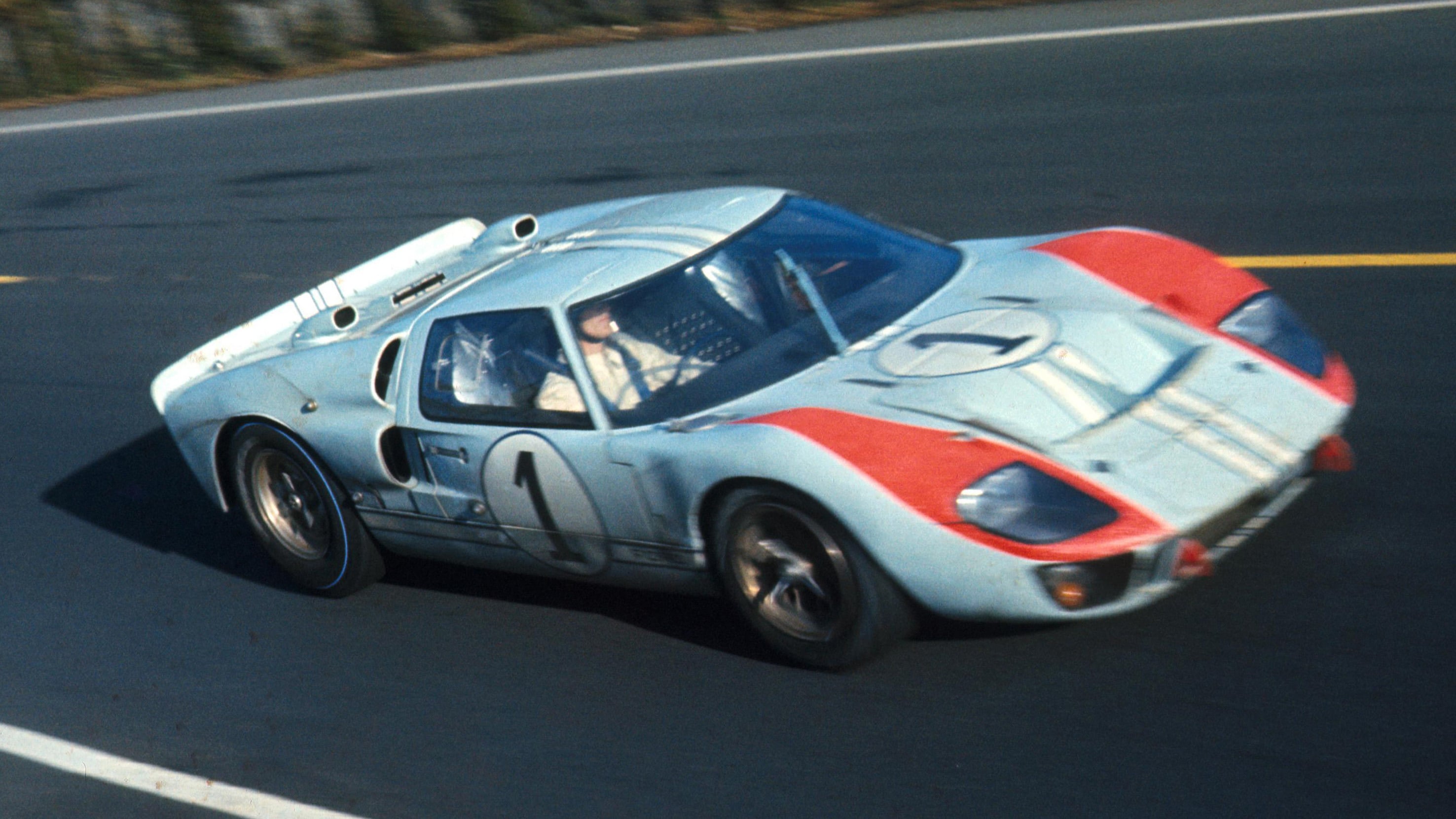
Runners-up Ken Miles and Denny Hulme were victims of the race's orchestrated finale.
Image credit: Getty ImagesGT40 P/1015 (2nd)
The pale blue #1 car at Le Mans, in which Ken Miles and Denny Hulme may or may not have been robbed of victory was also the white GT40 with a black bonnet in which Miles and Lloyd Ruby won the 1966 Daytona 24 Hours. Again, its life after the photo finish became complicated — and with its appearance changing all too regularly, respect for its provenance was again severely lacking.
To add insult to injury following its demotion to second place, P/1015 was one of the cars repainted as a clone of the black and silver winner for display purposes after Le Mans. It then returned to track action in the autumn of 1966 in a new red livery.
By the time of the 1967 Daytona 24 Hours, the Shelby American GT40 had changed its clothes again. This time, Ronnie Bucknam and Frank Gardner were entrusted with the car now painted a darker blue, but it was the first of the MkIIs to suffer terminal transmission problems, after only 23 laps.
Then handed to Holman Moody, P/1015 made a second appearance at Le Mans, now in Ford France’s colours of white with narrow black and red stripes. Jo Schlesser crashed the car he shared with Guy Ligier in the night, in an infamous GT40 pile-up triggered by Mario Andretti’s accident that also wiped out a third Ford driven by Roger McCluskey. This was P/1015’s final (and ignominious) period race appearance.
Eventually sold into private ownership in the 1970s, it again went through resprays and was even registered for the road in 1977. But finally in 1990, the chassis was stripped bare and fully restored to its 1966 (near) glory. At a 2006 recreation of the final lap from the 1966 race held at Le Mans Classic, P/1015 was seen proudly leading its sisters around the lap as if it was attempting to finally set the record straight…
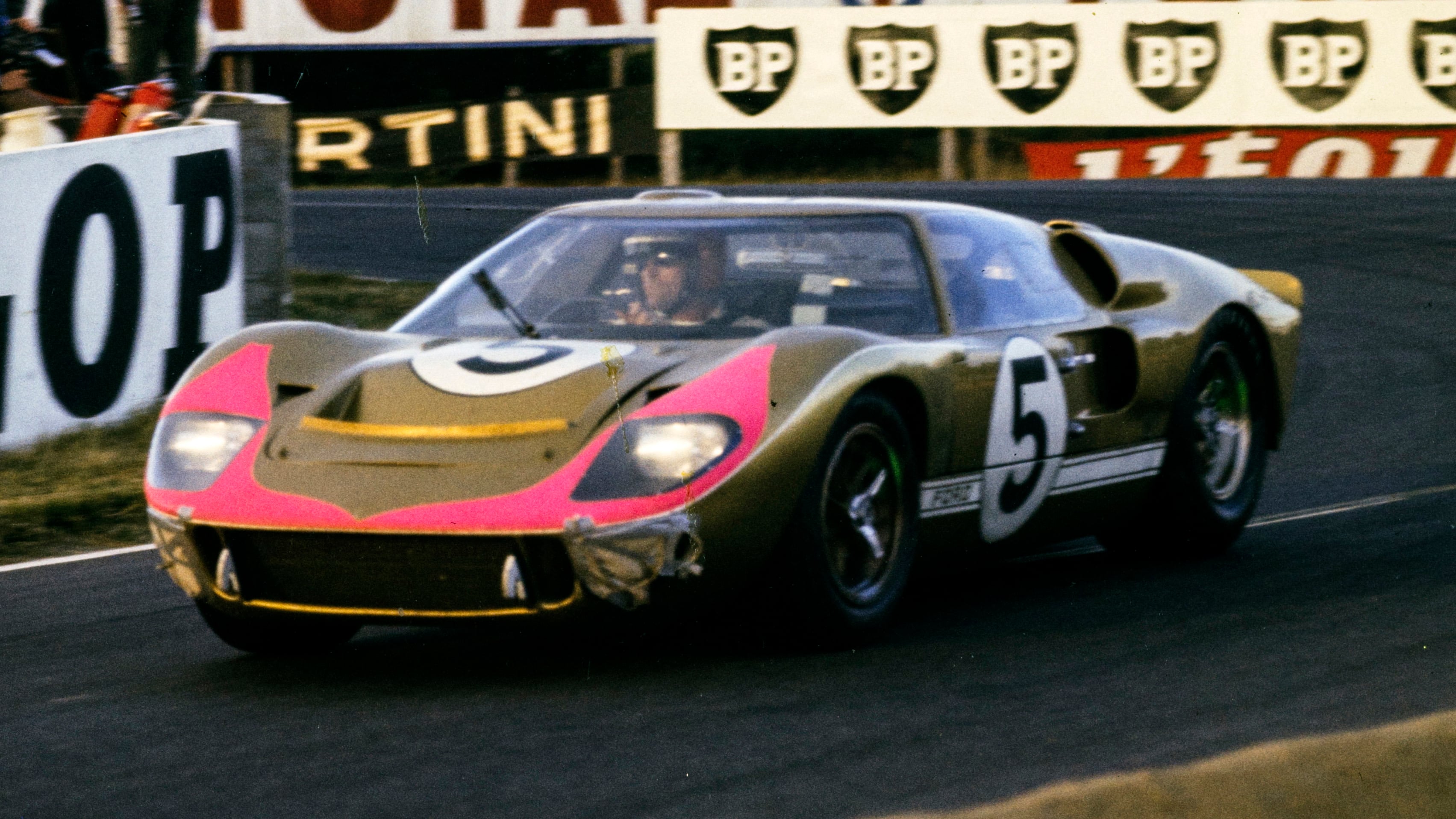
Ronnie Bucknum and Dick Hutcherson's third-place finish made it a clean sweep for Ford.
Image credit: Getty ImagesGT40 P/1016 (3rd)
Another of the four chassis Shelby American ordered in July 1965, this was the MkII painted in lurid gold which finished third in the hands of Ronnie Bucknum and Dick Hutcherson.
Prior to Le Mans, P/1016 also competed in white at both the Daytona 24 Hours and Sebring 12 Hours, with Bucknam joined by Richie Ginther and AJ Foyt respectively. From Sebring, Holman Moody ran the car, with Hutcherson stepping in for Foyt at Le Mans in the wake of the Texan suffering serious burns in an IndyCar crash at the Milwaukee Mile.
Like its sisters, P/1016 went on tour in America following the Le Mans 1-2-3, before returning to action. Mark Donohue and Peter Revson drove it in the 1967 Daytona 24 Hours, where the gold GT40 retired with engine problems. But while Donohue ran it in the Le Mans trials that spring, it was subsequently flown back to New York and consigned to storage with Holman Moody.
According to Ronnie Spain, during its time there in 1968 the car became another victim of identity confusion. For years, it was confused with P/1015, the Ken Miles car, and even restored in 1983 in light blue and white colours.
Discovery of ‘1016’ engraved in a rear crossmember in 1988 helped set the record straight. Spain finally unravelled the 1015/1016 saga once and for all in 1990, and it was restored in period gold in ’92. In the wake of the three-car reunion at Le Mans in 1996, P/1016 has paid visits to Goodwood and Le Mans Classic.
Now this year all three cars have been reunited once again, first at the Festival of Speed and now once more at the Revival. Their various identity crises are long behind them, and we can enjoy them for what they are: one of motorsport’s greatest trios.
Source: ‘Ultimate Ford GT40: The Definite History, Volume 1’ by Ronnie Spain, published by Porter Press.
Main image photography by Max Carter.
The 2027 Goodwood Revival will take place on 17th-19th September 2027. Sign up for ticket alerts to make sure you don’t miss out.
If you’re not already part of the GRRC, you can sign up to the Fellowship today to save ten per cent on your 2027 tickets and grandstand passes, as well as enjoying a whole host of other on-event perks.
race
historic
revival 2026
ford
Ford GT40
le mans
Le Mans 1966