‘Sammy’ Davis and ‘Benjy’: Bentley Boy heroes of Le Mans 1927
Is it the most remarkable comeback in the long history of the Le Mans 24 Hours? The first victory at the great race for a works Bentley, in the famous edition of 1927, is certainly still right up there, a century on from that landmark achievement.
‘Bentley Boys’ S.C.H. ‘Sammy’ Davis and Dr. Dudley Benjafield, who pulled off what even they thought was impossible after the infamous multi-car crash at White House, were two of the great characters of 1920s British motor racing.
Now the duo will be celebrated in the best possible fashion to mark the 100th anniversary of their unlikely victory, with a race named in their honour at the 84th Members’ Meeting presented by Audrain Motorsport next spring.
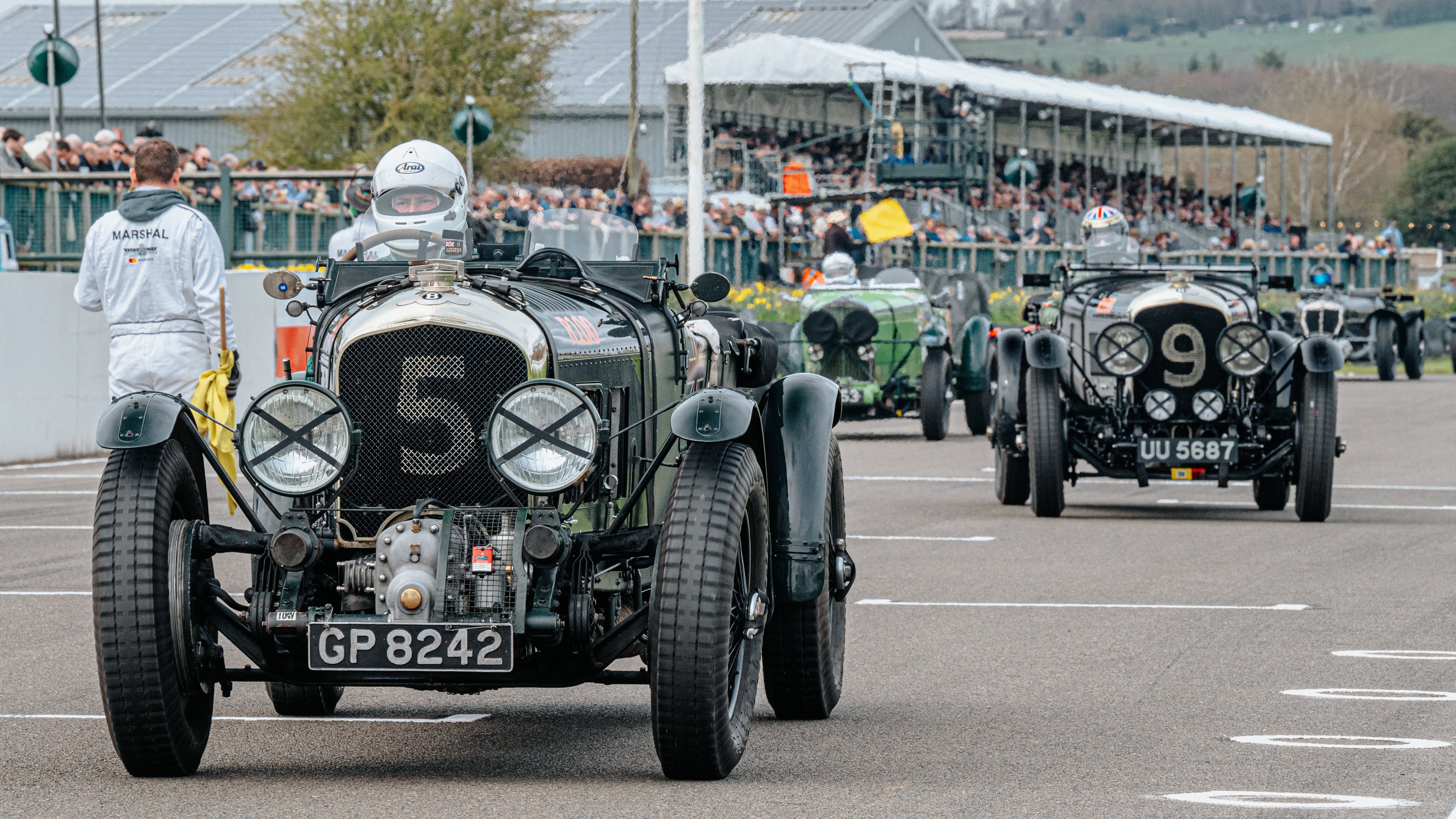
The Benjafield-Davis Cup will be a 20-minute contest featuring a full grid of vintage Bentleys of a type that raced between 1922 and 1930. In anticipation of what promises to be yet another unforgettable Goodwood moment, let’s recall the two men and their greatest motor racing feat, forever enshrined as pure Le Mans gold.
S.C.H. ‘Sammy’ Davis’
Sydney Charles Houghton Davis was among early motor racing’s greatest enthusiasts, as sports editor of The Autocar. Born in January 1887, ‘Sammy’ was educated at Winchester School where the new sport of motor racing had already captured his imagination, and then at Slade Art School where he honed the illustrator skills that would serve him so well in his life dedicated to the automobile.
Davis was apprenticed to Daimler in Coventry in 1906 — the year he cycled with a friend to Le Mans to witness the first Grand Prix — and joined The Automobile Engineer as an illustrator in 1912 before transferring to The Autocar. Invalided out of World War I after his time in the Royal Naval Air Service, he assisted old cycling friend W. O. Bentley in nascent engineering endeavours, rejoined The Autocar after Armistice, wrote the first road test of the 3.0-litre Bentley and became an avid and prolific competitor in motor races, trials and reliability runs.
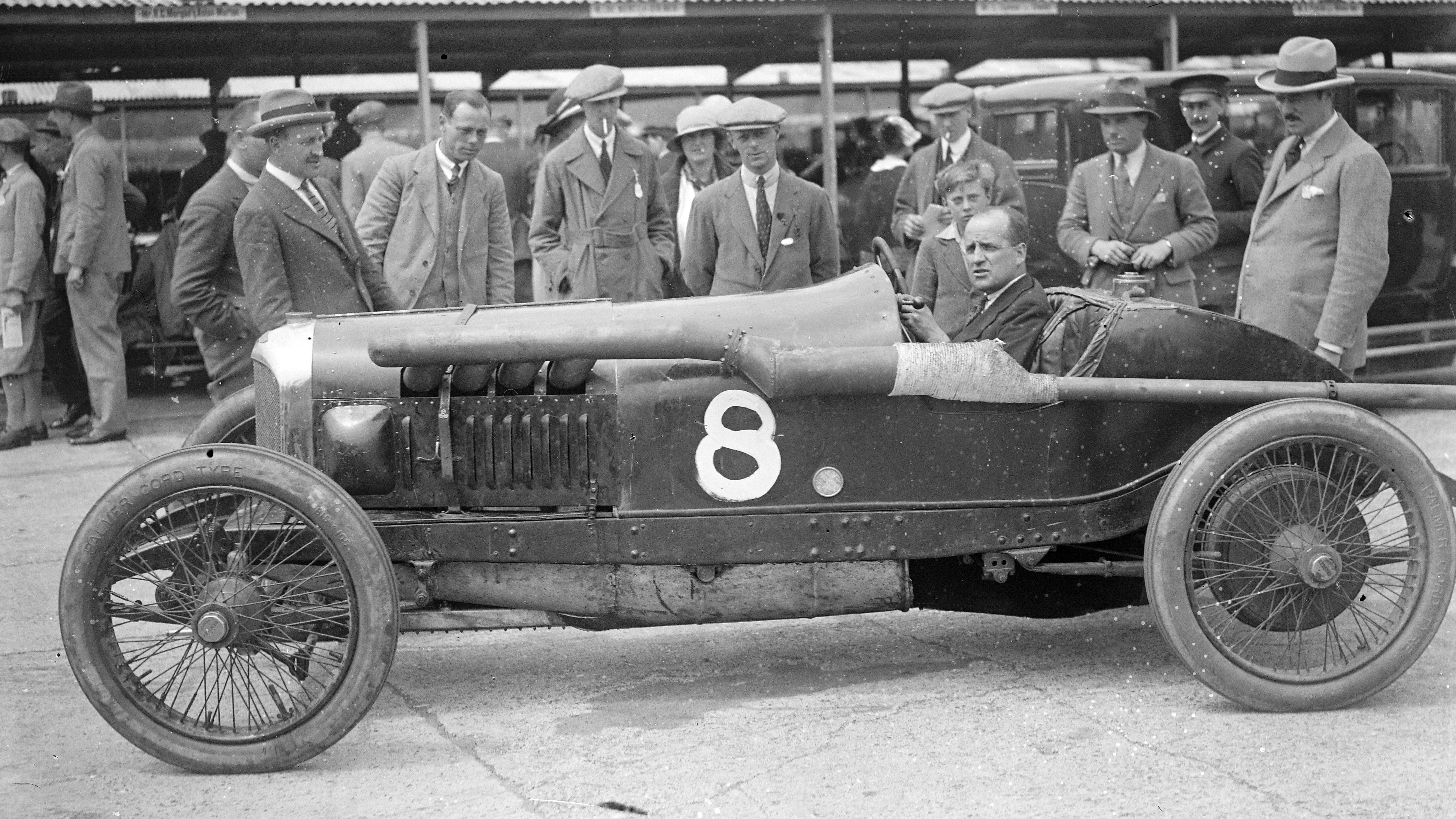
Dudley Benjafield sits in his Bentley during the BARC Whit Monday Meeting at Brooklands, June 1924.
Image credit: Getty ImagesDr. Dudley Benjafield
Also born in 1887, Joseph Dudley Benjafield was educated at Malborough, University College Hospital and London University, qualifying as a doctor in 1912. A leading bacteriologist and consultant at St. George’s Hospital in London, the cheerful doctor was also a committed amateur racer who began competing at Brooklands in 1924.
‘Benjy’ as he was known, became established as one of W. O.’s daring ‘Bentley Boys’ and made his debut at Le Mans in 1925 sharing with Bertie Kensington-Moir — the same year Davis finished second nursing a 3.0-litre Sunbeam with Jean Chassagne.
The following year, Benjy and Sammy were teamed together as part of Bentley’s ill-fated assault on the race. Their 3.0-litre was the last of the trio to retire, in agonising fashion as they chased the dominant Lorraines for victory. Heavily worn brakes caught Davis out at the end of the Mulsanne Straight and Sammy found himself stuck in a sandbank with just 20 minutes to go. Retribution would follow swiftly a year later.
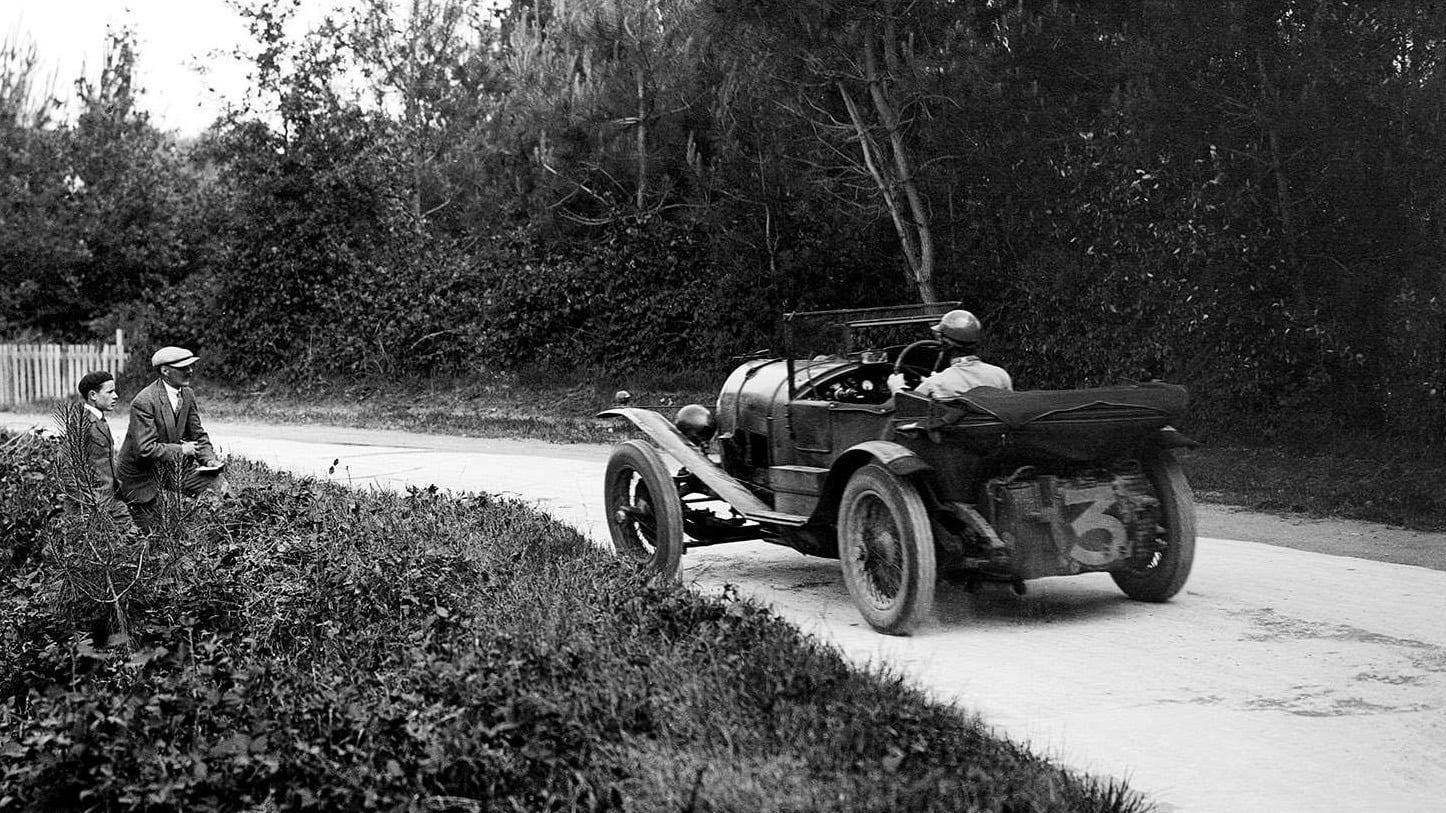
The Bentley 3-Litre of Davis and Benjafield at the 1927 Le Mans 24 Hours.
Image credit: LAT Images/Getty ImagesThe crash at White House
Even though five of Bentley’s six Le Mans wins landed in the first eight editions of the great race, the luxury car maker remains equal fifth with Toyota as the most successful at the 24 Hours, behind only Porsche, Audi, Ferrari and Jaguar. But while the most recent victory, in 2003, will be the most familiar to modern audiences, the 1927 race still stands as Bentley’s competitive high point, given the circumstances of how the win was snatched from infamous disaster.
Three works Bentleys were entered in 1927 and they all became entangled in the smash which also involved five other cars at White House (or Maison Blanche if you were a local). Of the Bentleys, only Davis’ Old Number 7 (but confusingly running with the number three) recovered and was able to limp back to the pits for repairs.
In an interview with Brendan Lynch conducted a year before his death at 94 and later published in Motor Sport, ‘Sammy’ recalled the accident. “How can you get frightened in one-hundredth of a second?” he said. “My chief concern was that one might never be asked to drive again!”
His account is vivid in detail. “The accident took place just as darkness fell. A French car spun, half-blocked the road and was in turn hit by a Schneider and the Bentleys of [Leslie] Callingham and [George] Duller. I was behind Duller when I came around the blind right-hander to find the road absolutely blocked. The peculiar thing is that, as I approached, I saw white specks on the road. l eased off a little because the objects reminded me of chestnut wood I had seen scattered during a 1924 French Grand Prix accident. But I still hit the wreckage at speed.
“My immediate concern was for my team-mates — but I also thought of my racing future, especially because the previous year I had crashed out with a brake problem after being ordered to go flat out for a possible second place.”
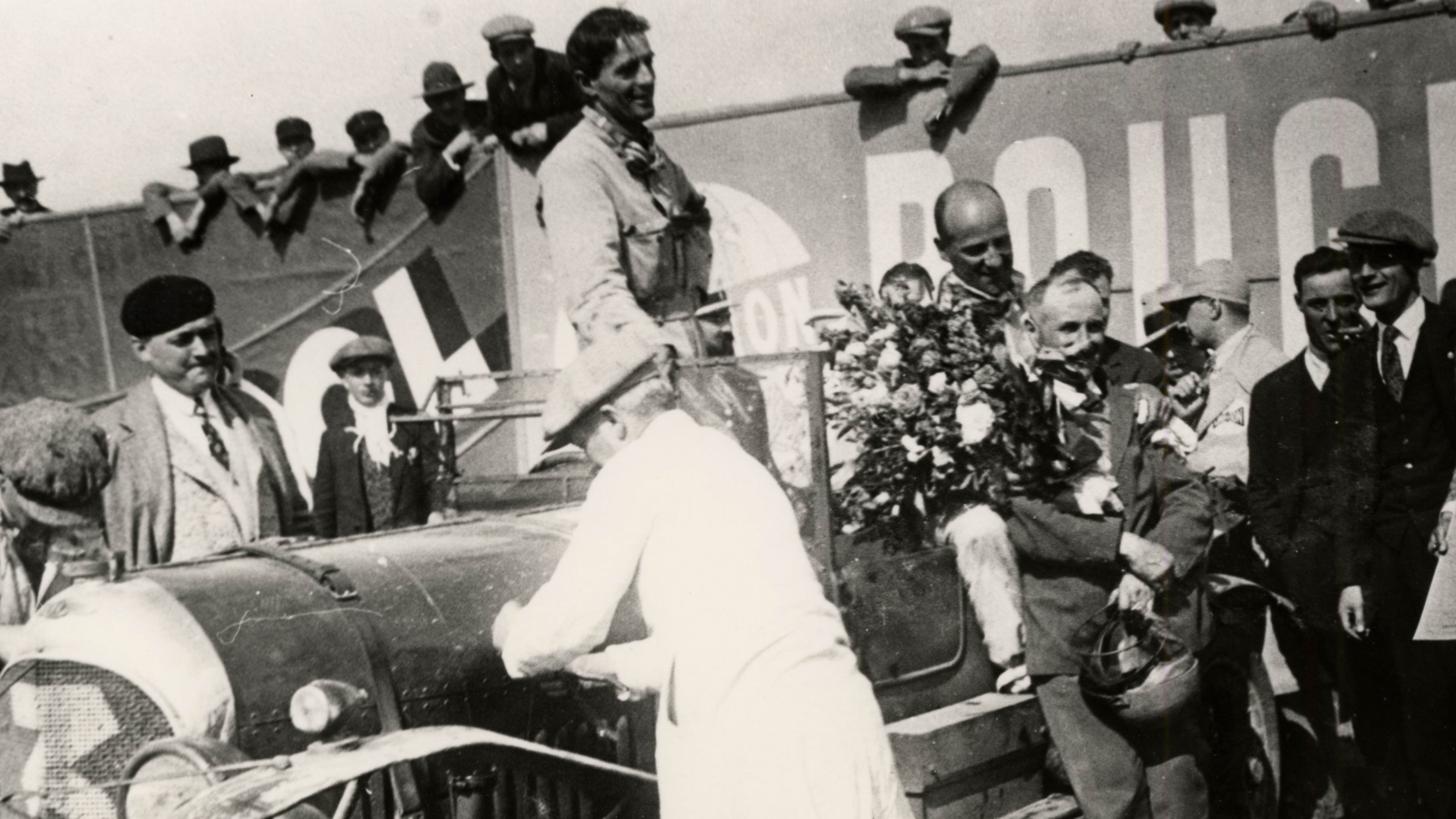
Davis (centre) and Benjafield (holding the flowers) celebrate after emerging victorious from an eventful race.
Image credit: Bentley MediaComeback of the century
Sammy nursed his Bentley back to the pits where the team went to work on repairs. Sporting lashed-up bodywork on a badly twisted chassis with just one working headlight, he and Benjy charged back into the race.
“The amazing thing is that Benjy and I got accustomed to the new handling, although the steering was funny,” Sammy told Lynch. “As we plodded along, we discovered that we were going much faster than we thought possible. We had no idea of winning. Just to finish would have been a great relief. And then I got the ‘Flat Out!’ signal. ‘In this thing? That’s asking for trouble!’.”
The gap to the leading Aries initially looked unassailable, but that began to change. In the final hour, the Bentley took the lead and when the Aries was retired a remarkable victory was assured, by a 20-lap margin (349.808km) — still a Le Mans record.
It was Sammy who took the flag. “Benjy had the last driving spell,” he recalled. “But suddenly, with a few laps left, he pulled into the pits and jumped out of the car. I was smoking my pipe and didn’t know what was going on. ‘You had all the trouble with the crash, you will finish the race,’ he said. And let me tell you, after the previous year’s experience, those were the most nervous laps of any race I ever drove.”
Celebrations at the Savoy
Upon its return to Britain, the battered and mud-splattered car was manoeuvred through the doors of the Savoy Hotel, as a special guest of honour at a dinner hosted by The Autocar. The wheels and wings had to be removed to get it through, then the engine was fired back into life to great applause.
There were likely few complaints from the hotel management. The Savoy, along with Claridges and the Cadogan, were owned by the family of Benjy’s wife.
Sammy and Benjy: beloved Bentley Boys
Both drivers remained highly popular among the motor racing community for years (and in Sammy’s case, decades) to come. In a racing context, perhaps Benjy is best remembered by how his team patron summed him up. “He was tough, thickset, totally bald and wonderful fun at all times, except perhaps during the hours before a race,” said W. O. Bentley.
“He worried, a useful asset in a racing driver: he was a grand driver once he got going. He was one of our steadiest and most reliable drivers and an equally strong supporter of oil-duty fun and games, even if he did not appear to know which way to do up a nut or a hub-cap.”
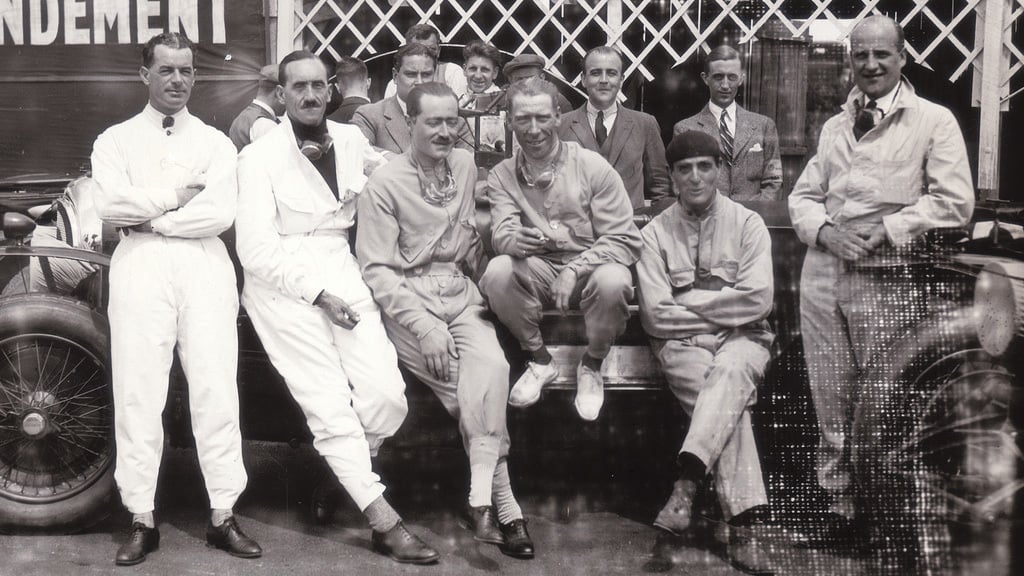
The Bentley Boys gather at the 1927 Le Mans.
Image credit: Bentley MediaAs for Sammy, he spent 32 years as editor of The Autocar and played a key role in the promotion of the sport he dedicated his life to. He was also a hero and something of a mentor to another famous motoring writer, Bill Boddy. “If I wasn’t myself, I can think of no-one I would rather have been,” wrote WB in his obituary of Sammy published in Motor Sport in 1981. “Sammy Davis was such a great all-rounder: ‘Bentley Boy’, journalist, rally-driver, writer and friend of so many in our world, with time also for strangers.”
How fitting that Benjy and Sammy will be back in the limelight next spring, as Goodwood pays tribute at the 84th Members’ Meeting. A century on, their daring victory and significance to both Le Mans and Bentley can never be forgotten.
Main image photography by Jayson Fong.
The 84th Members' Meeting takes place on 10th and 11th April 2027. Tickets are now on sale to GRRC Members and Fellowship Members at the early bird price.
If you’re not already part of the GRRC, you can sign up to the Fellowship today to save ten per cent on your 2027 tickets and grandstand passes, as well as enjoying a whole host of other on-event perks.
race
historic
le mans
le mans 1927
sammy davis
dudley benjafield
Bentley
Bentley Boys
Members' Meeting
84MM
Benjafield-Davis Cup info