André Lotterer: Goodwood’s newest three-time RAC TT Celebration winner
André Lotterer had no idea his team-mate Lukas Halusa had picked up a three-second penalty for a false start, so their headline-grabbing victory in the 2026 RAC TT Celebration was far from assured at the close of the Goodwood Revival presented by Dunlop.
Lotterer, in a prowling Jaguar Lightweight Coupe, had stalked and eventually passed Andrew Jordan, whose rear tyres on his AC Cobra were wilting fast. But that penalty left Lotterer with serious work still to do. He could see his pitboard read ‘P2’ instead of ‘P1’, so fortunately he pressed on, and opened enough of a gap to the white Cobra to win by the scant margin of a second once the penalty had been accounted for. What a finish to another fabulous Revival.
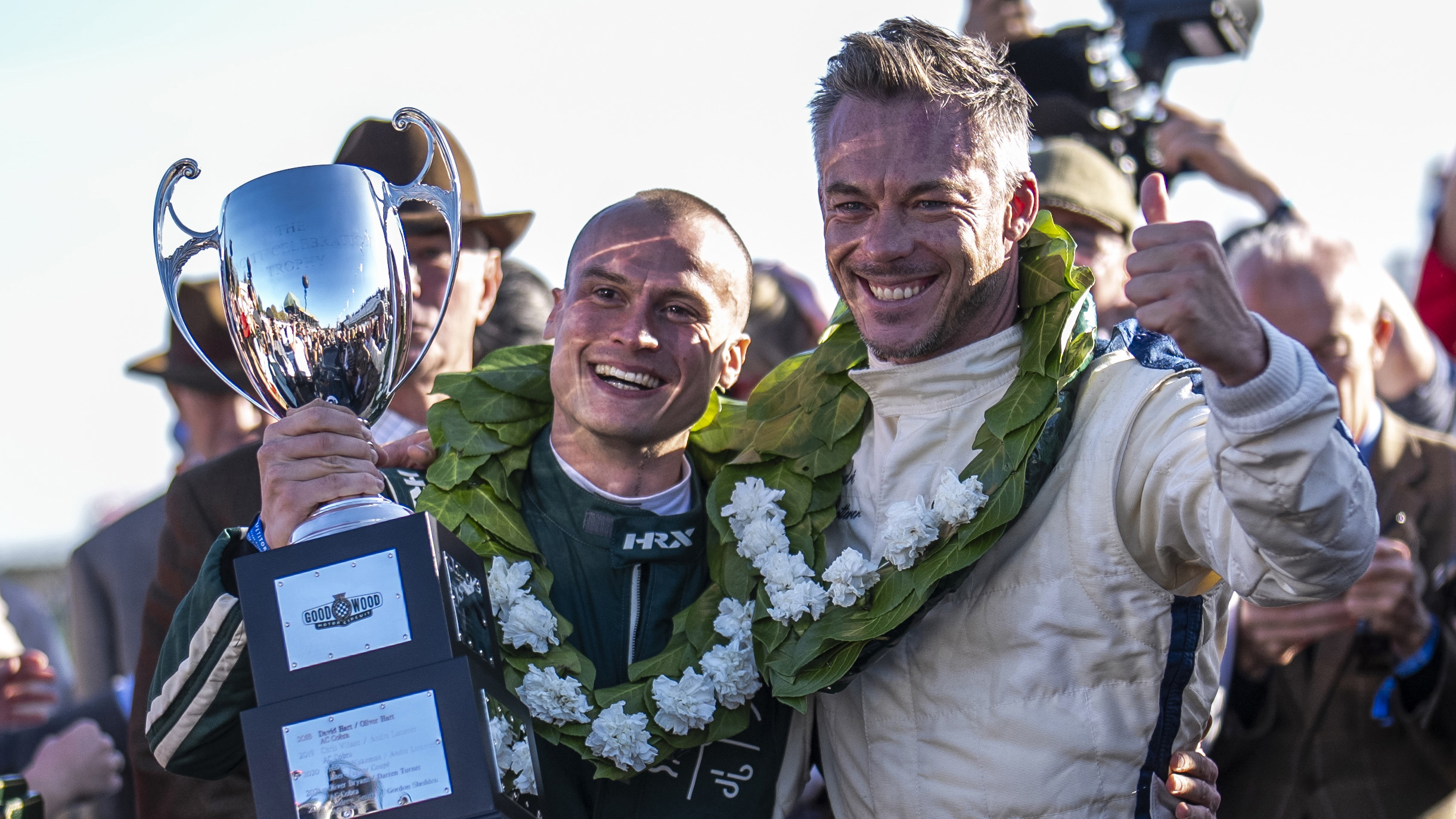
For Halusa, the victory will be the biggest of his life. For Lotterer, it marks another hat-trick to go with his three Le Mans wins. He previously won the RAC TT Celebration in 2019 with Chris Wilson in an AC Cobra and the following year with Fred Wakeman in a Lister-Jag.
Now 44, Lotterer is in the sunset period of his frontline racing career — and what a career it has been. Let’s scroll back and remind ourselves why André Lotterer is a modern-day motor racing folk hero.
Single-minded on single-seaters
Lotterer has a theory that he’s probably among the most experienced single-seater racing drivers in motorsport history, which might surprise you given his strong association to Le Mans and endurance racing.
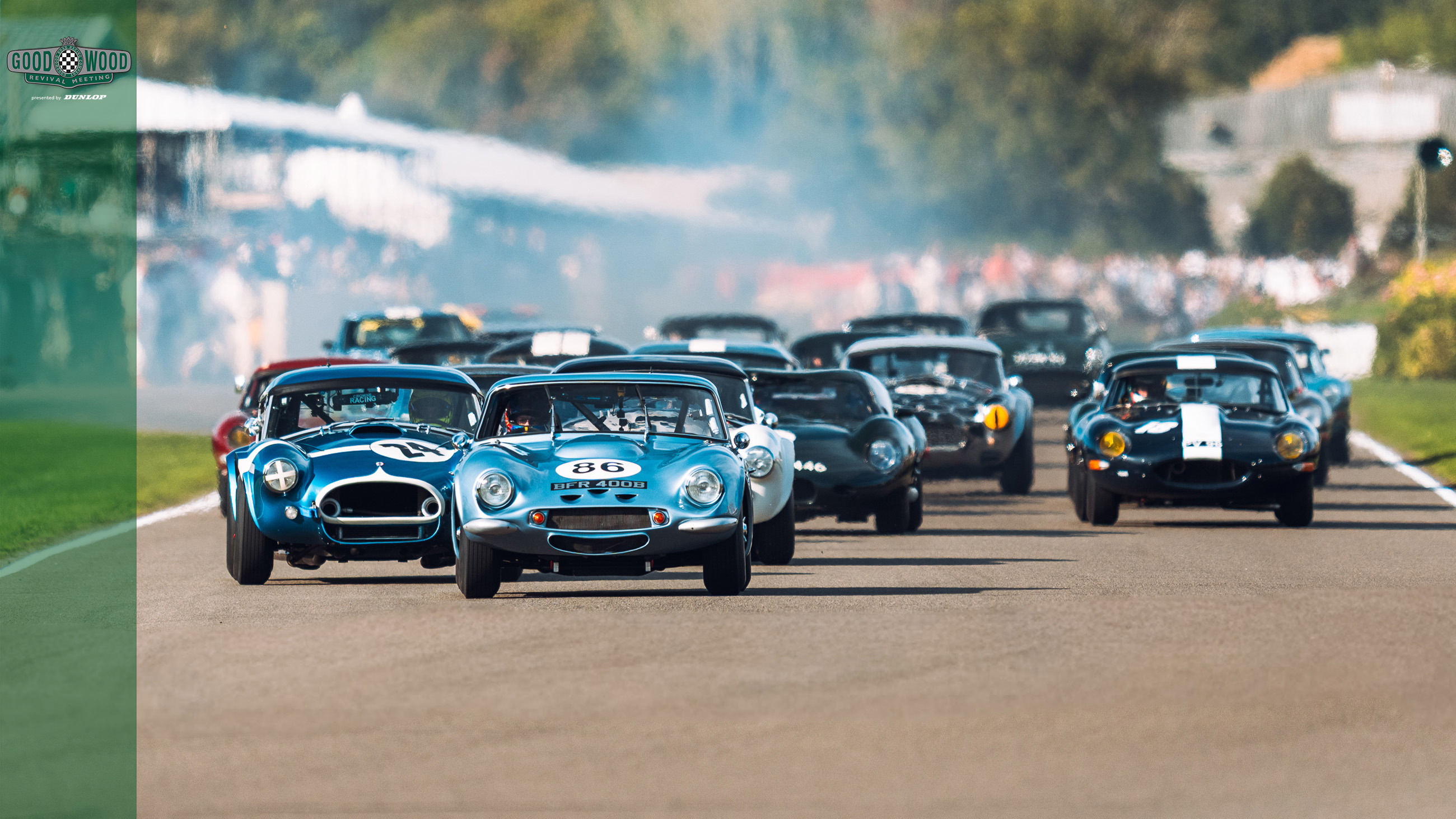
Born to a Belgian mother and German father who ran a garage specialising in Porsches, Lotterer grew up in Nivelles, former home of the Belgian Grand Prix, and made his way into racing, as most do, through karting. He won a junior world championship in 1995 before graduating to cars, showing clear and obvious promise.
In 2001, Lotterer landed in the UK for a season in the British Formula 3 Championship, racing with the team formerly known as Paul Stewart Racing, but now labelled as the Jaguar junior team. There was only one win, scored at Donington Park, and he only finished seventh in the points in a Championship won by Takuma Sato. But the Jaguar link seemed sure to propel him into an eventual Formula 1 seat.
Sadly, internal management changes (which seemed to occur every five minutes in the Jaguar F1 team) scuppered his chances. When Bobby Rahal was replaced by Niki Lauda, Lotterer found himself out of favour. Instead, he looked east to the land of the rising son for a new and brighter future.
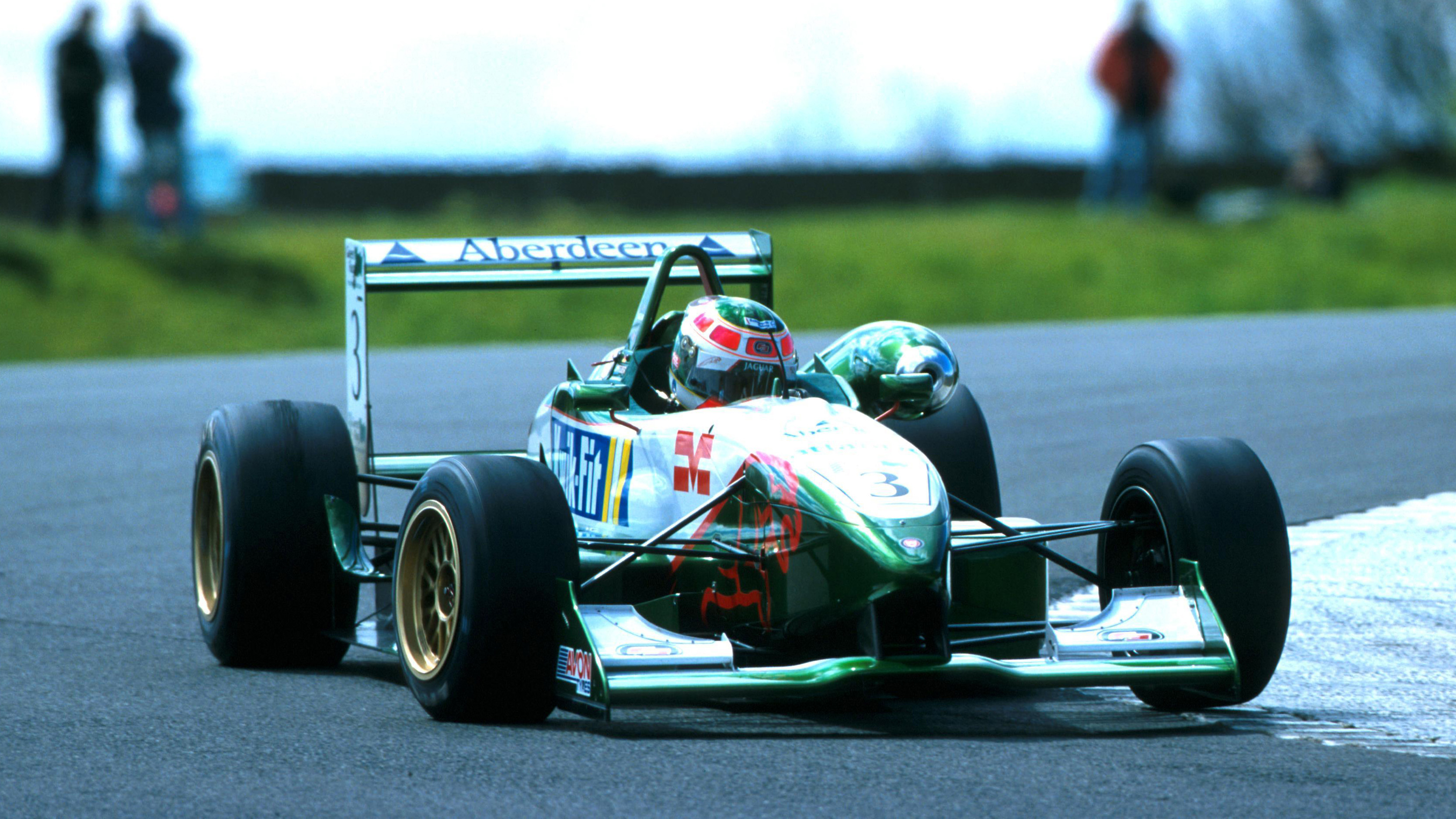
Lotterer’s lone British F3 victory came at Donnington Park, April 2001.
Image credit: Getty ImagesTurning Japanese
It’s the 15 years he raced in Japan’s fabled Formula Nippon series that supports Lotterer’s theory about his single-seater experience status. A friendship with Jaguar F1 driver Eddie Irvine led to the Northern Irishman’s manager, Enrico Zanarini, connecting him with ex-Lotus driver Satoru Nakajima’s team. Lotterer would spend three years with the Honda-affiliated squad, embracing Japanese culture. He loved it and revelled too in the power, speed and excitement of the Formula Nippon cars, which were only a shade slower than the Grand Prix cars of the same period and raced on better slick tyres, too.
He switched to Toyota-affiliated TOM’S, won the Championship in 2011 and across 15 years notched up 24 race wins. And like most who make it to the top level of the Japanese scene, Lotterer also lived out the video game fantasy of running parallel seasons in the Super GT Championship, first in Honda’s NSX, then in the Lexus SC430. He was Champion in both 2006 and ’09.
The Le Mans love affair
While Lotterer thrived in Japan, naturally he kept one eye firmly trained on the European scene, and it was in 2009 that he made his debut at the race that would come to define his career. The drive in a privateer Audi R10 turbo-diesel run by Colin Kolles opened the door to the four-ringed manufacturer, and by 2010 Lotterer was a member of Audi’s factory squad, finishing second at Le Mans behind one of the sister R15s.
For a few years, he enjoyed the hectic privilege of a double life racing in Japan for TOM’S and for the greatest endurance racing team of the modern era. Then in 2011, Audi assembled what would become one of sportscar racing’s finest trios: Lotterer, Benoît Tréluyer and Marcel Fässler. Lotterer had struck up a firm friendship with Frenchman Tréluyer out in Japan, and with the Swiss Fässler complementing the pair, they found themselves working in perfect harmony.
Especially when the trio became a quartet with the addition of British race engineer Leena Gade. They might have been from different nations, but they all spoke the same language when it came to winning motor races.
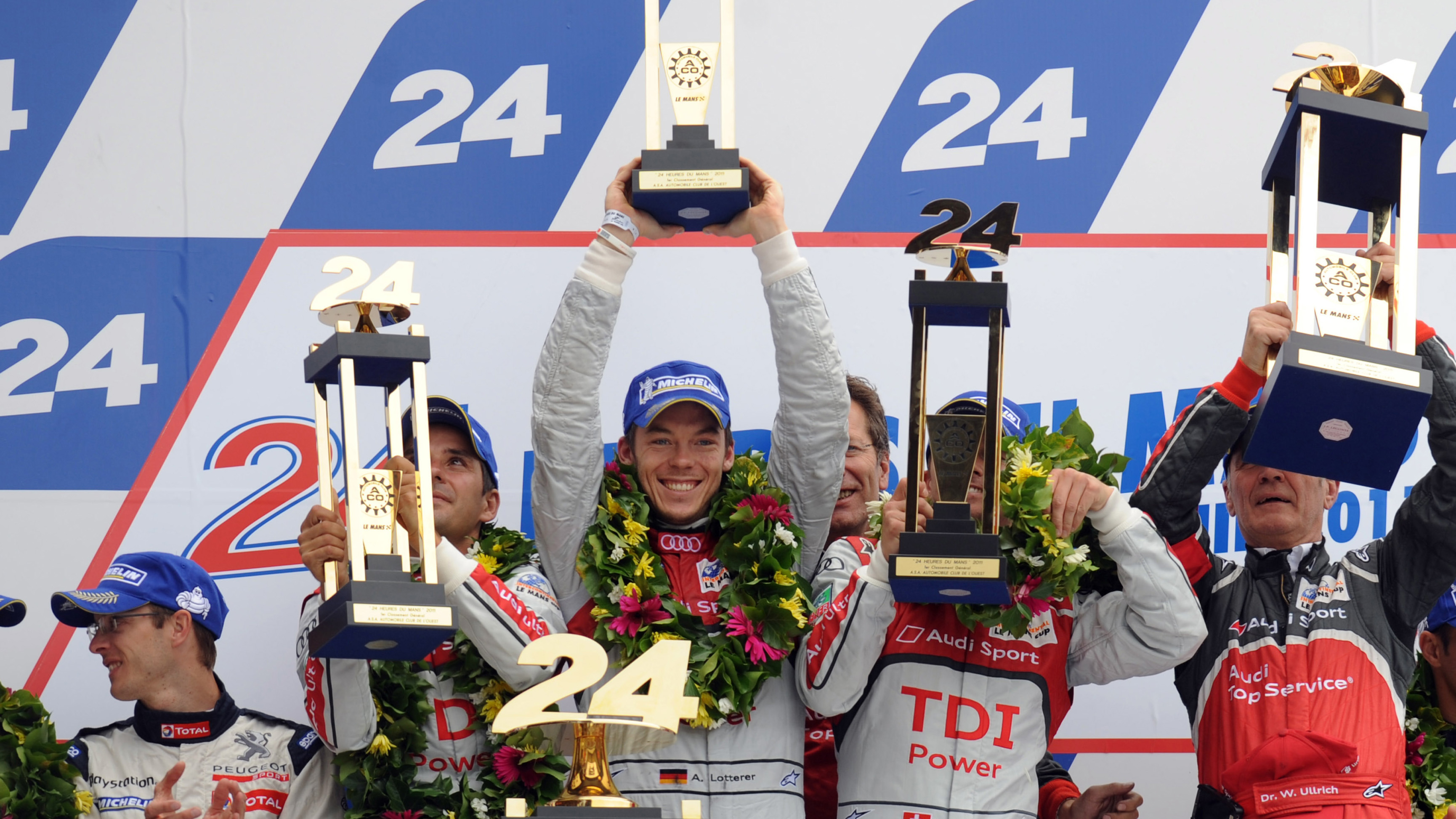
Fassler, Lotterer and Tréluyer celebrate their victory at the 2011 Le Mans 24 Hours with Audi Sport Team Joest.
Image credit: Getty ImagesThe first of three Le Mans wins in four years was a classic. Audi was reduced to just one of its new R18s in the 2011 race, after heavy accidents for Allan McNish and Mike Rockenfeller. But Lotterer, Tréluyer, Fässler and Gade held their nerve in the face of Peugeot’s challenge. A crucial decision to take on four fresh tyres at the final stop, after spotting the car had a slow puncture, gave Lotterer what he needed to clinch the victory — by just 13.854sec.
Although the so-called Audi legends McNish, Tom Kristensen and Dindo Capello, claimed a popular victory together at Le Mans in 2013, the younger trio had become the new benchmark as LMP1’s high-tech hybrid era kicked in. They made it back-to-back victories in 2012 at La Sarthe, then completed the hat-trick in ’14. Lotterer and his mates were on top of the world.
Porsche’s siren call
The return of Porsche to sportscar racing’s premier division changed the game, with the 919 Hybrid grabbing a Le Mans hat-trick from 2015. Audi’s reign came to an end and then it departed the scene at the end of 2016, leaving Lotterer with just two choices if he wanted to remain a force in the World Endurance Championship. Toyota or Porsche? For a driver who had grown up surrounded by 911s at his father’s business, there could only be one choice.
Lotterer was destined never to win Le Mans for his favourite manufacturer, but he came agonisingly close in 2017. The 919 Hybrid he shared with Neel Jani and Nick Tandy held a commanding lead, only to retire with less than four hours to go with failing oil pressure. Lotterer would late race twice for the Penske-run Porsche team in the Hypercar era, but the 963 has yet to triumph at the 24 Hours.
Formula E and an F1 cameo
For a driver with such a clear affinity for traditional racing cars, Lotterer’s move into Formula E in 2017 might have seemed a surprise. But he has always professed genuine enthusiasm for the electric-powered single-seaters, relishing the challenge of the tight street circuits and the convoluted puzzle of energy management racing. Single-seaters, whatever the means of propulsion, remained his first love.
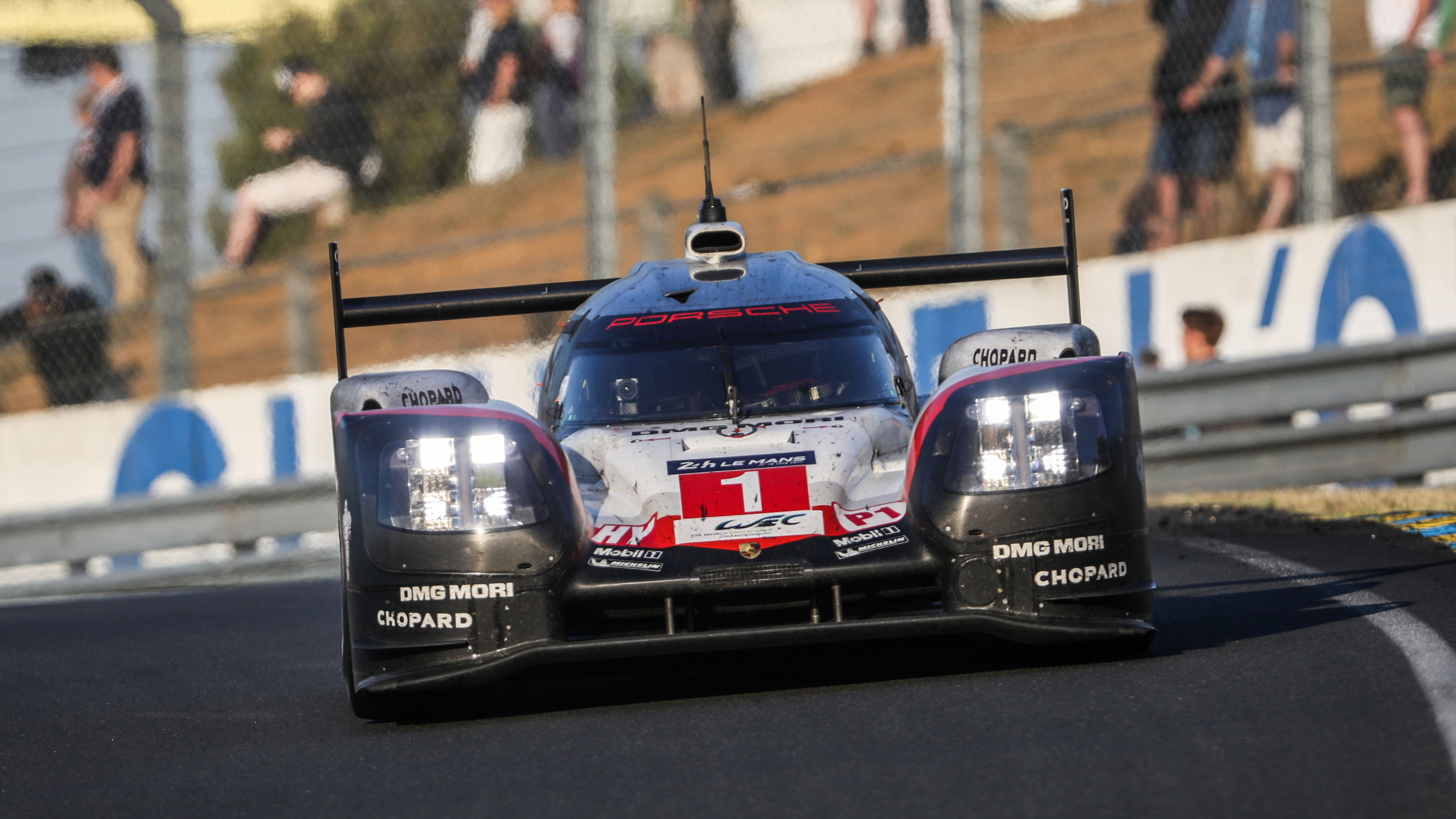
A Le Mans win with Porsche was not to be for Lotterer, who came closest in 2017 with Neel Jani and Nick Tandy.
Image credit: Getty ImagesYet over five seasons in the series, first with Techeetah, then with the works Porsche team and finally with Michael Andretti’s squad, Lotterer somehow never managed to win a race. It’s the only miss in an otherwise glittering career.
Oh, and he did make it on to the F1 grid eventually — but only once. Old friend Kolles called him up for the Caterham team at the 2014 Belgian Grand Prix. Lotterer at least got a taste of F1 at glorious Spa, qualifying respectably ahead of his team-mate Marcus Ericsson, only to lose all power on just the second lap of the race after riding a kerb.
Still, who needs F1 when you’ve enjoyed a racing life as rich as this? Lotterer is and always has been a purist, and a racer with a big heart. That’s why he’ll appreciate what it means to win Goodwood’s RAC TT Celebration for a third time, joining the only other three-time victors in the Revival era: Mark Hales and Gordon Shedden.
Welcome to the hat-trick club, André.
Main image courtesy of Getty Images.
race
modern
revival 2026
RAC TT Celebration
rac tt celebration 2026
RAC TT Celebration feature
Andre Lotterer