INTERVIEW: Kristensen and Brabham lift the lid on intense Le Mans rivalry
The rivalry between Audi and Peugeot shaped a generation of world endurance racing, its intensity pushed technology advancement to the limit and inspired a global renaissance embodied by the return of the World Endurance Championship.
This pair of European automotive giants fought for supremacy with their revolutionary diesel-powered turbocharged V12 engines, and the grandest stage for their years-long battle was of course at the greatest race of them all, the Le Mans 24 Hours.
Goodwood will be remembering the story of Audi vs. Peugeot as we prepare to celebrate ‘The Rivals — Epic Racing Duels’ at the 2026 Festival of Speed presented by Mastercard. It was a remarkable era, and it came at the perfect time for an endurance racing scene that had begun to lack a competitive edge in the face of Audi’s dominance.
By 2007, Tom Kristensen was a seven-time winner at Le Mans, and his success with Audi was unprecedented.
“I found home when I signed with Audi,” he told us. “People who really wanted to do their utmost, always wanted to improve.
“We had very strong racing cars, certainly not always the fastest, [but] they were very reliable so we could optimise, particularly with the R8. We could drive in Canada and Sebring, it would also be very fast and efficient around Monza, and of course at Le Mans.
“The organisation was key, always trying to do better, a technical failure would be taken really hard. They wouldn’t always develop in terms of speed because reliability was the key word.”
With the exception of Bentley’s brief cameo in 2003, Audi’s efforts pushed the team to a clear run of success throughout the 2000s, the likes of Panoz and Pescarolo could do little to stifle the team’s superiority.
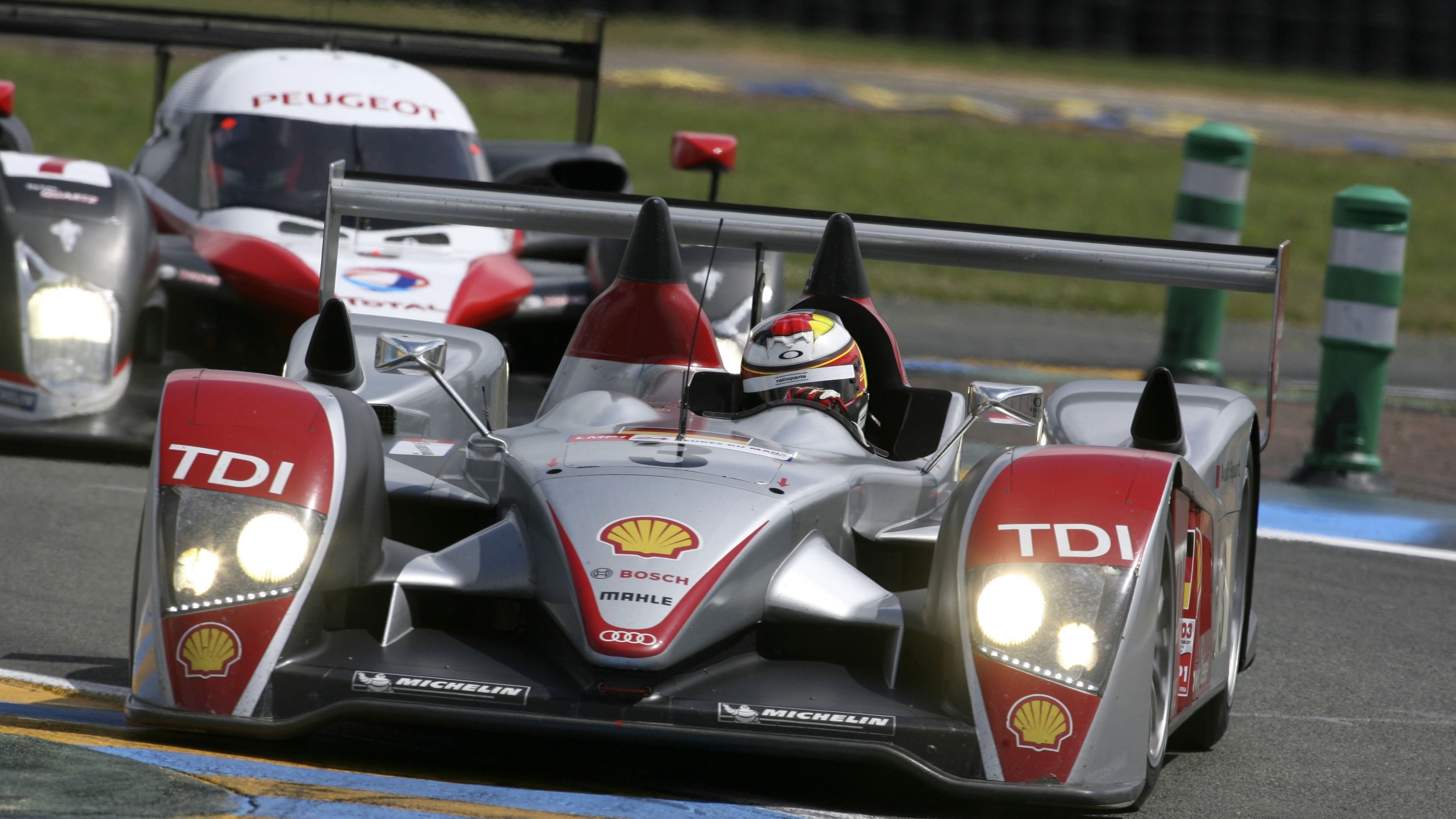
Despite that, Audi’s desire to improve was unwavering, and it was as early as 2005 when Ulrich Baretzky, Audi Sport’s Head of Engine Technology, got to work on developing the revolutionary TDI engine that would push the team’s performance to an even greater level.
“Initially we thought that was maybe not the best way to go,” Kristensen said. “But we understood early in 2005 that the plan was to enter a new car, powered by a 12-cylinder TDI engine.”
It was around that time that rumours were beginning to spread that Peugeot, who had last won at Le Mans in 1993, was sizing up a return to endurance racing after more than a decade away, and that it too was working on a new diesel project.
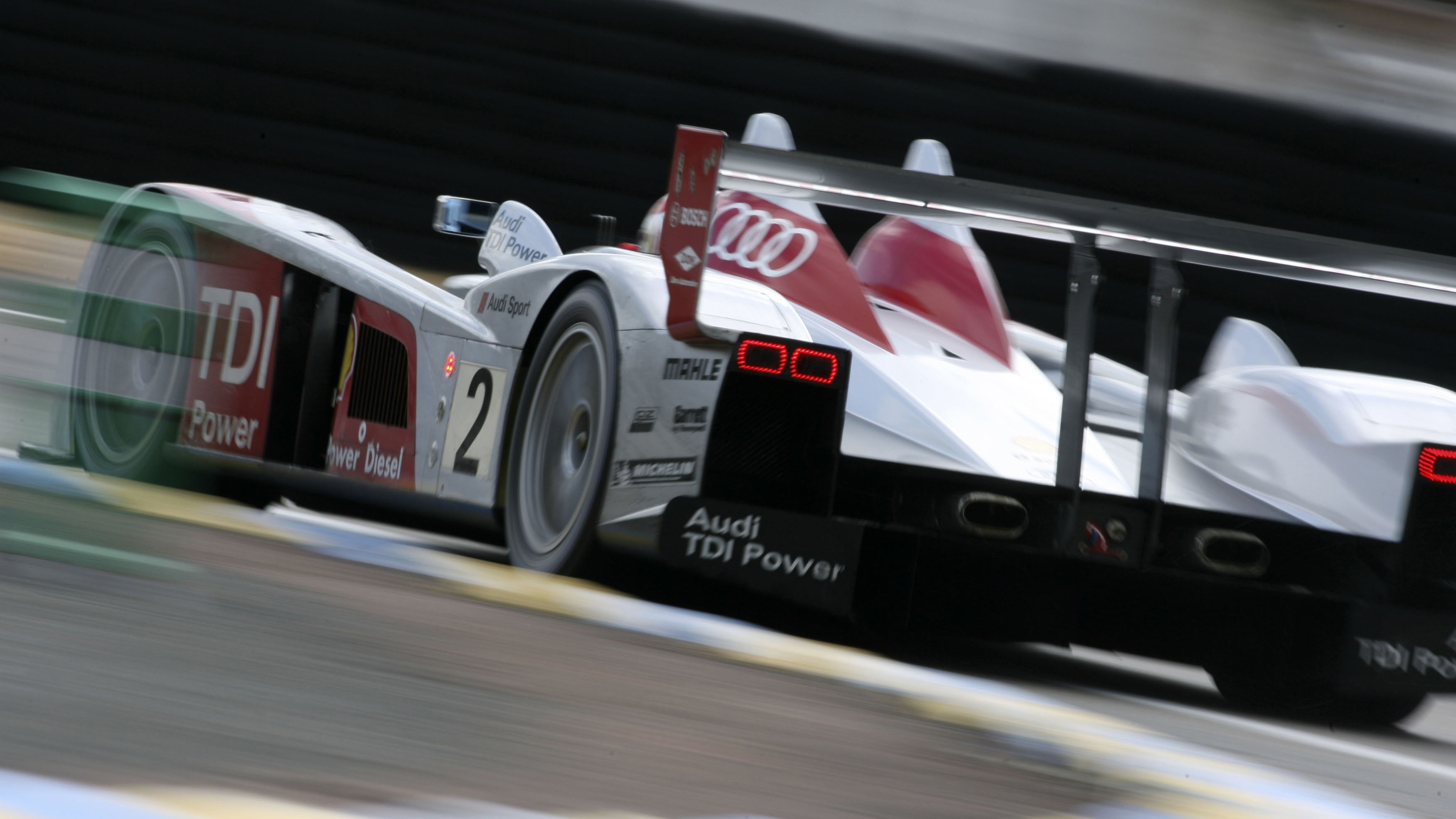
Audi's R10 TDI won Le Mans three years in a row from 2006-08.
Image credit: Getty ImagesWhen those rumours reached the ears of Audi executives, the development of the new TDI engine went into overdrive. The team wanted to make sure it maintained its advantage, and getting a headstart on its rivals was a priority.
The new Audi R10 TDI was launched in front of the world’s media, in Paris of all places, on 13th December 2005.
“I got the honour to drive the car in front of the Eifel Tower,” Kristensen shared. “We beat Peugeot to be first with the TDI, that was the feeling I had from the team, it was a very big day in Paris.”
That ultra-competitive mindset defined the next six years for both Audi and Peugeot.
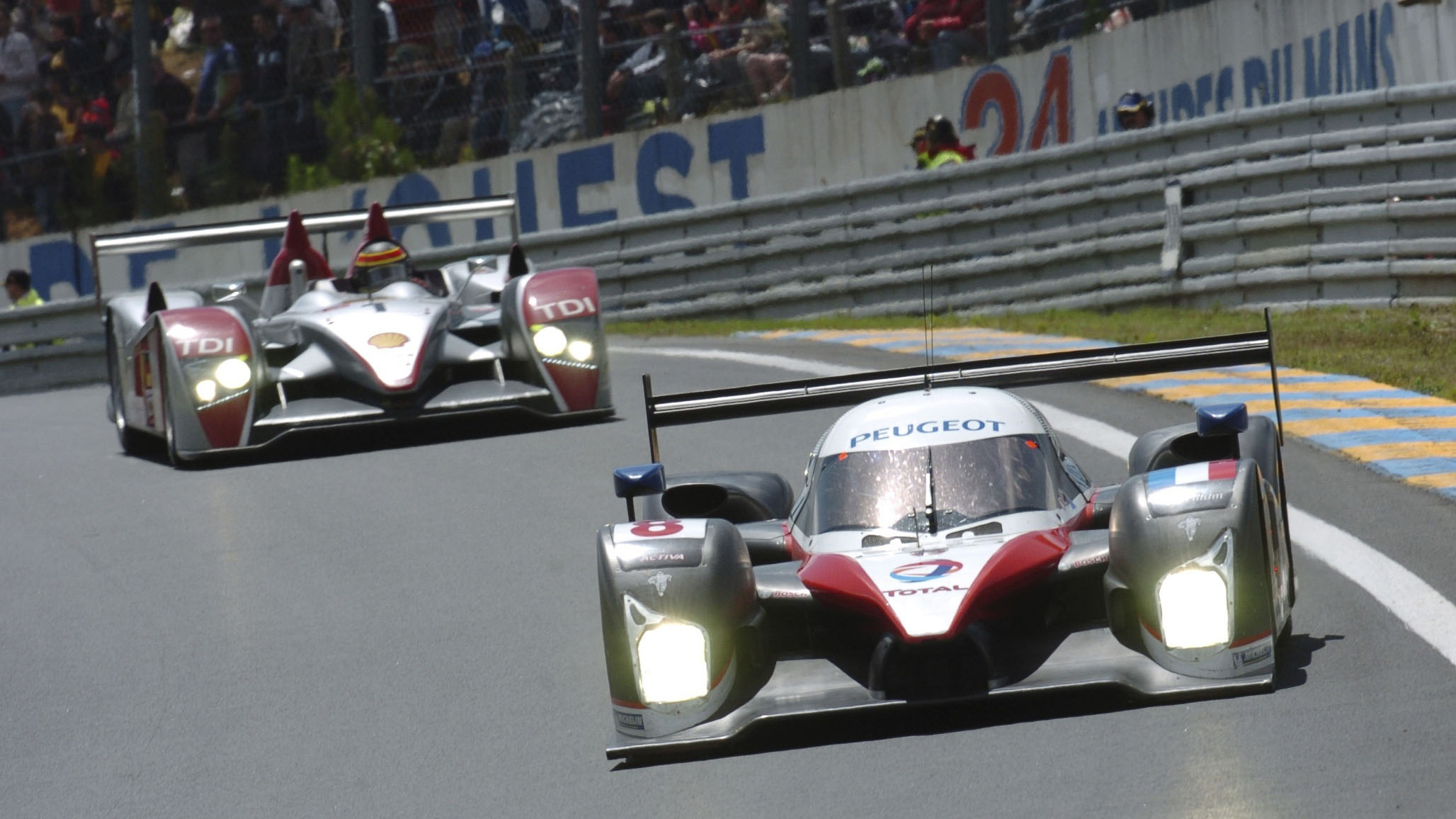
Their two cars, while both powered by V12 diesel engines, followed opposing design philosophies. Audi had close to a decade’s worth of experience and success using an open-cockpit car, but Peugeot, who finally arrived on the grid in 2007, had opted for a closed cockpit.
“In hindsight, we would have liked to have had the coupe,” said Kristensen, but the contrast of these two philosophies going to head-to-head made for a fascinating spectacle. “These two cars against each other were absolutely stunning.”
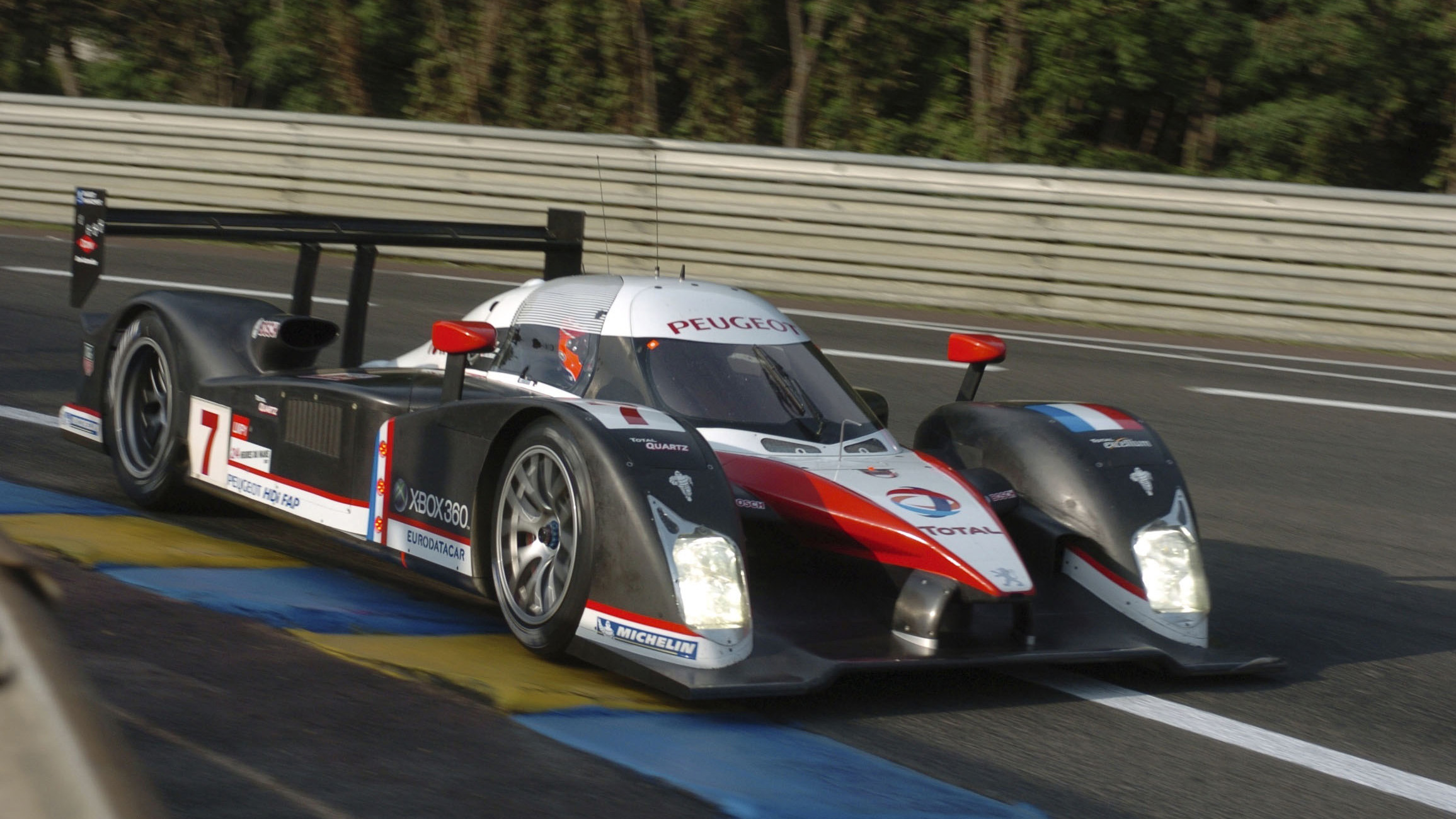
Peugeot's 908 HDi FAP was runner up at its first two outings at Le Mans, in 2007 and '08 — both times to Audi.
Image credit: Getty ImagesConverse design ideas perhaps, but the Peugeot 908 HDi FAP was immediately quick, and the French team snatched pole position at its debut Le Mans outing in 2007 to send a stark warning to Audi that its crown was under threat.
But Audi’s superior experience and reliability told when the race got underway, and “the German tank” — as it was dubbed by Peugeot — prevailed once again. The team had retained its status, but only just. The message was sent that Audi would have to fight hard to maintain its place at the top.
Returning a year later, Peugeot was arguably the favourite heading to Le Mans after a dominant start to the 2008 season, and Kristensen recalled the feeling within the Audi camp was “desperate.”
“Our win in 2008 we should never have had on pace,” he said. “We were beaten in Sebring, our car was getting into its third year, and Peugeot were coming with new cars. We were very slow on lap time in Sebring and we really got beaten.
“At Le Mans we were desperate to try to optimise everything. The leadership and a lot of people, [Rinaldo] Capello, [Alan] McNish and myself, we won a race which we shouldn’t have won. But we did that with enormous team spirit.
“Our engineer gave us the best power he could at the time, and Dr. Ulrich [Baretzky] gave us freedom to take any risk we wanted.”
Kristensen and co. made the most of that freedom, and Mr. Le Mans completed one of the great stints at the Circuit de la Sarthe to swipe the lead away from Peugeot’s Jacques Villeneuve during the night. Together with McNish and Capello he set a new distance record at Le Mans, showing in no uncertain terms that it would take more than just a quick car to knock this great Audi team off its perch.
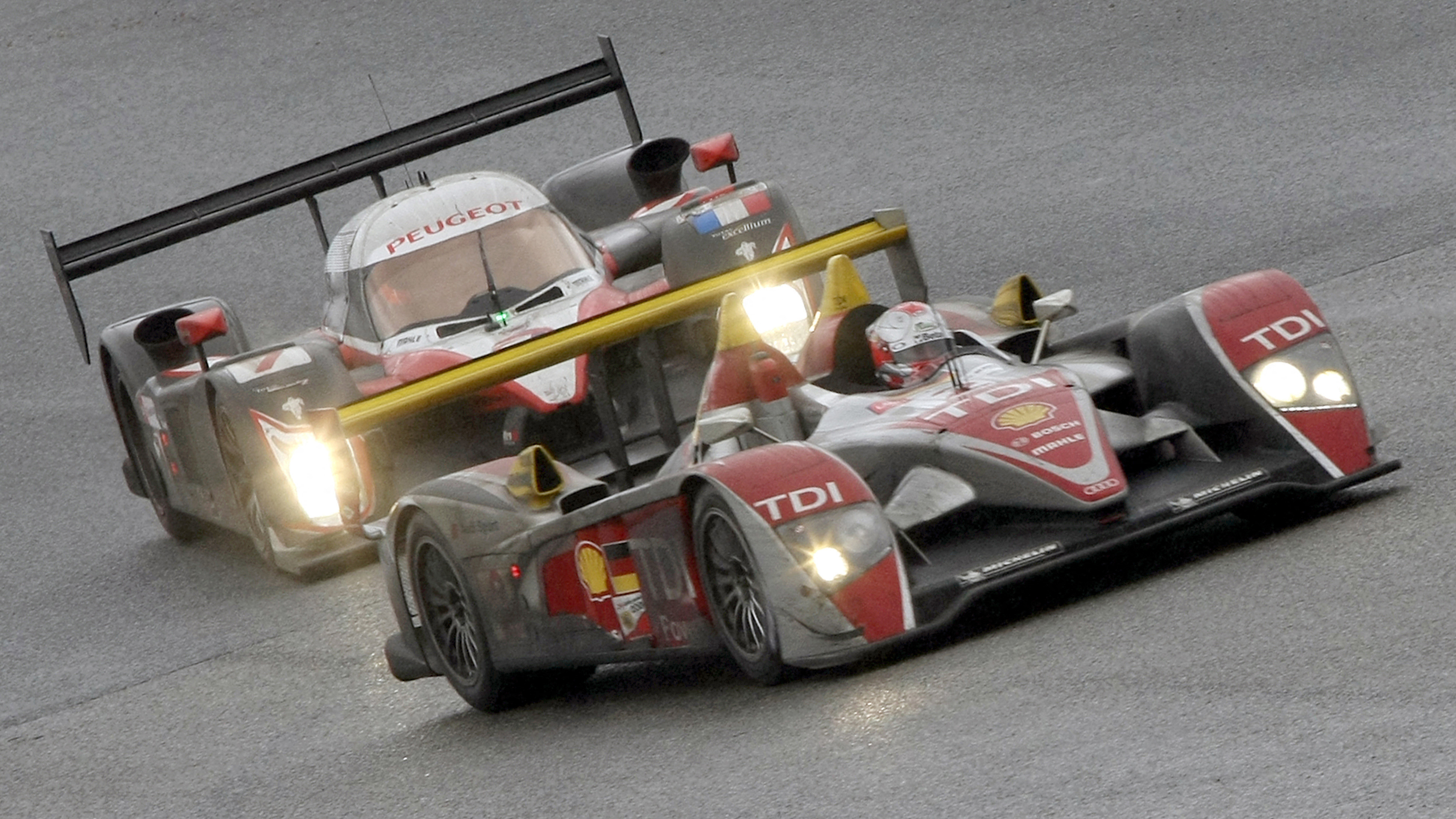
The Audi of Rinaldo Capello leads Jacques Villeneuve's Peugeot on its way to victory at the 2008 Le Mans 24 Hours.
Image credit: Getty ImagesIt would be fair to say that the feeling of desperation shifted camps for 2009. Peugeot was hell bent on achieving another victory at Le Mans, and the team turned to David Brabham — a man who knew all about winning at La Sarthe, to bolster its roster of drivers.
At that time, Brabham was racing in the American Le Mans Series with Acura, but the global financial crisis at that time had put the team’s future in doubt.
“The programme got canned six times, and each time it got resurrected,” Brabham said. The team had managed to last long enough to make it to a season-opening test at Sebring, but it was there that he first received communication from Peugeot.
I could win Le Mans with this car
David Brabham
“That was a bit of an odd one. I had to get permission from Honda and Acura and the race team because I was contracted to them. We were doing LMP1 and Peugeot were doing LMP1, so I was kind of racing for two manufacturers at the same time.”
Brabham got permission and travelled to Barcelona shortly afterwards carry out his first test of the Peugeot car.
“I remember the first time I got in the car and drove down the pitlane. I accelerated to turn one and felt the power of the engine, and I had the biggest grin by the time I got to the first turn.”
His first impressions were good, but the result was all that mattered.
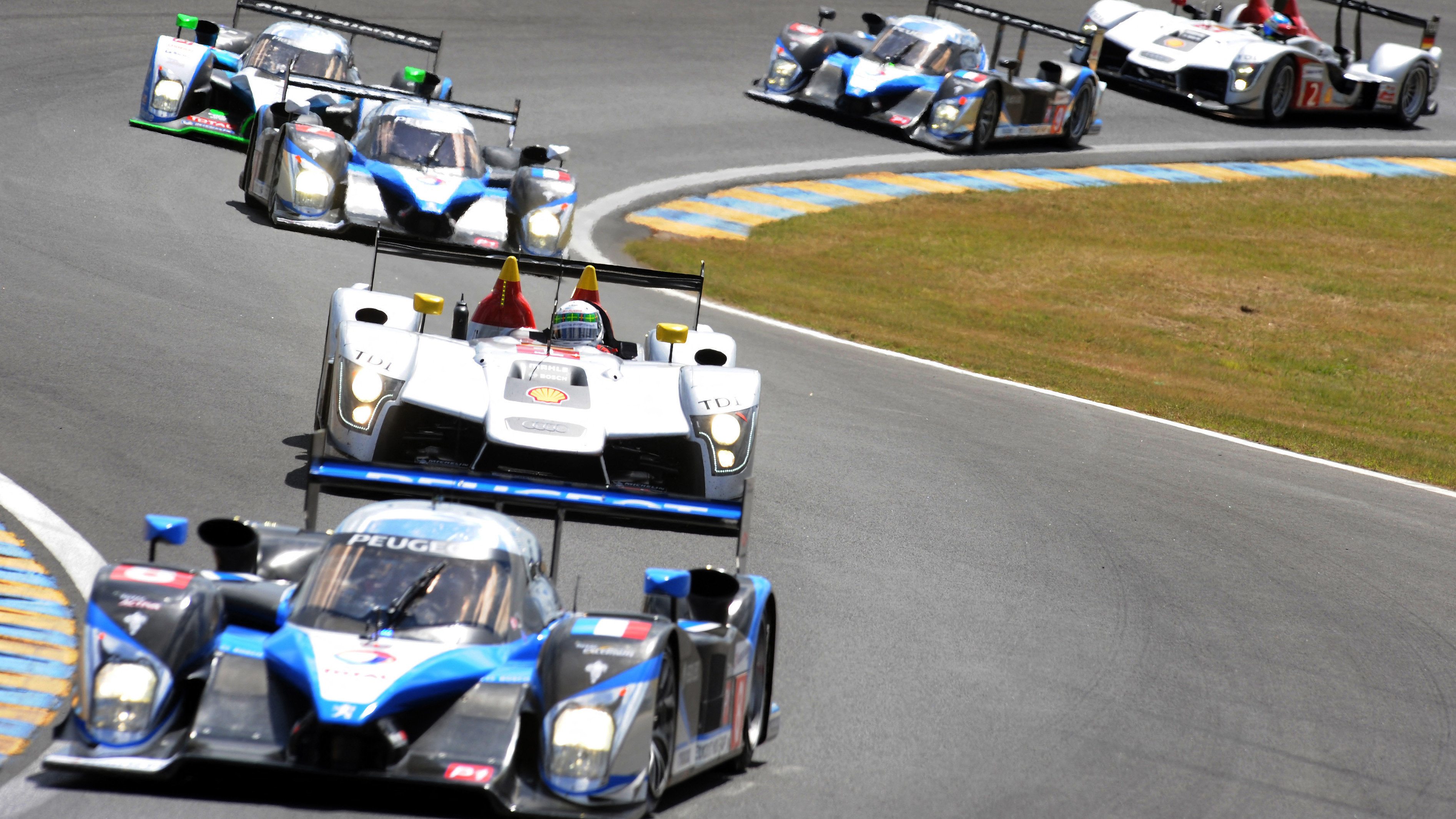
Franck Montagny leads at the start of the 2009 Le Mans in the Peugeot 908 HDi-FAP.
Image credit: Getty Images“Peugeot had to win because they were spending a lot of money getting beat all the time. We had three cars and I was with two older drivers, Alex Wurz and Marc Gene, and the other guys were the younger generation.
“It was split between two cars over there and our car, which came to our advantage a little bit during that time because they were under so much pressure. They were seen as the cars to win the race, we were kind of the backup plan.”
Audi had a backup plan too, as the aging R10 was retired at the end of 2008 as a three-time Le Mans winner. The team introduced the brand-new R15 for the 2009 season that was also diesel powered but switched out the turbocharged V12 for a new 5.5-litre turbo V10. It won first time out at Sebring, but the Peugeots were out in force at Le Mans, and Kristensen was yet to be convinced about the potential of his new car.
“It wasn’t perfect,” was his review. The French team continued to hold a substantial speed advantage, particularly in a straight line, and Stephane Sarrazin claimed his third successive pole position.
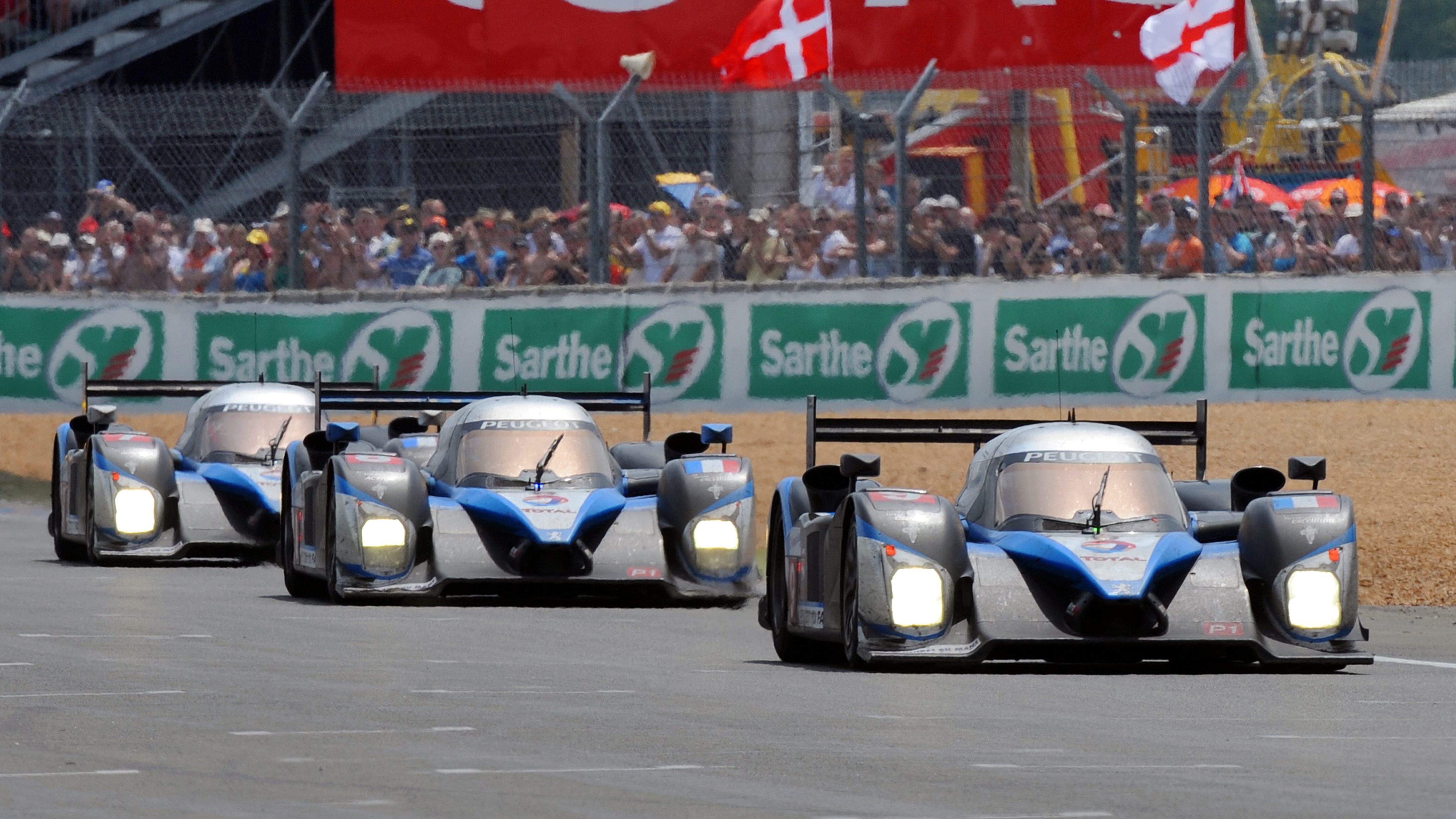
Peugeot finally beat Audi in 2009, taking a 1-2 finish to secure its first Le Mans victory since 1993.
Image credit: Getty ImagesThere would be no epic recovery this time though; the Peugeot cars were both quicker and more reliable than the Audis as they finally achieved success at the third time of asking.
But, as anyone who has raced at Le Mans will attest, even a great victory such as this is still fraught with drama, pressure and the constant risk of reliability issues. Peugeot’s performance alone would not be enough to guarantee victory, and the experienced hands of Brabham, Wurz and Gene drove a balanced and methodical race.
The celebrations at the finish were as wild as you would expect, as Brabham and co. broke Audi’s distance record by a single lap to take the chequered flag after 382 tours.
“Standing on the podium I thought, ‘thank God’,” Brabham said, as he reminisced on that day. “It was an interesting experience because two years in a row I won with Aston Martin and the feeling of being on the podium it was immense.
“You feel like you’ve achieved something amazing, not just yourself but with your team-mates, the team, everyone behind the scenes.”
He recalled looking across at the overall winners and wondering what that must feel like: “Fast forward 12 months and there I was, standing on that podium as the overall winner; the feeling was exactly the same.
“Then it kind of wakes you up and you think it’s not so much about the trophy, it’s about the journey that got you there, that means more. The ups and the downs, the tears, the laughter, nearly dying in the car because it’s too hot.
“The family commitment, too. It’s a selfish sport; the family have to support you. I stood up there and appreciated that lot, so it was a really special moment for me.”
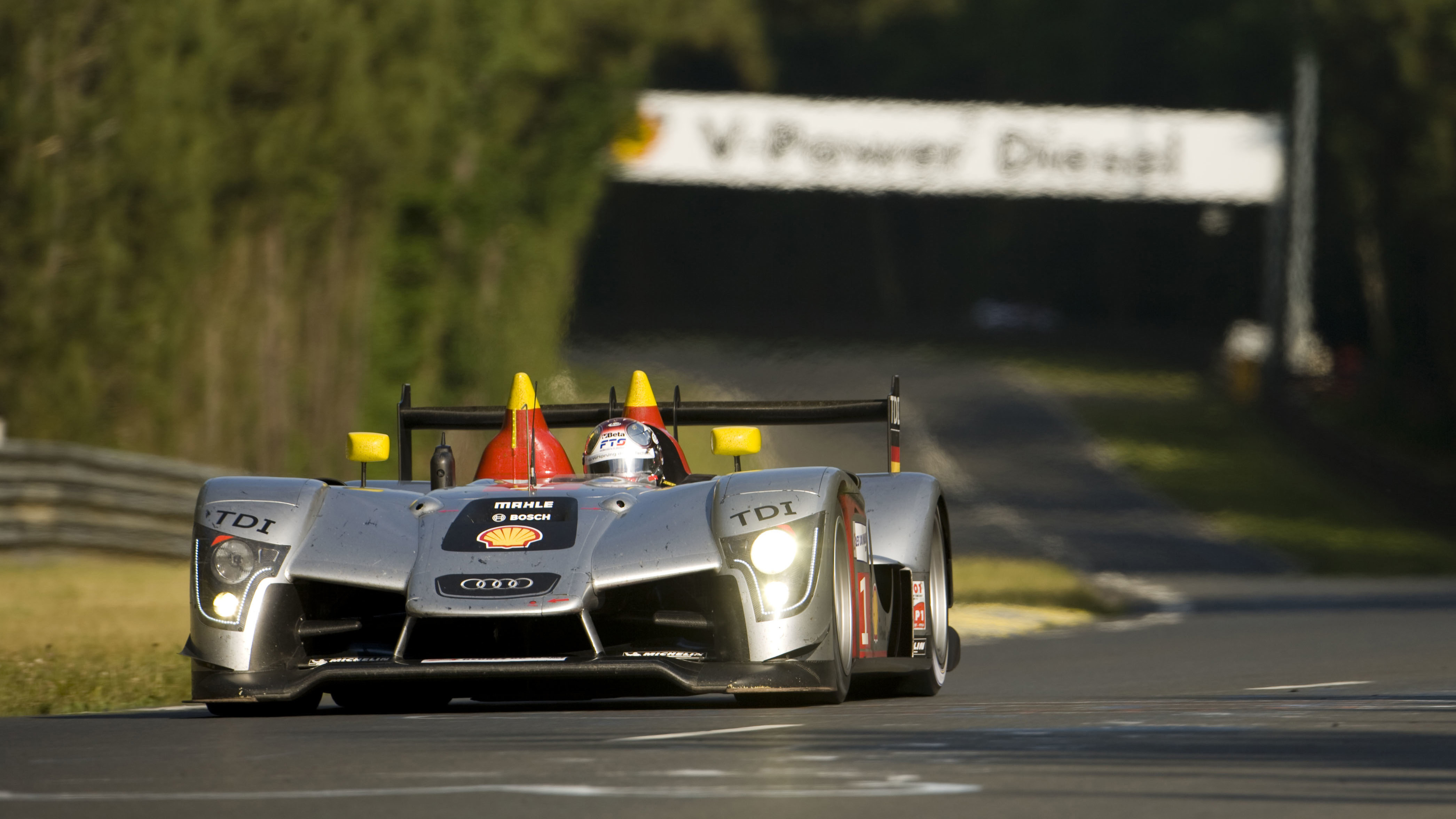
The number 1 Audi of Kristensen, McNish and Capello finished a distant third at Le Mans in 2009.
Image credit: Getty ImagesAudi, on the other hand, had seen its five-year streak at Le Mans brought to an end in comprehensive circumstances. Kristensen’s car, the leading Audi, finished six laps down in third place.
“Peugeot were always a great competitor,” the Dane said. “It was hard for them in 2008, swapping shirts with the engineers and mechanics.
“There was a really good atmosphere at Le Mans in 2009 when Peugeot finally won again after their victory in the early ‘90s. It was deserved, no doubt.”
Deserved it might have been, but Audi were not prepared to accept it.
"We went back, worked harder, tried to improve what we could in all areas of the car for the following year.”
We were doing the fastest laps ever, we were doing the distance records, it was the fastest cars ever to be driven around the track.
Tom Kristensen
Despite a year’s worth of effort, and some substantial upgrades to the R15, Peugeot’s performance advantage if anything looked to have grown further still. The four 908 HDi FAPs locked out the front two rows on the grid and looked set to deliver back-to-back victories at Le Mans.
The race itself, however, was a chain of disaster for the French marque, as the reliability woes of earlier years returned to scupper its chances.
Audi however ran a near perfect race to obliterate the distance record that had stood since 1971 and claim a ninth Le Mans 24 Hours victory.
The final chapter of this great rivalry played out a year later, when Audi again brought a brand-new car to Le Mans intending to finally confirm its superiority without question.
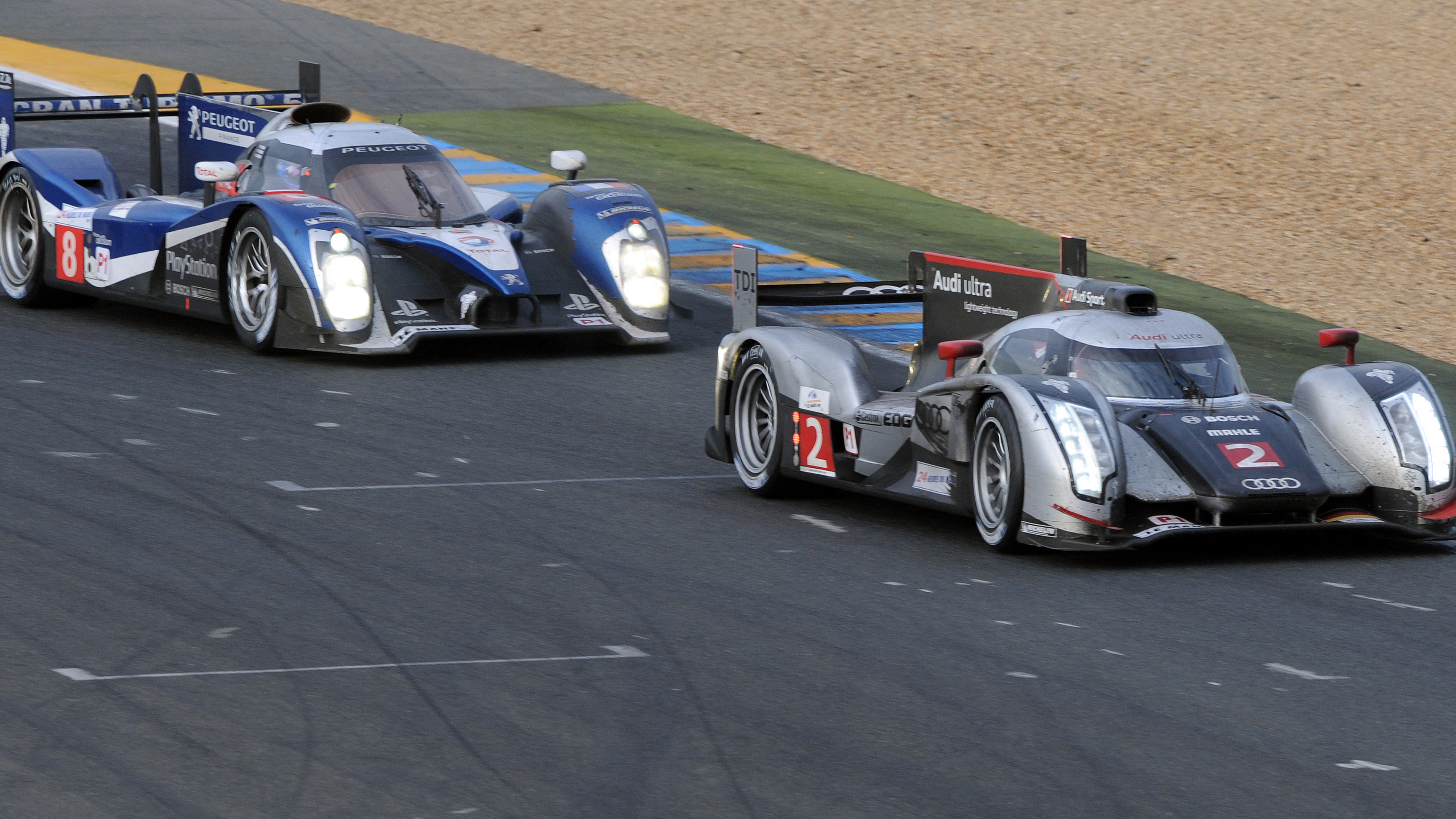
Peugeot pushed Audi all the way in 2011, but finished second and third in what proved to be its final Le Mans entry for over a decade.
Image credit: Getty ImagesThe closed-cockpit R18 was a substantial step up in performance compared to the R15 and gave the Germans an outright speed advantage over Peugeot for the first time since 2007.
The race itself was memorable for many reasons, but the battle for the lead remains to this day one of the closest of all time, as the leading and last-surviving Audi came home just 13.854 seconds ahead of the second-placed Peugeot.
It was a fitting end to what had been a hugely important era for the world of endurance racing. A five-year period that transformed the landscape and garnered an interest that certainly inspired the formation of the World Endurance Championship in 2012.
That Peugeot was not there for those early years of the WEC was an injustice considering its influence on the sport’s popularity at that time, but financial struggles forced its departure at the end of 2011.
A great sporting rivalry was brought to an end, but Kristensen maintains that it was one of the greatest of all time.
“I would put it right up there. It was the time when we were doing the fastest laps ever, we were doing the distance records, it was the fastest cars ever to be driven around the track. There’s no doubt about that.”
Tickets for the Festival of Speed are limited. Only Thursday admission remains but hospitality packages for all four days are available. Missed out on a ticket for Friday or Saturday? Find out how you can access our sold-out days with one of our new packages.
If you’re not already part of the GRRC, joining the Fellowship means you can save ten per cent on your 2026 tickets and grandstand passes, as well as enjoy a whole host of other on-event perks.
Main image courtesy of Getty Images.
race
historic
festival of speed
fos 2026
The Rivals
Audi
Peugeot
Tom Kristensen
David Brabham
interview