Sainz vs McRae: A golden era of rallying
There is no greater rival in motorsport than your team-mate, so you can imagine the intensity of the rivalry between Carlos Sainz Sr. and Colin McRae, who were team-mates on three separate occasions. The pair drove together at Ford, Citroën and, most famously, at Subaru, where the competition exploded at Rally Catalunya in 1995.
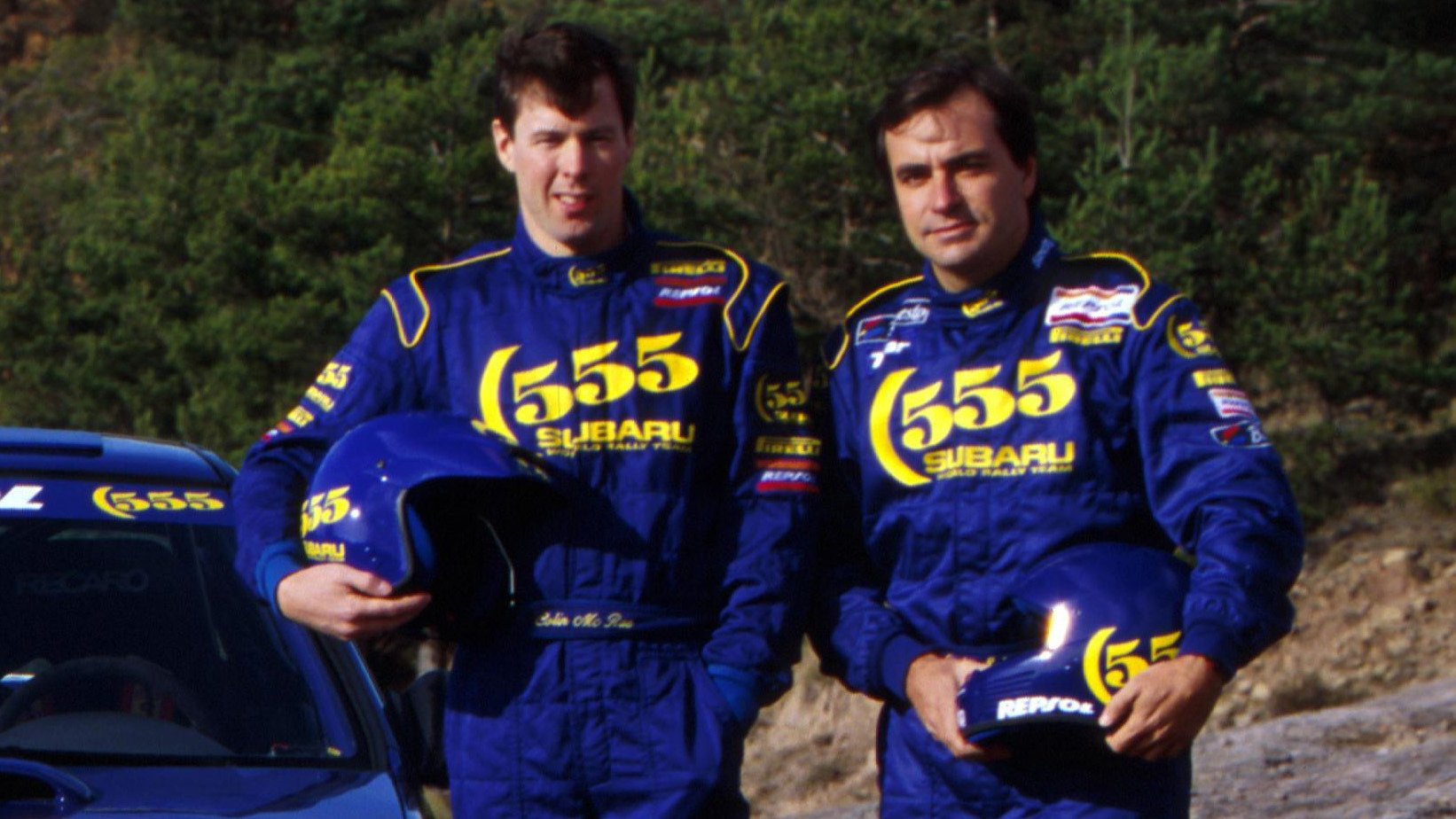
Sainz, six years McRae’s senior, was already a two-time World Rally Champion when the bolshy Scotsman burst onto the scene in 1993. As a driver, Sainz relied on pace notes, had a tidy style, high mechanical sympathy and a reputation for pushing his team as hard as he pushed his car.
McRae, meanwhile, relied on raw car control, feel and instinct, with a flamboyant style that often took its toll on the machinery beneath him. His motto ‘If in doubt, flat out’ reflected his need to always drive as fast as possible, but this approach earned him a less flattering media nickname: ‘McCrash’.
In 1993, the Scotsman secured his maiden victory for Subaru at the New Zealand Rally behind the wheel of the Prodrive Legacy, a relatively long car that wasn’t entirely suited to the rally scene. Hopes for the 1994 season were high, not just because the team would use the smaller, more nimble Impreza with pioneering active differentials, but because Sainz joined the team to bring together what looked like the perfect mixture of youth and experience.
Sainz’s work rate, perfectionism and analytical feedback made him the ideal candidate to get the new car competitive. He secured the Impreza 555’s maiden victory at the Acropolis Rally in Greece before McRae won in New Zealand and Great Britain. The Impreza was proving it could take on the establishment of Ford and Toyota.
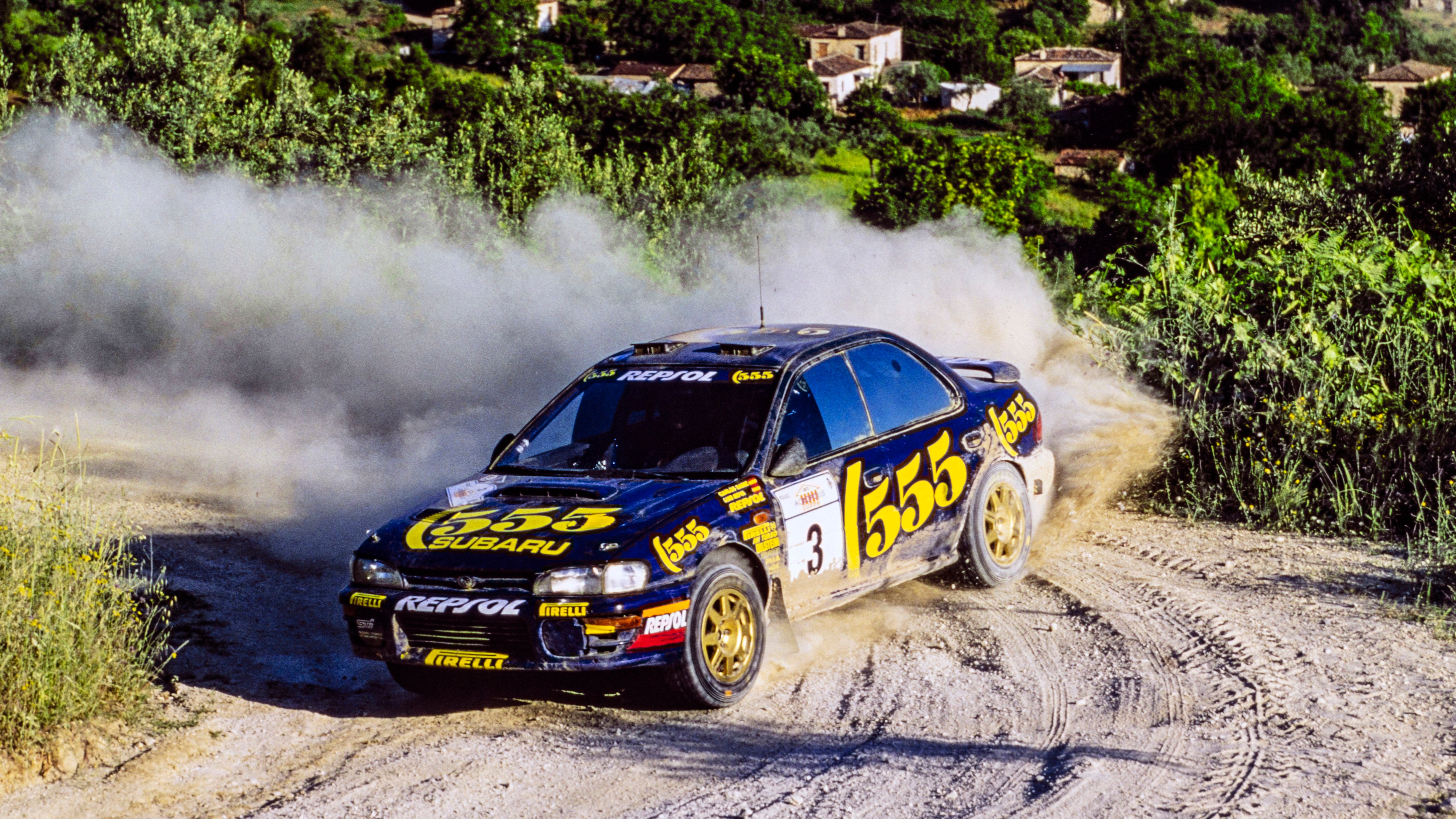
Carlos Sainz Sr. drives his Subaru Impreza at the Acropolis Rally in May 1994.
Image credit: Getty ImagesThere was a sense of inevitability that Subaru would win a World Championship, and Sainz taking the opening round in 1995 in Monte Carlo did nothing to disprove that theory. McRae, though, hit sheet ice and crashed out on the Sisteron stage. The team notes had mentioned a risk of ice but Sainz, knowing it was practically guaranteed — neglected to emphasise the danger to his team-mate.
There would be no space for shenanigans at Rally Sweden, Subaru's three cars retiring, but the manufacturer’s title hopes got back on track in Portugal, with Sainz winning and McRae finishing third. The team put in a solid performance at the Tour de Corse, with Sainz fourth and McRae fifth, but the run-up to New Zealand was a turning point. Sainz was forced to sit out the event after breaking his collarbone falling off his mountain bike.
McRae, meanwhile, won in dominant fashion taking ten of the 33 stages, and carried this momentum into Rally Australia where he showed uncharacteristic restraint, settling for second behind Kenneth Eriksson’s Mitsubishi. Sainz, freshly recovered from his injury, retired with a failed radiator, and that gave McRae a five-point lead over his teammate and set the tone for the next event: Rally Catalunya.
For McRae, Catalunya represented unfamiliar territory — it was his first time competing there. But Sainz wasn’t looking likely to win either, with Juha Kankkunen’s Toyota Celica leading by 22 seconds at the end of day one. Two stages from the end of day two, Kankkunen misheard a pace note, entered a corner far too fast and rolled heavily, coming to rest on his roof wedged between a rock and a tree. His rally was over, and Sainz inherited the lead with an eight-second gap to McRae.
That gave Subaru a dilemma: let the pair race or impose orders and take safe points?
The team chose the latter, deciding that local hero Sainz should win, a decision that left McRae incandescent. He kicked the team bus, argued openly with boss David Richards and smouldered through interviews. If his body language wasn’t enough, his driving made his feelings crystal clear. He drove flat-out, ignoring orders, even blasting past protesting bosses waving their arms by the roadside.
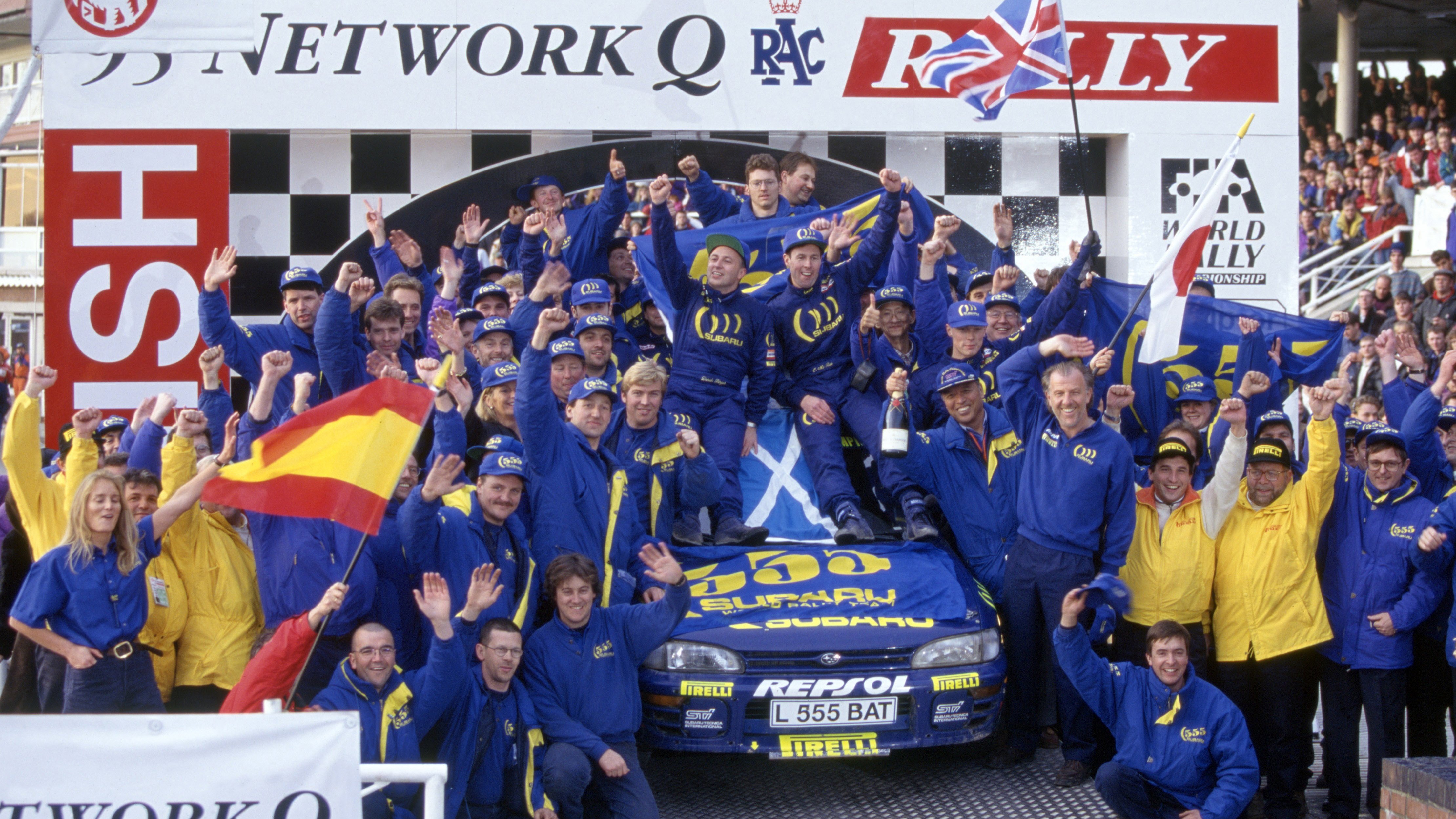
Colin McRae and team celebrate winning the Championship after the Rally of Great Britain in November 1995.
Image credit: Getty ImagesIt was a vintage display of car control and a two-fingered salute to those who wanted to slow him down. McRae had reversed Sainz’s lead, finishing eight seconds ahead and winning the rally. Or so we thought. The threat of an on-the-spot sacking was enough to make McRae relent and team orders prevailed. McRae arrived for his time check a minute late de facto handing victory to Sainz, but his point had been made.
Ultimately, it was McRae who would triumph in 1995. He won the final round of the season, the Network Q RAC Rally, driven by a sense of injustice that made him nearly uncatchable. McRae took victory finishing 36 seconds over Sainz and at 27 became the youngest World Champion in history at the time.
The competition between McRae and Sainz would never again reach the heights of Catalunya 1995, but their rivalry continued to flicker.
By the time the pair reunited at Ford in 1999, the dynamic between them had changed. Both were now World Champions; both were team leaders; and both desperately wanted to add another title to their tally.
Ford’s new Focus WRC was fast but fragile, and reliability became a theme of their time there. McRae delivered spectacular wins, including a dominant performance in Kenya at the Safari Rally where his commitment stunned even his team-mate. But he also suffered a string of mechanical retirements that drove him to distraction.
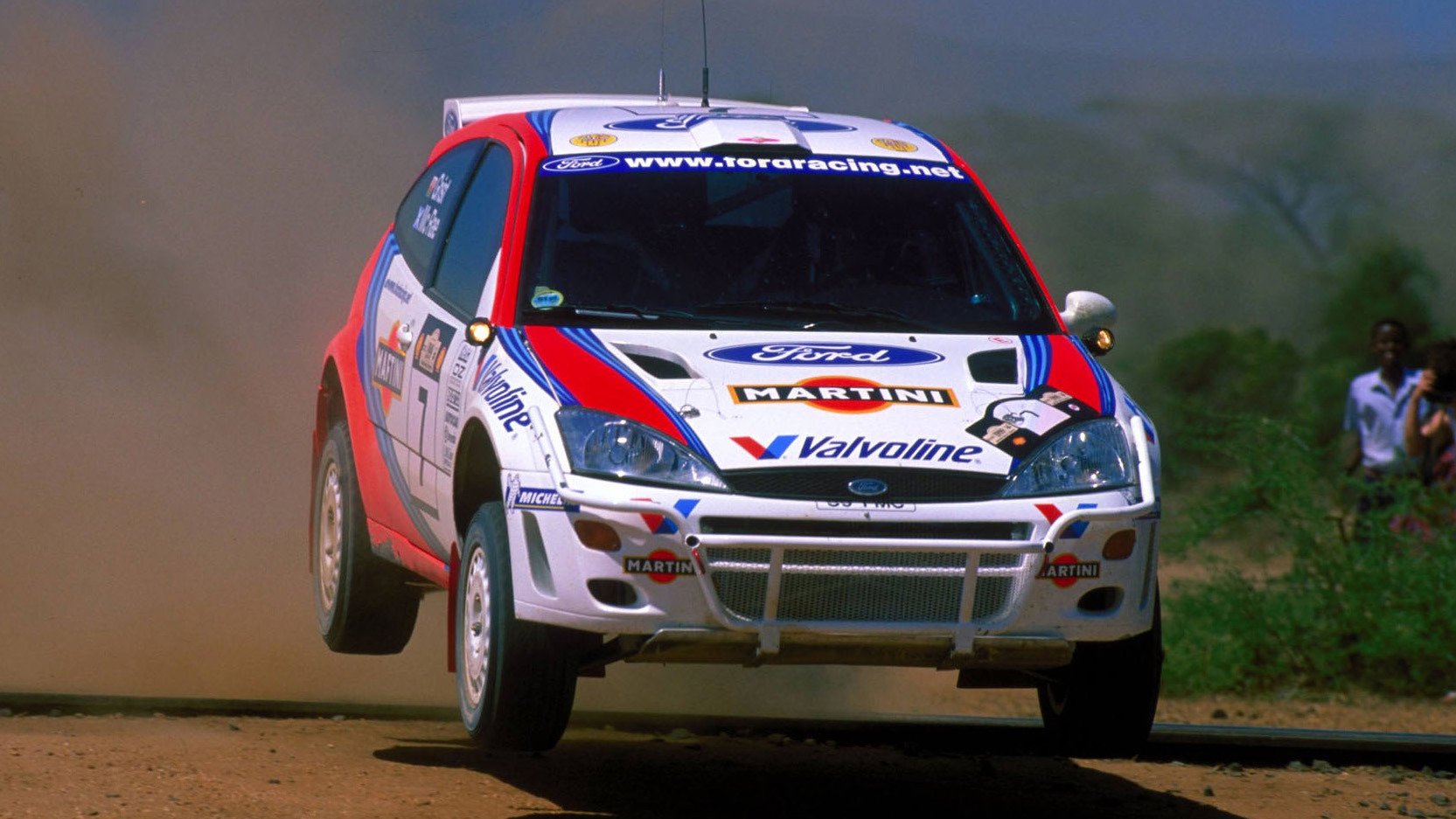
Colin McRae drives the Ford Focus to its first victory, at the Safari Rally in Kenya in March 1999.
Image credit: Getty ImagesSainz, meanwhile, delivered trademark consistency that kept Ford's title hopes afloat. Their styles once again made them perfect foils: McRae blisteringly quick, Sainz relentlessly steady. The 2000 Acropolis Rally highlighted the contrast. McRae retired with mechanical failure while Sainz, using his finesse to nurse the Focus through brutal conditions, took a controlled victory.
Their final pairing came at Citroën in 2003, where another generational talent entered the stage: Sébastien Loeb. Suddenly, McRae and Sainz found themselves not as title favourites but as experienced heavyweights tasked with developing the Xsara and mentoring a future star.
This period marked the most harmonious stage of their relationship. Sainz won in Turkey that year, McRae delivered solid points, and Citroën took the Manufacturers’ Championship. Animosity had long since faded and mellowed into genuine friendship. Sainz admired McRae’s bravery and astonishing car control. McRae admired Sainz’s professionalism, intelligence and relentless work ethic.
McRae once joked that when he finally learned to drive tidily like Sainz, he’d probably be ready for retirement. Sainz, for his part, would later say that McRae was “one of the most naturally talented drivers I ever saw” and his best friend in rallying.
Their friendship made McRae’s death in September 2007 all the more devastating. Sainz, who had spoken to McRae only days earlier, was heartbroken. He travelled to Scotland to pay his respects, standing alongside former rivals and team-mates who all recognised the same thing: that McRae was irreplaceable.
Sainz and McRae weren’t just team-mates, they were polar opposites, friends, and rivals who defined their era of WRC, and its dynamics like this that we can’t wait to celebrate at the 2026 Festival of Speed presented by Mastercard when we explore everything that goes into a rivalry as epic as that which Sainz vs McRae shared.
Tickets are now available for the 2026 Goodwood Festival of Speed. If you’re not already part of the GRRC, you can sign up to the Fellowship today and save ten per cent on your 2026 tickets and grandstand passes, as well as enjoying a whole host of other on-event perks.
Images courtesy of Getty Images.
race
historic
festival of speed
fos
fos 2026
The Rivals
colin mcrae
Carlos Sainz Sr
event coverage