

Neuromorphic skin could lead to robots feeling pain
Robots are getting a sense of touch and a rudimentary sense of pain. Scientists have developed a neuromorphic electronic skin that allows machines to detect pain and react instantly.
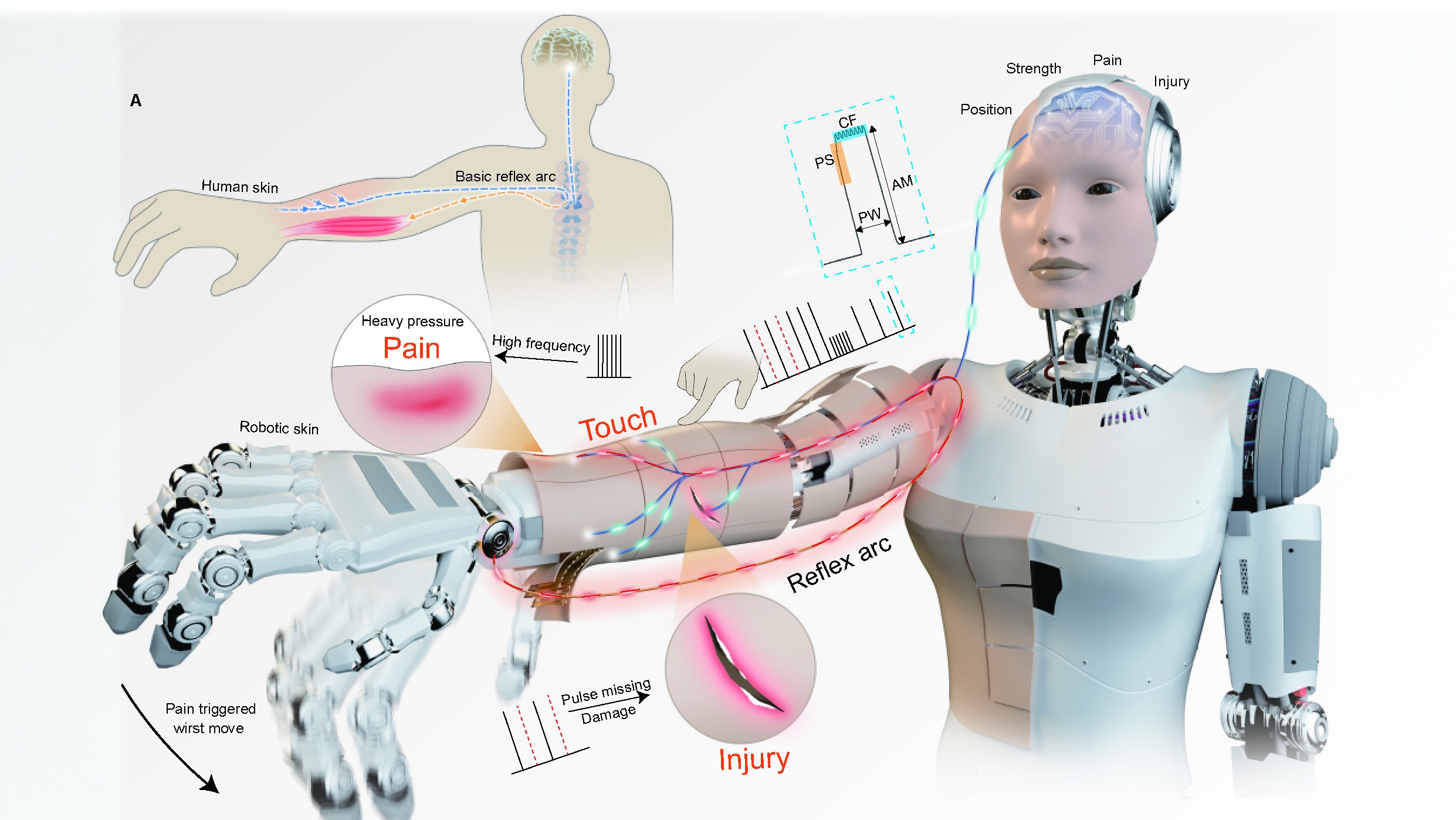
Developed by researchers at City University of Hong Kong, the technology encodes tactile information into neural-like signals, enabling robots to distinguish between ordinary touch and potentially harmful contact. When force or pressure crosses a defined threshold, the skin triggers an immediate protective response, such as pulling a limb away, without waiting for instructions from a central computer.
Known as a neuromorphic robotic electronic skin, the system is designed to mirror how the human nervous system handles reflexes. Writing in the Proceedings of the National Academy of Sciences, the researchers describe a “hierarchical, neural-inspired architecture enabling high-resolution touch sensing, active pain and injury detection with local reflexes, and modular quick-release repair.”
In this research context, “pain” does not refer to conscious experience or emotion. Instead, it describes a functional equivalent of how our bodies detect something potentially damaging and respond before further harm occurs. Crucially, that response is generated locally, within the skin itself, rather than being routed through a central processor.
Most robotic skins currently act as passive sensors, registering contact and passing data back to a computer that decides how the robot should respond. That process introduces a delay. By contrast, the new system allows different parts of a robot’s body to react independently when dangerous contact is detected.
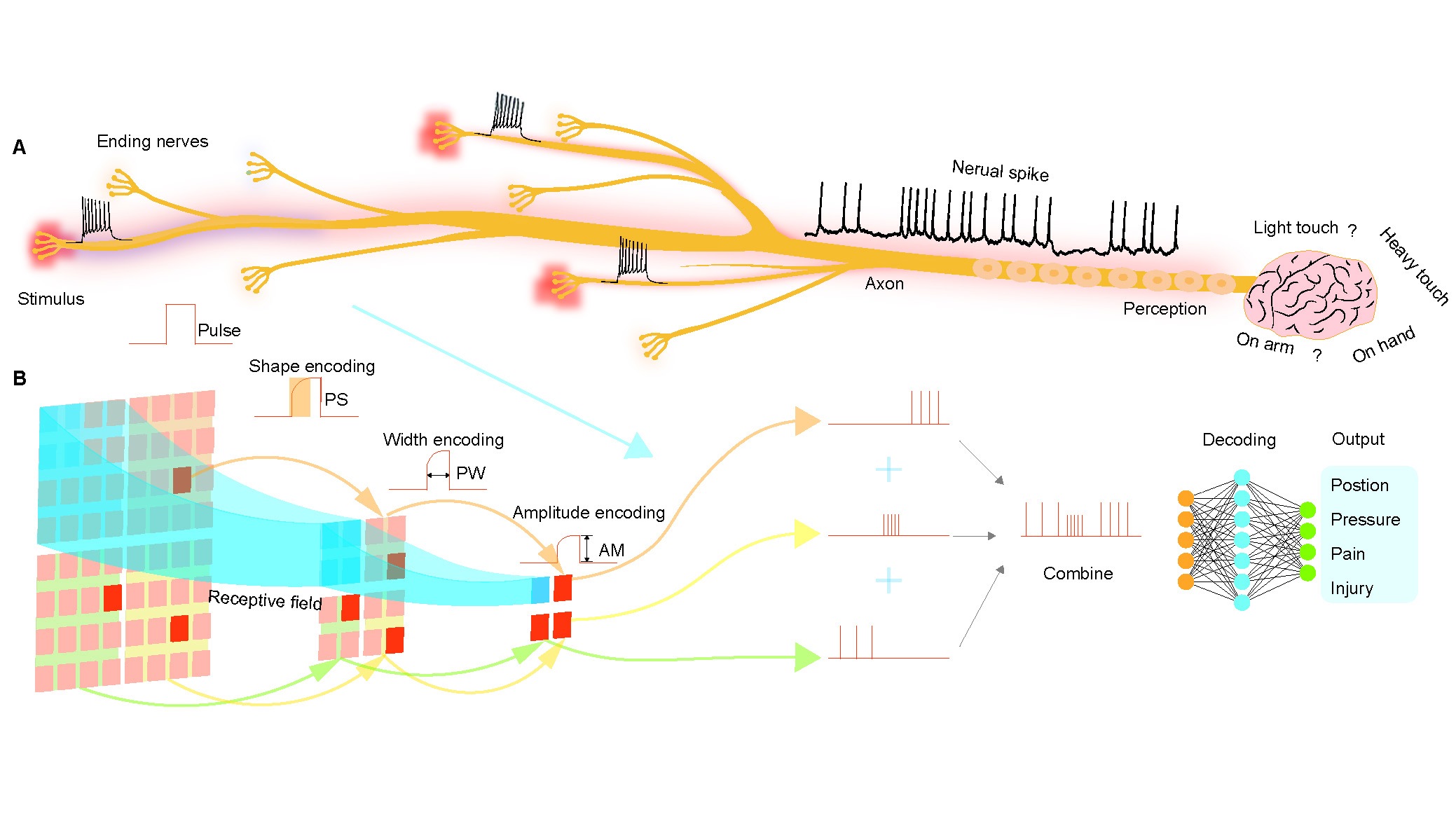
During normal interaction, touch is converted into electrical signals and sent to the robot’s main system for interpretation. When contact exceeds a preset damage threshold, however, the skin generates a strong neural-style signal that directly activates the robot’s actuators, producing an immediate reflex. In related reporting, the researchers explain this bypass allows the robot to respond before damage escalates.
Physically, the skin is constructed from four layers loosely modelled on human skin. A protective outer layer shields the system, while sensors and circuitry beneath are arranged like a distributed network of nerves, allowing local processing rather than reliance on a single control point.
Damage to the skin itself can also be detected. Each sensor module continuously sends a low-frequency signal confirming it is operational. If that signal stops, because the skin has been cut or torn, the robot can identify the precise location of the fault.
Modularity is central to the design. Individual sections of damaged skin can be removed and replaced without dismantling the robot, a feature intended to reduce downtime and make the system viable outside laboratory conditions.
Interest in the technology comes as robots move beyond tightly controlled industrial settings into hospitals, care environments, service roles and public spaces, where slow or unpredictable physical reactions present safety risks. Researchers argue robotic systems capable of detecting pain-level contact and responding immediately could be safer to work alongside humans.

Similar principles could also influence the development of advanced prosthetics and assistive technologies, where rapid, local response to touch and pressure is critical.
Ultimately, the researchers suggest neuromorphic skins capable of detecting pain and triggering reflexes represent a step toward robots that can interact more safely and reliably in the physical world — not by thinking harder, but by reacting faster.
Robotics is a key pillar of FOS Future Lab presented by Randox, where 2025 exhibitors included The National Robotarium, the UK’s epicentre for cutting-edge AI and robotics innovation. You can expect to see more innovations in this area at the 2026 Goodwood Festival of Speed.
Randox is a global leader in diagnostics, revolutionising patient outcomes through innovative technologies, including its patented biochip technology. This pioneering diagnostic platform allows for the simultaneous detection of multiple biomarkers from a single sample, delivering faster, more accurate, and comprehensive results. Operating in over 145 countries, Randox develops advanced laboratory instruments, high-quality reagents, and innovative testing solutions to improve global healthcare.
Randox Health brings this cutting-edge technology directly to individuals, offering bespoke, preventative health testing programs. With world-class laboratories and personalised health insights, Randox Health enables early detection of a wide range of conditions, helping individuals take control of their health.
Together, Randox and Randox Health are redefining diagnostics and preventative healthcare. For more information, visit www.randox.com and www.randoxhealth.com.
festival of speed
fos
fos future lab
future lab
event coverage
robotics




Subscribe to Goodwood Road & Racing
Thank you, you’re now subscribed

How many hay bales are used at FOS?
For the last two years, 5,800 bales have been recylced into the biomass energy centre to be used for energy generation