

Rain, reprogrammed: the autonomous umbrella that follows you
Autonomy usually arrives wrapped in seriousness. Safety cases; efficiency gains; grand promises about cities, transport and productivity. Which is why an autonomous umbrella feels kind of refreshing. It doesn’t promise to change the world, just stop us holding a brolly ever again.
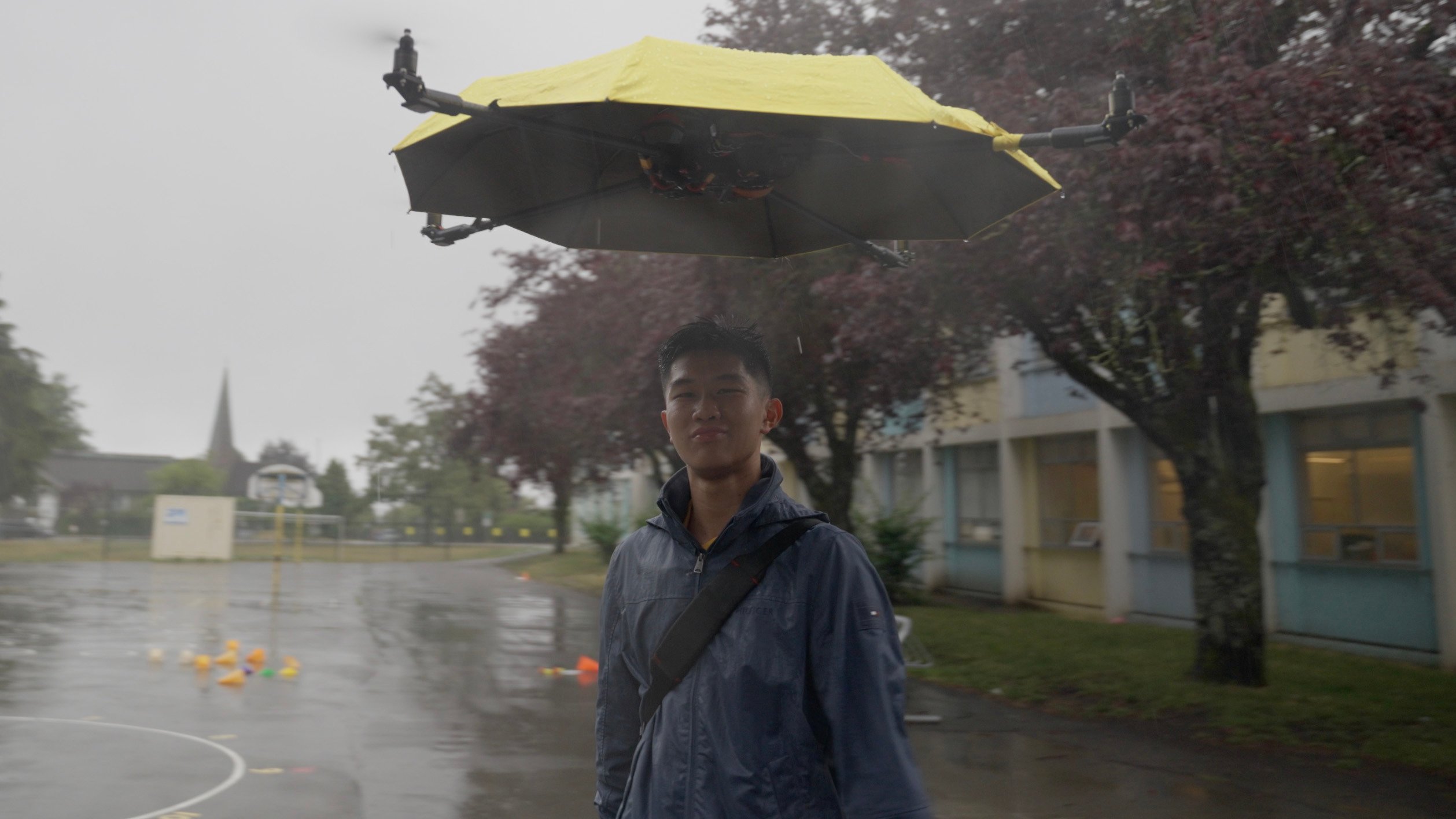
The answer, at least in prototype form, now hovers overhead. Built by inventor John Tse under the name I Build Stuff, the autonomous flying umbrella replaces the familiar stick-and-canopy with a small drone carrying its shelter above the user, following them as they move.
Rain or sun, hands-free. It’s equal parts practical experiment and deadpan joke, but the most interesting ideas are often the ones that look slightly ridiculous before they feel inevitable.
A solution nobody asked for
On one level, the flying umbrella is delightfully unnecessary. On another, it’s a perfect distillation of where personal technology is heading. Autonomous tracking; real-time sensing; machine vision interpreting human movement and responding without instruction.
The umbrella uses onboard cameras and flight control to remain centred above its user, adjusting position as they walk. There’s no handle to grip, no wrist strap to tangle, no sudden inversion in a gust of wind. The technology simply does what umbrellas have always done without needing to be held.
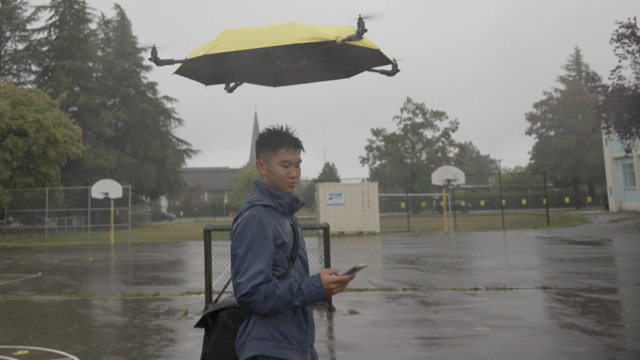
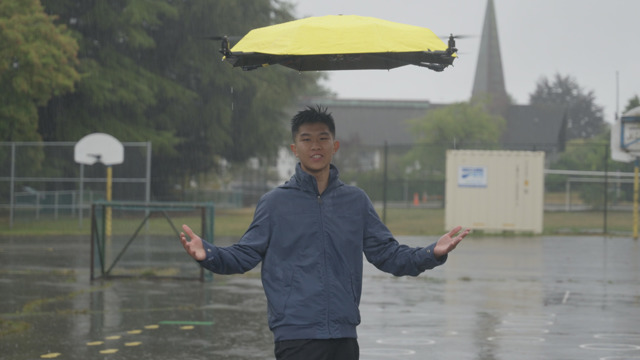
Clashing brollies is an obvious pitfall when walking down a packed, sodden British high street, and it remains to be seen whether the autonomous version can adeptly avoid mid-air collisions in built-up urban areas, but strip away the humour, and the flying umbrella is built from the same foundations as far more serious systems: stabilised flight, object tracking, spatial awareness and real-time decision making.
By applying those tools to something so mundane, the project exposes how flexible autonomy has become. Once, this kind of behaviour belonged exclusively to military drones or research labs. Now it can be repurposed to keep your hair dry on the walk to the station.
FOS Future Lab presented by Randox is the best place in Britain to learn about autonomous vehicles, so we can’t promise an umbrella will make the cut for this year’s event, but bagging your tickets to the Festival of Speed presented by Mastercard is the only way to truly find out.

Randox is a global leader in diagnostics, revolutionising patient outcomes through innovative technologies, including its patented biochip technology. This pioneering diagnostic platform allows for the simultaneous detection of multiple biomarkers from a single sample, delivering faster, more accurate, and comprehensive results. Operating in over 145 countries, Randox develops advanced laboratory instruments, high-quality reagents, and innovative testing solutions to improve global healthcare.
Randox Health brings this cutting-edge technology directly to individuals, offering bespoke, preventative health testing programs. With world-class laboratories and personalised health insights, Randox Health enables early detection of a wide range of conditions, helping individuals take control of their health.
Together, Randox and Randox Health are redefining diagnostics and preventative healthcare. For more information, visit www.randox.com and www.randoxhealth.com.
festival of speed
fos
event coverage
future lab
fos future lab




Subscribe to Goodwood Road & Racing
Thank you, you’re now subscribed

How many hay bales are used at FOS?
For the last two years, 5,800 bales have been recylced into the biomass energy centre to be used for energy generation