

5 Vespas that typify La Dolce Vita (and one that doesn’t)
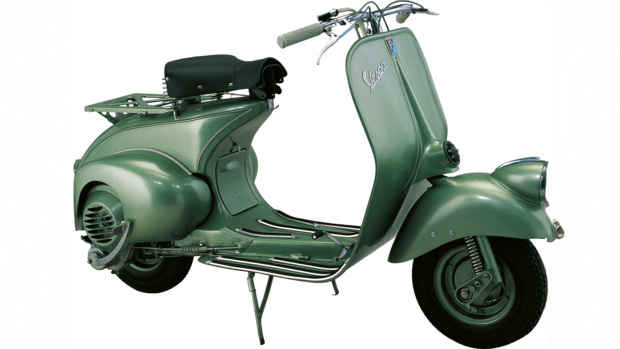
The first Piaggio scooter, nicknamed ‘Paperino’ – the Italian name for Donald Duck, was built towards the end of World War II. Enrico Piaggio didn’t think this initial machine looked right for production, and so enlisted Corradino d’Ascanio to give it a new style. He sketched the shape that has endured almost unchanged ever since.
Distinctive features include the enclosed engine and front panel, both introduced to help keep Italian riders’ clothes clean while commuting around Rome or Milan. There were also some practical elements that made the new Piaggio scooter easier to ride, not least the step-through style. The Vespa (Italian for wasp) nickname stuck and the new offering made its debut in 1946. The buying public was initially sceptical, but 2,484 examples of the 98cc machine found homes in the first year, and while it’s undergone revisions in its 80 year history, today it remains as popular as ever.
The first upgrade
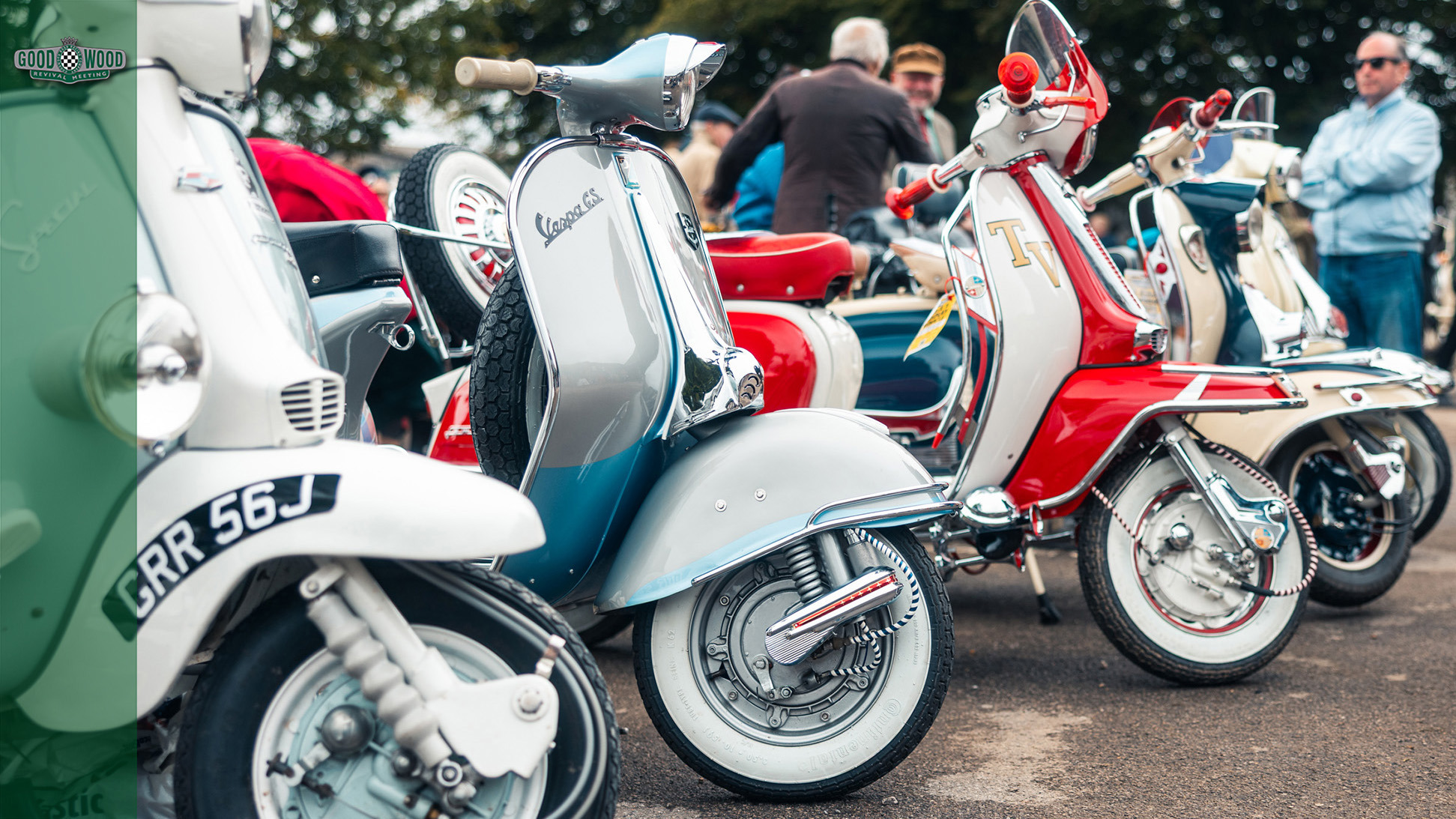
The first revision to the Vespa arrived with the V11 in 1948. That’s very neat and tidy for our La Dolce Vita celebrations at this year’s Goodwood Revival as the same year that the Motor Circuit opened. The Vespa’s appearance had barely changed but the 125cc engine (until then the preserve of export models) became the standard fitment. Access was eased by a simpler engine cover, but of more importance to riders was the upgrade in comfort that came thanks to improved damping for the rear wheel. Up front, the arm was moved to the right-hand side, where it remained for several iterations of future Vespa.
A Vespa for two
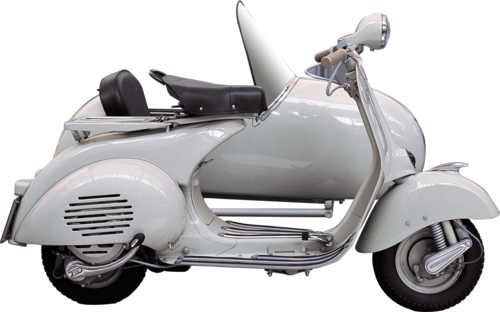
The 125cc engine brought with it greater capacity, so Piaggio introduced a sidecar option to the Vespa. The curvy shape was a stylistic match for the two-wheeler’s established design and provided the passenger with a comfortable seating position and coil-sprung suspension. While it was open-topped, some practicality was offered by a windscreen and space for a small amount of luggage behind the seat. Today, as in period, the sight of a Vespa with a sidecar is much rarer than its more conventional two-wheeled configuration.

On the attack
In the 1950s, the Vespa returned to its roots. The original Paperino had been inspired by the American Cushman Airborne, a small scooter used by parachutists landing in enemy territory, and the Vespa 150 TAP (Truppe Aero Portate, or air troops carrier) was a return to that concept. It was commissioned by the French defence ministry and built by ACMA, Piaggio’s French licensee. Approximately 600 were built between 1956 and ’59 to be used by the Foreign Legion and French paratroopers. Unlike the civilian Vespa, it was equipped with a 75mm cannon, six rounds of ammunition and spare fuel capacity that allowed for a range of 200km.
New body image
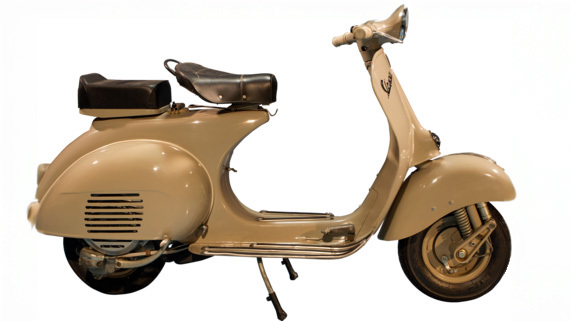
Back home in Italy, Piaggo was making one of the most significant changes to date to the Vespa’s construction. The 1958 Vespa 125 had its body constructed from two steel half shells which simplified the manufacturing process, a method that Piaggio has stuck with ever since. Another feature of the 1958 revisions was a greater number of controls located on the handlebars, while the engine became physically smaller despite retaining its existing displacement. The colour options didn’t exactly scream La Dolce Vita, though; in period this Vespa was available in grey or beige.
The 50 N mobilises youth
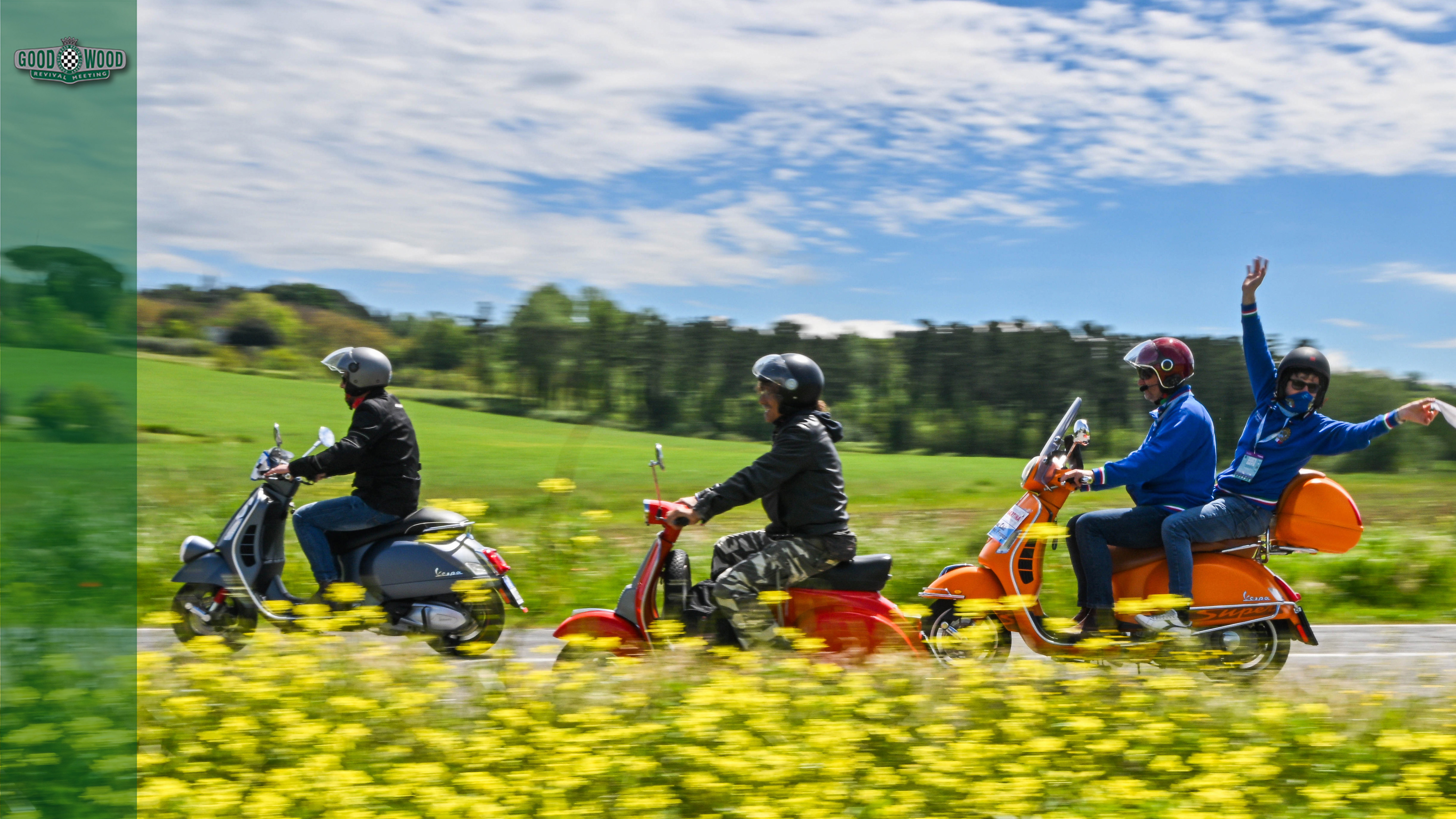
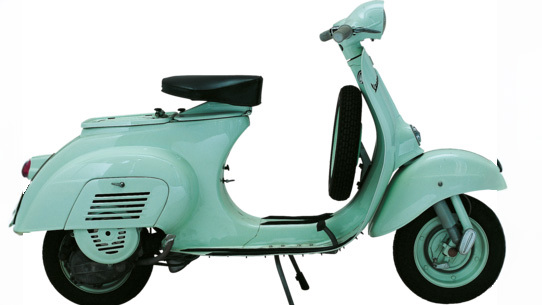
The 50 N was the most popular Vespa with young riders, which is perhaps no surprise given that Italian rules of the time allowed them to be ridden by people as young as 14 with no licence. There was also no need for a numberplate, so it was a motorised two-wheeler with the same freedom that bicycle riders enjoy in the UK. The 50 N had its own styling, but it was still unmistakably a Vespa. It has the distinction of being the final Vespa designed by d’Ascanio. The 49cc engine was all new for 1963, its cylinder mounted at a 45-degree angle in contrast to the horizontal arrangement that went before. More than three million have now been built.

Vespa rallies with 180cc
Bookending our delve into Revival-era Vespas is the Rally 180, which was launched in 1966, the year that the Goodwood Motor Circuit closed. It was preceded a couple of years earlier by the 180 Super Sport, one of the fastest scooters of its time with a top speed of 105km/h. Mechanically, however, the Rally 180 owed more to the Vespa Sprint with its rotary valve engine. The frame was new, too, and the handlebars and saddle were redesigned. After a production run of five years, 26,000 had been built.
Tickets for the 2026 Goodwood Revival are now on sale. If you’re not already part of the GRRC, you can sign up to the Fellowship today and save ten per cent on your 2026 tickets and grandstand passes, as well as enjoying a whole host of other on-event perks.
Want to get involved in the on-track parade? If you have a pre-1967 Vespa or other contemporary Italian scooter please register your interest by completing the submission form here, and the team will review your vehicle for consideration.
Images courtesy of Museo Piaggio.
revival
event coverage
vespa
list
Track Opening Parade

Subscribe to Goodwood Road & Racing
Thank you, you’re now subscribed

How many hay bales are used at FOS?
For the last two years, 5,800 bales have been recylced into the biomass energy centre to be used for energy generation