

How the Vespa mobilised post-war Italy
It speaks volumes about Italian style that the Vespa, celebrating its 80th anniversary in 2026, took its inspiration from the utilitarian Cushman Airborne. Devised by the US military during World War II, the Airborne was designed for parachutists to get mobile in the territories they landed in.
Light and small, it was ideal to be dropped into action, but those qualities would also prove useful for a nation that needed to mobilise affordably in peacetime. But there was no way stylish Italians would ride something that looked as rudimentary as the soldiers’ motorcycle…
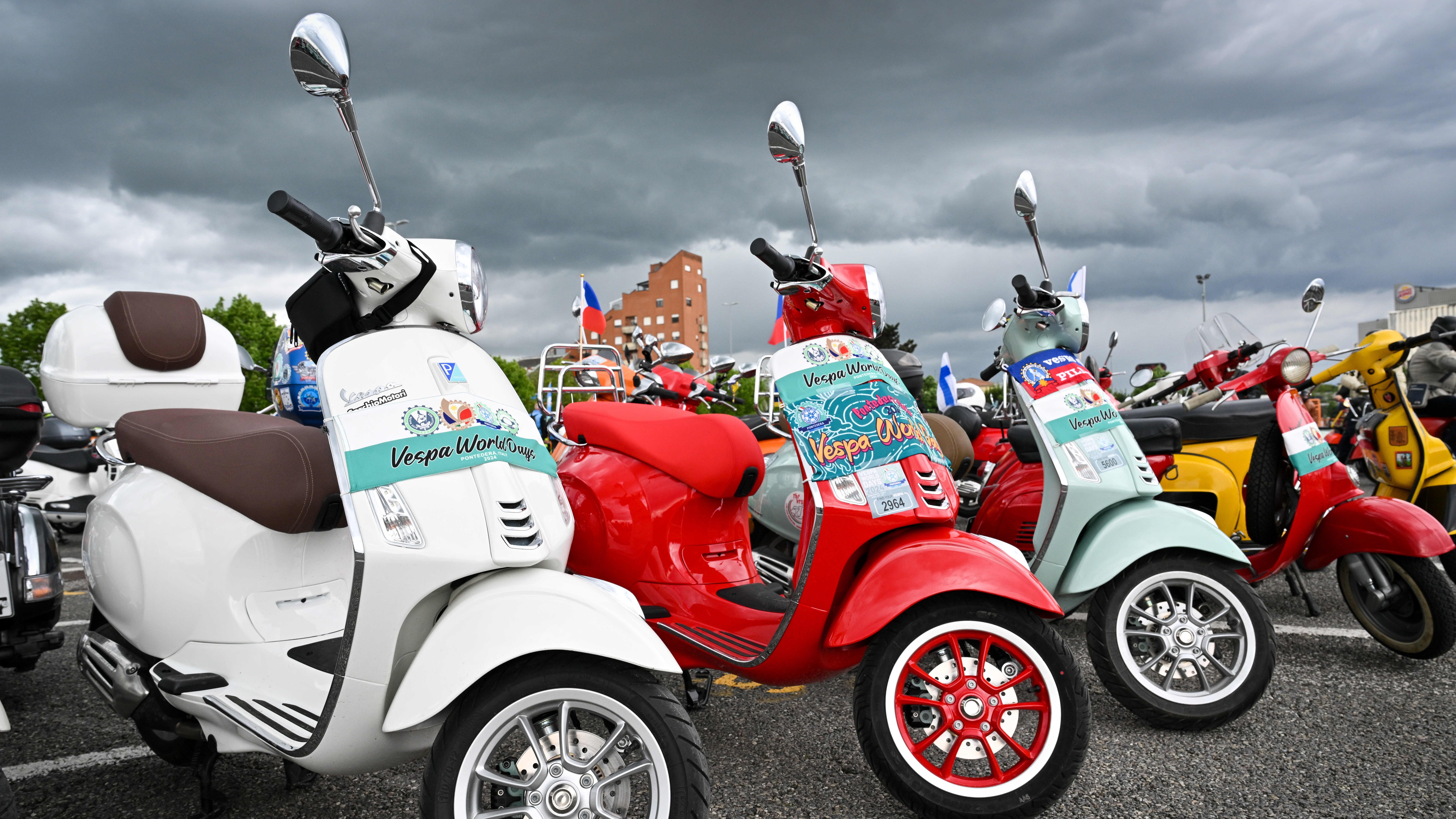
Piaggio, a company established in 1884 initially fitting out luxury ships, was ideally placed to take the concept of a small, light motorcycle and adapt for a nation getting back on its feet. During the war, its facilities were used to build military machines which made them a strategic target.
When the war ended, the allies rebuilt production lines that had been razed to the ground. Enrico Piaggio decided that the manufacture of a small motorcycle would be the ideal way to bring the factory back to life.
The initial MP5 wasn’t going to cut it. Its odd appearance gained it the nickname ‘Paperino’, the Italian name for Donald Duck, and Piaggio enlisted Corradino D’Asconio to redesign it. He disliked motorcycles so came up with a list of their shortcomings that he wanted to address.
In doing so, he created the ideal machine on which to get around Rome, Turin or Milan on a budget all while looking chic. It was the two-wheeled opposite number of the Fiat 500: small, affordable, economical, practical and great looking.
There was no chain drive, so clothing wouldn’t be splashed with grease and muck. An enclosed rear wheel did the same, while front bodywork also kept the rider protected from the worst of the elements. Simplified controls made it easier to ride than the motorcycles that preceded it, while the step-through format made for a comfortable riding position.
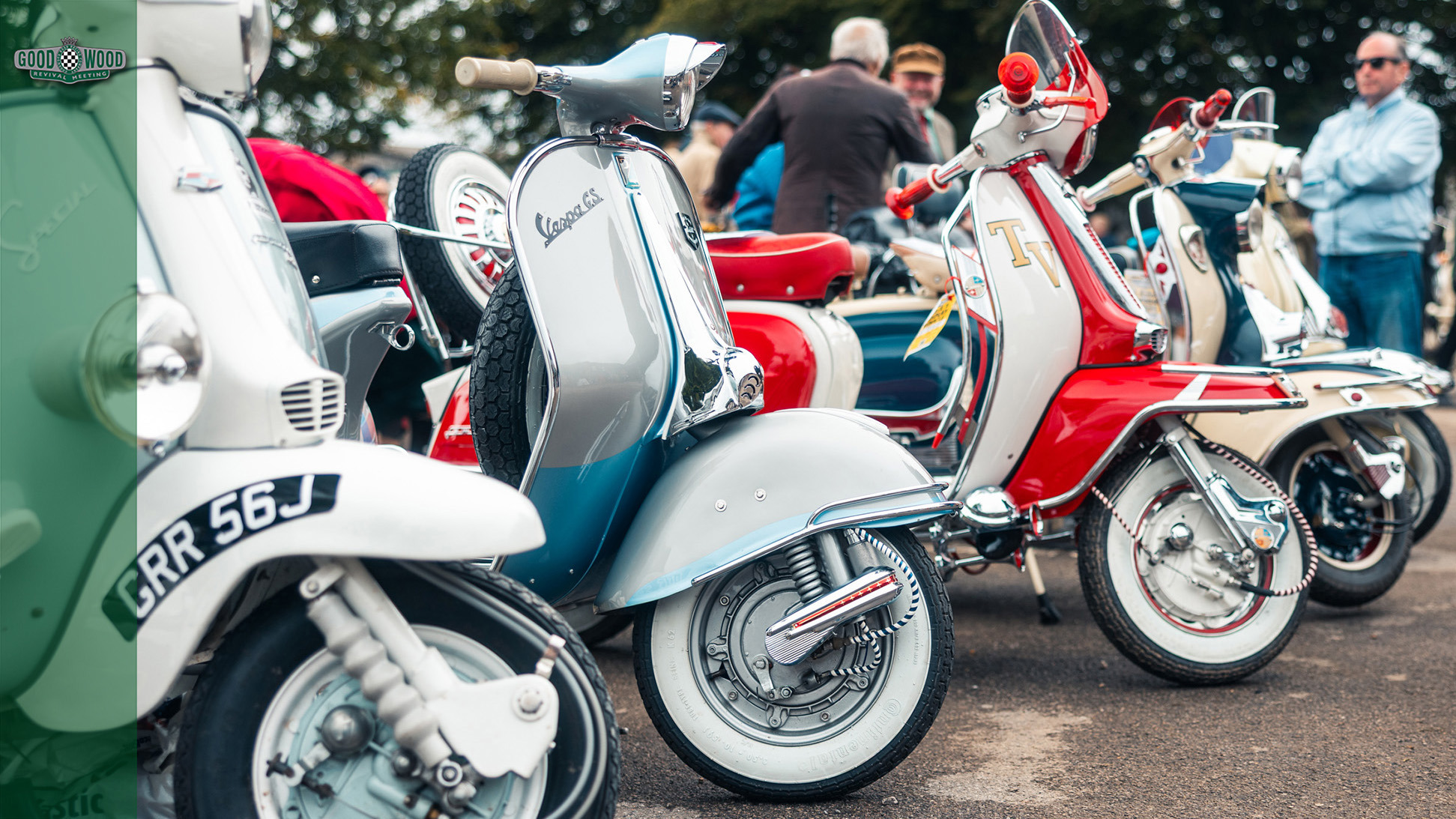
So called ‘Vespa’ because Enrico Piaggio thought it resembled the insect, the fact it sounded like one too was a happy coincidence. The Vespa was revealed at Rome Golf Club in April 1946 (a year ahead of Innocenti’s Lambretta), but potential customers were initially resistant to its charms.
An initial batch of 50 were built, and the last two proved slow to sell. Undeterred, Piaggio committed to building 2,000 and it soon caught on. By 1953, 10,000 examples had found homes, and its popularity continued to expand exponentially. By 1960, two million examples had been built.
The Vespa became more than a mode of day-to-day transport, lodging itself into the culture. Roman Holiday, the 1953 film starring Audrey Hepburn and Gregory Peck, featured the couple riding around the Italian capital, and the Vespa instantly became a short-hand symbol for freedom and style. It is estimated that the film resulted in 10,000 Vespa sales.
It may have been a functional form of transport, but its Latin flair allowed it to ascend to the aspirational. The Italian language even gained a new verb – ‘vespare’, to travel somewhere on a Vespa.
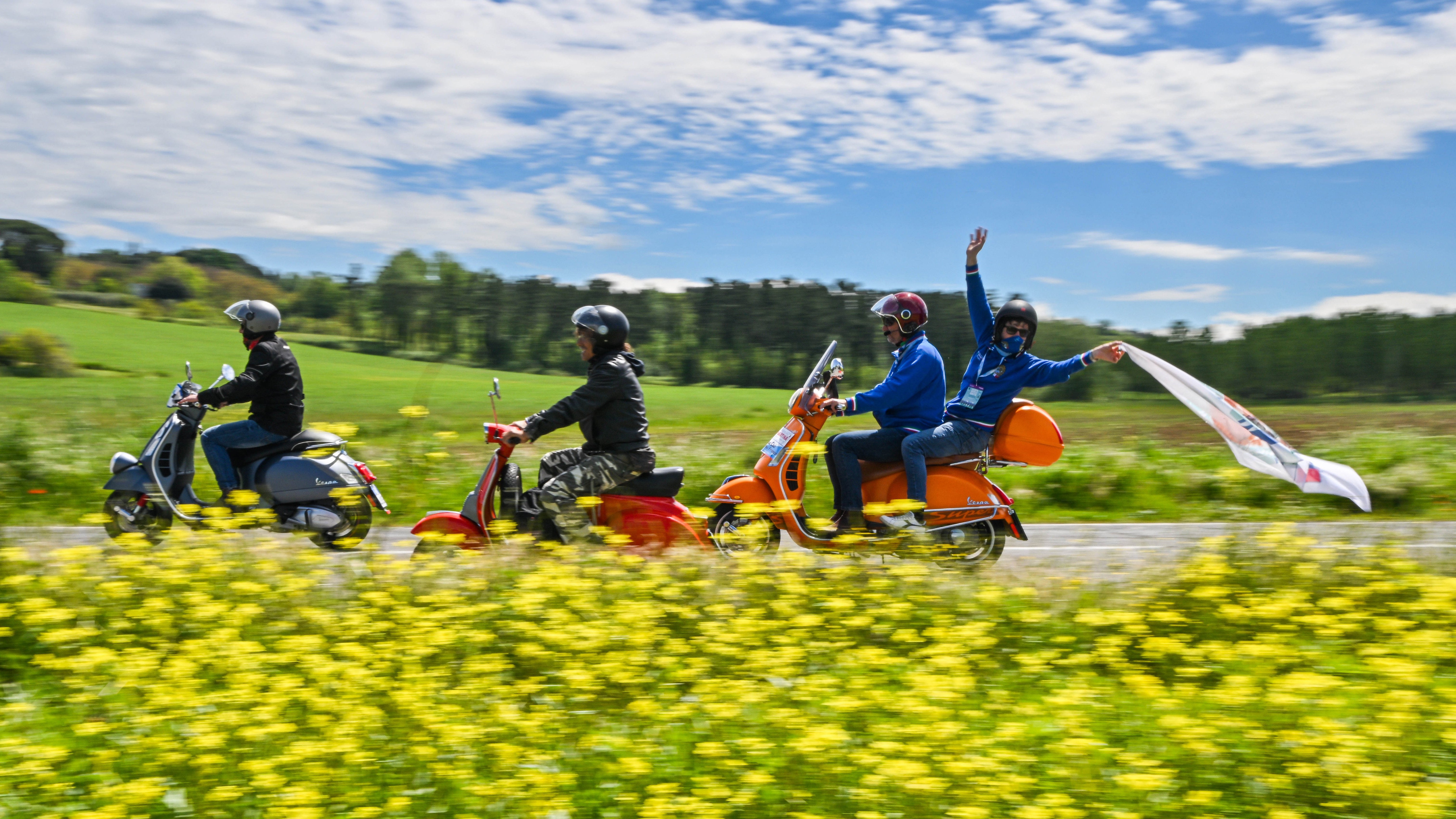
And some had ambition to vespare further than the city streets and nearby vineyards. In 1952, French motorcycle racer and multiple record-holder Georges Monneret adapted a Vespa into an amphibious vehicle and crossed the Channel with it. Giancarlo Tironi rode to the Arctic Circle, while Italian singer-songwriter Giorgio Bettinelli went further still. In 1993, he rode from Rome to Saigon, and then continued his adventure across continents to clock up 254,000km.
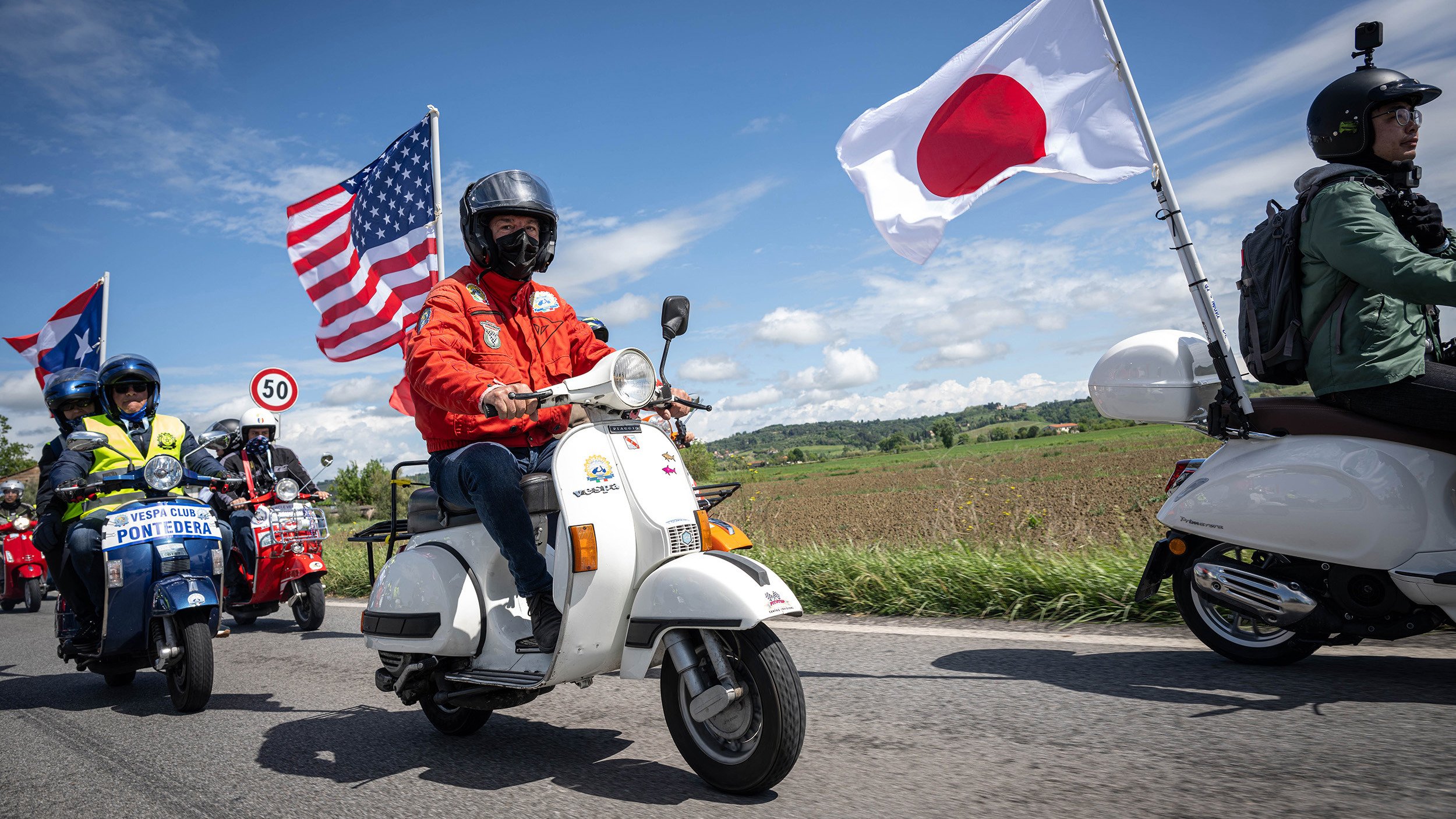
The Italian icon’s influence spread around the globe, with examples made under licence in 13 countries and they were officially sold in 114 territories. The UK was the second largest market after Italy, on this side of the Channel becoming synonymous with the Mods movement.
Eighty years after that launch in Rome, Piaggo continues to make scooters using the Vespa name with styling that borrows from the original.
Late Florence University Industrial Design Professor, Roberto Segoni, had a theory on the Vespa’s timeless appeal. In his book Vespa: Italian style for the world, he wrote: “The Vespa underwent no ageing process in either looks or function because, from the very first model in 1946, its shape was so new and different that it had very little in common with the style of two-wheeled or four-wheeled vehicles at the time. This uniqueness prevented it from looking dated like the motorcycles of those years.”
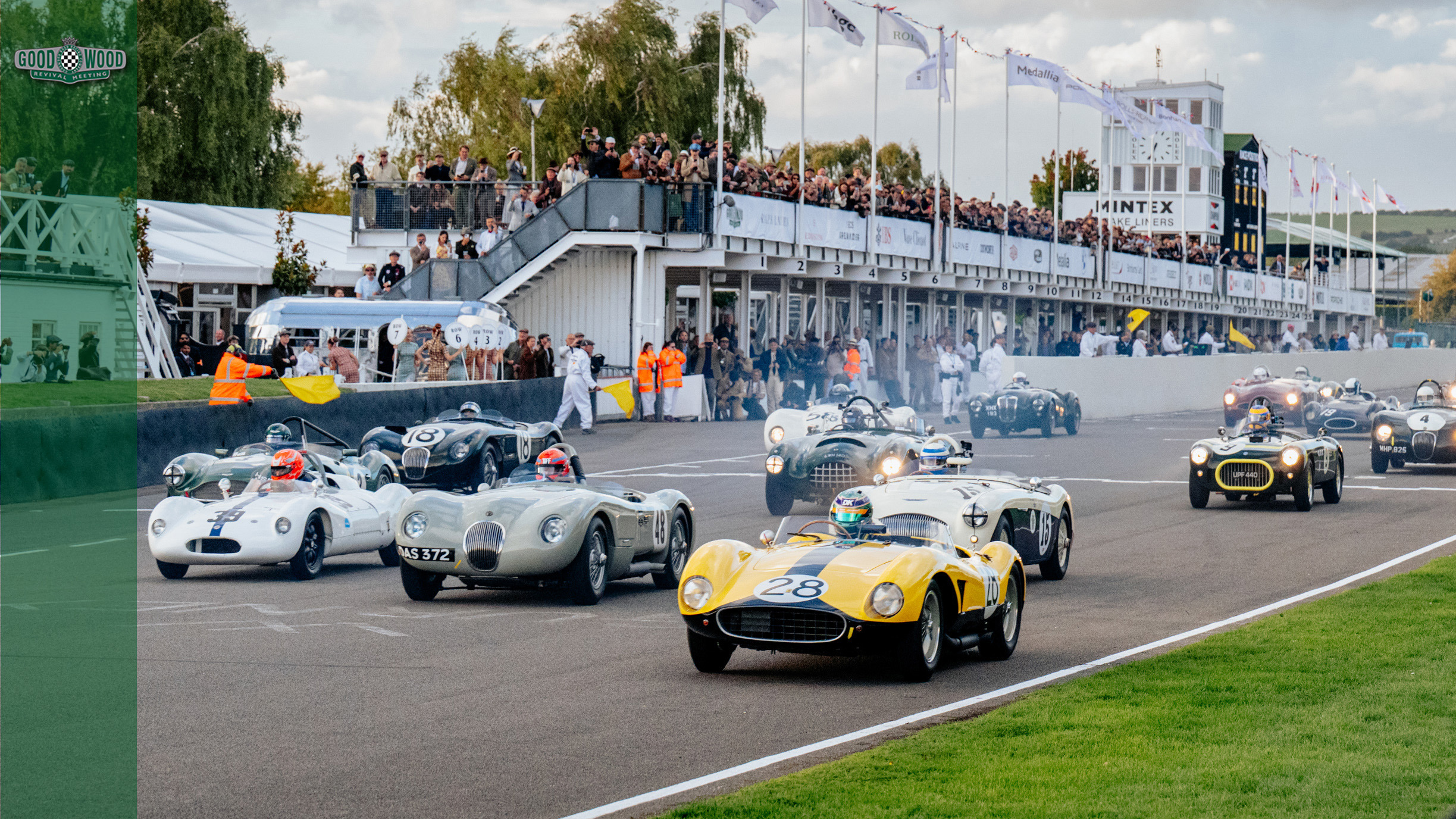
We’re looking forward to opening each day of the 2026 Goodwood Revival with a swarm of timeless Vespas and other contemporary scooters with a parade as part of our ‘La Dolce Vita’ theme.
Tickets for the 2026 Goodwood Revival are now on sale. If you’re not already part of the GRRC, you can sign up to the Fellowship today and save ten per cent on your 2026 tickets and grandstand passes, as well as enjoying a whole host of other on-event perks.
Want to get involved in the on-track parade? If you have a pre-1967 Vespa or other contemporary Italian scooter please register your interest by completing the submission form here, and the team will review your vehicle for consideration.
revival
revival 2026
event coverage
vespa
Track Opening Parade



Subscribe to Goodwood Road & Racing
Thank you, you’re now subscribed

How many hay bales are used at FOS?
For the last two years, 5,800 bales have been recylced into the biomass energy centre to be used for energy generation