

The Italian driver who only considered Maserati
Hailing from one of Italy’s richest families, Maria Teresa de Filippis never needed to rely on sponsors for a drive, so it was a determined desire for autonomy that led the first woman to race in Formula 1 to do so in a Maserati.
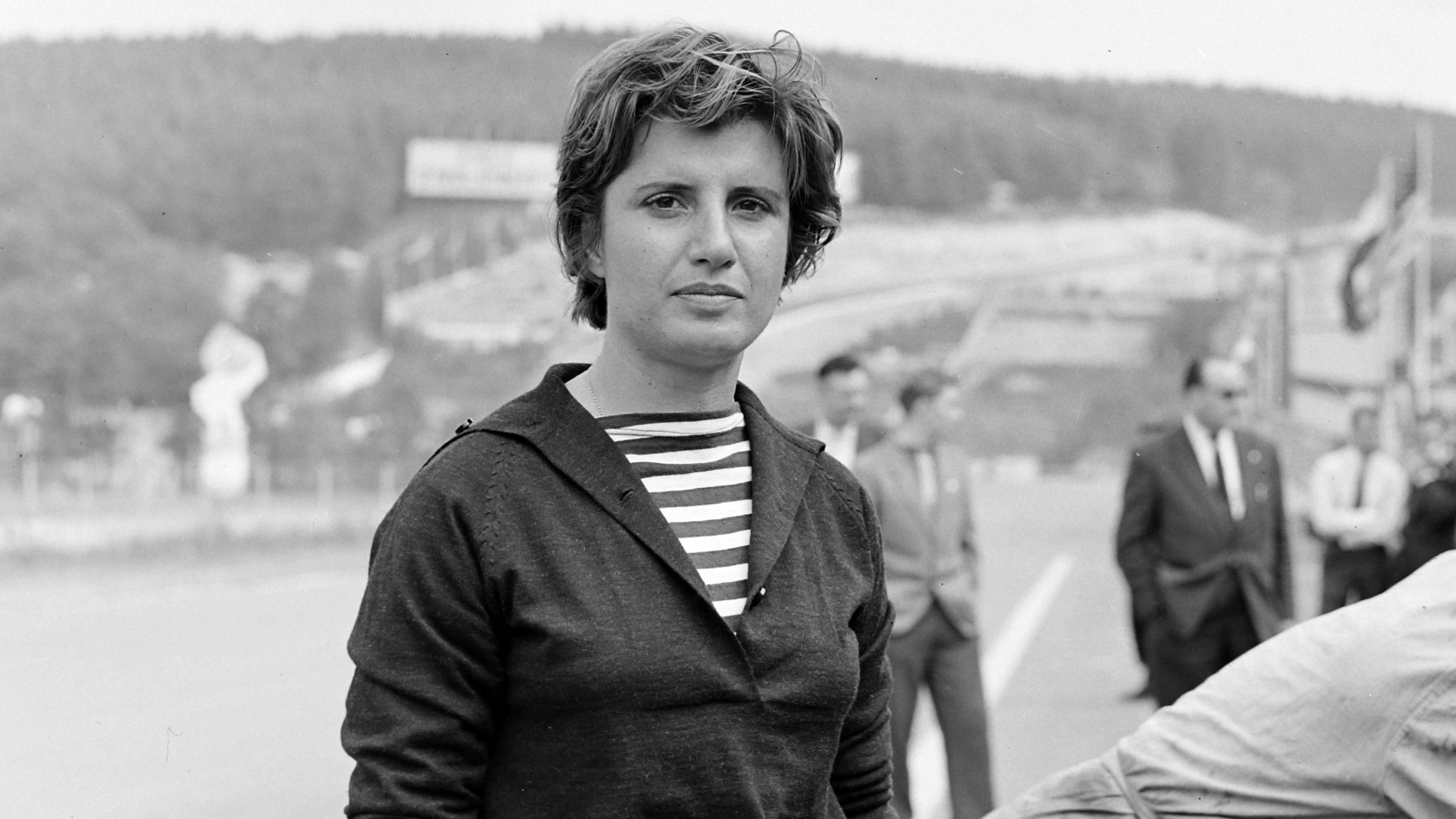
A comfortable upbringing in Naples led to horses being de Filippis’ first passion, soon enough followed by horsepower. Her choice to race a car for the first time, in 1948, was inspired by her brothers claiming she would be too slow to compete. Aged 22, her first competitive drive was a 10km race between Salerno and Cava de Tirreni in the Fiat 500 her father helped her acquire. To her siblings’ surprise, she won.
By the 1950s, de Filippis had established herself in national motorsport. She finished runner-up in the Italian Sports Car Championship in 1954 driving a BMW motorcycle-engined Urania Sport 750 before switching to a 1,100cc OSCA — the company the Maserati brothers founded in 1947 after leaving their namesake firm.
Italy wasn’t short of great racing stables, but for de Filippis the decision to become a Maserati driver was an easy one. “I never wanted to go to Ferrari,” she revealed in a 2012 interview. “At that time I did not want to be commanded by Mr Ferrari. I spoke to him and I told him I didn’t want to drive for his team. In those days he would say one word and everybody jumped. That was not for me.”
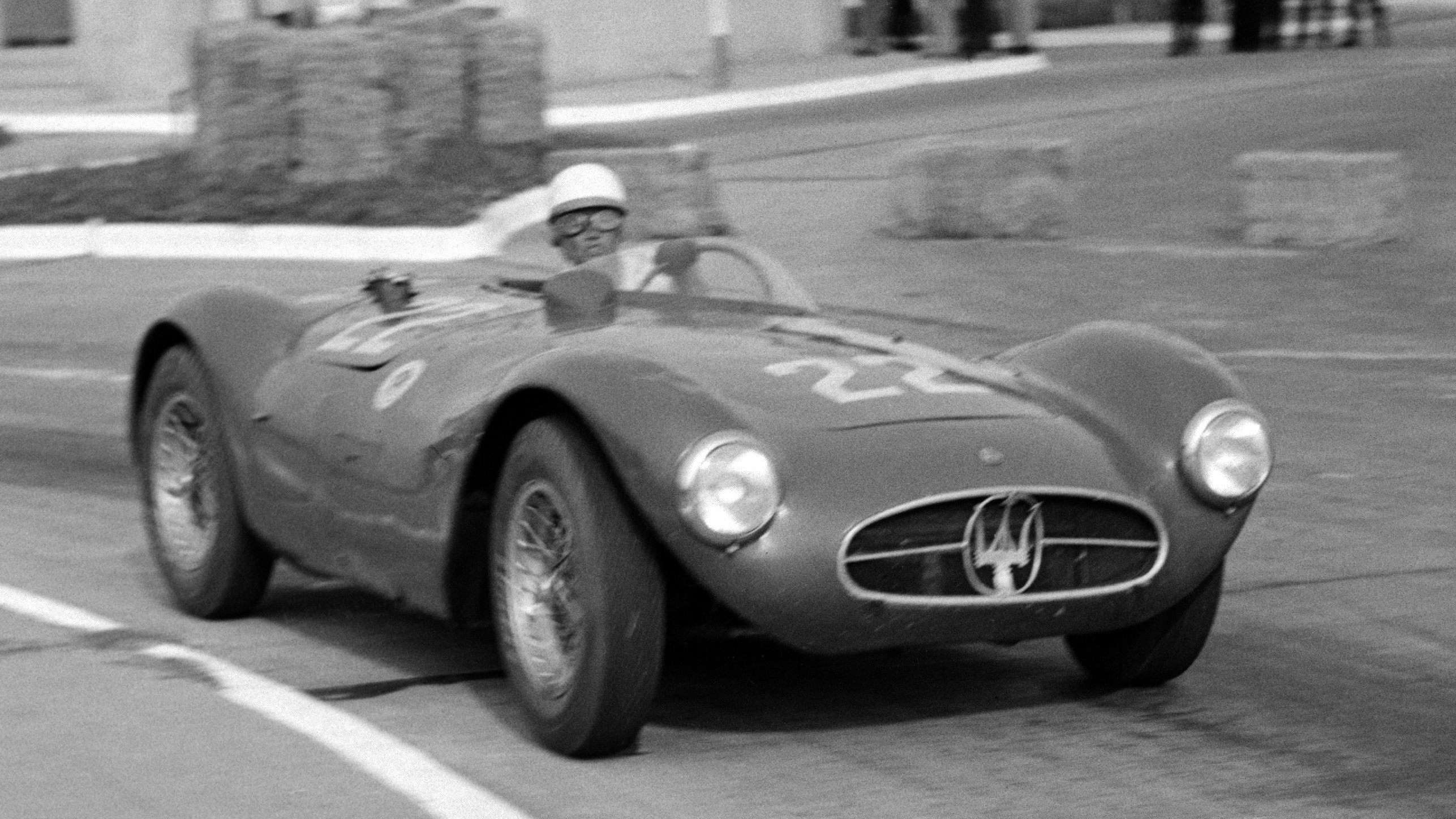
De Filippis raced a Maserati A6GCS at the 1956 Buenos Aires 1,000Km Buenos Aires.
De Filippis was never prepared to compromise on her independence, and Maserati was the alternative sweetened by the depth of culture she saw in comparison to the team from Maranello. “At Maserati it was more a family concern,” de Filippis explained, “with more real people and they were easier to talk to. And I could take my own car to the team, that was important for me.”
She drove a Maserati 200S to second in the sportscar race that supported the 1956 Naples Grand Prix, and though Maserati withdrew from F1 at the end of 1957 amidst unrelenting financial struggles, cars were still available to privateers, and de Filippis switched to a 250F — the car with which Juan Manuel Fangio won his fifth and final World Championship the year before.
Fangio was a great hero of de Filippis. Her “race father”, she admired him because “he was a simple man and he worked very hard to achieve all the success he had. Nothing was given to him.” He once told her she was driving too fast and should go slower, but de Filippis maintained she “didn’t feel any fear” on track.
At the 1958 Monaco Grand Prix, de Filippis became the first woman to enter an F1 Grand Prix. Though she and her 250F failed to qualify, at Spa-Francorchamps she started her first F1 race in 19th and saw the car home in tenth.
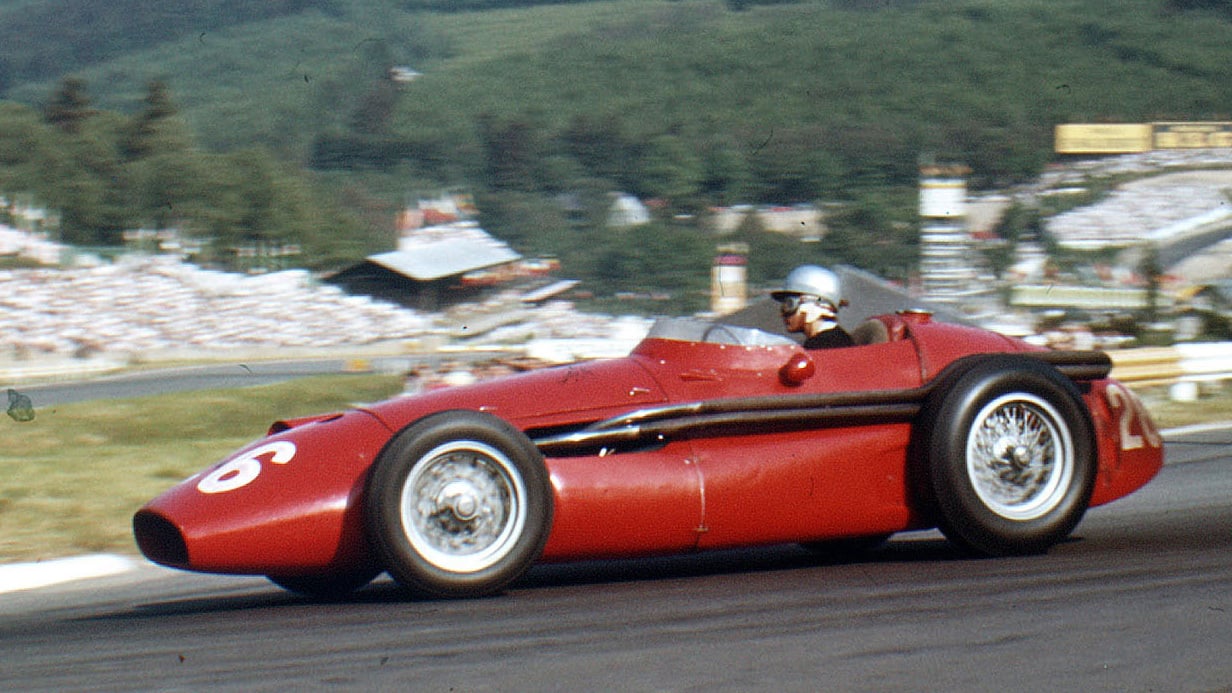
The Maserati 250F of de Filippis at Spa-Francorchamps during the 1958 Belgian Grand Prix.
She later reflected on the experience of driving the 250F at these two different circuits. The Maserati’s steering was reportedly extremely heavy in Monaco’s slow corners — “I was at the limit of my physical stamina” — but better at speed, so “at somewhere like Spa it was not a problem.”
Expectation-setting also helped her approach to her time at the pinnacle of motorsport. Free from any pressure, she “could do what [she] wanted with no shame.”
When she was allowed to compete, that was. The French Grand Prix that followed from Spa was the scene of the most explicit sexism de Filippis faced, when the race director simply banned her from competing. Two more Grands Prix entries followed that year; in Portugal, where the 250F’s engine caused retirement; and her home race in Monza, where she failed to qualify.
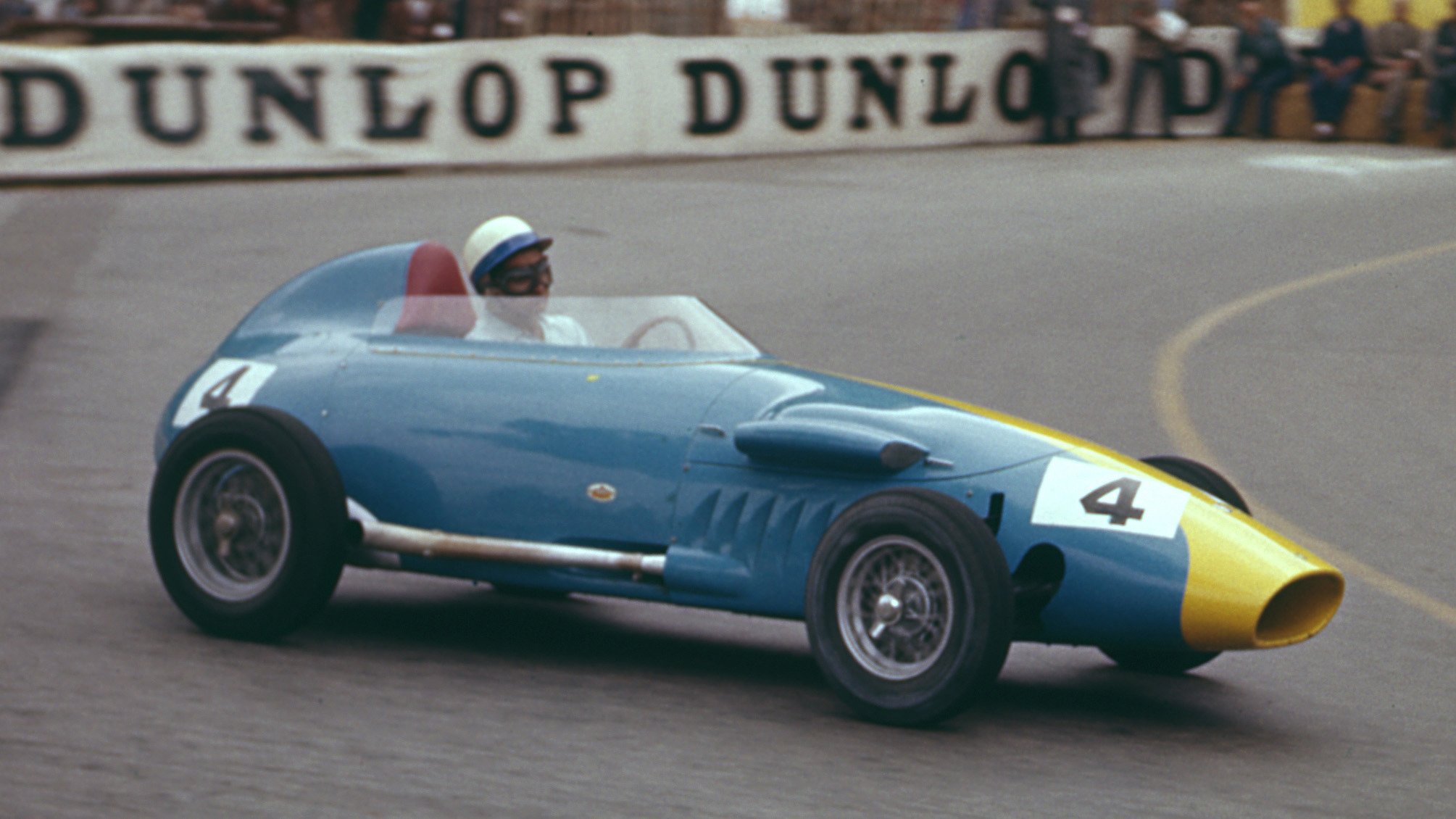
In her final race, the 1959 Monaco Grand Prix, de Filippis raced a Behra-Porsche RSK.
De Filippis entered her fifth Grand Prix, at Monaco in 1959, now racing a Behra-Porsche RSK, though again she didn’t qualify. That proved to be her final competition entry. After her friend Jean Behra was killed at Avus later in the season she called time on her career. “I realised then that racing would no longer give me happiness,” she said.
While she never raced again, de Filippis eventually found her way back to the motorsport community — and the Maserati family. She was a founding member of the Maserati Club, established in 2004, and served as its chair.
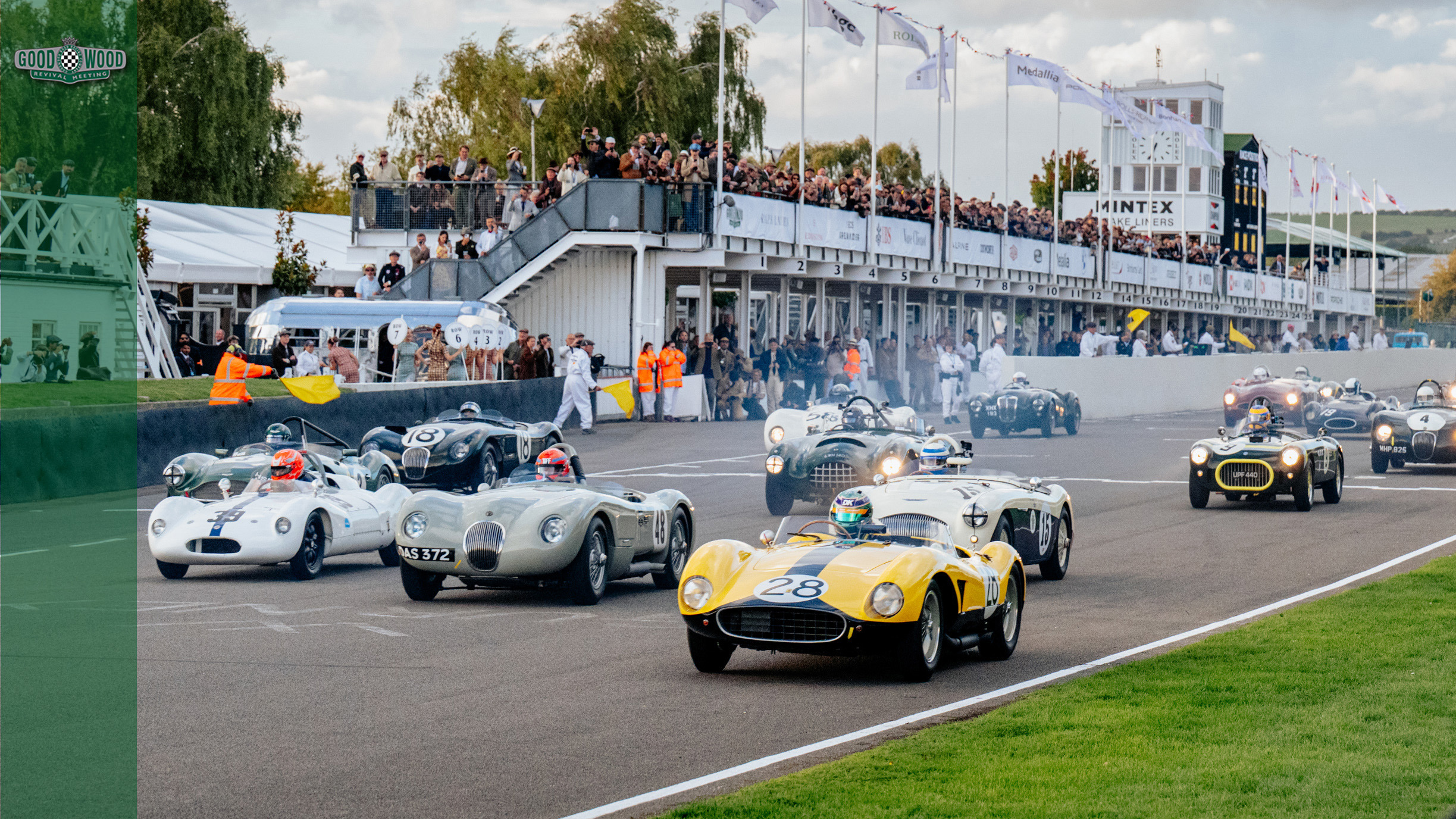
This year marks 100 years since de Filippis’ birth, a milestone twinned with the occasion of Maserati’s first major motorsport success, at the 1926 Targa Florio. As the 2026 Goodwood Revival prepares to celebrate the rich history of the great Italian marque, it is also fitting that we honour the legacy of de Filippis, a dedicated Maserati driver and an individual in the truest sense.
Tickets for the 2026 Goodwood Revival are now on sale. If you’re not already part of the GRRC, you can sign up to the Fellowship today and save ten per cent on your 2026 tickets and grandstand passes, as well as enjoying a whole host of other on-event perks.
Images courtesy of Getty Images.
revival
event coverage
maria teresa de filippis
Maserati
Maserati 250F
Maserati Celebration

Subscribe to Goodwood Road & Racing
Thank you, you’re now subscribed

How many hay bales are used at FOS?
For the last two years, 5,800 bales have been recylced into the biomass energy centre to be used for energy generation