

When an Italian legend came to Goodwood
Tazio Nuvolari’s victory at the 1935 German Grand Prix was perhaps his most remarkable, as he brilliantly overcame the might of the government-backed Mercedes-Benz and Auto Unions on their own turf. That win against the odds also cemented the legacy of the Alfa Romeo P3, one of history’s most significant racing cars.
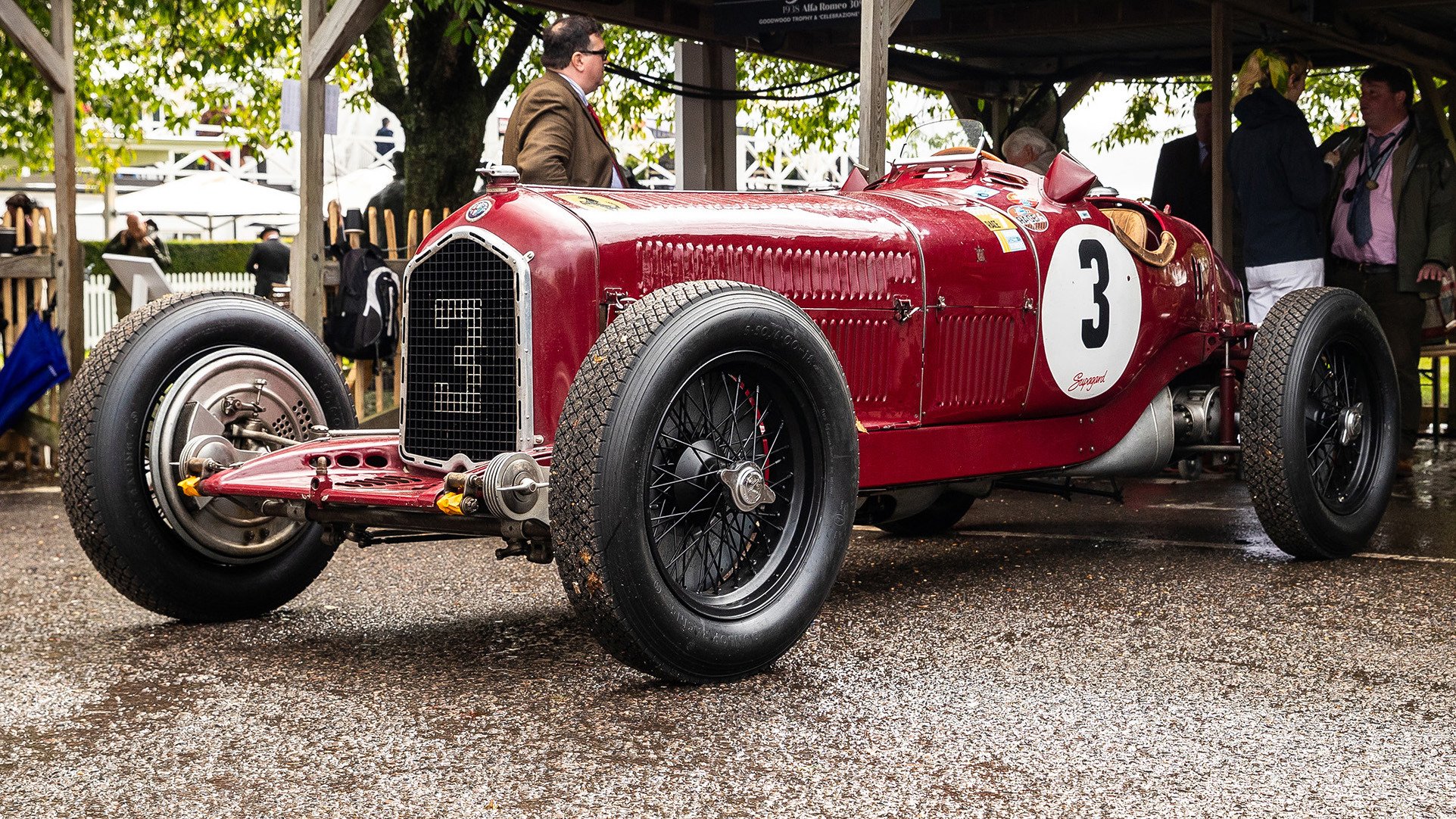
Alfa Romeo chief designer, Vittorio Jano, developed the P3 (also known as Tipo B) through a process of refinement, drawing on the strengths of the legendary P2, the first winner of the Automobile World Championship in 1925, and the Tipo A, Alfa’s first monoposto (single-seater) racing car.
From the P2, Jano wanted a car able to race longer distances, and while Tipo A broke single-seater ground, the P3 lay claim to being the first genuine single-seat Grand Prix car. Monopostos weren’t exactly new in 1932, but never before had there been a specialised design for a single-seater car, not just an adapted twin-seater model.
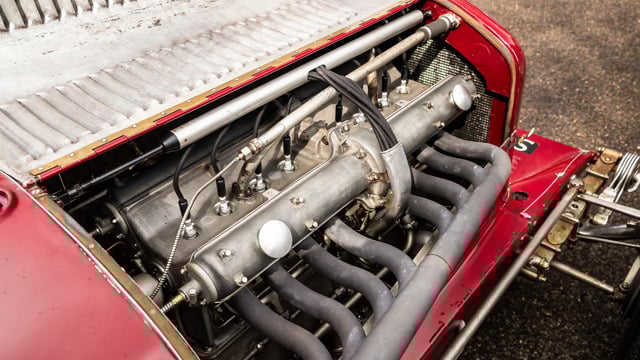
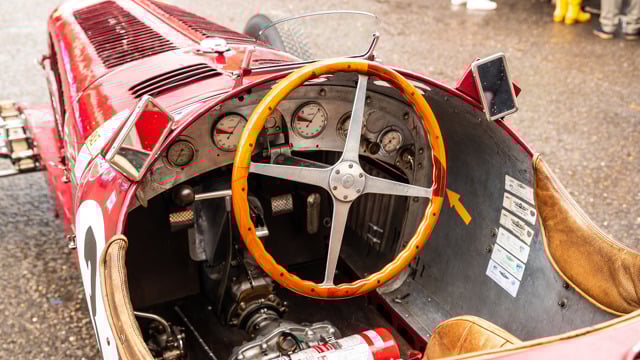
Weighing only 700kg the P3 was incredibly light, especially considering the materials of its day, with a narrow chassis and cockpit. And with its 2.6-litre straight-eight engine delivering 218PS (160kW) — around 100PS more than the Tipo A — it was both agile and powerful.
The P3 won its debut race at the 1932 Italian Grand Prix with Nuvolari at the wheel, and he was crowned European Champion as the car went on to win six races that season with team-mate Rudolf Caracciola.

Nuvolari didn’t return to the P3 until 1935, but for a moment it appeared that it wouldn’t be driven again. A year after Nuvolari’s success, financial difficulties saw them stored away and replaced in competition by old Alfa Romeo models run by the Scuderia Ferrari team.
The 1933 season was in full swing by the time the P3 was unleashed again, after which drivers like Luigi Fagioli and Louis Chiron, and Achille Varzi in 1934 picked up race wins of their own. By 1935 the P3’s shine was fading, now struggling to challenge the dominant Mercedes-Benz and Auto Union outfits, yet it still recorded 16 victories, including perhaps the greatest ever at the Nürburgring.
Nuvolari’s comeback from an early puncture to pull off a last lap overtake on the Mercedes W25 of Manfred von Brauchitsch stunned the partisan crowd, and was one of the 11 major race wins he achieved in the P3.
One of the drivers to join Nuvolari at Alfa Romeo that year was Raymond Sommer, with whom he had won the 1933 Le Mans 24 Hours, and it was the car they both drove that delighted crowds at the 2025 Goodwood Revival.
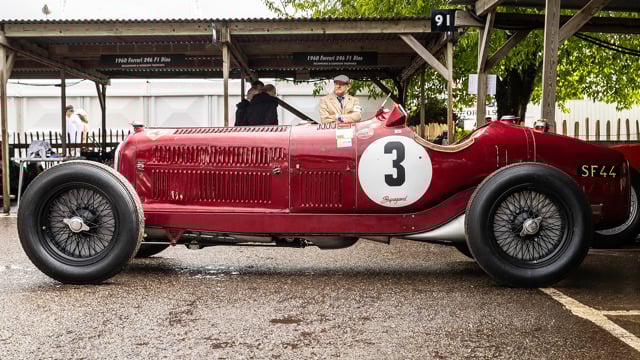
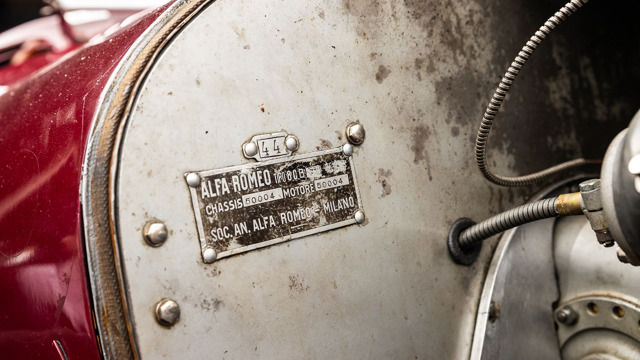
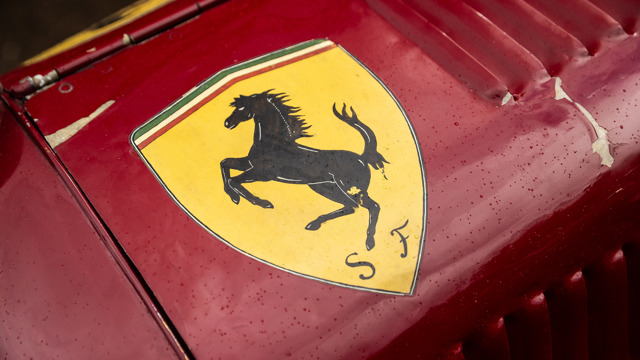
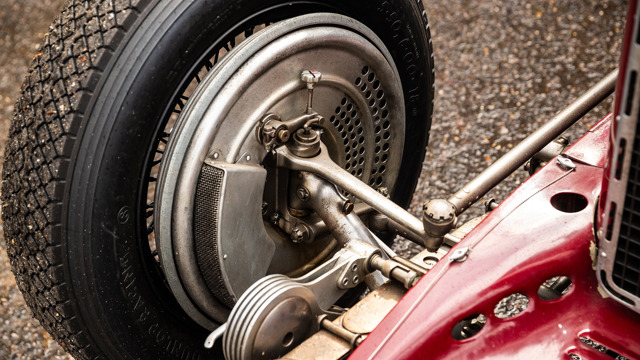
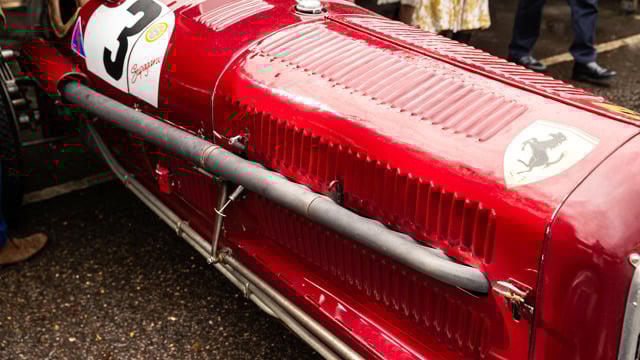
There it was raced by Stephan Rettenmaier in the Goodwood Trophy, for Grand Prix and Voiturette cars from 1930-51, and we spoke to Tom Edwardes who was with the car over the event to find out more about its condition almost a century on.
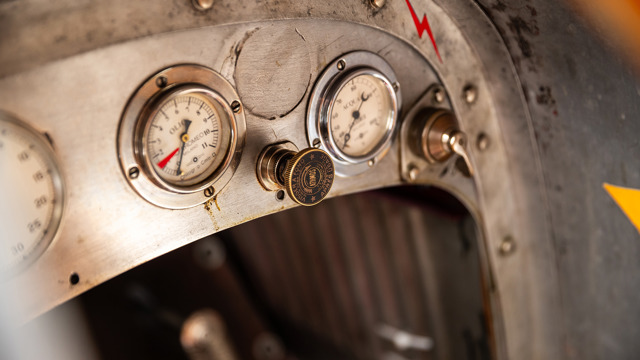
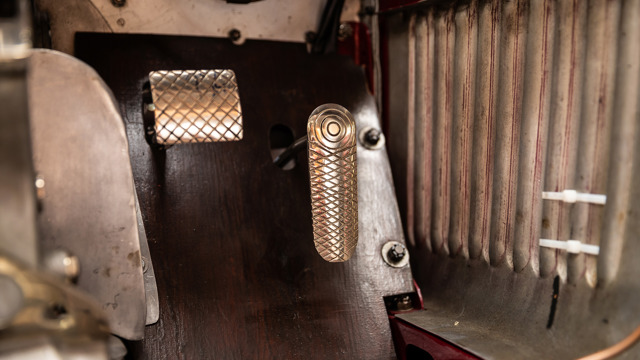
“It’s very much how it was when Nuvolari drove it,” Edwardes explained. “The original body chassis, crank cases [have been] changed, pre-war, the engine, obviously it had a fault and that was changed in America, but it is essentially, very much one of the better survivors of the P3s out there today.”
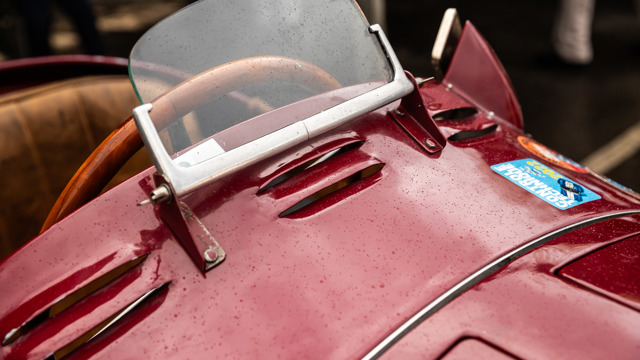
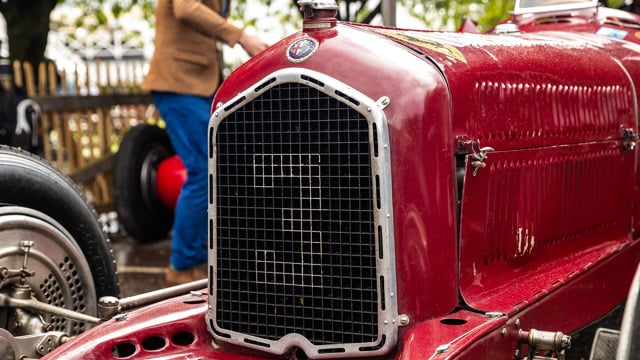
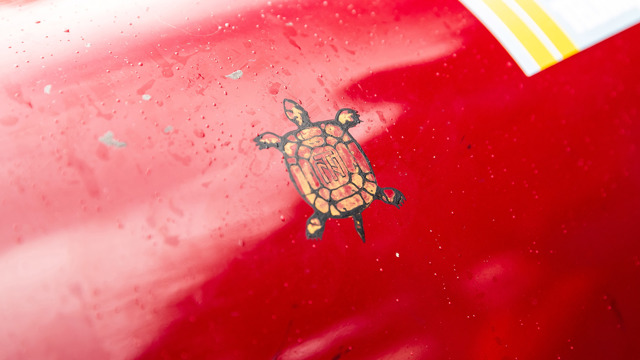
The car today does still run with an original Alfa Romeo engine, one that has “been in the car for 60 years” and sports beautiful details including a nod to Nuvolari’s famous golden tortoise talisman.
It’s owned by the Rettenmaier family, who had “always coveted it” and now run the P3 across the continent. “It goes to Dijon, Spa, it regularly comes to Goodwood, it's seen here quite a lot, so it is extensively used.” With that brings a lot of what Edwardes describes as “preventative maintenance, but essentially they are quite a reliable Formula 1 car of the period.”
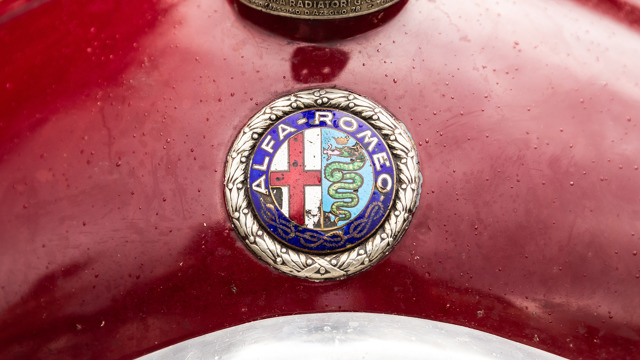

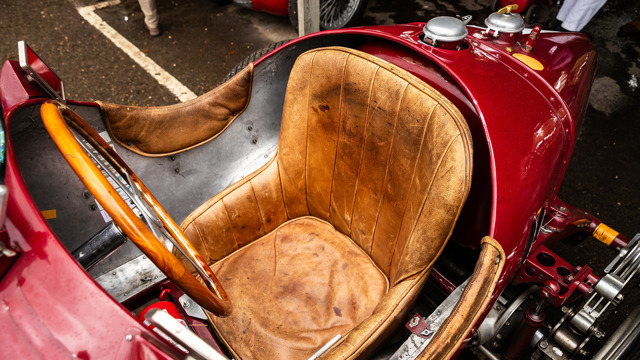
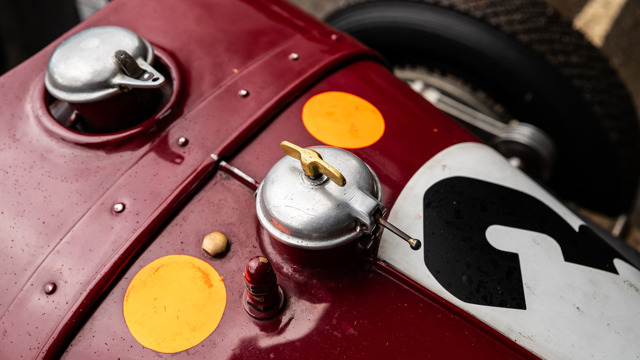
Its presence at the Revival this year was even more apt as we celebrated 100 years of Alfa Romeo. This P3 was the centrepiece of a parade that took place each day of the event and brought together some of the marque’s finest machines from 1925 through to 1975 in a spectacular showing of success and evolution.
“I think [the celebration is] fantastic,” Edwardes shared, “and the selection of cars that they managed to pull together, it really has worked. It's just nice to actually have the pull that people are prepared to bring their cars, it just shows how respected the meeting is.”
As for the competition, the P3’s appearance in the Goodwood Trophy was afflicted from a stroke of poor luck. Or more specifically, poor weather. Torrential rain on Saturday morning meant the decision was taken not to run the car, but its outing in Official Practice the day before meant that there was at least some representation of this hugely important car on track.
Despite the disappointment, Edwardes reflected how “nice” it was to have a specific race for pre-war cars — “a fantastic spectacle of the car running with contemporary cars around it.”

But the standout factor for him about the P3 was that it was driven to fame by Nuvolari, whom Edwardes described as “a spectacular driver of the period and one of the leading drivers in sportscars and pre-war single seaters.”
To honour the achievements of one of the greats of early motorsport by racing his own momentous P3 once again is one of the joys of the Goodwood Revival.
Tickets for the 2026 Goodwood Revival are now on sale. If you’re not already part of the GRRC, you can sign up to the Fellowship today and save ten per cent on your 2026 tickets and grandstand passes, as well as enjoying a whole host of other on-event perks.
Photography by Joe Harding.
revival
revival 2025
event coverage
goodwood trophy
goodwood trophy feature
alfa romeo
P3
tipo b
tazio nuvolari



Subscribe to Goodwood Road & Racing
Thank you, you’re now subscribed

How many hay bales are used at FOS?
For the last two years, 5,800 bales have been recylced into the biomass energy centre to be used for energy generation