
Fangio vs. Moss: The best of rivals
Mutual respect. That’s always the cornerstone of the most wholesome, good-natured and heartwarming sporting rivalries.
And at the Goodwood Festival of Speed presented by Mastercard, where we’ll be celebrating with the theme ‘The Rivals – Epic Racing Duels’, there can be no finer example in this regard than the competitive relationship that flourished between those two giants of the 1950s, Juan Manuel Fangio and Stirling Moss.
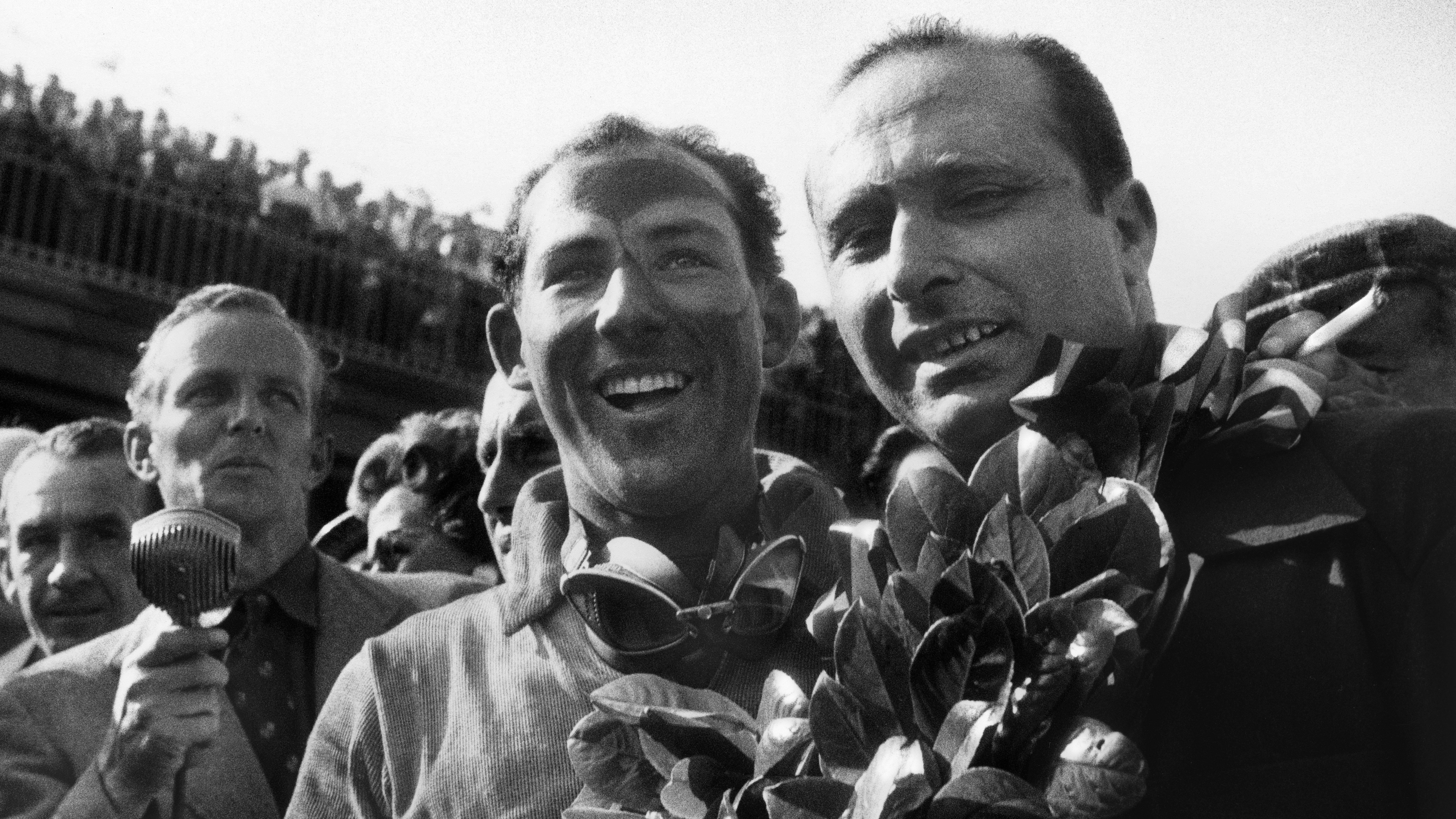
The Maestro and The Boy raced hard through the decade as rivals, team-mates and friends, creating an unbreakable bond between them that would last for the rest of their lives. While it was at Mercedes-Benz where their generational powers were twinned for one glorious season together in 1955, they also shared a connection to another great racing car — one of the most evocative in Formula 1 history: the Maserati 250F, the Trident’s masterpiece that will feature at the Revival as we celebrate a century since Maserati’s first major motorsport success.
First impressions that lasted
Fangio and Moss encountered each other early in the decade, in 1950, at the Bari Grand Prix. That day, Fangio was annoyed to run low on fuel late in the race to be classified second to Alfa Romeo team-mate Nino Farina. But of greater significance was the talent he spotted in the HWM-Alta that finished third. Moss finished two laps down on the dominant Alfettas, but still left a deep impression, as Fangio recounted in his autobiography published a little over ten years later.
“In that race, a young Englishman driving a HWM came in third,” he wrote. “I passed him twice. Nevertheless, I was strongly impressed by his driving style. Having raced so much in my life, I can judge a rival. I immediately sensed the makings of a great driver in that young man with an almost disdainful expression about his mouth.”
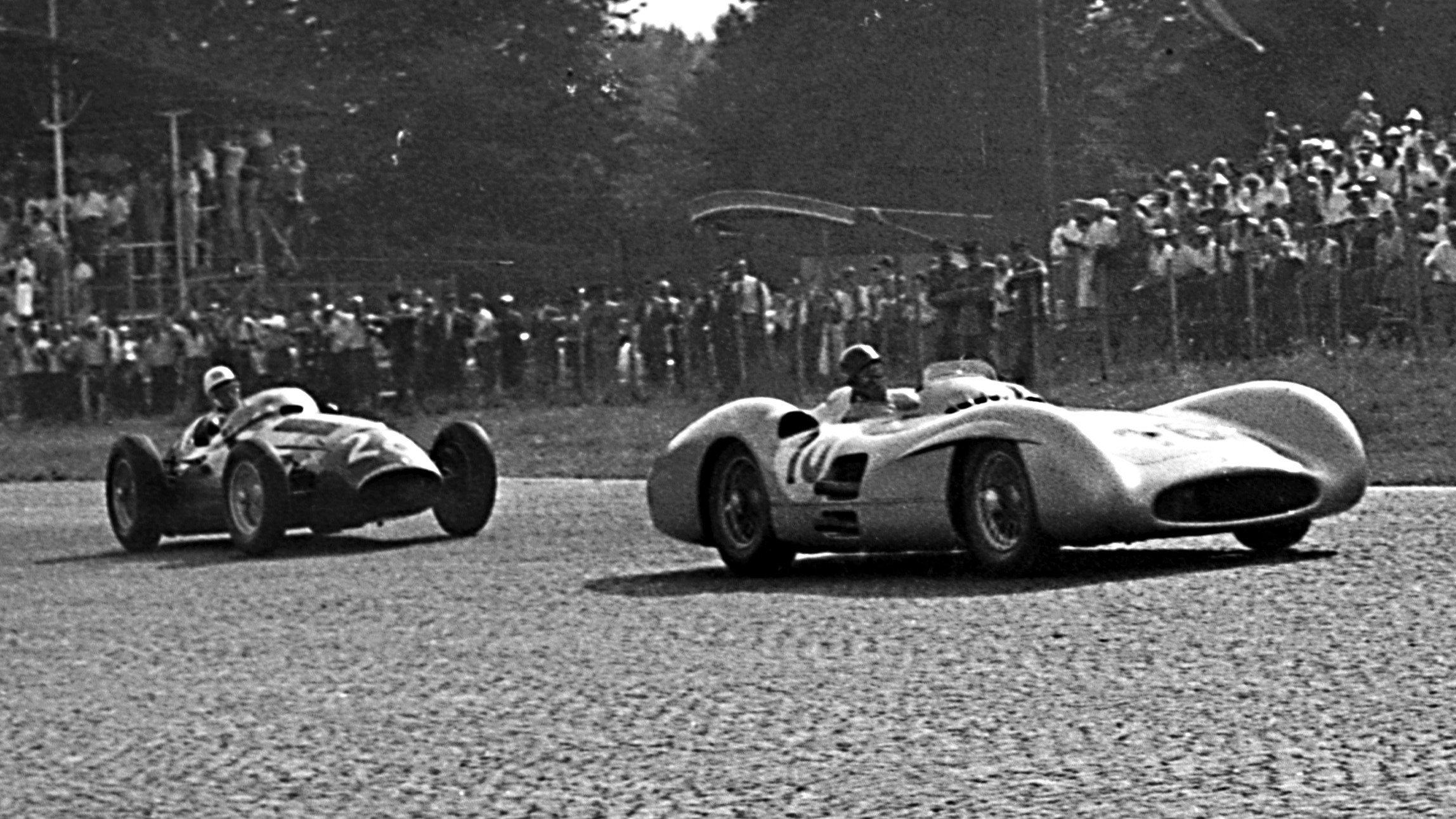
The Mercedes-Benz W196 of Juan Manuel Fangio leads Stirling Moss' Maserati 250F at the Italian Grand Prix, September 1954.
No surprise the occasion stuck in Moss’ memory, too. In an interview with Rob Widdows for Motor Sport Magazine in 2007, he recalled: “I was being lapped by Farina in the Alfa — he was quite a dirty driver — and as he came by he pushed me over a bit and by doing so he got into a slide and started fish-tailing. So I was able to get by him again on the exit of the next corner, and he slid off.
“And then Fangio came by and he was laughing. That was my first meeting of the eyes with him, you know, and he was just killing himself laughing that his Alfa team-mate had been passed by a HWM.”
Meeting at Monza
Their first proper encounter at the sharp end of a World Championship Grand Prix was at Monza in 1954. That day, Fangio judged Moss the ‘moral victor’ of the Italian Grand Prix after the Briton led in the 250F his father Alfred and manager Ken Gregory had bought to finally give the young man a car deserving of his talents.
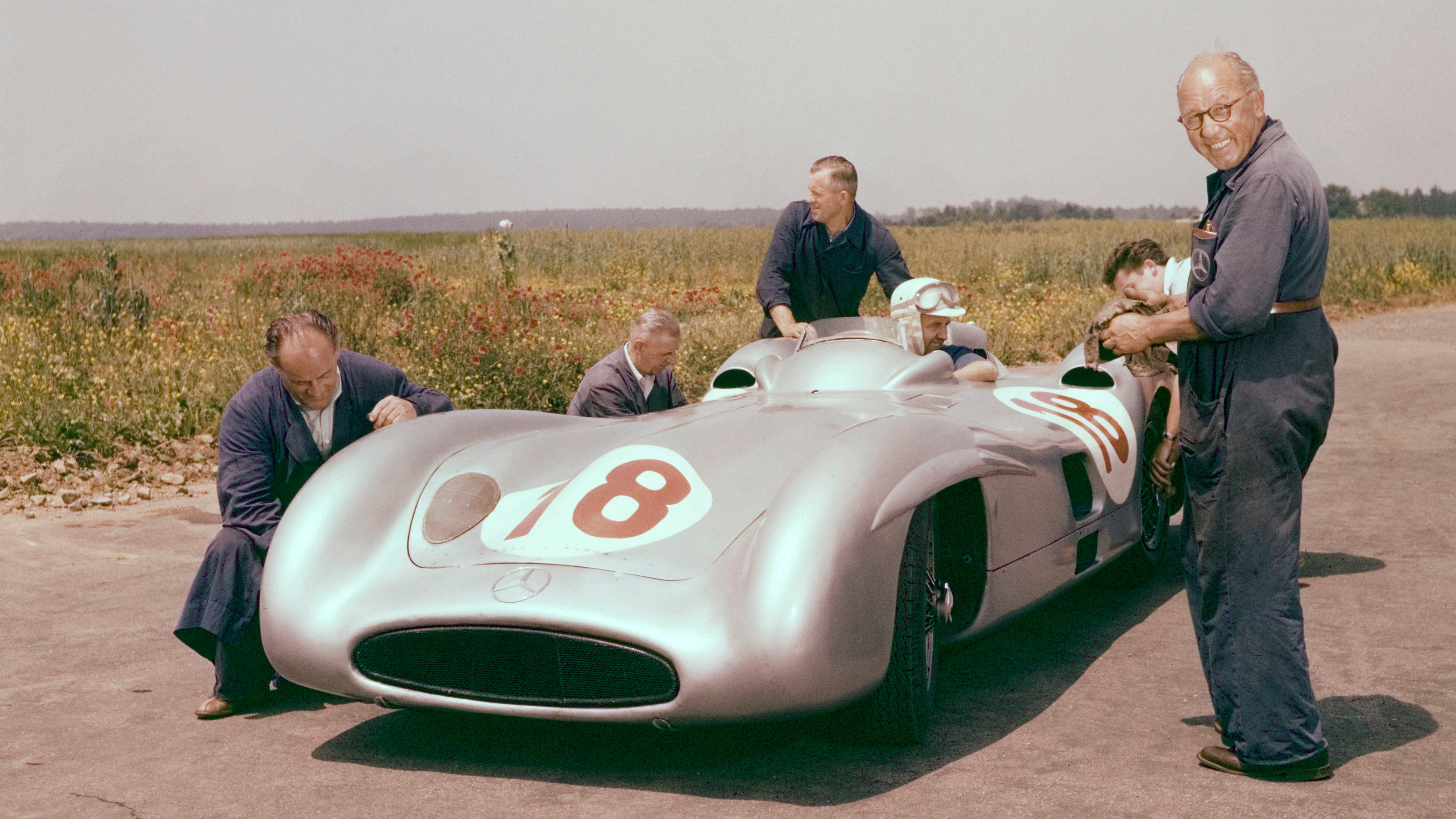
Fangio won eight Grands Prix in the W196 across the 1954 and '55 seasons, winning the Championship in both years.
A lubrication problem left Moss pushing the Maserati over the finish line and handed the win to the streamlined Mercedes W196 of Fangio, who had already become World Champion for a second time. But the point had been made. Moss would join the man he so admired in a Silver Arrows master and apprentice ‘dream team’ for ’55.
The ‘Silver Train’
That became the collective nickname for Fangio and Moss through the summer of their single season together at Mercedes, as they carved up the F1 World Championship between them. Most of the time Moss dutifully followed in the wheel tracks of the team leader, and never with a hint of resentment. Quite the opposite, in fact.
“It was fine with me,” Moss told Widdows. “He was the senior driver. I had such respect for the man; his driving talent was enormous, but I could beat him in sportscars. For some reason he didn’t like sportscars.”
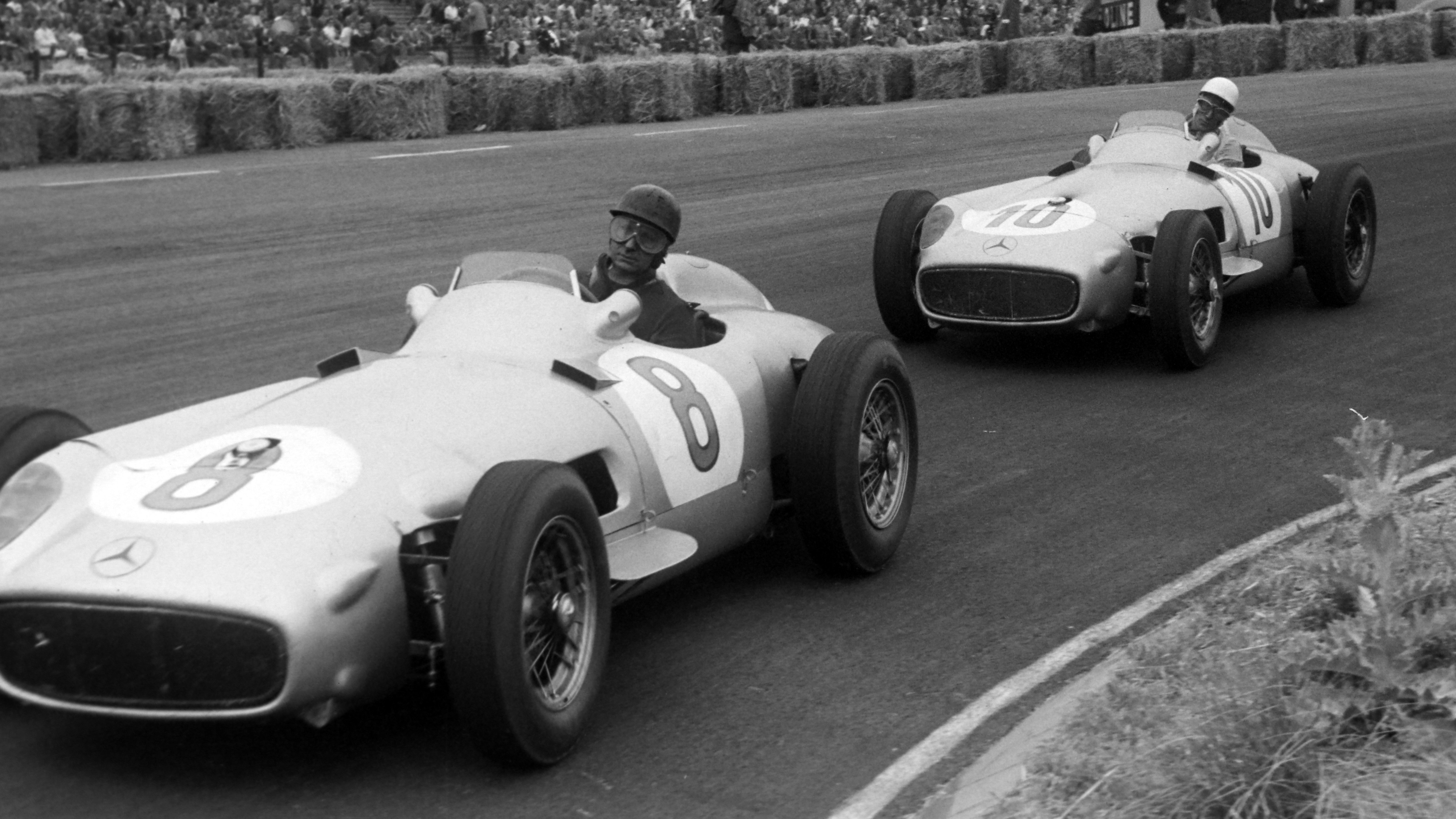
Fangio leads Mercedes team-mate Moss at the Dutch Grand Prix, June 1955.
Indeed, Moss scored his signature Mille Miglia victory in May, aided by the hand-signal directions of journalist Denis Jenkinson sat beside him. Then the two drivers teamed up in the same 300 SLR for the Le Mans 24 Hours — surely the greatest pairing ever to be assembled for the great endurance race. They would likely have won, too, had Mercedes not pulled its team out of the race in the wake of the disaster of Pierre Levegh’s sister car crashing into the crowd and killing more than 80 spectators. By far, motor racing’s worst disaster.
The British Grand Prix question
Later that summer, Fangio and Moss put on what’s surely their best-known and most celebrated duel, at Aintree for the British Grand Prix. But how much was choreographed that day in Liverpool? Certainly, they were racing for most of the distance, but in those closing yards did Fangio back off to allow Moss to score an overdue first World Championship Grand Prix win? The Maestro never did say as much — and The Boy was never really sure.
“I don’t really know the answer, he wouldn’t ever tell me,” Moss said. “But he did say to me, ‘this was your day; you were really on form today’. Now, we always found it difficult to communicate because we never had a common language and I’m not sure if something was lost in the translation. All I do know is that I got fastest lap of the race that day and that’s indicative.”
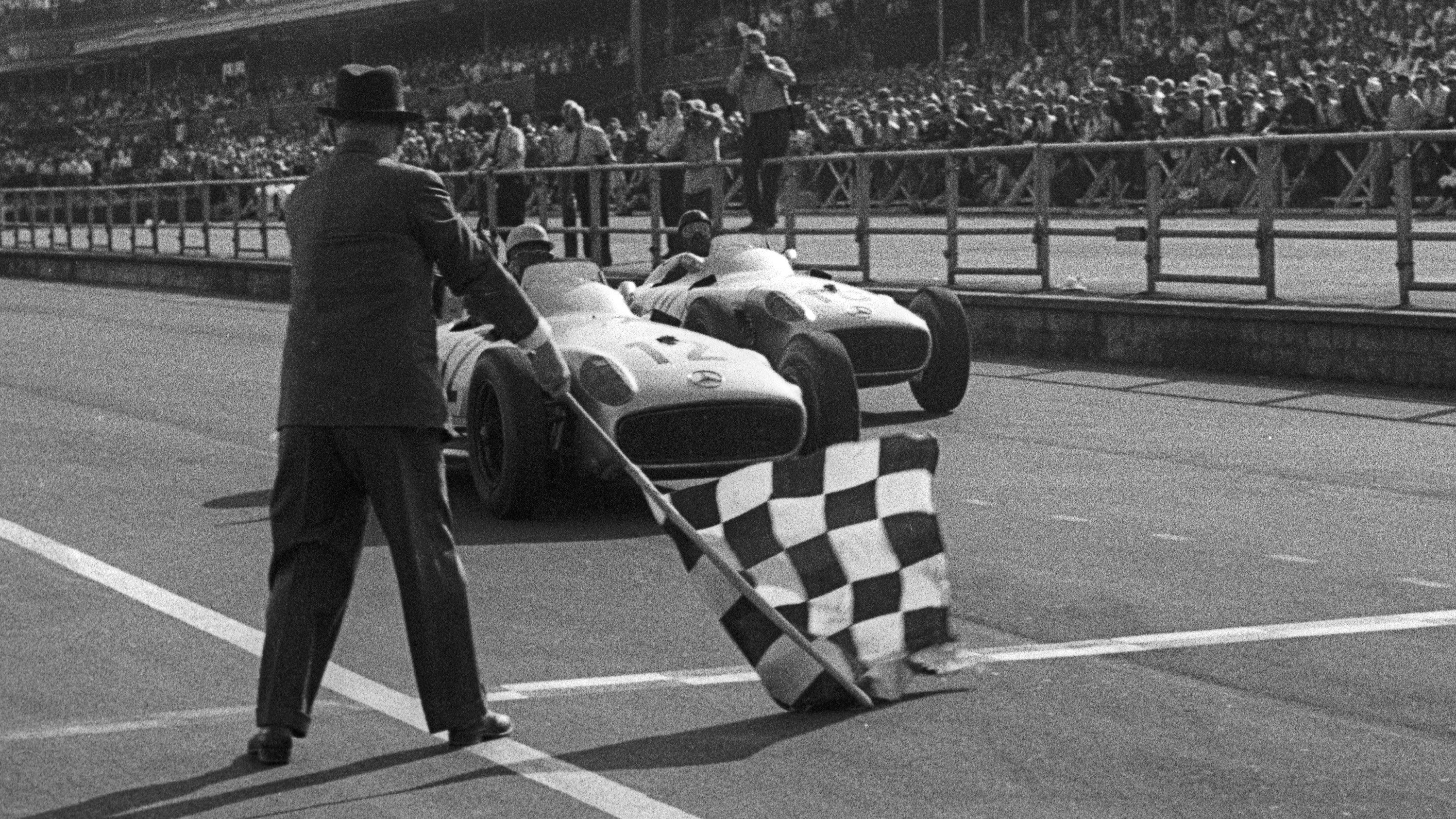
Moss takes a narrow victory over Fangio at the 1955 British Grand Prix.
Shining in 250Fs
Both Fangio and Moss were left high and dry at season’s end when Mercedes withdrew from all motorsport. Now a three-time World Champion, Fangio joined Ferrari for an uneasy run to a fourth title in 1956, while Moss landed a seat in a factory 250F. In the Maserati, he scored the first of his eventual three Monaco Grand Prix victories and made up somewhat for the loss at Monza in 1954 with Italian Grand Prix success at season’s end.
The following year, Moss finally had his wish to drive for a competitive British F1 team as Vanwall came on song. Meanwhile, Fangio returned happily to Maserati with whom he claimed his fifth and final title, with that incredible day of days virtuoso performance at the 1957 German Grand Prix. It’s a drive that remains revered as among the greatest from anyone in any era, and enshrined the legend of the 250F as one of the great Grand Prix cars.
In London in 1979, Nigel Roebuck — the maestro of F1 writers — enjoyed one of the best days of his life when he sat down to interview his hero. “I loved that Maserati,” Fangio told him. “It wasn’t very powerful, but it was beautifully balanced — I felt I could do anything with it.
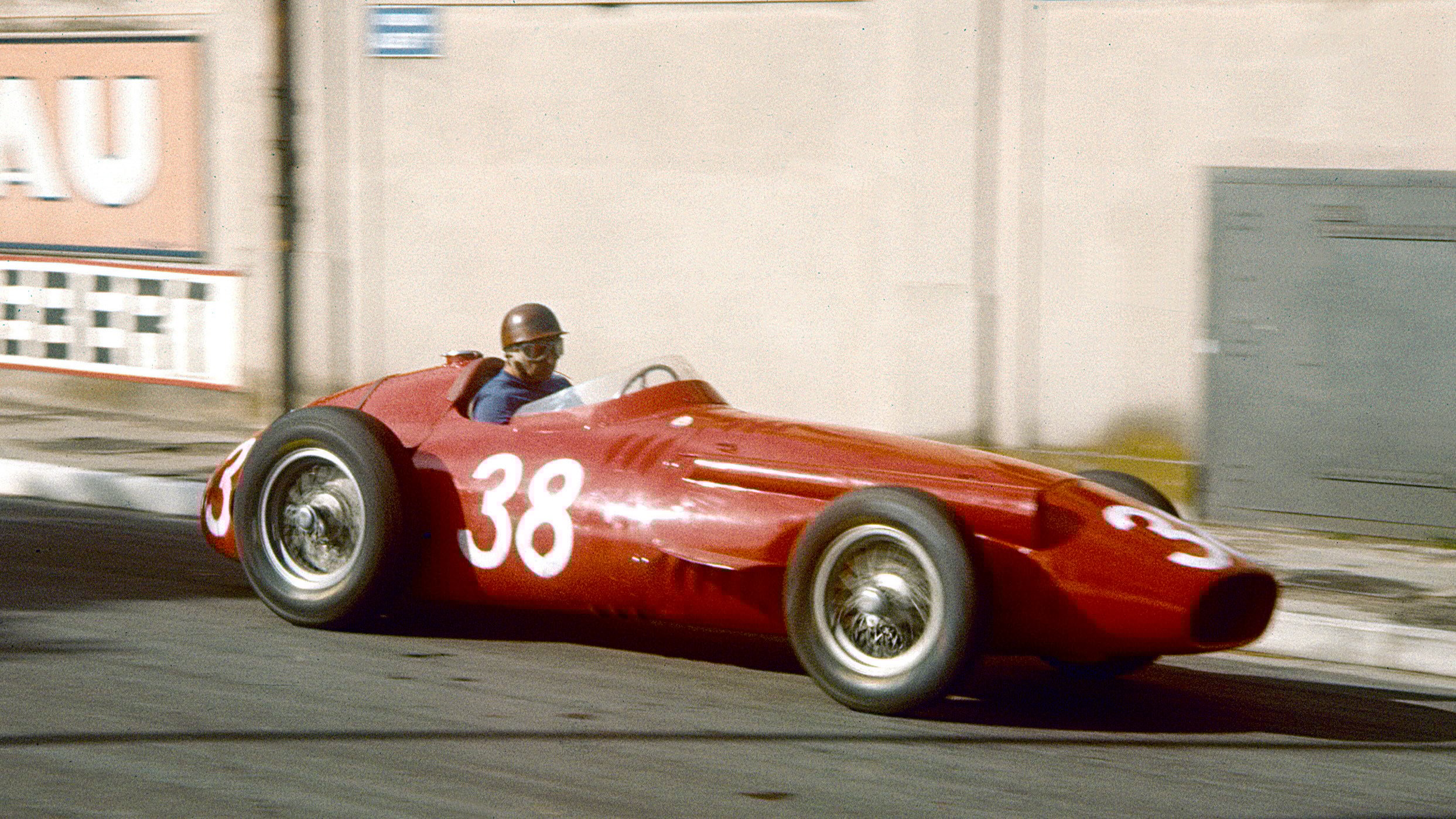
Back with Maserati, Fangio won the the 1957 Monaco Grand Prix in a 250F, on his way to a fifth World Championship.
“Even now, sitting here with you all these years later, when I think of that race I can feel fear. The Nürburgring was always my favourite circuit — I loved it, all of it, and I think that day I conquered it, but on another day it might have conquered me, who knows? Afterwards I knew what I had done, the chances I had taken — I believe that day I took myself and my car to the limit, and perhaps a little bit more. I had never driven like that before, and I knew I never would again.”
The baton passes
The following season, Fangio quit motor racing mid-season at the ripe age of 46. Moss once again missed out on the World Championship, this time by one point to friend and fellow Brit Mike Hawthorn. But the nature of that season — how he scored four wins to Hawthorn’s single victory — changed his perspective on World Championships for good. Famously he never did claim one, and it really didn’t matter. Without Fangio, it was commonly accepted among his peers that a fully mature Moss was now head and shoulders the best racing driver in the world through those final years of the 1950s and into the next decade. Everyone knew it, titles or not.
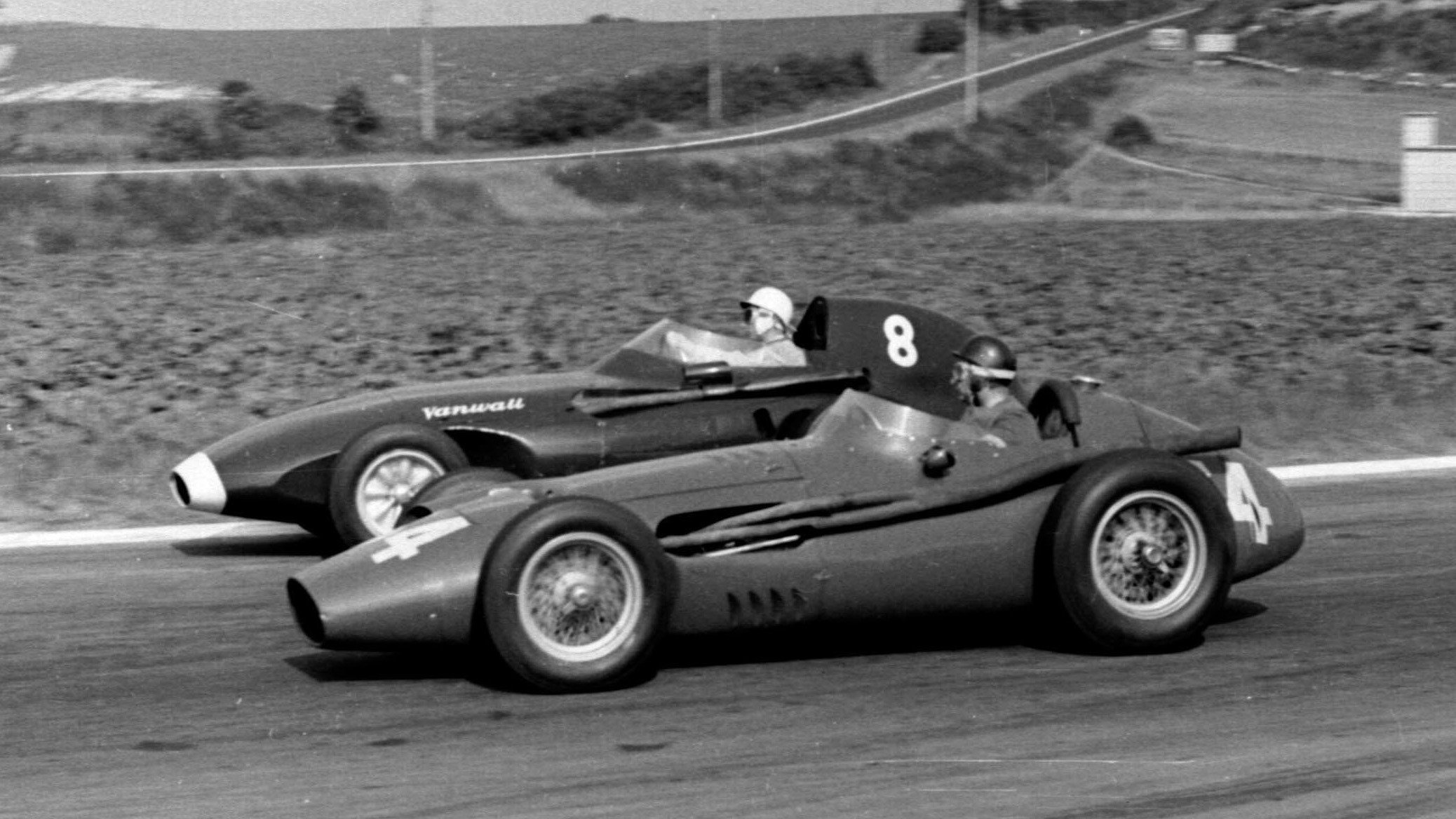
The Vanwall of Moss and the Maserati of Fangio battle it out at the 1958 French Grand Prix, Fangio's final race.
But Moss would always remain deferential to the man and competitor he respected beyond any other. “He was the greatest of them all,” Moss told Widdows. “In truth you can’t really compare drivers across all the different eras, but to me Fangio was outstanding and of course he was in the era of dangerous cars.
“We all knew it was dangerous: I went into it partly because it was dangerous. It’s totally different now, so comparisons are difficult. But Fangio was the greatest. He had tremendous stamina, he was tremendously consistent and he was a gentleman, too. He has to be number one, for me.”
Tickets for the Festival of Speed are on sale. Saturday and four-day passes are now sold out and Friday tickets are limited. If you’re not already part of the GRRC, joining the Fellowship means you can save ten per cent on your 2026 tickets and grandstand passes, as well as enjoy a whole host of other on-event perks.
Images courtesy of Getty Images.
formula 1
f1
the rivals
Stirling Moss
Juan Manuel Fangio
Maserati Celebration
Festival of Speed
fos
fos 2026

Subscribe to Goodwood Road & Racing
Thank you, you’re now subscribed

How many hay bales are used at FOS?
For the last two years, 5,800 bales have been recylced into the biomass energy centre to be used for energy generation