
Why Häkkinen was Schumacher’s equal
They first encountered each other in Formula 3. That’s when Mika Häkkinen discovered just how ruthless Michael Schumacher could be. Then again, the Finn had his own brand of cold, hard competitiveness and wasn’t one to be messed with either.
That’s why their Formula 1 rivalry, when it finally kicked in during the final years of the 1990s, proved a perfect match-up. These two not only revived the intensity of the McLaren vs. Ferrari fight that had first ignited with James Hunt and Niki Lauda in the 1970s, they also proved to be each other’s equal. As we prepare for ‘The Rivals — Epic Racing Duels’ at the 2026 Festival of Speed presented by Mastercard, let’s remind ourselves why.
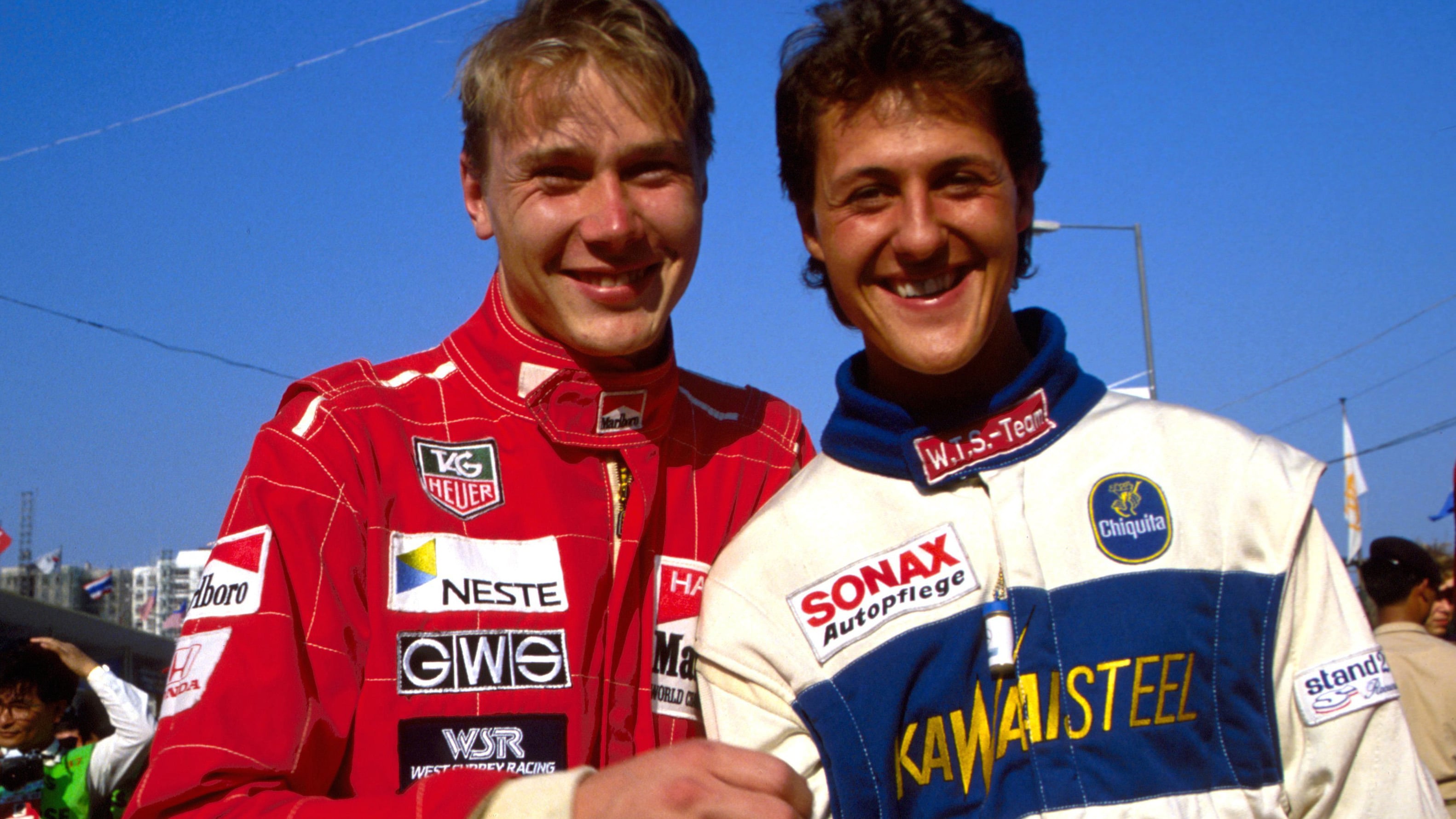
Roots of the rivalry
Hockenheim, 1990. That’s when Häkkinen and Schumacher first went head-to-head. Häkkinen was in his second year of Formula 3 and, with West Surrey Racing, was on his way to British Championship glory when his team took him over to Germany for a guest appearance in the final round of the German series, where Schumacher was king.
At first, the locals could scoff at the British series invaders. Initially, a misfire left Häkkinen off the pace. But once his Ralt’s Mugen-Honda was firing cleanly he then took pole position by more than a second, led the race all the way and broke the lap record just to rub it in.
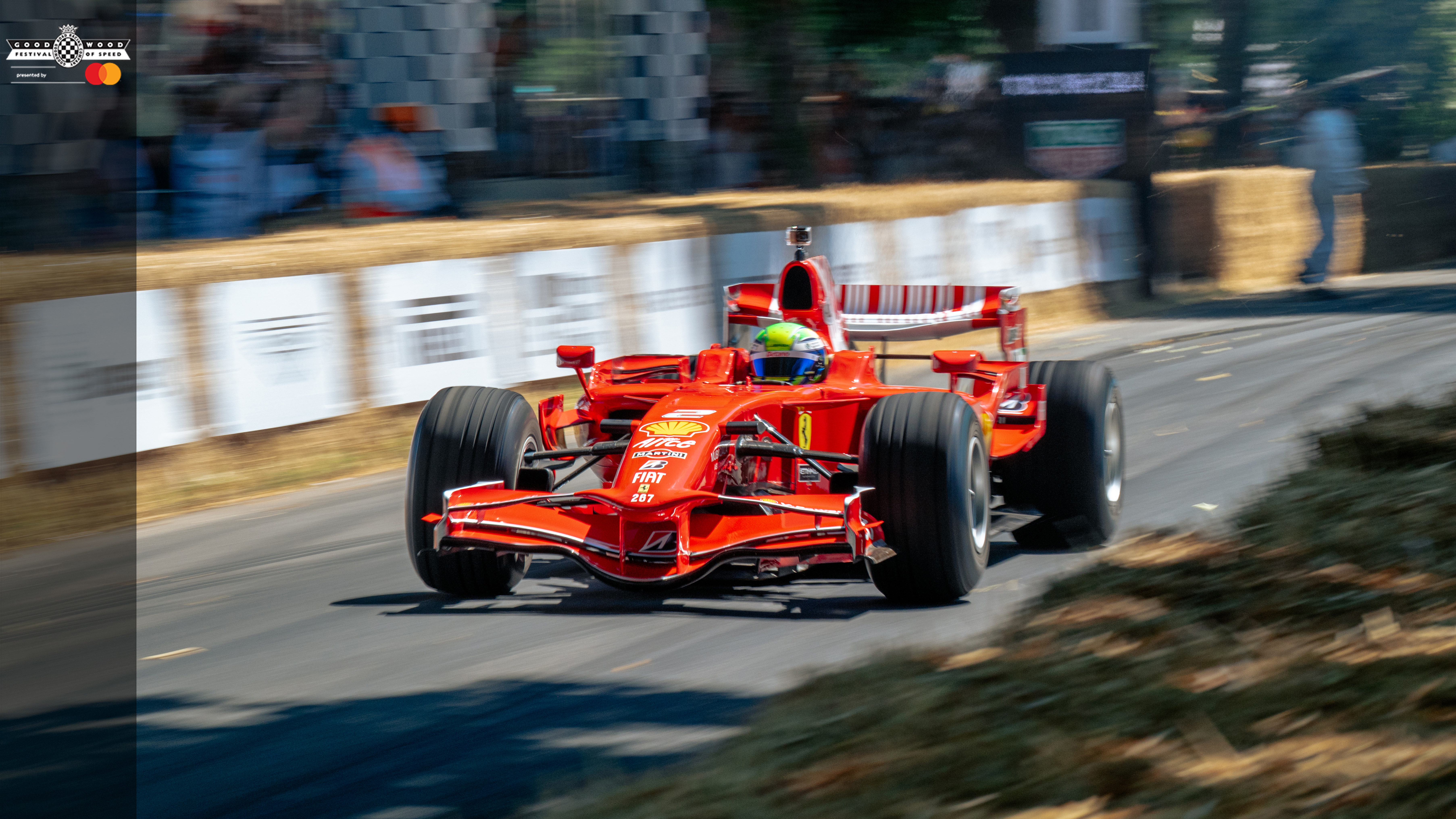
But a few weeks later at the Macau Grand Prix, Schumacher gained his revenge — in a fashion that would become all too familiar. In the first of two heats, Häkkinen again held the upper hand to beat Schumacher by a comfy 2.7seconds.
All he had to do in the second heat was to shadow the German and the Macau title would be his. Instead, he tried to pass, Schumacher’s WTS Reynard inevitably blocked and contact was made. A gutted Häkkinen was left ruing his mistake as Schumacher claimed F3’s biggest prize.
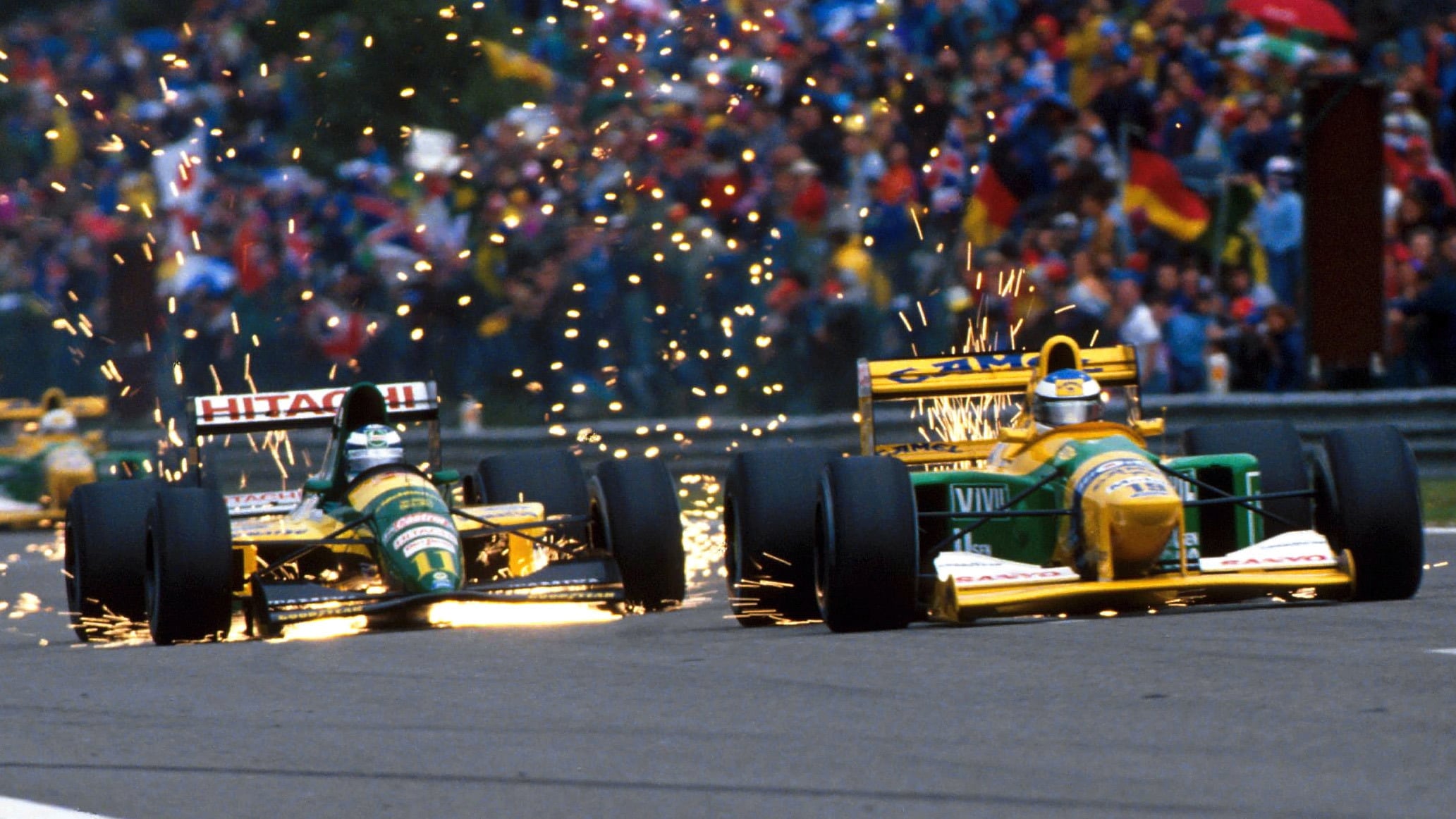
Mika Häkkinen chases Michael Schumacher, as the German races to his first F1 victory at the 1992 Belgium Grand Prix.
Image credit: Getty ImagesA dormant rivalry
From there, both made their F1 debuts in 1991, but in very different circumstances. Häkkinen’s Grand Prix career began with an underfunded and in-decline Lotus, while Schumacher made his headline-grabbing debut with Jordan at Spa, then controversially switched to Benetton. As he bedded down within a team that was a growing force, Häkkinen initially laboured. He joined McLaren in 1993, but only as test driver — until struggling Michael Andretti returned to the US. Outqualifying team-mate Ayrton Senna first time out at Estoril served notice of what Häkkinen could achieve in the right car. But unfortunately, he had joined McLaren just as its fortunes were taking a dip.
As Schumacher soared to back-to-back titles with Benetton in 1994-95, Häkkinen made little headway as the new McLaren-Mercedes alliance took its first faltering steps. Then the Finn escaped from an accident that almost claimed his life; a puncture sent him into the wall during practice at the 1995 Adelaide season closer and his helmet smacked hard into his McLaren’s steering wheel.
An emergency tracheotomy saved his life, but when he regained consciousness in hospital Häkkinen’s first concern was simply to recover in a way that would allow him to live a normal life. He went through hell — yet somehow, 87 days after the crash, he returned to the cockpit in a test at Paul Ricard. After 63 laps and a time that was faster than Schumacher’s from the previous day, Häkkinen had emphatically confirmed he was back, and with a new sense of purpose to start winning Grands Prix.
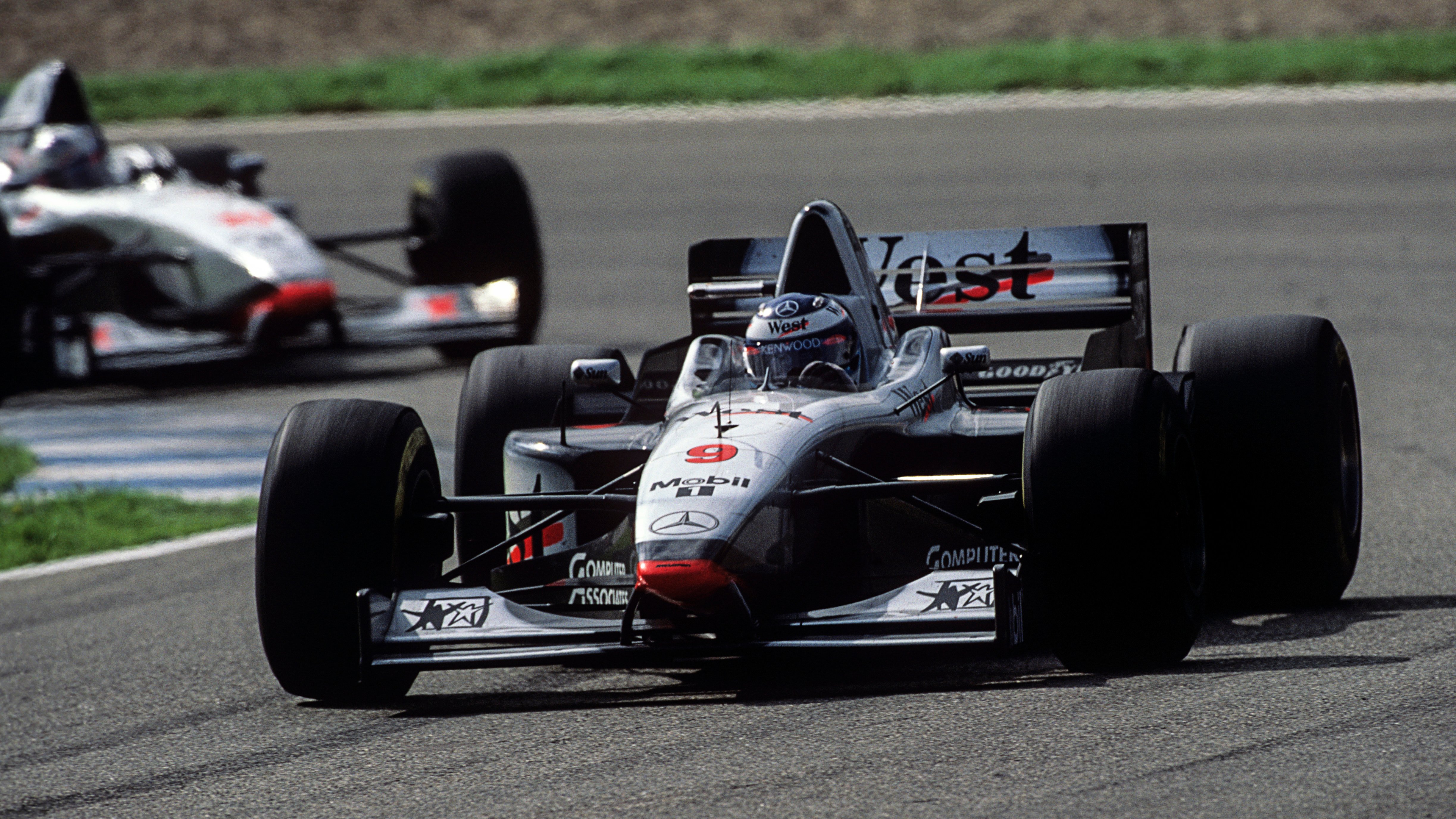
Häkkinen finally took his first F1 victory at the 1997 European Grand Prix, in the McLaren MP4-12.
Image credit: Getty ImagesMcLaren: When the force awakened
More patience was required, but finally, in 1997, McLaren-Mercedes started to win. At first it was David Coulthard rather than Häkkinen who took the glory, winning in Melbourne and at Monza. Engine failures cost Häkkinen first F1 wins at Silverstone and the Nürburgring, much to his frustration.
When the first victory finally did land, at the 99th time of asking no less, it was in odd circumstances at the Jerez finale, when Schumacher’s failure to barge Jacques Villeneuve’s Williams off the track backfired spectacularly. In the wake of such controversy, Häkkinen win — especially in circumstances he considered a “gift” — was very much a secondary story. But his status in F1 was about to change.
Armed with Adrian Newey’s first McLaren, the MP4-13, Häkkinen finally had a car to take on Schumacher on equal terms. In fact, the McLaren was a shade quicker than Schumacher’s Ferrari F300. Häkkinen won eight races to Schumacher’s six and scored nine pole positions to just three for his rival. He closed out his first World Championship in style at Suzuka, although beating Schumacher in a straight fight at the Nürburgring had been the crucial blow in what became an increasingly intense duel.
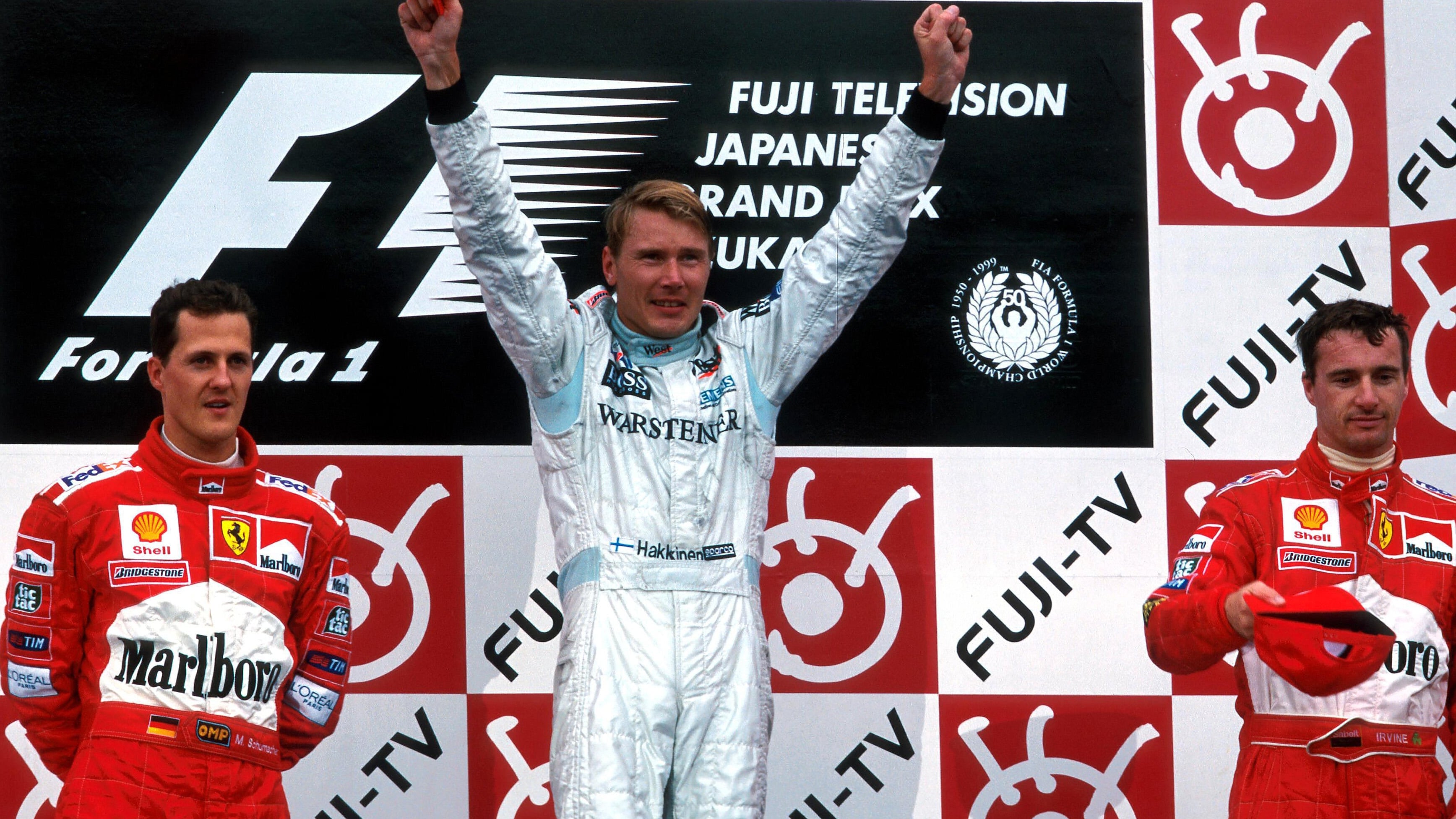
After a slow start to his F1 career, a second World Championship was secured for Häkkinen at the 1999 Japanese Grand Prix.
Image credit: Getty ImagesBack-to-back titles
The promise of a sequel between these two boded well for 1999, but the season took an unexpected turn when Schumacher broke a leg in a big accident on the opening lap of the British Grand Prix. His bid to end Ferrari’s 20-year Drivers’ title drought was becoming increasingly desperate and now he was forced to sit out six races as the focus shifted unexpectedly to team-mate Eddie Irvine. Imagine if the Northern Irishman had pulled off the feat of becoming Ferrari’s breakthrough Champion instead…. It almost happened as Häkkinen and McLaren faltered, despite their biggest rival sitting on the sidelines.
Häkkinen spinning out of the lead at Monza, then weeping behind a bush in front of the baying tifosi could have become the defining image of 1999. But as Schumacher returned for the final two rounds, to grudgingly support Irvine’s title cause, Häkkinen did just enough to become a back-to-back World Champion. After the ‘barge-board’ controversy of Malaysia, where Irvine’s winning Ferrari was first disqualified over the dimensions of the aerodynamic appendages, then reinstated in a manner that raised uncomfortable questions about the FIA’s governance of F1, Häkkinen kept a cool head to win in Suzuka.
Meanwhile, Schumacher faced the awkward truth. Four years after quitting Benetton as World Champion, the big mission to win a title with Ferrari was still out of reach. The pressure was on for 2000. This time, for Schumacher and everyone at Ferrari — including Jean Todt, Ross Brawn and Rory Byrne — another failure wasn’t an option.
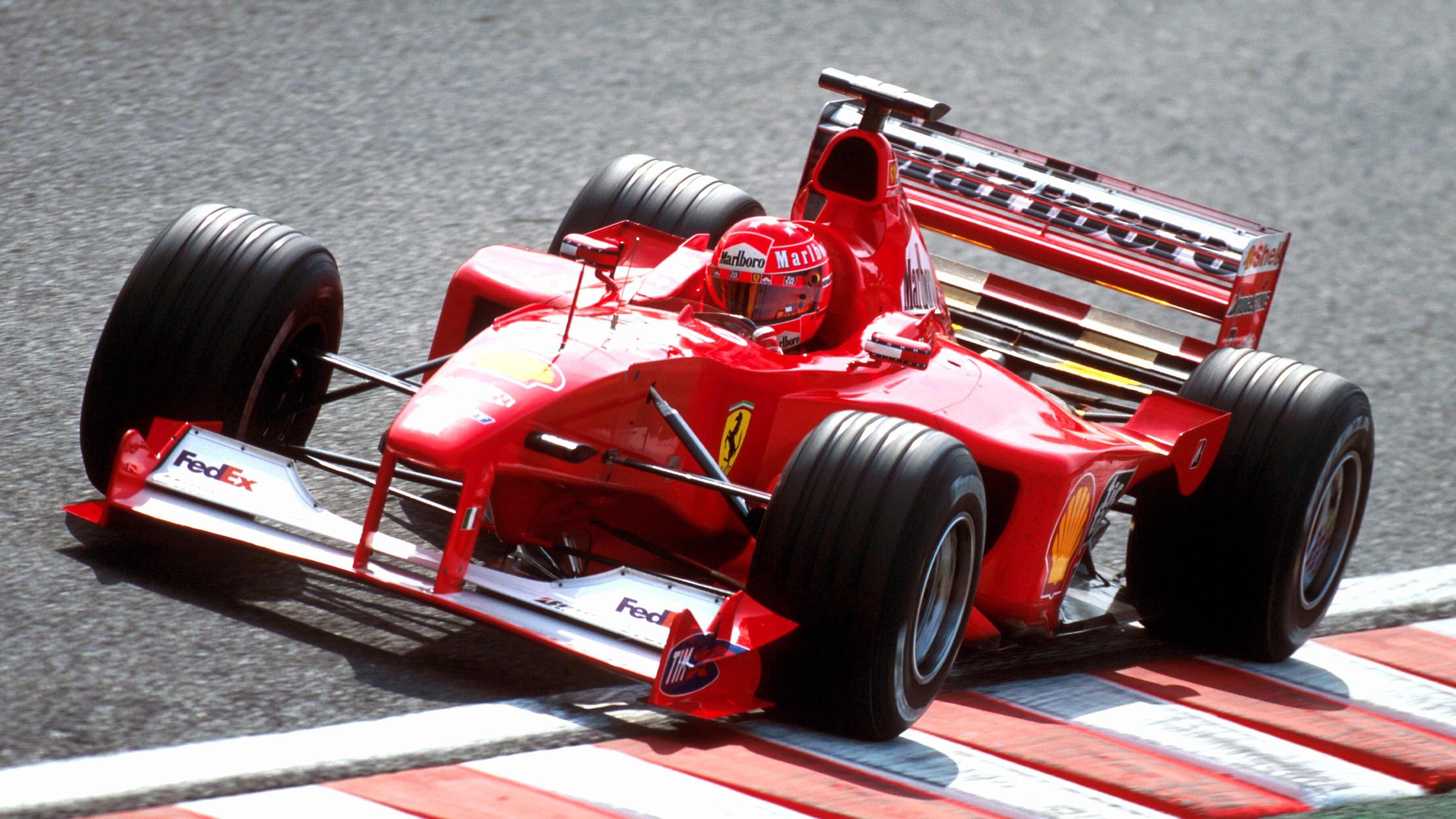
A year on, the 2000 Japanese Grand Prix was where Schumacher confirmed his third World Championship - and first with Ferrari.
Image credit: Getty ImagesThe apex of a rivalry
Schumacher grabbed the redemptive title he so desperately craved in 2000, to end Ferrari’s 20 years of hurt and to begin a run of five unbeaten Championships. The German prevailed with an heroic drive at Suzuka to secure the crown with a round to spare, then consolidated his success with a ninth victory of the campaign in the Malaysian finale. The what-ifs of another Ferrari failure could be banished from all thought.
But for all that Schumacher deserved his third World Championship and first for Ferrari, the prevailing image from that season was again tinged with controversy. At Spa, the Schumacher/Häkkinen rivalry hit its apex, with Schumacher’s questionable ethics of racing wheel-to-wheel inspiring Häkkinen to his most celebrated F1 moment.
How Schumacher blocked a chasing Häkkinen on the Kemmel straight, edging the McLaren on to the grass, enraged the usually sanguine Finn. It fired him up to land the pass that would give him the lead and victory.
The next time around, as the pair came up to lap Ricardo Zonta’s BAR, Häkkinen saw his chance. He zapped past Zonta on the inside line, with Schumacher on the Brazilian’s other flank, to take the lead into Les Combes. It remains one of F1’s great overtaking moves.
Afterwards in parc ferme, Häkkinen explained his grievance to a stern-faced Schumacher over what had occurred out there in the Ardennes forest. But as was Häkkinen’s way, he kept the discussion away from microphones. Still, he made his point.
Years later, in an interview with Simon Taylor for Motor Sport, Häkkinen gave some insight into what he made of Schumacher. “After the race I went to talk to him. But with Michael that doesn’t help, he is what he is. I’d known him since F3. He was a hard racer, well that’s OK. You play some tricks, go to the limit of the rules, but you don’t look in the mirror and then move to where the guy is coming.”
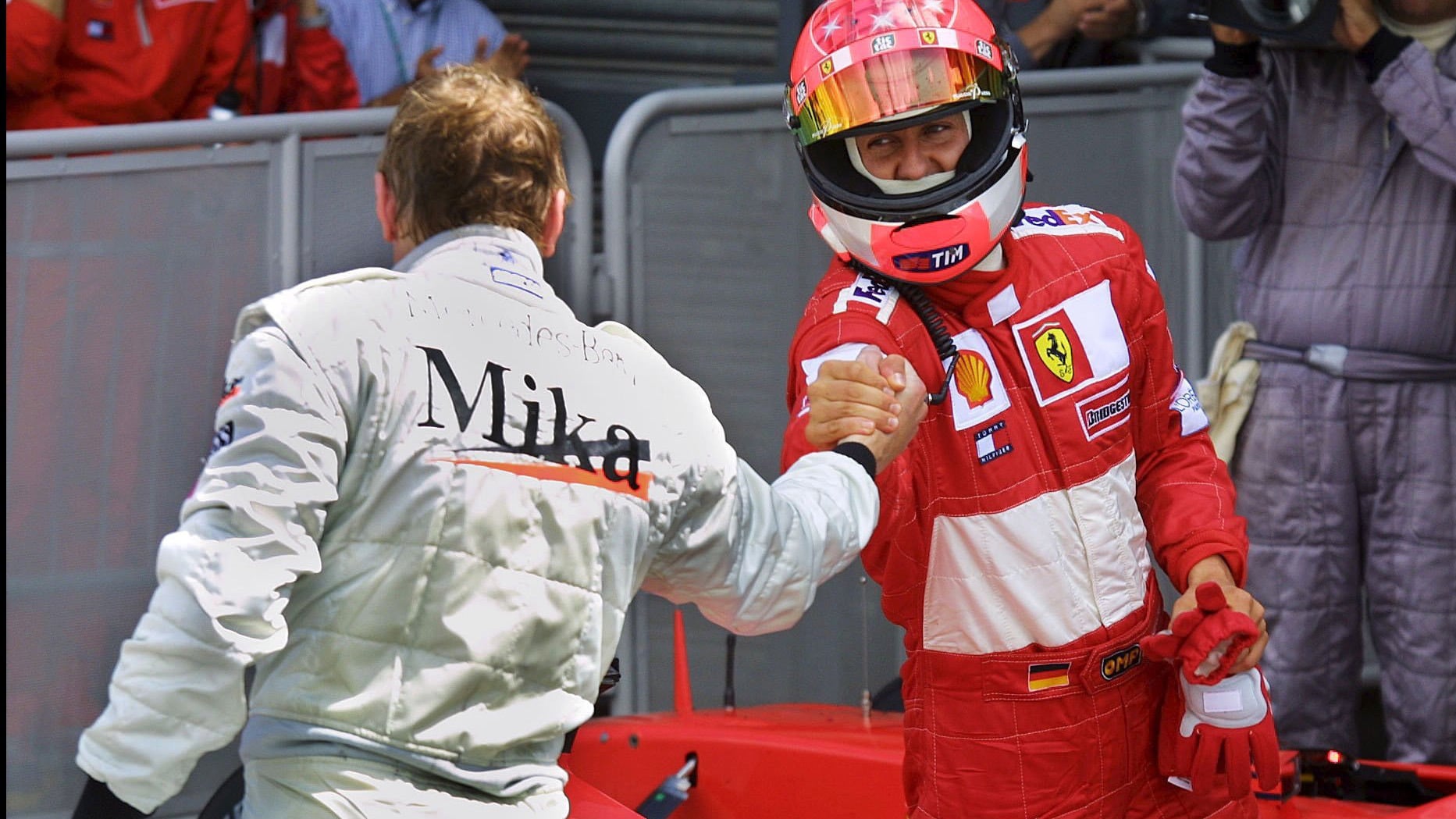
Häkkinen and Schumacher finished 1-2 at the 2001 British Grand Prix - the Finn's penultimate race win in the final year of his F1 career.
Image credit: Getty ImagesExhausted Häkkinen bows out
The Schumacher vs. Häkkinen rivalry continued into a fourth season, but it wasn’t quite the same in 2001. Häkkinen, who suffered headaches years after his Adelaide crash, was exhausted. As he described it to Taylor, it was like “writing a book, and my pen was running out of ink.”
That year, he lost a certain Spanish Grand Prix win with a broken clutch on the last lap, with Schumacher picking up the pieces. He also suffered a big crash at the Melbourne season opener, and the seeds of doubt over his future fully took root. As Schumacher galloped to another title, Häkkinen claimed two final wins at Silverstone and Indianapolis, then bowed out. Initially, it was supposed to be a sabbatical, but in truth he was done. Three years of DTM with Mercedes was much less pressure and more fun.
As for Schumacher, the titles continued to rack up. He clashed with new rivals — Juan Pablo Montoya, Fernando Alonso and the new ‘Flying Finn’ Kimi Räikkönen. But no one would earn his respect to the same degree as Häkkinen. As far as Michael was concerned, Mika had been his greatest rival.
Tickets for the Festival of Speed are limited. Only Thursday admission remains but hospitality packages for all four days are available. Missed out on a ticket for Friday or Saturday? Find out how you can access our sold-out days with one of our new packages.
If you’re not already part of the GRRC, joining the Fellowship means you can save ten per cent on your 2026 tickets and grandstand passes, as well as enjoy a whole host of other on-event perks.
Main image courtesy of Getty Images.
formula 1
f1
festival of speed
fos 2026
the rivals
michael schumacher
Mika Häkkinen

Subscribe to Goodwood Road & Racing
Thank you, you’re now subscribed

How many hay bales are used at FOS?
For the last two years, 5,800 bales have been recylced into the biomass energy centre to be used for energy generation