Modified machines and the Mother Road: Hot Rods and Route 66
The Quail welcomes automotive enthusiasts back to California this week, with the annual, mid-August car show celebrating, among other things, the century of the iconic Route 66.
Such events showcase the polished results of American car culture, but the true story of Route 66 was born in a very different environment, one of dust, grease and post-war ingenuity, which saw the emergence of Hot Rod culture.
As the historic highway approaches its 100th anniversary in 2026, its legacy remains inseparable from the young mechanics who used its asphalt to redefine American car culture.
Established in 1926, Route 66 stretches nearly 4,000km, all the way from Chicago to California. The road became a major migration route during the Dust Bowl of the 1930s, and in the decades following the stretch that became known as the ‘Mother Road’ underwent a transformation to become a true cultural phenomenon.
An unprecedented boom in car sales in the US after World War II, paired with a unique generation of young adrenaline-seeking men returning from military service produced a culture of Hot Rodding.
Armed with advanced mechanical skills learned in the armed forces, these enthusiasts sought out inexpensive, pre-war cars — most notably Ford Model As and Ts — and began stripping them down to reduce weight. This was a lifestyle built on hands-on craftsmanship, shared technical knowledge and a desire for individuality, modifying vehicles for maximum speed and acceleration.
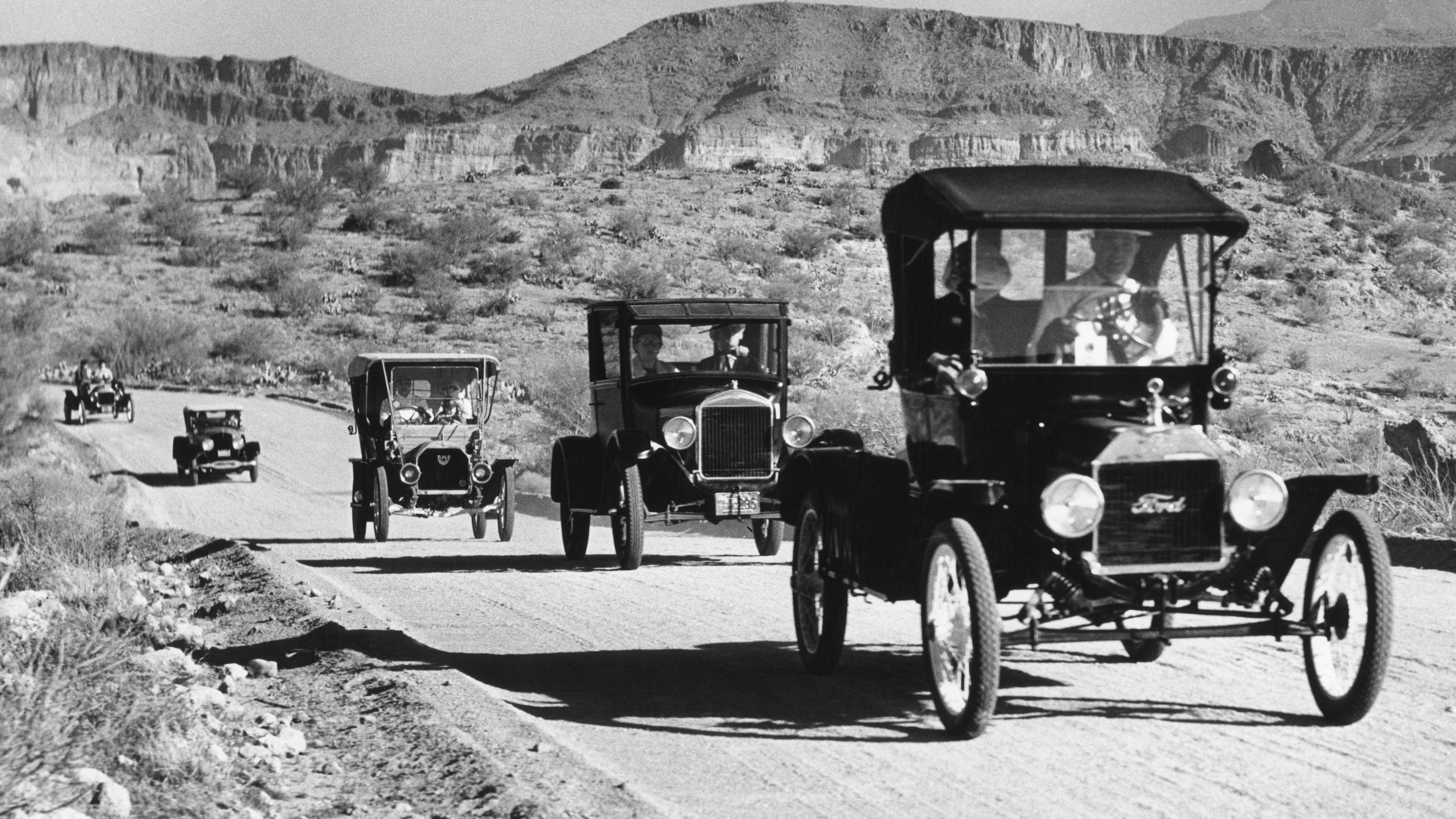
Ford Model Ts and Model As from the 1920s travel in a convoy in the Southwest of America.
Image credit: Getty ImagesRoute 66 quickly became the natural conduit for this growing movement; the highway provided a direct path to the open spaces of the American West, something Hot Rodders took advantage of to test the limits of their machines. Off-highway destinations like the El Mirage dry lake bed and the vast expanses of the Mojave Desert became testing grounds for top-speed runs, and between these formal trials the long, flat straights of Route 66 hosted impromptu drag races.
Hot Rodding was never purely a pursuit of raw speed, though, it evolved rapidly into an art form. The culture became equally defined by style: pioneering custom paint jobs, chopped roofs and meticulously detailed engine bays.
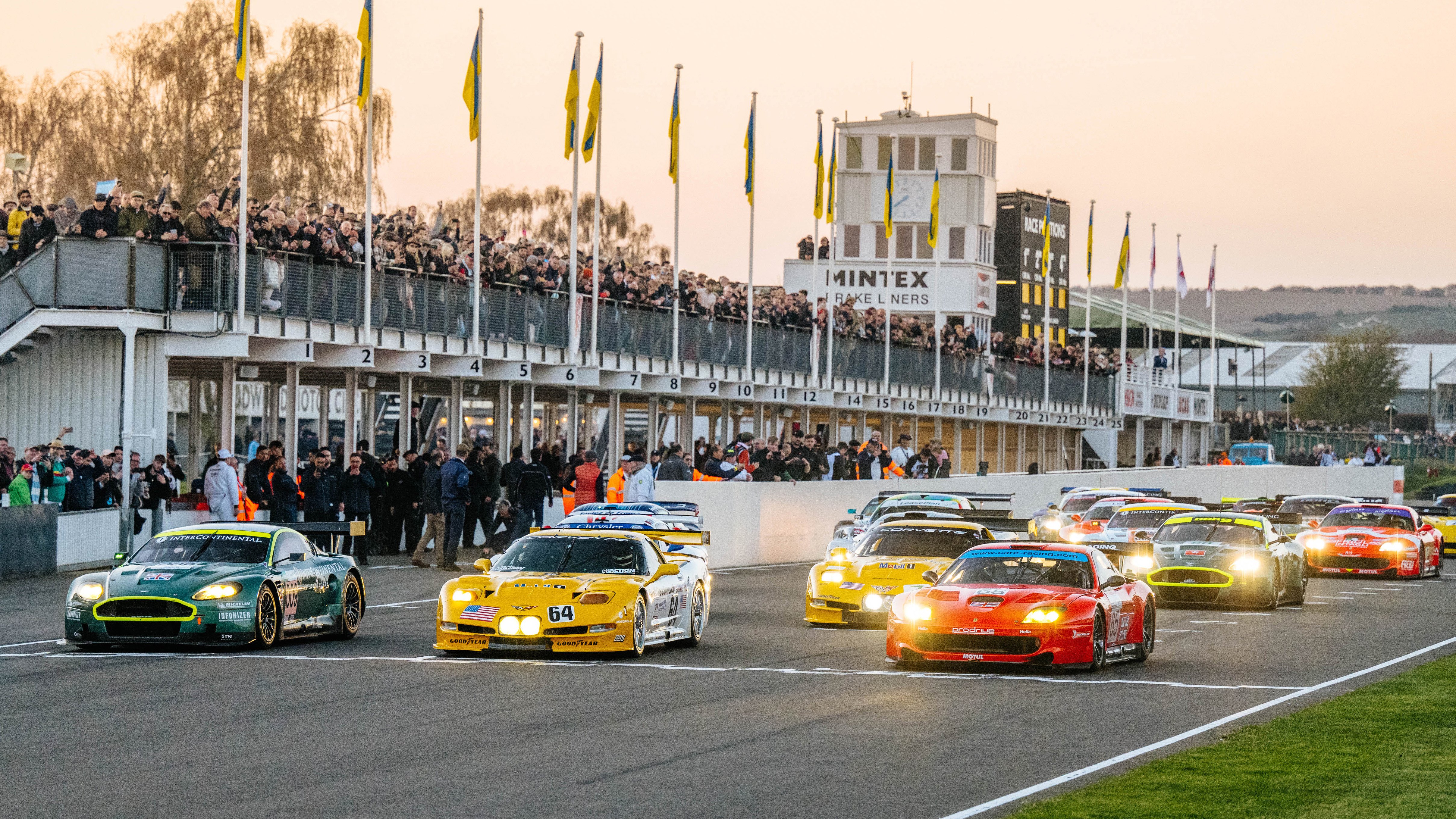
By the 1960s, the Hot Rod movement gained a new dimension with the arrival of factory-built muscle cars. Vehicles like the Ford Mustang, Chevrolet Camaro and Pontiac GTO offered massive horsepower straight off the dealership floor.
Route 66 still remained the definitive backdrop for these cars, cementing its place in popular media. The road and its cars inspired an entire era of American music, television and film, transforming a stretch of concrete into a universal symbol of adventure and rebellion.
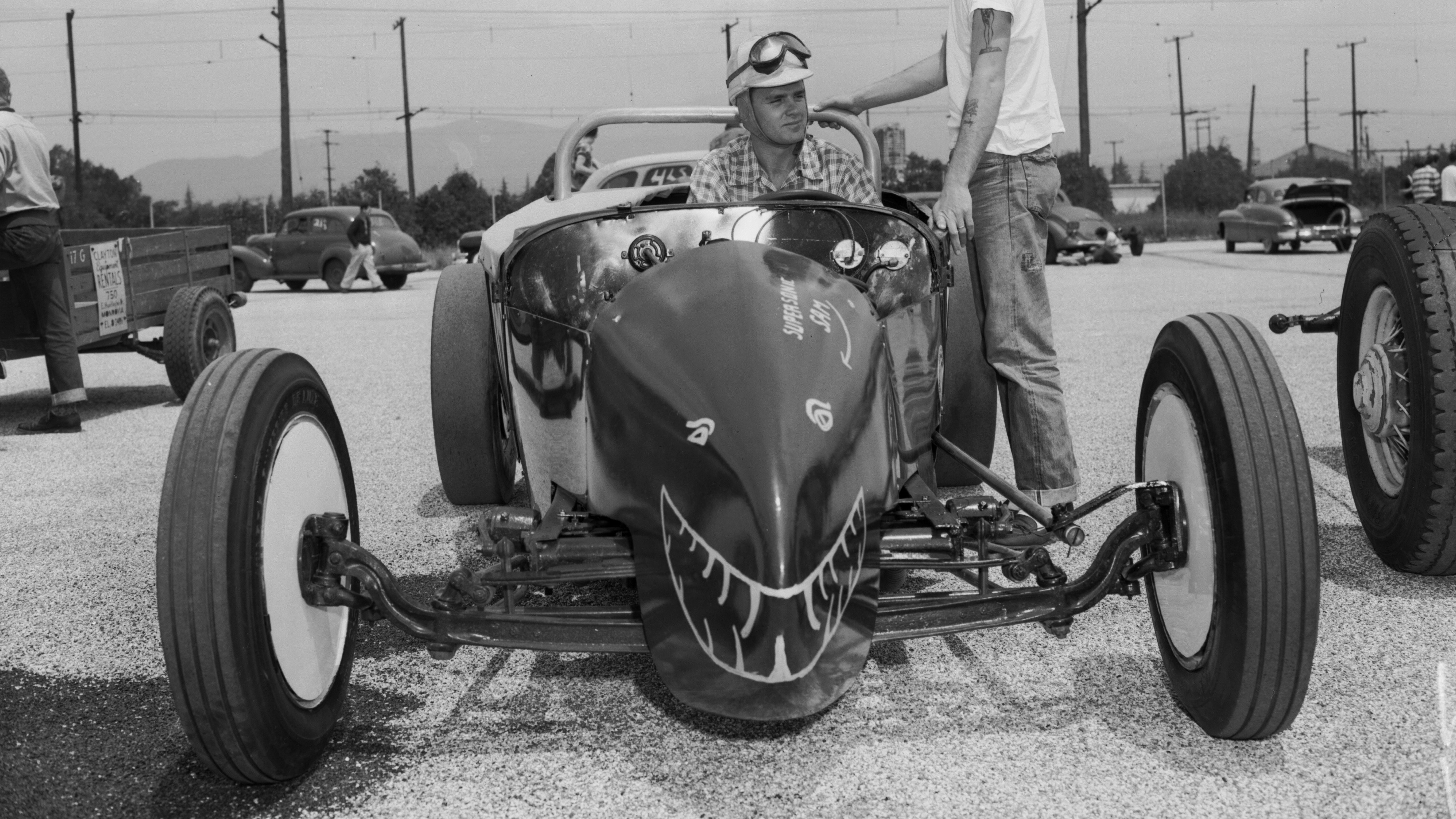
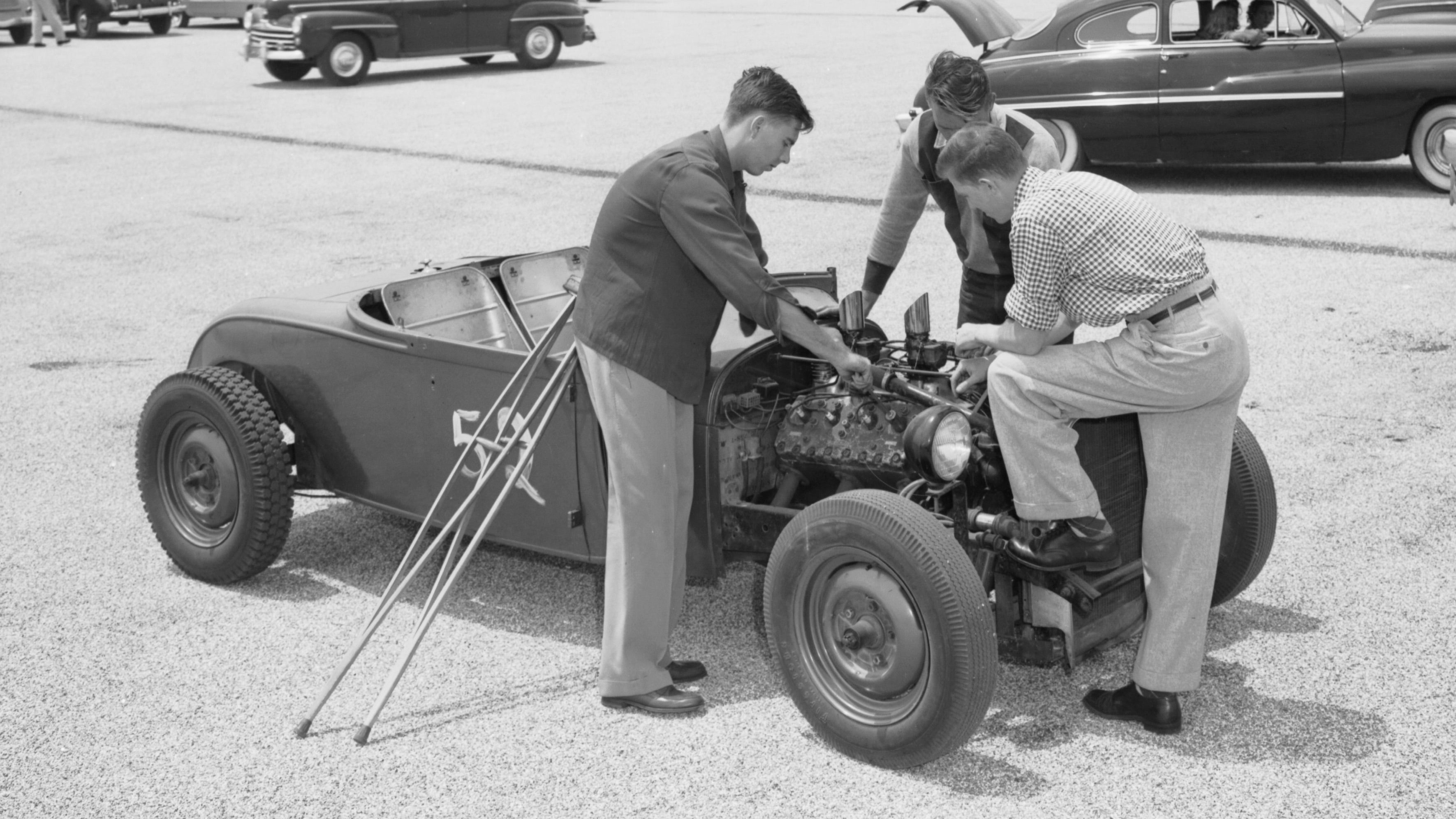
A modified roadster in Pomona, California in 1952.
Image credit: Getty ImagesAs is the way, the golden era eventually yielded to progress. By the late 1960s and 1970s, the wider, faster Interstate Highway System was established, systematically bypassing Route 66 and leading to its official decommissioning in 1985.
Though no longer an official highway, Route 66 never truly disappeared. It shifted from a functional trade route into an artifact of American nostalgia. Today, driving a custom machine down the remaining sections of the Mother Road remains a bucket-list pilgrimage for automotive purists worldwide.
Nearly 100 years since its origination, the Route 66 stands as a permanent monument to post-war grit, speed and the enduring spirit of Americana.
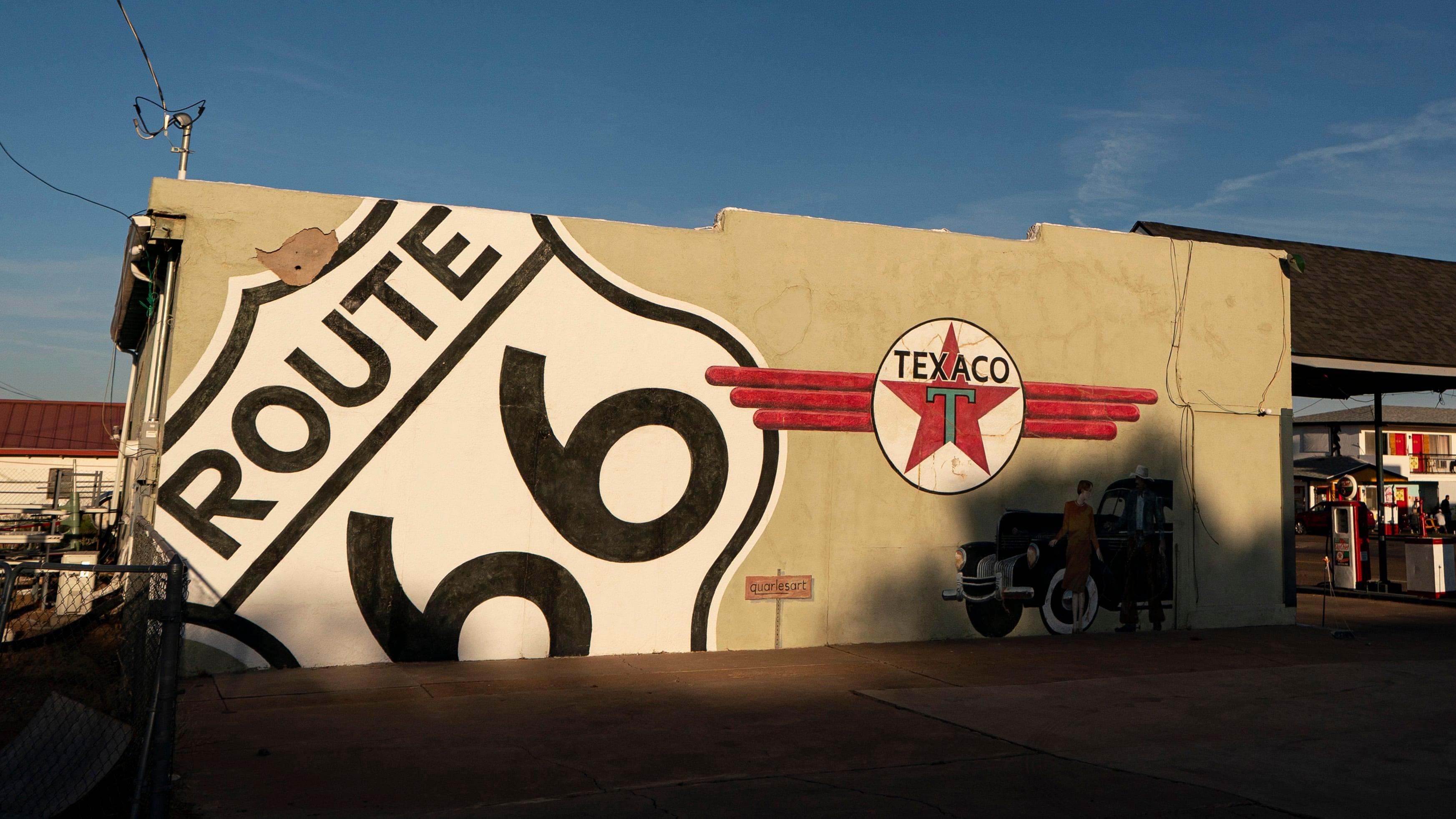
This Route 66 mural is in Tucumcari, New Mexico. The sign is an iconic image of American culture.
Image credit: Getty Images.The historic highway also passes just south of the country’s oldest permanent road course, Willow Springs International Raceway, which is set to host inaugural event of the Goodwood Road Racing Club of America in 2028.
We’ll be telling more stories spanning the spectrum of American automotive culture as we look forward to all that’s to come across the pond.
The 2027 Festival of Speed will take place on 15th-18th July 2027, sign up for ticket alerts to make sure you don't miss out. Tickets are available for GRRC Members and Fellows, you can join the Fellowship today.
Images courtesy of Getty Images.
road
news
route 66
hot rods
america
GRRC of America