This £1million-plus pre-war Mercedes could be yours before Christmas
In the years between World Wars I and II, Germany’s economy was struggling and car factories across the country were closing at an astonishing rate. It was against this backdrop that rivals Daimler and Mercedes understood that they would need to combine resources if they were to survive, and the companies merged in 1926, having been co-operating for two years prior to that.
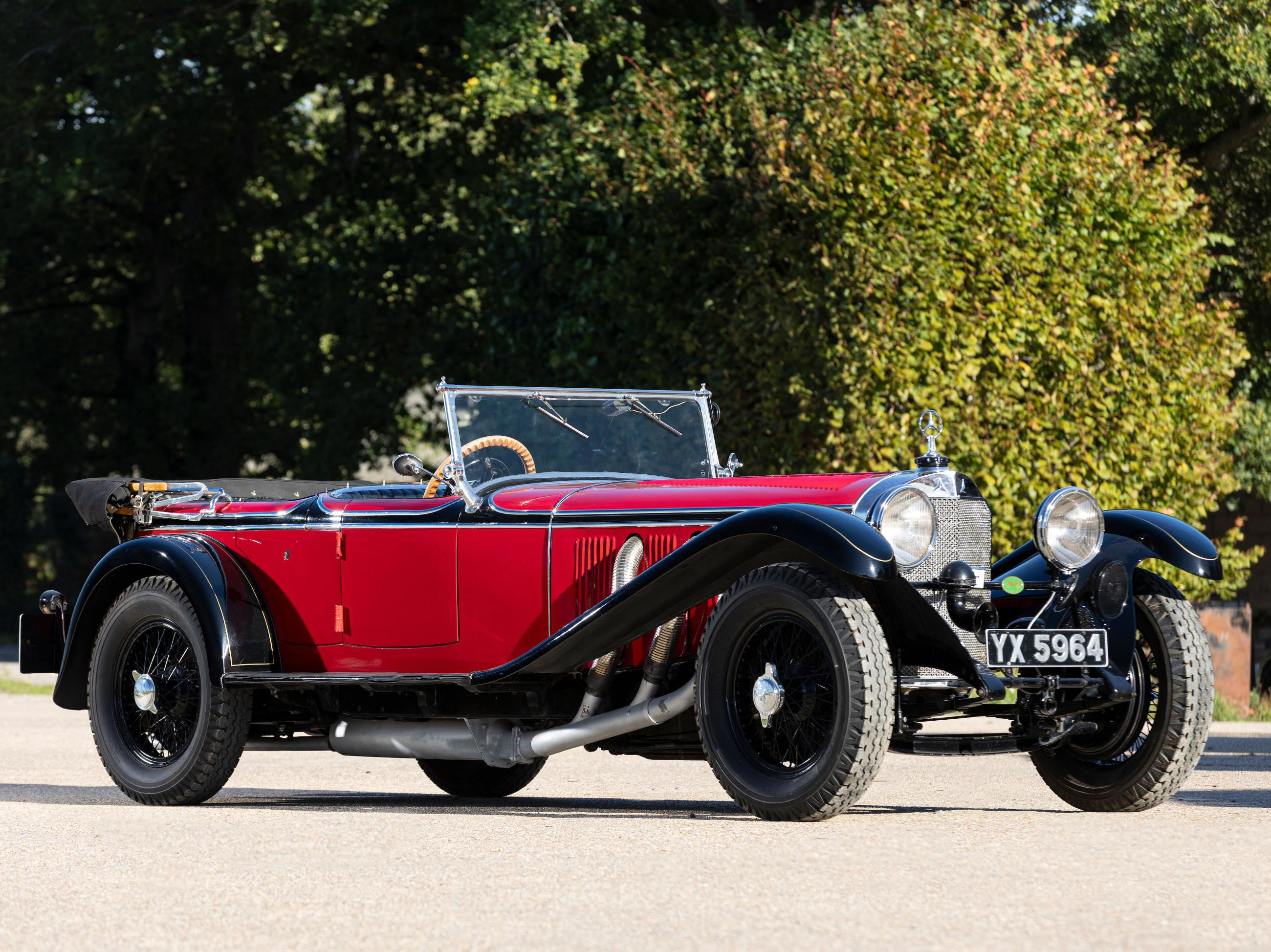
Daimler-Motoren-Gesellschaft had introduced the world’s first supercharged production cars in 1921, and Ferdinand Porsche joined the company in 1923 to continue to develop the company’s forced-induction technology. The prosaically named Type 680 26/120/180 Model S made its debut at the Nürburgring’s opening meeting in June 1927 and, what the car lacked in dynamic nomenclature, it compensated for with outright performance. Two works cars were driven by Adolf Rosenberger and Rudolf Caracciola, the latter scoring the first of many victories for the Model on the first time of asking.
In the autumn of that year, the more snappily named 36/220 Model S production car was launched. While Mercedes had no real opposition, it struggled for sale as much as other German car makers and the Depression took hold. Production came to an end in 1930, by which time only 174 examples had been built.
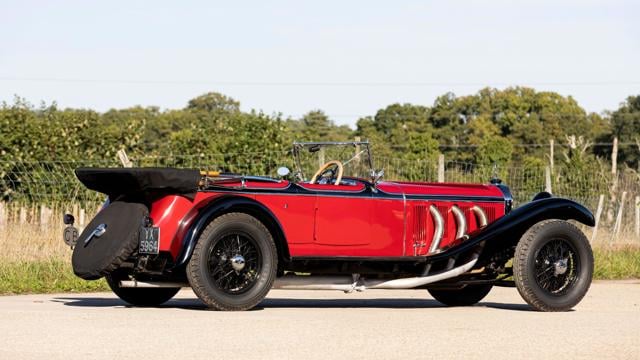
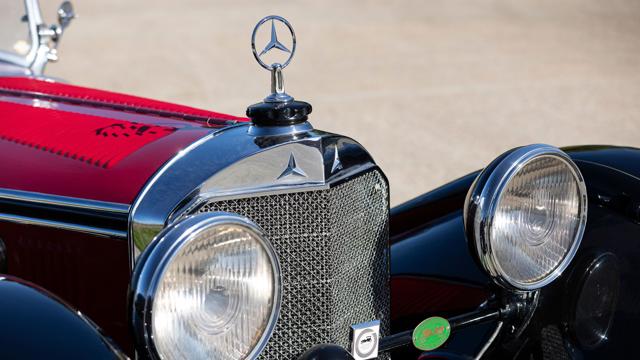
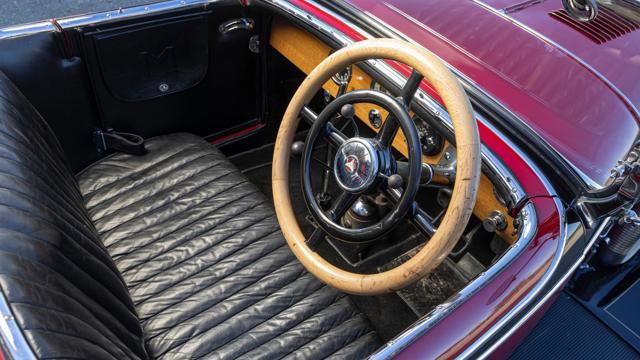
One of them, chassis number 35952, was ordered by British Mercedes Ltd in 1928 and supplied to its UK buyer. It was ordered without a body, but no records exist to confirm which coachbuilder shaped the car. Little is known about subsequent owners until it was bought by the much-loved late actor Peter Ustinov in 1951.
From 1955, the car was shown in the old Montagu Motor Museum before being officially loaned to the National Motor Museum Trust in 1973. By then, the original coachwork had been replaced with a home-made two-seater body. A new reproduction four-seater body was fitted in time for Lord Montagu to drive the car in the FIVA International Rally of 1986, which marked 100 years of the motor car. A year later, an entry in the Mille Miglia is believed to be the last time the car was driven.
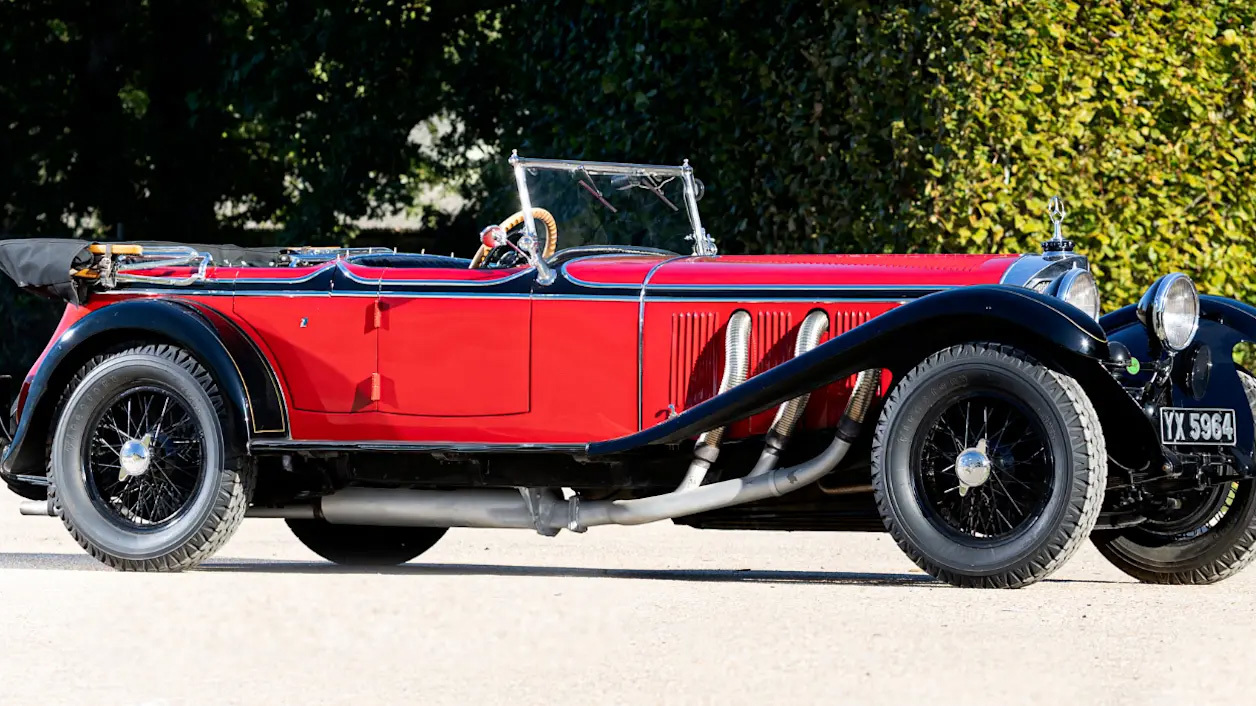
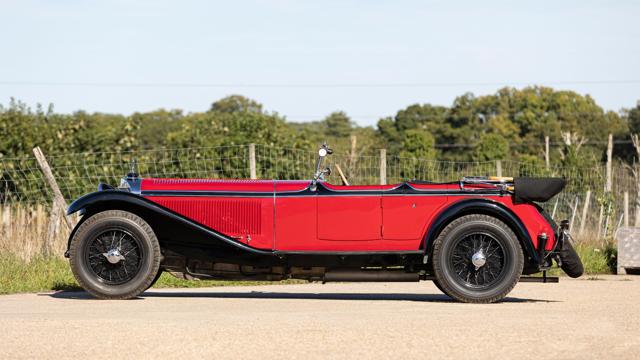
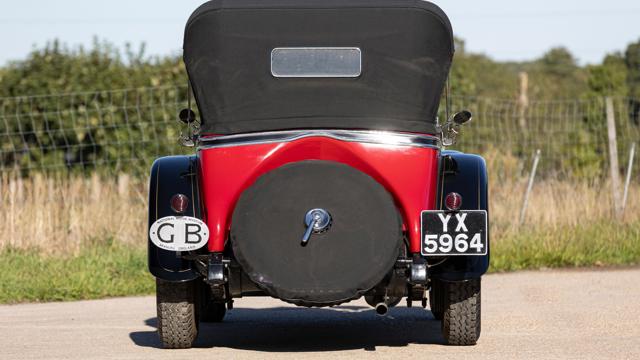
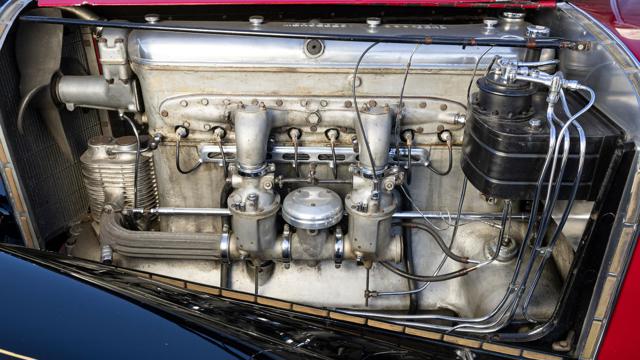
That replacement body, incidentally, was based on a car featured in The Car of Kings, but it isn’t right for this S-Type’s short chassis. The rear door, therefore, is small and the driver’s seat had to be cut away to allow enough space for access. The build was also rushed for the Mille Miglia entry, and some jobs remain unfinished to this day. The bulkhead wasn’t fully fitted, and neither were the running boards. The wiring harness wasn’t fitted either, the electrics were wired to make them useable.
The years since last use also mean some recommissioning is required. The fuel system needs cleaning, and there is no measurable oil pressure (although the engine will start and run).
Even so, this is arguably a supercar from several decades before the term was coined. Its significance is therefore not to be underestimated, while its rarity also boosts its value. Add in long-term celebrity ownership and we have a car with a seven-figure estimate when it goes under the hammer in Bonhams|Cars Bond Street sale. It’s guided to sell for between £1.2million and £1.7million.
Bonhams|Cars
Auctions
Mercedes-Benz
Road
News