

A closer look at the startling progress of Formula E
It’s nearly 12 years now since Formula E burst onto the international motorsport scene in 2014. Back then it was intent on disrupting the status quo of single-seater racing and, while it never positioned itself as a direct competitor, it offered fans a fresh alternative to Formula 1.
At the 2026 Festival of Speed presented by Mastercard, we’re taking a look back at the history of this innovative series which has grown over the years from an experimental testing ground for electric racing cars to an established FIA World Championship.
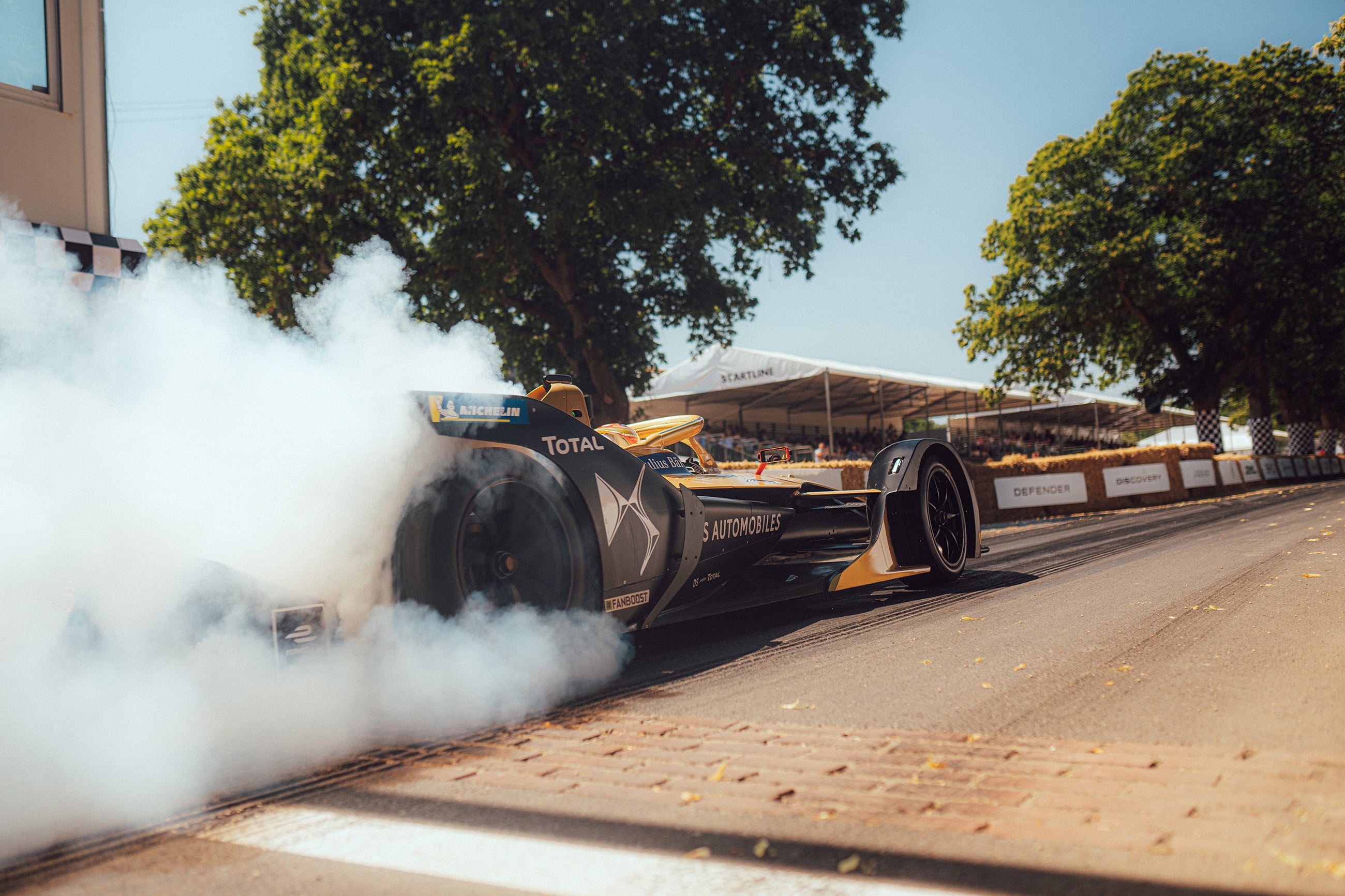
It feels like a long time since drivers were pulling into the pits to jump out of one car and into another to complete a full race distance of just over 50 miles. The sport has moved on, but by far the biggest change we’ve seen throughout Formula E’s lifespan is in the cars themselves.
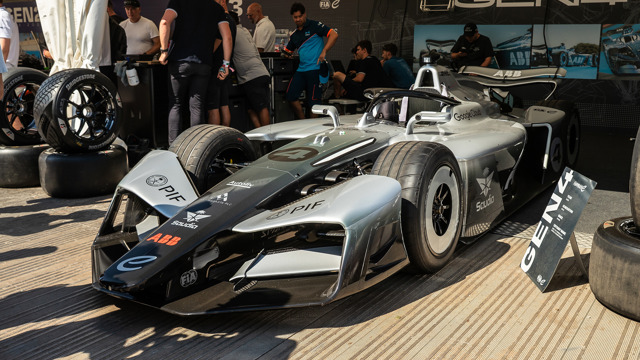
We’ve witnessed the public dynamic debut of the upcoming Gen4 car this weekend at the Festival of Speed, and this is a very different beast to those that pulled away from the line at the inaugural e-Prix in Beijing.
All four Formula E cars have been designed and manufactured by Spark, which was founded by current Ferrari Team Principal Fred Vasseur in 2013. The experience of Dallara was also incorporated during those early years to provide another layer of knowledge to the project.
It all began with the Spark SRT_01E, which was developed in partnership with Renault. The 28kWh batteries were provided by Williams Advanced Engineering, and the electric motors, transmission systems and electronics were supplied by McLaren Applied Technologies.
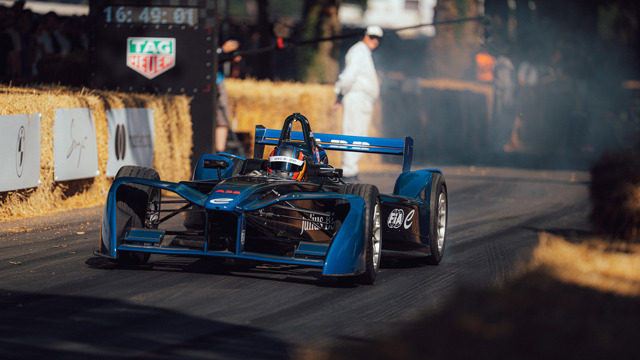
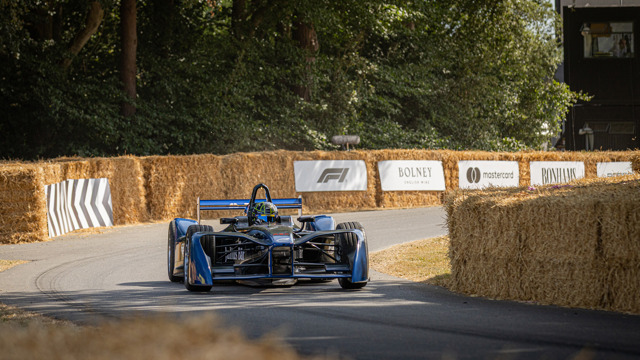
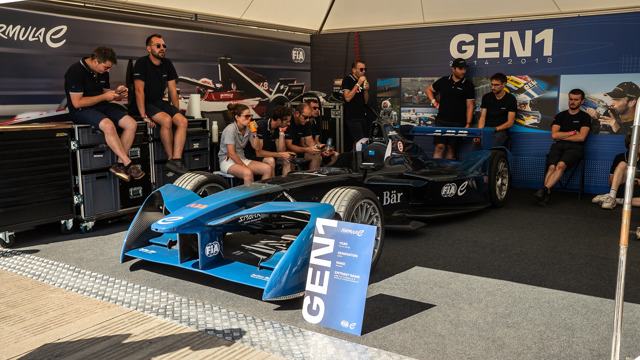
Retroactively named the Gen1 car, it was capable of 272PS (200kW), but due its limited range that output was restricted to 204PS (150kW) during races, with an additional 41PS (30kW) made available with a push-to-pass system.
Despite the big batteries, the Gen1 still only weighed 898kg, which made it barely heavier than a modern F1 car. It was also relatively small, at five metres long and 1.8 metres wide.
In terms of performance, it could manage 0-62mph in around 3.0 seconds, and its top speed was limited to 140mph, but the thing that defined this era of Formula E was the mid-race car swaps.
That quirk of the early seasons made it difficult for the sport to win over more steadfast motorsport fans who weren’t entirely convinced by cars that couldn’t even manage a race distance, so whatever came next had a tough job to try and win them over.
The Gen1 was campaigned for four seasons by Formula E until the series entered its second phase in 2018 and Spark was tasked with developing the Gen2 car, the SRT05E.
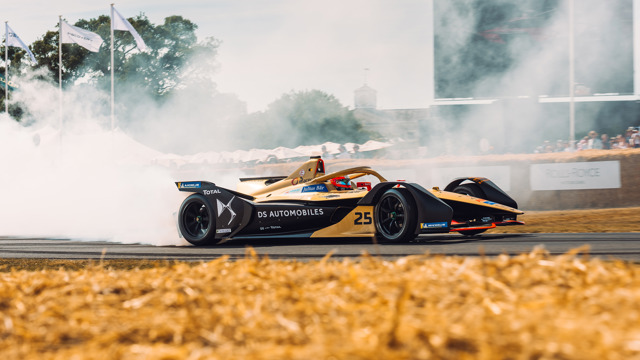
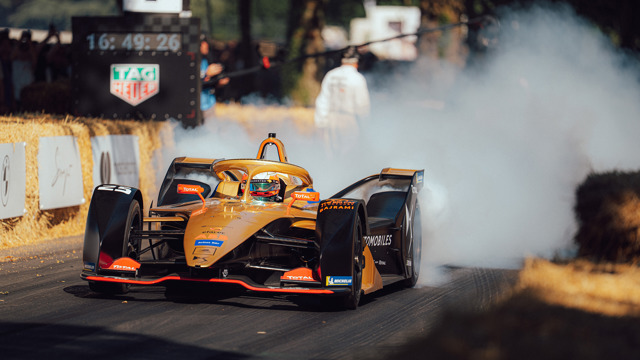
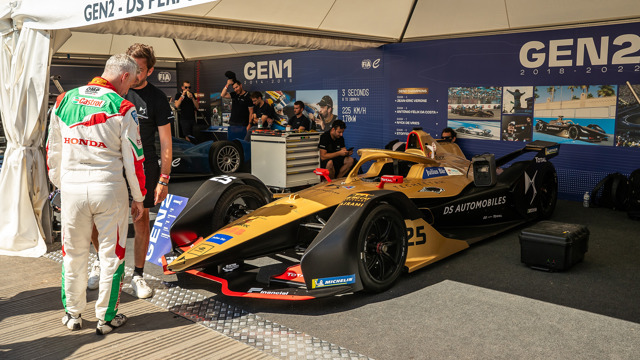
At the top of the priority list for the progression of electric single-seater racing was dramatically expanded energy capacity, and this new car delivered with a new 54kWh battery, again provided by McLaren.
Power was also increased, with electric motors either developed by the teams themselves or procured from another competitor. They were homologated to a maximum 340PS (250kW), reduced in race trim to 272PS (200kW).
This second era of Formula E also saw the introduction of Attack Mode, which gave drivers a temporary power boost, initially to 220kW, then 225kW and finally 250kW by 2021.
This Gen2 era arguably oversaw the greatest growth for Formula E in terms of fandom and competition. Mercedes and Porsche both joined the series, and it was officially granted FIA World Championship status in 2020, which was a major coup.
Despite that, the Gen2 car was still at a very early phase of electric single-seater development. There was plenty more to come, and the arrival of Gen3 in 2022 moved the dial further still.
With electric automotive technology developing at an increasingly rapid rate, Formula E was evolving ever more dramatically, and the Gen3 car made the most drastic steps yet.
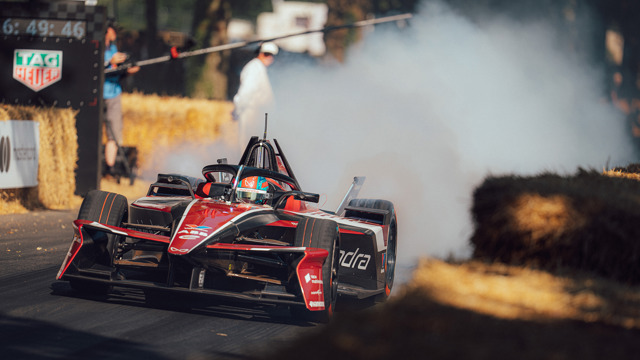
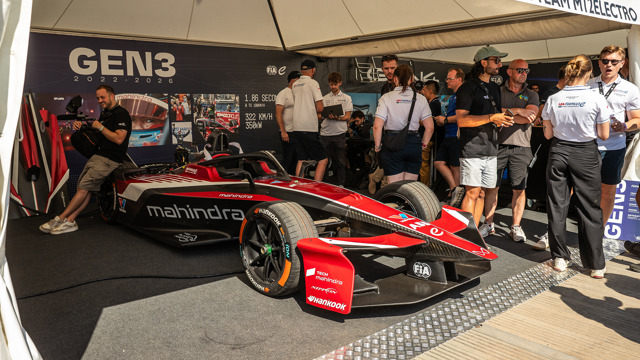
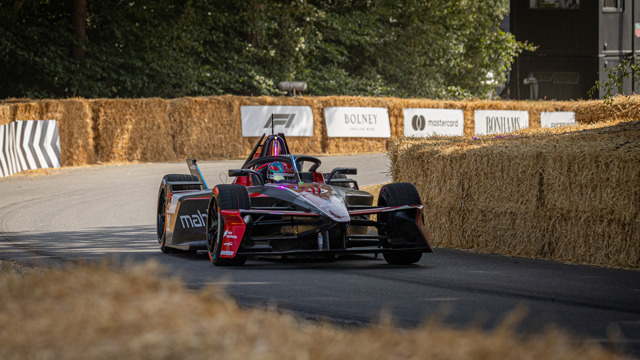
From the outside, the Gen3 car was instantly recognisable thanks to its jet fighter-style wedge shaped design. It was a departure from its more traditional open-wheel predecessors and did perhaps a better job than either the Gen1 or Gen2 in differentiating Formula E from its major single-seater competition.
Williams continued to supply the batteries, which were now up to 47kWh and responsible for feeding the electric motor mounted on the rear axle. That capacity was actually limited to 38.5kWh in race trim, demonstrating just how far this technology had advanced since the early days.
Max power, usable during qualifying and Attack Mode, output increased to 476PS (350kW) but was limited to 408PS (300kW) during races. Top speed was a theoretical 200mph. Gen3 also incorporated a new front axle motor, provided by a single manufacturer, which was used only for recouping a maximum 250kW under braking.
The pace of development showed no sign of slowing, however, and barely a year after the arrival of Gen3, Formula E announced that it was pushing on with its next iteration, the Gen3 Evo.
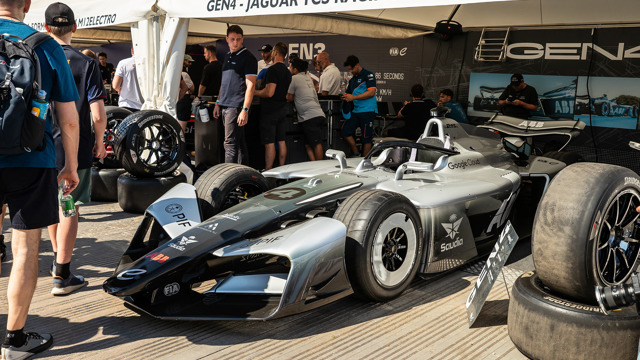
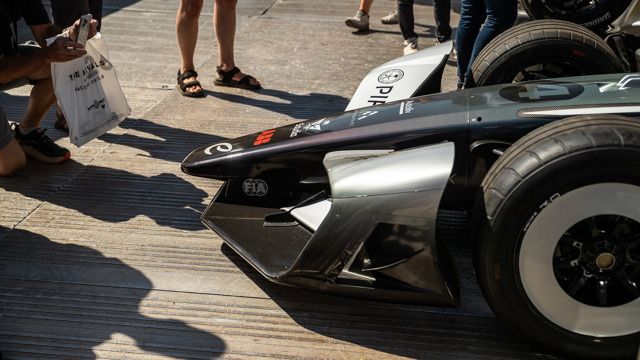
While maximum power output remained the same, the front axle motor was repurposed to provide the additional 50kW made available during qualifying, race starts and Attack Mode. Formula E cars were now all-wheel drive at peak potential, making for even greater performance gains intended to energise the action on the track.
Even as Formula E seemed to be achieving a standard that could turn the heads of those more reticent motorsport fans, news broke that Gen4 was on the way, and that we should expect even greater things.
The Gen4 car will make its competitive debut in Jeddah at the opening round of the 2026/27 season of the Formula E World Championship, and it’s set to deliver the series’ biggest performance jump to date.
Spark remains responsible for the car’s development, but the batteries have been provided by Podium Advanced Technologies for the first time. Energy capacity is up to 55kWh, with 51.25kWh of usable energy during a race.
It’ll once again make use of two electric motors, one on each axle, and they will again combine, this time in all conditions, to provide a peak output of 816PS (600kW) during qualifying and Attack Mode.
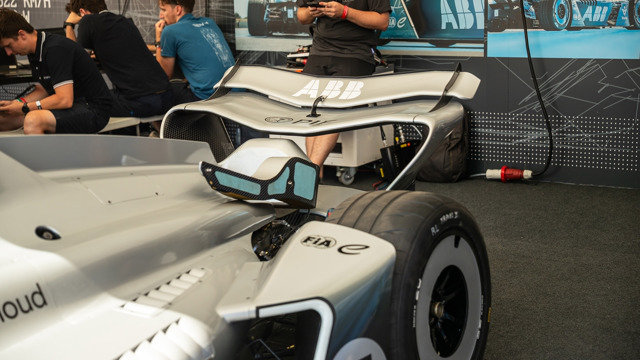
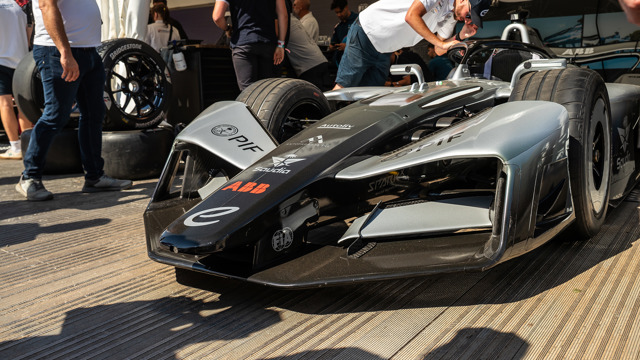
That’ll be limited to 612PS (450kW) in standard race mode, but performance is expected to be a massive step up from what we’ve seen before. This car returns to a more traditional single-seater shape with an F1-style nose, rear wing and sidepods, but retains the double decker front wing.
Seeing it here at Goodwood this weekend has given us a clear picture of how much bigger this Gen4 machine is than its predecessors, but with the announcement that Formula E will be stepping away from some of the more restrictive street circuits on its calendar, and instead heading to a handful of permanent circuits like the Circuit of the Americas, Zandvoort and Jarama, a larger car won’t be such an issue as it perhaps would have been ten years ago.
To see these four cars side by side at the Festival of Speed tells a striking story of the world’s most innovative racing series. A lot can happen in 12 years; Formula E has proven that.
Photography by Joe Harding, Tom Baigent, Charlie Brenninkmeijer and Sam Milton.
The 2027 Festival of Speed will take place on 15th-18th July 2027, sign up for ticket alerts to make sure you don't miss out. Tickets are available for GRRC Members and Fellows, you can join the Fellowship today.
festival of speed
fos
fos 2026
event coverage
formula e

Subscribe to Goodwood Road & Racing
Thank you, you’re now subscribed

How many hay bales are used at FOS?
For the last two years, 5,800 bales have been recylced into the biomass energy centre to be used for energy generation