

Britain and America are combining fusion supercomputers
Two of the world's most powerful computers, one in Oxfordshire and one in New Jersey, are being wired together to solve the mysteries of nuclear fusion. Fusion is how stars make energy, and recreating it on Earth could provide the planet with cheap, clean, and abundant power.
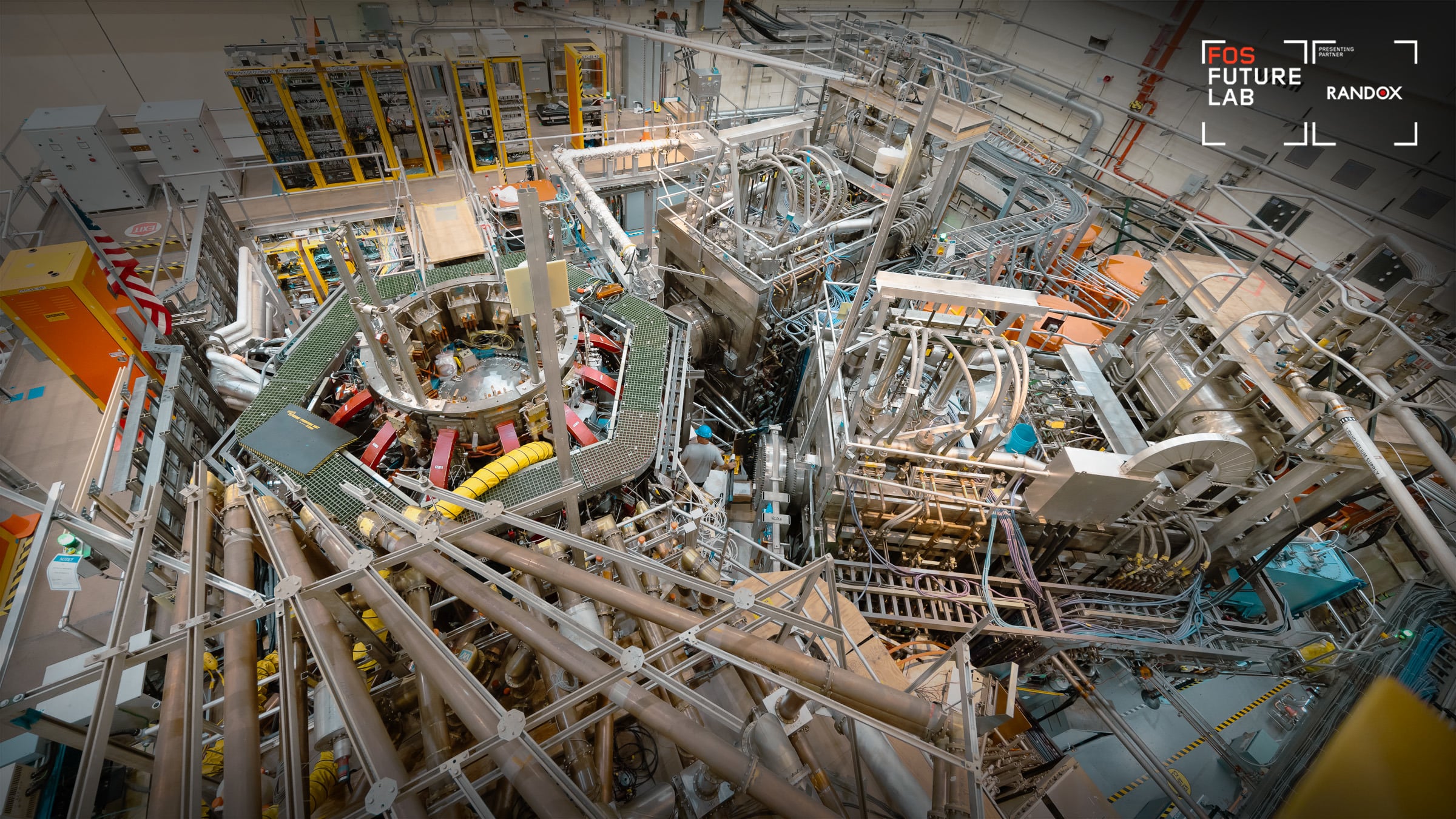
The catch is that the Sun does it with its own colossal gravity holding everything in place. Here, the job falls to magnets, which must suspend a fuel burning at over 100 million degrees inside a vacuum chamber without letting it touch the walls.
That fuel is plasma, and it’s a nightmare to control. It writhes, bulges, develops instabilities in milliseconds, and finds every flaw in a magnetic cage. It’s rather like balancing a spinning plate made of lightning, which is why it’s over to AI.
Fusion friends
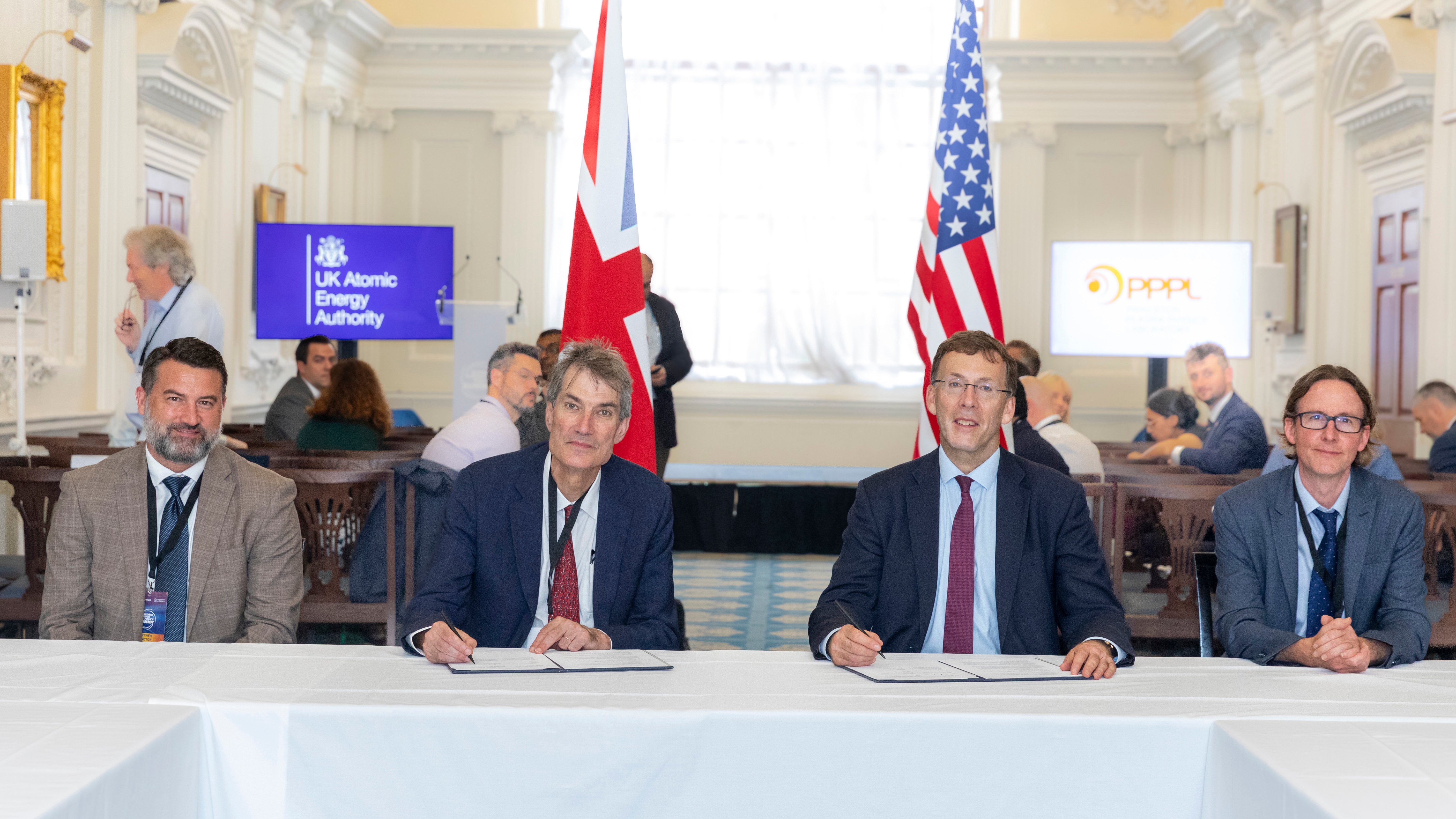
At the recent Global Fusion Policy Summit in London, the UK Atomic Energy Authority and the US Department of Energy's Princeton Plasma Physics Laboratory signed an agreement to link their fusion supercomputers across the Atlantic.
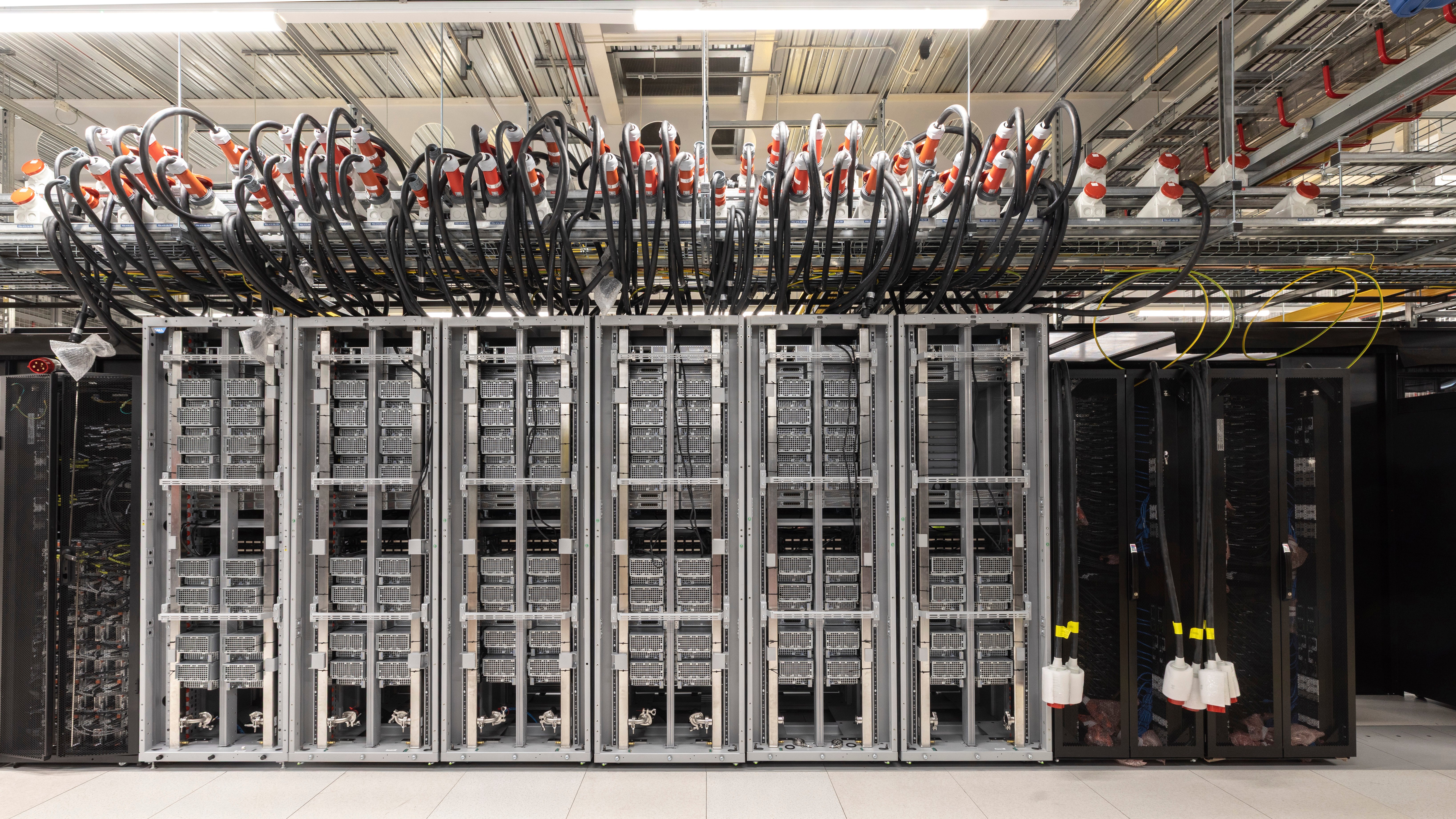
On the British side is Sunrise: the UK's first AI supercomputer dedicated to fusion, backed by £45 million of government funding and housed at UKAEA's Culham campus in Oxfordshire. On the American side, PPPL's Stellar-AI platform in New Jersey.
Together they form what's been christened the Sunrise–Stellar-AI Federation — which sounds like a premise for Star Trek: The Next, Next Generation, but amounts to sharing training data, models and the ability to run jobs on whichever machine has capacity.
Why the pairing makes sense
Both organisations are working on the same unusual design, called a spherical tokamak. Where a conventional tokamak is shaped like a doughnut, a spherical one is squashed closer to a cored apple. That’s because the shape appears to hold plasma more efficiently in a smaller, cheaper machine.
Among those experimenting with spherical tokamaks is the aptly named Tokamak Energy, situated near the UKAEA in Oxfordshire. The fusion tech company has broken several records, including the highest plasma current and the highest stored energy during testing, described as key measures on the path to limitless energy.
Britain is betting heavily on it. STEP — the Spherical Tokamak for Energy Production — is the UK's plan for a prototype fusion power plant, and everything Sunrise learns feeds into designing it. Princeton is pursuing its own spherical tokamak reactor concept, so two labs with the same geometry equals twice the data.
Tokamak Energy is the Magnet Systems Partner for the STEP programme, having designed, built, and now operating two of the world’s most advanced fusion devices, which are vital testbeds for the technology.
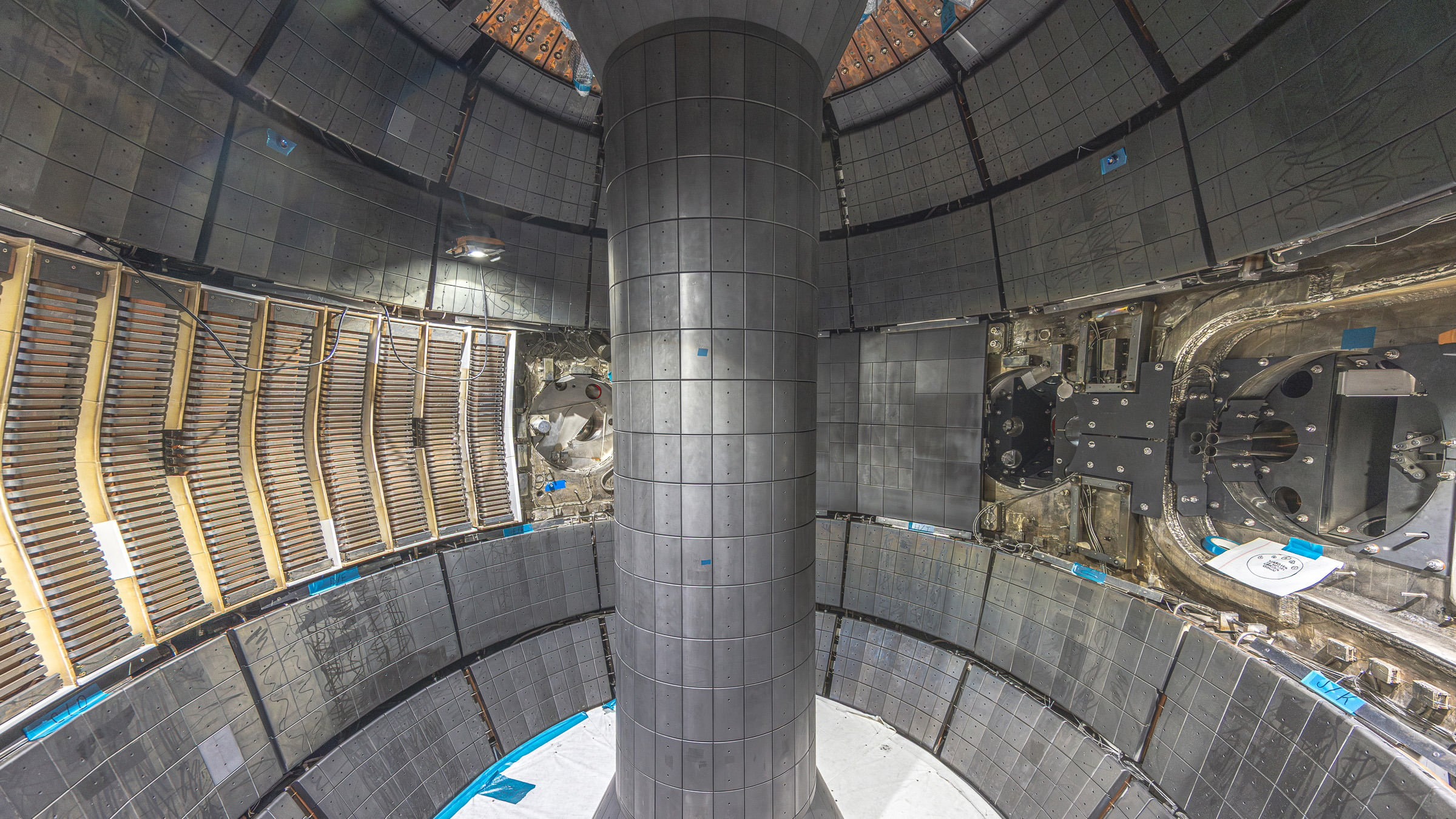
One of them, ST40, is currently undergoing a USD $52m upgrade in collaboration with the US Department of Energy and the UK’s Department for Energy Security and Net Zero, proving the “special relationship” is alive and well when it comes to fusion.
“A fusion power plant is one of the most complex machines humanity has ever tried to build,” says PPPL chief scientist Jonathan Menard, “and no single laboratory or nation will design it alone.”
With AI, the models are trained on millions of simulated and experimental shots of plasma behaviour so they can predict what it will do next and adjust the magnets before it does it.
Human reflexes are irrelevant at these timescales. A disruption can develop in thousandths of a second. The control system has to see it coming, and seeing things coming from messy data is exactly what machine learning should be primed for.
The second job is design. Building a fusion plant means choosing between an astronomical number of possible configurations of magnet strengths, wall materials, shapes and fuelling rates.
Simulating each option takes enormous computing time, so AI models approximating those simulations quickly allow engineers to explore thousands of designs instead of dozens.
Fusion finally within reach
Fusion has been famously 20 years away for about 60 years. Nothing announced here changes that timeline on its own, but the mood has changed measurably.
Private investment has reached the billions, governments are writing strategies rather than press releases, and the problems being worked on have shifted from ‘will this ever work?’ to ‘how do we scale up?’. Linking two national supercomputers is a statement serious planning could overtake something speculative.
We can’t promise next year’s FOS Future Lab presented by Randox will have any artificial stars on show, but we do expect artificial intelligence and machines at the edge of what’s possible to be there, and with a good chunk of it in Oxfordshire, it hasn’t got far to travel.

Randox is a global leader in diagnostics, revolutionising patient outcomes through innovative technologies, including its patented biochip technology. This pioneering diagnostic platform allows for the simultaneous detection of multiple biomarkers from a single sample, delivering faster, more accurate, and comprehensive results. Operating in over 145 countries, Randox develops advanced laboratory instruments, high-quality reagents, and innovative testing solutions to improve global healthcare.
Randox Health brings this cutting-edge technology directly to individuals, offering bespoke, preventative health testing programs. With world-class laboratories and personalised health insights, Randox Health enables early detection of a wide range of conditions, helping individuals take control of their health.
Together, Randox and Randox Health are redefining diagnostics and preventative healthcare. For more information, visit www.randox.com and www.randoxhealth.com.
The 2027 Festival of Speed will take place on 15th-18th July 2027, sign up for ticket alerts to make sure you don't miss out. Tickets are available for GRRC Members and Fellows, you can join the Fellowship today.
festival of speed
fos
fos future lab
future lab

Subscribe to Goodwood Road & Racing
Thank you, you’re now subscribed

How many hay bales are used at FOS?
For the last two years, 5,800 bales have been recylced into the biomass energy centre to be used for energy generation