

Koenigsegg: from childhood dream to world-beating supercars
Many of us likely drew a car at some point in our childhood. Some of us may well have dreamed of building our own car one day, something fast, loud and exciting. But childhood dreams don’t always convert to reality – we grow up, our dreams change, we move on.
Born in Stockholm, Sweden, in 1972, von Koenigsegg’s interest in cars and technology developed at an early age. At five years old, for example, he watched a stop-motion film about a bicycle repairman who built his own cars, a moment that got the ball rolling on the idea that eventually grew into the company we know and love today. He also washed cars at his local Suzuki dealership, and became known as a reliable moped tuner in his teenage years. But as a young man, his career path didn’t scream ‘hypercar company founder’.
To build cars, to chase the dream, von Koenigsegg first needed to earn a few pennies. He started to think of concepts and technologies he could perhaps patent, one being ‘click’ flooring, where wooden floor panels could click together without the need for glue or nails. The patent was never filed, however, no doubt a missed opportunity as that concept has gone on to become the most popular way of putting together wooden floor panels in the world.
Von Koenigsegg saw opportunities elsewhere, however, setting up his first business at the age of 19 selling plastic bags, ballpoint pens and frozen chicken in Estonia. Hoping to buy products at one price and sell for slightly more than he bought them for, he was at one point Estonia’s largest chicken importer. Through this period, cars remained the ultimate goal, and three years later at the age of 22, he used some of the money he’d generated from chicken, bags and pens to start work on his first car.
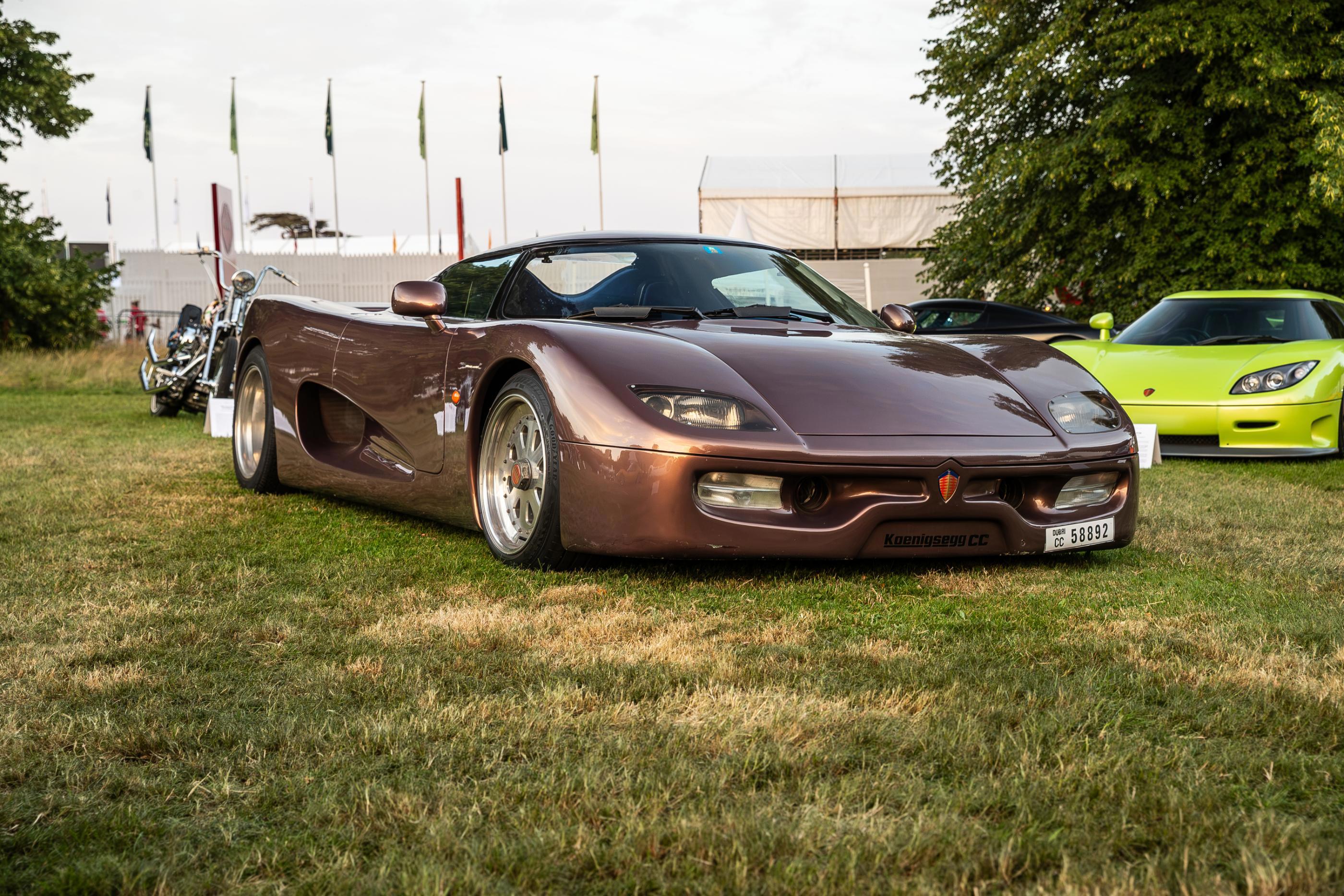
Establishing Koenigsegg in 1994, he took two years before the first concept vehicle, the ‘CC’, was driven in public for the first time. With Rickard Rydell at the wheel at an event at Anderstorp circuit in 1996, media and potential buyers were switched on to what Koenigsegg had to offer. The car was then shown at the 1997 Cannes Film Festival, now in a fetching shade of purple, and it is this very machine that’s sitting on the Cartier Lawn at the 2026 Festival.
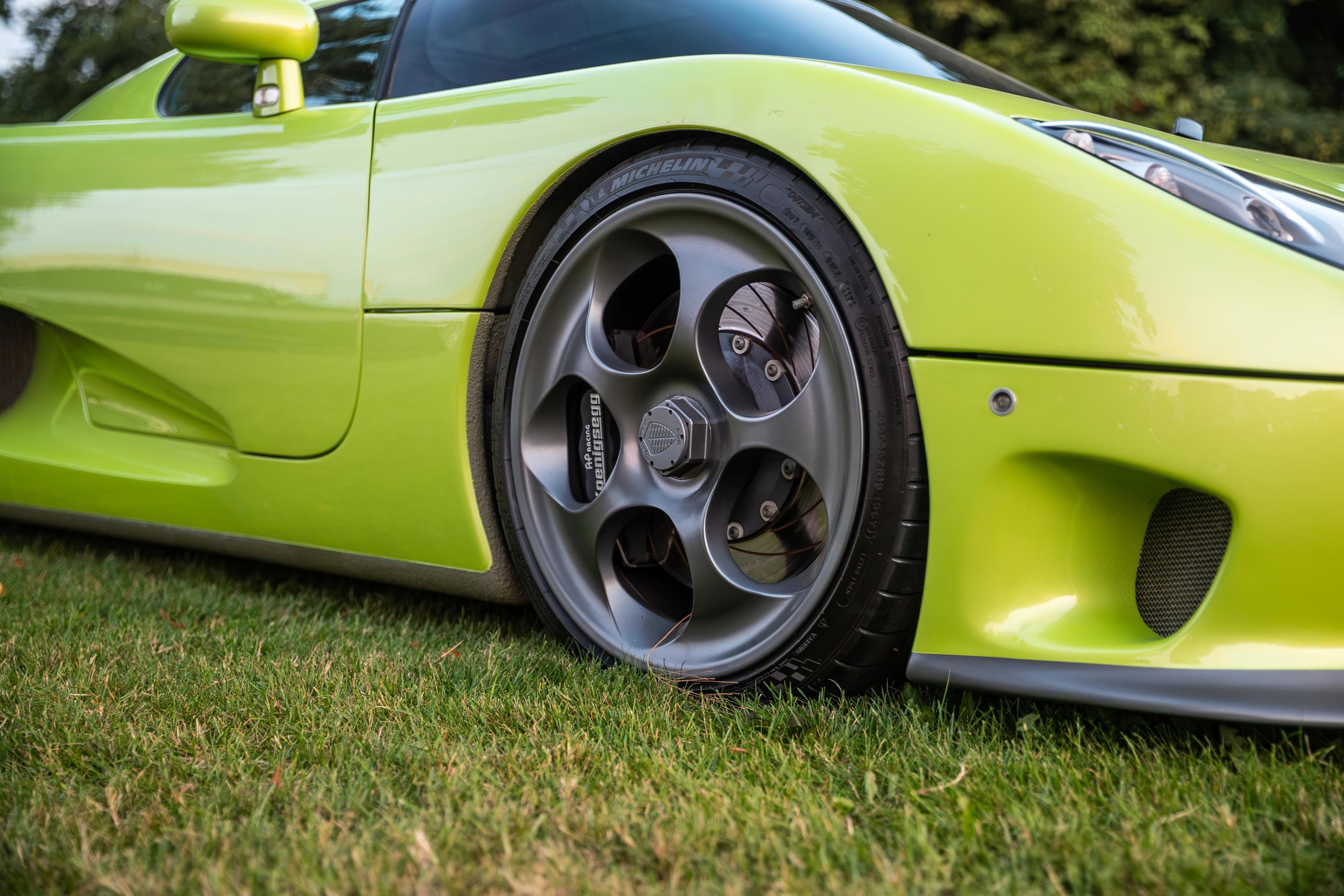
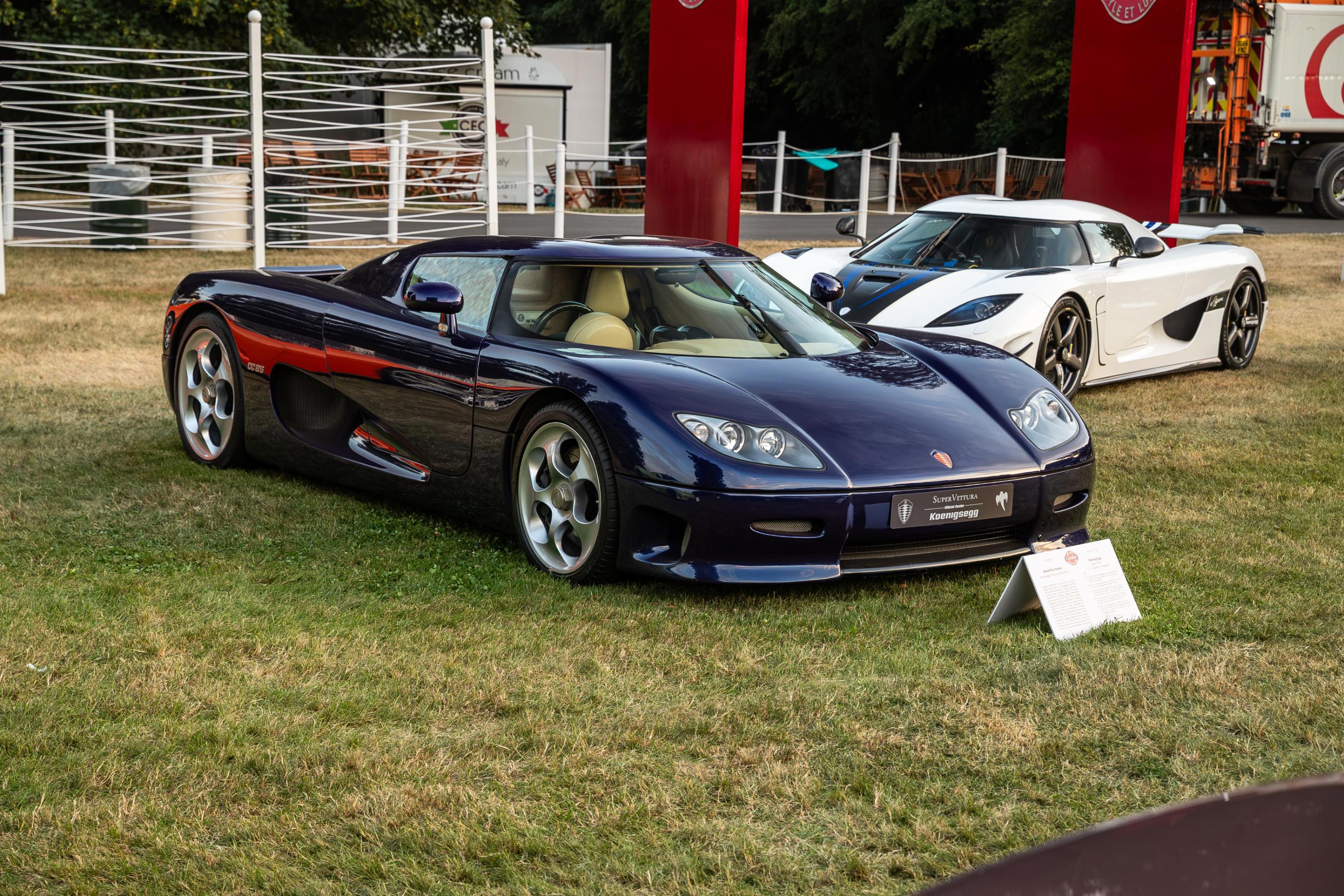
Koenigsegg moved headquarters in 1999, from a small workshop to a larger premises (with a thatched roof, no less), before the CC8S production prototype was shown at the 2000 Paris Motor Show. The world loved it, and although that specific car was used in crash tests, it paved the way for the first CC8S production cars, the first of which was built in 2002 and then displayed at the 2003 Geneva Motor Show. Standing for ‘Competition Coupe V8 Supercharged’, the CC8S used a supercharged 4.7-litre V8 with Ford origins, throwing out 664PS (488kW) to the rear-wheels via a six-speed manual gearbox. Six examples were made from 2002 to 2003, including two right-hand drive examples, one of which is displayed on the Cartier Lawn.
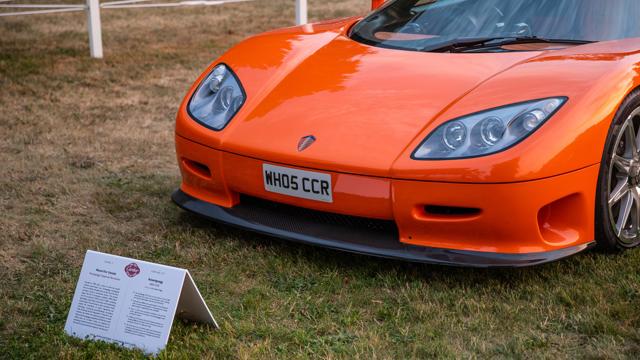
After the CC8S came the CCR, of which 14 were produced from 2004 to 2006. They featured a new splitter, a small rear wing, a tweaked interior design, larger and more powerful brakes, bigger wheels and tyres, and a revised suspension set-up. Then there was the engine, now fitted with two superchargers and good for 817PS (600kW). Pre-dating the Bugatti Veyron, the CCR even became the world’s fastest production car in 2005, pipping the McLaren F1’s longstanding record of 240mph with a top speed of 241mph. What started as a small supercar project in Sweden was rapidly becoming an operation that could challenge the likes of Ferrari, Lamborghini and Porsche, plus another 1990s supercar start-up, Pagani.
With CCR production in full-swing, and all the while continuing to develop new patents and technologies that could be used in future products, work began on the company’s most extreme project to date, the CCX. Though it looked very similar to the CCR, underneath the aggressive bodywork lay a new carbon-fibre tub, fit for the complete spectrum of global safety regulations which in turn allowed it to become the first Koenigsegg to arrive in the USA. It’ll come as little surprise to know it was also lighter and more advanced than its predecessor, and while the engine remained a 4.7-litre, twin-supercharged unit with 817PS (600kW), this time it was a Koenigsegg-made powerplant. Peak power was available slightly earlier in the rev range, peak torque was available earlier and the peak itself was higher, and the engine itself weighed 178kg, 37kg less than the previous unit.
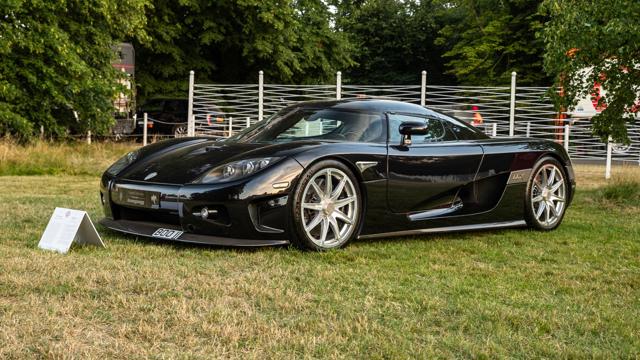
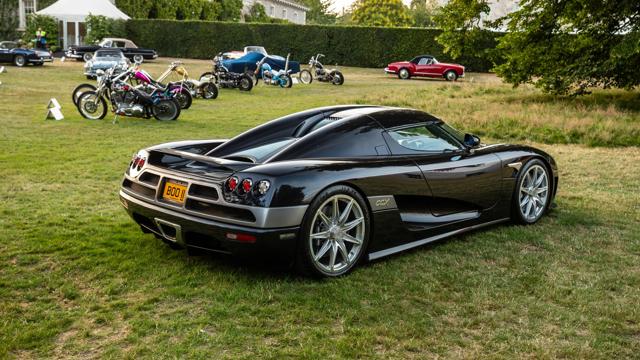
If you’ve spotted a theme of Koenigsegg’s new cars being generally more advanced and faster, it’ll come as little of a surprise to say the next model, the 2007 CCXR, was yet another step on for the company. Alongside numerous other changes throughout the car, the CCXR debuted a new flex-fuel sensor plus multiple other engine hardware updates, allowing the car to run on either regular fuel or E85 or E100 ethanol fuel. The net result was a power boost to 1,032PS (759kW), a truly exceptional figure for the time.
Though a few special editions followed, including the CCX and CCXR Editions, as well as the CCXR Trevita, a real shock as the ‘CC’ lineage neared its end was the global unveiling of the Koenigsegg CCGT race car at the 2007 Geneva Motor Show. Built to slot nicely into the top-level category of FIA GT1, it featured a 5.7-litre naturally aspirated V8, a straight-cut, sequential gearbox, ceramic brakes, magnesium wheels and a dry weight of around 1,000kg, boosted to 1,100kg with 100kg of ballast in order to meet the minimum weight requirements of GT1 regulations.
Unfortunately for Christian von Koenigsegg and the entire business, the FIA hurriedly changed the regulations within months of the CCGT’s testing programme, banning carbon-fibre tub chassis and imposing a minimum road car homologation number of 350 years per year. An impossibility for Koenigsegg, the lone CCGT was retired from action, eventually being sold at the 2023 Bonhams Festival of Speed sale and, while it isn’t on show at the 2026 Festival of Speed’s Cartier Lawn, it is at the entrance to the Drivers' Club.
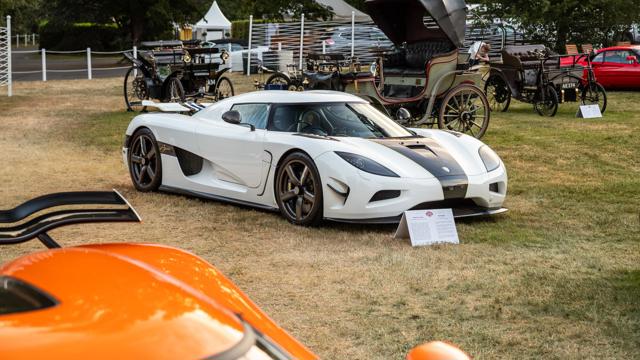
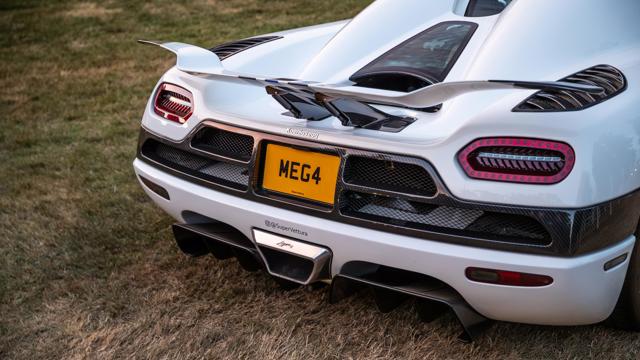
From here Koenigsegg moved on to a truly all-new model: the Regera. Meaning ‘to take action’, the Regera was shown at the 2010 Geneva Motor Show, using a twin-turbocharged V8 engine for the very first time instead of the twin-superchargers that had proved so successful up to that point. Clever technologies minimised turbolag, however, allowing the 5.0-litre V8 unit to churn out 960PS (706kW) and a frankly staggering 1,100Nm of torque. Tipping the scales at 1,330kg dry, or 1,435kg with all its fluids and half a tank of fuel, it could accelerate to 62mph in 3.0 seconds, 124mph in 8 seconds, and on to a top speed of almost 150mph.
Though the Koenigsegg story on the Cartier Lawn stops at the Agera, specifically a 2010 example that returned to the factory in 2014 to be updated into a unique Agera N specification, Christian von Koenigsegg’s dream has continued to evolve and expand, with numerous speed and performance records, plus multiple new technologies, things like FreeValve technology, its Light Speed Transmission and Koenigsegg Direct Drive. While we’d dearly love to nerd out on these fascinating systems, and plenty more besides, there isn’t space to do so here without writing a small novel, so go to Koenigsegg’s website to have your mind well and truly blown.
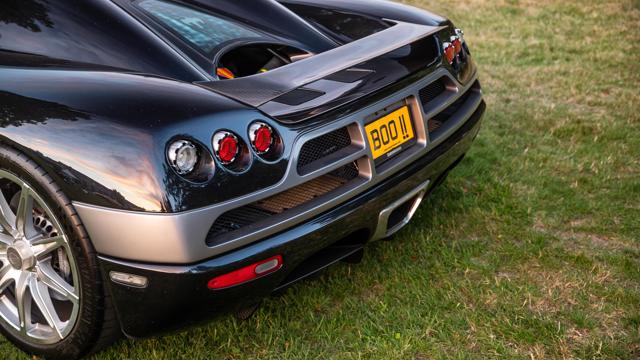
There has been a breathtaking array of new models, too. The Agera developed into the Agera R, Agera S, One:1 (with a truly ridiculous one horsepower for every kilogram of weight), Agera RS and Agera Final Edition, before being succeeded by the Koenigsegg Jesko, named after Christian von Koenigsegg’s father.
Koenigsegg’s operation has expanded beyond one ‘core’ product, too. The Regera was unveiled at the 2015 Geneva Motor Show, featuring a twin-turbo 5.0-litre V8 working in tandem with a single gear system (the aforementioned Koenigsegg Direct Drive’) and three electric motors for a total of 1,500PS (1,103kW).
Then came the CC850 in 2024, designed to tip its cap to the design of the CC8S, fitted with a nine-speed Light Speed Transmission and the Engage Shifter System, effectively allowing the driver to either use the paddles and the twin-clutch box, or use a gear-lever and a manual clutch pedal to change ratios themselves. Wild is the best way to describe that. Then finally there’s the Gemera, unveiled in 2024 with its curious Tiny Friendly Giant twin-turbo Freevalve three-cylinder engine, which with three electric motors puts out a total of 1,700PS (1250kW).
What’s next for Koenigsegg? To find out, you’d have to ask the man himself, Christian von Koenigsegg. But there’s little doubt his childhood ambition of building cars has well and truly succeeded.
Photography by Joe Harding.
Festival of Speed
FOS
FOS 2026
Cartier Style et Luxe
Event coverage
Koenigsegg

Subscribe to Goodwood Road & Racing
Thank you, you’re now subscribed

How many hay bales are used at FOS?
For the last two years, 5,800 bales have been recylced into the biomass energy centre to be used for energy generation