

Pulsar Fusion: Taking us to Mars in half the time
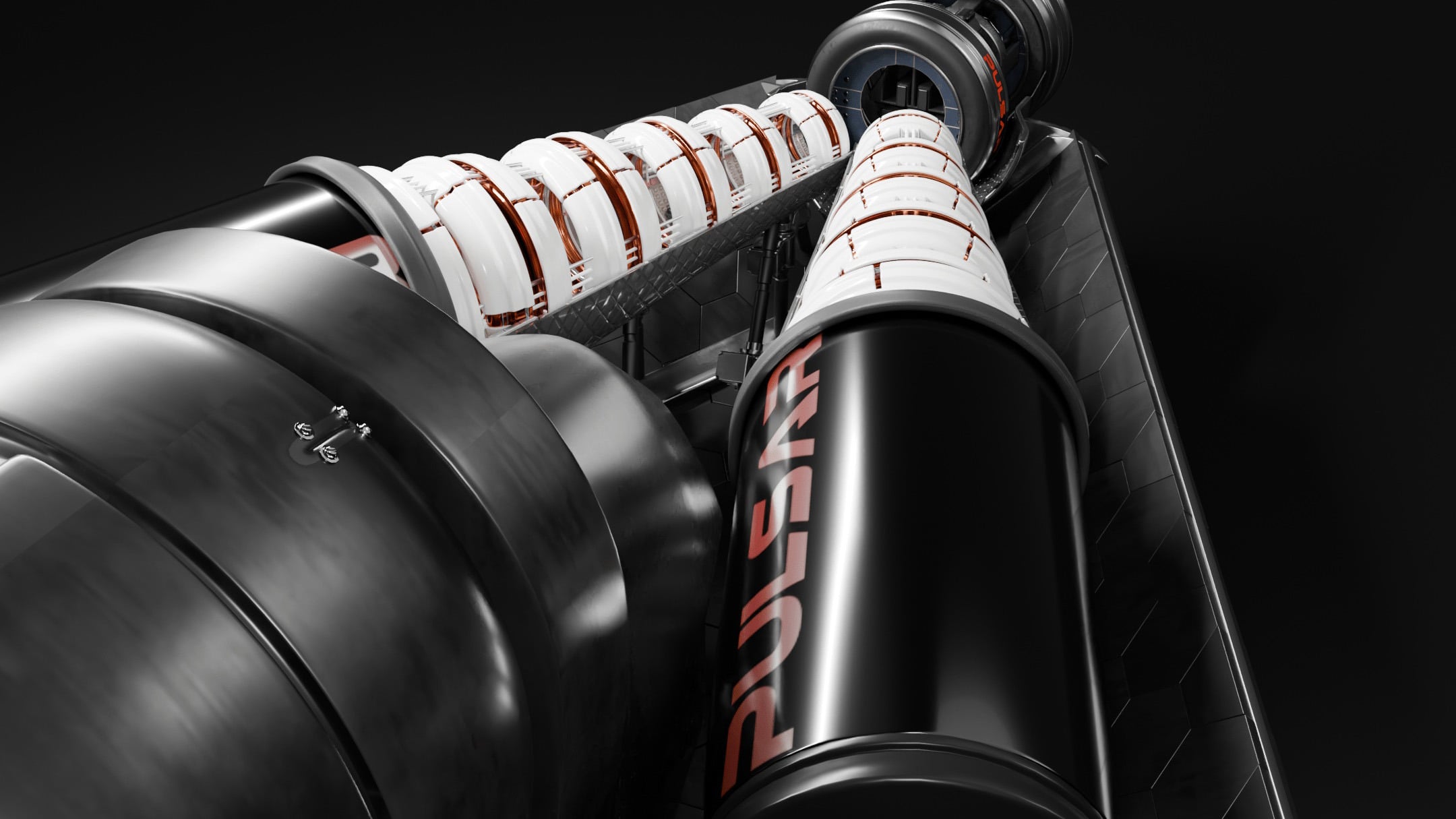
In March this year, watching from his MARS Conference stage in California, Jeff Bezos saw a British start-up do something no other company or government had managed. Pulsar Fusion’s Sunbird programme produced the first plasma inside a nuclear fusion rocket nozzle — and beamed the test back live from Bletchley.
In plain terms, this is the biggest leap in rocket engines since we started burning fuel to fly. Fusion propulsion could halve the journey time to Mars, using grams of fuel instead of tonnes.
“An exceptional moment and a genuine privilege,” said Pulsar CEO Richard Dinan. “There is no greater platform to share this first test than here, surrounded by an esteemed group of world-leading machine learning and robotics academics, entrepreneurs, Nobel laureates and astronauts.”
Pulsar isn't doing this alone. The UK Space Agency and the European Space Agency are both backing the work, alongside a research partnership with the UK Atomic Energy Authority.
It is the loudest signal yet that nuclear fusion propulsion in space is not the decades-away pipe dream most assume. And visitors to FOS Future Lab presented by Randox at the 2026 Festival of Speed presented by Mastercard will see some of the hardware that fired.
Three rockets in one stand
Pulsar’s story involves chemical, electric, and nuclear fusion propulsion.
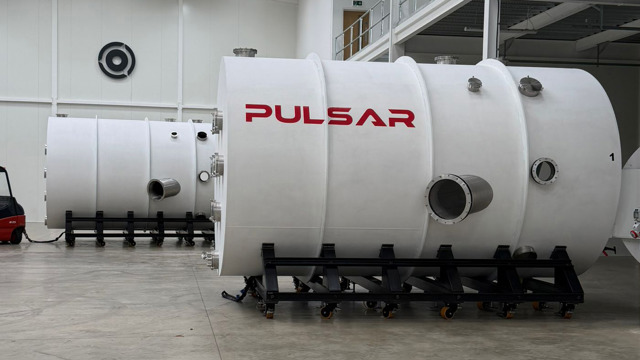
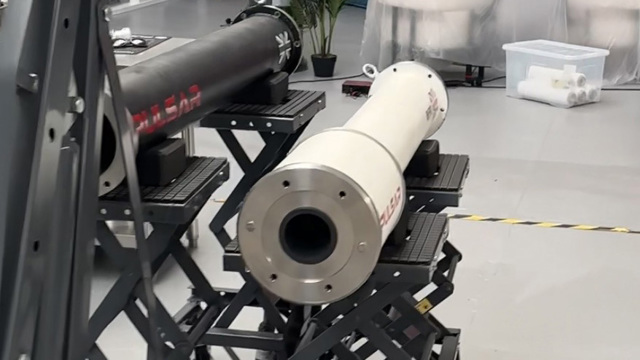
The chemical side involves hybrid rockets fuelled by recycled plastic, designed for satellites, lunar landers and space tourism. Cleaner than the legacy hardware — and one of those rockets will be on the stand at Goodwood.
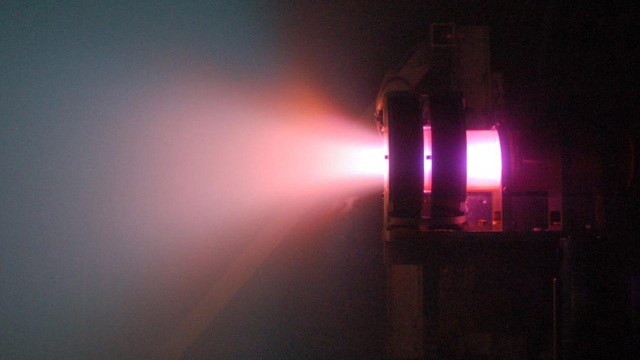
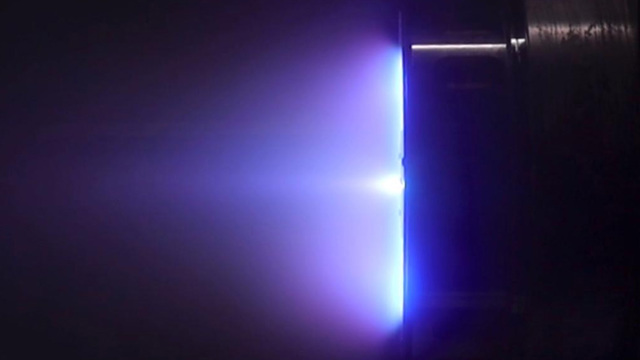
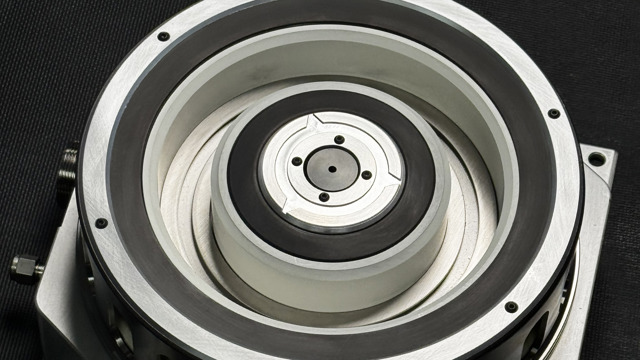
The electric side uses Hall Effect thrusters. Essentially, metal compact discs producing plasma jets that do the heavy lifting on commercial satellites, extending their working lives and cutting mission costs.
Pulsar has scaled the technology up to the point where, in theory, the same approach could move the International Space Station. All three of their flight-ready Hall Effect engines will be on display.
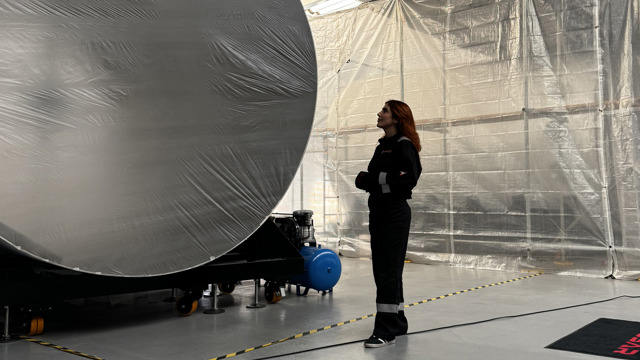
Then the nuclear fusion side. The exhaust unit fired in March will be there in person. Visitors can stand a few feet from a piece of hardware that has, by any reasonable measure, just made history.
Why nuclear fusion works in space (but not yet on Earth)
The word ‘nuclear’ usually conjures one of two images: power stations or weapons. Both use nuclear fission — the splitting of heavy atoms like uranium, which produces long-lived radioactive waste. Nuclear fusion is the opposite: joining light atoms together, the same reaction that powers every star in the sky. Fusion produces vastly less waste, and the variant Pulsar uses produces almost none.
The assumption is that if nuclear fusion worked, we’d already be using it to power our homes, and that anything pitched as ‘fusion-powered’ must therefore be science fiction. Fusion is actually the most natural reaction in the universe; the same process powers every star you can see. We can reproduce it in laboratories today; what’s hard is doing it on Earth at a scale and stability to add it to the grid.
For a power plant, nuclear fusion has to be confined perfectly, sustained continuously, captured as heat, turned into steam, spun through a turbine and fed safely into the grid. The reaction also has to happen inside an artificial vacuum, built and maintained at enormous expense.
In space, much of that problem disappears because space is already a vacuum. There’s no steam, no turbine and no grid. The job is simply to produce fusion and direct the resulting high-energy plasma out the back of the spacecraft.
Plasma escaping a power station is a failure, but plasma escaping a Pulsar engine is, by design, thrust. It’s a different engineering problem, one that Pulsar argues is a much more tractable one.
Sunbird — the double-decker bus set for Mars
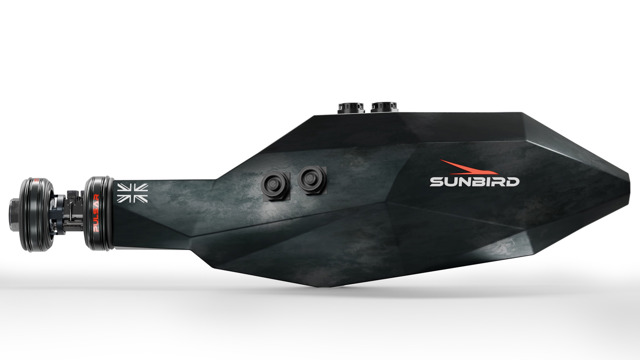
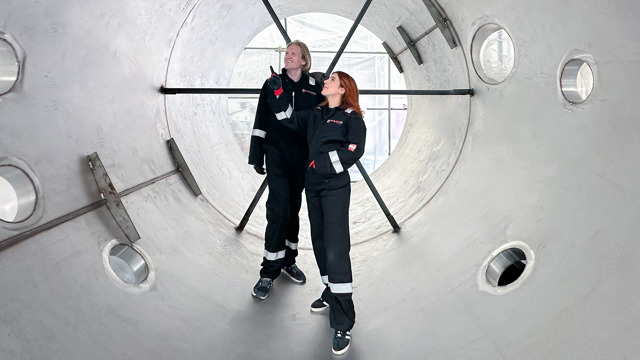
The vehicle the fusion drive is designed for is called Sunbird. It’s about the size of a double-decker bus, and it’s conceived as a space tug. That means meeting a spacecraft already in low orbit, docking with it and supercharging the rest of the journey.
With a design speed of a mesmerising 329,000mph, a Mars trip drops from somewhere between six and nine months to three or four. At that speed, a flight from London to Sydney would take under two minutes.
The fuel pair is deuterium and helium-3 — known as aneutronic fusion, because it emits negligible numbers of neutrons compared to the more common deuterium-tritium reaction. That means reduced radiation from the engine itself, less shielding mass and a safer ship over a long mission.
There is enough deuterium in seawater that, in principle, the fuel for the ship is already on our planet, in the ocean, ready to be extracted. Helium-3 is rarer and has to be produced, but tiny quantities go a long way.
What you’ll see at FOS Future Lab
Pulsar’s stand at FOS Future Lab will feel like the company’s own test facility, featuring prototype technology, plus explainers that walk through chemical, electric and fusion in turn. The Sunbird fusion exhaust unit will be accompanied by all the exhilarating information from the March firing.
For younger visitors, there’s a hands-on STEM activity built around the magnets-and-plasma idea — a way to physically demonstrate how fusion plasma is squeezed through magnetic fields to make thrust. Stickers for anyone who pulls it off.
Pulsar’s own scientists will be on hand, too, including head of operations, physicist and legitimate rocket scientist, James Lambert, alongside trailblazing engineer and recent TED Talk speaker, Bilge Kacmaz. Pulsar's own podcast, Rockets and Coffee, will also be recording live from the stand, hosted by marketing manager, Sophie Warner.
Pulsar Fusion’s pitch is, in the end, a straightforward one. The British are building one of the most ambitious spacecraft engines on the planet, and you can come and see it at the Goodwood Festival of Speed.
Randox is a global leader in diagnostics, revolutionising patient outcomes through innovative technologies, including its patented biochip technology. This pioneering diagnostic platform allows for the simultaneous detection of multiple biomarkers from a single sample, delivering faster, more accurate, and comprehensive results. Operating in over 145 countries, Randox develops advanced laboratory instruments, high-quality reagents, and innovative testing solutions to improve global healthcare.
Randox Health brings this cutting-edge technology directly to individuals, offering bespoke, preventative health testing programs. With world-class laboratories and personalised health insights, Randox Health enables early detection of a wide range of conditions, helping individuals take control of their health.
Together, Randox and Randox Health are redefining diagnostics and preventative healthcare. For more information, visit www.randox.com and www.randoxhealth.com.
festival of speed
fos
fos 2026
event coverage
future lab
fos future lab
pulsar fusion
new frontiers


Subscribe to Goodwood Road & Racing
Thank you, you’re now subscribed

How many hay bales are used at FOS?
For the last two years, 5,800 bales have been recylced into the biomass energy centre to be used for energy generation