

The studio copying masterpieces before it’s too late
When Notre Dame burned in 2019, no detailed record existed of the surfaces it lost, says Sol Costales Dalton, director of projects at the Factum Foundation. "You would be surprised at how many museums and institutions are not actually carrying out surface recordings of their collections," she told us, at FOS Future Lab presented by Randox.
That is the gap the foundation was set up to close. Founded in Madrid in 2009, it records cultural heritage in microscopic surface detail, so that a copy exists the day the original does not.
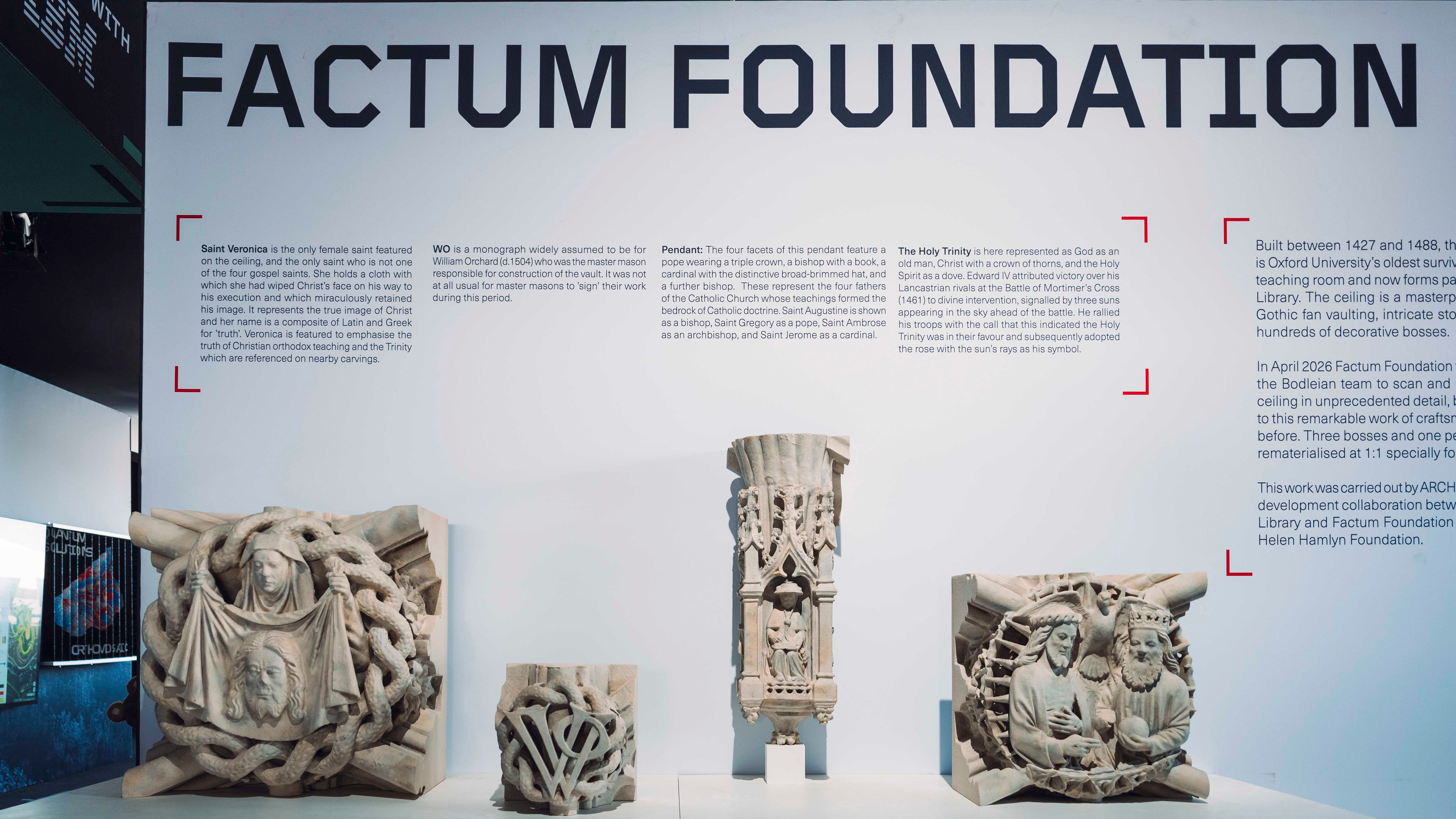
The idea meets resistance, because a copy sounds like a lesser thing. "Lots of negativity, I think," said Costales Dalton. A painting is held to have an aura a reproduction cannot carry, "and one could argue that maybe that aura is its value, and its financial value.”
Factum's reply is that its copies are not lesser, and that the original is not the fixed, sacred thing people imagine. Its scans are accurate to about 98 per cent, close enough that "the naked eye can't tell if you put them side by side". And the original is always changing. The Mona Lisa has been restored so heavily across four centuries that "you're never looking at the original painting", Costales Dalton explained.
The organisation’s stand at FOS Future Lab made that argument with an original 17th-century painting, a facsimile of it, a colourless recording of its surface, and an X-ray exposing an earlier painting hidden underneath. "It's also about showing how originality is a process and how surfaces change."
How you copy a thing you cannot touch
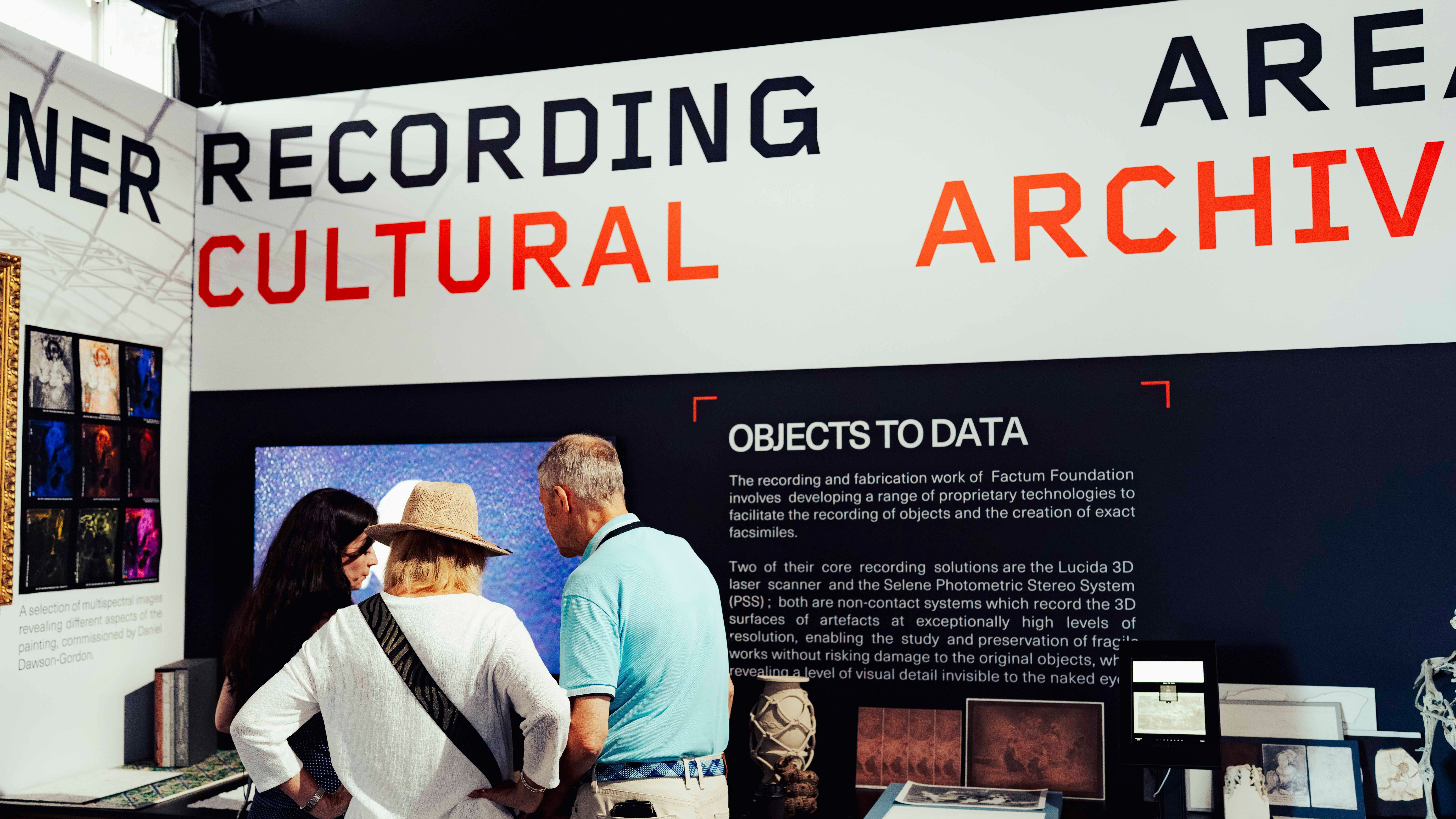
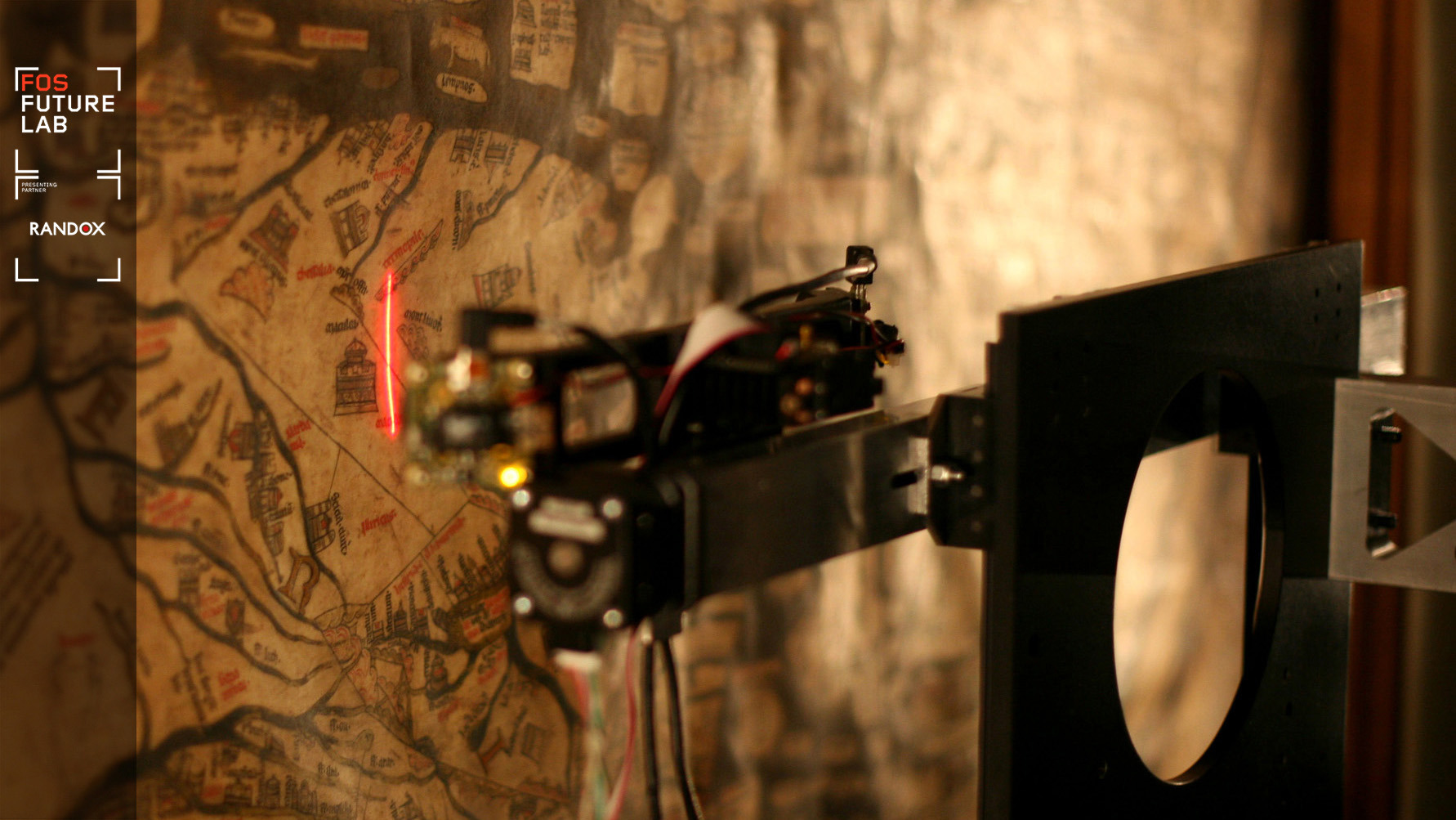
Factum records these surfaces with scanners it designs and builds itself. The first of these, the Selene scanner, was prototyped by Head of R&D and technology Jorge Cano in 2018 and had it working by 2021, capturing surfaces with almost no relief: copper plates, manuscripts, paper, paintings. Alongside it, the Lucida laser scanner maps the fine topography of a painting, because a painting is not flat.
Cano's proudest piece of work is a viewer that runs in an ordinary web browser and lets a researcher handle a painting nobody is allowed to touch, turning it, zooming in and relighting it from any angle. "A raking light is an important technique for researchers," he said. "It's just using a torch and using in a small angle, you can get most of the relief on the surface."
The finished records are kept in at least three copies, in old, universal image file formats like TIFF, chosen so the data can still be opened long after today's software is gone, rather than becoming a disc no one has the machine to play.
From Tutankhamun to a Formula 1 seat
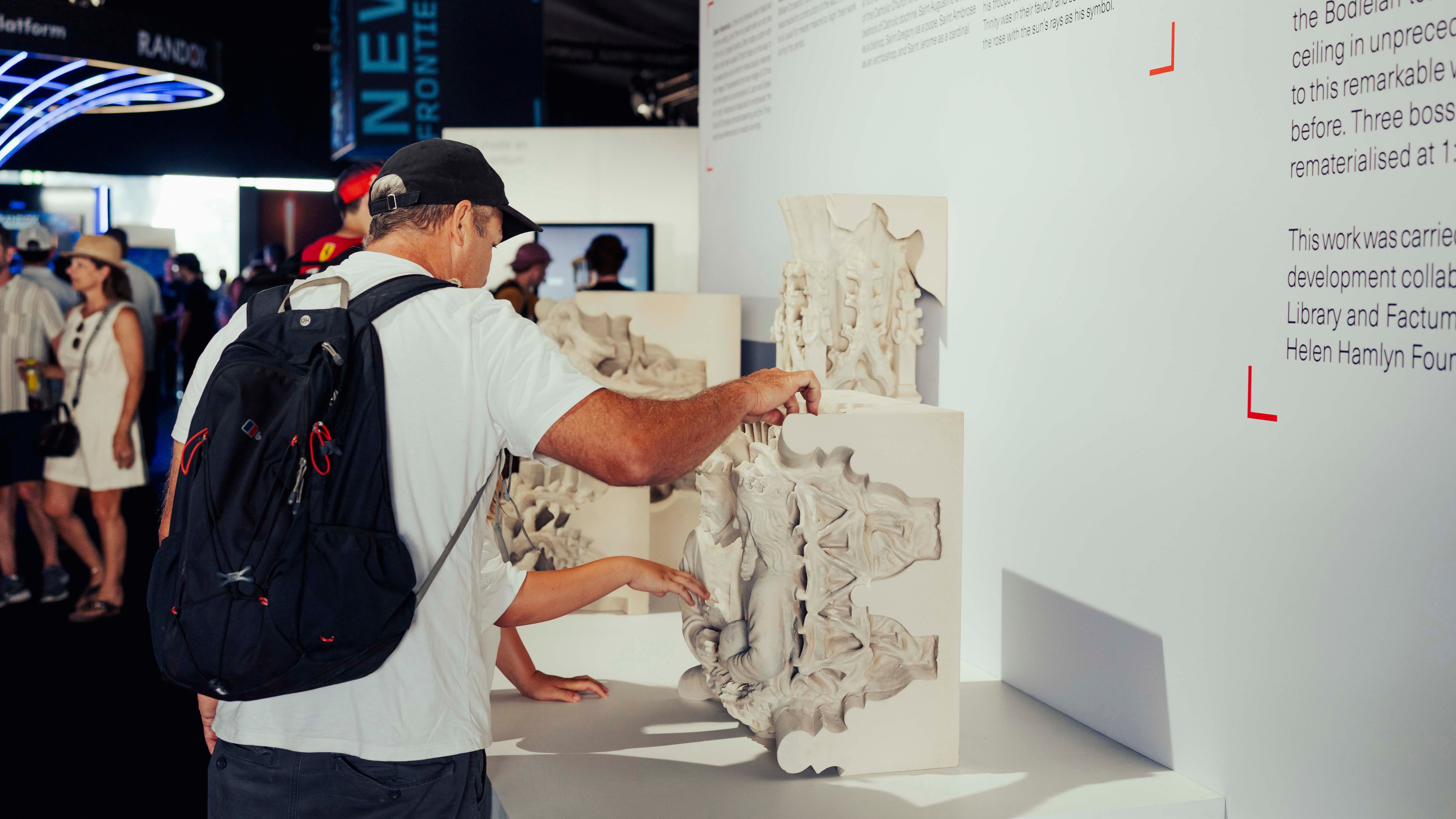
In 25 years, Factum has surface-recorded the tombs of Tutankhamun and Seti I in the Valley of the Kings, gathered every marble sculpture Michelangelo carved into a single exhibition in Copenhagen, and, in a three-week campaign just finished, captured the three Caravaggios of a chapel in Rome, which Costales Dalton describes as "absolutely breathtaking".
Nothing is off the table, and asked what he would record next given the choice, Cano said, "Maybe the surface of the Moon." At the Goodwood Festival of Speed presented by Mastercard, Factum’s technology could capture a 1950s Formula 1 car down to "every small detail of the skin of the seat".
It all rests on a quiet heresy that turns out to be plain fact: nothing lasts. Paint fades, marble cracks, cathedrals burn and ships sink never to be seen again. The object behind the glass is only its latest state, on its way to being lost like the rest. What Factum makes is the copy that survives.

Randox is a global leader in diagnostics, revolutionising patient outcomes through innovative technologies, including its patented biochip technology. This pioneering diagnostic platform allows for the simultaneous detection of multiple biomarkers from a single sample, delivering faster, more accurate, and comprehensive results. Operating in over 145 countries, Randox develops advanced laboratory instruments, high-quality reagents, and innovative testing solutions to improve global healthcare.
Randox Health brings this cutting-edge technology directly to individuals, offering bespoke, preventative health testing programs. With world-class laboratories and personalised health insights, Randox Health enables early detection of a wide range of conditions, helping individuals take control of their health.
Together, Randox and Randox Health are redefining diagnostics and preventative healthcare. For more information, visit www.randox.com and www.randoxhealth.com.
Main image photography by Charlie Brenninkmeijer.
The 2027 Festival of Speed will take place on 15th-18th July 2027, sign up for ticket alerts to make sure you don't miss out. Tickets are available for GRRC Members and Fellows, you can join the Fellowship today.
festival of speed
fos
fos 2026
event coverage
future lab
fos future lab
factum foundation
Subscribe to Goodwood Road & Racing
Thank you, you’re now subscribed

How many hay bales are used at FOS?
For the last two years, 5,800 bales have been recylced into the biomass energy centre to be used for energy generation