

The wild Apollo Evo looks unlike any other hypercar
You can’t accuse the all-new Apollo Evo of looking like any other hypercar. In a world where common aerodynamic problems result in similar solutions, the team behind the Evo have clearly not been reading from the conventional script.
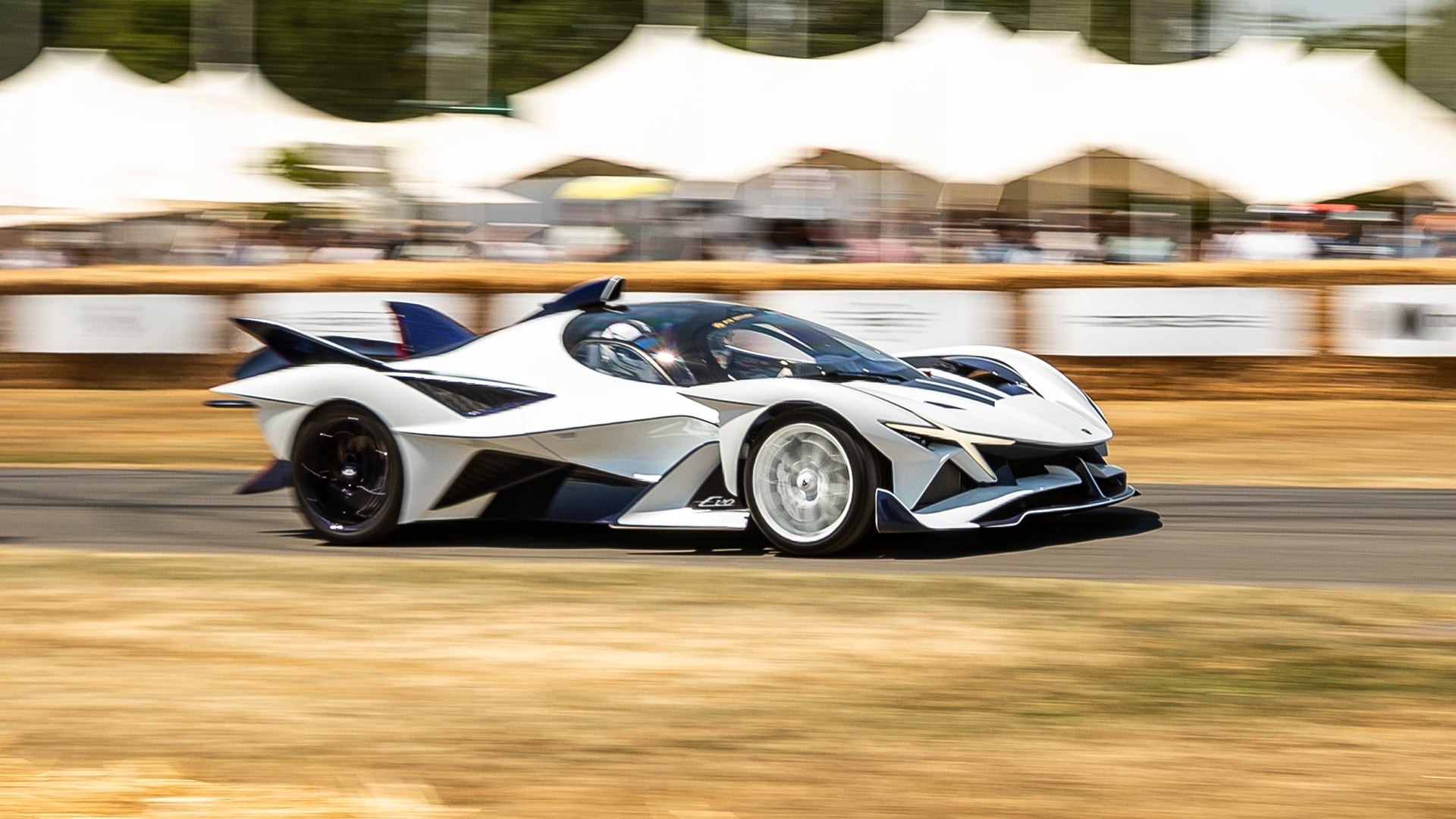
Having first seen the Apollo Evo in 2021, the first of 10 production cars has been completed and is in action here at the Goodwood Festival of Speed presented by Mastercard.
The complicated shape is made from no fewer than 75 individual body panels, each of them hand-painted with eight coats, a job on its own that consumes 1,000 hours. Contributing to the Evo’s one-of-a-kind appearance is a lighting arrangement unlike anything else, the starburst tail lights being particularly eye-catching.
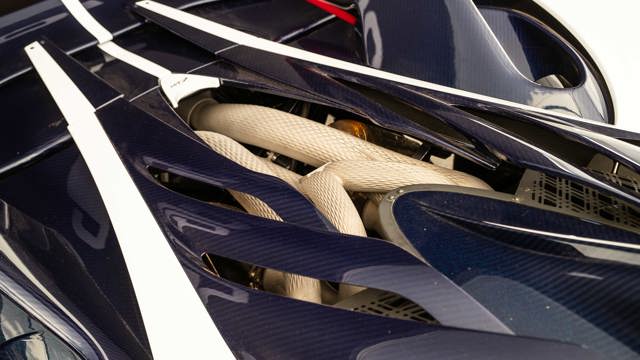
Spend a little longer studying the tail and you’ll spot the 3D printed titanium exhaust, the longest exhaust to be 3D printed and one that takes 123 hours to make. Various colours are available, but in its raw form it will naturally discolour in reaction to heat.
Heat-proofing in the engine bay is taken care of with gold lining, a very useful feature given the beast within: a Ferrari-derived 6.3-litre V12 developed by HWA to produce 800PS (588kW). (Incidentally, HWA is at Goodwood this weekend in its own right with its own Mercedes-Benz 190E restomod.)
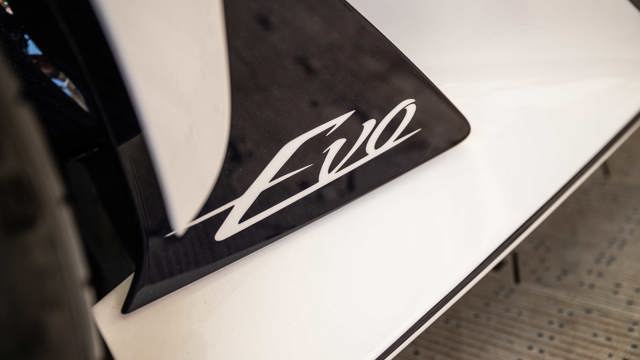
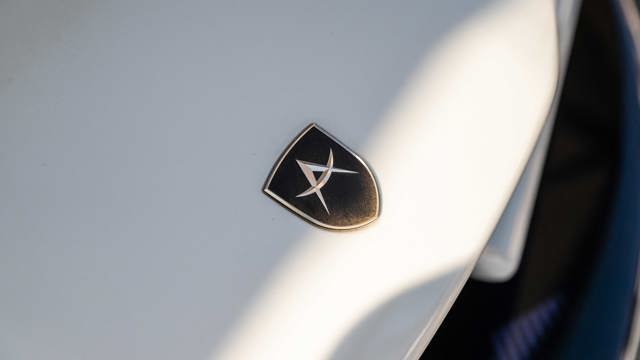
All that power, which is free from hybridisation, is delivered solely to the rear wheels via a six-speed sequential gearbox, making this an old-school supercar despite the 22nd century looks. Apollo claims a top speed of 207mph and a 0-60mph time of 2.7 seconds.
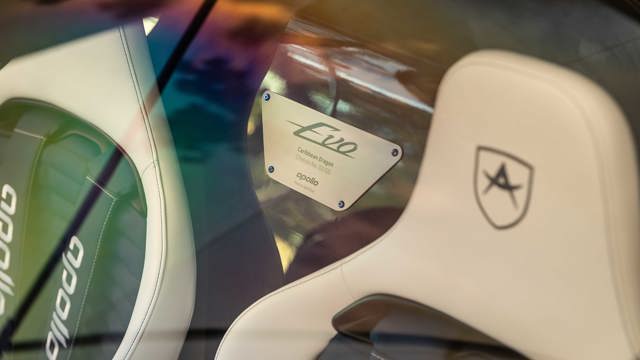
Each one of the 10 Evos has its own identity, with this one dubbed Caribbean Dragon – perhaps it has something to do with its flame-spitting titanium exhaust? Whatever the case, it has swathes of blue-tinted carbon-fibre inside to complement the blue and white upholstery. As you would expect at this level, each car is built on a bespoke basis with personalisation in addition to €3million (plus taxes) price.
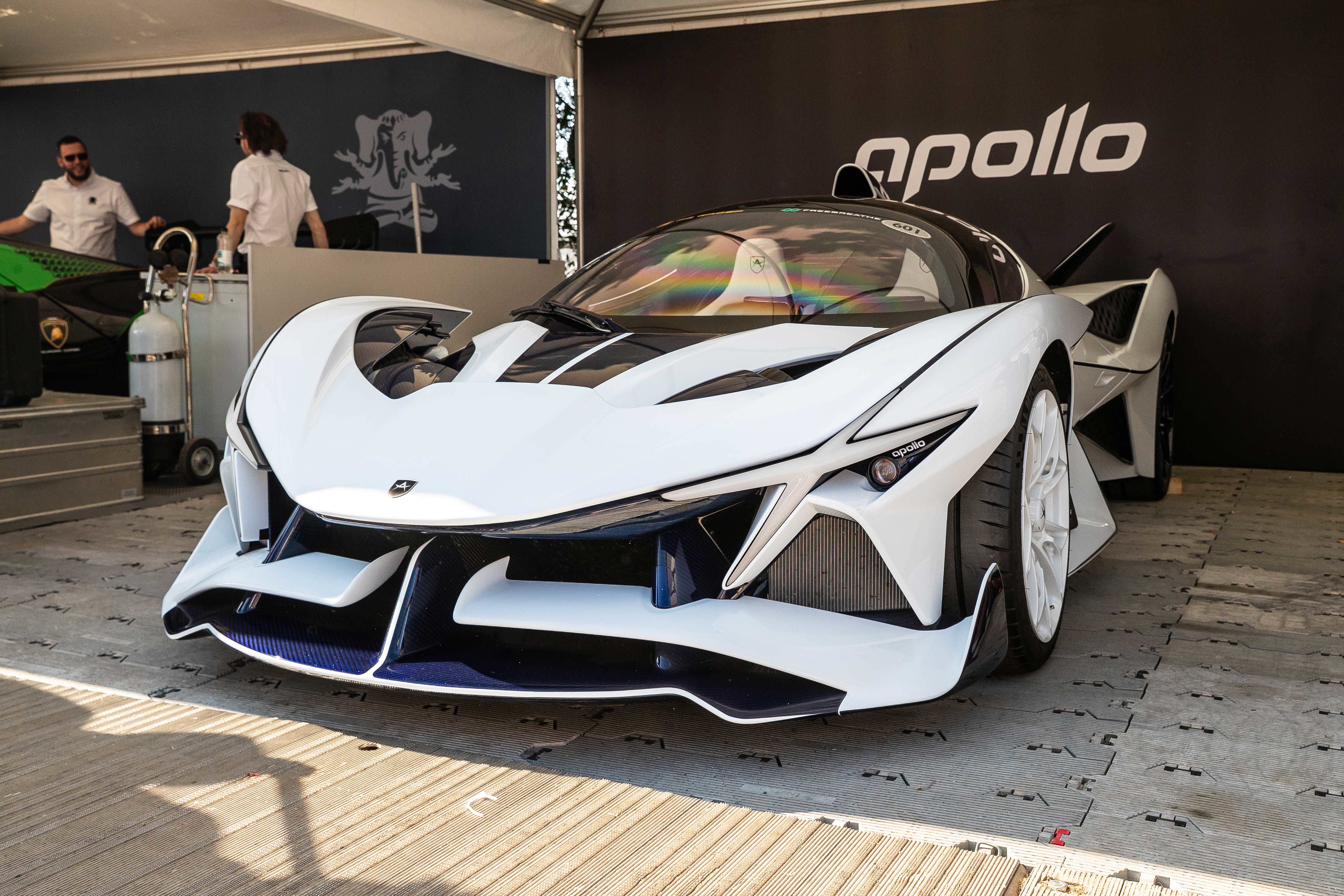
As standard, Evo buyers receive carbon ceramic brakes, lightweight forged wheels and Michelin Cup 2 tyres. It’s purely a track machine, which was the case for its Intensa Emozione predecessor, but that didn’t stop some owners registering their cars for road use. It seems likely that a few Evos will also escape the confines of the circuit as well.
Oh, and while it doesn’t follow the conventional path to aerodynamic efficiency, the Evo does create 1,350kg of downforce, which exceeds the 1,300kg dry weight. Fancy a drive on the ceiling, anyone?
The 2026 Festival of Speed is live now! Watch every moment of the action on our live stream right here on GRR.
Photography by Joe Harding.
Debut
Supercar Paddock
FOS
FOS 2026
Festival of Speed
Festival of Speed 2026
Apollo
Apollo Evo


Subscribe to Goodwood Road & Racing
Thank you, you’re now subscribed

How many hay bales are used at FOS?
For the last two years, 5,800 bales have been recylced into the biomass energy centre to be used for energy generation