

Toyota's hydrogen Hilux to tackle 2027 Dakar Rally on nothing but water
In January 2027, a Toyota pickup with a difference will set off across the Saudi Arabian desert, leaving nothing but a trail of dust, sand… and water. In fact, the final part may be so clean, engineers say they could drink it if they get stranded.
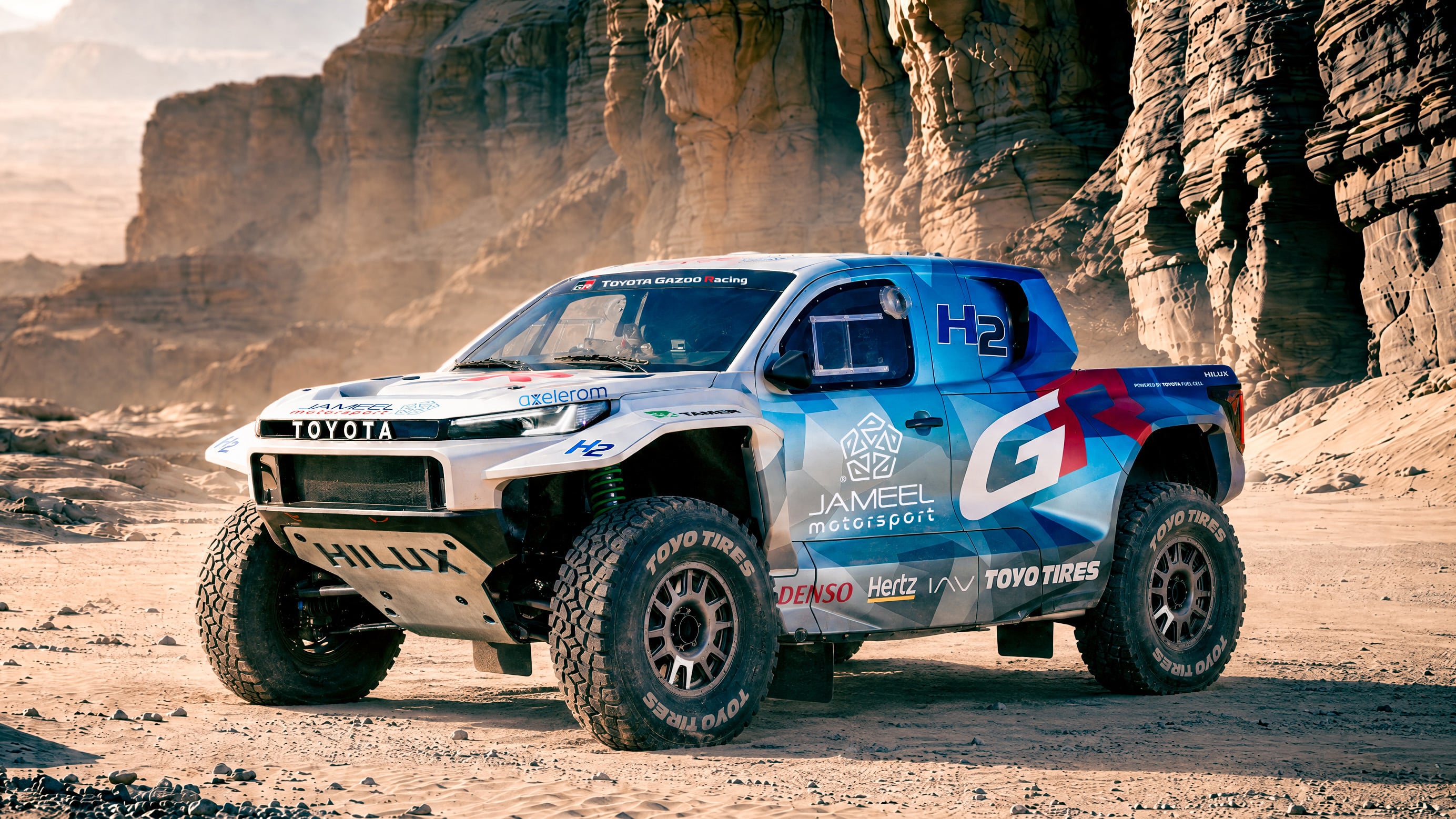
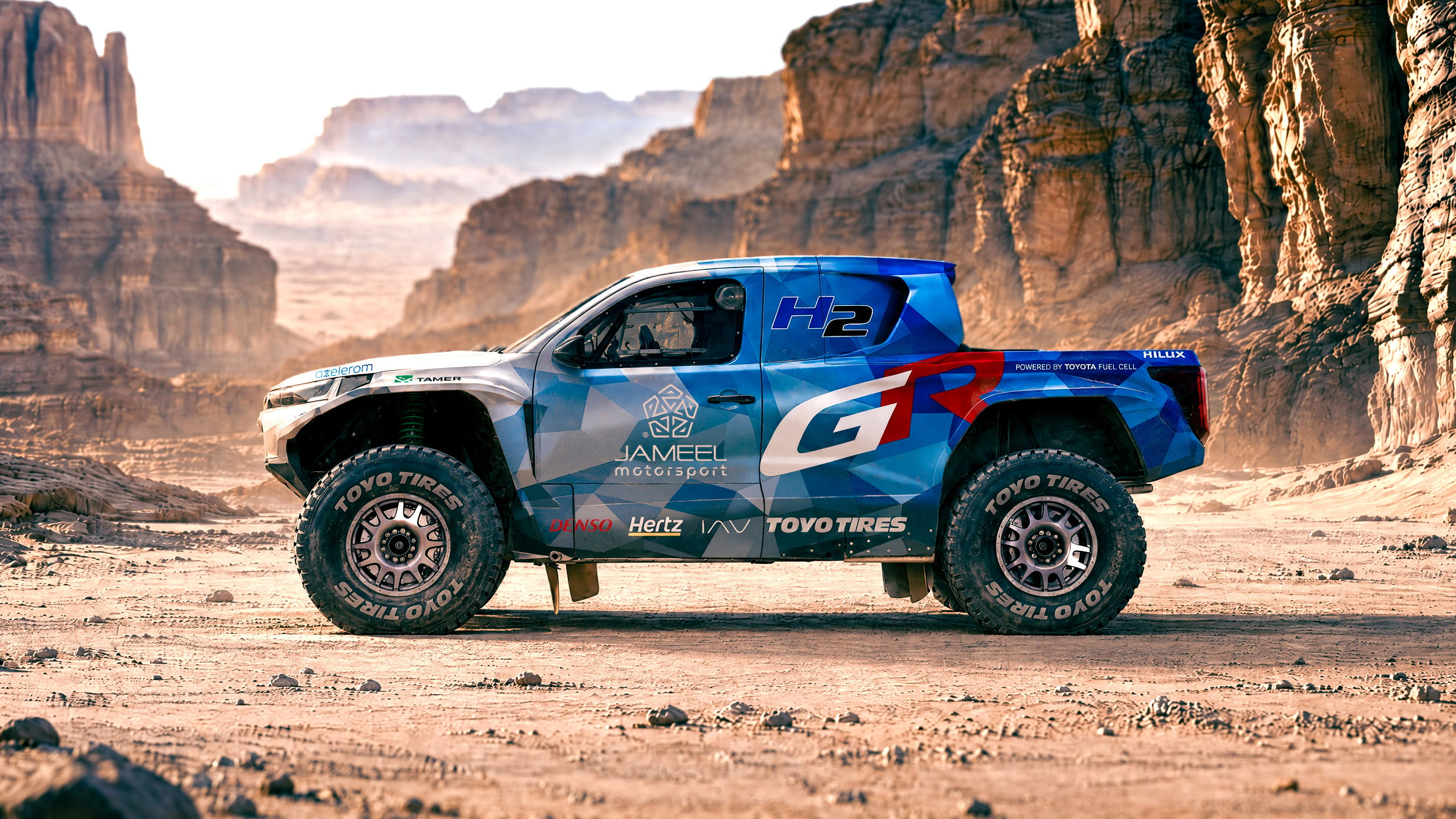
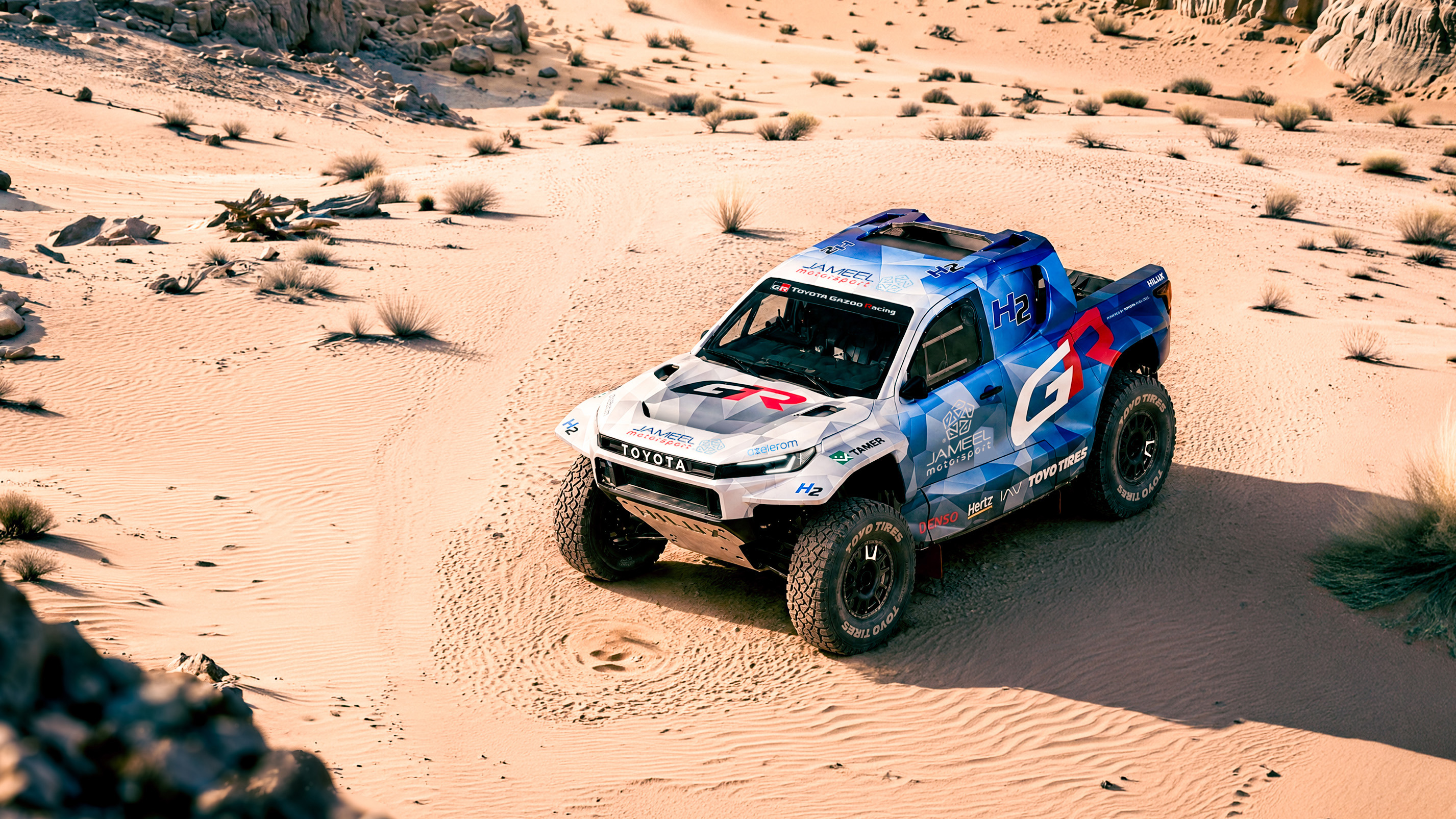
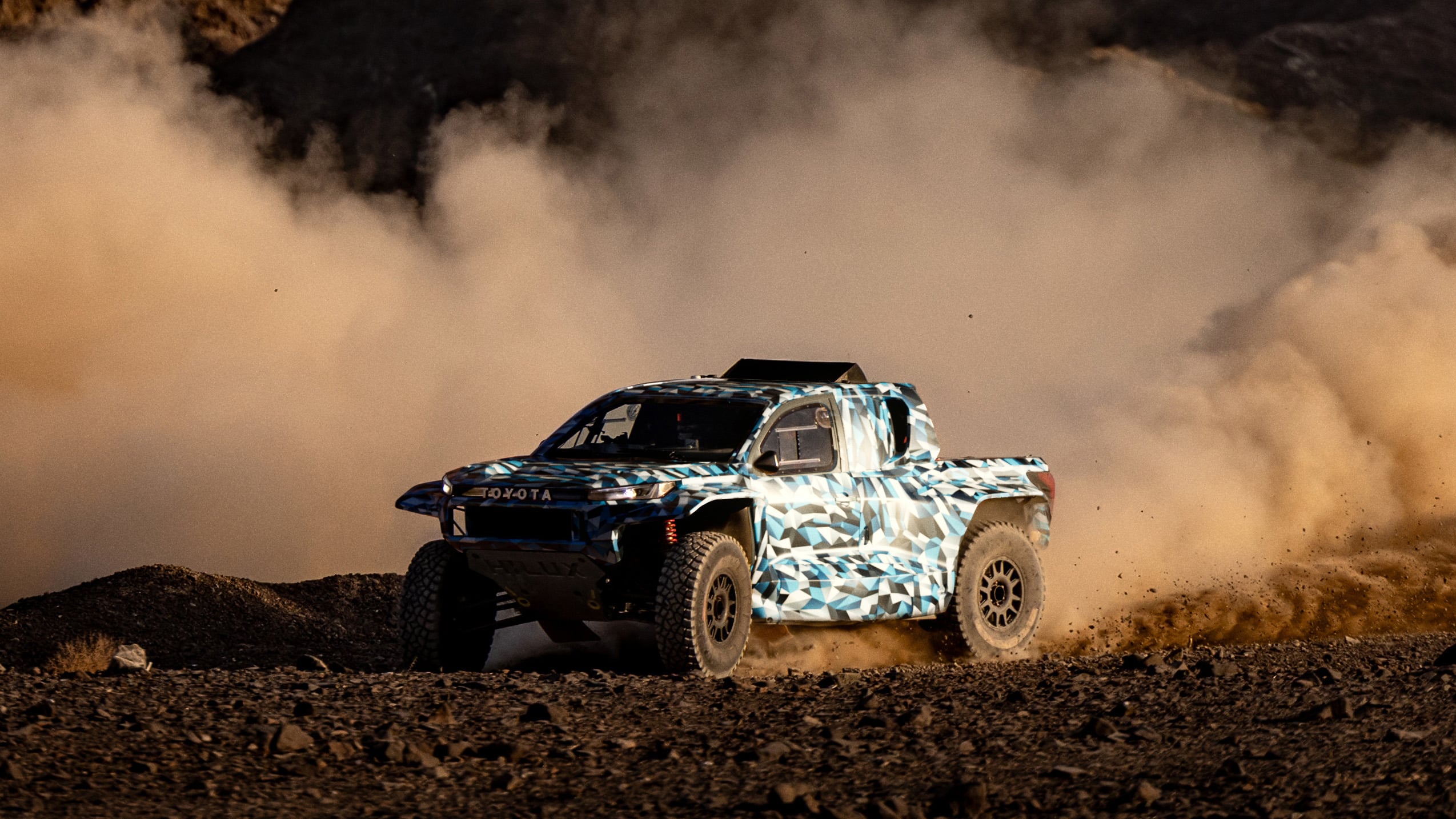
The DKR GR FC Hilux is a Dakar Rally truck with its twin-turbo V6 torn out and a hydrogen fuel cell dropped in its place. It keeps the mad bits — the shortened wheelbase, the enormous tyres, the suspension travel of a pogo stick — and swaps the noisy, thirsty heart for something almost silent.
That may disappoint some, but Dakar's Future Mission 1000 category is reserved for experimental machines only. Toyota’s motorsport division, Gazoo Racing, has been tasked with developing this first hydrogen foray, aiming to create a vehicle capable of completing 13 stages and 1000 competitive kilometres (621 miles).
Fuel cells explained
A battery stores electricity; a fuel cell makes it. Hydrogen goes in one side, oxygen from the air comes in the other, and where they meet they produce electricity, a bit of heat and water. There are no exhaust fumes, just a warm puddle.
The appeal is obvious when you're 400 miles into a desert. Refuelling takes minutes rather than hours for a typical EV, and you're not hauling a tonne of heavy batteries over sand dunes.
Toyota means business with its hydrogen development. It’s already released the Mirai, the first FCV (fuel cell vehicle) to be mass-produced and sold commercially. Now it’s going after rally stages, and even lorries.
Swedish HGV giant Scania will run 40 heavy-duty trucks on Toyota's new 300kW fuel cell system from early 2027. Italian manufacturer Iveco is building its S-eWay Fuel Cell around the same hardware, targeting over 900km of range and 25,000 hours of working life.
Toyota has also taken an equal stake in cellcentric, the fuel cell venture owned by Volvo Group and Daimler Truck, which means three of the four biggest names in European trucking are now using Toyota's technology.
That 300kW unit is roughly twice as powerful and twice as durable as the one before it, with 20 per cent better fuel efficiency. It was designed from scratch for workhorses that weigh 40 tonnes and rarely stop moving.
Toyota isn't alone
In truth, hydrogen fuel cells and vehicles have been mooted since Welsh physicist Sir William Grove laid the foundational principles in 1839, but only now is it becoming a viable option. Toyota isn’t the only company pursuing it, but it is a key player, even working with rival car makers.
BMW has confirmed the iX5 Hydrogen for production in 2028, built with Toyota's fuel cell expertise. Hyundai keeps updating its Nexo crossover, and closer to home, JCB has spent years developing a hydrogen combustion engine for diggers, on the reasoning a machine working in a field all day can't wait around for a charging cable.
How best to highlight the potential for eco-friendly excavators? By setting a land speed record with Andy Green at the wheel, of course. The JCB Hydromax has reached 406mph (654km/h) at the Bonneville Salt Flats in Utah, using two hydrogen internal combustion engines, with a combined 1,622PS (1,193kW).
The serious point to all this is that some jobs are too heavy, remote, unrelenting for electric batteries to be the whole answer.
The catch
Hydrogen technology is still being perfected, and as with EVs, it’s got an infrastructure problem to overcome. You fill a hydrogen car in a similar way to a petrol vehicle, but Europe's refuelling network is thin, expensive and patchy. Pus, most hydrogen produced today is still made from natural gas.
Toyota's answer appears to be to build the vehicles anyway, starting with fleets that return to a depot every night, and let the infrastructure follow the demand. A production FCEV Hilux is promised for 2028, with around 400km of range.
Whether that's vision or a gamble depends entirely on what happens next, but watching a hydrogen pickup cross a desert on nothing but water makes it harder to label hydrogen a dead end.

Randox is a global leader in diagnostics, revolutionising patient outcomes through innovative technologies, including its patented biochip technology. This pioneering diagnostic platform allows for the simultaneous detection of multiple biomarkers from a single sample, delivering faster, more accurate, and comprehensive results. Operating in over 145 countries, Randox develops advanced laboratory instruments, high-quality reagents, and innovative testing solutions to improve global healthcare.
Randox Health brings this cutting-edge technology directly to individuals, offering bespoke, preventative health testing programs. With world-class laboratories and personalised health insights, Randox Health enables early detection of a wide range of conditions, helping individuals take control of their health.
Together, Randox and Randox Health are redefining diagnostics and preventative healthcare. For more information, visit www.randox.com and www.randoxhealth.com.
The 2027 Festival of Speed will take place on 15th-18th July 2027, sign up for ticket alerts to make sure you don't miss out. Tickets are available for GRRC Members and Fellows, you can join the Fellowship today.
festival of speed
fos
fos future lab
future lab
toyota
Toyota Gazoo Racing
Dakar

Subscribe to Goodwood Road & Racing
Thank you, you’re now subscribed

How many hay bales are used at FOS?
For the last two years, 5,800 bales have been recylced into the biomass energy centre to be used for energy generation