

What SpaceX’s Starship reaching orbit means for the Moon
SpaceX’s Starship stands 398ft tall, weighs 5,300 tonnes fully fuelled, and until recently had never once made it into orbit. It finally got there on its 14th attempt, dropping off 26 Starlink satellites on its way, but things didn’t go entirely to plan…
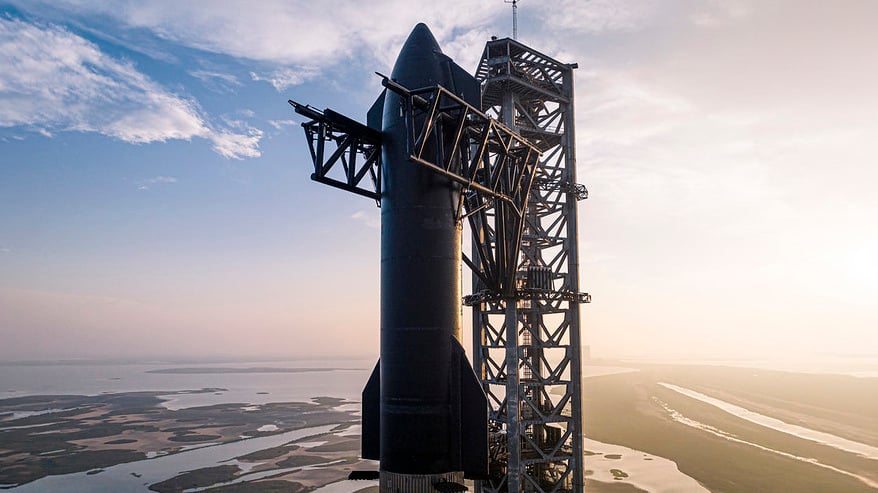
One of the six engines on the upper stage quit as the rocket climbed away from Starbase in Texas, and SpaceX spokesman Dan Huot promptly told everyone watching that the orbital attempt was off.
Minutes later he was back with the sort of line you cannot script: “We are not giving up yet. We will continue to hang out.”
Pressing on with five engines and about 25 minutes after lift-off, Starship fired once more and slipped into orbit roughly 170 miles up, which is the rocket equivalent of finishing the race on three wheels.
Why this attempt really counted
Starship’s first 13 flights went up and came straight back down, like a ball thrown in the air. Spectacular to watch, but never going round anything.
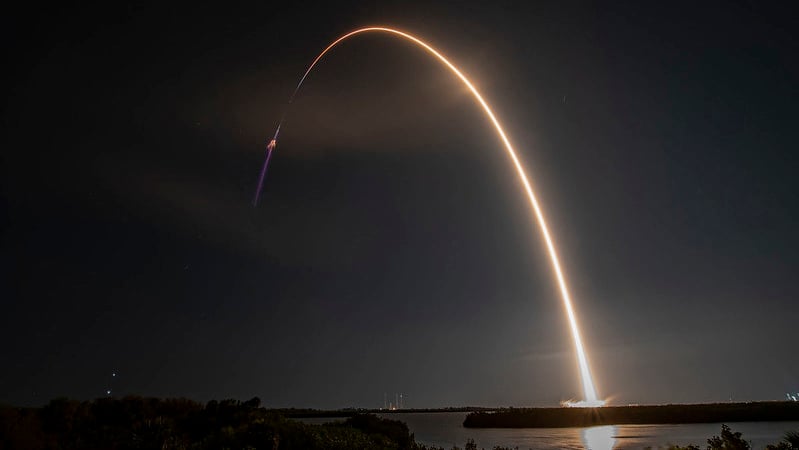
Orbit means going sideways instead, and fast — about 17,500mph. Hit that, and you stop falling back to the ground and start sailing right round the planet, with one lap every 90 minutes. Starship managed it on its 14th try.
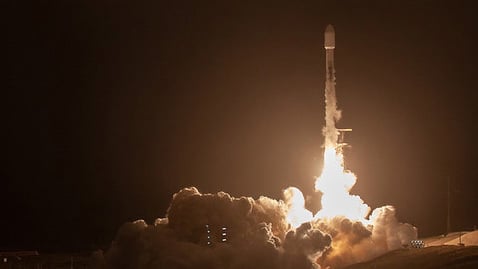
Starship is taller than the Saturn V that carried Apollo astronauts, and produces roughly twice the thrust of its first stage. It has 39 engines, 33 in the booster and six in the ship on top. The latest version can heave around 100 tonnes into orbit in a single go, which is roughly seven double-decker buses.
Of the 26 Starlink satellites dropped off by Starship, three were fitted with cameras, and their job was to photograph its heat shield on the way home. So, while headlines are great, what the company really wanted was data on the underside of the ship, hitting temperatures that would melt most metals.
The tiles protecting it are the difference between flying again next month and never flying again. Somebody needed to know exactly which tiles cooked, and where.
Home rather early
The plan had been roughly six laps of Earth across eight and a half hours, finishing off the coast of Chile. What actually happened was one.
About 90 minutes in, SpaceX told viewers it would “take our first checkpoint and come back early”, and the ship splashed into the northern Pacific after roughly three hours.
The company still hasn't given a technical reason, though coming home early with an engine gone and a heat shield you're itching to inspect is hardly baffling behaviour.
SpaceX has called the flight “wildly successful”, which, given it reached orbit and delivered its cargo, is hard to argue with.
Why bother with any of it?
Rockets are the only form of transport we still throw away after one use. Imagine scrapping a jumbo jet after a single trip to New York, and the cost of going to space starts to make sense.
Starship is built to be refuelled and flown again within weeks, and orbit was a gate it had to get through first. Everything queued up behind it depends on that working.
Catching the ship on the launch tower, refuelling in orbit, fitting life support, and eventually putting astronauts back on the lunar surface for Artemis.
Moon bases, rovers, orbiting factories and telescopes far larger than anything we have now are all reliant on rockets like this one, and if Elon Musk doesn’t get it right, a certain Jeff Bezos is waiting in the wings.
NASA wants Artemis III crewed and away in mid-2027, and Starship has to be capable of carrying people by 2028. NASA has already said that if it isn't ready, Blue Origin's rival Blue Moon lander could get the job instead.
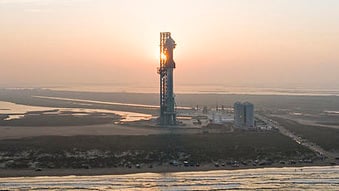
Starship’s flight 15 could come as soon as 19th October, and it's the one to watch. SpaceX has now caught the Super Heavy booster three times, plucking it out of the air with the launch tower's giant arms.
It has never tried that with the ship itself, which is 171ft of spacecraft arriving back from orbit at considerable speed. Musk has hinted Flight 15 will have a go.
After that comes the properly difficult part. To reach the Moon, one Starship has to be refuelled in orbit by another Starship, and nobody has ever done that either. Everyone at FOS Future Lab presented by Randox will be watching with bated breath.

Randox is a global leader in diagnostics, revolutionising patient outcomes through innovative technologies, including its patented biochip technology. This pioneering diagnostic platform allows for the simultaneous detection of multiple biomarkers from a single sample, delivering faster, more accurate, and comprehensive results. Operating in over 145 countries, Randox develops advanced laboratory instruments, high-quality reagents, and innovative testing solutions to improve global healthcare.
Randox Health brings this cutting-edge technology directly to individuals, offering bespoke, preventative health testing programs. With world-class laboratories and personalised health insights, Randox Health enables early detection of a wide range of conditions, helping individuals take control of their health.
Together, Randox and Randox Health are redefining diagnostics and preventative healthcare. For more information, visit www.randox.com and www.randoxhealth.com.
Images courtesy of SpaceX via Flickr.
The 2027 Festival of Speed will take place on 15th-18th July 2027, sign up for ticket alerts to make sure you don't miss out. Tickets are available for GRRC Members and Fellows, you can join the Fellowship today.
festival of speed
fos
fos future lab
future lab
SpaceX


Subscribe to Goodwood Road & Racing
Thank you, you’re now subscribed

How many hay bales are used at FOS?
For the last two years, 5,800 bales have been recylced into the biomass energy centre to be used for energy generation