

Maserati: The brothers who built a legend
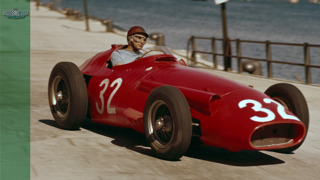
Maserati shone brightest on the Grand Prix stage throughout the 1950s. Nine victories in World Championship-counting rounds as a constructor — two via Stirling Moss in 1956 and seven courtesy of Juan Manuel Fangio between 1953 and ’57, when the Argentine also claimed his fifth and final title in the gorgeous 250F — scaled the pinnacle for the Trident-badged marque in Formula 1 terms.
But there’s a slight shadow over that decade of achievement; the brothers who gave their name to the company and toiled so hard to establish it were long gone as figures of influence during Maserati’s heyday. That’s why at the 2026 Goodwood Revival, where Maserati will be celebrated a century on from its first major success, that fraternal foundation absolutely will not be forgotten.
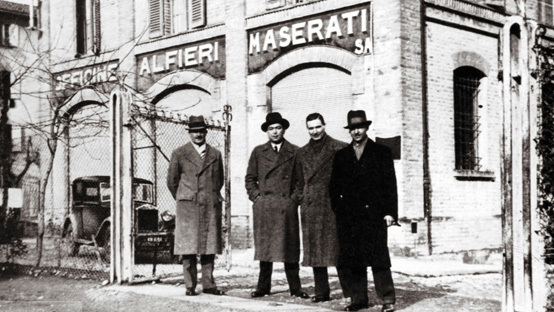
Once there were six
Born between 1881 and 1898, the six sons of engineer Rodolfo Maserati and his wife Carolina Losi all had a part to play in the family’s automotive heritage, to one degree or another. Carlo was the oldest and therefore the first to make his mark. At 17, he designed and built a single-cylinder engine for bicycles. He was soon going racing on Carcano motorcycles, making a name for himself — and as it turned out, for his family.
Carlo worked at Isotta Fraschini in the early years of the new century, pulling in his brother Alfieri with him, the younger Maserati making his own mark as a test (and eventual race) driver. But while Carlo kickstarted the Maserati automotive story, he also departed the scene first — way too early. He died of tuberculosis in 1910 aged just 29.
Forming Maserati
Alfieri became the driving force of the family’s future legacy. Following a spell working in South America, he returned to Europe and in December 1914 founded Societa Anonima Officine Alfieri Maserati with brothers Ettore and Ernesto in their hometown of Bologna. Bindo, another brother with the engineering gene, would join later.
Perhaps the timing could have been better. Europe became engulfed by World War I, during which the company focused on aircraft engines for Isotta and the manufacture of spark plugs — a line of production that would last.
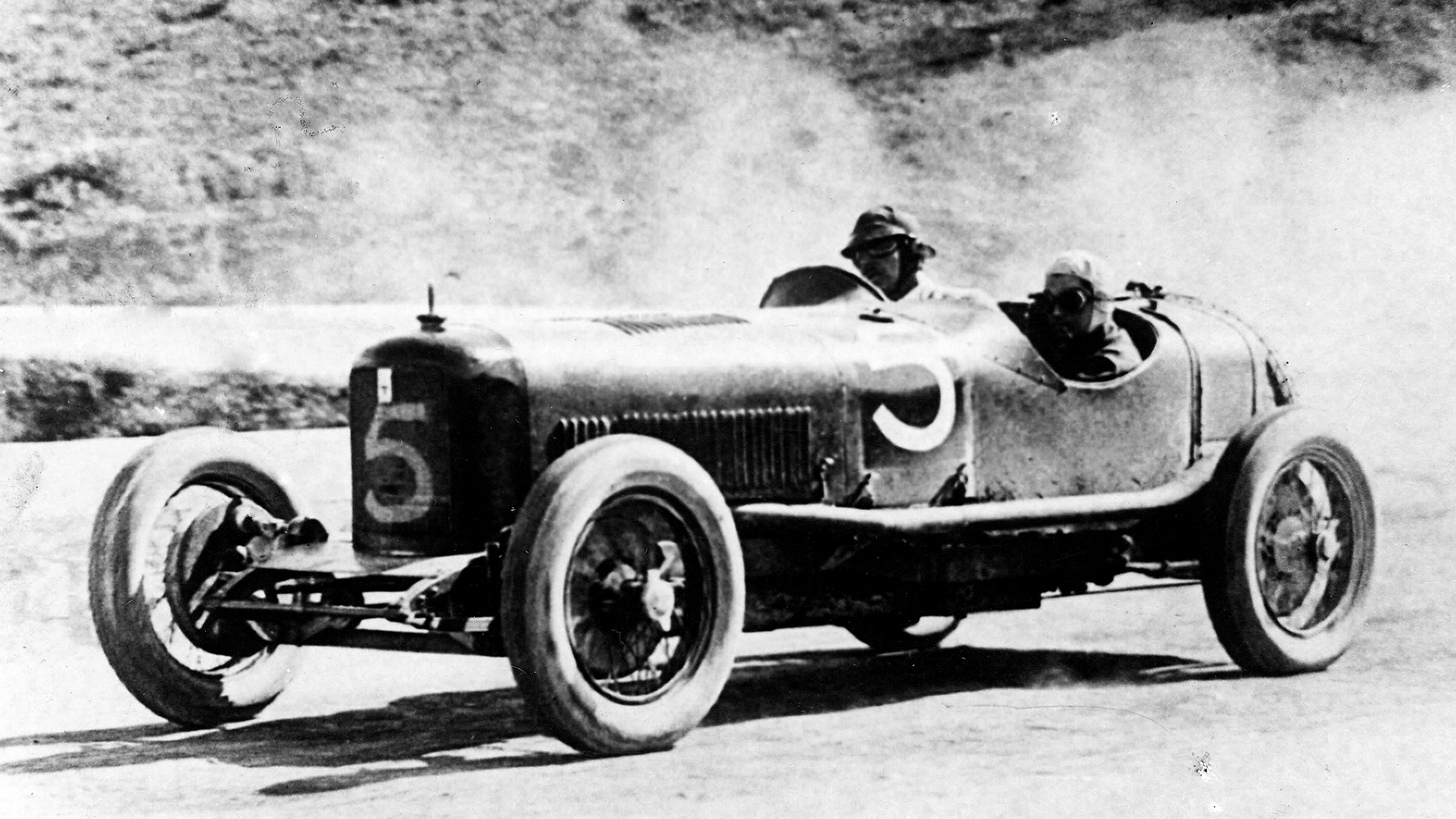
Alfieri Maserati took his company's first major victory with a class win at the 1926 Targa Florio. He drove a Tipo 26 alongside Guerino Bertocchi.
Following the Armistice and into the 1920s, the brothers indulged their passion for motor racing, notably with a Tipo Speciale built in 1921. It was a proper ‘bitza’… Isotta chassis, 8-cylinder Hispano-Suiza engine, with other parts sourced from SCAT, Itala and Rudge. Alfieri and Ernesto then worked for Diatto, but when that company hit financial trouble in 1925, their attention finally turned to the first Maserati racing car.
Birth of the Trident
The Type 26 was the first racing car to carry the Maserati name. Joined by riding mechanic Guerino Bertocchi, Alfieri drew success immediately with an eighth overall and a fine class win on the gruelling Targa Florio precisely 100 years ago in 1926.
The Tipo 26 was the foundation of all that would follow, some 43 eventually being produced in a variety of evolved forms. As for the Trident symbol all Maseratis still carry on their nose, that was the work of the other brother. Mario was the only one of the six who was not an engineer, but he was an artist. The badge is inspired by the Fountain of Neptune (Fontana del Nettuno) in Bologna’s Piazza Maggiore.
Loss of Alfieri
By the early 1930s, Maserati was a plucky alternative on the Grand Prix scene to Alfa Romeo. Most famously, the great Tazio Nuvolari switched to race for the firm in 1933 after a fall-out with Enzo Ferrari, whose Scuderia had become the de facto works team.
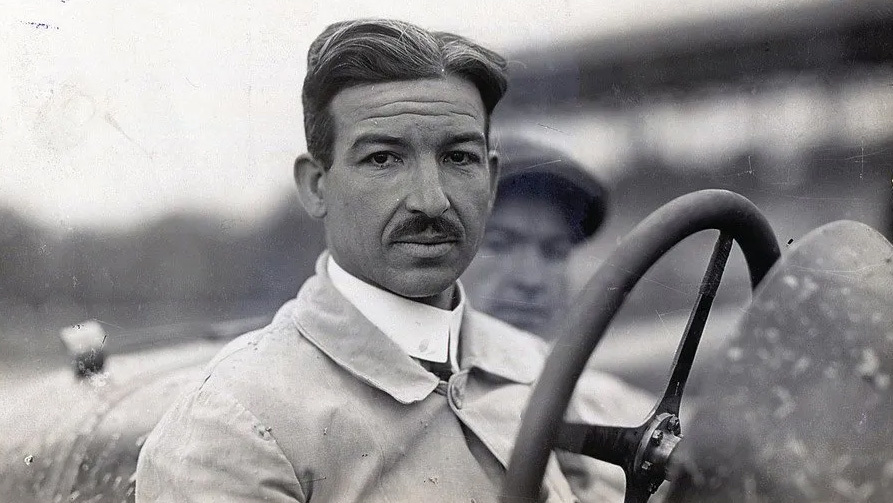
But by then, Alfieri had also sadly departed the story. He’d crashed on the 1927 Coppa Messina, sustaining injuries that resulted in him losing a kidney. Alfieri did return to racing, but never to full health and in 1932, following surgery on his remaining kidney, complications set in and he died aged just 44. The funeral in Bologna for this popular figure was a large affair, with the great and good of Italian motorsport, including Ferrari, in attendance.
Maserati under Orsi
Ettore, Ernesto and Bindo persevered, but in 1937 the brothers accepted an offer to pass the baton on to Adolfo Orsi, the other great figure in Maserati’s history.
Born in 1888, Orsi was the eldest of eight, born to an impoverished father who collected scrap metal to make ends meet. After his father died when he was just 15, Adolfo continued the family trade, eventually bought a forge and developed it into an iron and steel plant. Such was his success he took over Modena’s bus service and even the local football team.
His interest in Maserati was initially for the spark plug business rather than the racing cars, but he split the business in two for both arms to continue, then moved the company from Bologna to his hometown of Modena — into a new headquarters situated directly oppositive the original premises of Ferrari.
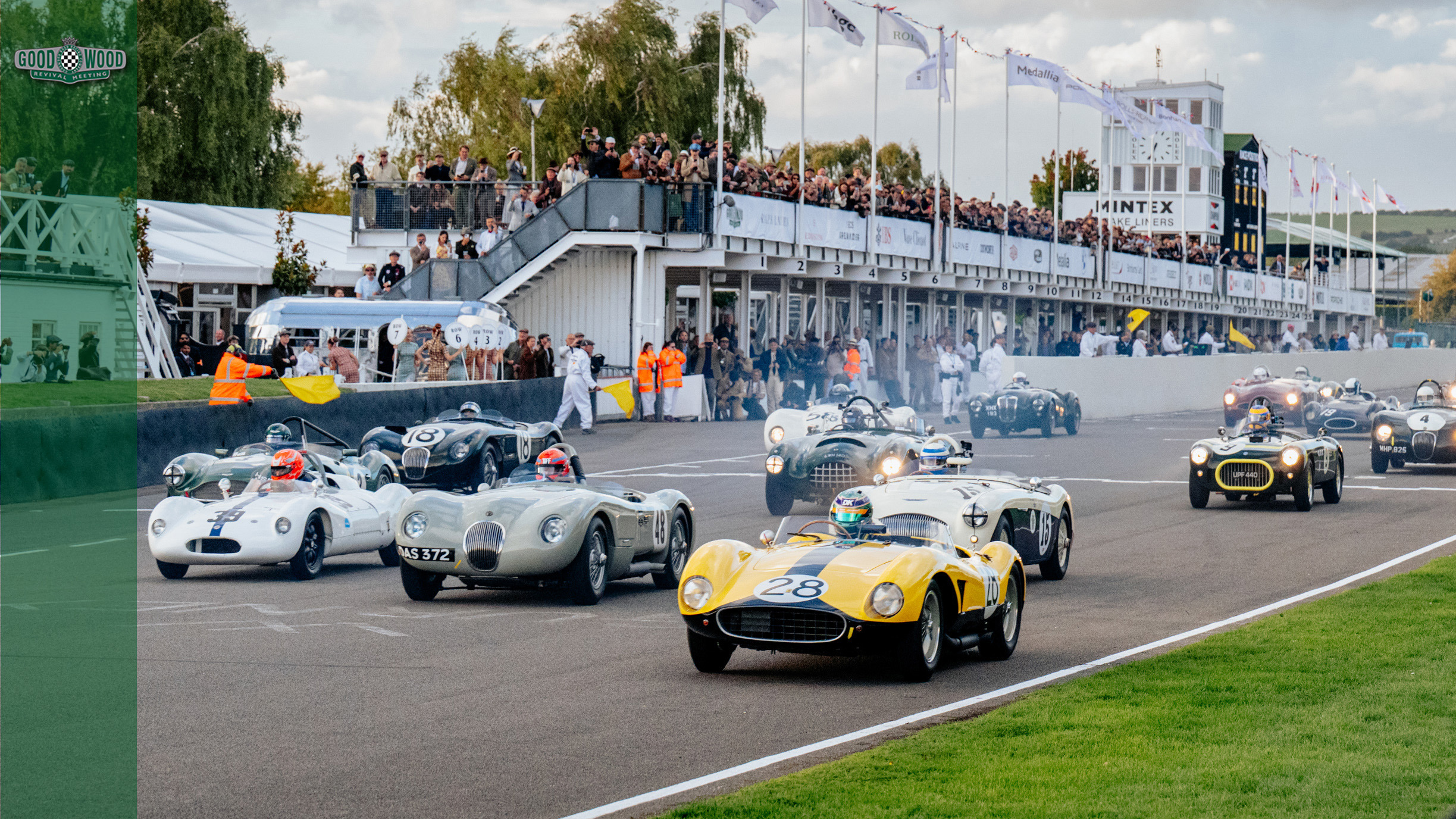
Under Orsi and his son Omer, Maserati remained a force in motor racing all over the globe, including at the Indianapolis 500 where Wilbur Shaw scored a pair of landmark victories with the 8CTF before World War II pressed the pause button on racing.
The brothers start again
As Maserati initially thrived under Orsi in the post-war world, expanding beyond racing with its first Grand Turismo, the A6, in 1947, the Maserati brothers chose a new path. They started again, by founding OSCA (Officine Costruzioni Automobili), building small-scale sports and competition models from a base near Bologna.
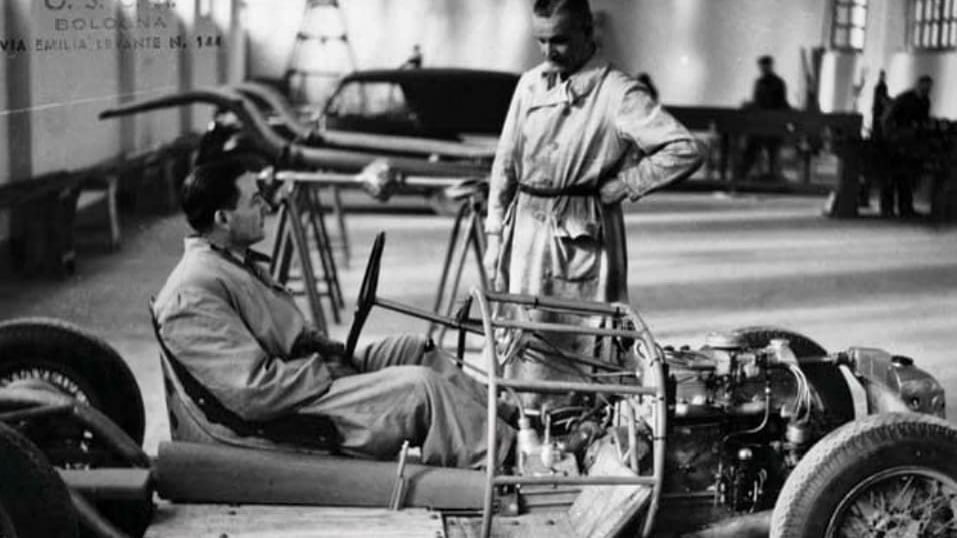
Ernesto and Bindo Maserati work on an early OSCA MT4 chassis, April 1948.
OSCA made its own mark. The most notable highpoint was a shock overall win at the 1954 Sebring 12 Hours as Stirling Moss, sharing with Bill Lloyd, saw off Ferrari with the little MT4 1450. Moss never forgot OSCA, and decades later bought one as his racing car of choice during his final years in historic motorsport.
OSCA was sold to Italian motorcycle manufacturer MV Agusta in 1964. Ernesto died in 1975, Bindo in ’80 and Ettore in ’90.
Maserati at the movies
As we celebrate the brothers’ heritage at Goodwood Revival this year, the story is also set for the silver screen. A new movie called Maserati: The Brothers is set for release in 2026 and completes a triumvirate of homages to Italian motoring in the 20th century.
Without Adolfo Orsi, Fangio and Moss wouldn’t have had the wondrous 250F to twirl to 1950s Grand Prix victories. But without the Maserati brothers, a whole chapter of glorious Italian motor racing would never have been born.
Tickets for the 2026 Goodwood Revival are now on sale. If you’re not already part of the GRRC, you can sign up to the Fellowship today and save ten per cent on your 2026 tickets and grandstand passes, as well as enjoying a whole host of other on-event perks.
Main image courtesy of Ferruccio Testi.
revival
revival 2026
event coverage
Maserati
Maserati Celebration

Subscribe to Goodwood Road & Racing
Thank you, you’re now subscribed

How many hay bales are used at FOS?
For the last two years, 5,800 bales have been recylced into the biomass energy centre to be used for energy generation