

The Maserati 250F: the greatest Grand Prix car?
Is there a more instantly recognisable Grand Prix racing car than the Maserati 250F? It’s the poster child of 1950s Formula 1, and the chariot of choice for many of the era’s greatest drivers. Juan Manuel Fangio and Stirling Moss both voiced their admiration for the 250F, and both achieved resounding success while at the wheel of Maserati’s most famous creation.
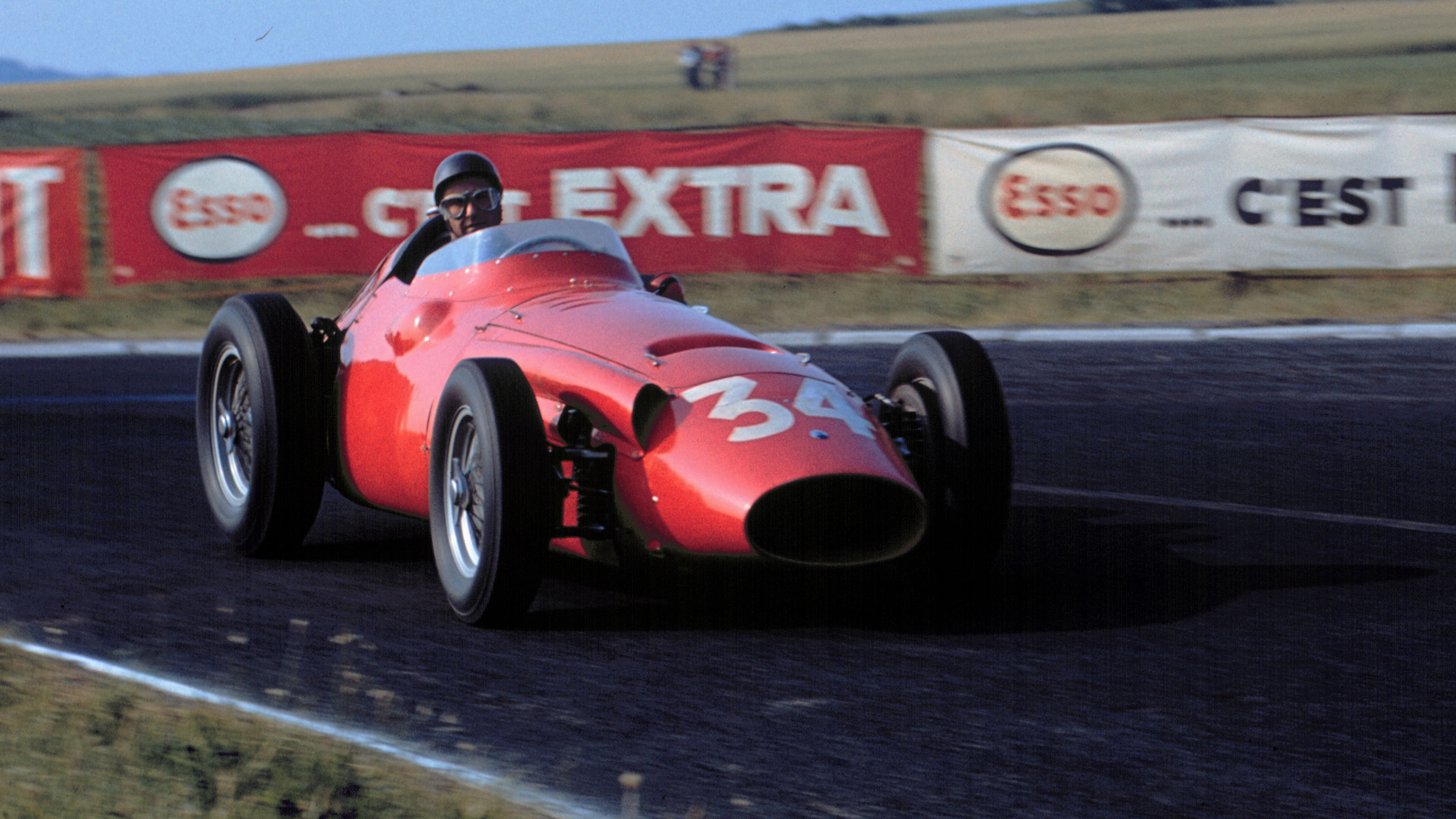
With sleek and efficient styling that stood out even amongst a field of slender and simplistic Grand Prix cars, the 250F, with its exhaust protruding along the entire left side of the bodywork, remains in the eyes of many aficionados as the perfect racing car.
It was introduced for the beginning of the 1954 Grand Prix season to replace the aging but hugely successful A6GCM that had won the final race of the 1953 F1 campaign at Monza in the hands of Fangio.
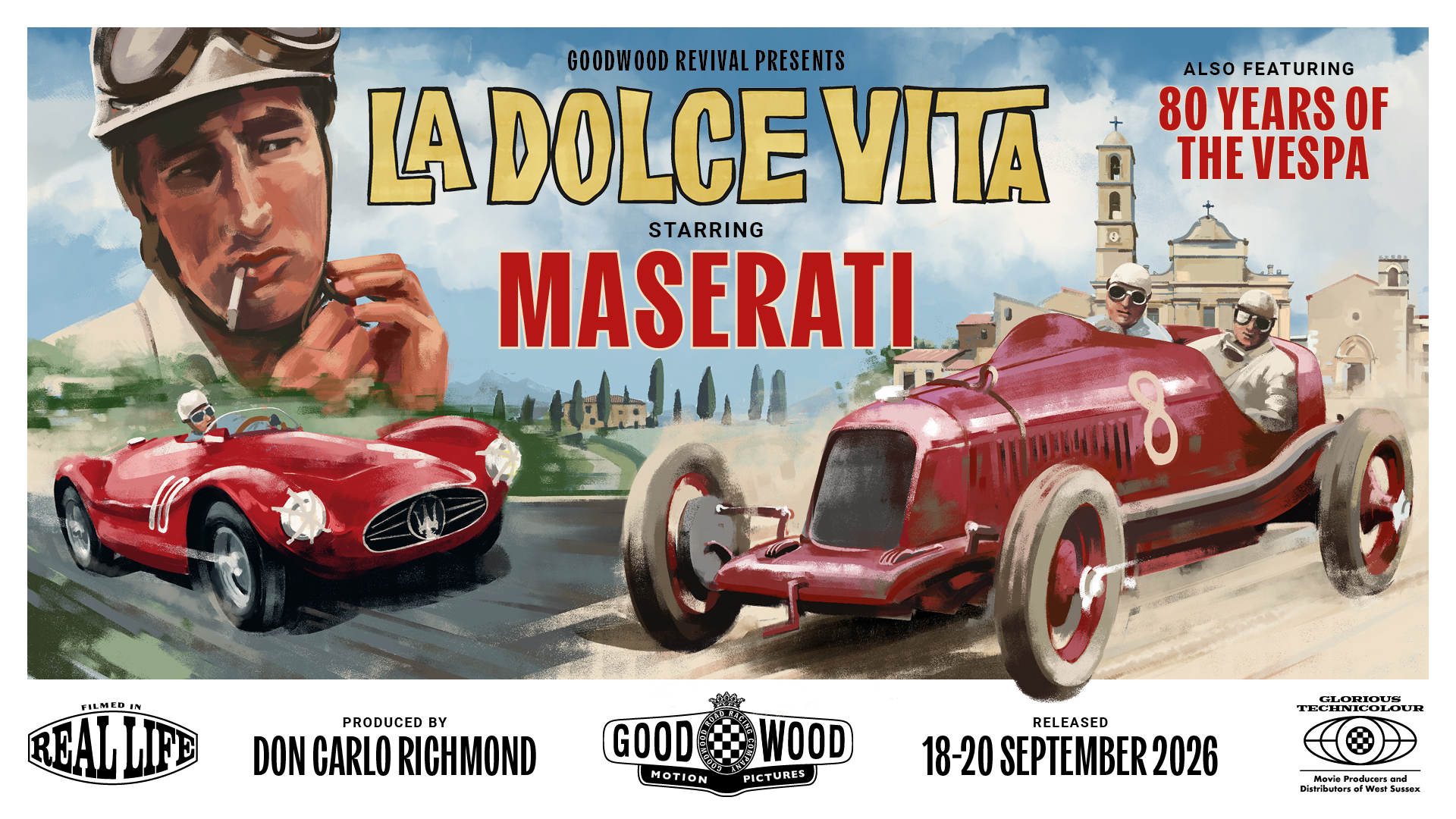
Despite its development amid Maserati’s increasing financial turmoil, that the 250F was immediately quick was just as well; following Alfa Romeo’s withdrawal from F1 it became the torch bearer of Italy’s motorsport hopes.
The great Fangio had signed a contract to race with Mercedes-Benz in 1954, but while he awaited the completion of his new car he opted to continue racing with Maserati through the opening rounds of the season.
He was lucky enough to be amongst the first to get some hands-on experience with the shiny new 250F, and it’s safe to say he enjoyed himself, driving the car to victory in its first Grand Prix in Argentina.
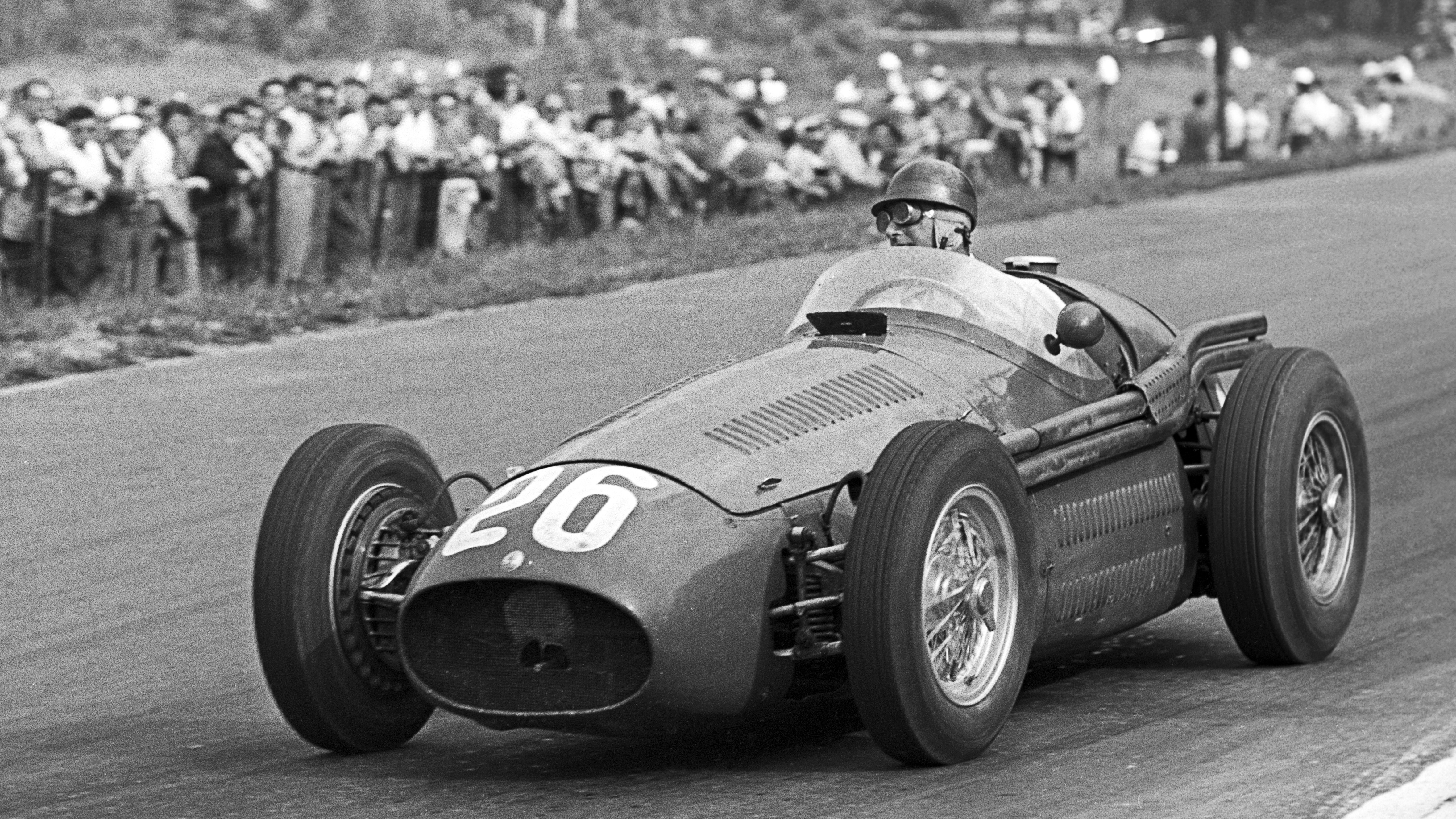
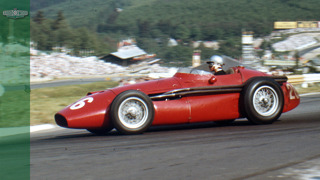
Juan Manuel Fangio took the Maserati 250F's second Grand Prix victory at Spa-Francorchamps, June 1954.
Fangio followed that up with another triumph at Spa-Francorchamps, a race that also saw a young Moss — who had bought himself a 250F to race as a privateer — score his first Grand Prix podium.
Mercedes’ arrival on the grid for the next race in France put a hard stop to Maserati’s success, and the 250F began to show its frailties, perhaps masked initially by the silky smoothness of Fangio as the likes of Moss, Roy Salvadori and Alberto Ascari suffered a series of mechanical failures.
But this was only the beginning for Maserati’s promising new car, because development continued at great pace as the F1 World Championship began to grow in stature. The original four-speed gearbox was replaced by a new five-speed, the fuel injection was updated and disc brakes were also deployed at various stages.
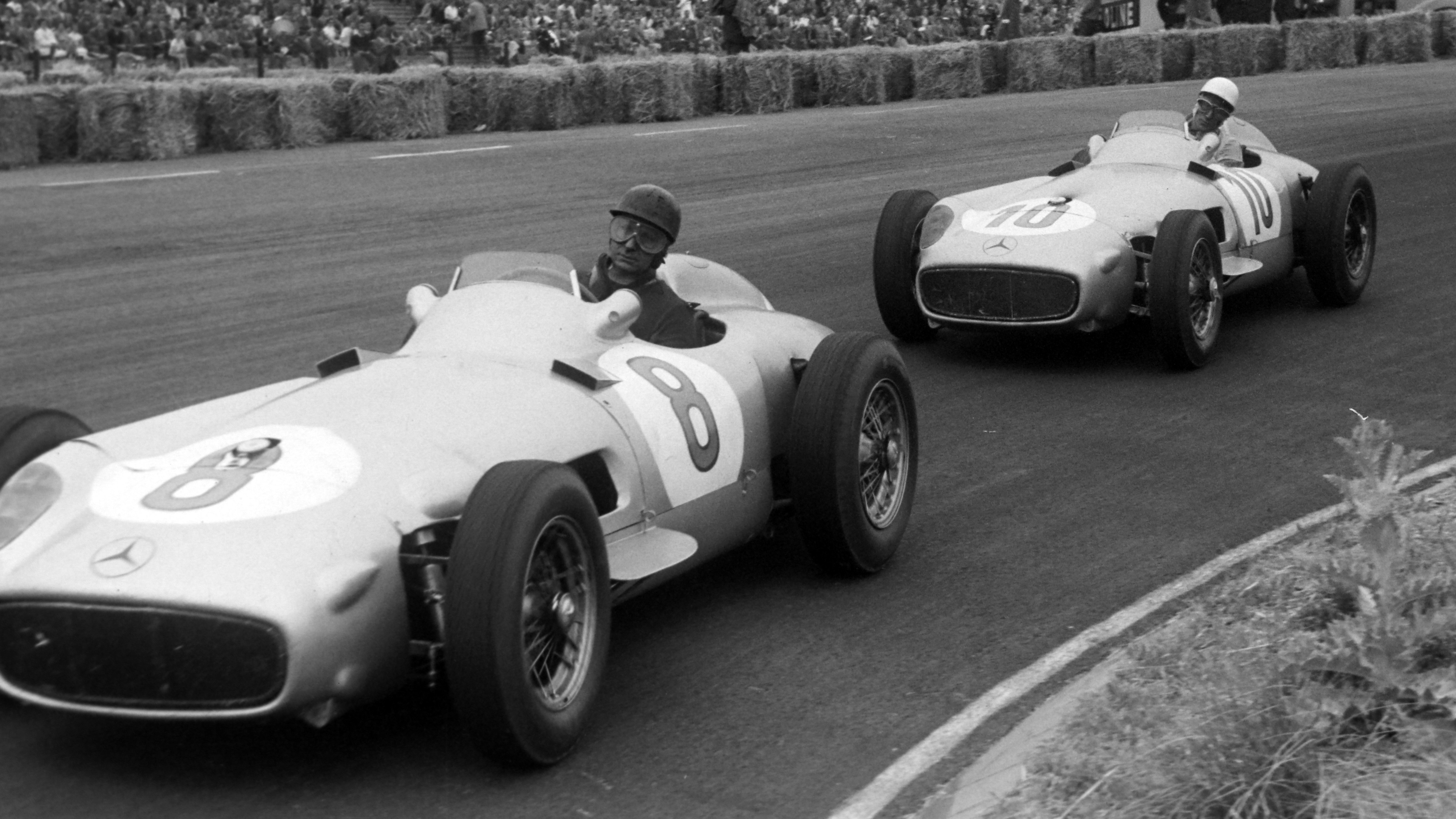
Maserati’s works team expanded to five cars in 1955, but the 250F could manage only a couple of podium places in the midst of overwhelming dominance by the Mercedes W196.
Throughout those first two years the 250F was far more successful in non-Championship competition, where the Silver Arrows generally opted not to attend. Moss, with his privately owned car, claimed three victories at Goodwood in 1954; Roy Salvadori won at Snetterton; Onofre Marimón triumphed in the Rome Grand Prix at Castelfusano; and Luigi Musso took the chequered flag at Pescara. Despite the dominance of Mercedes in the World Championship, there were 11 more Grand Prix victories for the 250F in 1955.
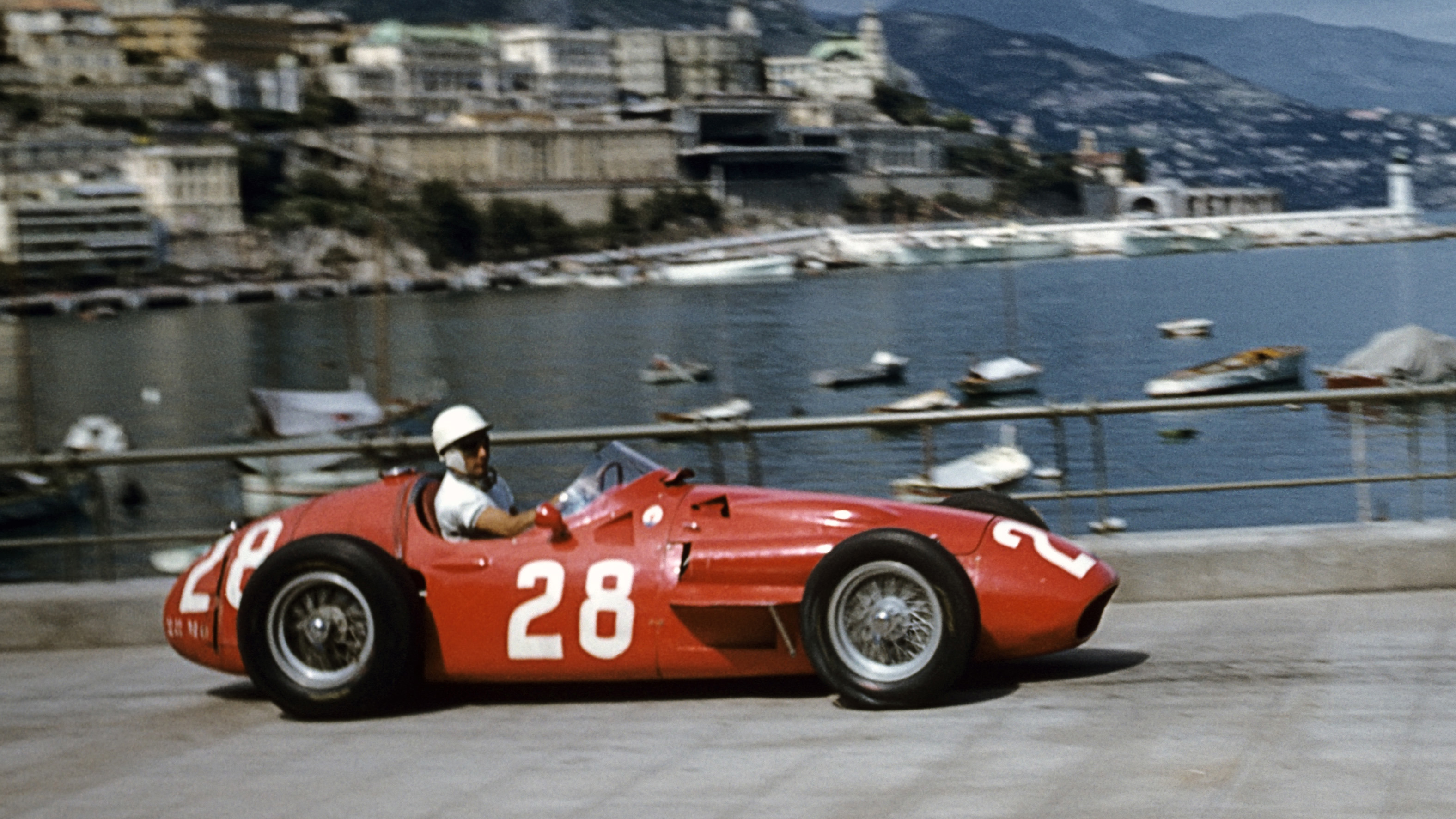
Stirling Moss took his first of two Grand Prix wins in a Maserati 250F at Monaco in May 1956.
With Moss at the wheel, the 250F was back on the top step of the World Championship rostrum in 1956 with significant victories in both Monaco and Monza, and although Ferrari’s D50 in the hands of Fangio became the car to beat in the World Championship, it was the exquisite shape of the 250F that set hearts racing across the globe.
After three full seasons of competition, the cash-strapped Maserati company was desperate for one final attempt at World Championship glory with the 250F. The car had proven to be hugely popular with privateer entrants throughout its three-year lifespan — Grand Prix grids had featured as many as 11 250Fs during the 1956 F1 season — and it was perhaps only that fact that enabled the team to begin development on a new 2.5-litre V12 engine capable of producing more than 300 horsepower.
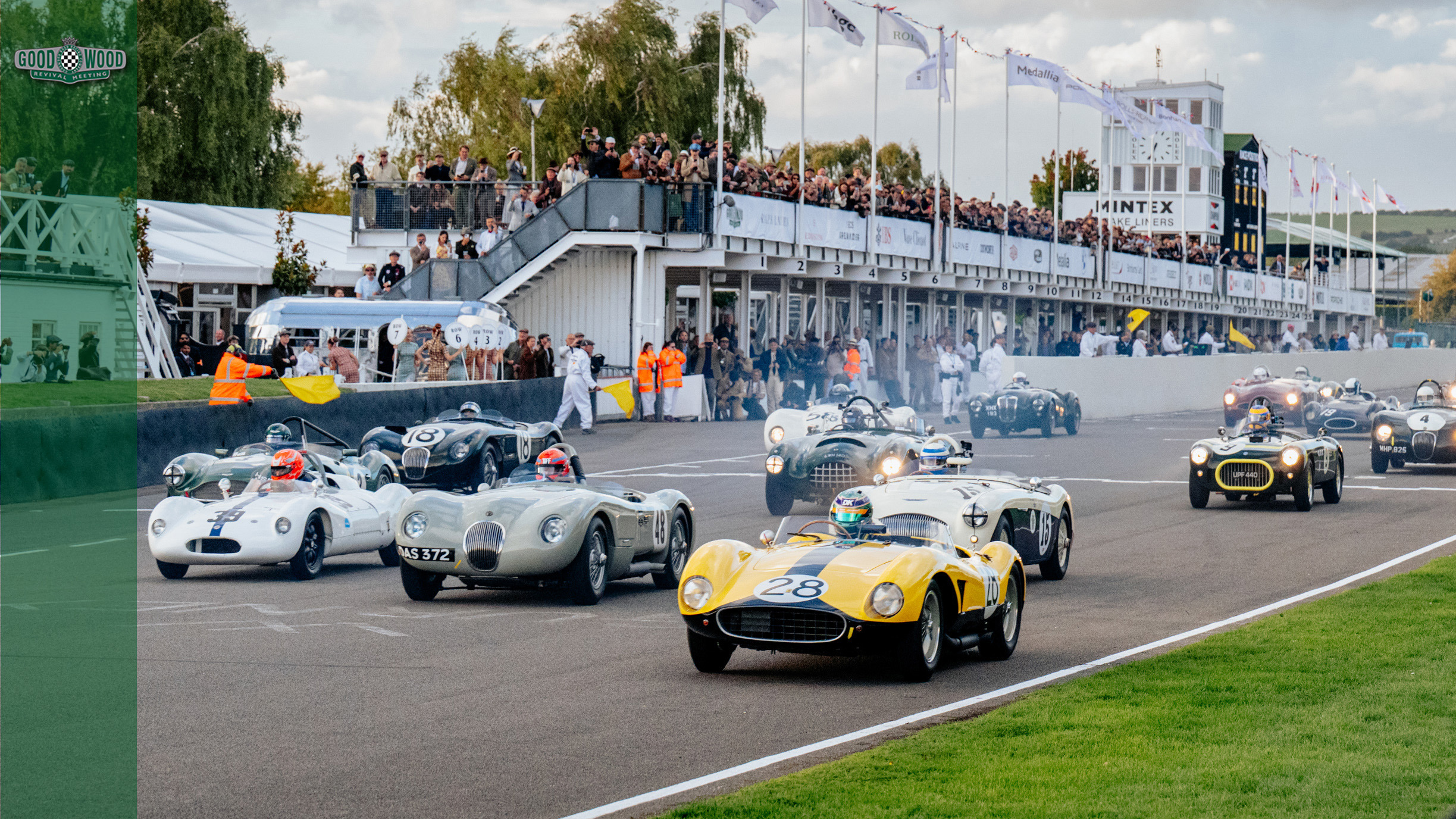
Now entering its fourth season, the 250F was heavily revised for 1957, and although the V12 wouldn’t be ready for several races, the straight-six was still more than capable of out-running rivals from Ferrari and Vanwall.
This final push for success was energised by the return of Fangio who, having fallen out with Ferrari, was back where many believed he belonged.
He stormed to three victories from his opening three races to take a commanding 17-point lead in the 1957 World Championship. Even a mechanical failure at Aintree did little to slow his progress, as he bounced back to complete one of the greatest performances in F1 history a round later at the Nürburgring.
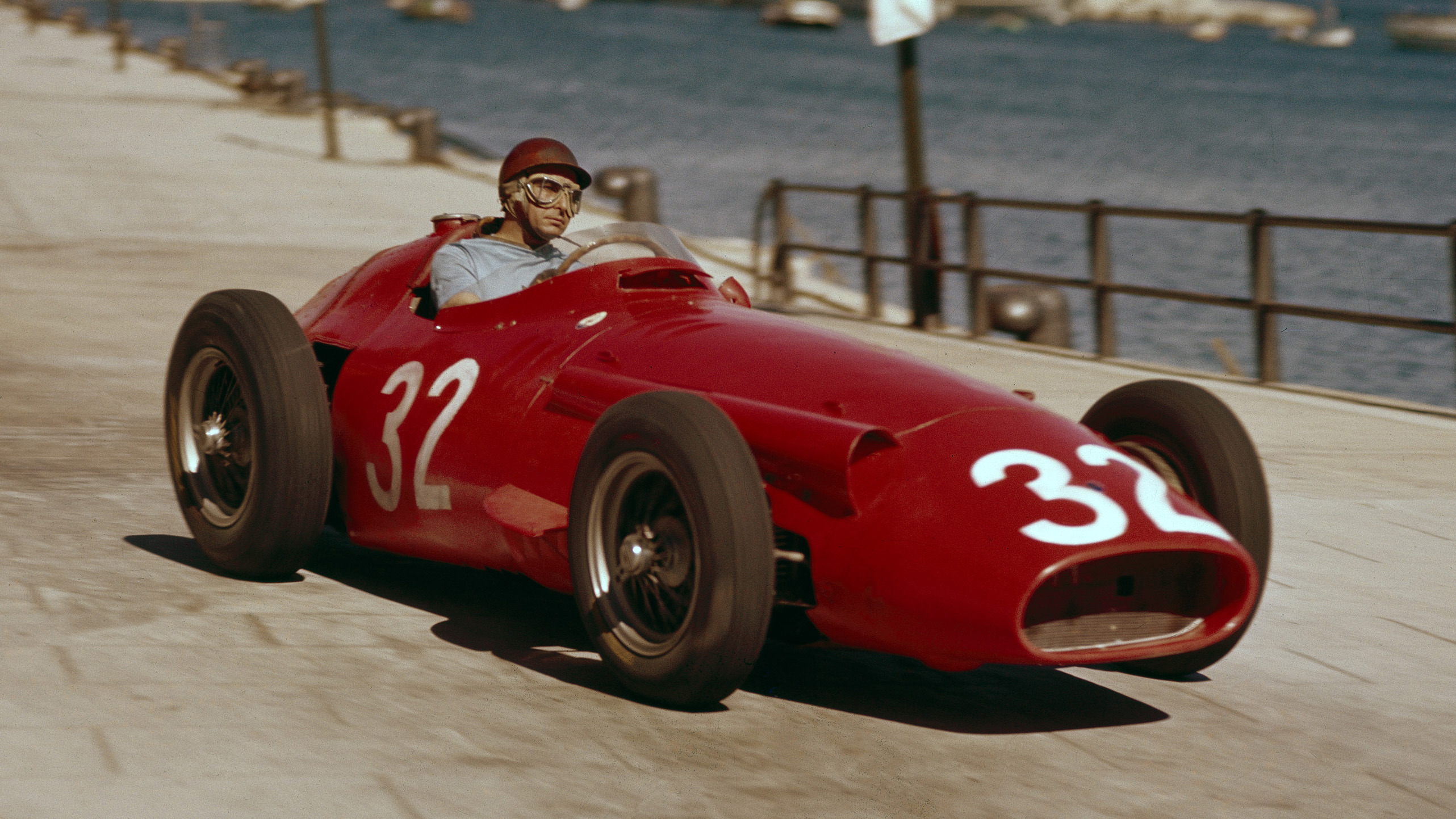
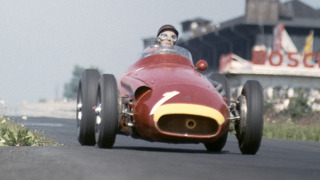
Fangio took four wins in the 250F during the 1957 F1 season, including the Monaco Grand Prix, to win his fifth and final Championship.
That extraordinary result would ultimately prove enough, despite a resurgence from Moss and Vanwall at the end of the season, for Fangio to finally bring Championship glory to Maserati.
It was the perfect culmination for one of motorsport’s most beautiful and recognisable cars, which had remained competitive throughout its remarkable four-year tenure as Maserati’s works Grand Prix machine.
Claiming the World Championship was, however, Maserati’s final act in F1, as the money ran out following the 1957 Italian Grand Prix, the only race where the team’s new V12 engine would be deployed in a works car.
The folding of the works team did little to stop the remaining owners of privateer 250Fs from continuing to race their cars, but the abrupt end to development alongside the arrival of the first rear-engined competitors meant its time at the top was over.
Although it remained on the grid until 1960, making it one of the longest tenured F1 cars in history, the 250F’s final victory came on 27th October 1957, with Jean Behra at the Moroccan Grand Prix.
In all, the 250F accounted for 277 entries across 46 F1 World Championship Grands Prix, it claimed eight World Championship victories (six with Fangio, two with Moss) and a further 27 non-Championship triumphs all over the world. It’s a record that few cars, if any, can come close to matching.
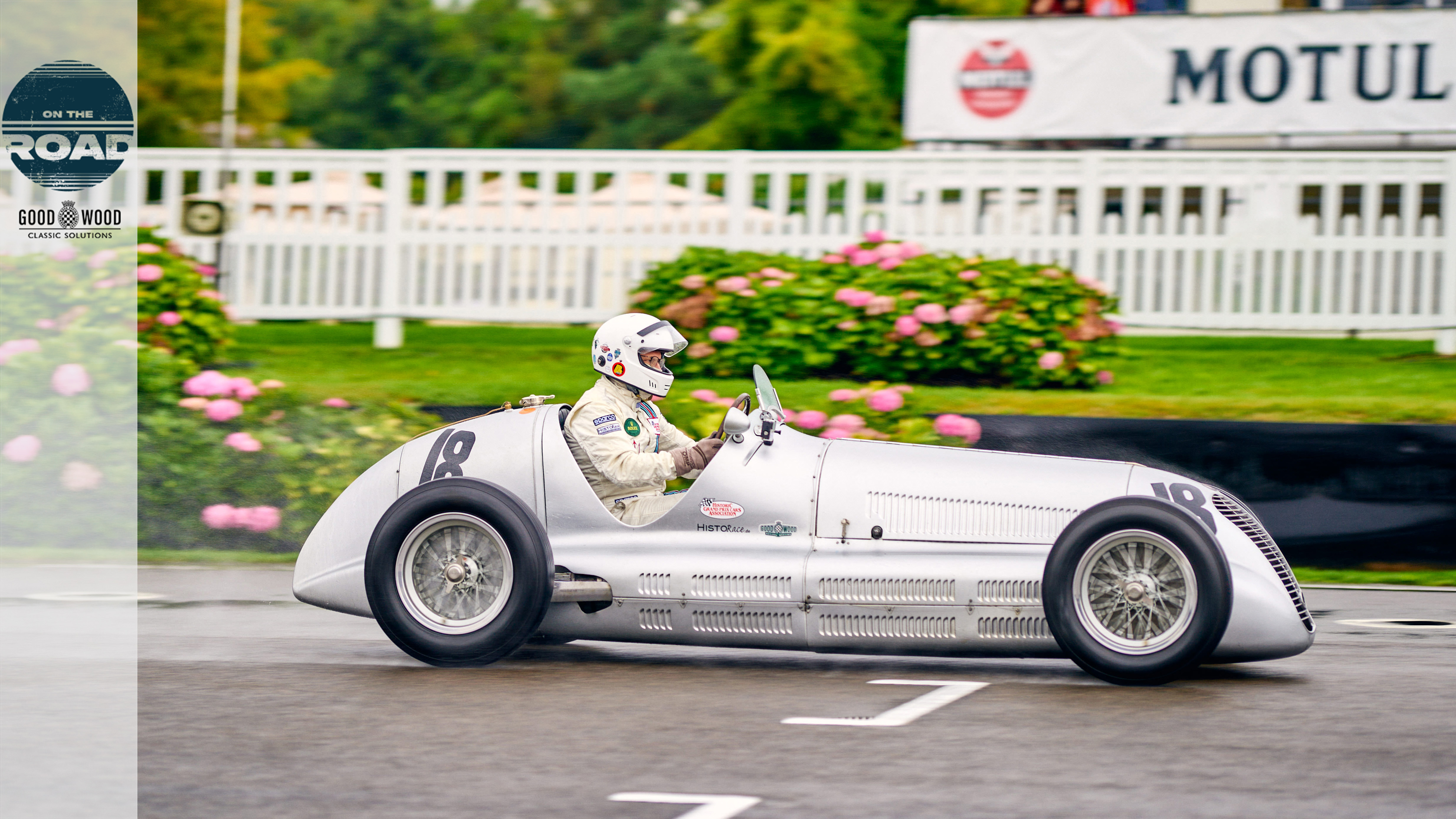
The Maserati 250F is truly one of the great Grand Prix cars, and a central pillar in the story of this great Italian marque. Its presence at the Goodwood Revival is always breathtaking, but it will be more poignant than ever as we celebrate Maserati’s heritage in 2026.
Tickets for the 2026 Goodwood Revival are now on sale. If you’re not already part of the GRRC, you can sign up to the Fellowship today and save ten per cent on your 2026 tickets and grandstand passes, as well as enjoying a whole host of other on-event perks.
Images courtesy of Getty Images.
revival
revival 2026
event coverage
maserati
Maserati 250F
Maserati Celebration
Juan Manuel Fangio
Stirling Moss

Subscribe to Goodwood Road & Racing
Thank you, you’re now subscribed

How many hay bales are used at FOS?
For the last two years, 5,800 bales have been recylced into the biomass energy centre to be used for energy generation