

The 5 best TWR Jaguar Group C cars
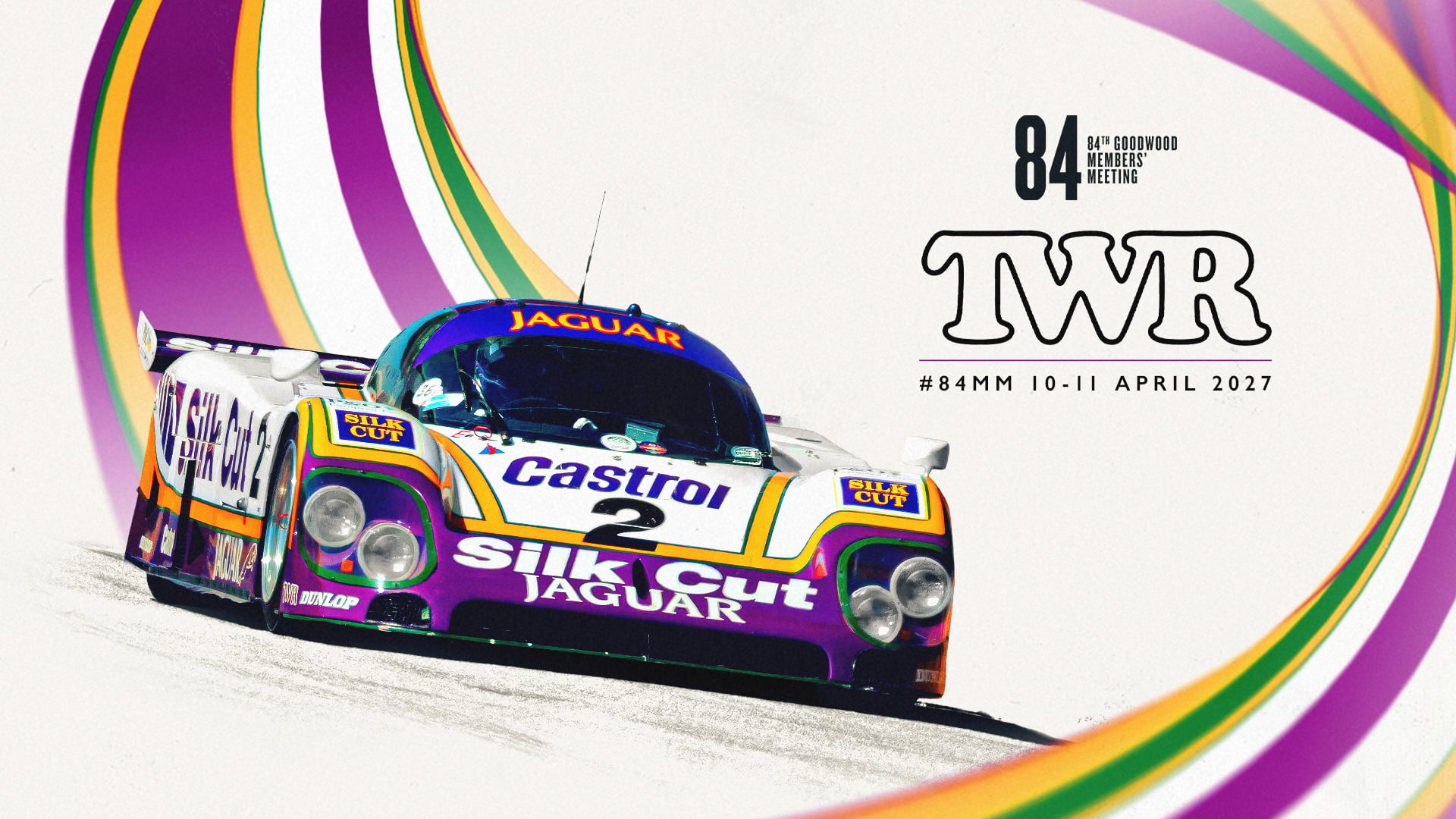
The sight and sound of TWR Jaguar Group C cars from the halcyon 1980s and early ’90s will set hearts racing next spring when the 84th Members’ Meeting presented by Audrain Motorsport celebrates what still stand tall among British motorsport’s most beloved racers.
But which ones specifically will we be thrilled to see again, howling at speed around our West Sussex Motor Circuit? Here’s our ranking of the top five best and most important TWR Jaguars, and a reminder why they matter.
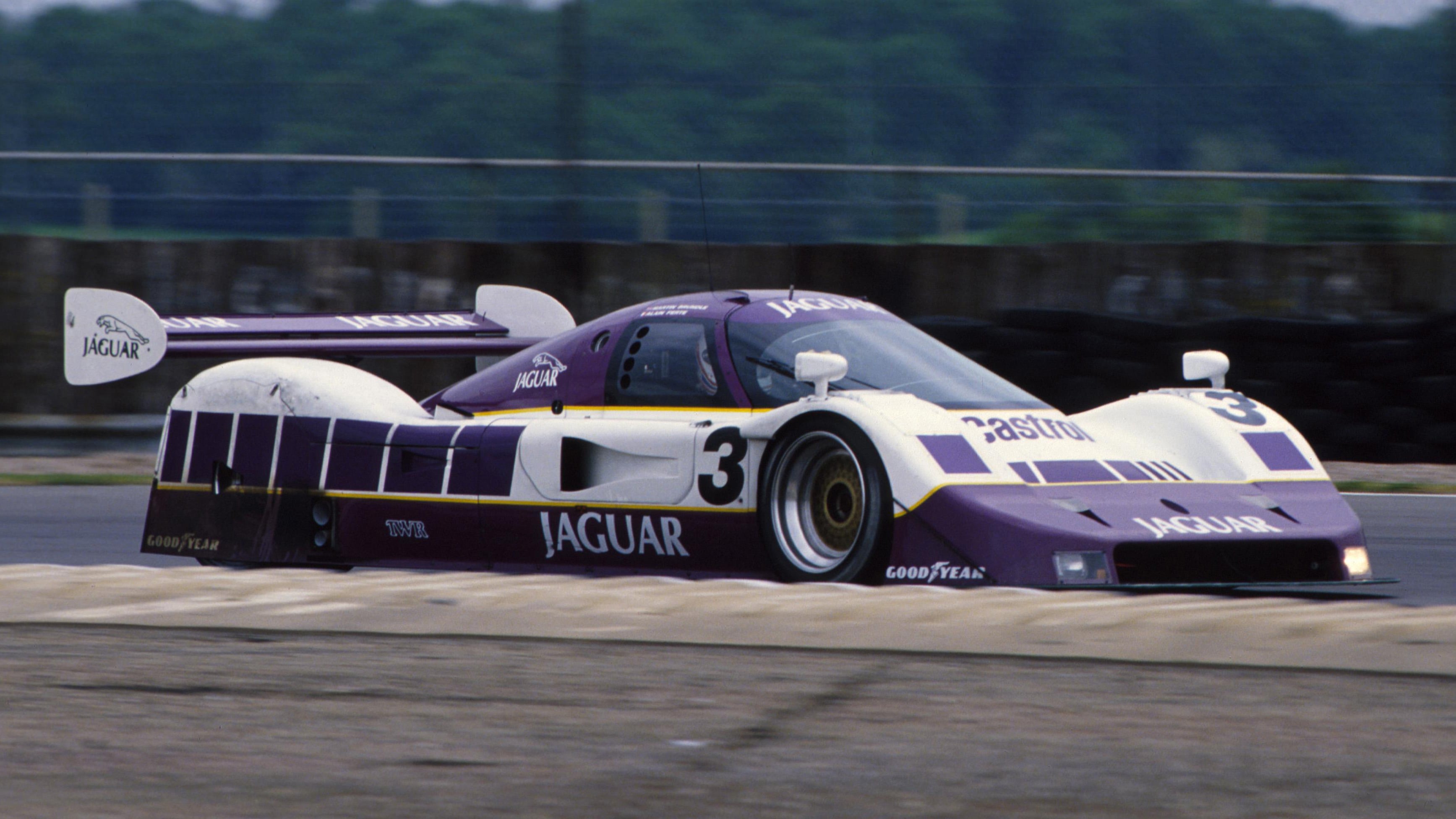
5. Jaguar XJR-10/11 (1989-91)
A turbocharged Jaguar? That might have sounded like sacrilege to traditionalists. But in Group C sportscar racing in the late-1980s, Tom Walkinshaw and his TWR engineers felt compelled to take the downsized turbo route, despite Le Mans and World Championship glory in 1988. The competition, chiefly in the form of Sauber-Mercedes in Europe and Nissan and Eagle in the US, meant the venerable production-based V12 that had served Jaguar so well left TWR fearful of losing ground.
Tom Walkinshaw committed to an all-new car and engine combination, in full knowledge of the Bernie Ecclestone-influenced decision to pull sportscar racing into line with Formula 1 via a normally aspirated 3.5-litre formula for 1991. Still, for two years the XJR-10 in IMSA and the XJR-11 in the World Championship would uphold Jaguar’s honour in the interim at everywhere bar the big 24-hour races at Daytona and Le Mans, where the V12 remained the better option.
Tony Southgate sculpted a high downforce-inducing and more compact evolution of his XJR series around a much smaller twin-turbocharged V6 that was rooted in the V64V, used in the Metro 6R4 rally car. Walkinshaw had gained the rights to this engine as a pay-off from Austin Rover over the cancellation of its European Touring Car programme.
In 3.0-litre form for IMSA, the XJR-10 scored six victories in a racing life that stretched from May 1989 into 1991, but the 3.5-litre XJR-11 managed just a single victory in the World Championship, for Martin Brundle and Alain Ferté at Silverstone in 1990, before the new ‘F1 sportscars’ made it obsolete the following year.
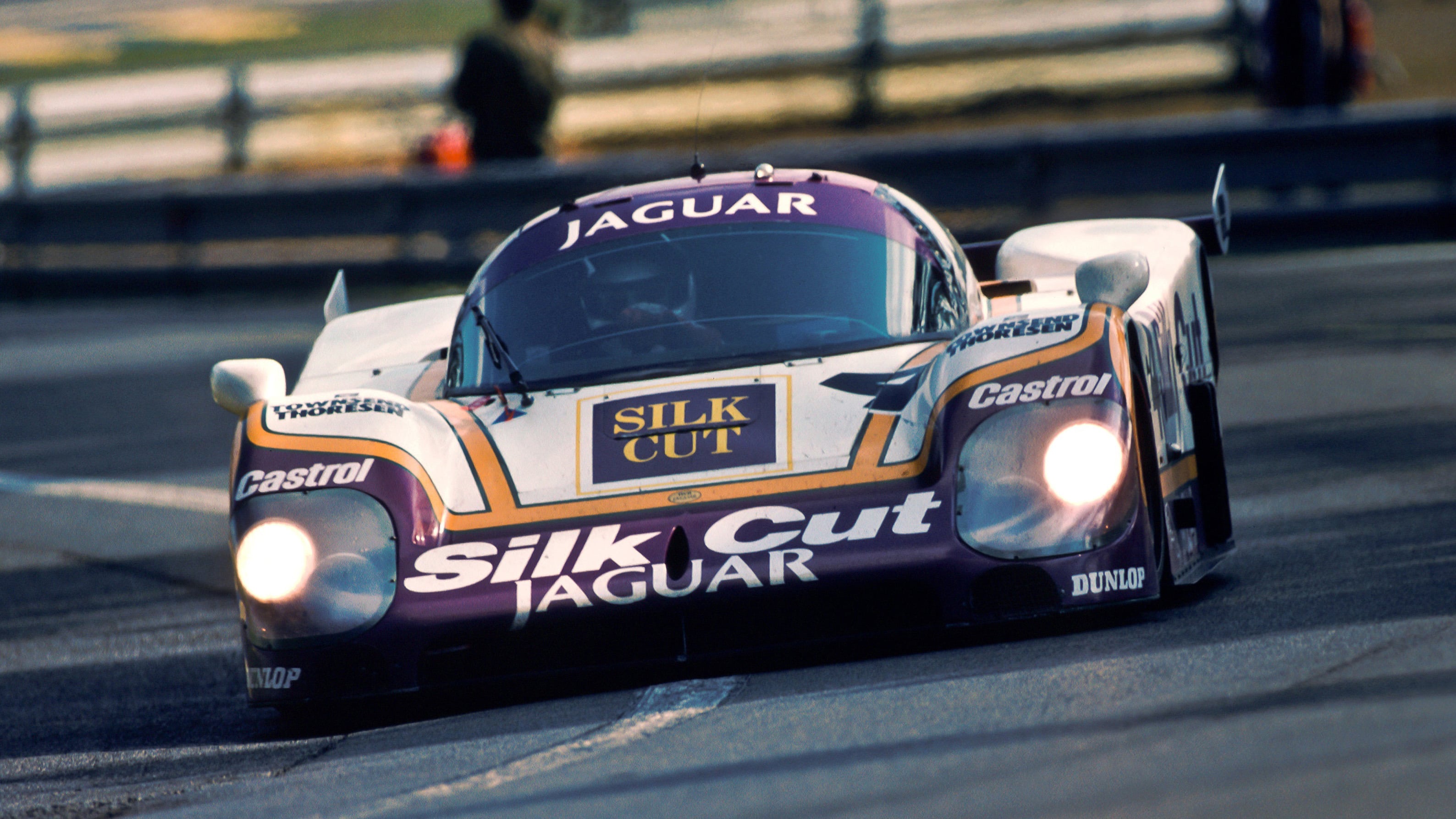
The XJR-8 of Cheever, Lammers and Boesel races at the 1987 Le Mans 24 Hours.
Image credit: Sutton Images/Stringer via Getty Images4. Jaguar XJR-8 (1987)
The car that lifted TWR Jaguar from plucky contender to World Champion, loosening Porsche’s grip on Group C and setting a new benchmark. An evolution of the breakthrough XJR-6, the biggest development was an enlarged 7.0-litre V12 (up from 6.3 litres) which provided copious torque. At a time when Porsche’s turbos were hampered by tightening regulations on boost and compression ratios, the Jag V12 required fewer gearchanges and was thus using less revs and fuel to gain the same performance.
The result was eight victories from ten races in the 1987 World Sports Prototype Championship, the Manufacturers’ title for Jaguar and the Drivers’ crown for Raul Boesel. The only missing piece was Le Mans, where two of the three XJR-8s in low-drag configuration failed to finish and the other made it home in fifth, having run second before gearbox problems caused delays.
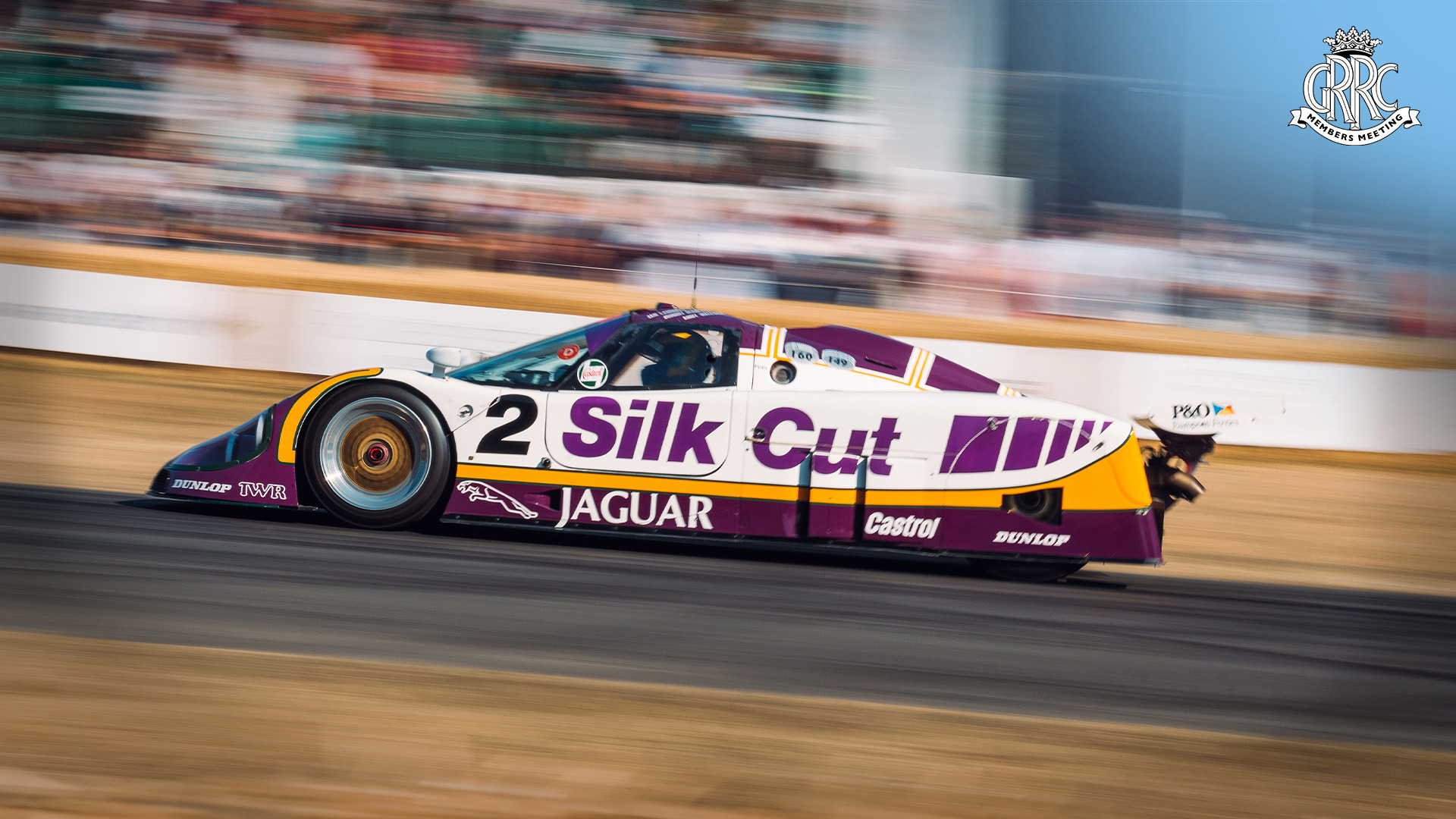
The XJR-8, which only raced for a single season, is also significant for its appearance. It was this model upon which the signature Silk Cut colour scheme that mixed white and purple with vivid yellow lines and subtle British Racing Green trim was introduced. Perfect in proportion and poise in non-Le Mans configuration, it’s also, in our opinion, the most handsome of all the Jaguar XJR Group Cs.
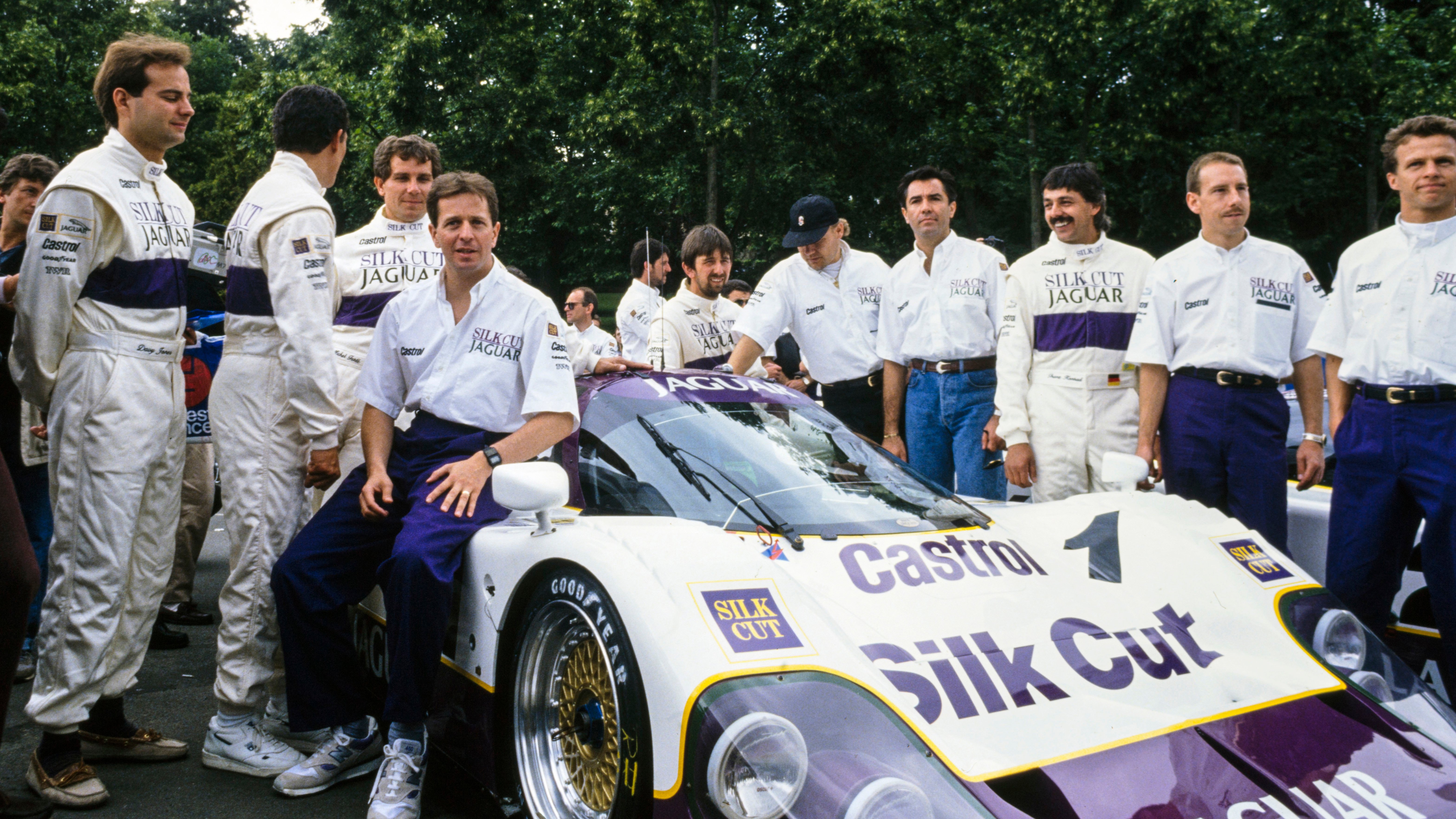
The Silk Cut Jaguar team gather by the XJR-12 at the 1990 Le Mans. John Nielsen, Martin Brundle and Price Cobb emerged victorious.
Image credit: LAT Images/Stringer via Getty Images3. Jaguar XJR-12 (1990-93)
The model that kept Jaguar in the game at the big races — and delivered the marque its second Le Mans victory of the Group C era and the last of its seven to date.
As TWR ploughed its turbo furrow in the World Championship and the American IMSA series, the V12-powered car was evolved for the 1990 edition of Le Mans with one major development in mind: this was the year two chicanes had been added to the Mulsanne. A dilution of what made Le Mans so special or challenging? To a degree.
But while the huge speeds of the 3.7-mile blast were dialled back by the crude interruptions, the chicanes offered a higher challenge on braking and finding a narrower balance between top speed and downforce in the turns. The result was an XJR-12 that employed the front end from the 1988 Le Mans winner and a rear more akin to the sprint cars.
Following the disappointment of 1989, when the Jaguar challenge had wilted by Sunday morning, leaving Sauber-run Mercedes to take its own historic win, the Big Cats hit back at the dawn of the new decade. John Nielsen, Martin Brundle and Price Cobb headed a Jaguar 1-2, just as they had at the Daytona 24 Hours that year, despite late overheating worries. So, a Jaguar double-double, if you like.
Now clothed completely in purple, the XJR-12 looked well set to complete a Jaguar Group C Le Mans hat-trick in 1991 — only for the TWR trio to come home for a 2-3-4, thwarted by the screaming rotary Mazda 787B anchored by Johnny Herbert. The model continued to serve TWR Jaguar at Daytona until the final year of Group C in 1993, adding a runner-up finish to its roster in Florida in 1992.
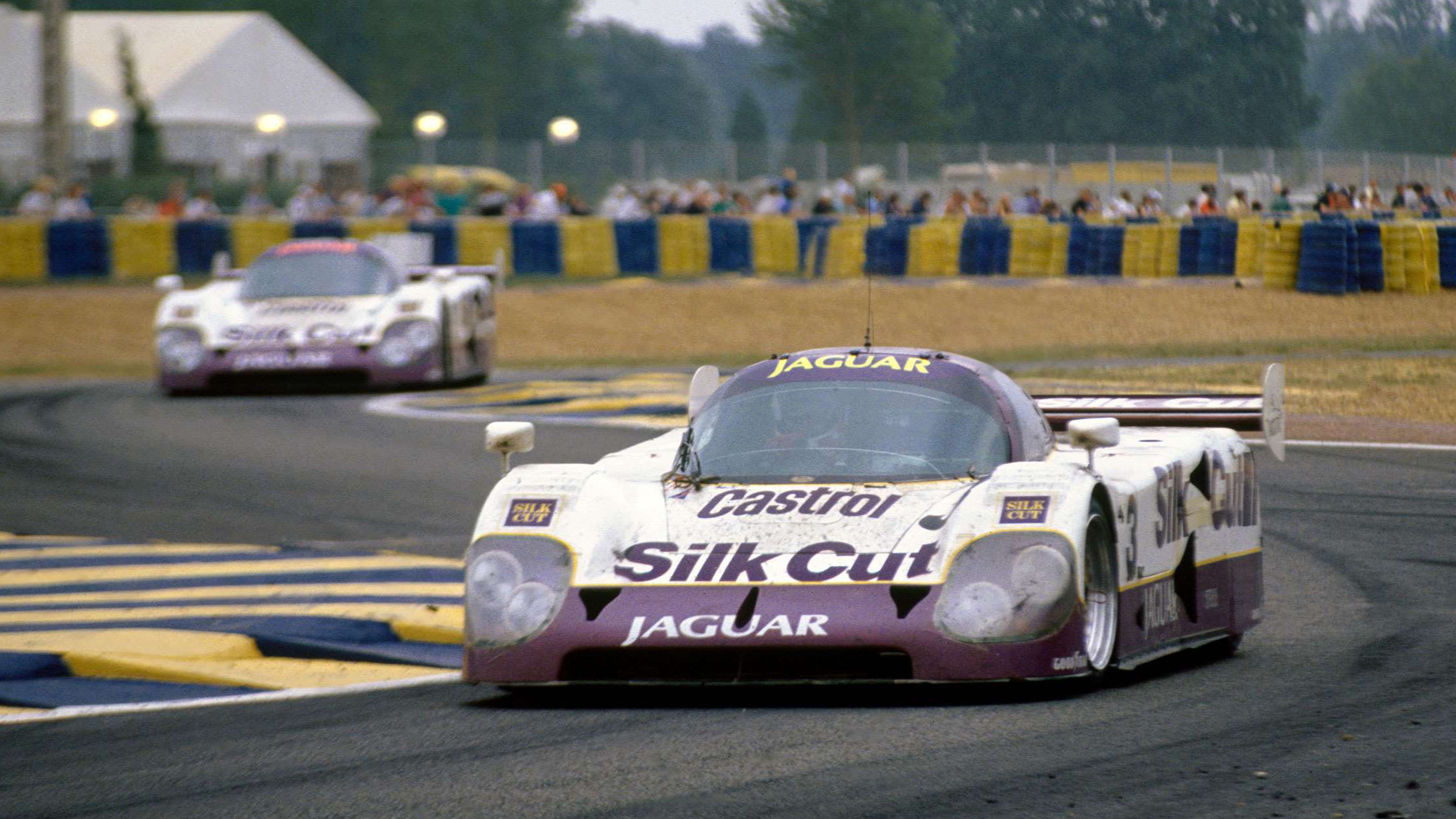
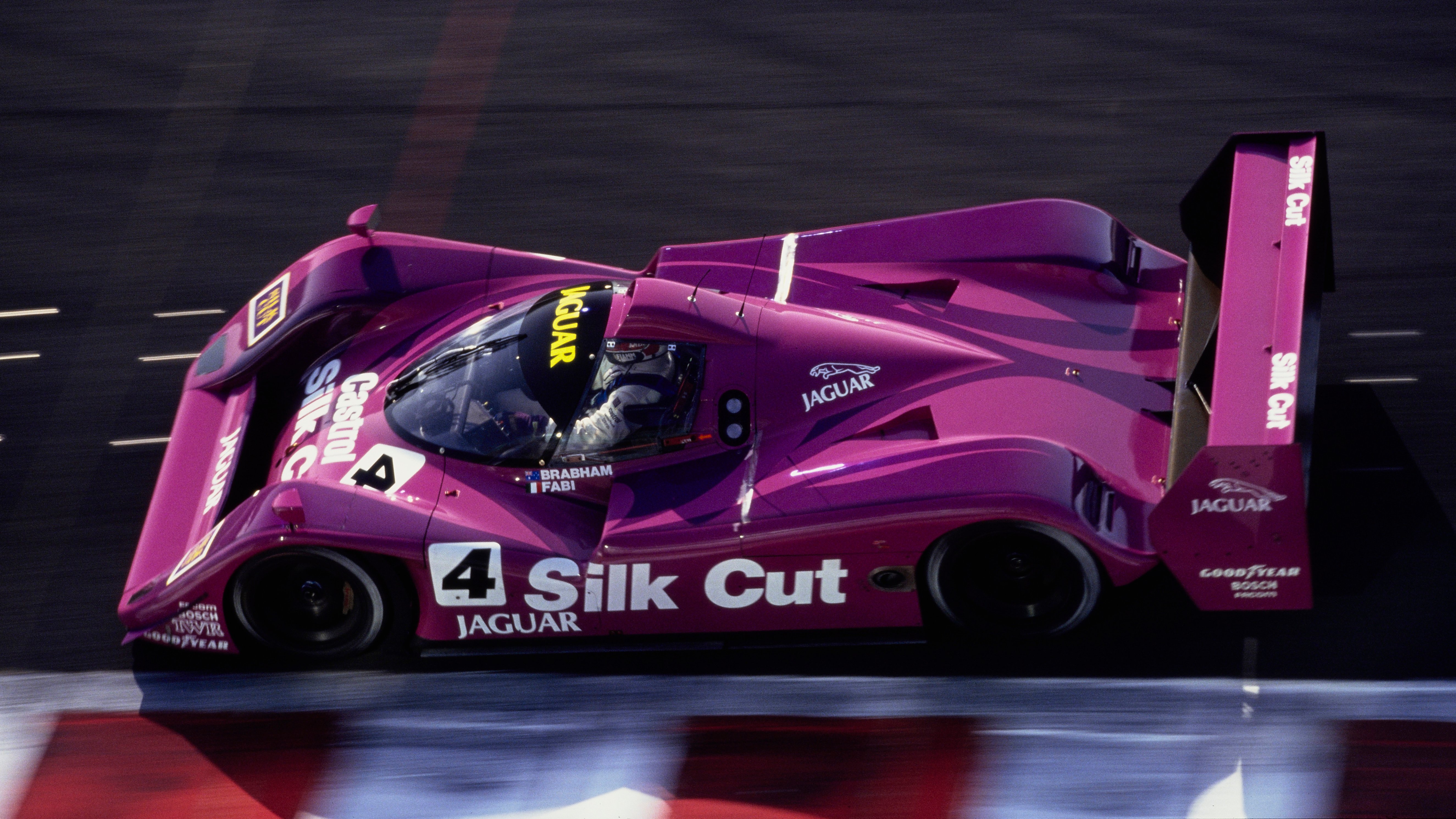
Teo Fabi drives the Jaguar XJR-14 during the 430Km of Magny-Cours, 15th September 1991. He won the Drivers’ title in that year’s Sportscar World Championship.
Image credit: Sutton Images/Stringer via Getty Images2. Jaguar XJR-14 (1991)
On sheer performance and spectacle, Ross Brawn’s Group C Jaguar — and the last racing car for which he was credited as lead designer — marked the pinnacle of the manufacturer’s sportscar racing adventures with TWR. But given its sprint race specification, the XJR-14 never raced at Le Mans or Daytona, and sadly by association it also represents the sad death of a fantastic era for endurance racing. So, it can’t be number one in our list of TWR Jaguar’s greatest cars.
The decision to move sportscars into line with F1 was taken as early as 1988, and Ecclestone’s fingerprints were all over the shift, not only in technical regs but in overall philosophy. It’s said he was niggled that manufacturers had far greater interest in winning Le Mans than Grands Prix. While only Lotus and Ferrari ran their own factory teams in F1, Group C had Jaguar, Mercedes and Porsche, with Nissan, Mazda, Toyota and Aston Martin incoming for 1989.
So, Ecclestone convinced FIA president Jean-Marie Balestre to pull the two codes into line, thereby allowing (in theory) the manufacturers to race in both — but crucially at the cost of the fuel consumption formula upon which the success of Group C was built. Also, a call to cut races away from Le Mans essentially in half, at the expense of the traditional bedrock 1,000km distance, would apparently make this form of motorsport more appealing to TV and a mass audience.
Instead, the overhaul enraged the hardcore enthusiasts, turned off the majority of manufacturers, created a breed that became more expensive to build and run, and led to a painful three-year decline and eventual death of a formula that had thrived so spectacularly through the 1980s. Infuriating.
Still… let’s not hold that against the XJR-14. In the new, shorter format Sportscar World Championship races of 1991, Brawn’s purple missile astounded both drivers and fans, through its Ford HB V8 shriek and F1-in-clothed-bodywork bombast. Against the growing threat of Peugeot, victories at Monza, Silverstone and the Nürburgring carried Jaguar to its last Manufacturers’ World Championship of the era, with Teo Fabi crowned in the Drivers’ standings.
David Brabham was given his big sportscar break in the XJR-14. He describes its grip and cornering speed as “insane”. “When people ask me what was the most impressive car you drove, I answer XJR-14, without a doubt,” he says. “That thing would have qualified in the top ten of an F1 race, it was that fast.”
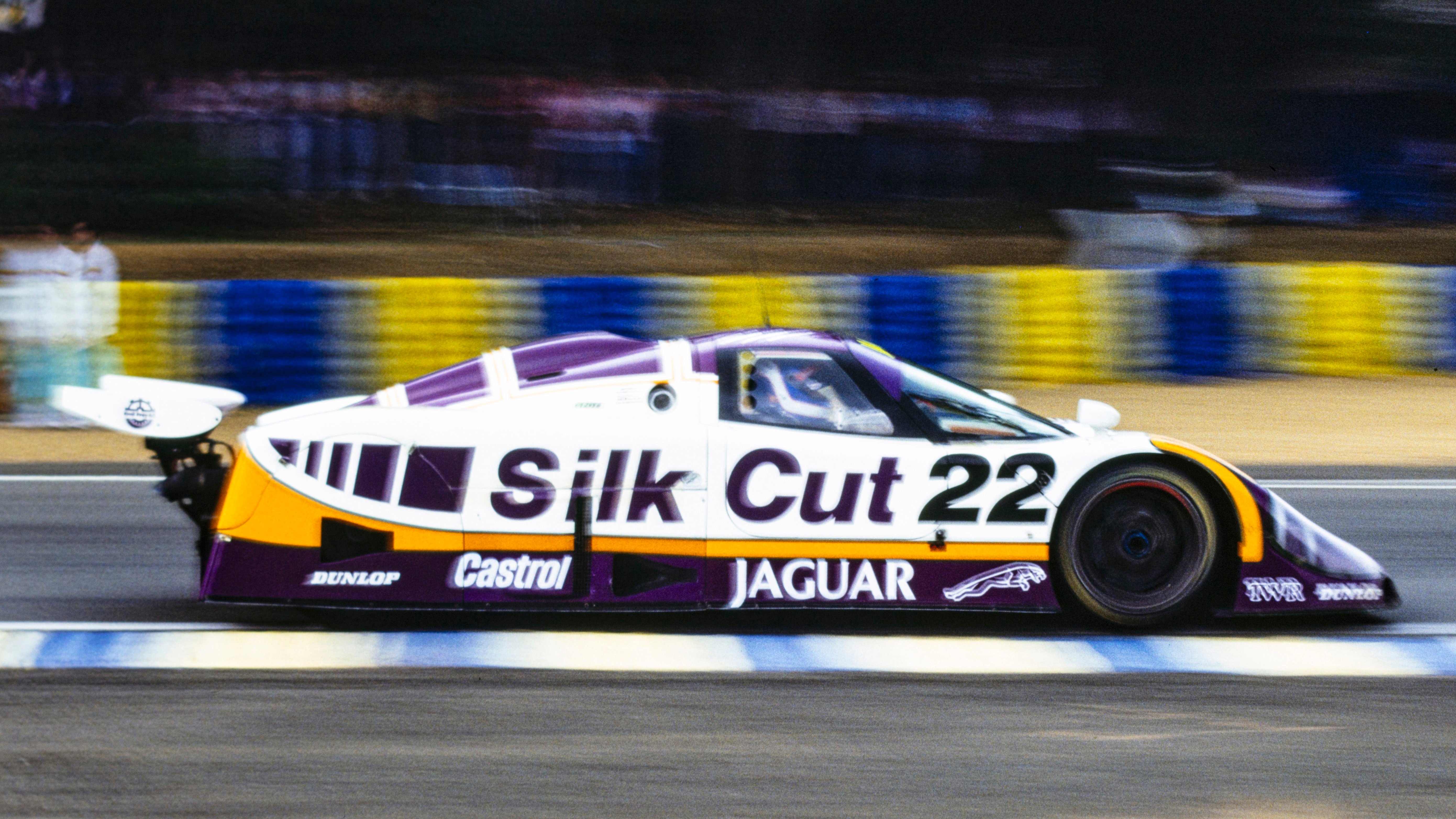
The Jaguar XJR-9 of Daly, Cogan and Perkins competes at the 1988 Le Mans 24 Hours. The trio finished fourth with the sister no.2 car taking the win.
Image credit: Rainer Schlegelmilch/Stringer via Getty Images1. Jaguar XJR-9 (1988-89)
TWR Jaguar’s evolved and carefully honed V12 weapon in the heartland years of Group C delivered on all of Tom Walkinshaw’s promises to marque boss Sir John Egan, and ultimately fully justified why Jaguar had chosen to return to Le Mans in the first place, when its overall health as a luxury car company was still so shaky during the 1980s.
Its record, specifically in 1988, enshrines the XJR-9 at the top of our list. This was the model with which TWR expanded into the American IMSA series — and then won first time out (in Castrol colours) at the Daytona 24 Hours. Then, most famously and most importantly, in low-drag form the XJR-9 completed the blessed Le Mans Grail quest at TWR’s third time of asking, allowing Walkinshaw to keep his promise to Egan. How Jan Lammers, Johnny Dumfries and Andy Wallace made history amid a frenzy of Union Flags is at the centre of why Goodwood will be celebrating these great cars nearly 40 years later.
Over the course of the rest of the World Championship season, XJR-9s won at Jarama, Monza, Silverstone, Brands Hatch and Fuji to retain Jaguar’s Manufacturers’ title, with Martin Brundle completing the sweep with a Drivers’ crown for himself. Arguably, it’s a season that outstrips any from the C and D-type heydays of the 1950s, and the XJR-9 shines bright as a beacon of revived glory for a grand old British marque.
Main image courtesy of Sutton Images/Stringer via Getty Images.
The 84th Members' Meeting takes place on 10th and 11th April 2027. Tickets are now on sale to GRRC Members and Fellowship Members at the early bird price.
If you’re not already part of the GRRC, you can sign up to the Fellowship today to save ten per cent on your 2027 tickets and grandstand passes, as well as enjoying a whole host of other on-event perks.
members' meeting
84th members' meeting
84mm
event coverage
list
TWR celebration
TWR Jaguar
xjr-11
xjr-12
xjr-14
xjr-8
xjr-9

Subscribe to Goodwood Road & Racing
Thank you, you’re now subscribed

How many hay bales are used at FOS?
For the last two years, 5,800 bales have been recylced into the biomass energy centre to be used for energy generation