

Why the Bugatti Type 51 is a better racer now than in period
For Tim Dutton, vintage Bugattis are in the blood. In the 1920s, his grandfather Victor was a riding mechanic and got into the French cars towards the end of the decade. After World War II, he collected a few cars and a lot of spares, which led to Tim’s father Ivan racing Bugattis in the 1980s and ’90s.
It’s a passion that has passed down to a third generation, which was more than apparent when we caught up with him during testing ahead of the 83rd Members’ Meeting presented by Audrain Motorsport with his Type 51.
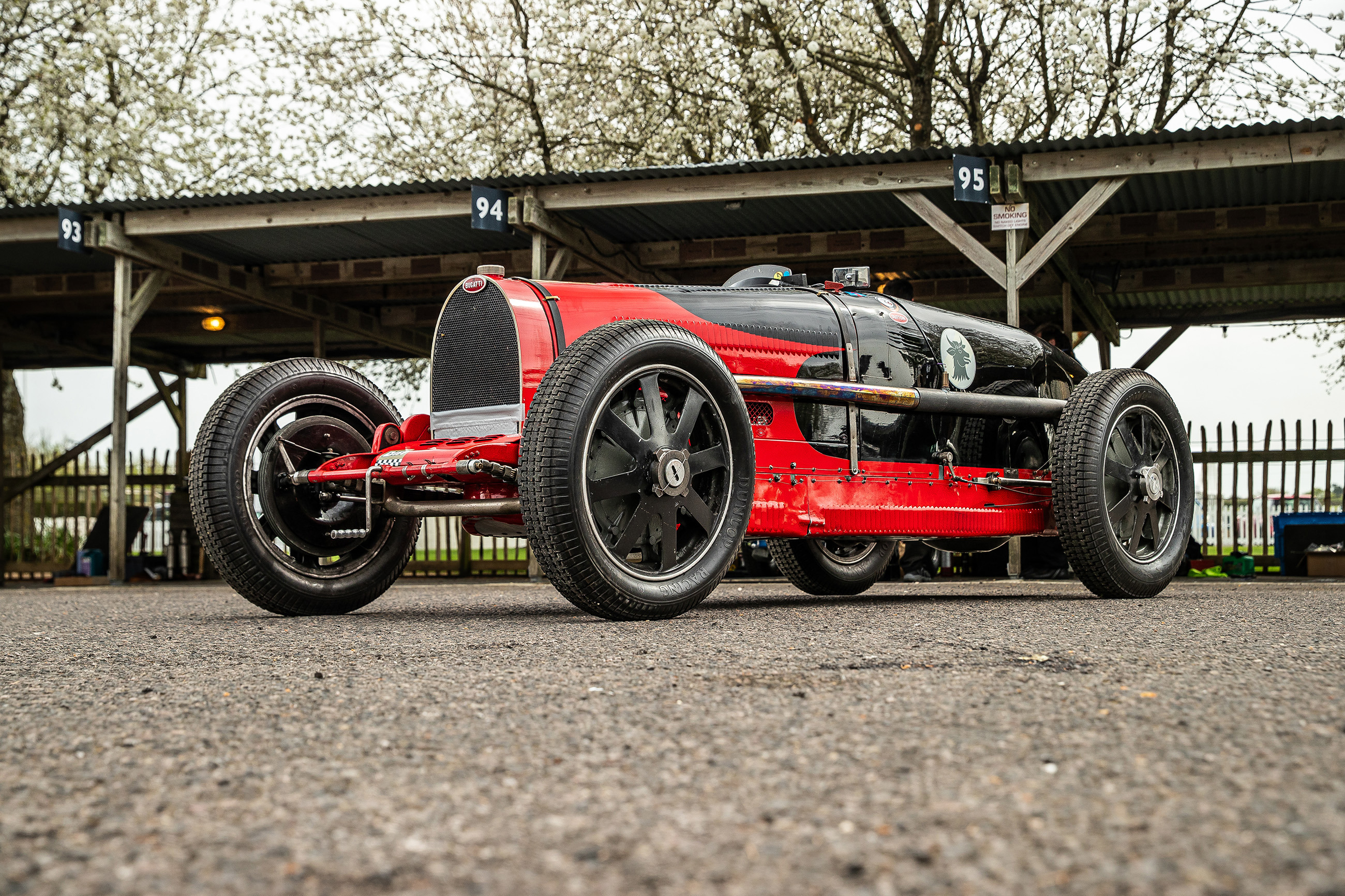
And it really is his Type 51, as it was built from an array of spare parts that Victor Dutton had collected in the 1940s. “It’s just a case of laying out the bits that I think are necessary and then turning it into a car,” said Dutton. “There’s quite a few original bits in it. Like I say, my grandfather worked on them, my dad worked on them, and I work on them.”

And where it wasn’t possible to fit original parts because of scarcity or safety considerations, replica parts can be fabricated to the original specifications thanks to the work of the Bugatti Trust. “The trust is run by a guy called Hugh Conway, who was president of the Bugatti Owners’ Club in the ’70s,” Dutton explained. “He was the highest qualified engineer in England and was a director of Rolls-Royce, but he was mad about Bugattis. When Bugatti finally went bankrupt in the early ’60s he went to the factory and collected all the drawings and a lot of stuff from the factory, and eventually set up the trust.”
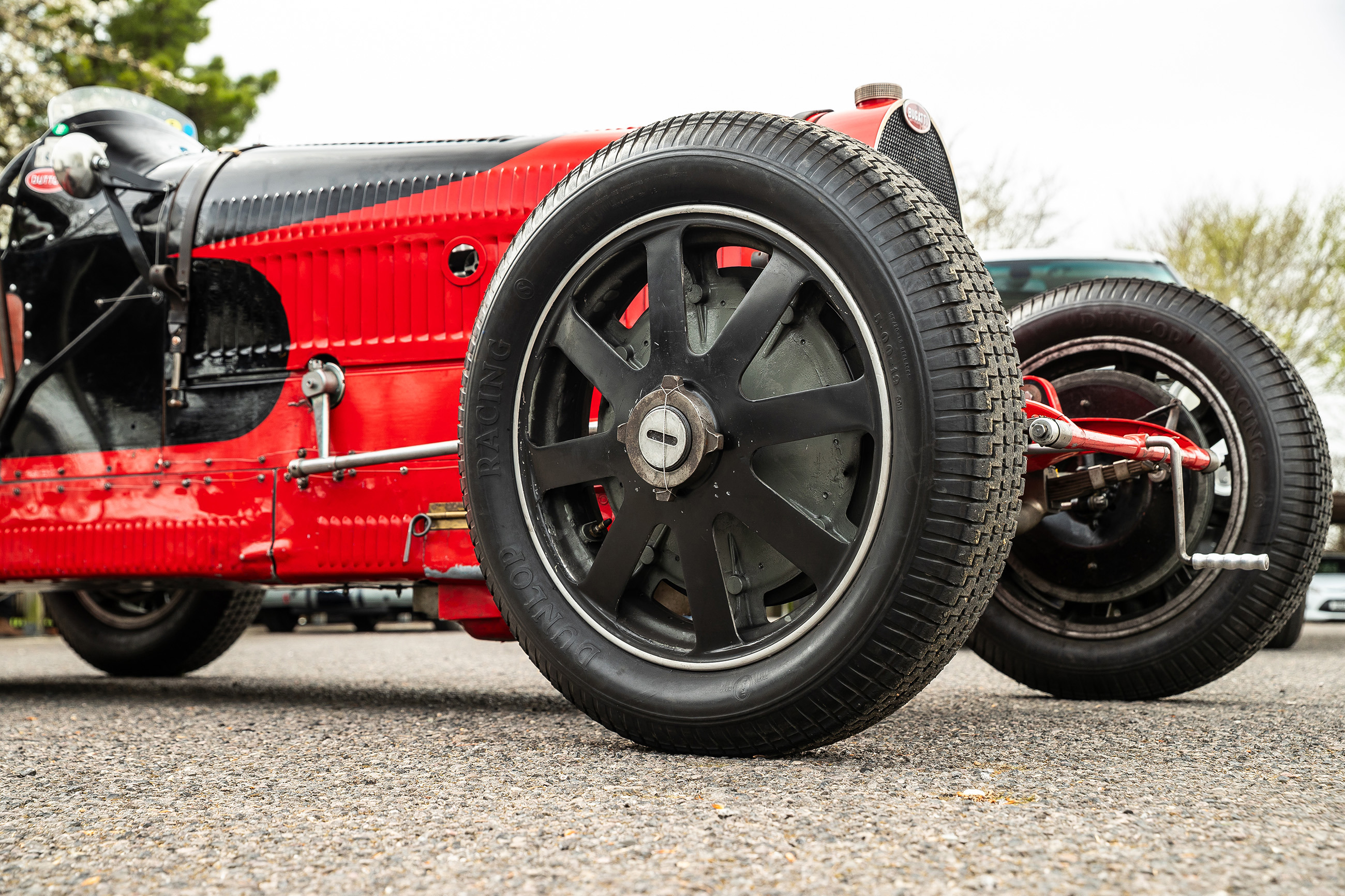
It means they have a great resource for remaking safety critical parts. “When you’re starting to stick your neck out in these things, quite a lot of the things around the car need to be new. You don’t necessarily need a new chassis, but you want new hubs and you want new wheels and you want new steering arms because if any of those break, it’s not good. It’s got to be a balance between originality and safety, but without taking away the feel of the original car.”
The Type 51 was the final development of the Type 35, which had dominated Grand Prix racing in the 1920s with more than 1,000 wins to its name. By the following decade, Bugatti had fallen behind rivals from Italy, so the Type 51 was its effort to keep up.
The key difference was the introduction of a twin-cam head. “Essentially, the top end of the engine is a copy of a Miller, which is an American circle track car. Bugatti’s son bought a couple of them, put them on a dyno and couldn’t believe how much power they made so they copied the top end of the engine and put it onto the 35 bottom end. They are so close to a Miller, if you take a cam bucket out of these, they fit a Miller.”
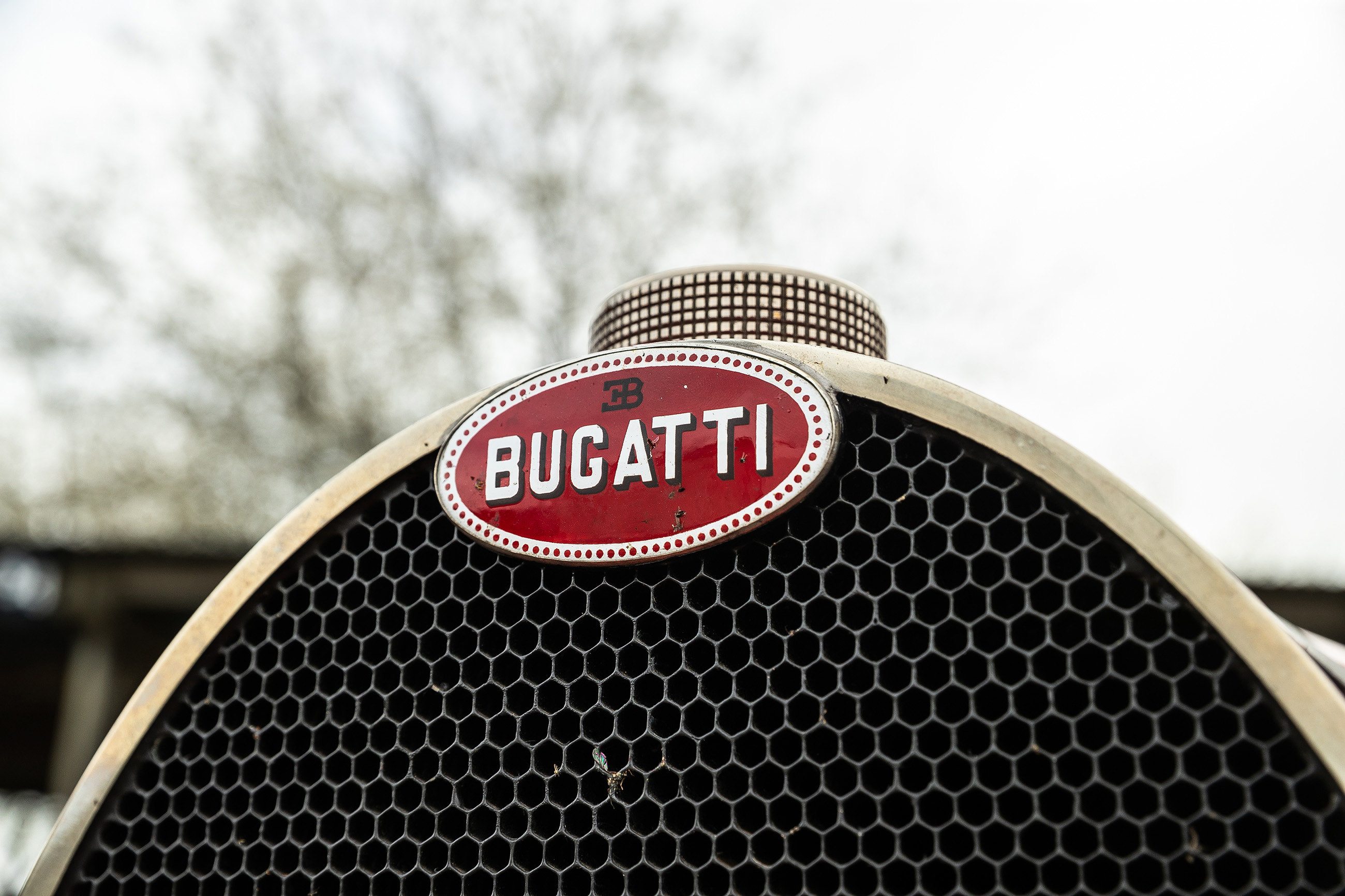
In the 1930s, the Type 51’s extra power wasn’t enough to keep Bugatti ahead of its competition. “The 51 was only really successful in that it was reliable, so when all the other cars went wrong, the 51 would beat them.
But in terms of actually being a cutting-edge Grand Prix car, it wasn’t.” Today it provides an advantage over the Types 35 and supercharged 35B in historic racing. Reliability is still an advantage, too, which was always a Bugatti strong suit.

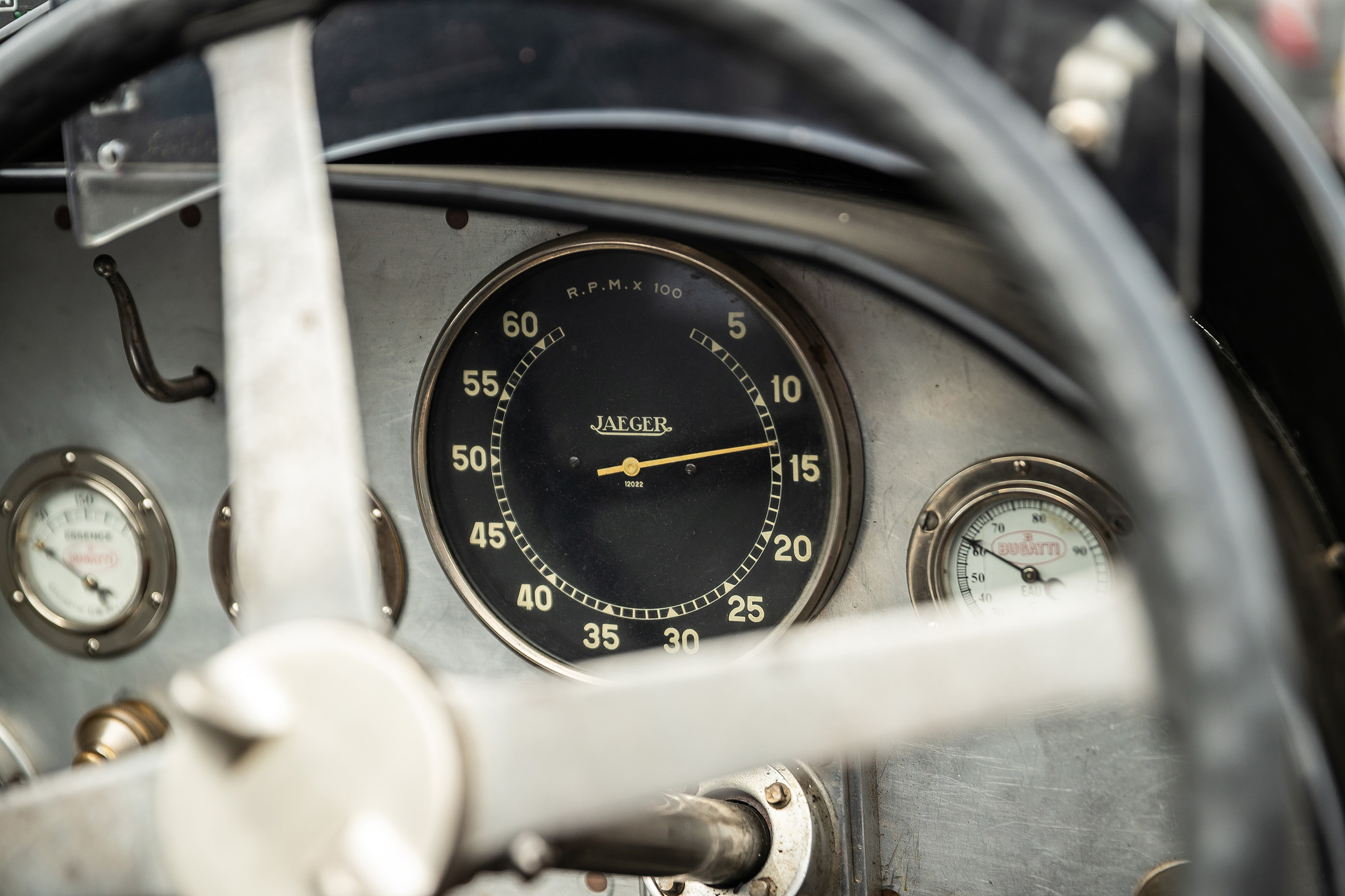
“There were lots of problems early on with white metal engines, so Bugatti’s engines got roller bearing crankshafts, which means they don’t need oil pressure. When we turn into a left-hander here, the oil pressure disappears to zero for about 200 yards until we straighten up again, then the oil pressure comes back up again. But because the roller crank only needs a mist of oil to run on, it doesn’t go wrong.”
Reliability also makes the Type 51 a great road car, especially as it’s also relatively easy to drive by vintage car standards. “Being supercharged, they have a very mild engine in terms of compression and cam timing, so that makes them quite a mild car. It all relies on the boost so they're a very easy car to drive. The gearboxes don’t go wrong; the clutches don’t go wrong; the engines; the back axles don’t go wrong. It’ll do a 24-hour race if you really wanted it to. Unlike a lot of vintage cars, which just don’t last, Bugatti always seemed to engineer out the problems.”
Goodwood itself is living up to its reputation for being well suited to vintage cars. “I love the circuit, it really suits the old cars because there’s not too many hard stops. The problem with modern Grand Prix circuits is that you’ve got a bit where you go fast and then you have to stop, go round a slow bit, and then you go fast again. Old cars don’t like that. Goodwood is a lovely flowing circuit. The corners are terrific, a little bit bumpy here and there but it’s great.”
And the Type 51? “It’s got about 200 horsepower and does 140-odd mph here, which is fast enough to frighten you. At the end of the day, it’s a Formula 1 car. Although it has two seats and looks like a sportscar, it’s not. In its period it was the McLaren or the Ferrari of its day, so they’re alive to drive round here. Every single sense is assaulted by this car.”
Dutton will be competing in the Varzi Trophy and is looking forward to a close race. “You can expect a fairly intense race at the front, I would say. There are three or four people here that are quite quick and hopefully I’ll be up and among them. When you get a full grid of them, there’s nothing quite like it.”
The 83rd Members' Meeting presented by Audrain Motorsport takes place on the 18th & 19th April 2026. Tickets are now sold out. You can sign up for ticket alerts for 2027 and join the Fellowship today so you can be alerted when tickets for 84MM go on sale.
Photography by Joe Harding.
members' meeting
83mm
event coverage
Bugatti
type 51
Varzi Trophy
Varzi Trophy feature


Subscribe to Goodwood Road & Racing
Thank you, you’re now subscribed

How many hay bales are used at FOS?
For the last two years, 5,800 bales have been recylced into the biomass energy centre to be used for energy generation