Targa Florio 1926: Maserati’s first glory, 100 years on
“The Targa Florio is not so much a race as a state of mind.” That’s how the revered Denis Jenkinson described the ‘other’ great Italian road race of the 20th century.
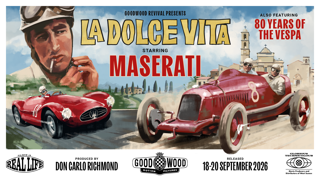
Beside the mighty Mille Miglia, the Targa Florio created some of the most cherished imagery and fabulous yarns of motorsport lore, played out on an epic scale on the volcanic island of Sicily. Among them is the birth and first victory for one of the great marques, Maserati, which will star as the celebrated marque of the 2026 Goodwood Revival.
Founding of the great race
It was on the Targa, precisely 100 years ago in 1926, where the Trident legend began, as Alfieri Maserati claimed the first class win in a car bearing his own name.
But before we get into Maserati’s breakthrough, first a quick recap on how the Targa Florio came to be, and why, by 1926, it was already a race considered amongst the grandees.
Vincenzo Florio was just 23 when he founded the fixture that would stamp his name on the pioneering sport of motor racing. Well-travelled with an education gained in Paris and at Eton, he’d first explored the Madonie region on his home island of Sicily as an 18-year-old. It was a virgin land. Borrowing a Renault with a De Dion-Bouton engine from his brother-in-law, he cut a trail across the rocky paths that would later become so familiar to racing drivers and motorsport fans around the world.
Having already founded the Coppa Florio in Brescia, he ran the first Targa Florio on 6th May 1906, held across a 92-mile mountain circuit that came to be known as the Grande Circuito delle Madonie. In those early years it was a battle to establish the race. Between 1912 and ’14, Florio abandoned the Madonie in favour of a single lap around the perimeter of the island, but after World War I the Targa emerged as high among the great motor races automotive marques strived to conquer.
Roots of Maserati
Alfieri Maserati was just one of 33 starters lining up for the Targa Florio in 1926, a bit-part player in a story that looked set to be dominated by Bugattis.
So it would prove. Meo Costantini led the 336-mile race all the way to win in seven hours and 20 minutes, ahead of Ferdinando Minoia and Jules Goux to complete a Bugatti 1-2-3. But more than an hour and a half later, Maserati made the finish for his own significant landmark.
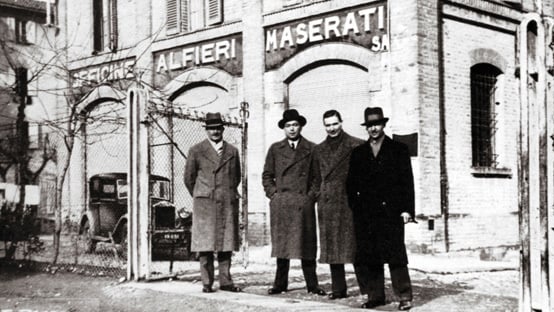
Alfieri was one of six brothers, five of whom proved mechanically minded. He’d first made his way in the emerging business of automobiles in 1903, when he followed brother Carlo into Isotta Fraschini. A handy racing driver, he was competing in a works Isotta by 1908 at Dieppe, then spent some time working for the firm in Argentina.
By the time he returned to Italy in 1914, Maserati had designs on creating the family’s own motoring empire. He established Societa Anonima Officine Alfieri Maserati — only for WWI to interrupt his plans. Initially, the company focused on aircraft engines for Isotta and the manufacture of spark plugs.
Following the Armistice, Maserati was soon eyeing a return to the race tracks and between 1922-26 he served as head mechanic at Diatto. Joined by his brothers Bindo Ernesto and Ettore, they created the racing car that was to become the first Maserati, once Diatto had withdrawn from motor racing.
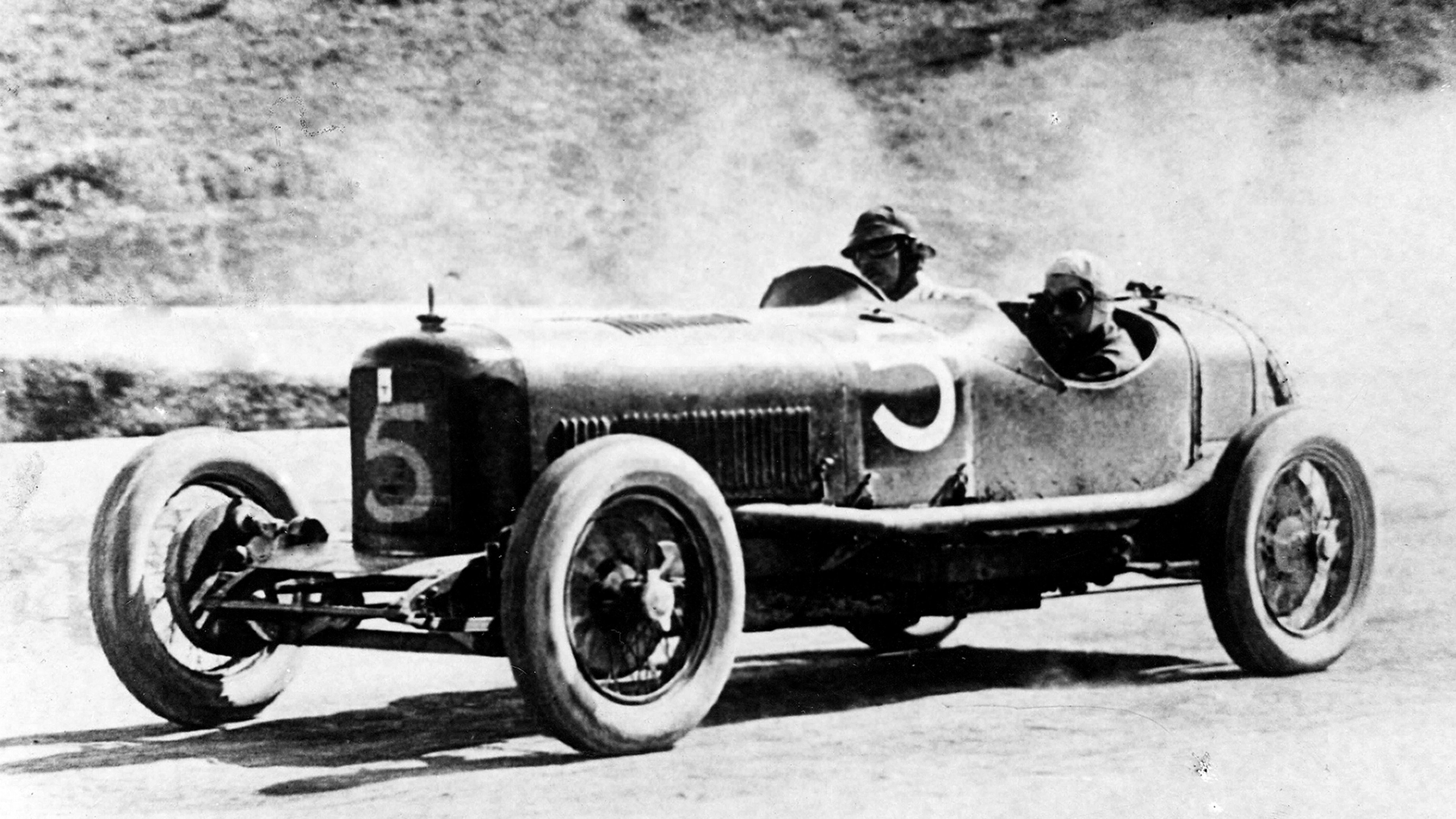
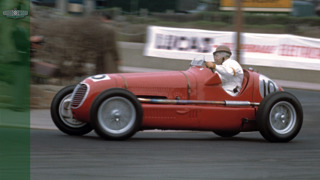
Alfieri Maserati and Guerino Bertocchi drove a Tipo 26 to a class victory at the 1926 Targa Florio.
The race where it all began
The Tipo 26 was a steel ladder-frame two-seater, featuring an aluminium body by Medardo Fantuzzi. Powered by a twin-overhead camshaft 1.5-litre supercharged inline eight-cylinder, it immediately set the Maserati template for stylish Grand Prix cars.
Held over five laps of the 67-mile circuit that became known as the Targa’s Mezzo (or Medio) layout, Maserati’s Tipo 26 featured a shortened tail fitted with two spare wheels. Beside him sat Guerino Bertocchi, his riding mechanic — a concept that had been phased out of Grand Prix racing from the start of 1925, but was still allowed here.
We can only imagine the scene, the duo bumping across rough roads, throwing up clouds of dust into the Madonie mountains. In a race running to Formula Libre rules, they were always outgunned. But apart from a little carburation trouble in the closing stages, the Maserati crossed the finish line in eight hours 37 minutes and 11 seconds.
They were classified eighth overall, but crucially, first in their class — a maiden victory for the Maserati family under their own name.
Typically, their success wasn’t achieved without a dark cloud passing over the Targa Florio. Just 27km into the first lap, Count Giulio Massetti had crashed with fatal consequences, his Delage overturning on a tricky bend. Delage team-mates Albert Divo, Robert Benoist and René Thomas — darlings of the Grand Prix scene that year — were all withdrawn from the race out of respect.
Evolution of the Targa
Into the following decade the Sicilian road race hit its own rocks in the road. One year, in 1931, the race was run again on the full Grande circuit, then for the first time in 1932 on the Piccolo layout we’re most familiar with from the post-WWII era. Small, really? Well, it was only 44 miles in length…
As for Maserati, its four overall wins came consecutively, but in the race’s most conventional and restricted era. Between 1937 and ’40, the Targa was reduced to a 3.3-mile park circuit on the outskirts of Palermo. Giulio Severi, Giovanni Rocco and Luigio Villoresi took victories in the 6CM, with Villoresi winning again in 1940 driving a 4CL.
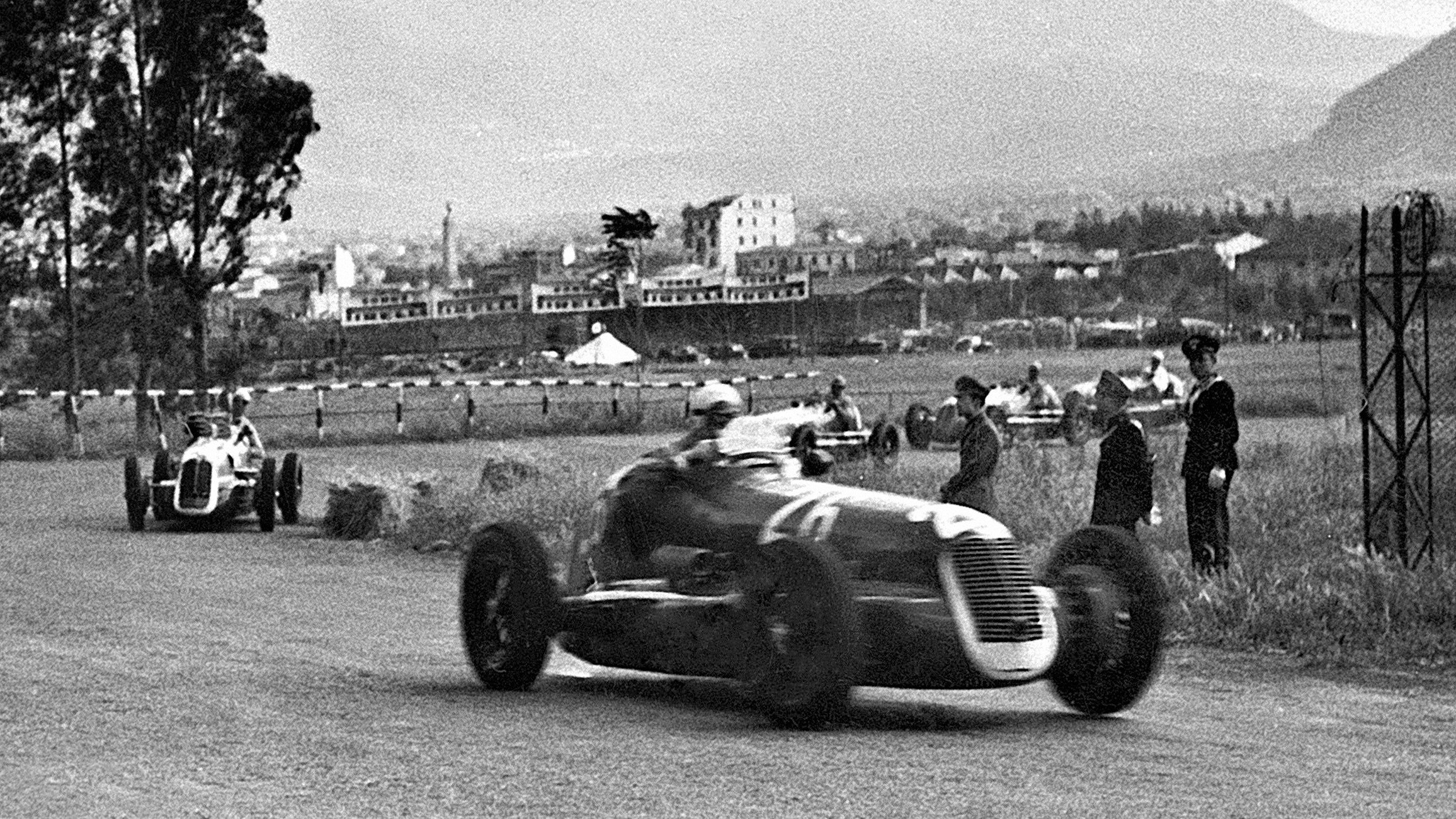
Luigi Villoresi won the 1940 Targa Florio at the wheel of a Maserati 4CL.
How Maserati raced on – without Alfieri
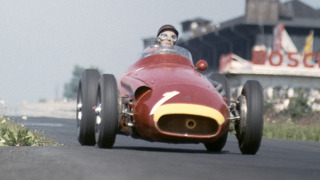
As for the founder, his story was sadly curtailed far too soon. A year after its class-winning maiden win, Maserati returned to the Targa with a trio of entries, and this time Alfieri finished third overall behind a pair of Bugattis. But tragedy lay just around the corner.
Alfieri crashed on the 1927 Coppa Messina, sustaining injuries that resulted in him losing a kidney. He returned to racing, but never to full health. In 1932, following surgery on his remaining kidney, complications set in and he died at the age of just 44.
But just look what he’d started…
Tickets for the 2026 Goodwood Revival are now on sale. If you’re not already part of the GRRC, you can sign up to the Fellowship today and save ten per cent on your 2026 tickets and grandstand passes, as well as enjoying a whole host of other on-event perks.
Main image courtesy of Getty Images.
race
historic
revival
Targa Florio
1926 targa florio
maserati
Maserati Celebration