When Jaguar returned to win Le Mans
As themes go, the glory days of Jaguar in Group C sportscar racing is about as close as you can get to a guaranteed sure-fire hit at Goodwood. The era of the Big Cat’s return to Le Mans will be celebrated in style at the 84th Members’ Meeting presented by Audrain Motorsport as a collection of the greatest, most evocative and well-loved endurance racers prowl the West Sussex circuit.
To get us in the mood, let’s cut to the chase and go straight to the best bit: the weekend in June 1988 when, at the third time of asking, the crack Tom Walkinshaw Racing squadron conquered Le Mans, in 24 hours packed with nail-biting drama. Few realised at the time just how close Jaguar came to defeat without the quick and canny actions of the racing driver tasked with getting the winning car over the line. Let’s look back at how it happened…
The pressure for third-time lucky
When Tom Walkinshaw convinced Jaguar chief Sir John Egan to put his faith in TWR to deliver Jaguar its first Le Mans win since the 1950s, the Scot made it clear three strikes would be required to hit the target. Sure enough, while the Jaguars were fast and threatening in 1986 and ’87, all the British marque had to show for those campaigns was a single fifth place.
This time, it had to be a different story, for Walkinshaw, Egan and a car company that was still clinging on for survival after the difficult British Leyland years of the 1970s.
A bunch of fives
TWR and Jaguar threw everything at Le Mans in 1988, in its quest to finally defeat the might of the dominant factory Porsche team. An armada of five XJR-9LMs lined up in the Place des Jacobins for scrutineering: three entries from the regular World Sports-Prototype Championship team and two more from the US IMSA satellite.
An army of 111 employees were deployed to run them, with Walkinshaw recruiting 14 aces to pedal the quintet — nine with Formula 1 experience, but only one had won Le Mans previously. That was Henri Pescarolo, who was pulled in to share the #3 car with experienced duo Raul Boesel and John Watson.
A scare when the cars failed a maximum length test was quickly resolved by the drilling of new mounts for the low-slung, low-drag rear wings. Then it was time for practice and qualifying. A new, smooth track surface caused further headaches as Dunlop’s tyres showed a tendency to overheat and blister.
Then Hans Stuck in the fastest Porsche 962C was six seconds faster than the best of the Jags, the no.1 driven by Martin Brundle. Not the easiest or most convincing of run-ups, then. But as always at Le Mans, the race would be another matter.
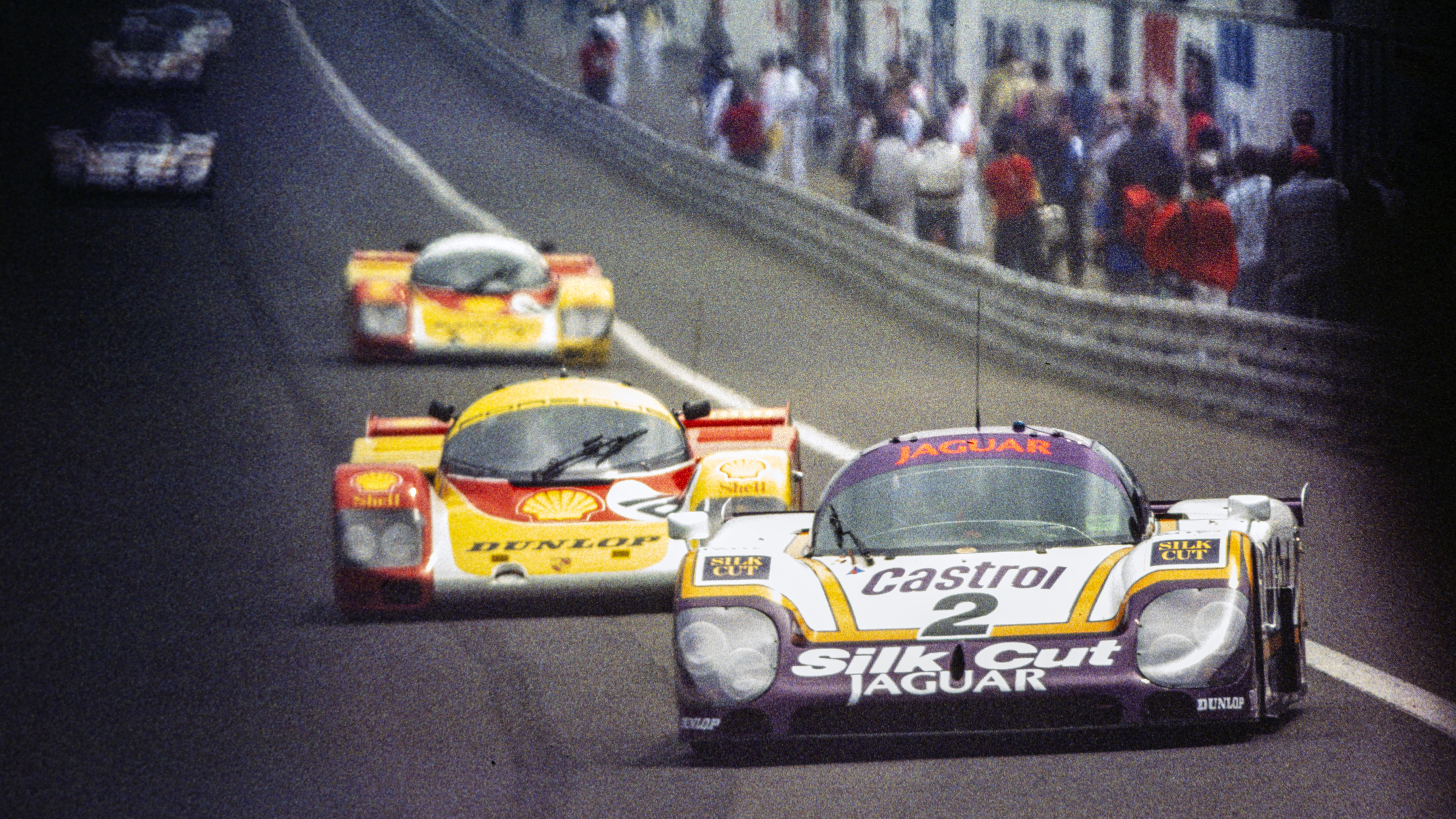
Two cars with striking liveries. The Lammers/Dumfries/Wallace Jaguar XJR-9 LM leads its Porsche 962 C rivals at the 1988 Le Mans 24 Hours.
Image credit: Getty ImagesPorsche spice
Three factory Porsches, in their new striking red and yellow Shell liveries, spearheaded the opposition, also made up by a total of 11 962s and challengers from Toyota, Nissan, Mazda and the promising Sauber-Mercedes. On paper, this was one of the best Le Mans entries in years — although the loss of the Saubers, withdrawn after practice over safety fears for their Michelin tyres, gave TWR one less problem to worry about.
The works Porsches had locked out the first three spots on the grid. Norbert Singer and his team had responded to the growing British threat with a new evolution of its tried and trusted 962, as the German marque attempted to stretch its phenomenal record of 12 wins from the previous 18 editions.
A new Bosch engine management system said to be good for an extra 51PS (37kW), fresh aerodynamics, lighter body panels and a ten-second overboost button increased an already formidable Porsche arsenal. As it turned out, there was only one team who could stop them.
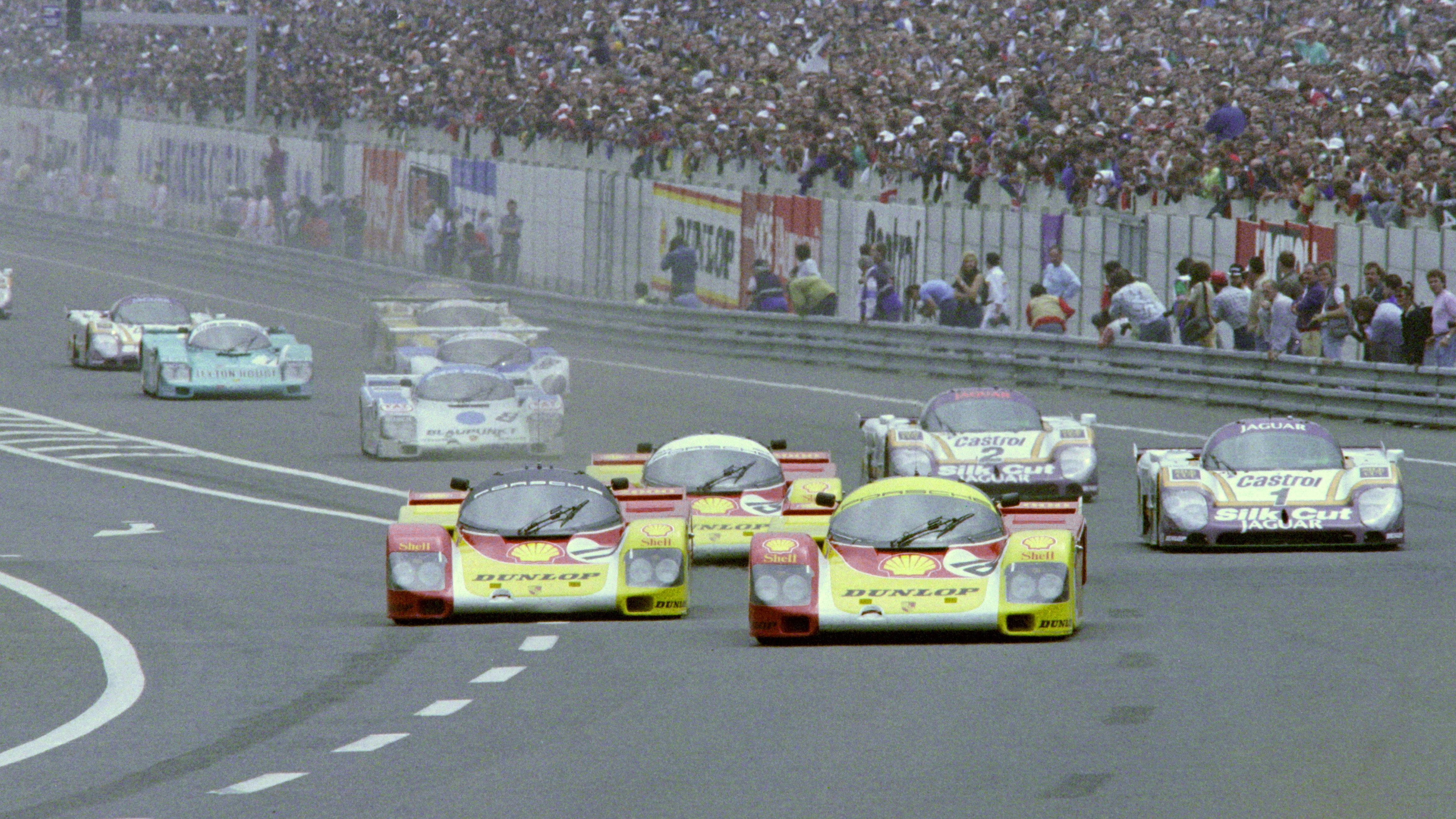
Porsche led at the start of the race, while Lammers took the no. 2 Jaguar from sixth to second by the end of the first lap.
Image credit: Getty ImagesBattle commences
Sir John flagged the race away, just as he had in 1986 but an hour early, at 15:00 because of French elections. Immediately, Porsche aces Stuck and Bob Wollek traded blows to establish a lead but the Jags, powered by their big, production-based V12s, were right in contention. Dutchman Jan Lammers in no.2, rather than the supposed ‘hare’ Brundle, asserted himself in those early laps.
But crucial casualties soon shaped the battle. First, John Nielsen — in for Brundle in the no.1 car — spun into gravel at Indianapolis as he struggled with tricky handling. The Dane lost two laps, which left the duo (running without a third driver) facing a comeback.
Then Stuck in the no.17 Porsche ran out of fuel, insisting he hadn’t gone a lap too long and that it was a fuel pump pick-up problem. The German nursed his car back to the pits on the starter motor and the Porsche dropped to ninth place. Still, Jaguar hadn’t heard the last of Stuck and his team-mates Derek Bell and Klaus Ludwig.
The race settled down into a battle between the no.18 Porsche of Wollek, Vern Schuppan and Sarel van der Merwe and the no.2 Jaguar led by Lammers, with support from ex-Lotus F1 racer Johnny Dumfries and Le Mans rookie Andy Wallace. Lammers coached his partners to make the best of their XJR-9LM, without stressing the major components. As always, gearboxes — especially in this analogue H-pattern era — were a main concern for reliability.
Speaking of which, not long after 23:00, with Wollek and Co holding a half-minute lead, Boesel in the no.3 Jaguar felt and heard a significant ‘clunk’ under acceleration. The gear he was in dropped out and he couldn’t find another. It would transpire a shaft had broken in two, and that clunk carried an echo that would come back to haunt Jaguar much deeper into the race.
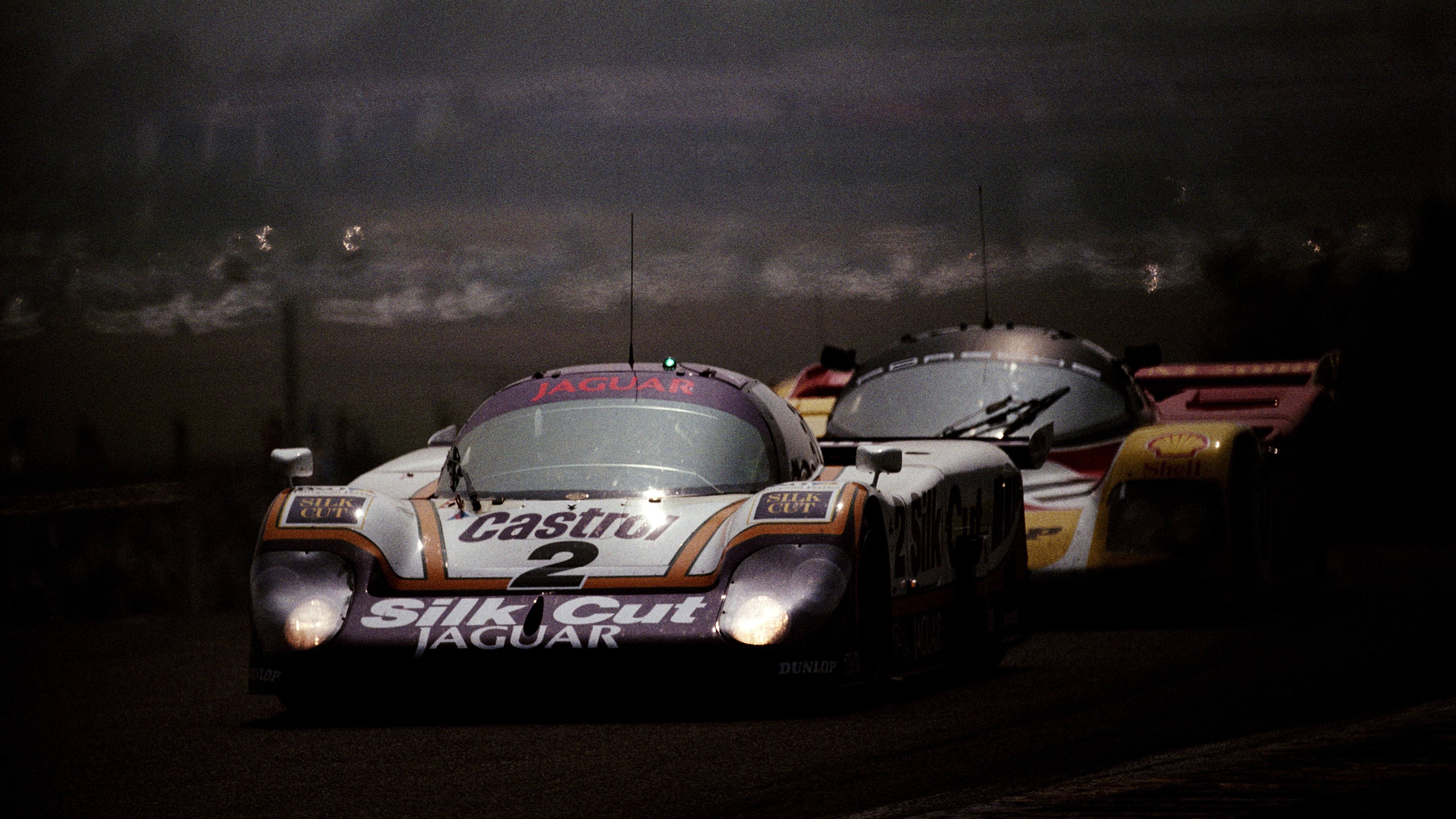
As darkness fell the rivals remained close together, until the lead no. 18 Porsche was forced to give up the chase with reliability issues.
Image credit: Getty ImagesAdvantage, Jaguar
Through the night, the margins between Porsche and Jaguar remained fine. But for once, it was the German cars that suffered reliability trouble. Not long before 03:00, Wollek’s fabled Le Mans curse struck again: the lead no.18 962 was out with engine failure; a fuel leak had caused a cylinder to overheat and burn the valves. Now German hopes rested on Stuck, Bell and Ludwig as the no.17 entry recovered from its early delay and chased the tail of the leading Lammers Big Cat.
Into Sunday morning, a bird strike while Lammers was at the wheel forced a quick windscreen change, which cost TWR its lead. But then Porsche again hit a snag. A preventative water pipe change after trouble for the sister cars handed Jaguar back its lead, but Singer was proven right when the pipe was checked. It was, as he feared, cracked and ready to fail.
Meanwhile, Brundle and Nielsen’s comeback had been for nothing. They had worked their way back up to second place by 08:00, only for the needle on the coolant temperature gauge to rise. The no.1 pitted in a cloud of steam at 09:45, with what turned out to be a crack in the engine block.
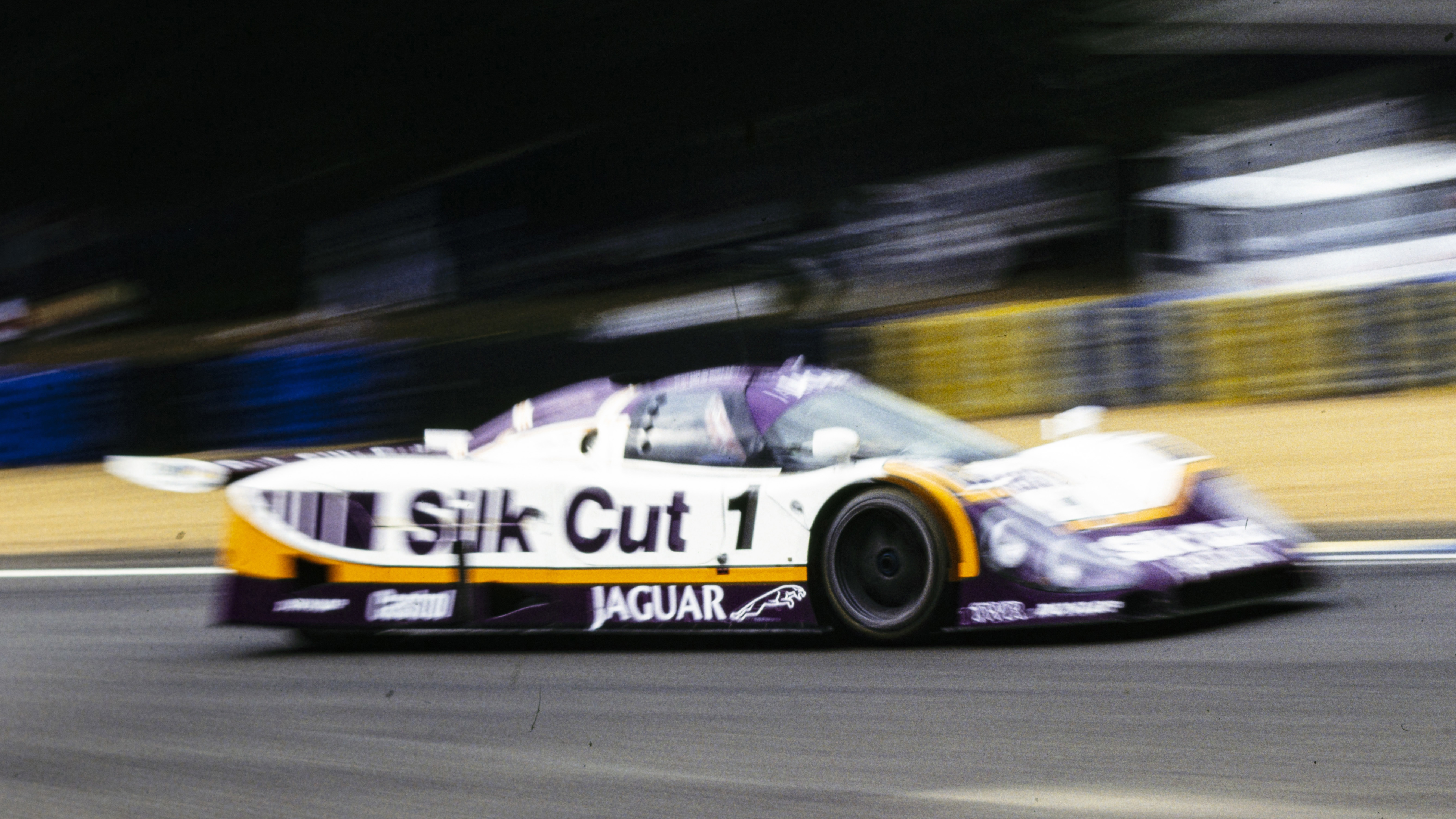
Martin Brundle and John Nielsen’s no. 1 Jaguar was one of two XJR-9 LMs to retire from the race.
Image credit: Getty ImagesInto the closing stages
At five hours to go, three Jaguars were still running, even if one of the ‘American’ cars (no.21) was down in 24th. At least the no.22 shared by Derek Daly, Kevin Cogan and Larry Perkins was well placed in fourth, in support of the leading no.2. Stuck and Co in the chasing Porsche were still a threat, about 100 seconds behind.
Rain at 11:00 played into Stuck’s hands. Famed for his regenmeister reputation forged on the Nürburgring, he loomed on intermediate tyres as Dumfries made the wrong call to stay on slicks. But then a reprieve. Again, the lead Porsche had fuel pick-up troubles. The time it took to replace the fuel pump cost no.17 a lap.
At 14:00, with an hour to go, the battle appeared to be won. Porsche called off its chase and resigned itself to second place (or hope of a late Jaguar failure). Little did it know…
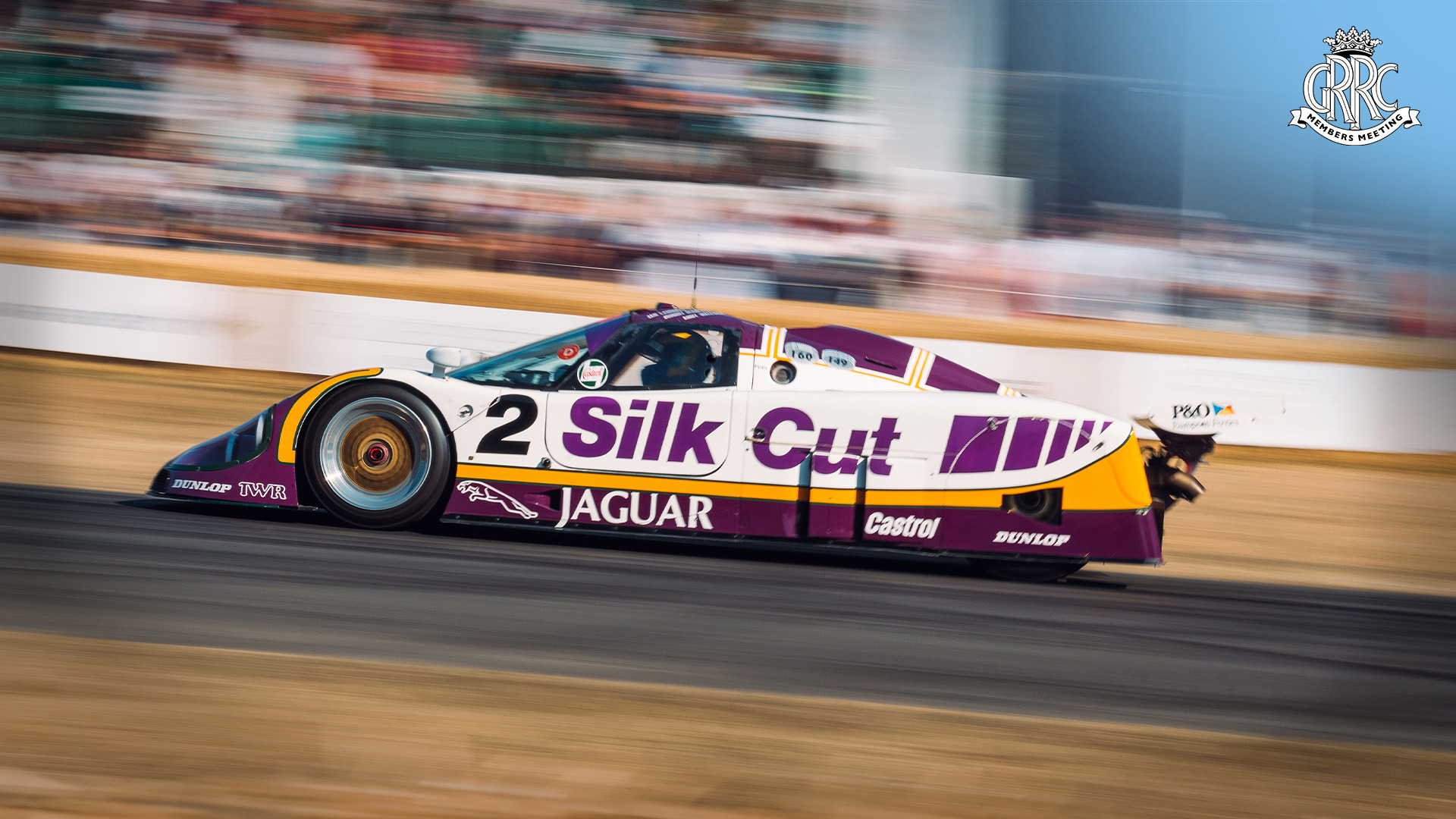
Another alarming ‘clunk’
With just 40 minutes to go, Jaguar bigwigs began to congregate in the TWR pit as the tension mounted. Then Lammers’ heart skipped a beat. Accelerating from second to third gear out of Mulsanne Corner, the Dutchman heard an ominous ‘clunk’. His mind raced back to a conversation he’d had with Boesel about the Brazilian’s experience of Jaguar gearbox failure.
Lammers gingerly found fourth gear, and from there he’d never touch the lever again. All he could do was drive as smoothly as possible and hope the big Jag would keep trundling for long enough to make the finish.
The trouble was, he still had one more refuelling pit stop to go. Fearful of alerting Porsche that he was in trouble (they were surely listening), he radioed in, referring vaguely to a “small problem” and that he might need a shove to get going again. Walkinshaw and his engineers were on high alert.
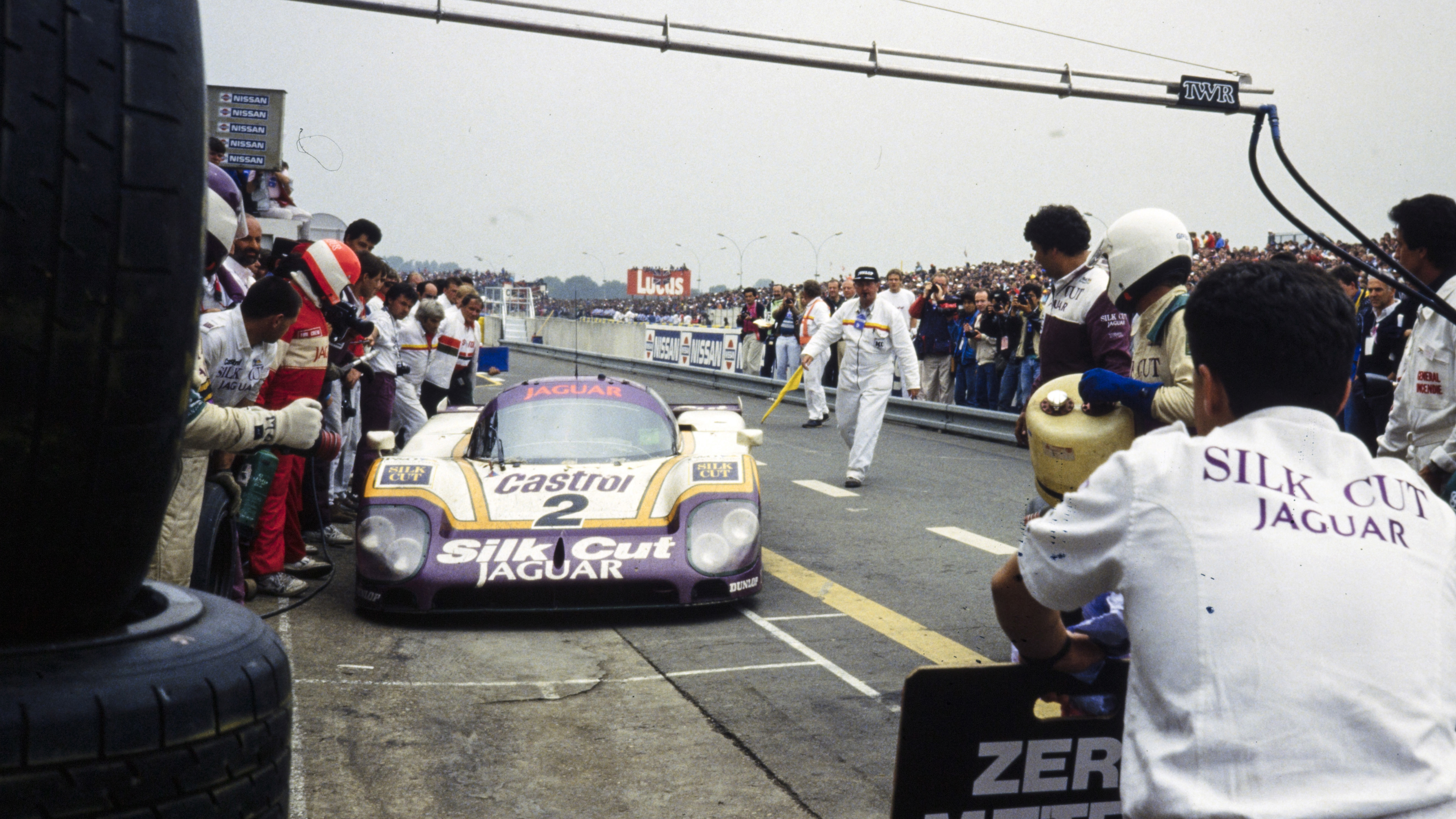
Lammers’ tense final pit stop of the race drew a crowd as British fans awaited the Jaguar victory they travelled to see.
Image credit: Getty ImagesShove off to victory
Crowds gathered around the Jaguar pit, as they tended to back then in a manner that just wouldn’t be allowed today. In came Lammers as the crew held back the masses. The last refuelling completed, Lammers built the revs to a crescendo and gently slipped the clutch as the mechanics gave what was an entirely illegal shove to get the car moving.
Thank goodness for those crowds after all. In the clamour, no one in an officials’ blazer seemed to notice — or did they turn a blind eye? Whatever, Lammers was on his way.
For the past three years, designer Tony Southgate had struggled in the face of how to make a weighty V12 based on a production engine a Le Mans winner. Now, its masses of torque had proved decisive just when it came to the crunch.
Still, Walkinshaw’s brow was knitted. He called on the two surviving ‘American’ XJR-9s to gather behind the lead car, not for a nice formation finish photo, but just in case Lammers needed another shove across the finish line.
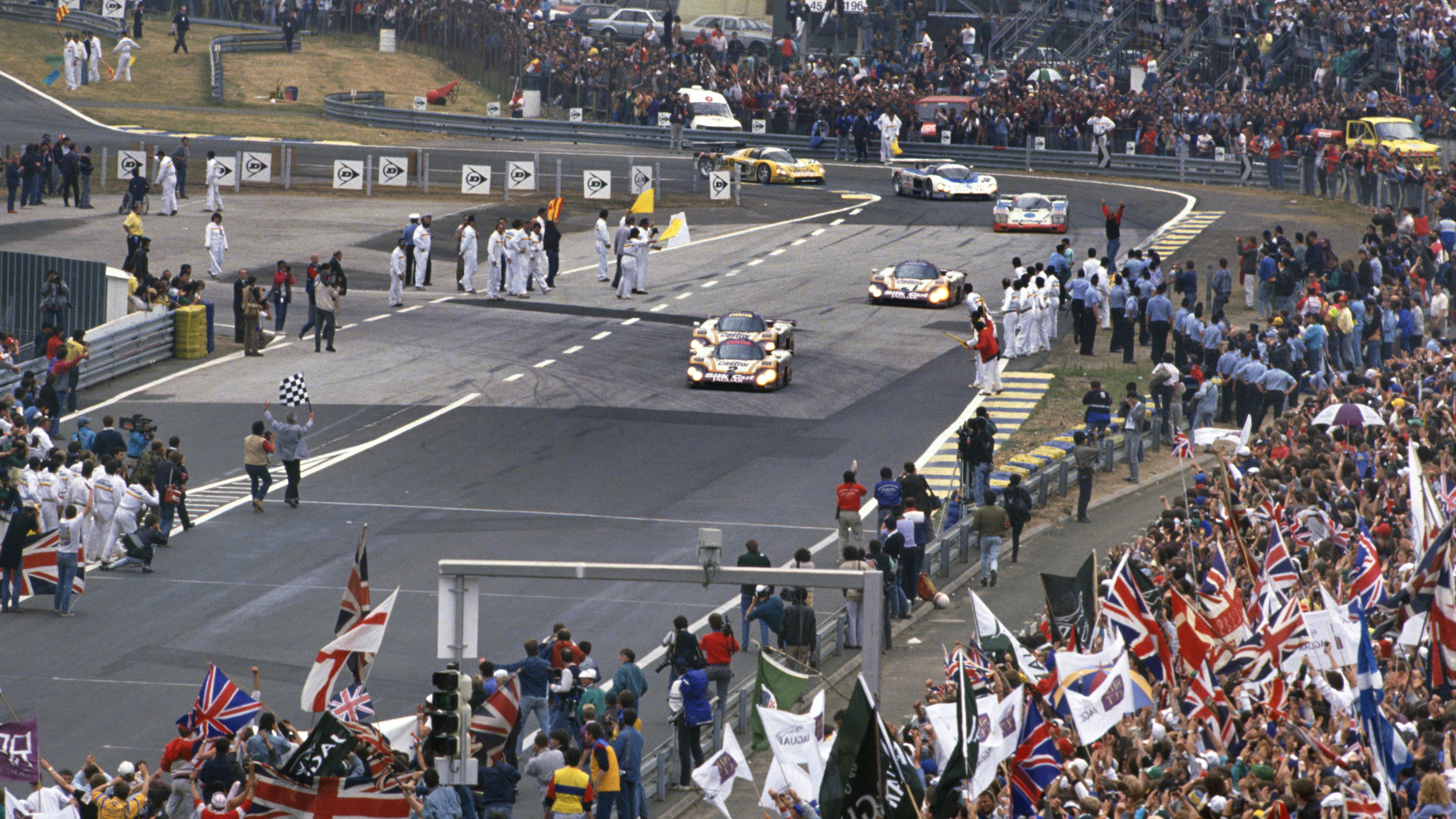
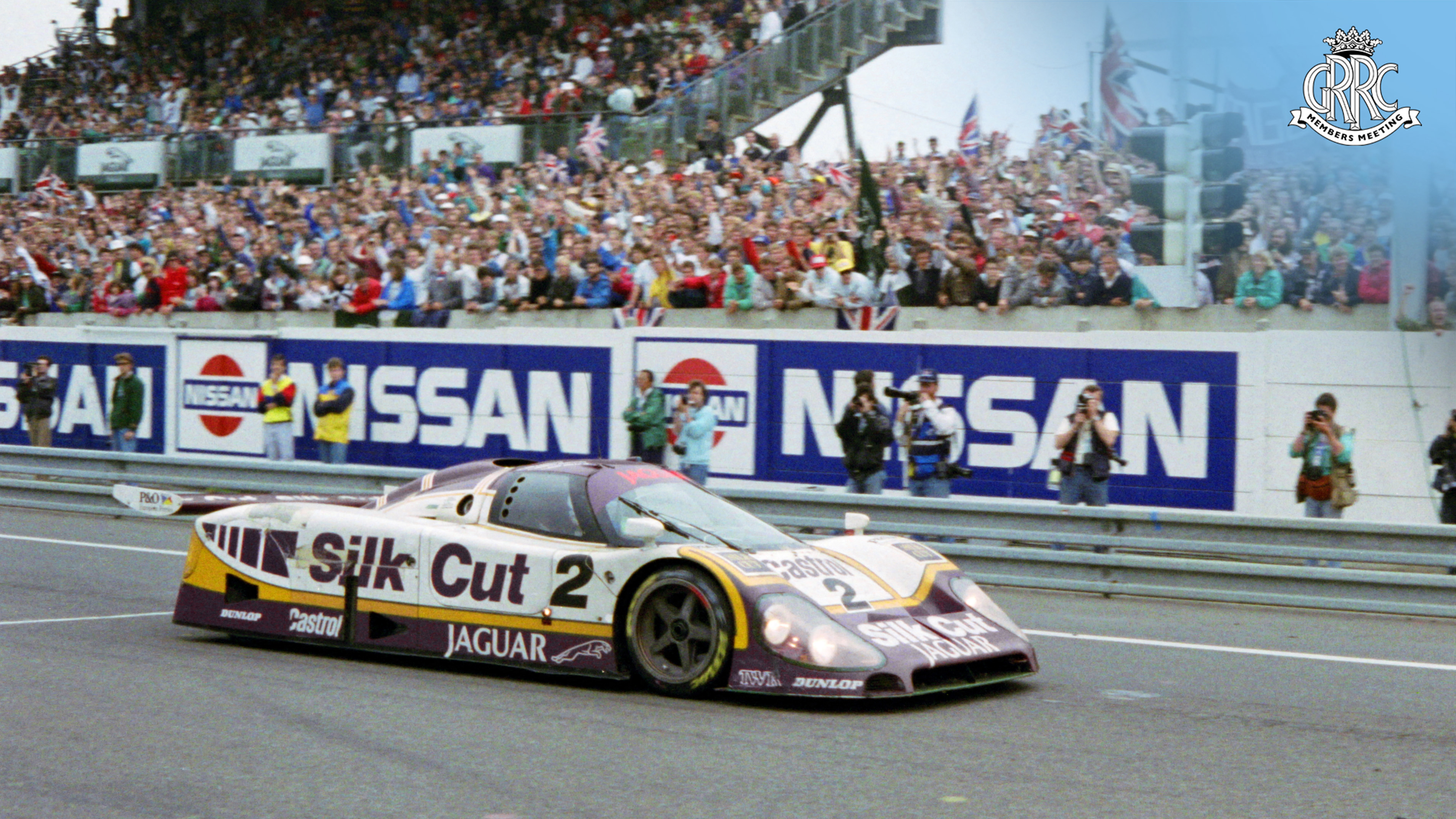
Union Flags were out in force as the Lammers/Dumfries/Wallace Jaguar finished the final lap. Its stablemates followed close by in case of emergency…
Image credit: Getty ImagesAs it turned out, such help wasn’t required. Just after 15:00, the three Jaguars passed the chequered flag amid a chaotic track invasion of delirious British fans waving their Union Flags. For the first time since 1957, Jaguar had won Le Mans.
Nearly shafted
The postscript: Back at TWR’s Kidlington base, when the team stripped the gearbox, the main shaft fell in half. A sliding ring which engages the gear had just about held to carry the drive. Had it not, one of the greatest victories, in what was then the second-fastest running of the 24 Hours since 1971, would have turned into one of the most heart-wrenching and infamous defeats.
Walkinshaw swore his engineers to secrecy, but inevitably the story eventually leaked out. Now it’s all part of one of the best legends in Le Mans lore, for what remains a high watermark for British motorsport in the 1980s.
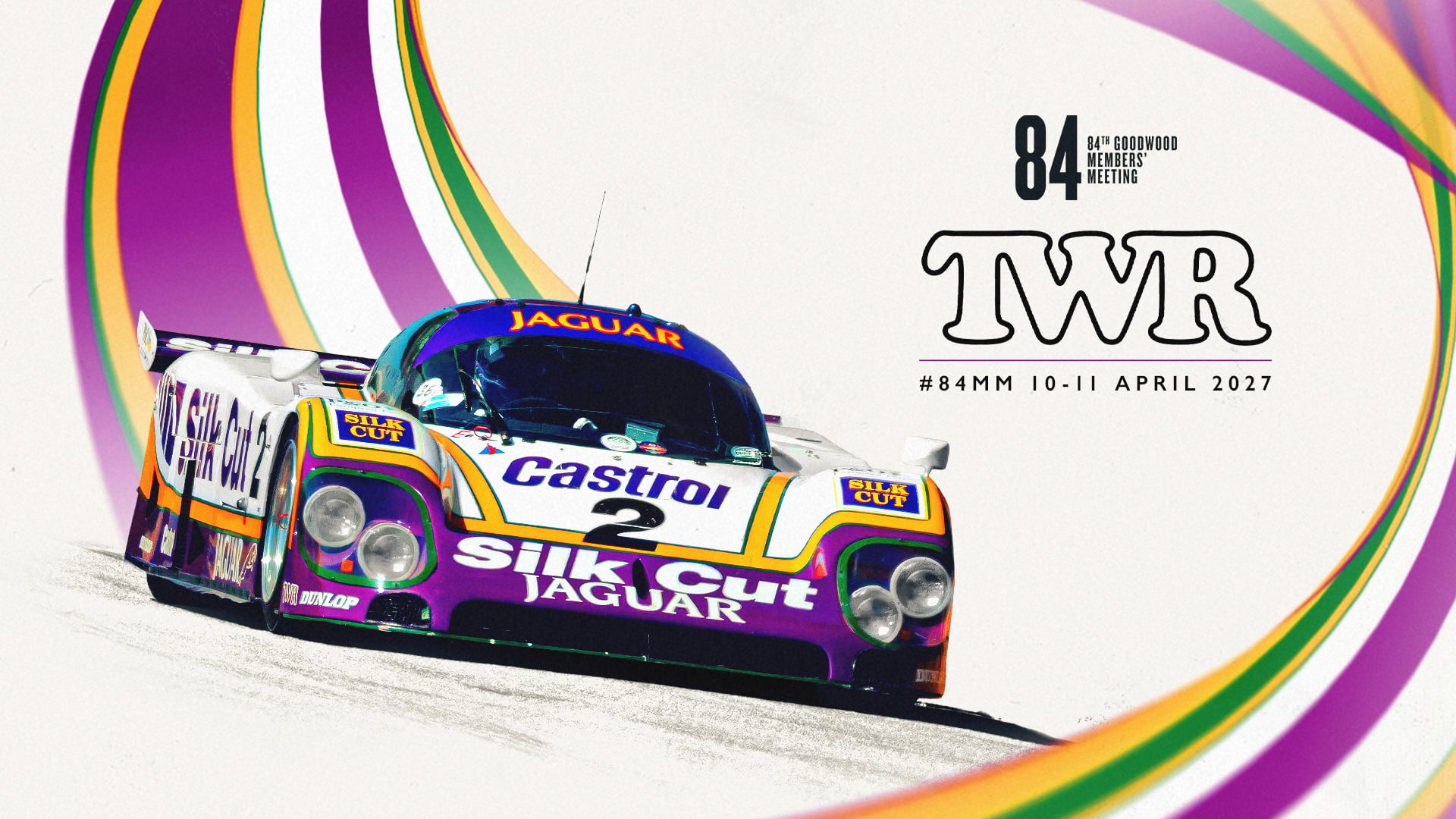
We’ll remember it again come 10th-11th April at the 84th Members’ Meeting.
Main image courtesy of Getty Images.
The 84th Members' Meeting takes place on 10th and 11th April 2027. Tickets are now on sale to GRRC Members and Fellowship Members at the early bird price.
If you’re not already part of the GRRC, you can sign up to the Fellowship today to save ten per cent on your 2027 tickets and grandstand passes, as well as enjoying a whole host of other on-event perks.
race
historic
84th members' meeting
84mm
TWR celebration
twr
TWR Jaguar
jaguar
le mans
le mans 1988