The 10 best road-going rally cars of all time
Homologated road-going rally cars occupy a unique space in the automotive world. Fast, hard-riding machines built to tackle gravel, tarmac or snow with equal ferocity, yet perfectly capable of doing the school run. Unlike Ferraris or hypercars (thrilling but impractical), a road-going rally car blends raw performance with real-world usability.
Based on hatchbacks, saloons and even compact coupes, these cars usually carry four passengers comfortably and offer enough luggage space for a weekend getaway. Their rally-derived engineering — four-wheel drive, turbocharged engines, clever differentials and the like — deliver thrilling performance in all conditions with humble roots that make them affordable. Here we celebrate the ultimate examples of these captivating performance cars.
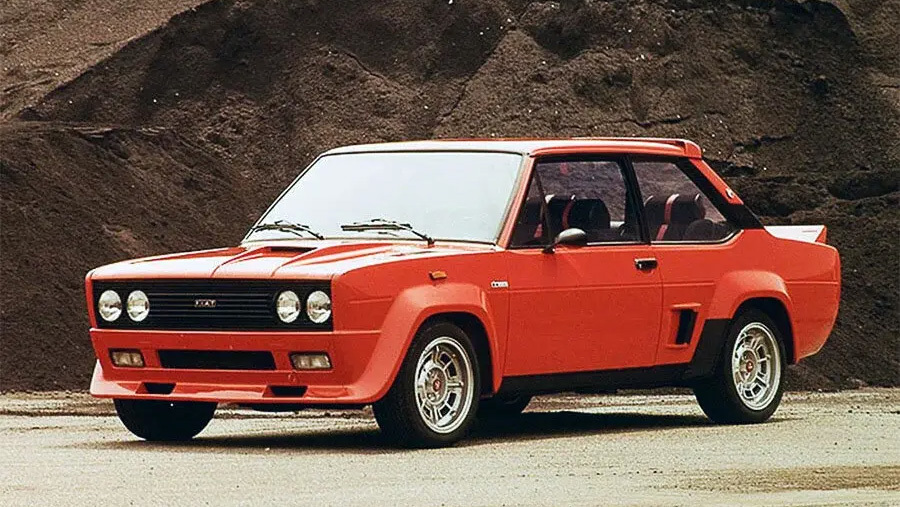
Fiat 131 Abarth Rally
If rallying in the late 1970s and early ’80s had a definitive road-going hero, it would be the Fiat 131 Abarth. Built specifically to homologate Fiat’s World Rally Championship contender, the 131 Abarth Rally took an utterly ordinary family saloon and transformed it into one of the most successful rally cars of its era. Between 1977 and 1980 it delivered three Manufacturers’ Championships and two Drivers’ Championships, cementing its place in rally royalty.
When it came to the road car, the steel doors, bonnet and boot lid were replaced with lightweight panels, suspension was completely reworked and a twin-cam 140PS (103kW) 2.0-litre four-cylinder engine resided under the bonnet. Rear-wheel drive and relatively modest power figures might not sound dramatic today, but on loose surfaces the 131 was devastatingly effective in the hands of drivers like Markku Alén and Walter Röhrl.
Visually, boxed arches, a deep front spoiler and purposeful stance turned the dowdy standard 131 into something genuinely exotic, while inside it retained enough practicality to remind owners it really was a homologated road car rather than a thinly disguised racer. It stands as one of the most authentic road-going rally cars ever made.
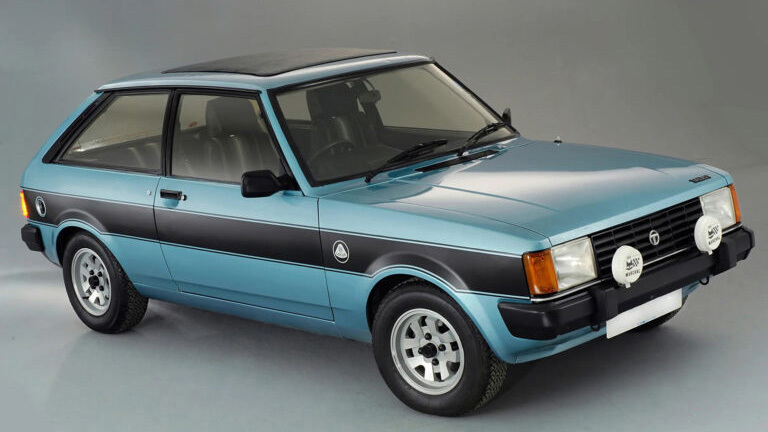
Talbot Sunbeam Lotus
The Sunbeam Lotus was created after Chrysler Europe realised it needed a competitive rally car quickly and on a limited budget. The solution was as simple as it was pragmatic: take the compact Sunbeam hatchback, send it to Lotus, and let Hethel work you the rest.
It was a dramatic transformation. Lotus fitted its own 2.2-litre twin-cam engine, producing around 150PS (110KW) in road trim, and paired it with a close-ratio five-speed gearbox. Power was sent to the rear wheels, while the suspension, steering and braking were comprehensively upgraded to match the performance. The result was an instantly quick car that was an immediate success. Driven by Henri Toivonen and Guy Fréquelin, it helped Talbot secure the 1981 Manufacturers’ World Rally Championship, battering more powerful machines in the process. It’s also the car a young Colin McRae cut his teeth on.
The road cars mirrored the competition machines closely, right down to their purposeful stance, flared arches and distinctive black-and-silver livery. Inside, they were sparse and functional, reinforcing the sense that this was a rally car first and a road car second.
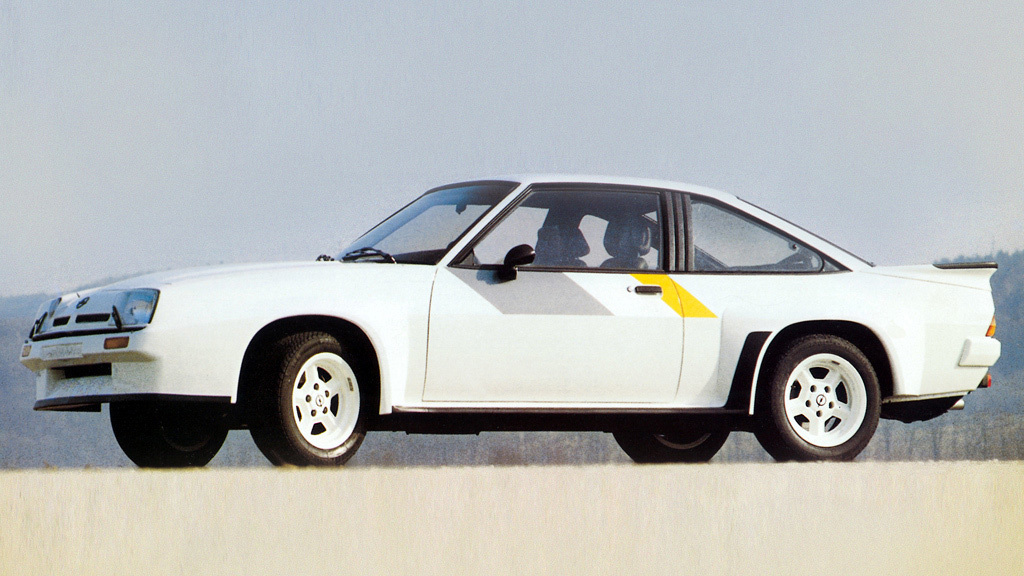
Opel Manta 400
The Opel Manta 400 — ‘400’ the number of cars needed for homologation — carried us to crossroads in rally history. A rear-wheel-drive homologation special developed on the cusp of the Group B era, just before the four-wheel drive era, sparked by the arrival of the Audi Quattro, became mandatory for success. Built to take on rivals like the Ford RS200 and Lancia 037, the Manta 400 was Opel’s last great standalone rally car and one of the most underrated road-going rally machines ever produced.
At its heart was a Cosworth-developed 2.4-litre four-cylinder engine with a 16-valve head, producing around 144PS (106kW) in road-going form and significantly more in competition trim. Power went to the rear wheels via a close-ratio five-speed gearbox, and the chassis was heavily reworked with a reinforced body, wider track and uprated brakes. While it lacked the outright traction of emerging four-wheel-drive rivals, it made up for it with balance, reliability and driver involvement.
Visually, the Manta 400 looked purposeful rather than flamboyant. Boxed arches, subtle spoilers and period graphics gave it an understated menace, while inside it retained enough civility to remain usable as a road car. This duality made it particularly appealing to privateer rally teams, who valued its robustness and relative simplicity.

Mini Cooper S
John Cooper knew the Mini’s potential after Roy Salvadori won an informal road race to the Italian Grand Prix, beating fellow star Reg Parnell in an Aston Martin DB4 with an early Mini Cooper prototype.
It took a few years to realise that giant-killing ability on the world stage but Paddy Hopkirk’s famous win in the 1964 Monte Carlo Rally, and successive ones for Timo Mäkinen and Rauno Aaltonen in 1965 and ’67, sealed the Mini’s reputation on twisty, snow-covered Alpine passes. The fact you could by one that looked – and went – much like the rally versions from your local BMC dealership is as big a part of Mini legend as Michael Caine and The Italian Job.

Alpine A110 Berlinette
Alpine founder Jean Rédélé was a rally driver at heart and, though he was born and raised in Dieppe, was so inspired by competing in the mountains he had the name for his car company settled from the start.
Although Alpine enjoyed success on track at Le Mans and elsewhere the brand is forever associated with rallying and the image of metallic blue A110 Berlinettes sideways between snow banks remains iconic. Anyone buying a blue A110 road car back in the day will have done so with this in mind, the reinterpretation of this classic look in the new A110 meaning it now resonates with a whole new generation of fans.

Ford Escort RS1600
The ‘race on Sunday, sell on Monday’ power of rallying was well-established by the mid-‘60s, homologation rules meaning manufacturers had to shift a decent number of equivalently modified road cars to qualify for competition. After creating the Lotus-engined Escort Twin-Cam for racing and rallying, the Cosworth-engined RS1600 followed, along with the Mexico, RS2000 and a long line of iconic homologation specials.
With their endlessly tuneable engines, strengthened shells and inherent toughness these cars have been a fixture of the British privateer rally scene ever since, their road-going brothers the blue-collar performance cars of choice for a generation of fans.

Audi Quattro
On road and rally stage the Audi Quattro’s influence is undeniable, the combination of turbocharging and four-wheel-drive laying a basic template for rally cars that survives to the modern day. A pet project of Ferdinand Piëch – grandson of Ferdinand Porsche, creator of the 917 and Volkswagen overlord until his death in 2019 – rallying was the perfect way to demonstrate the value of Quattro four-wheel-drive to Audi’s customers.
The Quattro perfectly embodied Audi’s Vorsprung Durch Technik mantra, the timing perfect as it straddled the transition into the legendary Group B era and proved decisively that technology was the route to world domination, as much in marketing as it was in motorsport.

Lancia Delta Integrale
After the excesses of Group B the switch to Group A regulations meant rally cars based on production models of which at least 5,000 were sold, inspiring a golden era of road legal rally reps. With 46 WRC victories, six consecutive constructor titles and four drivers’ championships the Delta Integrale dominated this early Group A era in spectacular fashion.
Thanks to its macho looks the Integrale turned Giugiaro’s square-cut hatchback into a formidable road car that looked but one step away from the rally stage. From its box arches to its scoops and Speedline Monte Carlo wheels it put owners in the shoes of legendary drivers like Juha Kankkunen and Miki Biaision and remains a definitive rally car for the road.

Subaru Impreza
Before a certain Scotsman powered his blue Impreza to the 1995 World Rally Championship Subaru had been little more than a quirky brand building cars for farmers and country folk. That made a natural basis for successful rally cars and the partnership with McRae created a sensation meaning everyone wanted an Impreza on gold wheels with a loud exhaust.
As fast Escorts became a fixture of the British fast car scene in the ‘70s and ‘80s so the Impreza was for a generation of enthusiasts in the ‘90s and early 2000s. The genuine homologation spec WRX versions remained Japanese-only models but that didn’t matter – its compact size, four-wheel-drive grip, punchy performance and charismatic sound was successfully translated for the British market to create a modern icon.

Mitsubishi Lancer Evolution
The Subaru Impreza captured everyone’s hearts. But its Mitsubishi Lancer nemesis was the one that got the wins, the partnership with Tommi Mäkinen yielding four titles on the trot in the late ‘90s and a memorable succession of road cars. Unlike the Impreza the Evo remained an exotic sight on UK roads, given it remained a Japanese market car until Mitsubishi’s UK-based Ralliart team imported limited numbers of the Evo VI and celebrated Mäkinen special edition.
Those committed enough to run one and put up with the extreme styling, pitiful range and painfully short service intervals were rewarded with the closest to an actual road-going rally car ever sold, in both looks and performance. Tech like Active Yaw Control the Evo was using a quarter of a century ago is only now being adopted by mainstream hot hatches too, demonstrating how far ahead of the game it really was.
Rallying
Mini
Cooper
WRC
Alpine
A110
Ford
Escort
Lotus
Sunbeam
Lancia
Delta
Mitsubishi
Evo
Subaru
Impreza
Audi Quattro
Paddy Hopkirk
Fiat
Opel
Manta
road
news
list