The 10 best four-cylinder engines ever made
Forget your V12s and W16s — real heroes come in packs of four. From rally stages carved into mountainsides to the high-tech world of Formula 1 and some of the world's best road cars, the humble four-cylinder has punched far above its weight. Light, versatile and endlessly tuneable, four-cylinder engines have powered some of the best cars on the planet, and here we’ve hand-picked ten of our favourites.
Subaru EJ
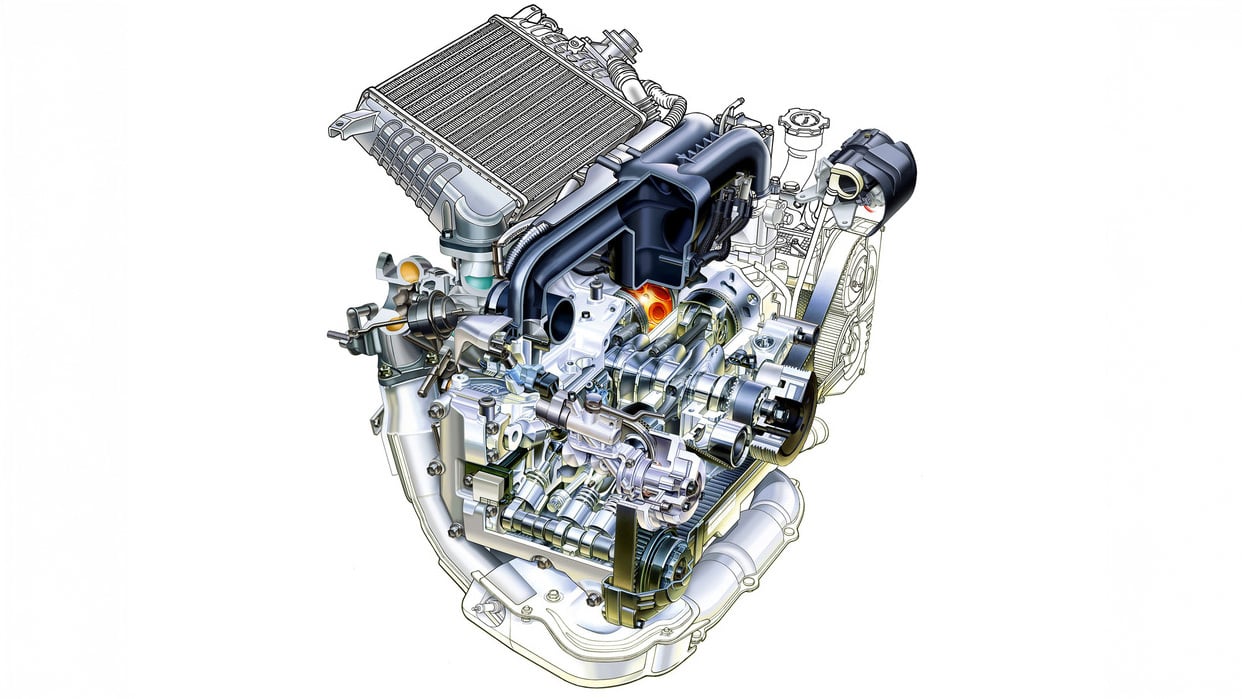
Subaru's EJ powered a rallying dynasty, driving the machines that made the brand a household name in the 1990s and 2000s. Replacing the old EA flat-fours, the 2.0-litre EJ20 was a boxer masterpiece, with an aluminium block and cast-iron cylinder liners, five main bearings and a forged steel crankshaft. Its pistons and rods were forged for the turbo versions and cast for naturally aspirated ones.
Available with single overhead cams, twin cams and in turbocharged form, the EJ's light weight and low centre of gravity gave Subaru road cars their signature balance and handling, along with a rumbling soundtrack. It didn't take long before Subaru's engineers turned their eyes to rallying – and the rest is legend. EJ-powered cars swept to three consecutive WRC Constructors' Titles between 1995 and 1997, while Colin McRae (1995), Richard Burns (2001), and Petter Solberg (2003) claimed Drivers’ Championships.
On the road, the EJ's most iconic form arrived in the wide-body two-door 22B STI, built to celebrate Subaru's 40th anniversary and third consecutive Manufacturers' crown. Enlarged to 2.2 litres, it produced 280PS (210kW) and 267lb ft (363Nm), and came equipped with Bilstein dampers, four-piston Brembo brakes and a ceramic clutch. Only 400 were made for Japan, with an additional 16 for the UK.
Cosworth YB
The story of the Cosworth YB begins with humiliation. In 1983, Ford's Capris were thoroughly outclassed by Rover SD1s in a touring car race — a result that didn't sit well with Ford UK's motorsport chiefs, Stuart Turner and Walter Hayes. Later that year, during a tour of Cosworth's HQ, they spotted something else: a strategically placed Pinto block topped with an aluminium 16-valve head.
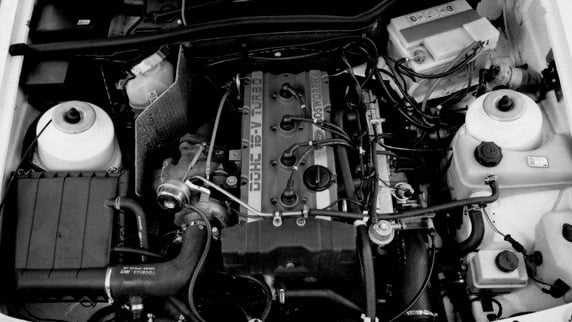
That engine became the Cosworth YB. Initially conceived as a naturally aspirated unit, it was soon turbocharged and tuned to deliver 200PS (147kW) for road use and over 500PS (368kW) in competition. It featured a high-flow cylinder head, a long tubular exhaust manifold and an intricate inlet system. Beneath the block, everything was strengthened to take the heat of racing.
The YB's greatest triumph came in the Ford Sierra RS500, statistically the most successful touring car ever made. Although it saw less rallying success, it gave birth to two of Ford's most iconic road cars — the Sierra and Escort RS Cosworths — turbocharged heroes that brought supercar performance within the reach of ordinary people.
Lancia Tipo 233 ATR 18S
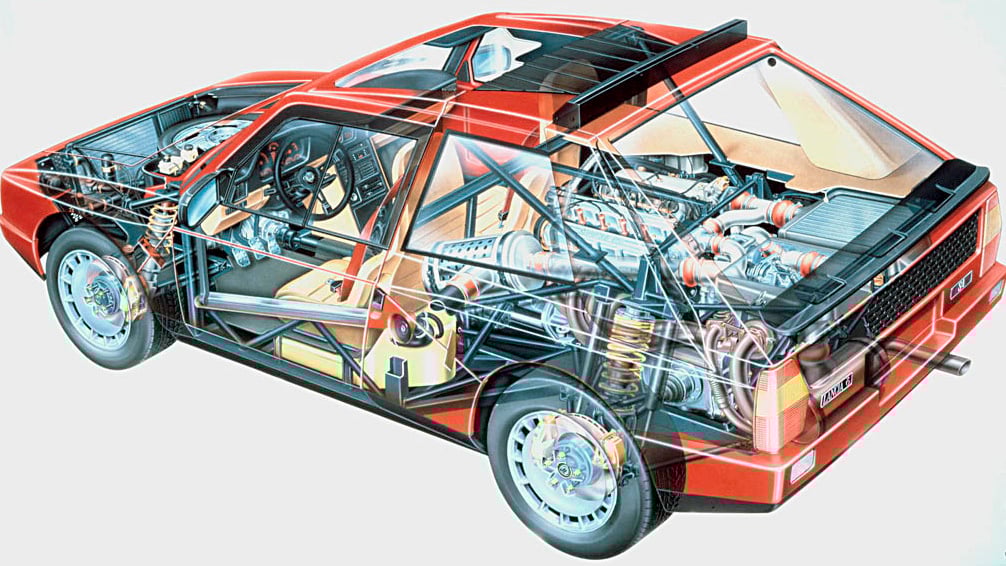
Lancia has always been an innovator, but the Tipo 233 ATR engine stands apart as technological marvel born in the crucible of Group B rallying. By 1984, Lancia needed something extraordinary to dethrone Audi's all-conquering quattro. The answer was the Delta S4, a four-wheel-drive monster with one crucial advantage: twin-charging.
Lancia's engineers wanted the instant response of a supercharger and the high-end surge of a turbo, so they fitted both — a Volumex supercharger and a Kühnle, Kopp & Kausch (KK&K) turbocharger — linked by a complex network of pneumatic actuators and valves.At low revs, the supercharger provided relentless torque; above 4,500rpm, compressed air was rerouted to spool the turbo before exhaust gases took over all the way to the 8,000rpm redline. On the dyno, the engine produced 1,000PS (735kW) at 72psi of boost, though competition versions were dialled back to a still-ferocious 480PS (353kW).
The Delta S4 won on its debut at the 1985 Lombard RAC Rally. Its road-going twin, the Delta S4 Stradale, remains the first production car ever fitted with a twin-charged engine, redefining the limits of four-cylinder performance.
BMW M12
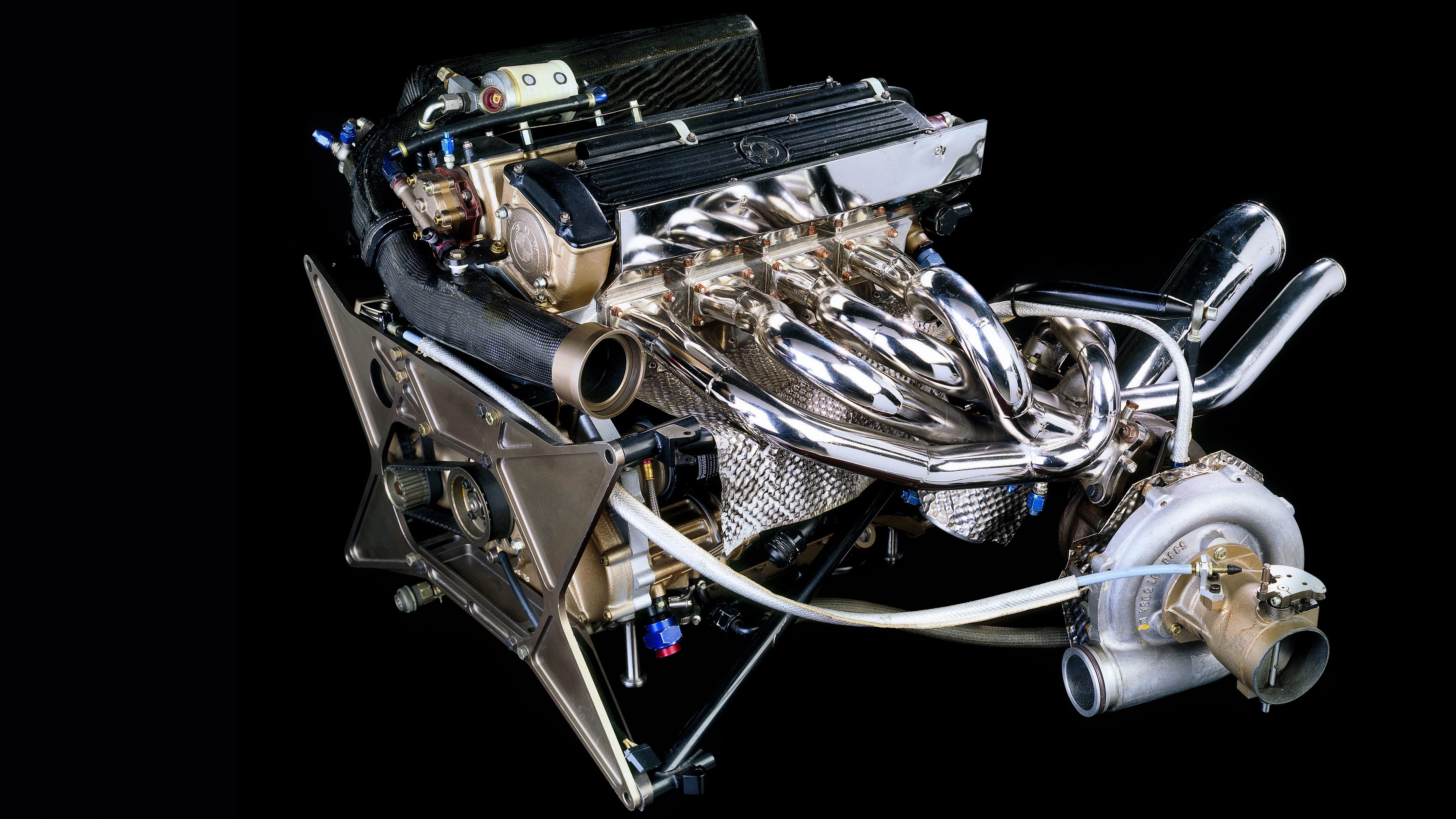
Few engines boast a résumé as outrageous as BMW's M12. It was the most powerful Formula 1 engine ever fitted to a car, producing over 1,400PS (1030kW) in qualifying trim and setting the sport's highest top speed (219mph in Gerhard Berger's Benetton B186). It was the first turbocharged engine to win a Drivers' Championship when Nelson Piquet took the 1983 title in his Brabham BT52.
Amazingly, the M12 started life as the cast-iron block from BMW's humble Neue Klasse saloons. But this simplicity was its strength. With one fewer turbo, two fewer cylinders and eight fewer valves than Ferrari or Renault's V6s, it generated less heat and friction. Gordon Murray exploited those advantages to give the BT52 smaller radiators and tighter side pods, slicing through the air with unmatched efficiency.
On fast circuits, the BT52 was unstoppable (if it didn't melt its internals or drain its fuel tank first). On slower tracks, drivers had to combat savage turbo lag by pressing the accelerator mid-corner in anticipation, waiting for the power to detonate. When it did, it hit like a bomb, unleashing 930lb-ft (1,261Nm) of torque and lighting up the rear tyres as if a big red switch had been flipped.
Coventry Climax FPF
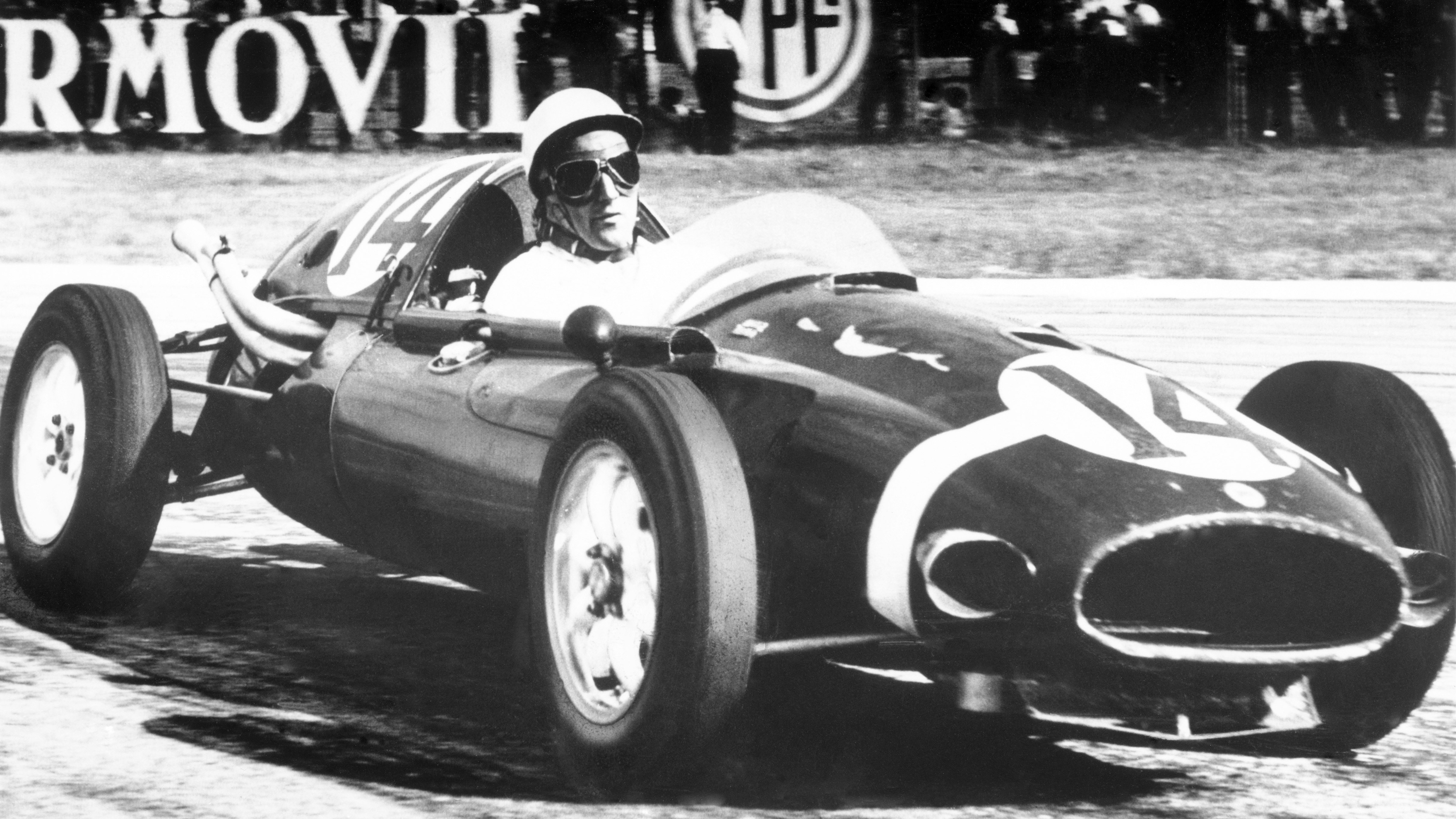
The Coventry Climax FPF (Featherweight Piston F-series) was nothing short of revolutionary. Originally a 1.5-litre Formula 2 engine, it was soon bored and stroked to 2.0 litres for Formula 1 duty. Its specification reads like a 1950s engineer's fantasy shopping list: lightweight all-aluminium construction, robust steel-alloy cylinder sleeves, hemispherical combustion chambers, gear-driven twin overhead cams and a dry-sump lubrication system for durability.
When installed in the mid-engined Cooper T43, it powered a seismic shift in racing philosophy. In 1958, Stirling Moss took the first victory for a rear-engined Formula 1 car at the Argentine Grand Prix against larger 2.5-litre rivals. Jack Brabham then piloted the combination to back-to-back Championships in 1959 and 1960, proving that balance and lightness could beat brute force.
In 1961, the engine was downsized to 1.5 litres and fitted to the Lotus 18, taking three Grand Prix victories that year. The FPF also excelled in sports car racing and, in 2.8-litre form, even took on the Indianapolis 500.
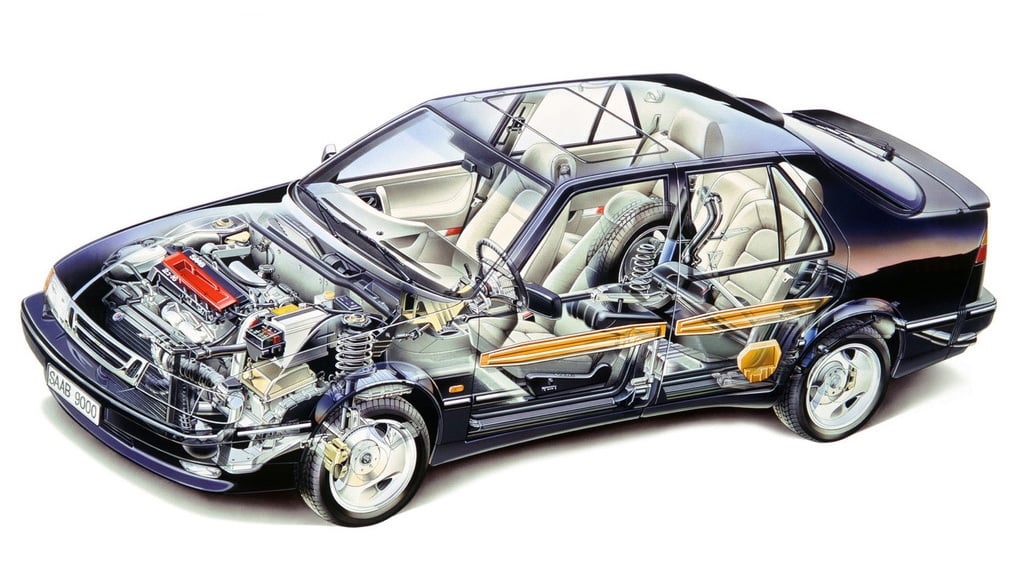
Saab B234R
Sweden's Saab was never afraid to do things differently, and its B234R engine proved that sensible could still be sensational. Named in Ward's ‘10 Best Engines’ list in 1995, it blended power, refinement and reliability in perfect harmony.
Evolving from Saab's indestructible H-engine, the B234 combined a cast-iron block with a lightweight aluminium head, dual overhead cams, four valves per cylinder, and counter-rotating balance shafts to smooth out the characteristic thrum of an inline-four. Increasing the stroke from 78mm to 90mm boosted displacement from 2.0 to 2.3 litres, while a Garrett T25 turbocharger delivered the kind of mid-range torque that left supposedly faster cars gasping.
Its most celebrated form came in the Saab 9000 Aero, which swapped in a larger Mitsubishi TD04 turbocharger. In-gear acceleration was extraordinary; the Aero could outpace a Ferrari Testarossa from 50 to 75mph, showing its extraordinary real-world flexibility. Even today, the B234R's bombproof design and huge tuning potential make it a cult favourite among Saab enthusiasts.
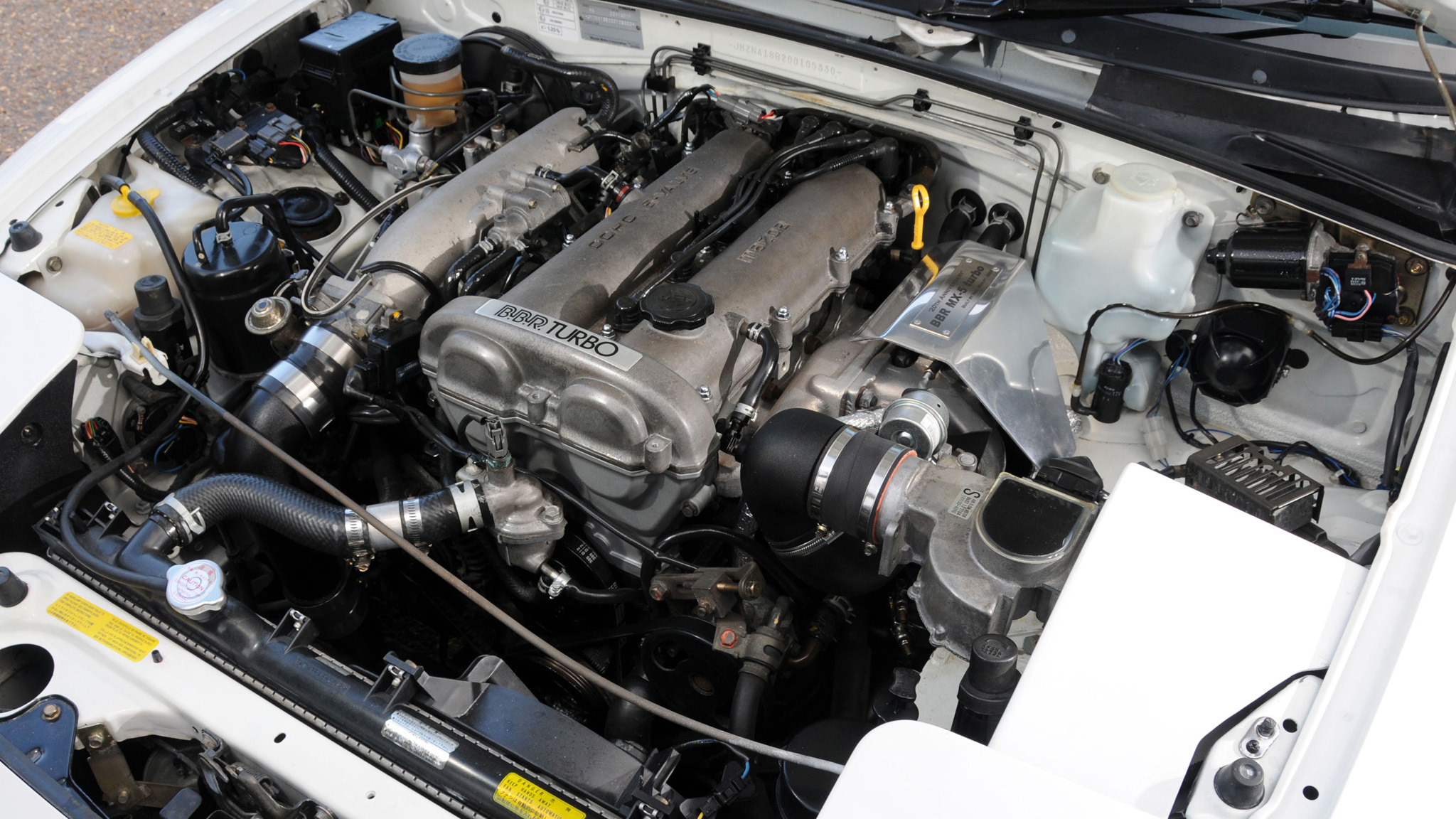
Mazda B6ZE (RS)
When Mazda made the original MX-5, it set out to build a reliable British sports car with a folding fabric roof that was easy to operate and didn't leak. At its heart would be precisely the engine you'd expect to find under the bonnet of such a machine – a 16V twin-cam that would gleefully scream its heart out, providing you with (not a massive amount of) forward motion.
The engine was a perfect fit for the MX-5. Not only did it provide most of its power at the top end, allowing you to make plenty of use of the MX-5's wonderful gearshift, but it also sounded great doing so (especially with some sympathetic mods) and even looked good with its bare-metal engine cover. Turbocharged in the 323 GTX, the B6ZE(RS) iron block and oil jet cooling meant it was under stress in the MX-5. Still, as it was designed to be turbocharged, it was also relatively easy to add forced induction further down the line as a multitude of amateur YouTube videos will testify.
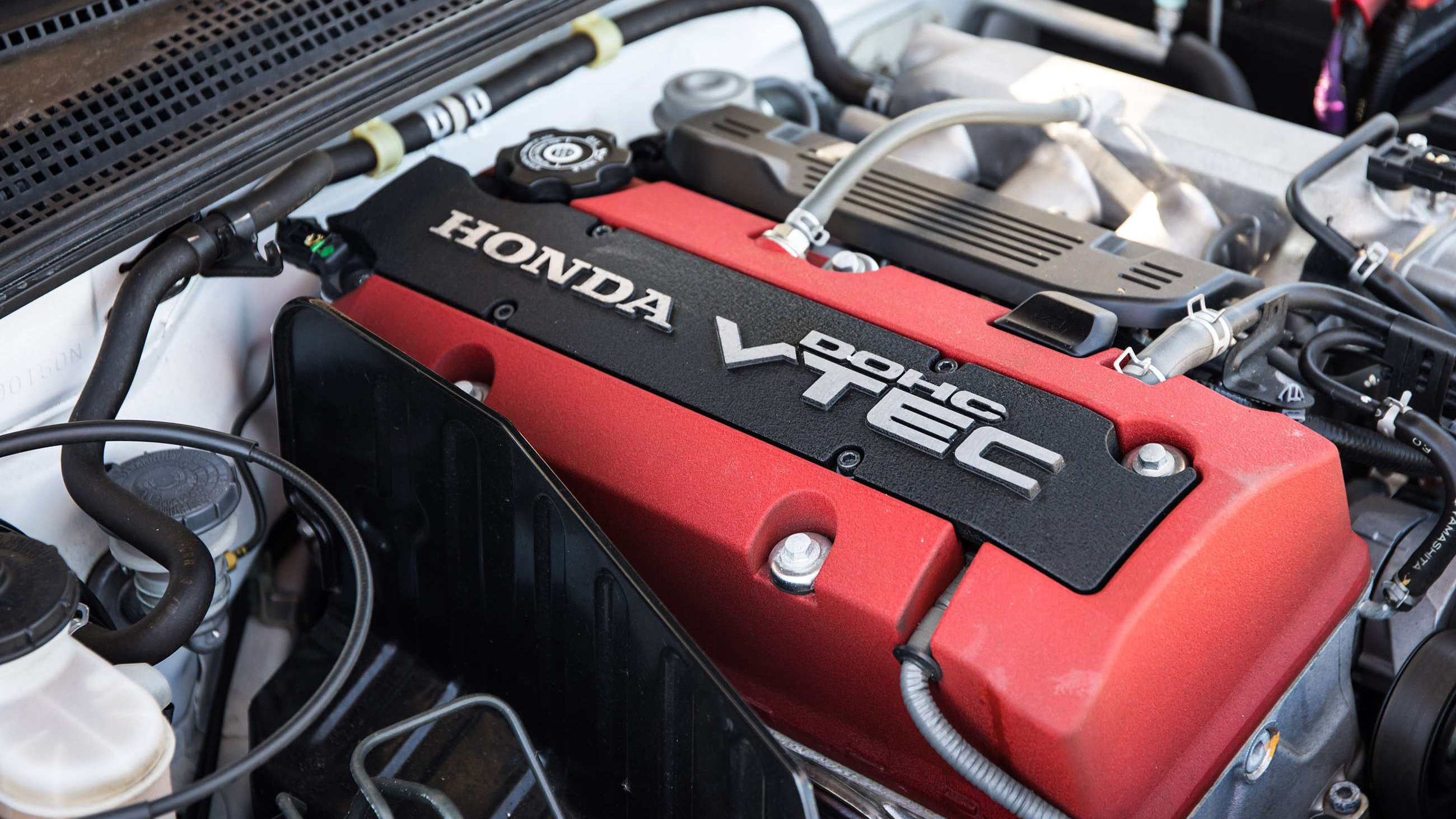
F20C – Honda S2000
Sorry, what’s this? Another Honda engine? Yeah, sorry about that – it was unavoidable really, because the F20C is a serious unit. A 2.0-litre, double overhead camshaft VTEC motor, it produced 240PS (177kW), or more in the Japanese market, and revved to 9,000rpm, with 0-62mph taking just 6.2 seconds, peak power at 8,300rpm and VTEC getting going at 5,850rpm.
Honda credited its F1 programme for some of the developments, like forged aluminium pistons, lightweight valve springs, an 11:1 compression ratio and a road car world-first use of metal injection moulded rocker arms. At the time of its launch, and for some time afterwards, the F20C meant the S2000 had the most power per litre of any naturally aspirated car on the market, with a whopping 120PS (88kW) per litre, breaking records set by – shock – Honda. We will never see a small, affordable sportscar with an engine quite so bonkers again.
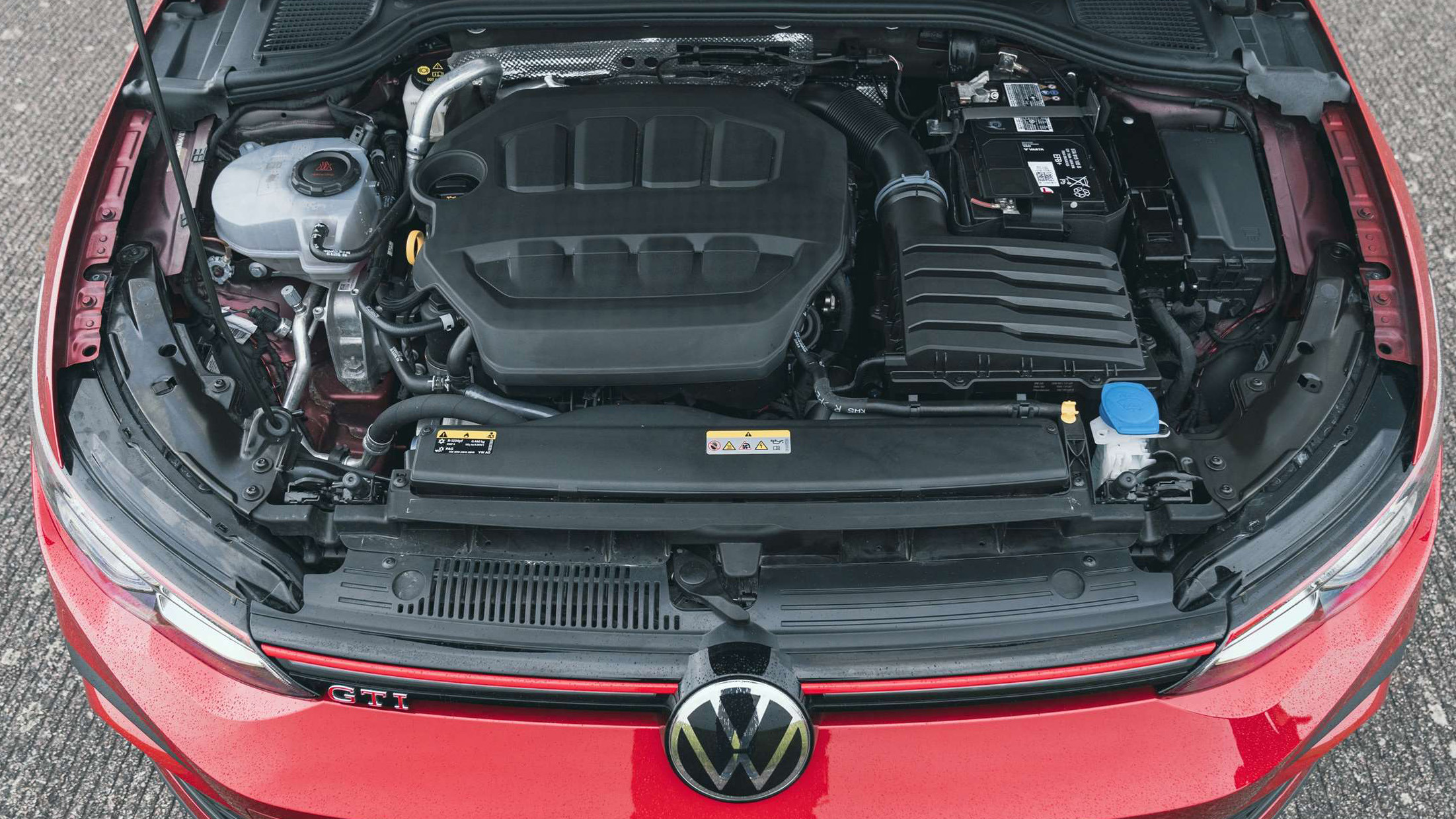
EA888 – Volkswagen
OK, we’ll admit, the EA888 engine is not the most charismatic of four-cylinder engines, but how could we possibly ignore it? Built to replace the EA113, the EA888 has come in 1.8- and 2.0-litre forms, powering cars like the Mk2 Audi TT, the Skoda Yeti, the Mk2 Seat Leon, the Mk6, 7 and 8 Golf GTI, the Audi S3 and more… Versatility is its strong point, which when you’re a company like Volkswagen, with multiple brands and dozens of models to power, is incredibly important.
What’s more, the EA888 has proved robust and reliable when it’s come to tuning, too, with tuners able to squeeze out moderate performance gains with very little trouble and no modifications at all, while others have been able to crack more than 500PS (368kW) from the 2.0-litre EA888. Admittedly that is not with a standard turbocharger, and many bits besides, but if an engine doesn’t just detonate with that sort of power running through it then it can only be held in high regard.
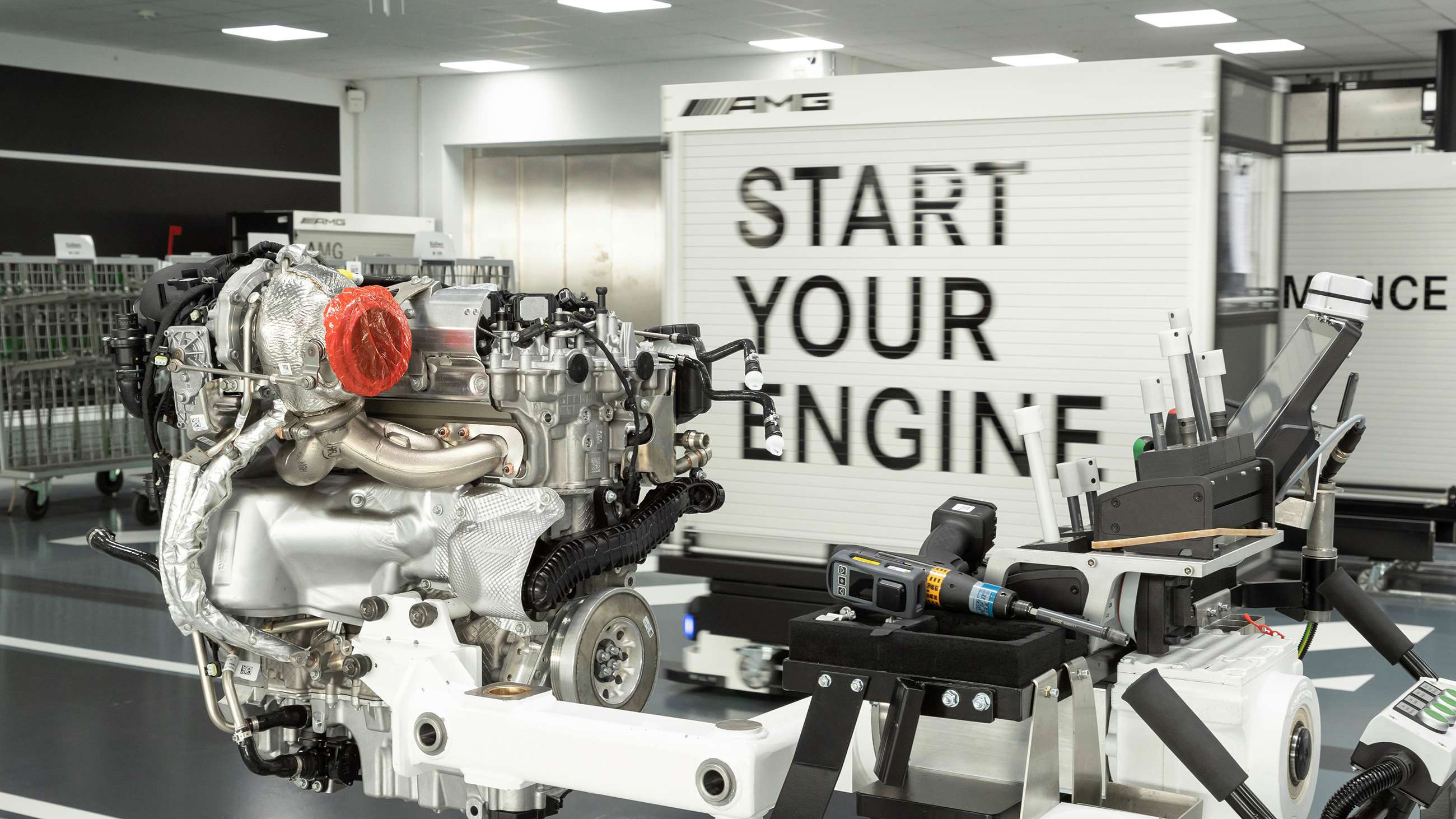
M139 – Mercedes-AMG A45S
We’ve talked about many engines in this list, but what about the most powerful? The most powerful four-cylinder engine title (at the time of writing) goes to the M139 found in the Mercedes-AMG A45S. Previewed in June 2019 and seen a month later at the 2019 Festival of Speed presented by Mastercard, the A45S’s 2.0-litre M139 has 421PS (310kW) and 500Nm (372lb ft) of torque courtesy of twin-scroll, twin-turbos, running through a seven-speed double-clutch to all four wheels.
This, then, is a hatchback that’ll hit 62mph in 3.9 seconds and go on to a top speed of 168mph. The engine even has ‘Nanoslide’ piston linings, where a thin, low-friction coating is applied to the inside of the cylinders, a technology that Mercedes says can save several kilos per engine and reduce friction by up to 50 per cent. Each of these engines is also built by just one person. In short, it’s an absolute beast of an engine.
road
news
List
Four-cylinder Engines
Mercedes
AMG
A45S
Honda
T350
Boxer
BMW
E30
M3
Civic
Type R
S2000
Volkswagen