

Formula E’s Gen4 car could be too fast for its circuits
Over a decade ago, Sylvain Filippi ran a race team whose batteries lasted 20 minutes. Drivers finished a race by climbing out of one car and into another. “People were asking me, ‘Sylvain, what are you doing?’” said the Envision Racing team principal at the 2026 Festival of Speed presented by Mastercard.
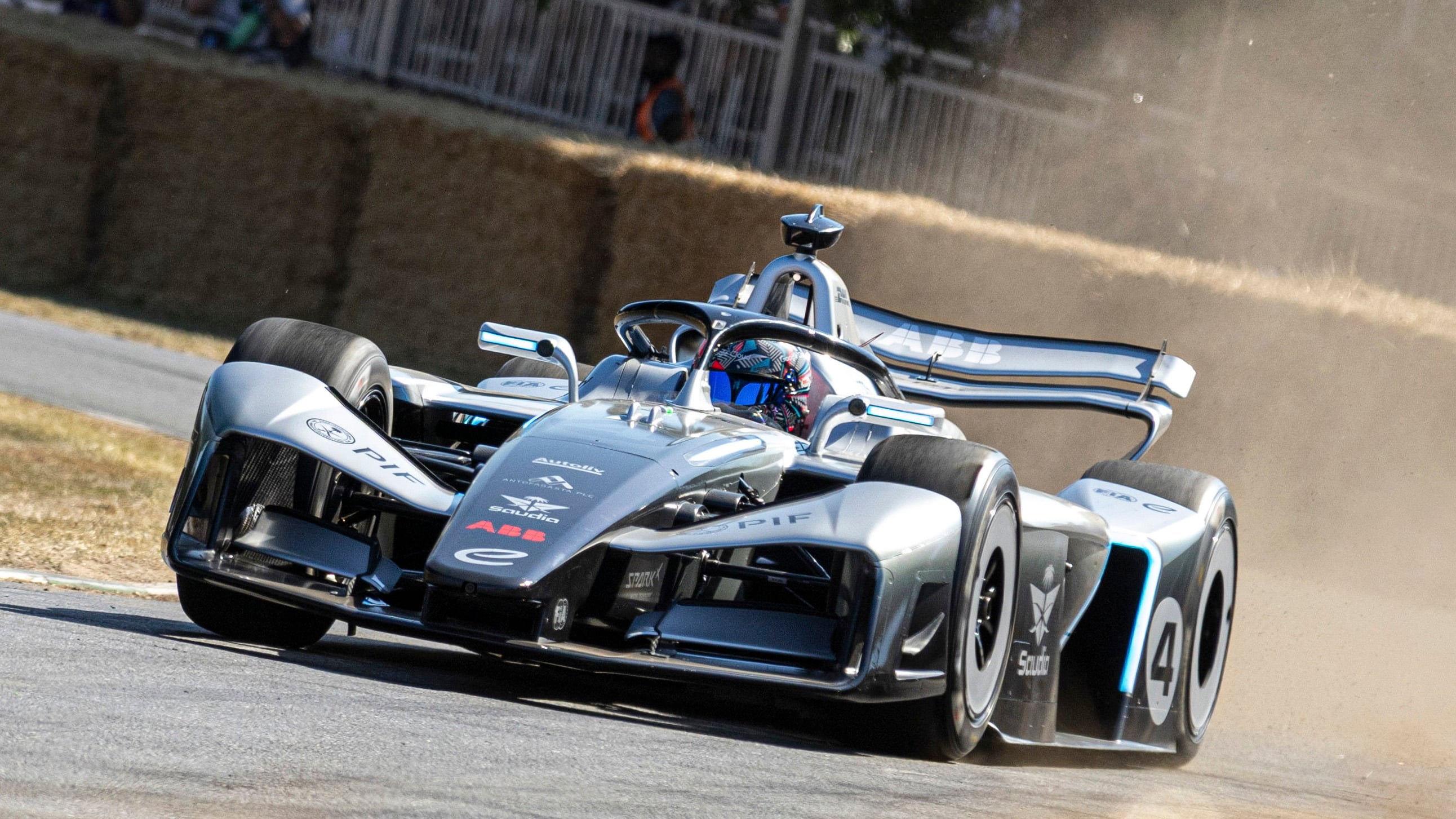
“I always said at the time: don’t judge us on where we are starting. Judge us on how quickly we’re going to improve that technology.” Judged on that basis, the verdict is in. The Gen4 Formula E car arriving this year produces 600 kilowatts — 830PS (611kW) — hits 62mph in about 1.8 seconds and tops out around 208mph.
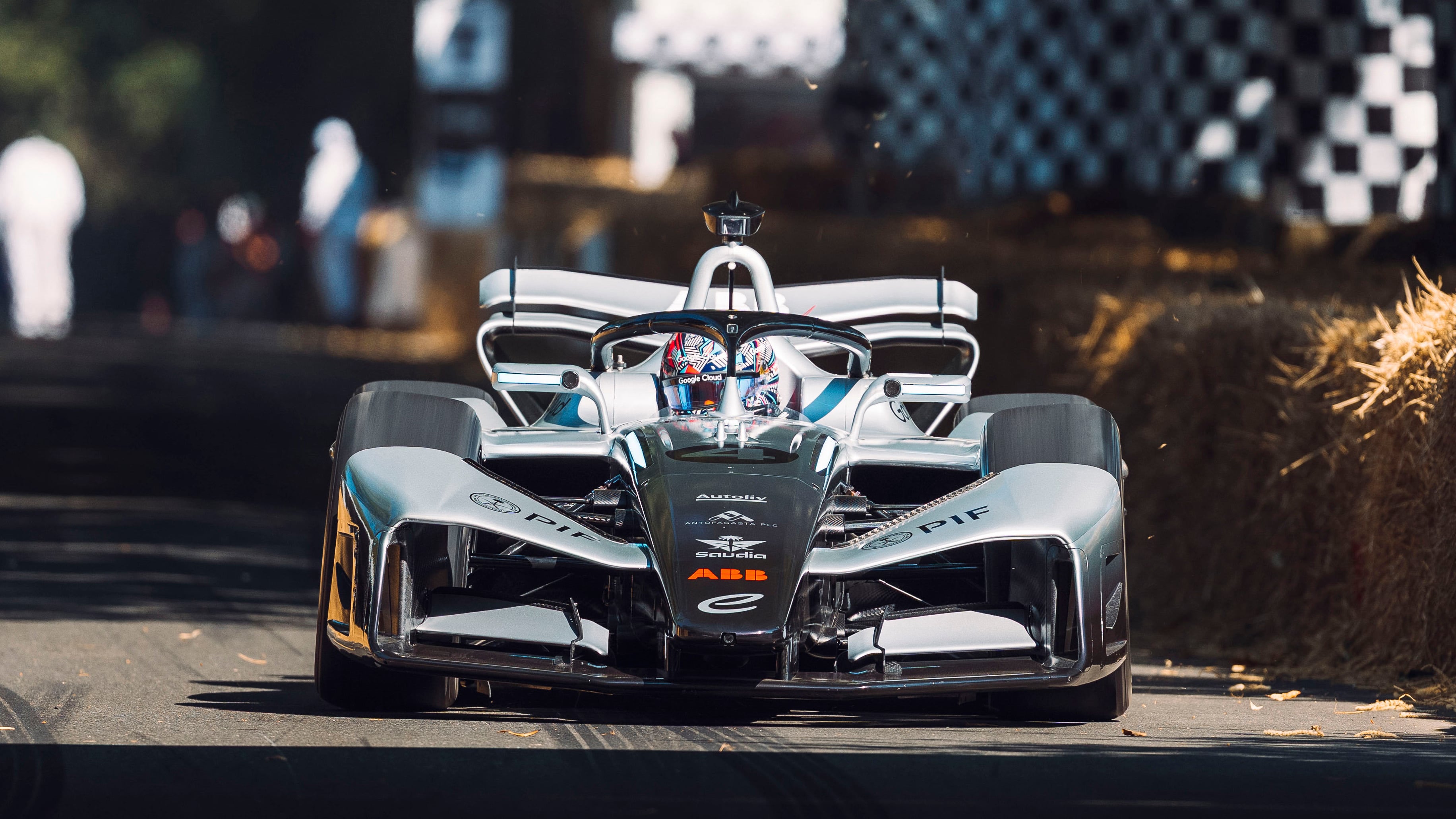
Filippi was joined in conversation at FOS Future Lab presented by Randox by Julia Pallé, Formula E’s Vice President of Sustainability. Between them they sketched a sport that has gone from punchline to pacesetter in 12 years, and they’re only just warming up.
Where does the petrol go?
A Gen4 Formula E car turns 97 per cent of its battery energy into motion at the wheel. A petrol car manages 20 to 25 per cent, while the rest disappears as heat and noise. “Instead of people like me doing long speeches,” Filippi said, “it’s a lot more powerful to see an electric racing car that is 97 per cent efficient going at 200 miles an hour.”

The 800-volt architecture in today’s premium EVs — faster charging, more range, lighter cabling — was pioneered in Formula E about eight years ago, when road cars were all running 400 volts, and no supply chain existed. Motors that once weighed 80 kilograms and filled a table now weigh 20 and make 500PS.
“Less than five years from early deployments in Formula E to road car,” Filippi added. “Which is very fast.”
The first B Corp sport
Pallé’s half of the story is how a championship that flies around the world stays honest about its footprint. In 2025, Formula E became the first sports organisation certified on the BSI Net Zero Pathway; in January it added B Corp certification — “the first and only global sport to receive the honour,” he beams.
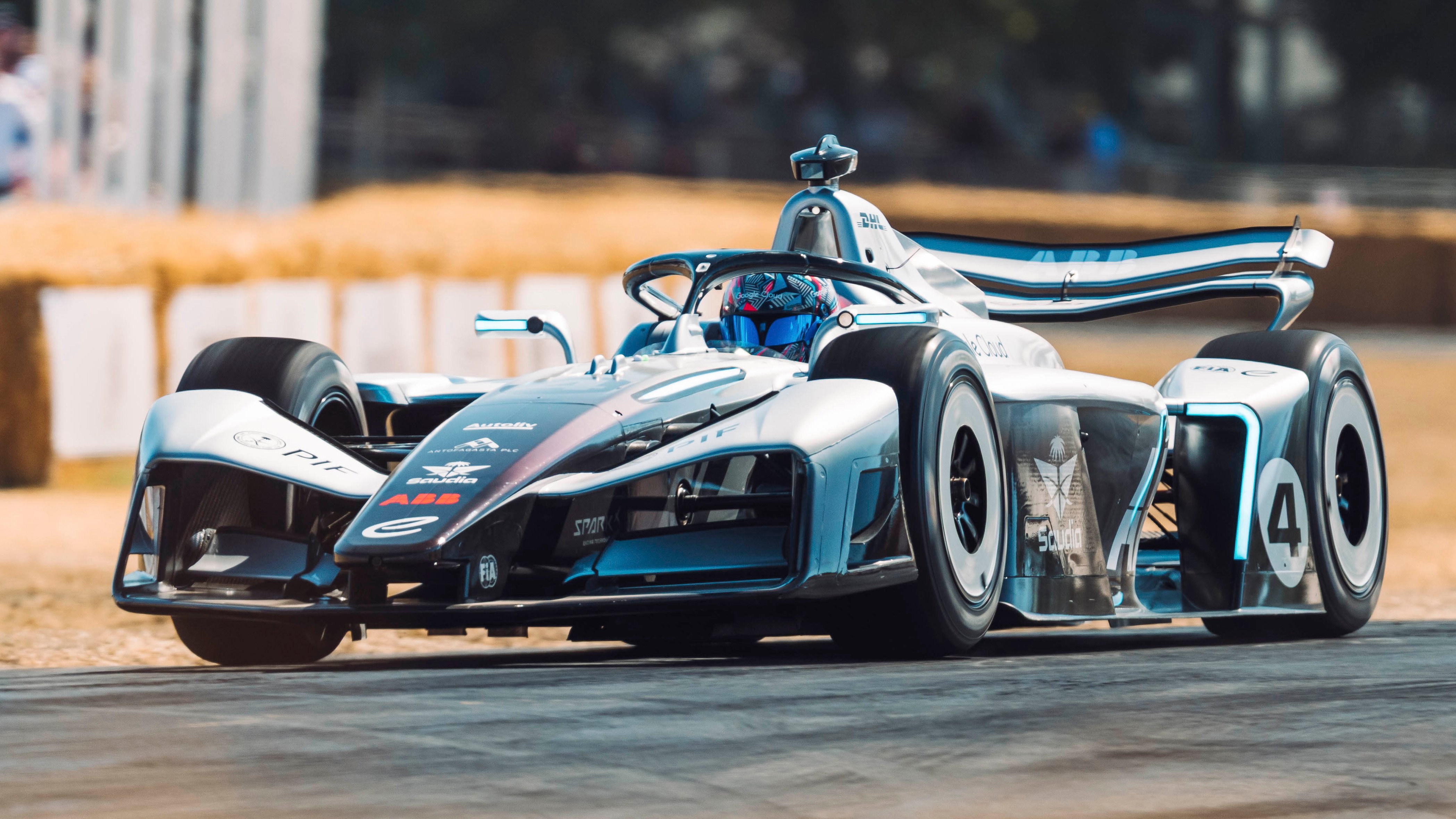
Just two seasons ago the Championship rethought its freight entirely and went from three planes to two — a 30 per cent cut in emissions. Every race venue must meet the international sustainable events standard.
Each car uses one battery for the entire season, and end-of-life cells are recycled — over 90 per cent of the lithium recovered without degradation. “Entertainment and sustainability are not seen as compromises,” Pallé said. “It’s actually levelling up all the elements.”
The Gen4 car goes further still: the first racing car that is 100 per cent recyclable and reusable, five years in the making.
A megawatt problem
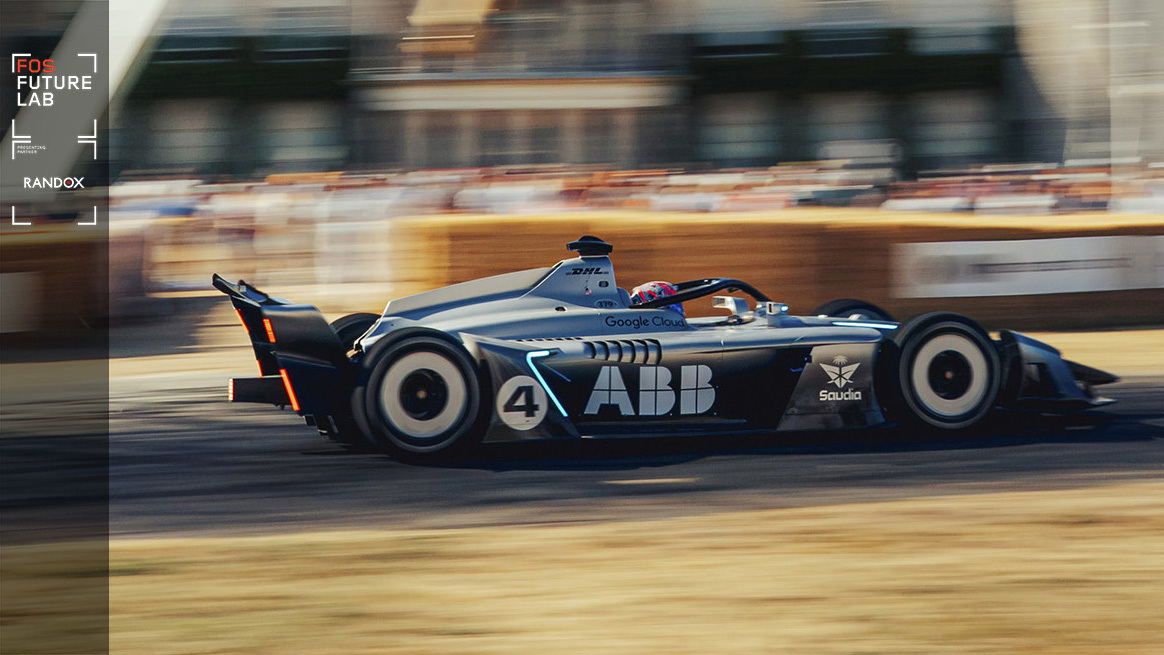
Battery cells are improving so fast — Envision’s newest cells store 310 watt-hours per kilogram — that a Gen5 car could plausibly run “close to a megawatt of power. That’s 1,300 horsepower,” said Filippi. “Our main problem will be the circuits. The car will be so fast we will be quite limited on where we can race them, which is a fantastic problem to have.”
His simulations suggest that on a damp track, four-wheel drive would already make a Gen4 car faster than a Formula 1 car.
Save the V8 for Sunday
None of which, Filippi was at pains to say, requires anyone at Goodwood to surrender their heroes. “We are at a petrolhead event here in Goodwood. Driving electric cars to go to work is a way to save our V8s and V12s to do 100 miles once every weekend. What makes no sense is to use highly inefficient petrol cars for the boring daily commute.”
His team’s Race Against Climate Change programme puts the audience to work too: 470,000 fan pledges so far, and a plan to plant 500,000 mangrove trees in India’s Sundarbans over five years. It’s great to see Formula E branching out.
Randox is a global leader in diagnostics, revolutionising patient outcomes through innovative technologies, including its patented biochip technology. This pioneering diagnostic platform allows for the simultaneous detection of multiple biomarkers from a single sample, delivering faster, more accurate, and comprehensive results. Operating in over 145 countries, Randox develops advanced laboratory instruments, high-quality reagents, and innovative testing solutions to improve global healthcare.
Randox Health brings this cutting-edge technology directly to individuals, offering bespoke, preventative health testing programs. With world-class laboratories and personalised health insights, Randox Health enables early detection of a wide range of conditions, helping individuals take control of their health.
Together, Randox and Randox Health are redefining diagnostics and preventative healthcare. For more information, visit www.randox.com and www.randoxhealth.com.
Photography by Charlie Brenninkmeijer and Sam Milton.
The 2027 Festival of Speed will take place on 15th-18th July 2027, sign up for ticket alerts to make sure you don't miss out. Tickets are available for GRRC Members and Fellows, you can join the Fellowship today.
festival of speed
fos
fos 2026
event coverage
formula e
future lab
fos future lab

Subscribe to Goodwood Road & Racing
Thank you, you’re now subscribed

How many hay bales are used at FOS?
For the last two years, 5,800 bales have been recylced into the biomass energy centre to be used for energy generation