

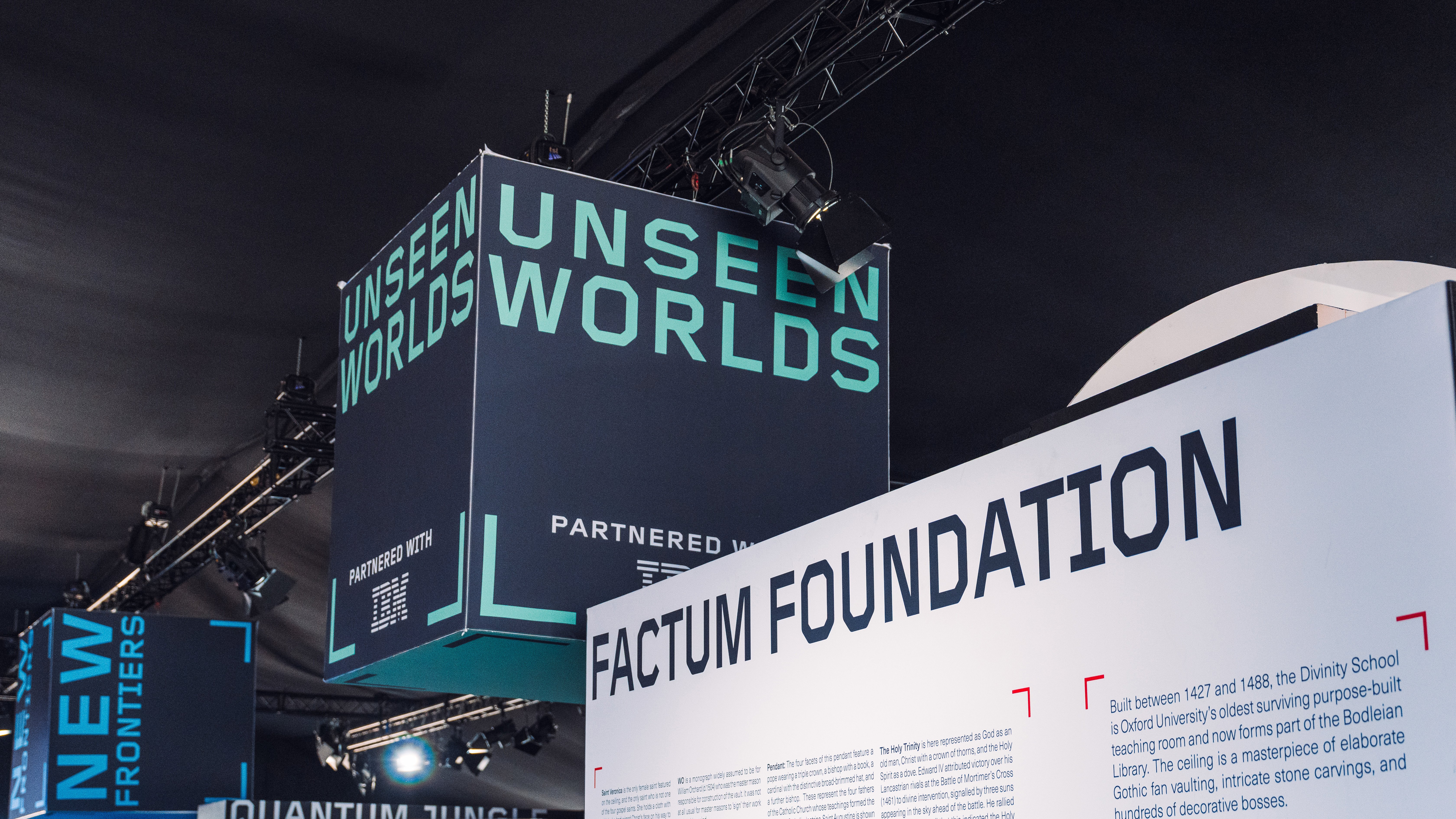
FOS Future Lab: Inside Unseen Worlds — quantum computers and hidden tombs
In the centre of the Unseen Worlds zone at FOS Future Lab presented by Randox hangs what looks like a chandelier spun from gold. Visitors keep photographing it, which is fair enough, though most are surprised to learn they are admiring a fridge.
This is IBM's Quantum Chandelier, the dilution refrigerator at the heart of its System One quantum computer, used to cool quantum chips close to minus 273 degrees Celsius. That’s colder than deep space, and comfortably the most glamorous cooling system at the Festival of Speed presented by Mastercard.
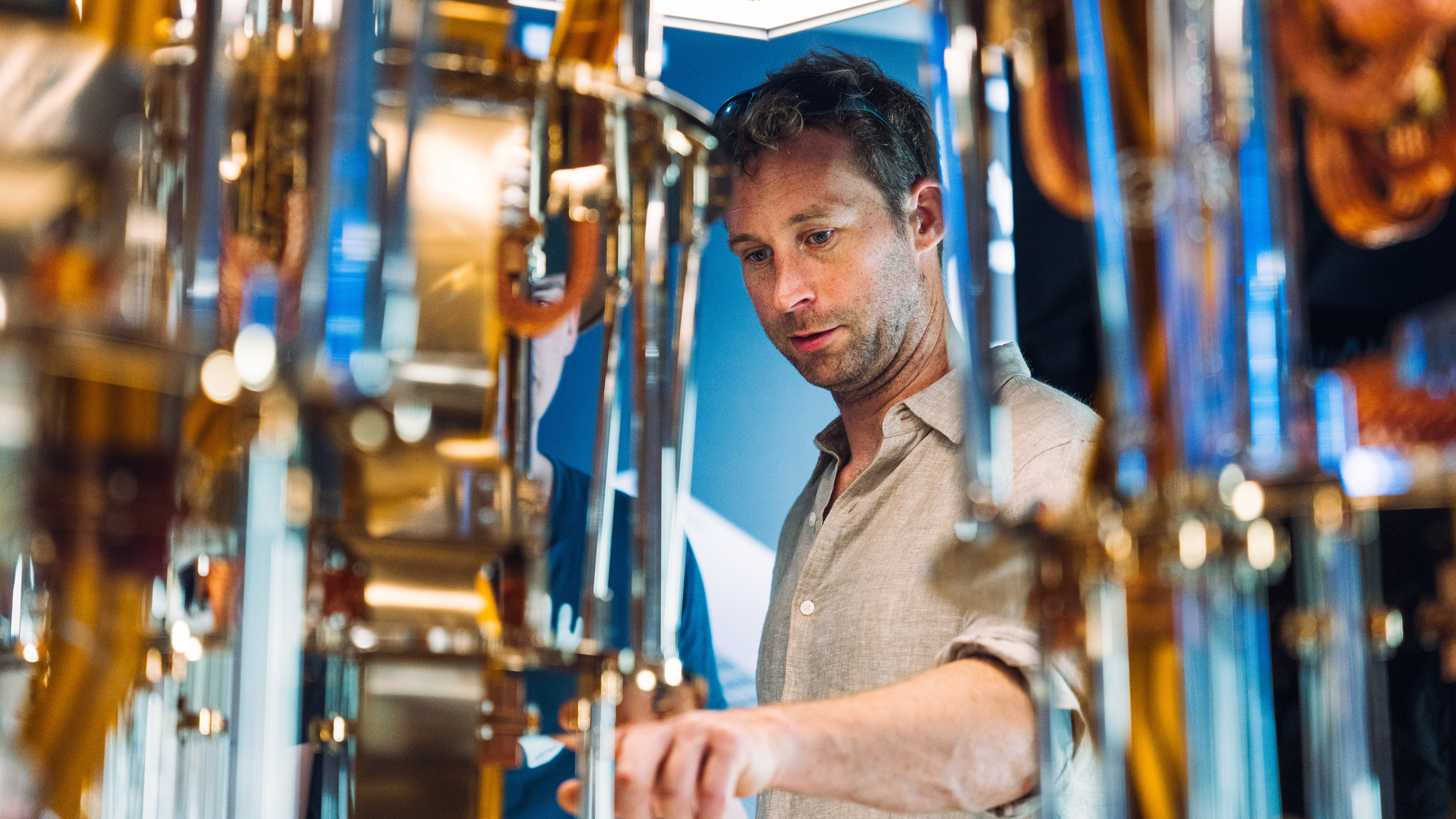
It sets the tone for a zone dedicated to things the human eye cannot see: atoms and electrons, wavelengths beyond our vision, paintings beneath paintings and tombs beneath the streets of Naples.
The chandelier's neighbours at the National Quantum Computing Centre (NQCC) are the people working out what to do with it. "Quantum computing is a completely different type of computing," explains Daisy Shearer of the NQCC. "You can think of it like a light switch. In a regular computer you've got on and off, but a qubit is like a dimmer switch; we can choose any position between that on and off. That means that we go from two options to basically an infinite number of options."
On the stand, real superconducting quantum chips sit under a microscope for visitors to inspect, and Shearer is quick to puncture the science fiction. "You're probably not going to have a quantum computer on your desktop," she says. Instead, think logistics, telecoms, new materials and battery chemistry. Her message to take home: "We are building quantum computers, and they're happening now."
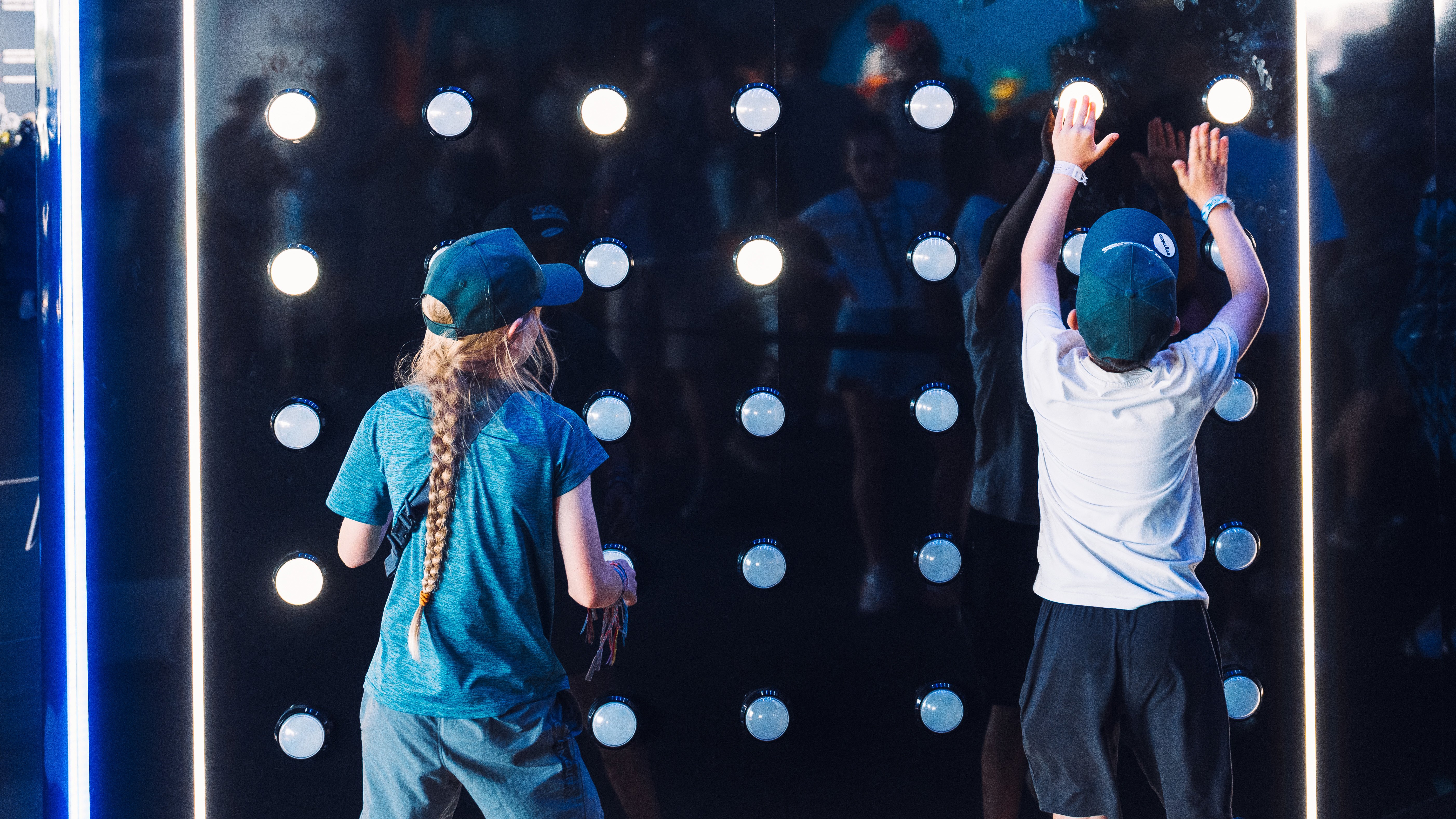
Behind her, a wall of rippling light pulls in the younger crowd. Quantum Jungle, by Berlin-based artist Robin Baumgarten, is an interactive installation that calculates Schrödinger's equation in real time. Poke it, and you are, in effect, playing with the maths of a quantum particle. It is quite possibly the only place at Goodwood where touching the art is encouraged.
Oxford-based Quantum Solutions completes the quantum corner by making the invisible practical. Its quantum dot imaging systems — advanced sensors mounted on compact drone cameras — reveal visual data the human eye simply cannot register, bringing satellite-grade sensing down to field level. Visitors can explore detailed aerial imagery spanning agriculture and the environment, including a unique look at the Eden Project in Cornwall.
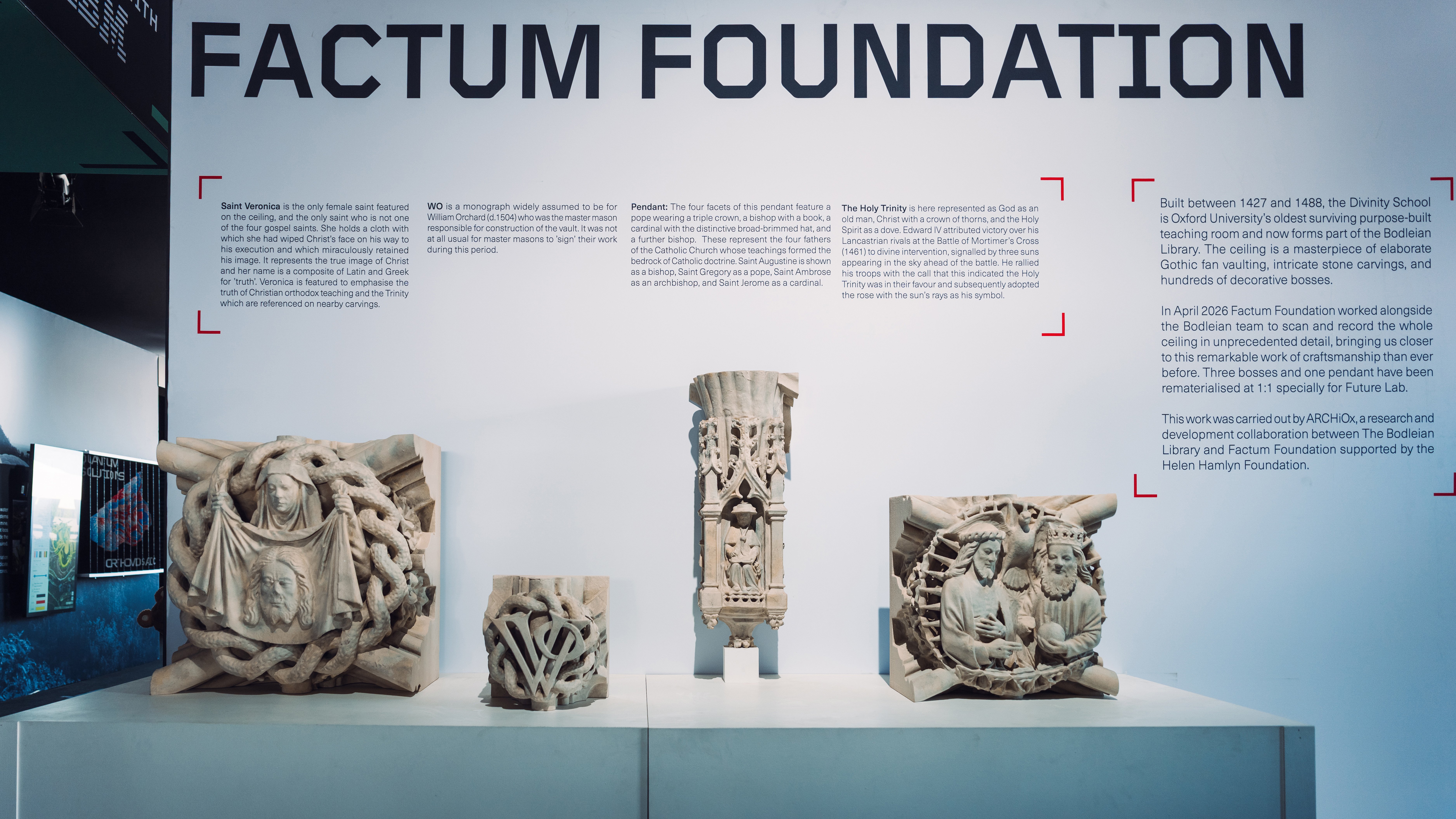
Then the zone pivots from physics to the past. Factum Foundation, the Madrid-based non-profit, records cultural treasures in extreme detail so they can be reproduced, studied and — crucially — saved. "It's really important to have a record of objects in case they get lost," says project manager Beatrice Bosco.
The star exhibit is a 17th-century Madonna and Child displayed beside its exact facsimile, and beside what an X-ray revealed hiding underneath: a 16th-century portrait of Antonietta Gonzalez, the 'Hairy Girl' celebrated across Renaissance Europe.
Nearby, a recreation of a chamber from the Ipogeo dei Cristallini, a fourth-century BC Greek tomb beneath Naples, comes complete with a CNC-milled, hand-finished head of Medusa. "What is really important for Factum is to build bridges between technology and craftsmanship," says Bosco.
She has also been window-shopping other exhibitors at FOS Future Lab. "What could be really important for us is the work that TouchLab are doing," she says of the robotic touch specialists opposite. "Experiencing artworks digitally by handling them in the digital space would really be a game changer."
That, in the end, is the trick of Unseen Worlds. Qubits, quantum dots, X-rays and scanners are all doing the same job: dragging the invisible into the light. You will leave having seen a computer that runs on atoms, a tomb no tourist can enter and a girl hidden inside a painting for four centuries. Not bad for things you cannot see.
Randox is a global leader in diagnostics, revolutionising patient outcomes through innovative technologies, including its patented biochip technology. This pioneering diagnostic platform allows for the simultaneous detection of multiple biomarkers from a single sample, delivering faster, more accurate, and comprehensive results. Operating in over 145 countries, Randox develops advanced laboratory instruments, high-quality reagents, and innovative testing solutions to improve global healthcare.
Randox Health brings this cutting-edge technology directly to individuals, offering bespoke, preventative health testing programs. With world-class laboratories and personalised health insights, Randox Health enables early detection of a wide range of conditions, helping individuals take control of their health.
Together, Randox and Randox Health are redefining diagnostics and preventative healthcare. For more information, visit www.randox.com and www.randoxhealth.com.
Photography by Charlie Brenninkmeijer.
The 2027 Festival of Speed will take place on 15th-18th July 2027, sign up for ticket alerts to make sure you don't miss out. Tickets are available for GRRC Members and Fellows, you can join the Fellowship today.
festival of speed
fos
fos 2026
event coverage
future lab
fos future lab
unseen worlds

-

Jumping for joy at the Forest Rally Stage
Subscribe to Goodwood Road & Racing
Thank you, you’re now subscribed

How many hay bales are used at FOS?
For the last two years, 5,800 bales have been recylced into the biomass energy centre to be used for energy generation