

The physicist making quantum computing tangible
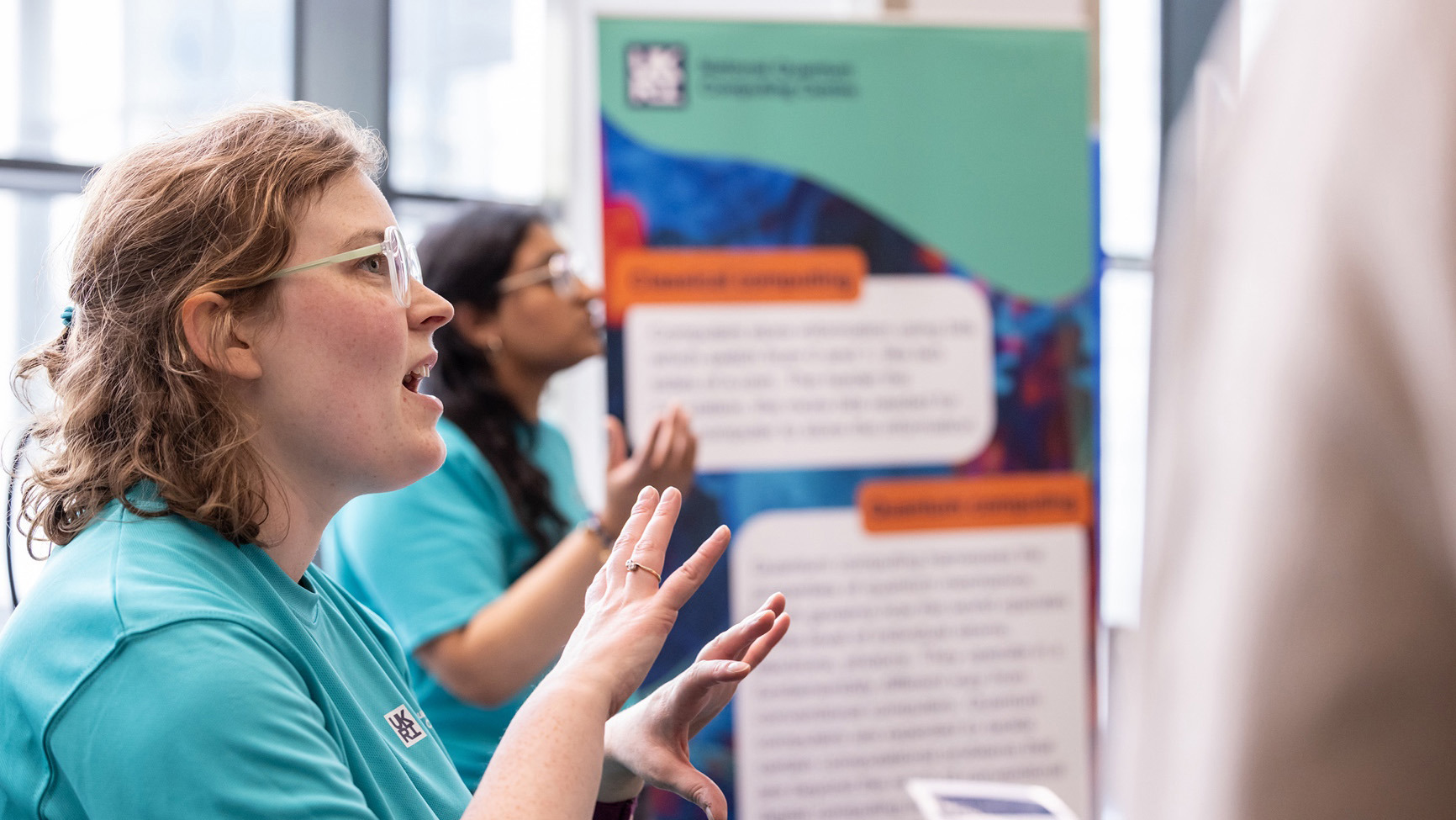
Daisy Shearer is the quantum computing outreach and education lead at the National Quantum Computing Centre, the UK’s national laboratory for quantum computing. A former semiconductor physics researcher who built a following explaining her work on Instagram, she now spends her days turning some of the strangest technology on the planet into something mere mortals can grasp.
We caught up with Shearer ahead of the NQCC’s visit to FOS Future Lab presented by Randox at the 2026 Festival of Speed presented by Mastercard to talk coin flips, careers and why some of the smartest problems we’ll solve this decade involve hospital beds, not just supercomputers.
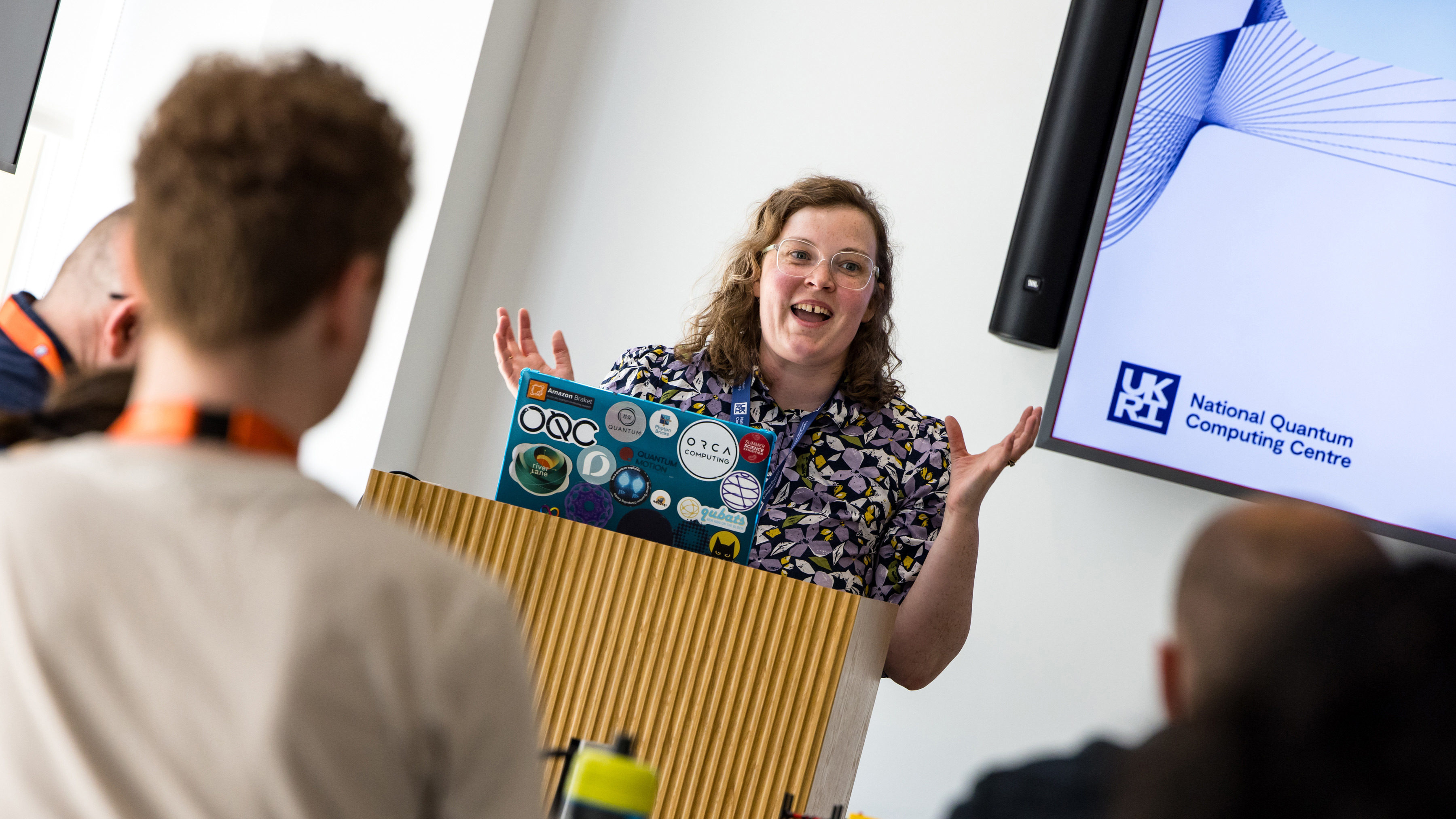
How did you end up running outreach at a national lab?
I did physics at university — an integrated master’s with a research year at a place that no longer exists, the Centre for Integrated Photonics. My short-and-sweet layperson description is I was helping make the internet faster: creating lasers used for telecommunications, and making them switch on and off quicker using quantum effects.
After that, I spent about three years as a physics researcher in semiconductor spintronics at the University of Surrey’s Advanced Technology Institute. The whole time, I was doing loads of work on Instagram, posting content explaining my research. I became a STEM ambassador, then this role came up. I hadn’t realised you could get paid to do a hobby I loved.
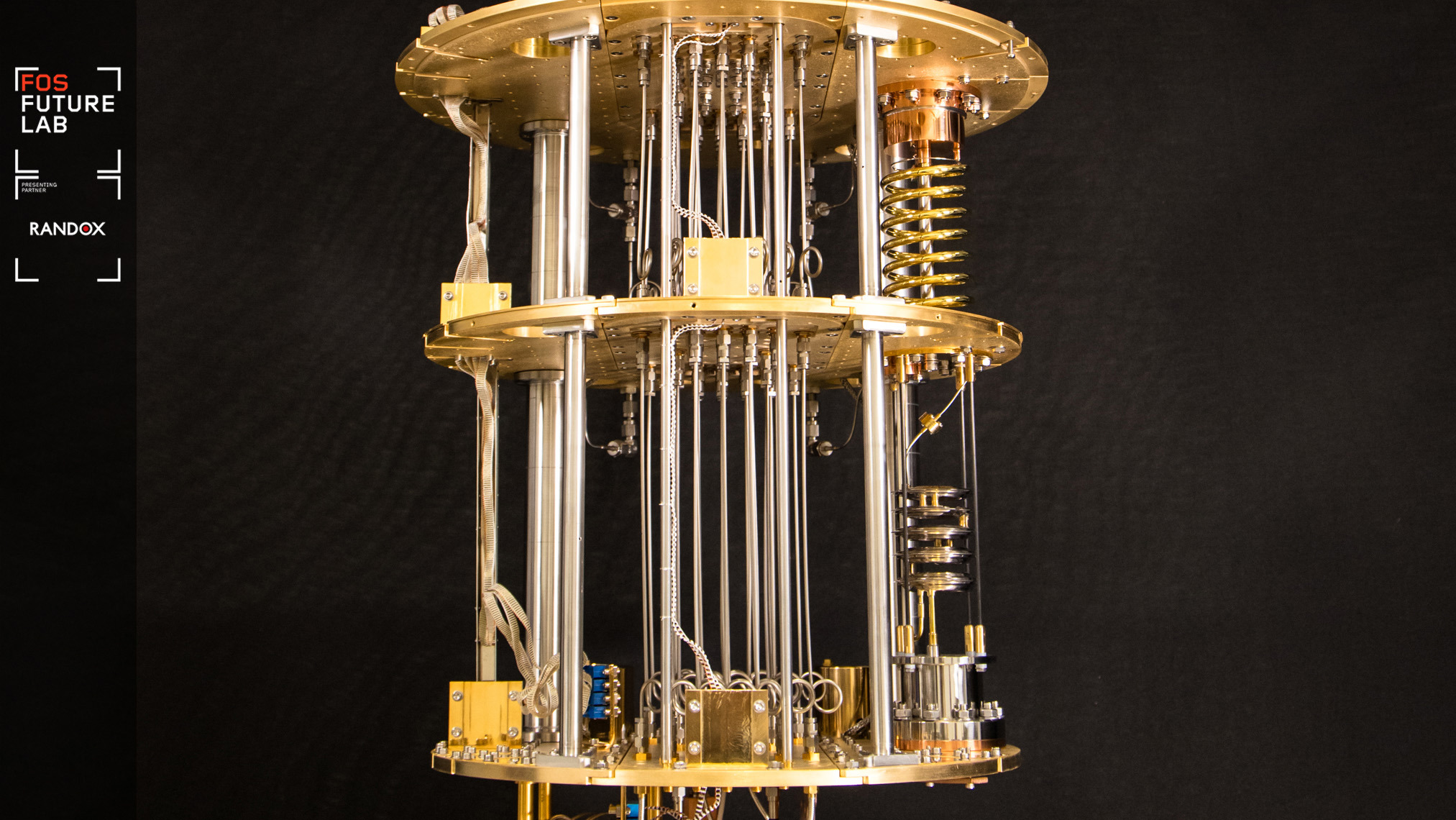
Walk us through it. What actually is a quantum computer?
Regular computers think in binary — ones and zeros. Imagine a coin: heads is a one, tails is a zero. Everything on your phone, every email, every video, is a long string of heads and tails. So you need a lot of coins. A quantum computer doesn’t use bits like that, it uses qubits. Rather than being stuck on heads or tails, the coin gets flipped into the air. It’s not heads; it’s not tails; it’s a combination of the two, with a probability of ending up either way.
Put lots of those mid-air coins into the same calculation, link them together, and you can do things even the most powerful supercomputer we have today simply can’t. Superposition (the coin in mid-air) and entanglement (linking qubits together so they share information) are the two quantum properties the whole thing runs on.
Quantum computing could be transformative. Where will we feel the impact first?
The ones I’m most excited about are healthcare and energy. We’ve done feasibility studies on optimising how you would allocate hospital beds on a national level, or where you would put vaccine centres if we had another pandemic. Drug discovery is a North Star in terms of applications, but it’s a lot further off.
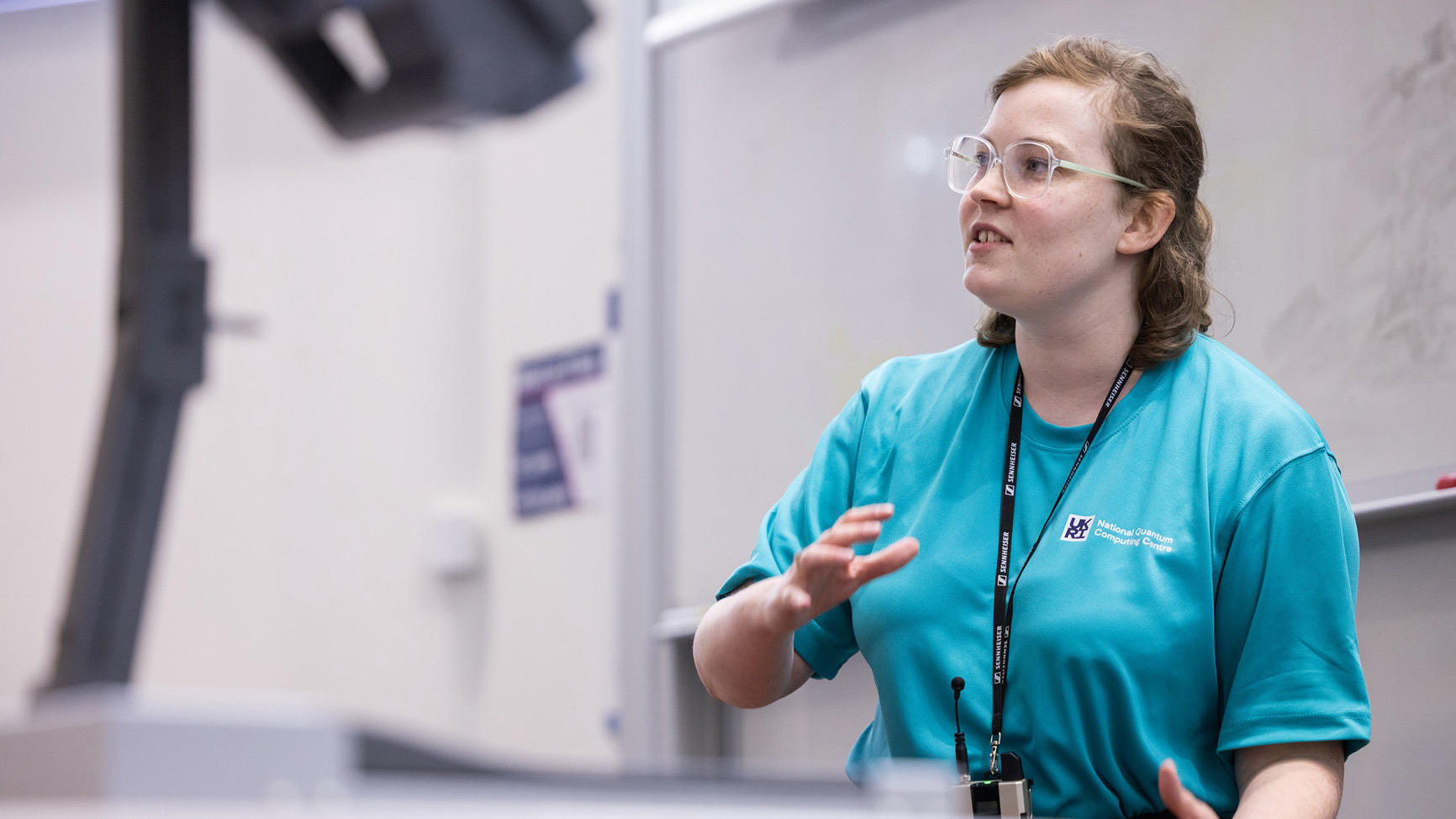
What’s the biggest technical challenge you’re working on right now?
Scaling. There are different types of quantum computers — some use an atom or an ion, another team works on superconducting circuits. Each has different pros and cons. One might be much more stable than another but require supercooling to almost absolute zero. Most machines today have hundreds of qubits. To breach what we call the quantum advantage era, predictions are we’d need at least 100,000 fully functional qubits. That’s a real order-of-magnitude step up.
And the more qubits you add to a system, the more unstable it becomes. Quantum systems are very, very fragile — any interaction can cause what we call the wave function to collapse, and all the quantum information is lost. So the more qubits you have, the more you have to do to keep them under control.

You’ve been a vocal advocate for neurodiversity in STEM. How has your own experience shaped the way you teach and work?
I’ve been quite loud about my autism for a long time, and I suspect I have ADHD, too. I think it’s crucial to have diversity of thought in all its myriad ways. We’re really lucky at the NQCC — we have a super diverse team, and many neurodivergent colleagues for whom quantum is something that really drives them.
I used to think I wanted to be a researcher, but I discovered an obsession with education and communication, partially because there had been times in my own education when my needs hadn’t been met. So a lot of my practice is around inclusive ways of teaching.
What advice would you give a young person interested in a career in quantum?
You’ve got so many tools at your advantage. The internet has loads of resources — be mindful, engage your media literacy, but there’s plenty out there to support a quantum journey. I was reading popular science books on quantum in high school. IBM has a really big library of learning resources, and I’m a big fan of PennyLane, from a company called Xanadu.
The NQCC also provides access to an online course. The thing that makes the biggest difference is the experiences. A masterclass, a hackathon, work experience, a summer placement — those will really shape your perception of quantum, and of what you do and don’t like.
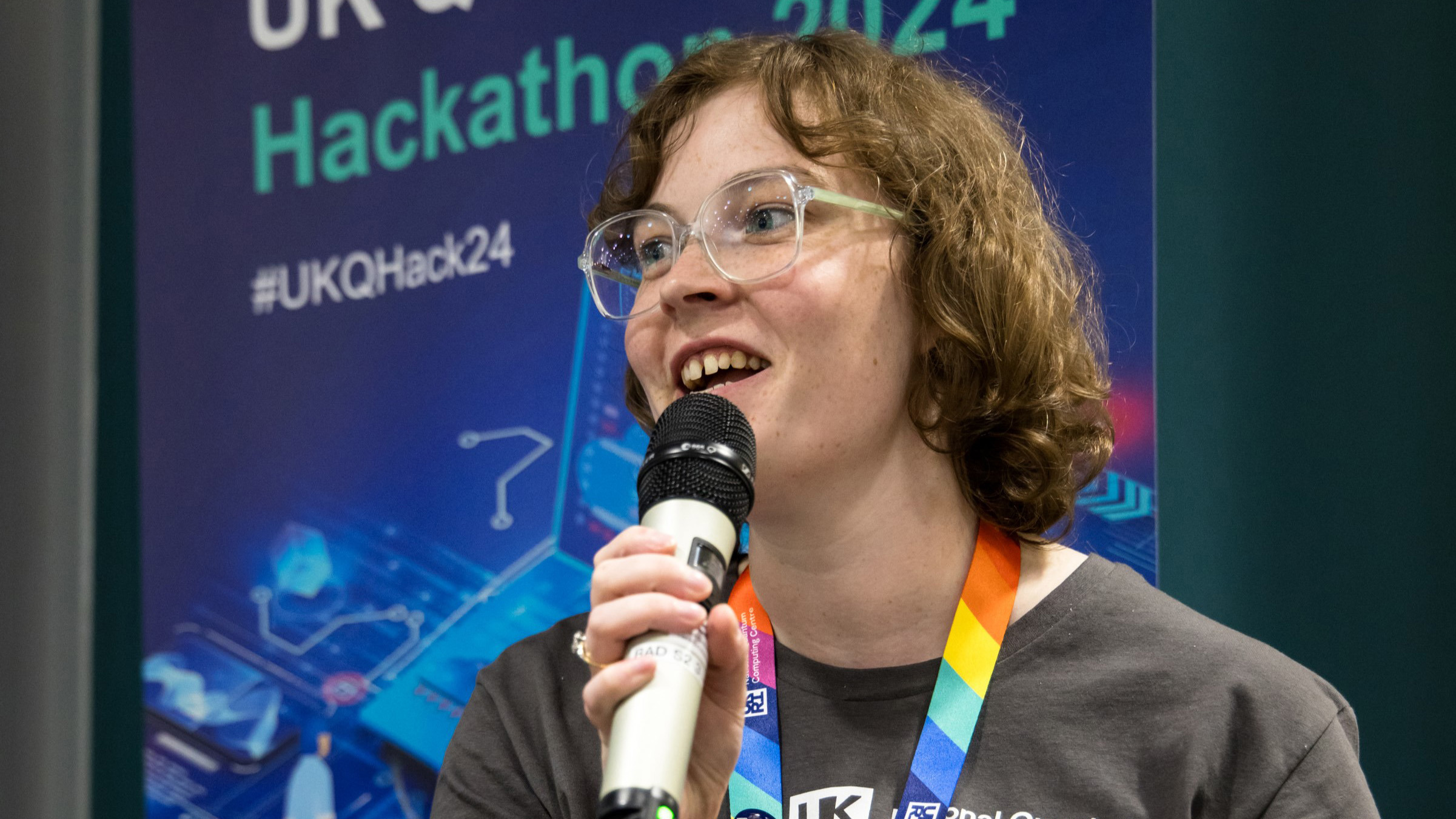
What’s the most exciting development you’ve witnessed in the field recently?
The government announced billions in ProQure investment, with a view to procuring a quantum computer. It really shows the UK’s commitment to this technology. Without it, we’d run the risk of losing a lot of talent.
What’s the biggest misconception about quantum computing?
That it’s really tied to AI. Everybody thinks quantum and AI go hand in hand. They don’t. There’s a subfield called quantum machine learning, and we anticipate our workflows will benefit from AI, but they’re not the same thing.
The other one is that everyone will have a quantum laptop in the future. Incredibly unlikely — never say never, but it’s much more likely we’ll have quantum computers in bespoke labs that people access via the cloud. You don’t have a supercomputer in your house. That’s probably what we’ll see with quantum computing for the next 20 to 50 years.
Outside the lab, what keeps you curious, and who should FOS Future Lab visitors follow?
There are so many amazing quantum people out there. We’ve just launched a Quantum Public Engagement Network that includes a lot of them. I’ve done a lot of work with Jess Wade at Imperial College — she’s a fabulous role model. I also work closely with Abie Bray from UCL, who runs an amazing initiative called Orbyts, putting researchers into schools. And internally, my colleague Natasha Oughton, our responsible and ethical computing lead — her work is so important, and it feeds into mine.
Follow Daisy’s work ahead of NQCC’s visit to FOS Future Lab.
Randox is a global leader in diagnostics, revolutionising patient outcomes through innovative technologies, including its patented biochip technology. This pioneering diagnostic platform allows for the simultaneous detection of multiple biomarkers from a single sample, delivering faster, more accurate, and comprehensive results. Operating in over 145 countries, Randox develops advanced laboratory instruments, high-quality reagents, and innovative testing solutions to improve global healthcare.
Randox Health brings this cutting-edge technology directly to individuals, offering bespoke, preventative health testing programs. With world-class laboratories and personalised health insights, Randox Health enables early detection of a wide range of conditions, helping individuals take control of their health.
Together, Randox and Randox Health are redefining diagnostics and preventative healthcare. For more information, visit www.randox.com and www.randoxhealth.com.
Tickets for the Festival of Speed are limited. Only Thursday admission remains but hospitality packages for all four days are available. Missed out on a ticket for Friday or Saturday? Find out how you can access our sold-out days with one of our new packages.
If you’re not already part of the GRRC, joining the Fellowship means you can save ten per cent on your 2026 tickets and grandstand passes, as well as enjoy a whole host of other on-event perks.
festival of speed
fos
fos 2026
event coverage
future lab
fos future lab
NQCC
unseen worlds

Subscribe to Goodwood Road & Racing
Thank you, you’re now subscribed

How many hay bales are used at FOS?
For the last two years, 5,800 bales have been recylced into the biomass energy centre to be used for energy generation