

How the internet is learning to feel
For most of the digital age, computers have understood the world through sight and sound. They learned to process images, recognise speech and generate video. Screens gave machines vision, microphones gave them hearing and the internet became a vast exchange of visual and auditory information. One sense, however, has largely remained missing: touch. Now that gap is beginning to close.
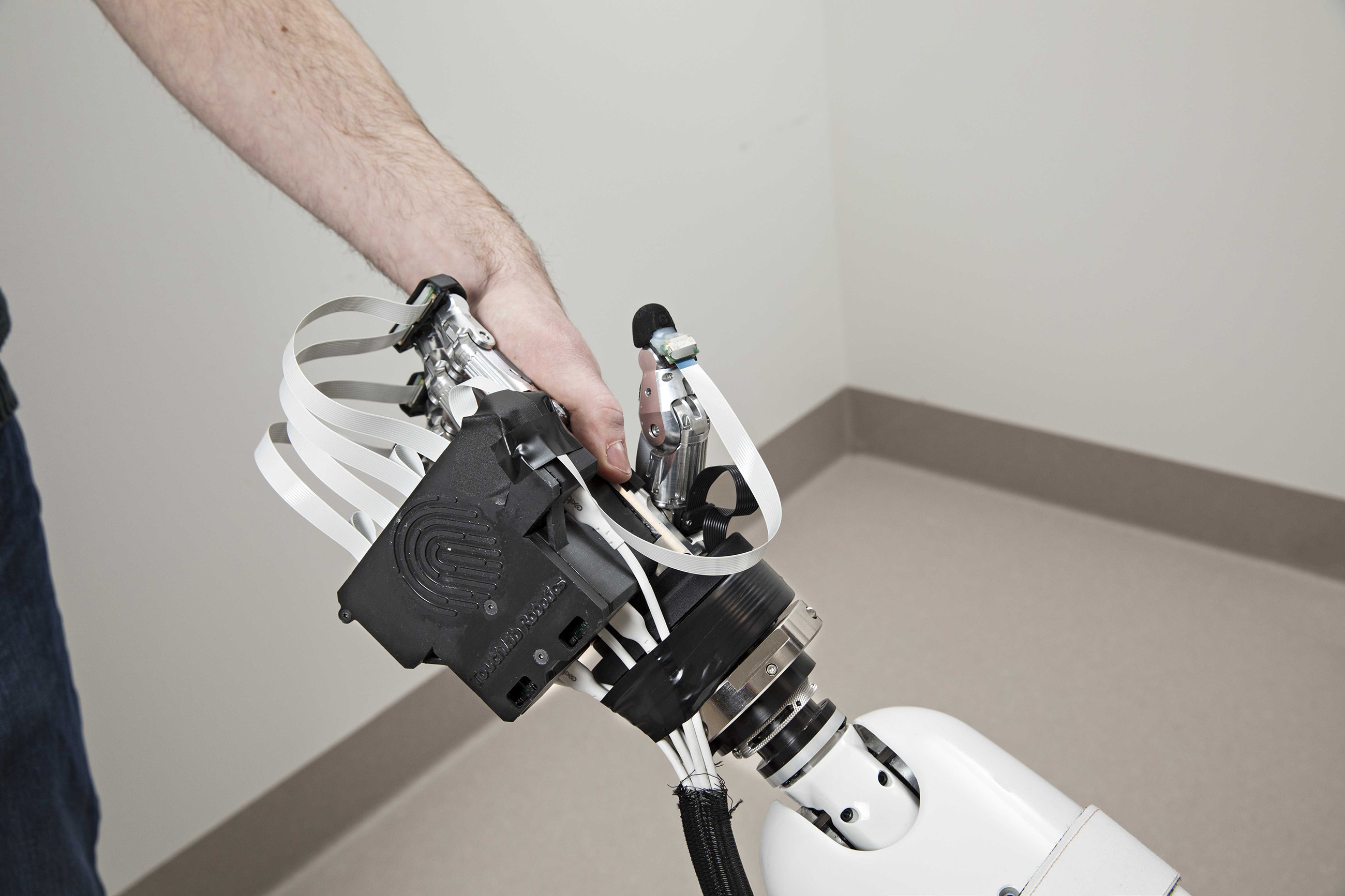
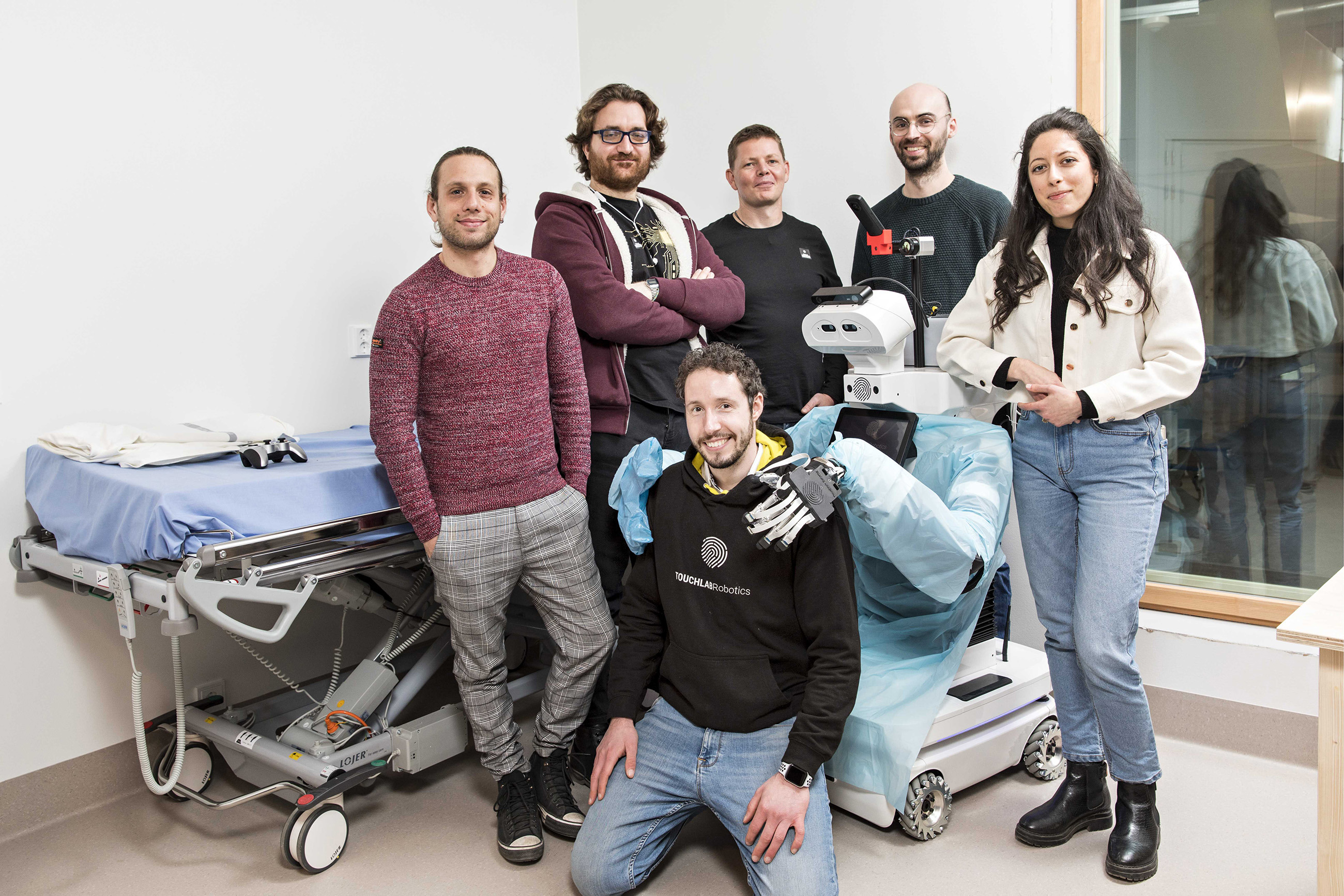
At the forefront of this work is TouchLab, a British company based at the National Robotarium in Edinburgh — the UK’s £22.4 million research facility dedicated to robotics and AI, and a previous FOS Future Lab presented by Randox exhibitor. Its 17-person team of PhDs and engineers has spent the past seven years developing fingertip sensors designed to give machines a human sense of touch.

What that means in practice is that physical sensation — the pressure of a handshake, the texture of a surface, the resistance of a beating heart — could eventually be transmitted across a network the same way a photograph or a phone call is today. Touch becomes data. And like any data, it can be shared, stored and sent anywhere in the world. In other words, the internet is learning to feel, and visitors to FOS Future Lab at the 2026 Festival of Speed presented by Mastercard will experience this technology, fittingly, firsthand.
Not everyone will be immediately comfortable with this idea. A robot that can feel what it touches raises instinctive questions: Do we really need machines with human-like senses? Could tactile robotics be used to replace workers rather than support them? What happens when the same technology that brushes a patient's hair on a hospital ward is adapted for surveillance, military use or environments where consent is harder to define?
These are legitimate concerns, and ones any technology claiming to extend human capability into machines must address openly. TouchLab's team will be at FOS Future Lab throughout the event, so there will be plenty of opportunity to put those questions to the people building this technology directly.
Why touch matters
Humans rely heavily on touch to understand the world. Our fingertips contain thousands of sensory receptors capable of detecting incredibly subtle differences in pressure, texture, and vibration, allowing us to thread a needle, judge the ripeness of a peach or sense when a glass is about to slip. That combination of sensitivity and instinctive motor response is something robotics has struggled to replicate.
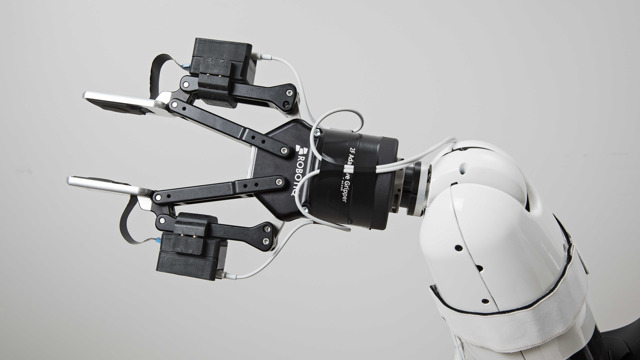
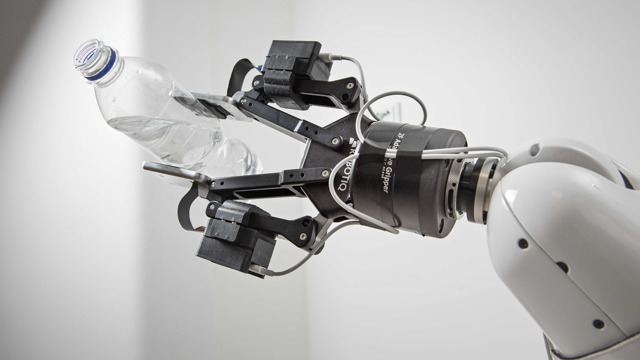
Researchers put it bluntly: building a robot that can walk is easier than building one that can pick up a grape without crushing it. For decades, automation has largely relied on cameras and pre-programmed motion. Vision can guide a robot to an object, but it cannot tell the machine how firmly to hold it. Without tactile feedback, even simple tasks require elaborate workarounds.
Engineering a sense of touch
TouchLab's answer to that problem begins at the fingertip — the precise point where machines physically interact with the world.
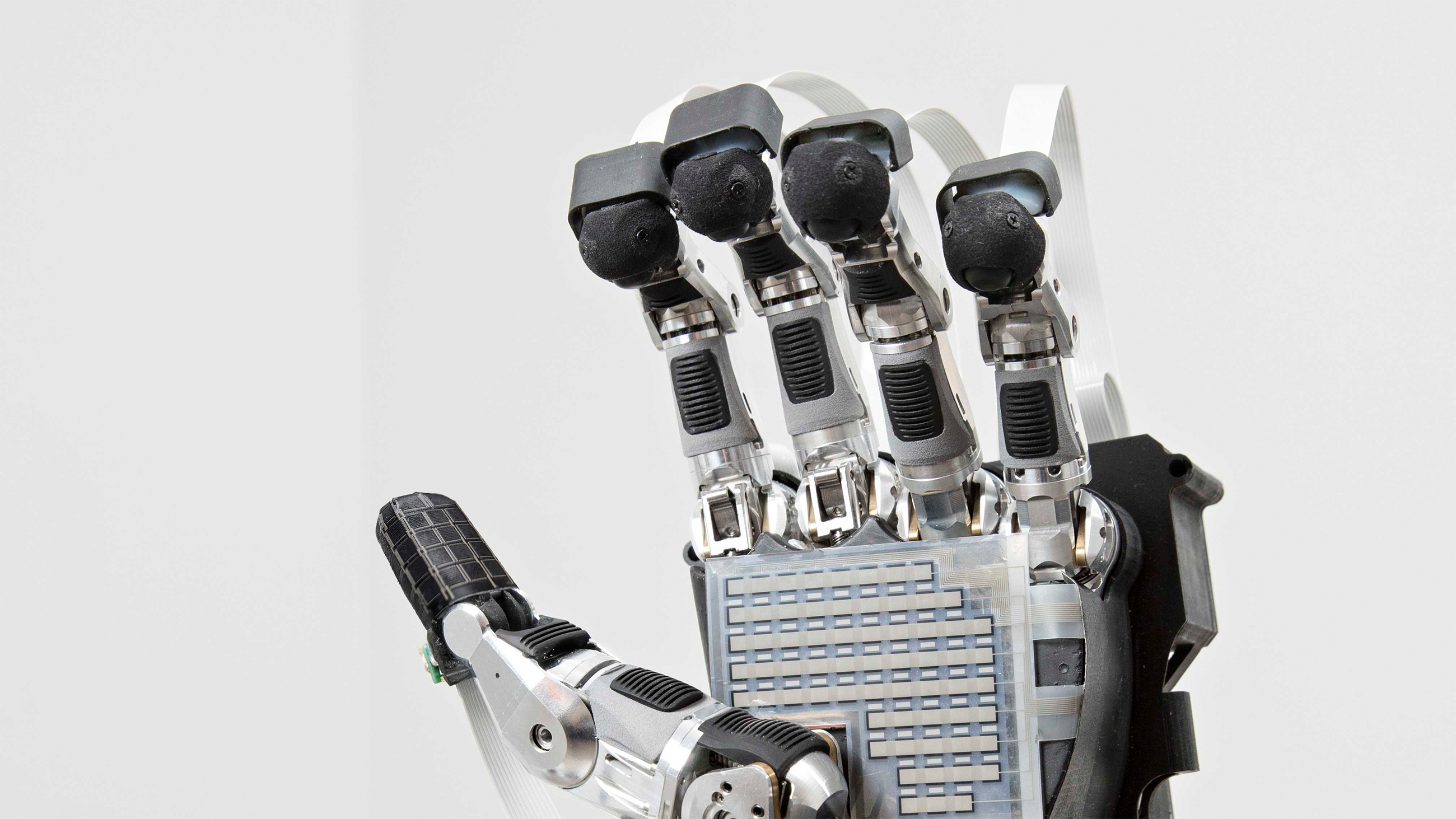
At the heart of the technology is a material science breakthrough: ultra-thin electronic skin that delivers high-resolution tactile feedback across a flexible surface. The sensors can be as small as 50 microns, roughly the width of a human hair, and capture pressure in three dimensions.
The result is a patented system allowing robots to adjust their grip dynamically rather than relying on pre-programmed movements. The e-skin can be wrapped around hard or soft robotic hands, arms and grippers, making it adaptable across a range of platforms. Industrial robots can weld car bodies with extraordinary precision, yet many still struggle with everyday tasks like folding clothing. TouchLab is changing that.
Feeling through a machine
One of the most striking demonstrations involves teleoperation — controlling a robot remotely while receiving feedback from the machine.
Using a specialised haptic glove, participants can move their own hand while a robotic hand mirrors the motion. As the robot touches objects, sensors relay feedback through the glove, allowing the user to feel what the machine is touching — something FOS Future Lab visitors will get to experience this July.
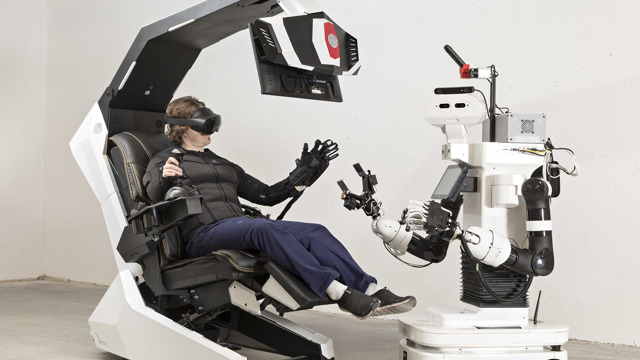
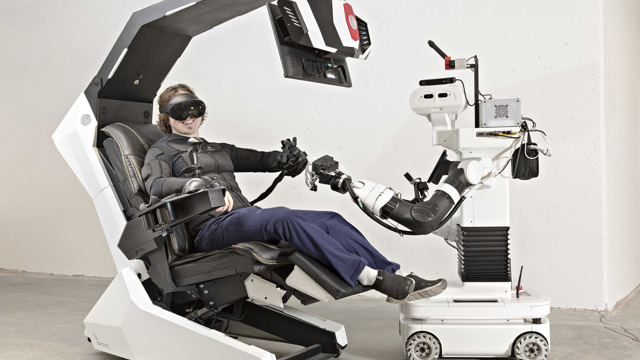
The first sensation can be slightly disorienting. You move your hand in mid-air while the robotic hand reaches out somewhere else entirely. When the robot touches an object, pressure is transmitted back through the glove. Within seconds, the brain begins linking the two sensations together, and it starts to feel less like controlling a machine and more like extending your own reach into another environment.
This kind of technology has far-reaching implications. Robots could handle hazardous materials, explore disaster zones or carry out delicate medical operations remotely while operators remain safely elsewhere. TouchLab has already demonstrated this capability over remarkable distances by transmitting touch feedback across 6,684 kilometres, from Edinburgh to Miami, as part of the $10 million ANA Avatar XPRIZE competition.
Tested on the ward
Arguably, the most compelling real-world evidence this technology works comes from a hospital in Finland.
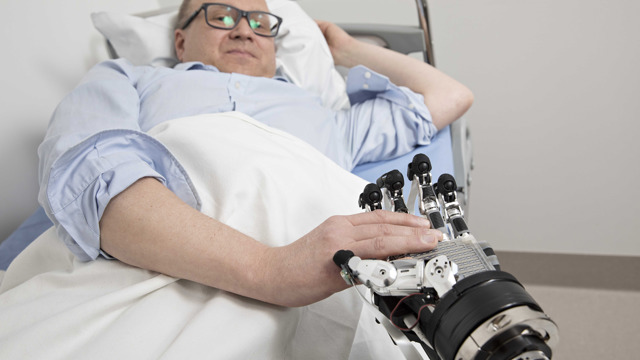
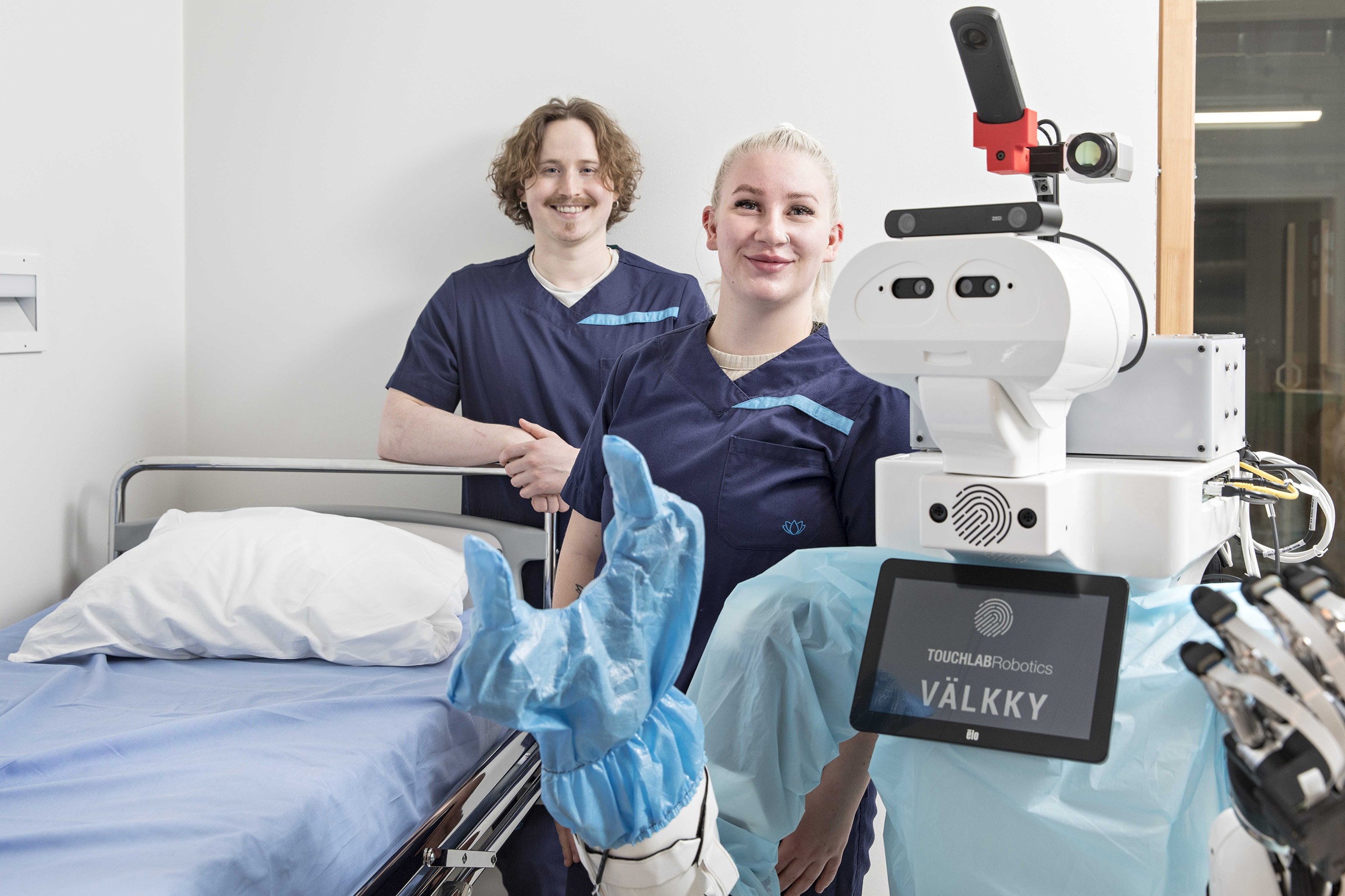
TouchLab deployed its e-skin-equipped telerobot — named Välkky by the nursing staff — at Laakso Hospital in Helsinki. The robot, built on PAL Robotics' TIAGo++ platform and controlled remotely by operators wearing haptic gloves, spent six months on a stroke ward as part of a clinical pilot.
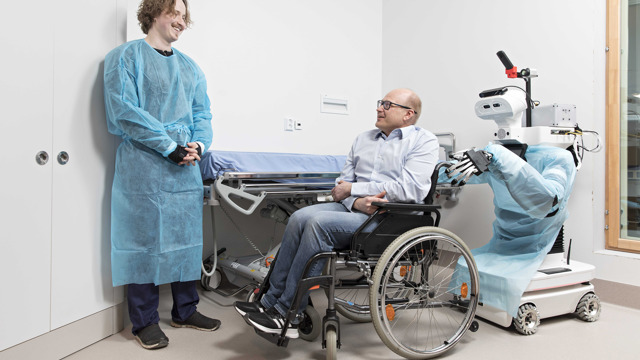
With nursing shortages worsening across Europe and hospital-acquired infections remaining a persistent threat, the World Health Organisation estimates 15 per cent of patients in low- and middle-income countries contract at least one infection during their hospital stay, with one in ten dying as a result. TouchLab wanted to test whether a touch-sensitive robot could take on routine clinical duties while keeping human caregivers at a safe distance from infectious environments.
During the pilot, Välkky measured vital signs including pulse, temperature and blood oxygen saturation. It served meals, moved assistive devices and carried out basic personal care tasks such as brushing patients' hair. Crucially, because of the e-skin, the remote operator could feel what the robot was touching — a capability no previous hospital telerobot had offered.
The trial is part of a broader €7 billion programme to build Europe's most technologically advanced hospital, due for completion in 2028, where purpose-trained nurses work alongside robots throughout. Perhaps the NHS will become the National Humanoid Service in time.
Proven under pressure
The Helsinki pilot built on credentials established during one of robotics' most high-profile international competitions. TouchLab was one of only 15 teams worldwide to reach the finals of the $10 million ANA Avatar XPRIZE, a four-year challenge to develop robotic avatar systems capable of transporting human presence across distances.
At the finals, untrained judges were given under an hour to learn how to operate each team's avatar before performing a series of real-world tasks. TouchLab's e-skin was among the sensing technologies evaluated, and as a result, now counts NVIDIA, Toyota, Honda, Boston Dynamics, Meta, Amazon, Ocado and PAL Robotics among its partners and clients. Not bad for a start-up with 17 people.
A wider sensory revolution
TouchLab's work is part of a broader effort to develop artificial skin capable of detecting temperature, vibration and surface texture, while advances in artificial intelligence are helping robots interpret the meaning of those signals.
Previously, FOS Future Lab has explored how neuromorphic skin could even allow robots to detect damage or ‘pain’, helping machines recognise when they are about to harm themselves or others.
A glimpse of the future of robotics
For visitors exploring FOS Future Lab, TouchLab will offer a rare opportunity to experience this technology for real. Robotic hands will demonstrate autonomous manipulation, sensors will visualise how machines interpret contact and participants will be able to try haptic interfaces simulating the sensation of touch.
Beyond the spectacle, the exhibit highlights an important shift in how machines are designed. The next generation of robotics may not be defined by faster processors or smarter algorithms alone, but by systems capable of sensing and responding to the physical world with far greater sensitivity.
If the digital age began with computers that could see and hear, the next chapter may belong to machines that can feel. That shift starts at the fingertip — and this July, you can feel it for yourself.
Randox is a global leader in diagnostics, revolutionising patient outcomes through innovative technologies, including its patented biochip technology. This pioneering diagnostic platform allows for the simultaneous detection of multiple biomarkers from a single sample, delivering faster, more accurate, and comprehensive results. Operating in over 145 countries, Randox develops advanced laboratory instruments, high-quality reagents, and innovative testing solutions to improve global healthcare.
Randox Health brings this cutting-edge technology directly to individuals, offering bespoke, preventative health testing programs. With world-class laboratories and personalised health insights, Randox Health enables early detection of a wide range of conditions, helping individuals take control of their health.
Together, Randox and Randox Health are redefining diagnostics and preventative healthcare. For more information, visit www.randox.com and www.randoxhealth.com.
Tickets for the Festival of Speed are on sale. Friday, Saturday and four-day passes are now sold out. Thursday tickets are selling fast and Sunday admission is limited. If you’re not already part of the GRRC, joining the Fellowship means you can save ten per cent on your 2026 tickets and grandstand passes, as well as enjoy a whole host of other on-event perks.
Images courtesy of Forum Virium Helsinki.
festival of speed
fos
fos 2026
event coverage
fos future lab
touchlab
extending reality

Subscribe to Goodwood Road & Racing
Thank you, you’re now subscribed

How many hay bales are used at FOS?
For the last two years, 5,800 bales have been recylced into the biomass energy centre to be used for energy generation