

Sir Lewis Hamilton’s Mission 44 sets sights on supporting 5 million young people
The moment that changed Gerren Ntiri’s life arrived via a podium ceremony she almost didn’t watch. It was 2020, and Stephanie Travers, a senior trackside fluid engineer for the Mercedes Formula 1 team, had been chosen to collect the winning constructors’ trophy.
“Oh my gosh, there’s a Black woman in Formula 1,” Ntiri remembers thinking. “I never thought I could actually do that. But she’s done it. Why can’t I?”
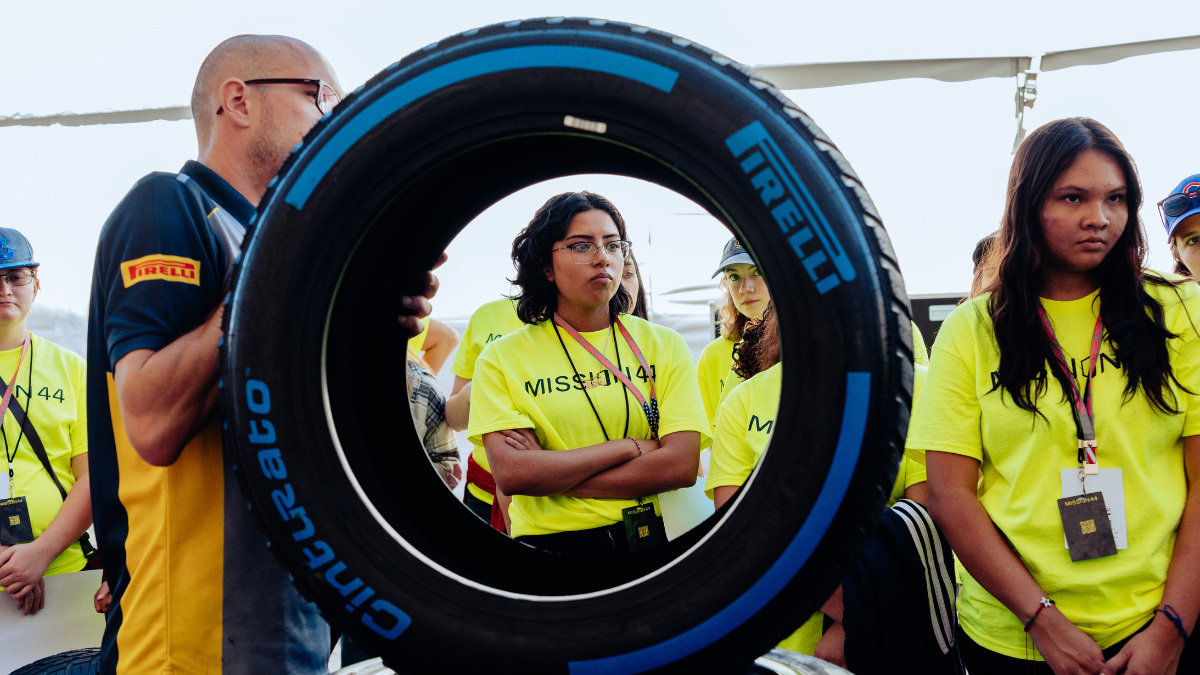
Until that day, Ntiri had been planning a career in medicine. She loved F1, but as a fan. Engineering the cars did not seem like a door open to her. Travers changed the map, and Ntiri applied to study aerospace engineering.
Now, five years on, she sat on the stage at FOS Future Lab presented by Randox at the 2026 Festival of Speed presented by Mastercard as a Mission 44 scholar with a Master’s in motorsport engineering, telling a tent full of young people how to follow her lead.
Mission 44 is the charity Sir Lewis Hamilton founded in 2021. As chief executive Jason Arthur puts it: “We know there’s talent in every community across the country, but what there isn’t is opportunity.”
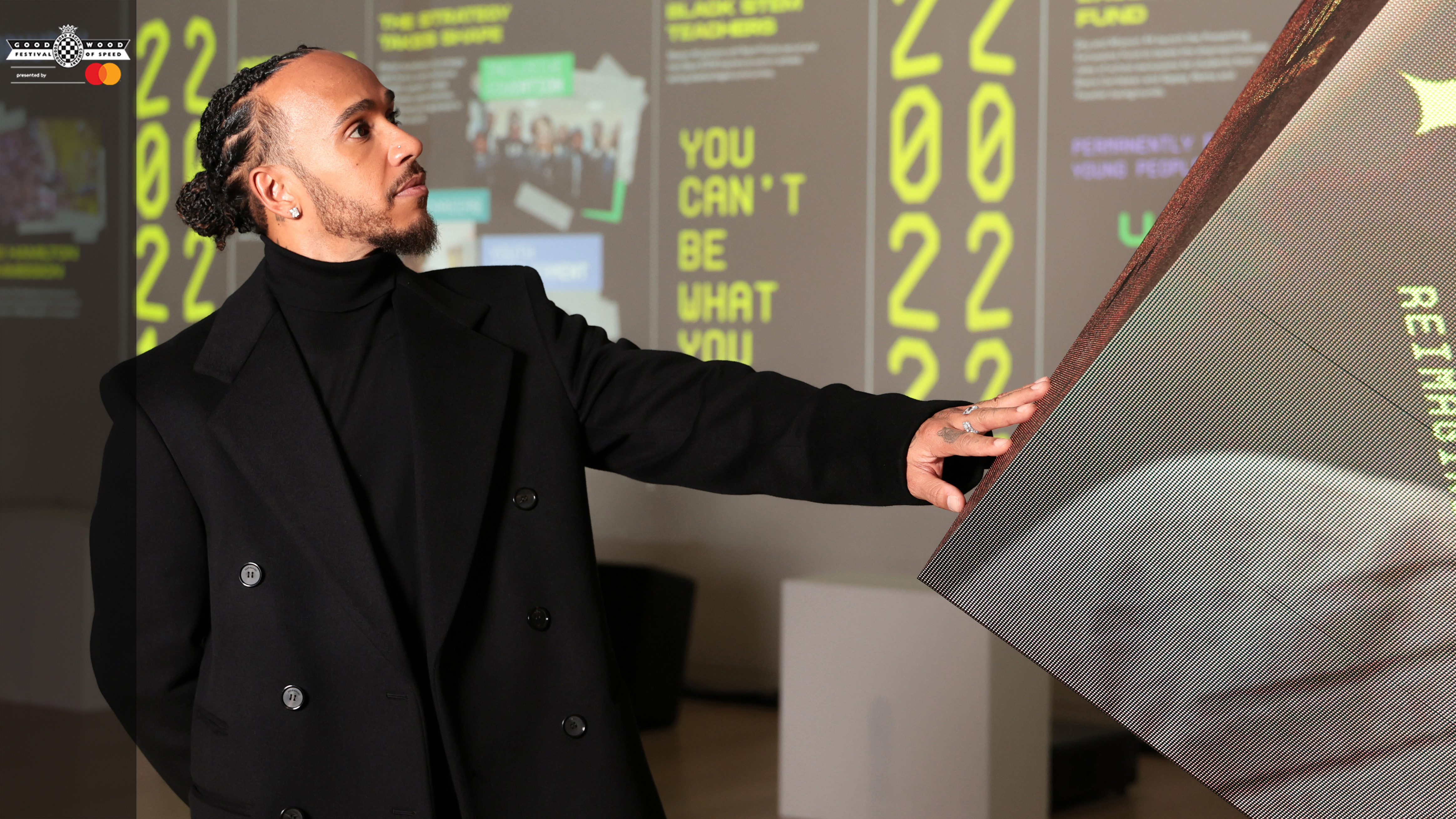
Hamilton knows this first-hand. For all the Championships, he is dyslexic, struggled at school and was expelled at 16. He then climbed a sport that is, in Arthur’s words, “incredibly expensive and pretty exclusive when you get to the top.” Mission 44 exists to narrow the gap between the talent that is everywhere and the opportunity that isn’t.
Teams around one table
The Hamilton Commission, the 2021 study Hamilton convened into why so few Black people work in UK motorsport, lit a fuse. Since then, Mission 44 has invested tens of millions through partner organisations, including Goodwood, where it's the Festival of Speed’s official charity, and brought F1 teams around a table to work out how to open their doors wider. “There’s been progress,” Arthur said. “But what we would say at Mission 44 is: let’s go faster.”
Press F1 for help
Leon Butler, chief executive of IBM UK and Ireland — a Mission 44 partner — grew up in a low-income family and taught himself computer science at A-level. His teacher’s sole contribution was the advice that “if you need help, press the F1 button.”
“I don’t want that experience for anyone,” he said. IBM’s answer is SkillsBuild, a free training platform with around a thousand courses, aiming to train 30 million people worldwide and already past 16 million.
Through the Mission 44 partnership it now carries F1-themed courses, and at Silverstone last week Butler watched young learners use AI to interrogate a virtual F1 car in plain English with no code required. “Turns out the car had no brakes,” he said. The learners found the fault, fixed it and raced the result.
His wider point is simple: “Don’t get intimidated by hearing STEM or AI or IT… believe me, if I can get into IT, anyone can.”

Five million by 2031
Mission 44 turns five this year, and Arthur used the FOS Future Lab stage to spell out what comes next. The charity currently reaches 550,000 young people. By its tenth birthday in 2031, it wants that number to be five million, and within the next 18 months it plans to expand into sub-Saharan Africa.
Hamilton has given £20million of his own money, fundraisers and lobbies policymakers, including the outgoing Prime Minister and current Education Secretary. “He does more than any other F1 driver, more than most athletes,” Arthur said. “He’s hugely engaged about using his platform, not for himself, but to really amplify the voices of others.”
Start by volunteering
So how does a young person actually get in? Ntiri’s advice is to start volunteering. “Whether that’s STEM activations, or even being at the Festival of Speed or Silverstone, the people that you meet, the networks you create, you don’t even know until you actually say yes to opportunities.”
Club-level racing teams, the panel agreed, are desperate for helping hands. They can’t pay, but most will offer you a bacon sandwich, a coffee and invaluable experience.
Fellow scholar Mohamed Elnadi is proof of concept. He read the Hamilton Commission as a student, spotted the scholarship on Hamilton’s Instagram, and now — Master’s completed — sat in the room with all those F1 teams himself.
Ntiri, meanwhile, found out she had won her place while on the phone to her mum and dad, and broke down in tears. “I don’t like to be dramatic,” she says, “but it quite literally changed my life.”
The courses are free. The volunteering is open to anyone. The talent, as Arthur says, is already out there — and might just be reading this.
Randox is a global leader in diagnostics, revolutionising patient outcomes through innovative technologies, including its patented biochip technology. This pioneering diagnostic platform allows for the simultaneous detection of multiple biomarkers from a single sample, delivering faster, more accurate, and comprehensive results. Operating in over 145 countries, Randox develops advanced laboratory instruments, high-quality reagents, and innovative testing solutions to improve global healthcare.
Randox Health brings this cutting-edge technology directly to individuals, offering bespoke, preventative health testing programs. With world-class laboratories and personalised health insights, Randox Health enables early detection of a wide range of conditions, helping individuals take control of their health.
Together, Randox and Randox Health are redefining diagnostics and preventative healthcare. For more information, visit www.randox.com and www.randoxhealth.com.
The 2027 Festival of Speed will take place on 15th-18th July 2027, sign up for ticket alerts to make sure you don't miss out. Tickets are available for GRRC Members and Fellows, you can join the Fellowship today.
festival of speed
fos
fos 2026
event coverage
future lab
fos future lab
mission 44


Subscribe to Goodwood Road & Racing
Thank you, you’re now subscribed

How many hay bales are used at FOS?
For the last two years, 5,800 bales have been recylced into the biomass energy centre to be used for energy generation