

FOS Future Lab: Inside New Frontiers — deep sea, outer space, and missions to Mars
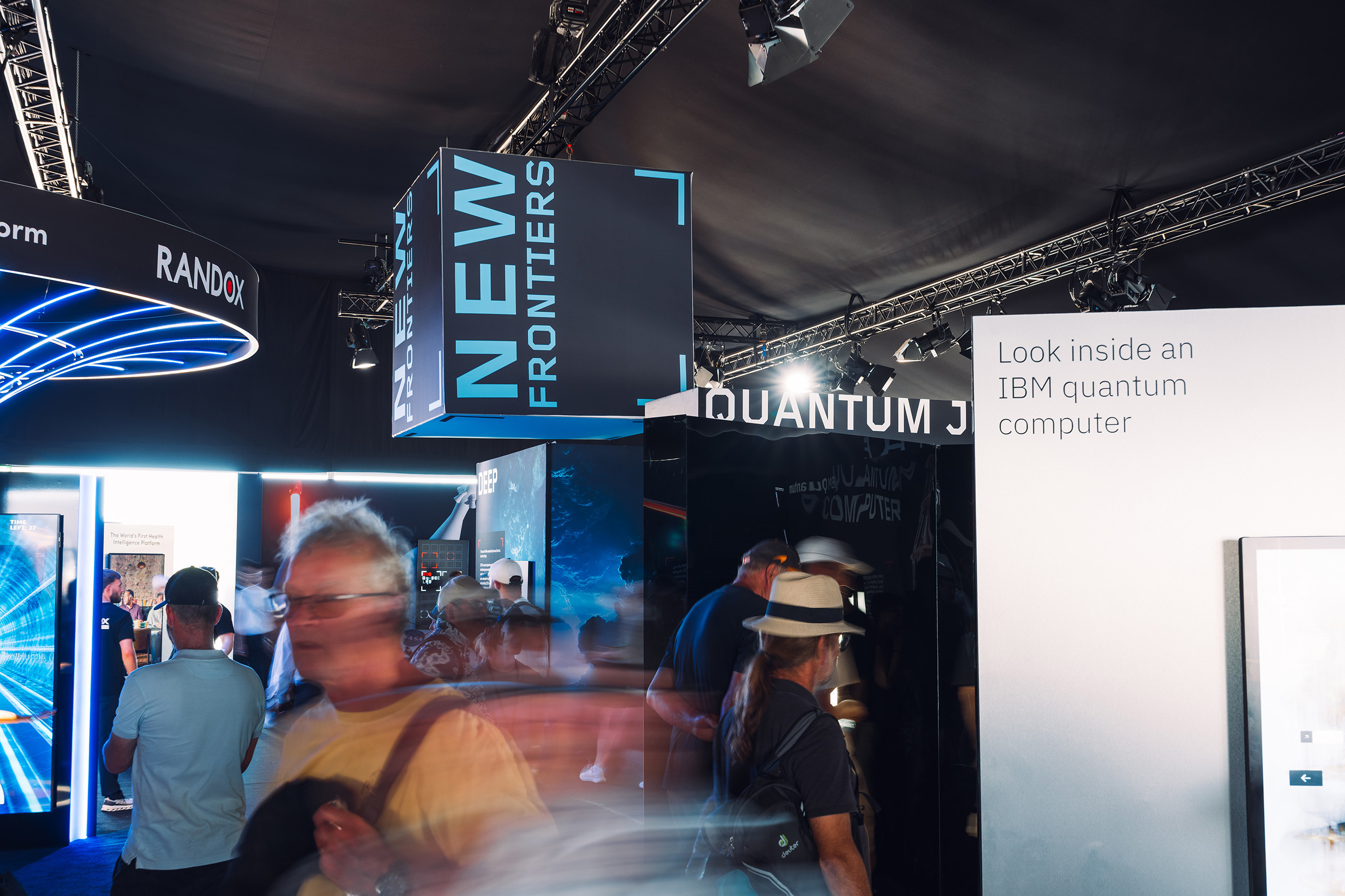
There is a corner of FOS Future Lab presented by Randox where the Moon has been ground into powder, a rocket engine bound for Mars stands fresh from its first firing and visitors peer through the hatch of humanity's newest underwater home.
The New Frontiers zone points in every direction at once: up, out and down. In the Return to the Moon area, a constellation of NASA, Airbus, the University of Sussex, Dark Star Labs and the European Space Agency (ESA) has gathered around the Artemis programme. FOS Future Lab ambassador Sir Tim Peake has visited over the weekend, too.
Chris Ogunlesi, a research fellow in ESA's Vulcan lab, is showing visitors something deceptively humble: dust. "We are looking at simulating Moon dust and Mars dust," he explains. "How can we help de-risk future missions? If you want to test a rover, how are you going to do that?"
On the stand sit rocks from Iceland and Norway, chosen for their lunar likeness, alongside the powdered simulant they become. A facility in Germany, he adds, "has 900 tons of this stuff in a room, and it's used to test spacesuits." Some of the exhibits are barely out of the lab. "I've got 3D printed parts. This was an experiment I did on Monday, where I used a laser to melt simulant. That's going to be used to build things on the Moon, hopefully."
For Ogunlesi, the stand is a chance to show the machinery behind the missions we see blasting off to the Moon. "Everybody knows astronauts, they're amazing. But there is so much amazing work behind the scenes." It is also personal. His brother visited FOS Future Lab last year and texted him photographs of the exhibits. "Now I'm here, and my brother [will be here] on Sunday. I get to be at the centre of it all.”
A few stands away, Pulsar Fusion has brought a piece of hardware that recently made history. In March, the British company produced the first plasma inside a nuclear fusion rocket nozzle, beamed live to Jeff Bezos's MARS Conference in California, and the fired exhaust unit is on display at Goodwood.
"We have our exhaust system for Sunbird, which is our fusion product," says Bilge Kacmaz, the aerospace engineer and recent TED speaker who plans Pulsar's missions and testing. "We are doing fusion propulsion for space applications. We designed the whole thing, and we're going to start manufacturing it soon."
Sunbird, a space tug the size of a double-decker bus, is designed to halve the journey time to Mars. The company's present-day business is here, too. "In the UK, we mainly do electric propulsion. So we have a thruster portfolio: all of our thrusters ranging from 500 watts to 10 kilowatts."
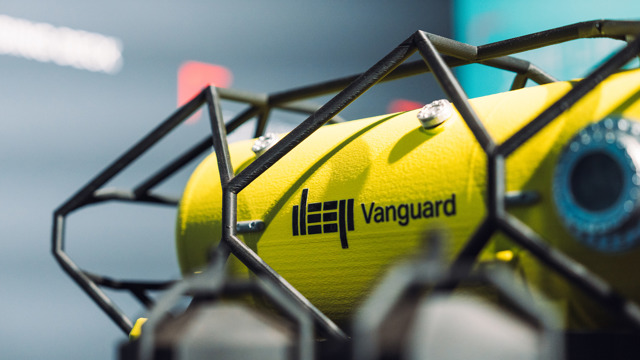
Then there is the frontier beneath our feet. A fortnight before the Festival, Deep deployed Vanguard, its pilot subsea human habitat, in the Florida Keys National Marine Sanctuary, the first new open ocean underwater habitat in 40 years.
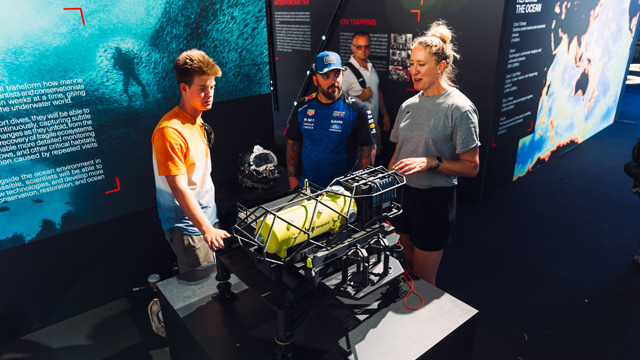
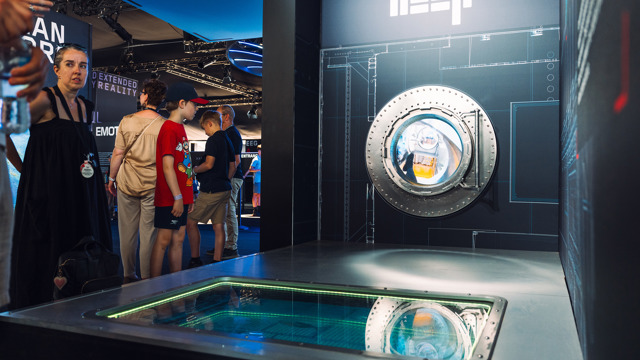
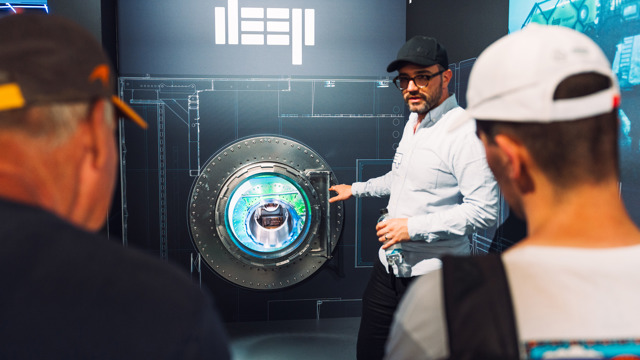
"The great news we've been able to share with people is that our pilot subsea habitat was actually deployed in the ocean about two weeks ago, so we've been able to let people see the real thing,” says Louise Nash from Deep. “There's a big school of fish right outside the habitat, and they're already making it their home."
Visitors can stand over a full-scale recreation of the moon pool, the opening through which aquanauts come and go, and try the hatch for themselves. Meanwhile there’s a major link to space exploration.
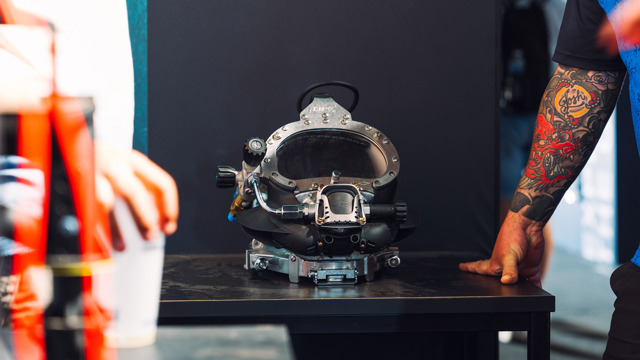
"A really big use case for a subsea habitat is astronaut training," Nash explains. "It's an extreme environment with teams working in proximity. It's difficult to get out of because of decompression, so you're kind of stuck there as you would be in space. Astronauts are definitely a potential customer base."
The Moon dust trains the rovers, the habitats train the crews and the fusion engines will one day carry them — in the New Frontiers zone each exhibitor is building a different stretch of the same road. None of it is finished, and nobody here pretends otherwise. What visitors get instead is the rare sight of future engineering in progress, close enough to touch. As Nash puts it: "You never know what age you can spark that in someone, but the younger you find them, the more excited they are."
Randox is a global leader in diagnostics, revolutionising patient outcomes through innovative technologies, including its patented biochip technology. This pioneering diagnostic platform allows for the simultaneous detection of multiple biomarkers from a single sample, delivering faster, more accurate, and comprehensive results. Operating in over 145 countries, Randox develops advanced laboratory instruments, high-quality reagents, and innovative testing solutions to improve global healthcare.
Randox Health brings this cutting-edge technology directly to individuals, offering bespoke, preventative health testing programs. With world-class laboratories and personalised health insights, Randox Health enables early detection of a wide range of conditions, helping individuals take control of their health.
Together, Randox and Randox Health are redefining diagnostics and preventative healthcare. For more information, visit www.randox.com and www.randoxhealth.com.
Photography by Charlie Brenninmeijer.
festival of speed
fos
fos 2026
event coverage
future lab
fos future lab
new frontiers


Subscribe to Goodwood Road & Racing
Thank you, you’re now subscribed

How many hay bales are used at FOS?
For the last two years, 5,800 bales have been recylced into the biomass energy centre to be used for energy generation