

The “landmark” Ferrari 250 Testa Rossa rebuilt from the ground up
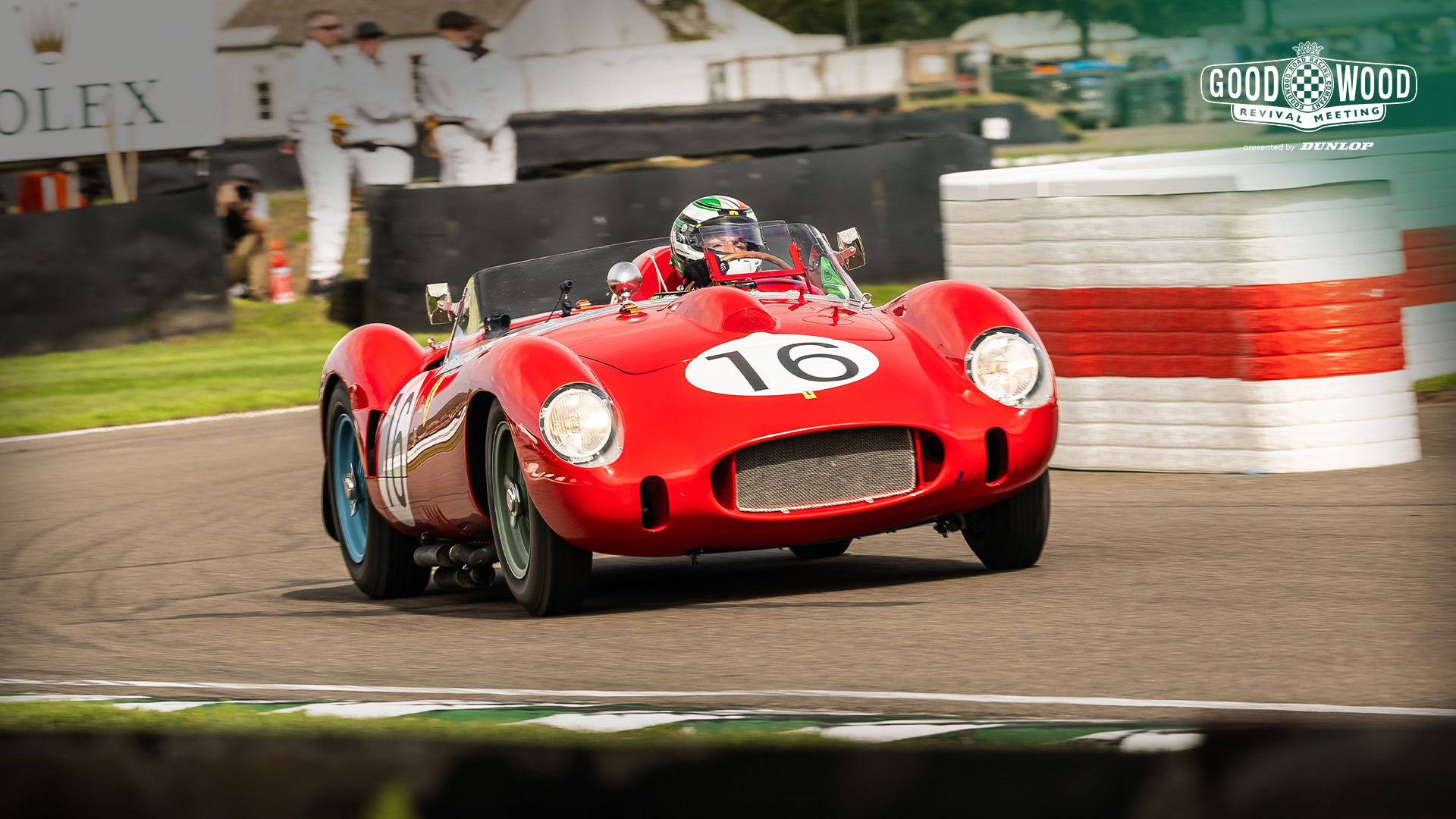
Which is the most significant Ferrari? It’s certainly one of the tougher questions you can ask, and not one you should answer quickly. There was a contender for that title at the 2026 Goodwood Revival presented by Dunlop, a car you could reasonably attribute to Ferrari’s long-term motorsport success: the 250 Testa Rossa.
Ferrari started competing in sportscar racing in the late 1940s, and scored major victories at the Mille Miglia and Targa Florio with the 166 S. That early success inspired the development of the 166 MM, which was raced to victory at the 1949 Le Mans 24 Hours by privateer Lord Selsdon and Luigi Chinetti.
Those results were proof for Ferrari that its cars could compete at the very highest level, and the Scuderia quickly took over the world as it dominated in sportscars and, to a lesser extent, in Formula 1.
Alberto Ascari and Juan Manuel Fangio won World Championships, while Ferrari claimed sportscar titles in 1953, ‘54, ‘56 and ‘57. Only Mercedes-Benz had the strength to challenge the Prancing Horse on both fronts, until the Silver Arrows stepped back from motorsport after the tragedy at Le Mans in 1955.
And it’s the prestigious 24-hour race that plays a key role in this story because, for all its success, Scuderia Ferrari had only claimed a single victory at the Circuit de la Sarthe, with José Froilán González and Maurice Trintignant in 1954. For Mr Ferrari himself, results in sportscars meant nothing unless his cars were triumphant at Le Mans.
Ferrari had been consistently shown up by Jaguar through the mid-1950s; the D-type was better than anything they could field from Maranello. El Commendatore demanded change, and a new car was conceived to align with a rumoured new 3.0-litre engine limit for the 1958 season.
It was decided that the existing 500 TRC, which had performed admirably in the 2.0-litre classes with its inline-four-cylinder Lampredi engine, would be the basis for this new creation, and Ferrari already had the proven Colombo V12 engine ready to go.
The 250 (so named for its 250cc cylinder capacity) had powered the Prancing Horse to victory at the Mille Miglia in 1952, and now a team of engineers led by Carlo Chiti were busy making substantial modifications to further increase its potency.
A grand total of six twin-choke carburettors were incorporated — double that of the standard 250 layout — while smaller helical valve springs allowed for a more robust construction. One thing the engine did carry over from the 500 TR was the red painted cam covers which inspired the for the Testa Rossa (red head) name.
An increase of power to around 300PS (220kw) and an acute focus on reliability were the priorities for this new car. Enzo demanded success in the world's most challenging endurance events, so the new 250 TR was built to be durable. Every component was crafted with endurance at its heart, because this car simply had to be successful at Le Mans.
It was developed and tested extensively during the 1957 season, racing as part of the Ferrari contingent at several World Championship events, but the final motivation was provided at the Circuit de la Sarthe, where the D-type claimed the top four positions while the leading Ferrari traipsed home 27 laps down in fifth. Ferrari still won the World Championship that year, but in many ways victory at Le Mans was more important.
The 250 TR was introduced as Ferrari's sole challenger for the 1958 season, and its quality was immediately evident. Its maiden victory at the opening round in Buenos Aires laid the foundation for an era of dominance the world of sportscars had never seen before.
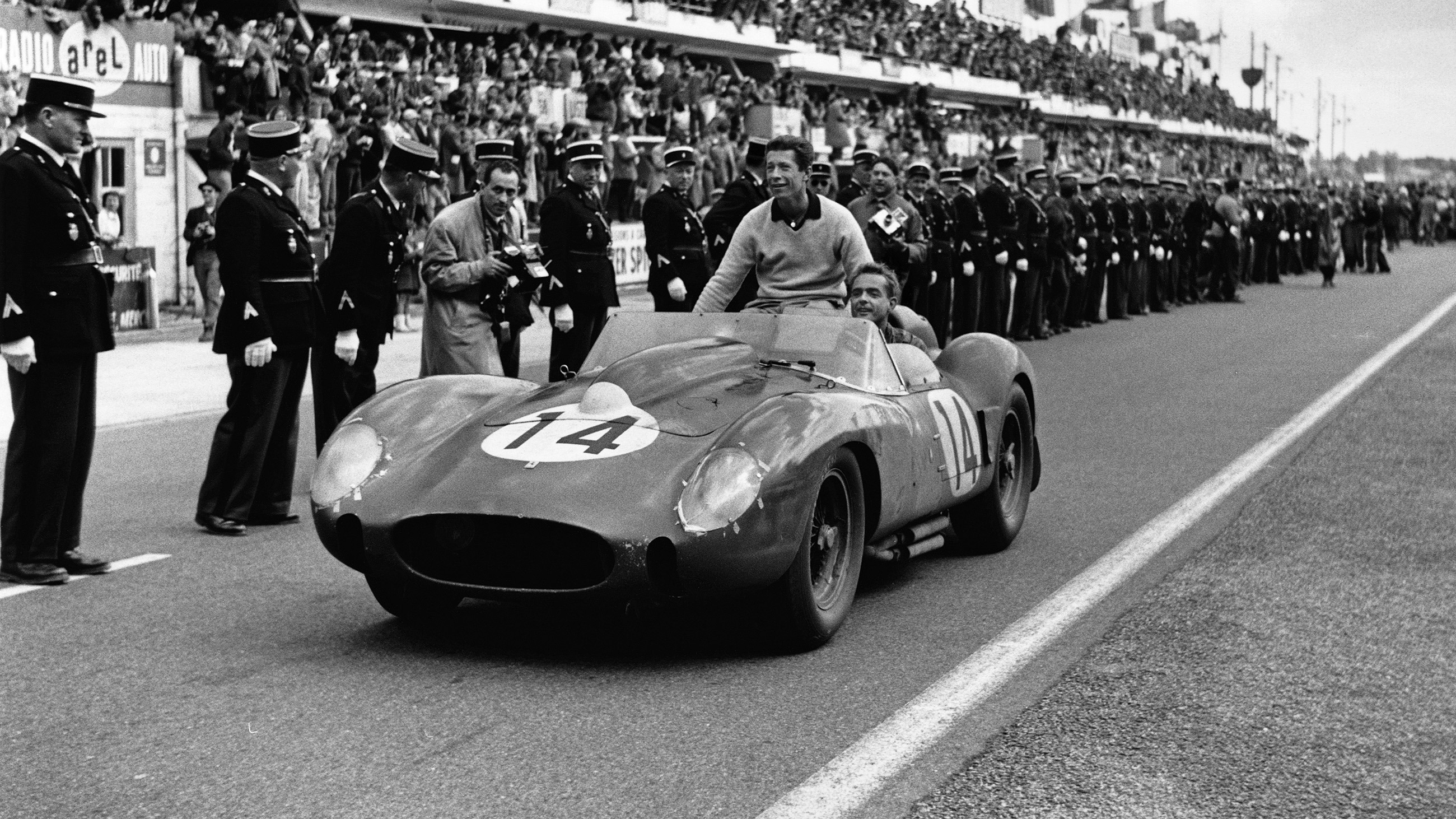
In five World Championship rounds the Scuderia took four race wins, but most importantly for Enzo his team made an emphatic return to the winner's circle at Le Mans. The 250 TR in the hands of Phil Hill and Olivier Gendebien navigated appalling conditions to seal victory by a huge 12-lap margin.
The Testa Rossa was a landmark... This was the start of Ferrari’s absolute maximum.
Joe Macari Owner
Aston Martin fought back with an incredibly strong season in 1959, although Ferrari did win the opening round at Sebring with the updated 250 TR 59. Those upgrades included a switch from drum to disc brakes, a wholesale redesign of the bodywork and a new five-speed gearbox, but that was still not enough to challenge the strength of the DBR1/300 and its all-star driver line-up.
Progress continued for Ferrari, however, and the 250 TR changed again for 1960 with a new dry sump system that allowed for the 3.0-litre V12 to sit lower in the chassis. There was also a new independent rear suspension introduced on a brand-new chassis, although a handful of '59 cars retained their de Dion rear axle. Handing and aerodynamics were both improved dramatically across the board to bring Ferrari another Championship win after victories at Buenos Aires and Le Mans.
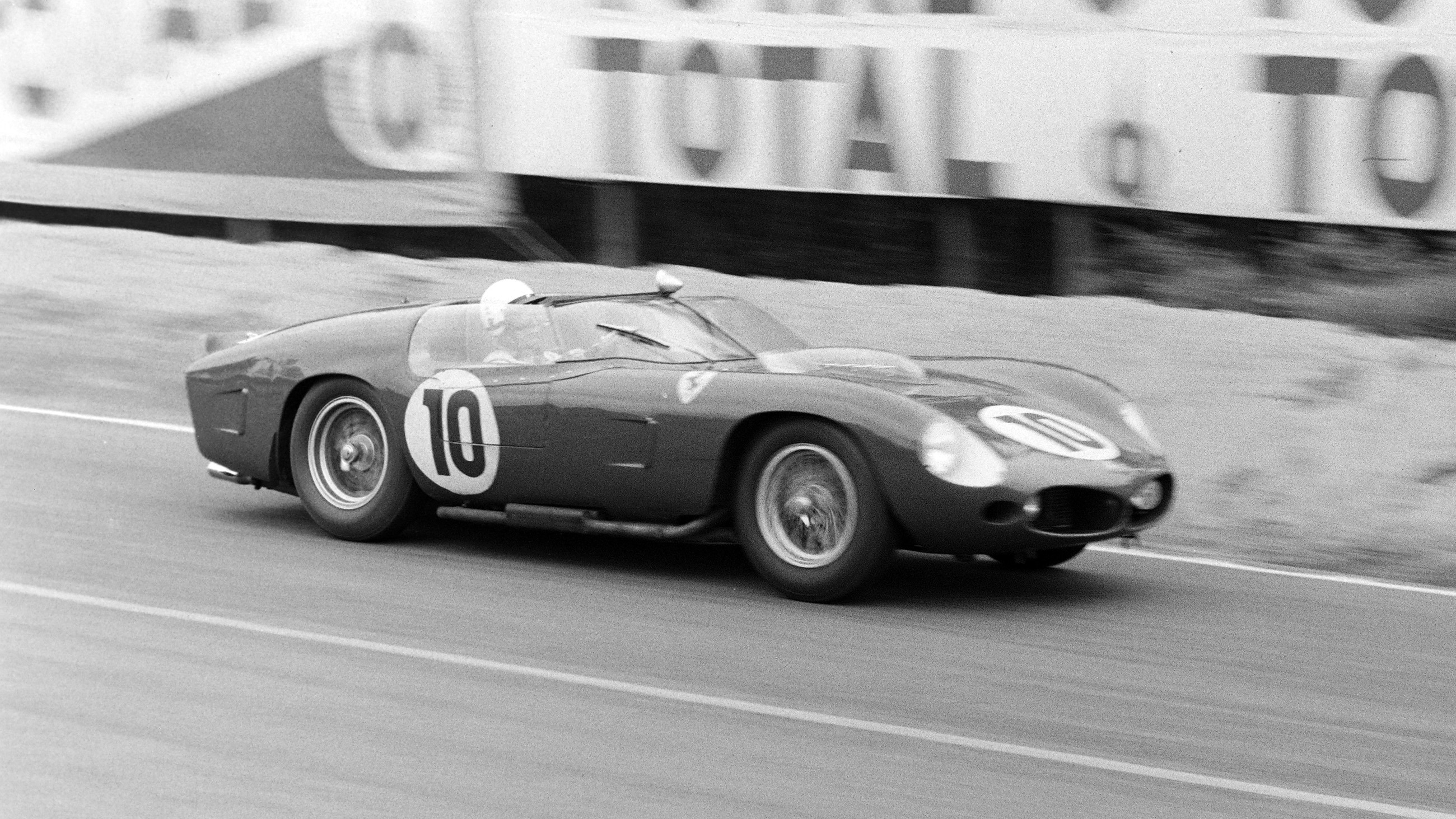
Bodywork was redesigned again for 1961, incorporating a host of new aerodynamic solutions to reduce drag and resulted in the distinct 250 TR 61. It was successful again, winning at Sebring, Pescara and Le Mans to claim another title and cement the 250 TR's legacy as one of the greatest sportscars of all time.
That performance at Le Mans in '61 remains one of the most dominant in living memory; 250 TRs finished first and second, the winner 22 laps ahead of the Maserati Tipo 63 that finished third in class.
A final upgrade came in 1962, when a single 250 TR 60 chassis was rebuilt after a crash and mated with a new 390PS (290kW) 4.0-litre Colombo engine. With new bodywork to go with its new powertrain, it was redesignated the 330TRI/LM and made a lone works appearance at that year's Le Mans 24 Hours.
It won again as part of the new 'Experimental' class, by another huge margin, as Ferrari's reign of supremacy reached unprecedented magnitude.
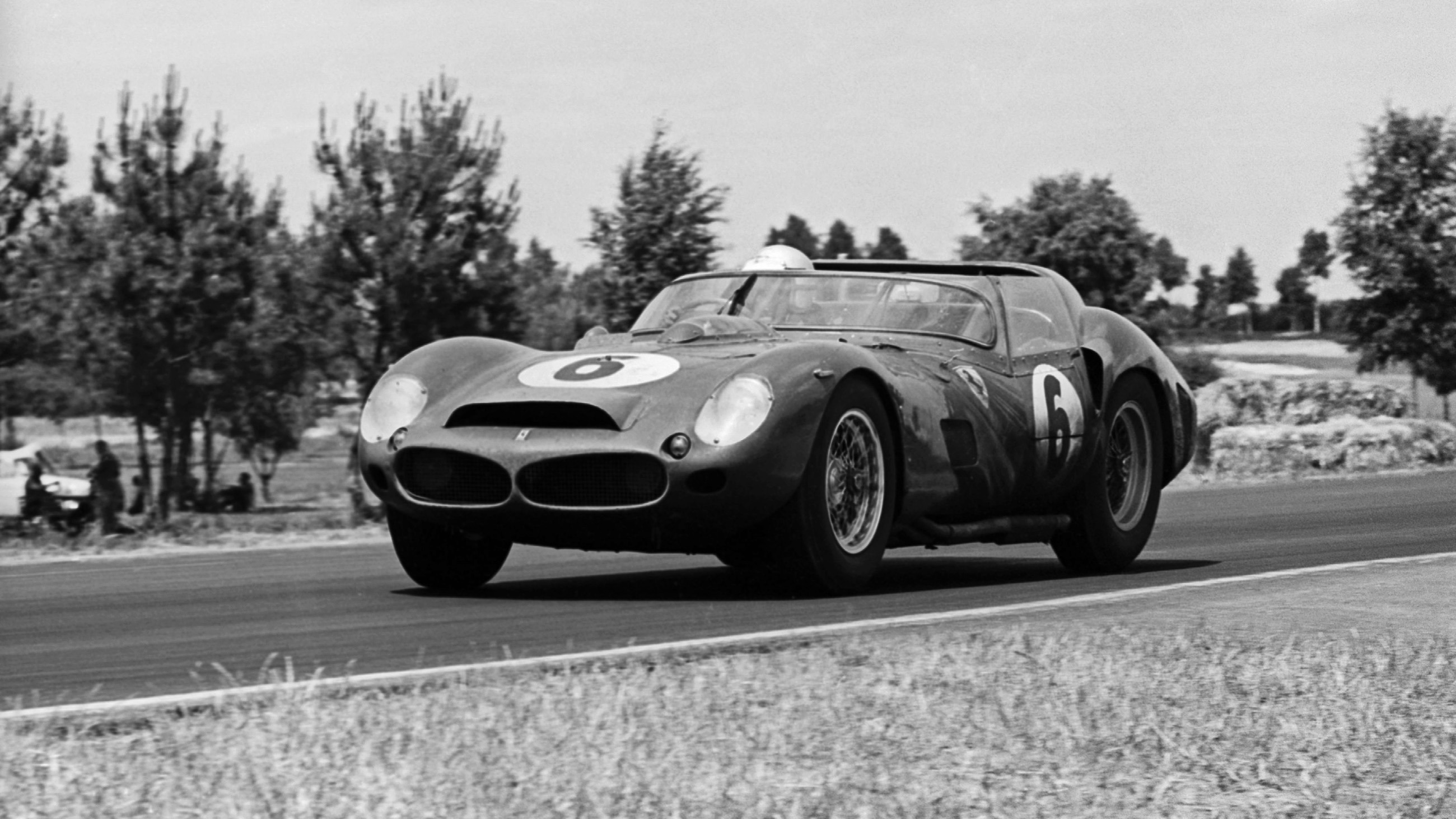
The Ferrari 330 TRI/LM made a single appearance at Le Mans in 1962, Phil Hill and Olivier Gendebien claimed their third victory together.
Image credit: David Phipps & Sutton Images via Getty ImagesThe 250 TR was finally cycled out of the Scuderia's plans in 1963, but its work was done. Ten World Championship race victories, including three at Le Mans and three at Sebring, carried Ferrari to global domination and a position of unassailable might. The Scuderia's success continued for years following its retirement, but the 250 TR was at the core of that remarkable era for the Prancing Horse.
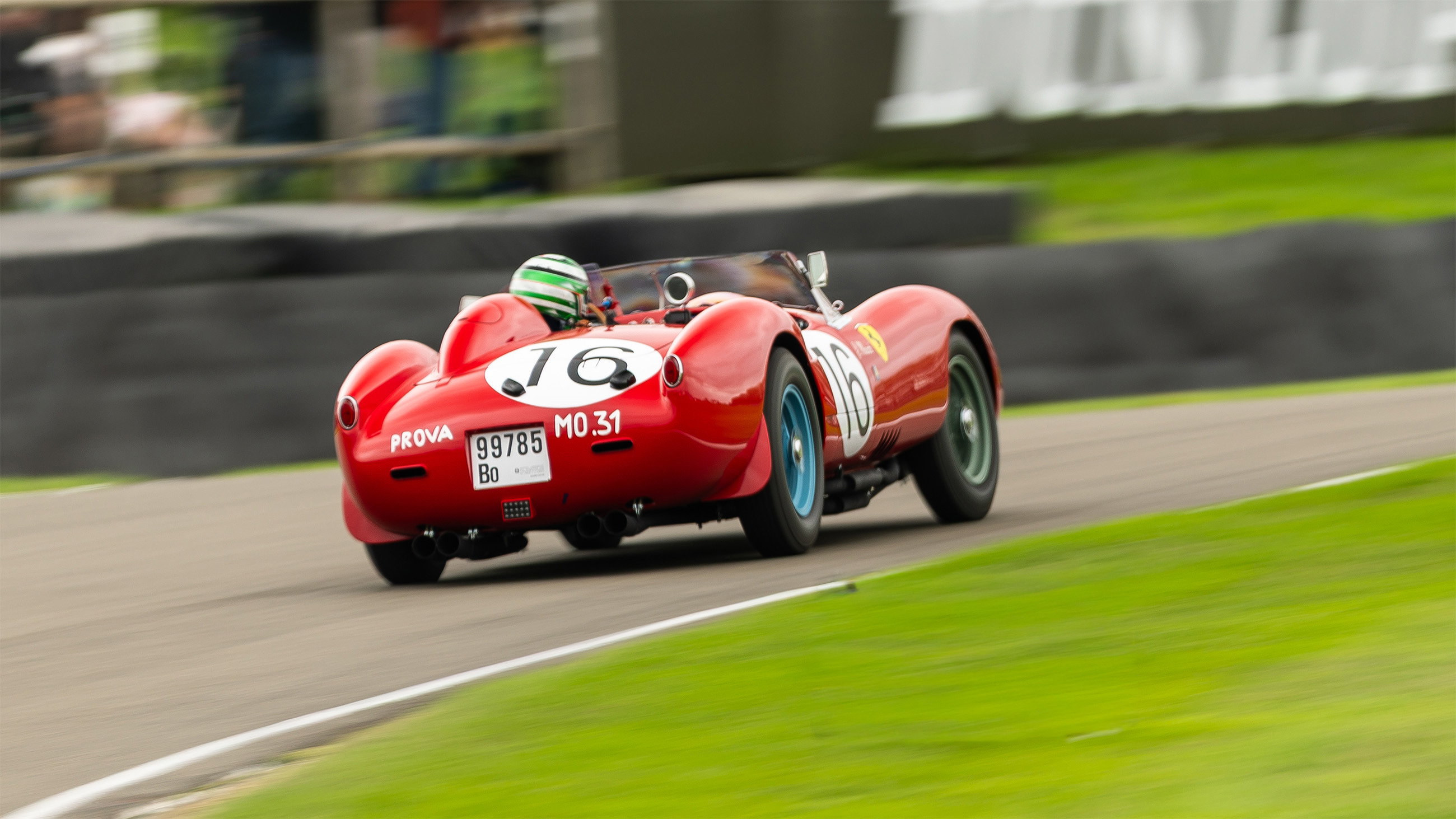
The car we saw at the 2026 Goodwood Revival was 250 TR chassis 0726, rebuilt from the ground up from what remained following a fiery crash in 1960.
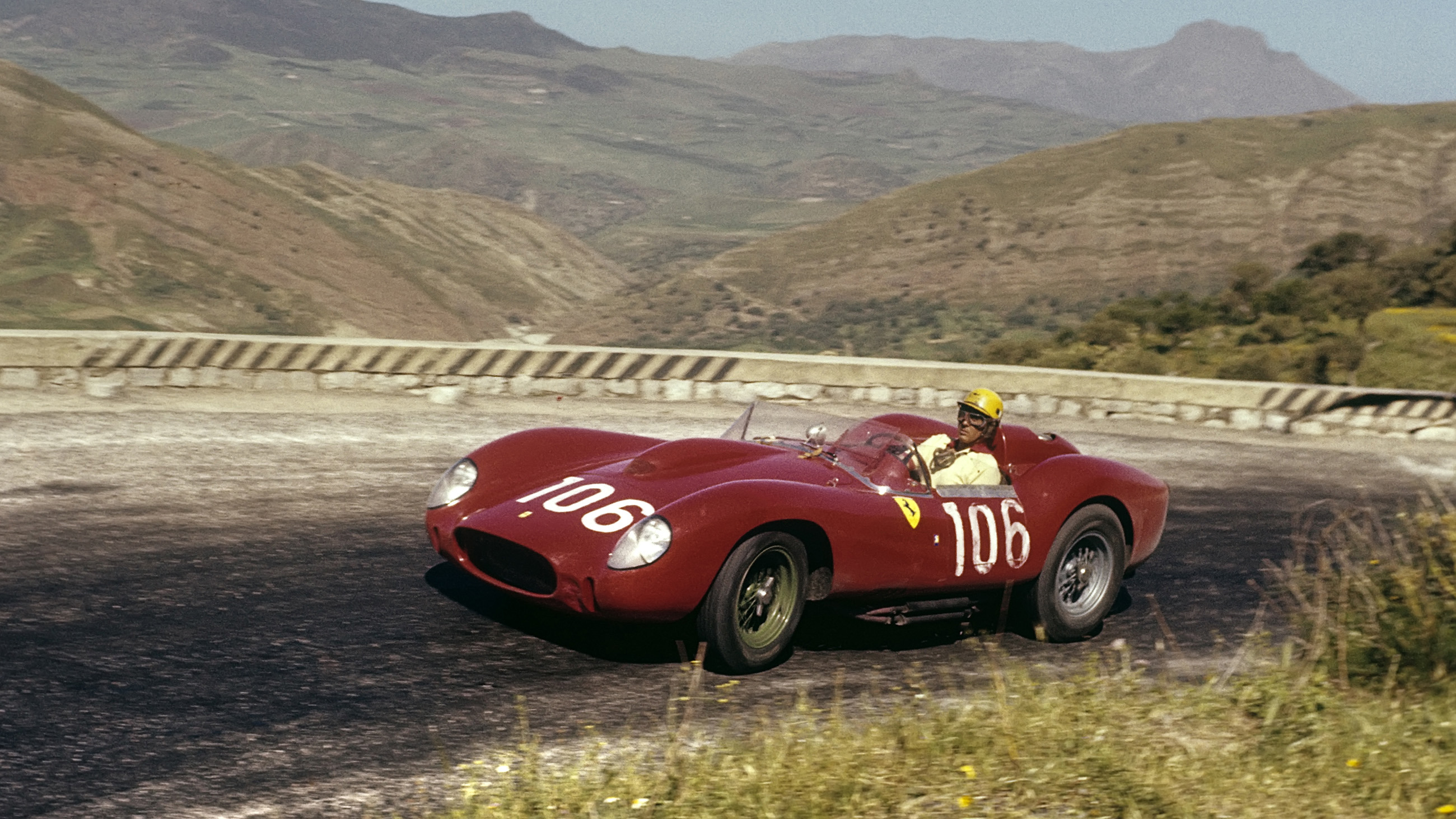
It was at the epicentre of that initial 1958 season, finishing second at Sebring before winning at the Targa Florio with Luigi Musso and Gendebien, and coming home fourth at the Nürburgring. It did fail to finish at Le Mans where it was shared by Wolfgang von Trips and Wolfgang Seidel, but it was an incredibly successful part of Ferrari’s 1958 sportscar onslaught.
Such was the pace of development as the Scuderia sought to maintain its advantage, chassis 0726 was already considered surplus by 1959 and it was sold into private ownership in Venezuela. It raced a handful of times in the Bahamas through the rest of that year, and ended up in the hands of Ettore Chimeri, who became the first Venezuelan to race in F1 when he took a Maserati 250F to the 1960 Argentine Grand Prix.
Two weeks later he was preparing for the Cuban Grand Prix at the Ciudad Libertad Airport, famed for its elevated location. Back in the 250 TR, practice was underway as Chimeri was rubbing shoulders with Stirling Moss, Jack Brabham, Pedro Rodriguez, Masten Gregory, Dan Gurney and Jo Bonnier.
But disaster struck when he lost control of the car, crashed through the barriers and plunged down a 150-foot drop into a ravine. It was a catastrophic accident that saw the car burst into flames and Chimeri miraculously air-lifted to hospital. He sadly died from his injuries later that day.
Chassis 0726 was left stranded beneath the racetrack. The car’s owner, who had loaned the car to Chimeri, deemed the cost of recovery too great, so the burnt-out wreckage of this Ferrari 250 TR remained untouched until 1963. Unrecognisable, and far beyond repair, it was eventually retrieved from its resting place, only to be dumped in a Cuban military scrapyard.
From the remains that were left of the car, we had to restore every single piece because there was nothing that could be saved from that.
Nicky Pastorelli Pastorelli Classis Cars
Those remnants, minus an engine, were discovered in 1979 and shipped back to the US. The car, which was identified as the long-lost chassis 0726, was then passed through a series of owners, until it finally fell into the hands of Joe Macari.
It was he, a passionate and respected collector of classic Ferraris, who ordered a full rebuild of one of the Scuderia’s greatest creations.
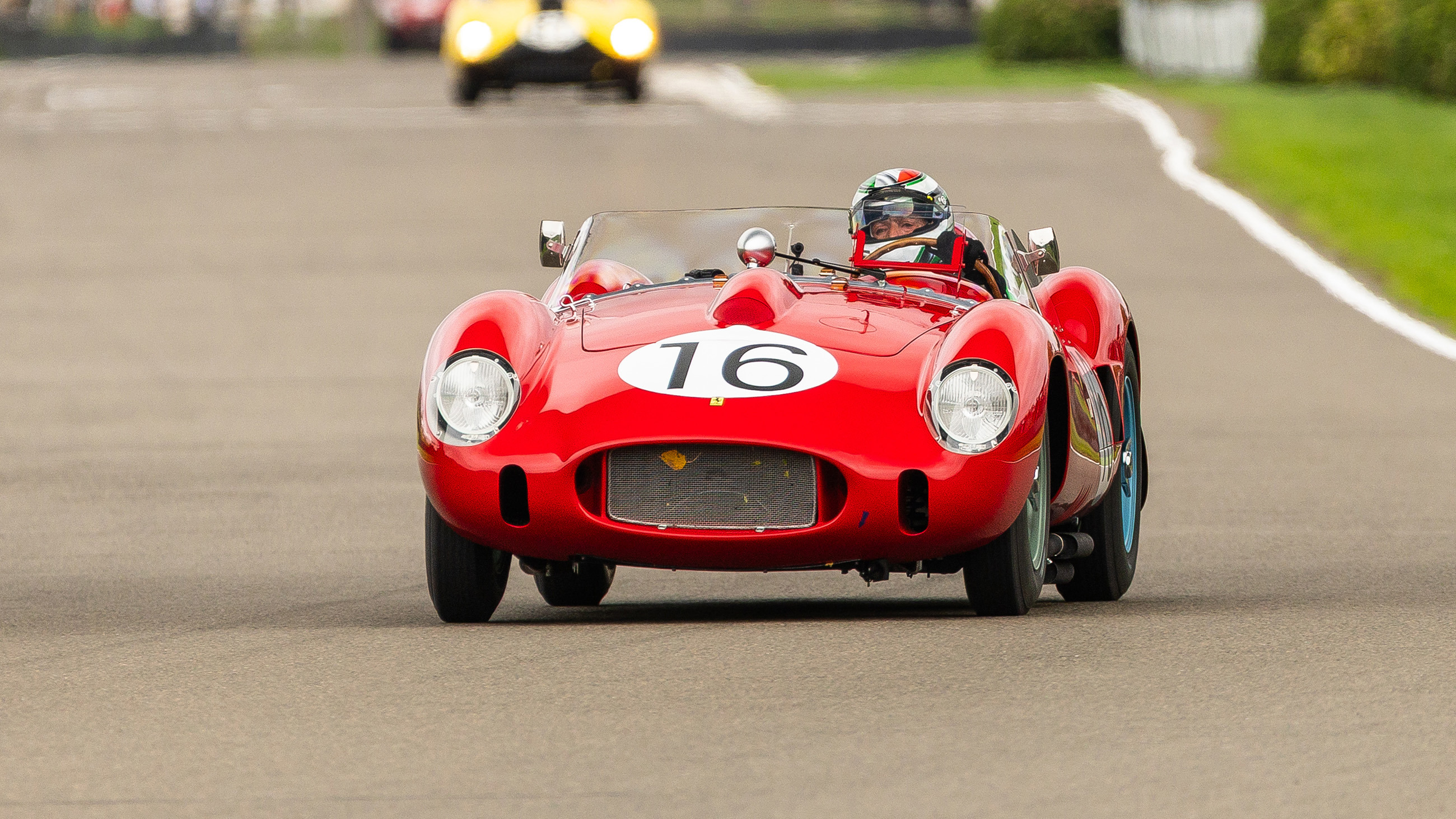
“It’s taken a little longer than I expected,” he said with a smile. “And it cost a lot more than I’d initially worked out.” Worth it though, we’d suggest, to have a car like this back in one piece and racing once again, a car that no one has seen in public since that crash in 1961. Like Macari, we were pinching ourselves that this long-lost Ferrari was indeed in action here at Goodwood, a car that transformed the landscape of sportscar racing.
“The Testa Rossa was a landmark," Macari enthused. "Suddenly Ferrari started to win races everywhere. The engine was remarkable; they were built so well they never broke. It’s hard to make one now that’s better than what they were then, they were already maxed out. This was the start of Ferrari’s absolute maximum.”
Remarkable is the word. Ferrari was the only manufacturer running a V12 engine, and it was at its howling best when it was flying down the Mulsanne Straight at 8,000rpm. It's difficult to fathom the degree of engineering that went into an engine that could tolerate that level of stress.
Macari is one of a small group of people these days who get to sample the delights of that Colombo masterpiece.
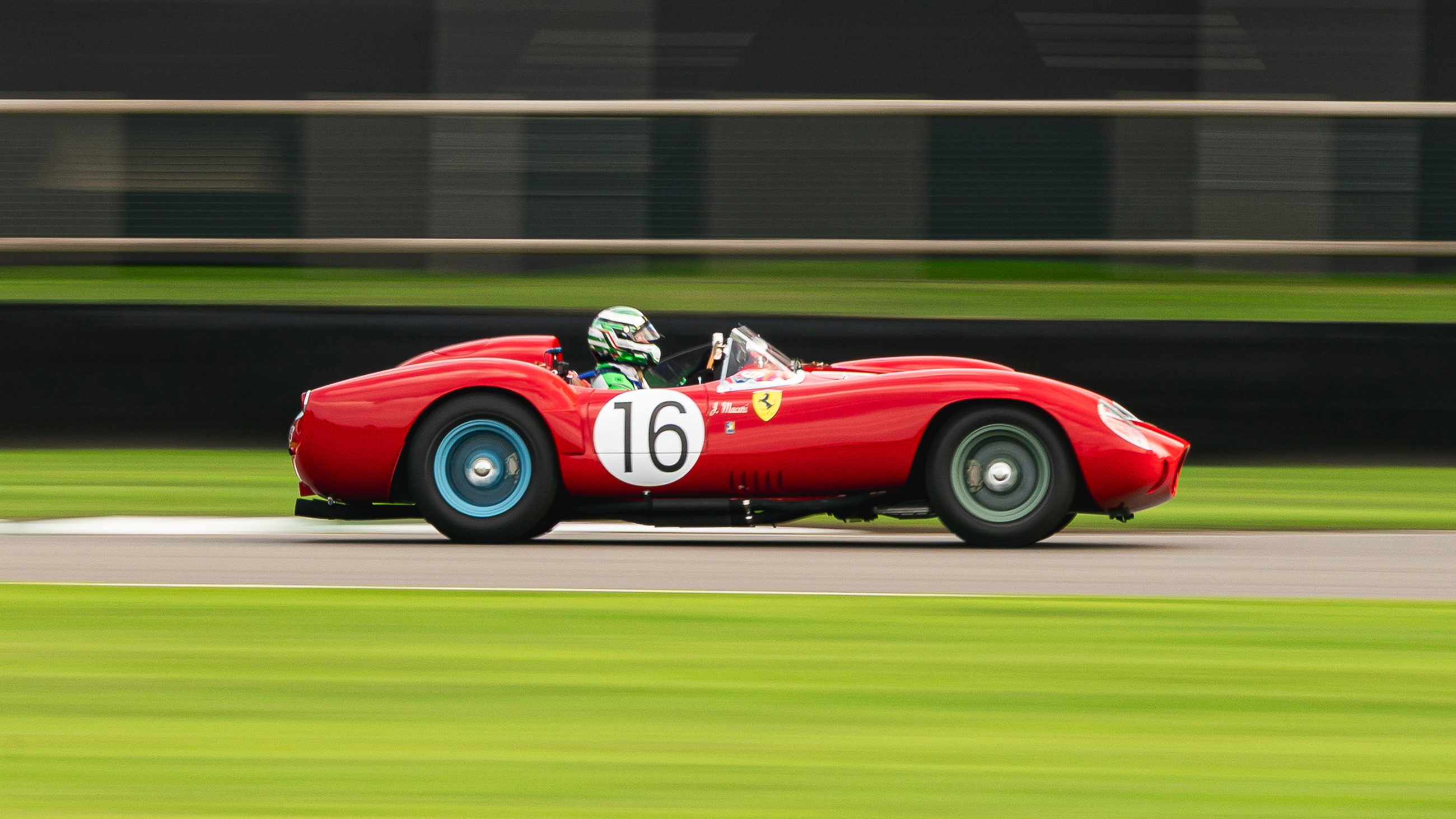
"It’s just good. It’s really good. When you get to around 6,000rpm you grin like a child whose found sweets, you just can’t help it. It’s a reflex, you just start smiling. It’s a big privilege. The only downside is it’s quite hard to get better."
He and us have the team at Pastorelli Classis Cars to thank for this monumental rebuild, a painstaking process that took the best part of a decade to complete. Beginning with nothing more than the wrecked and largely unrecognisable remains of chassis 0726, they have managed to piece back together one of the greatest racing Ferraris of all time.
"We started from almost zero," company boss Nicky Pastorelli said. "From the remains that were left of the car, we had to restore every single piece, create a new body because there was nothing that could be saved from that.
“Basically everything is new. The engine wasn’t there so we had to start from scratch. There are lots of parts available for 250 engines, but it’s a matter of putting them together in the correct way."
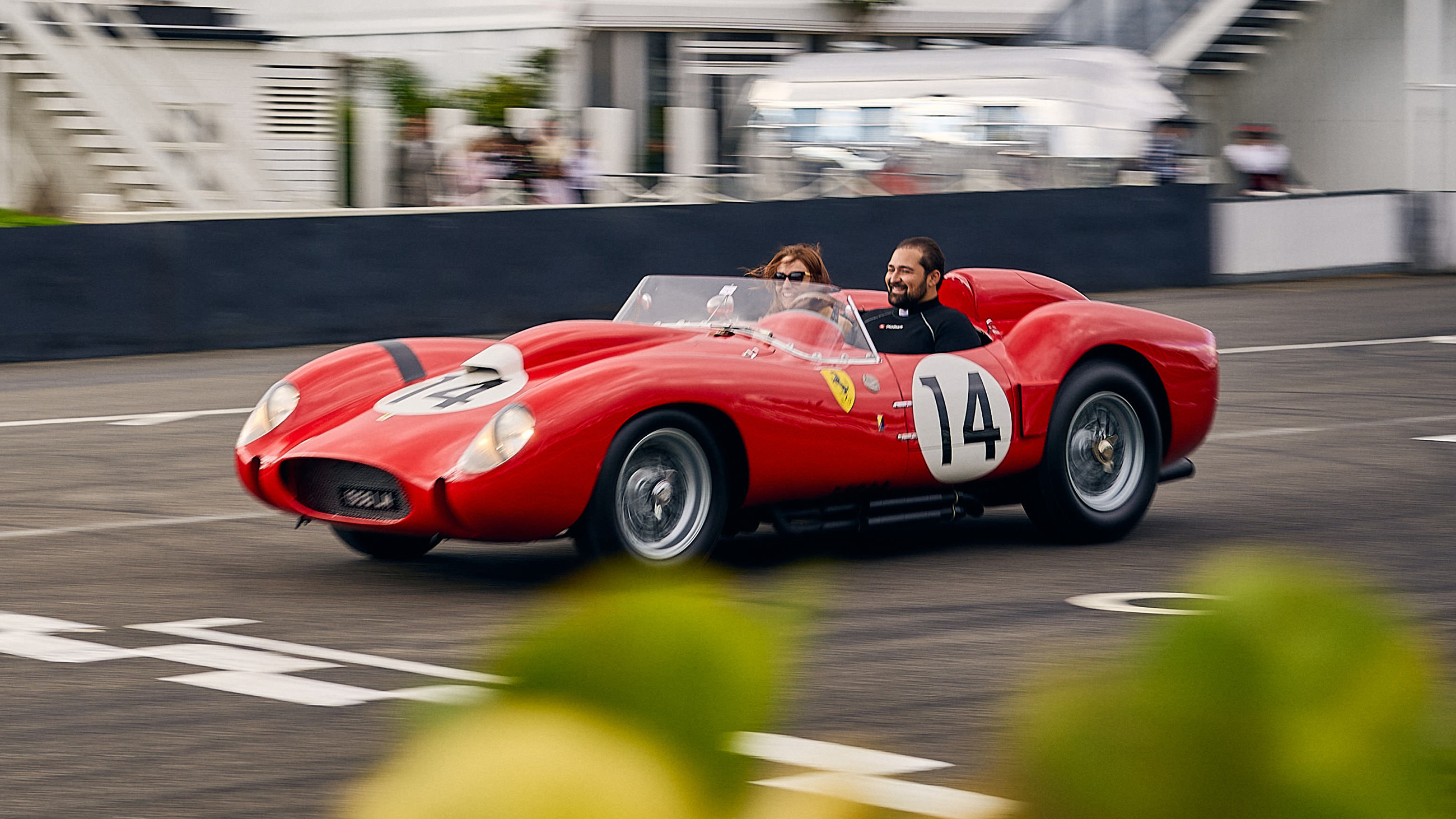
Ferrari 250 TR
Find out more
The team based their restoration on a broad collection of photographs and other reference materials from the car's past life to return it as close as possible that original form. Attention was of course paid to the technical excellence of the 250 TR, but no less effort was spent on the finer details. A faded sticker was accurately positioned on the front fender as it was seen in one photograph.
It was an uncompromising project that left no space for anything other than absolute faith to the original. Macari himself was astonished by just how focused Pastorelli was on delivering a perfect restoration, even refusing to soften the result with more modern safety considerations.
"The team were really strict about it," Macari explained. "They locked me out. They wanted to build it faithfully, to exactly how it was in 1958.”
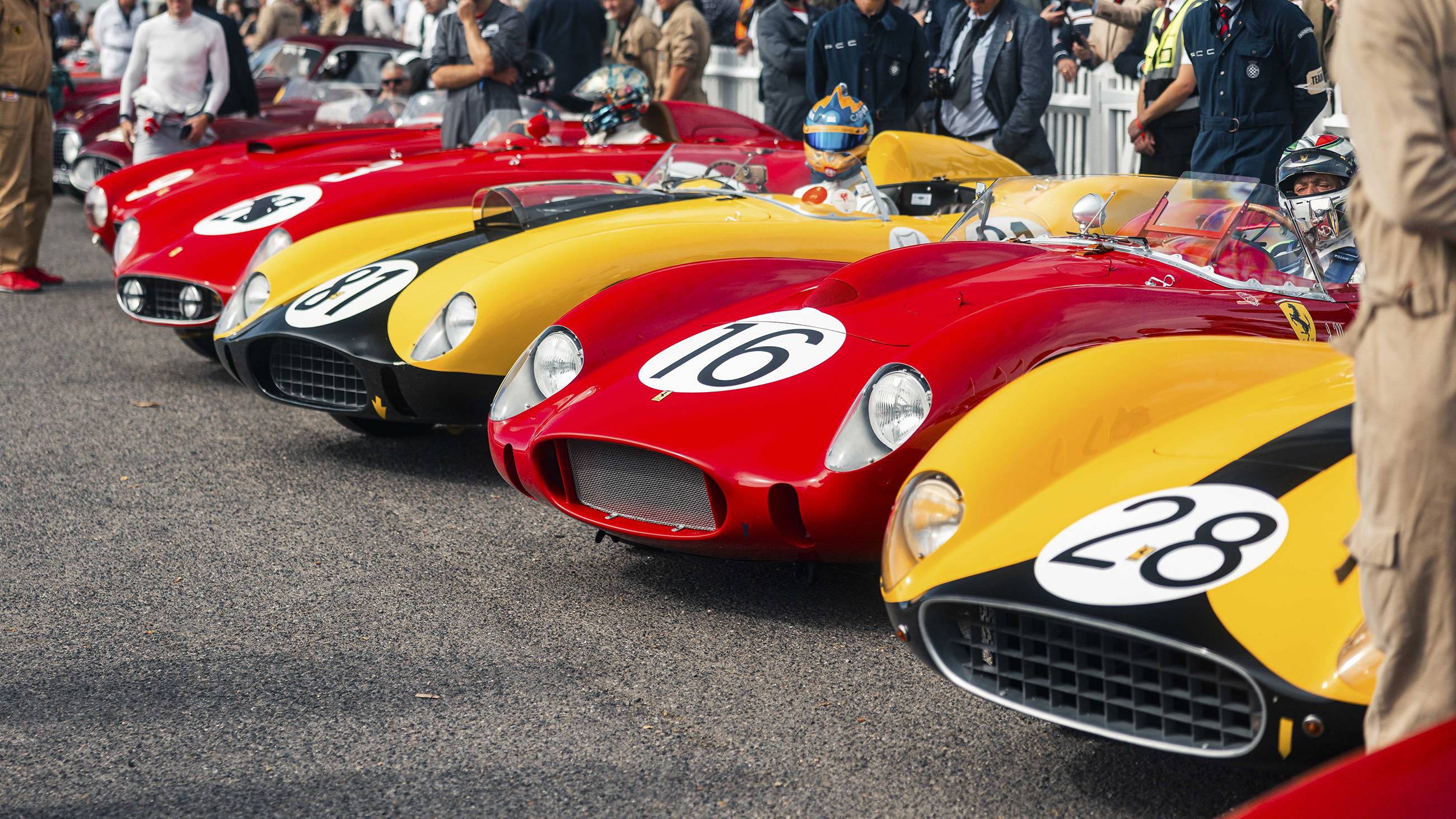
It's that level of focus that gives this 250 TR such a presence. You can trust that while physically this car is almost entirely separate from that original racer, this rebuild has been carried out in such a way that its soul has been retained, and this new chapter therefore is a continuation of chassis 0726's story rather than a new beginning. That, Pastorelli admitted, comes with a huge amount of pressure.
"It’s an important piece of history that you’re bringing back to life," he said. "Not only the aesthetic but also the technical side.”
That means this 250 TR needs to perform like a three-time Le Mans winner, which is no mean feat.
“Besides bringing the car back to how it used to be in period, we’ve also paid a lot of attention to make the car fast and competitive on track," he continued. The team even carried out its initial testing in the hills of Maranello, exactly as the Scuderia would've done all those years ago.
But it's still very early days for this Ferrari's return to racing. It's arrival at the Revival in 2026 was Macari's first outing with the car, which meant its performance on track was subject to plenty of early teething troubles.
“We’ve made an untested guess at the suspension," he admitted. "So it's moving around a little bit more than we’d like, but we’ll cope with it. We’ll develop it as we race it, it’s just part of an ongoing history."
An ongoing history that we hope will feature many more chapters both here at Goodwood and across the world. The Ferrari 250 TR is truly one of the world's most influential racing cars, and it will continue to inspire fans of motorsport for generations to come.
Goodwood photography by Joe Harding, Rob Cooper and Tom Shaxson.
Historic images courtesy of Getty Images.
The 2027 Goodwood Revival will take place on 17th-19th September 2027. Sign up for ticket alerts to make sure you don’t miss out.
If you’re not already part of the GRRC, you can sign up to the Fellowship today to save ten per cent on your 2027 tickets and grandstand passes, as well as enjoying a whole host of other on-event perks.
revival
revival 2026
event coverage
ferrari
250 TR
Lavant Cup
Lavant Cup feature

Subscribe to Goodwood Road & Racing
Thank you, you’re now subscribed

How many hay bales are used at FOS?
For the last two years, 5,800 bales have been recylced into the biomass energy centre to be used for energy generation