

The Lotus with a Ferrari heart
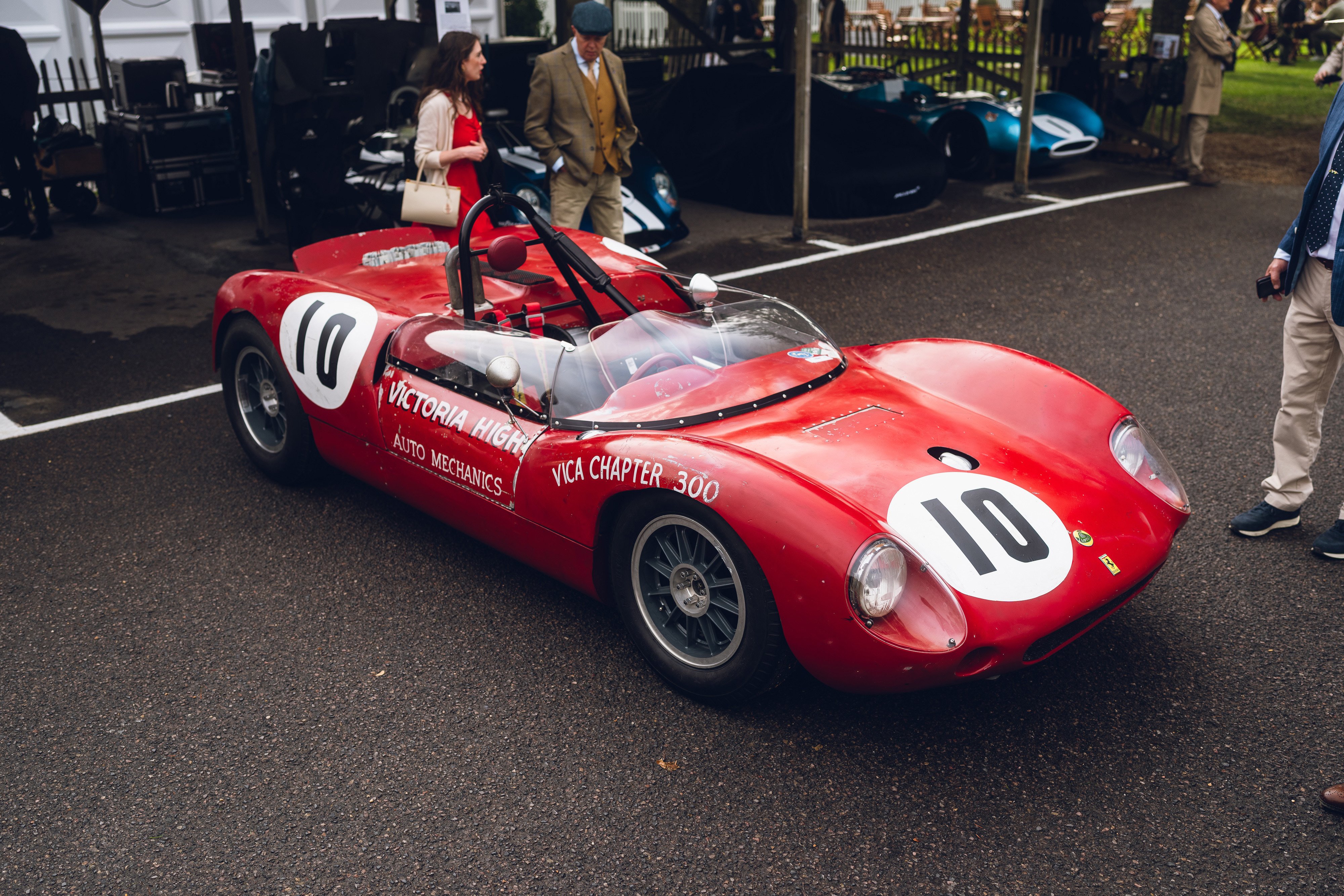
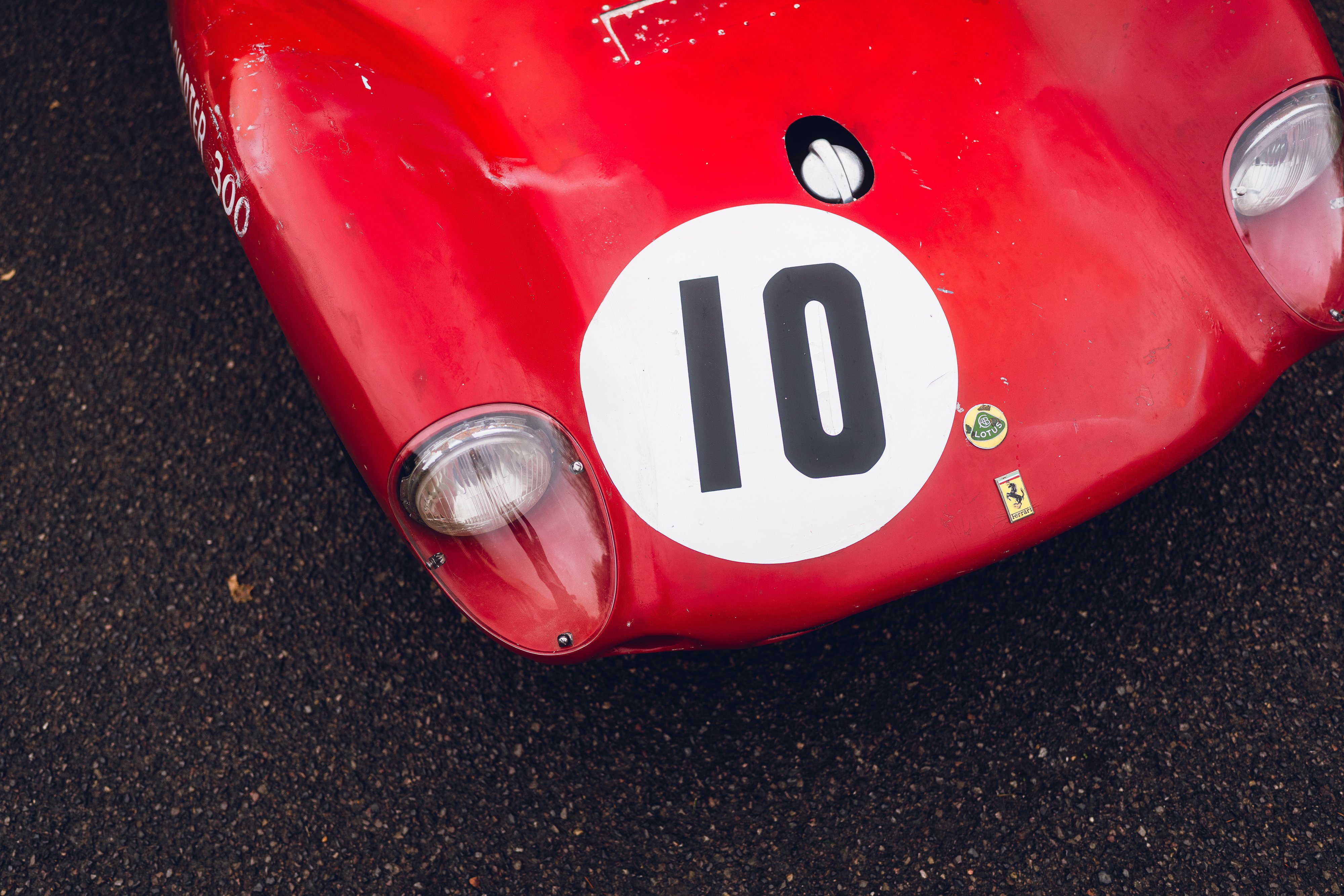
The sight of a red Lotus with a Ferrari badge below its own emblem provoked a huge amount of intrigue at the 2026 Goodwood Revival presented by Dunlop. Twelve intakes protruding from the engine cover told you that the Cavallino Rampante isn’t a bluff. Add in a rarely seen level of patina that speaks to a rich history and you just want to know more the moment you set eyes on the one and only Lotus-Ferrari 19.
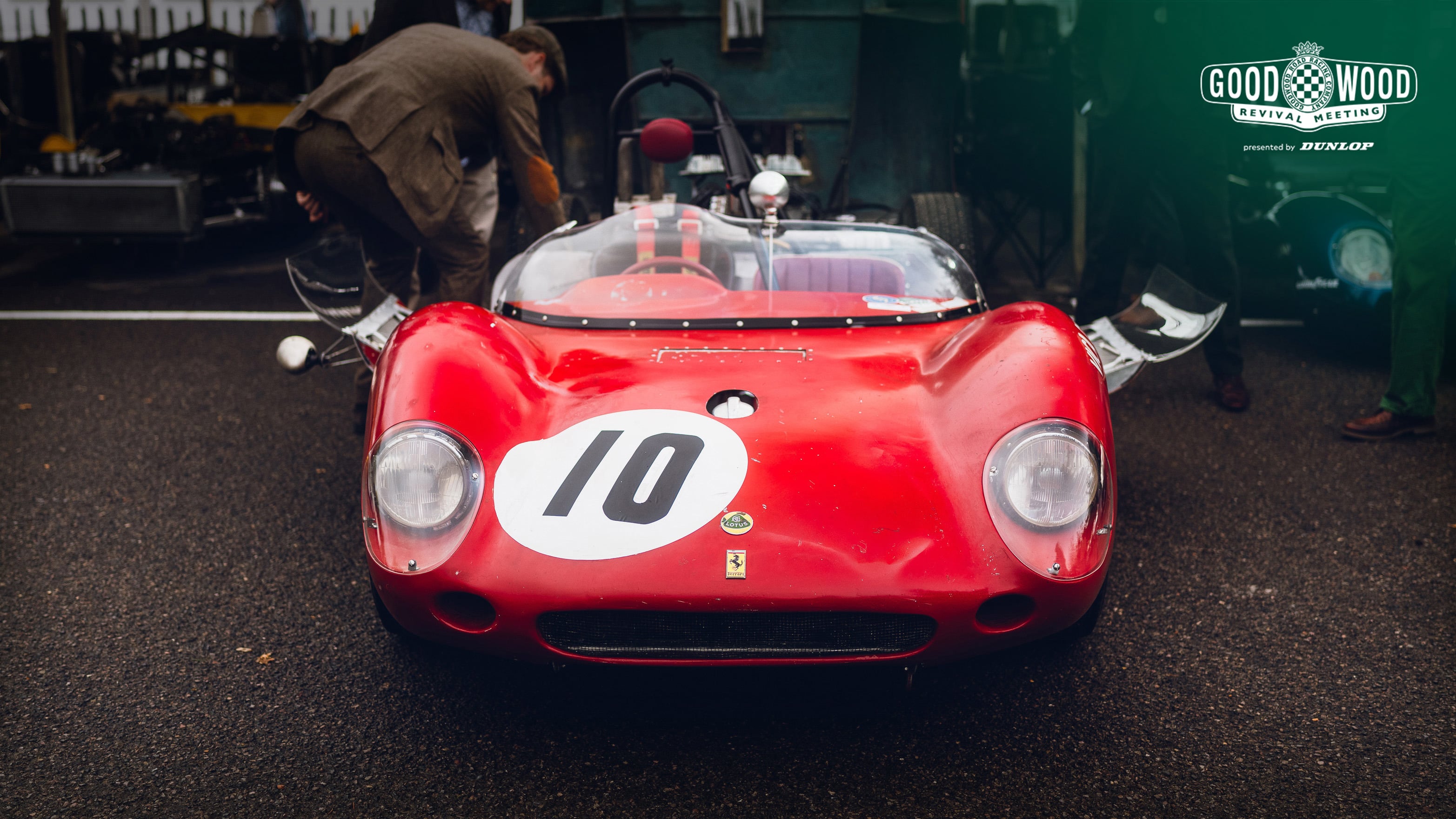
Chassis 952 started life as a regular 2.0-litre Coventry Climax-powered Lotus 19. The Colin Chapman-designed car featured a fibreglass body over a space frame chassis, with a mid-mounted engine and rear-wheel drive, in compliance with Group 4 Sportscar regulations. It gained its other name, ‘Monte Carlo’, in honour of Stirling Moss’ victory at the 1960 Monaco Grand Prix, which gave Lotus its first Formula 1 World Championship win.
In total only 17 models were made, and chassis 952 was delivered new to the UDT Laystall team in 1960, who were once British Racing Partnership — an outfit established in 1957 by Moss’ father, Alfred, and his manager Ken Gregory for him to race with when not under contract with other marques.
It was raced all over the world by the likes of Moss, Trevor Taylor, Pedro Rodriguez and Innes Ireland before being sold on to Team Rosebud who looked to boost the car’s power ahead of the 1963 season. The mechanics took the decision to squeeze in a 3.0-litre 355PS (261kW) Ferrari V12 engine from a 250 Testarossa into the small Lotus chassis, a transplant achieved with only millimetres to spare.
The Ferrari-powered Lotus 19’s first outing was at the Riverside Raceway in California where unfortunately it crashed during practice. Nevertheless, chassis 952 was in effect the second ever mid-engined Ferrari, following on from the 250 P that won the 1963 Le Mans 24 Hours.
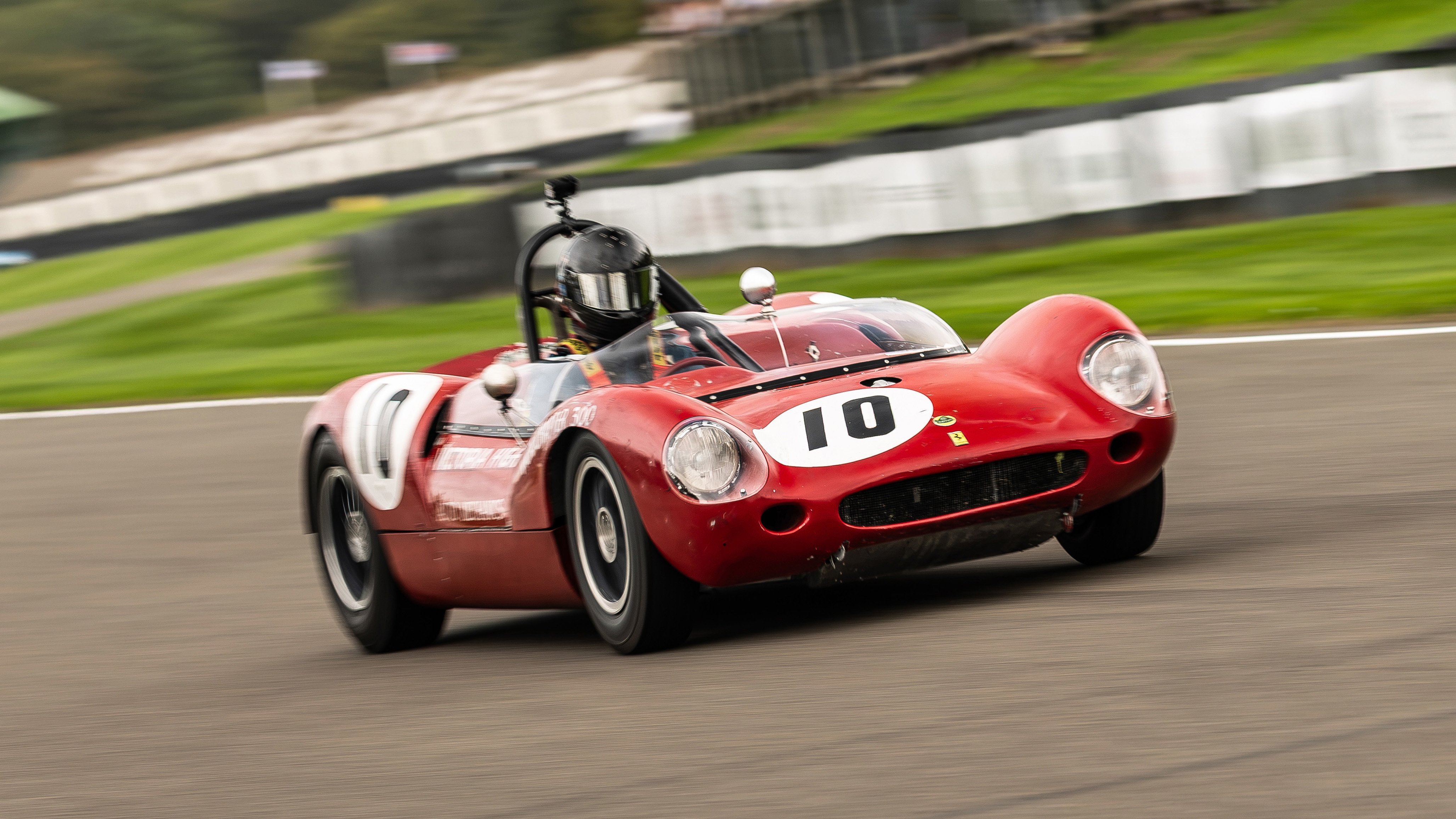
After a winter rebuild the car returned to the track in 1964 and competed in a handful of races with Ireland, though by this time the V8-powered cars proved more powerful and the 19 was restricted to midfield results.
When its racing career was over, the car was donated to Victoria High School in Texas for students to practice on. It remained in its Ferrari-powered form until the mid-1990s when it was bought by Otto Reedtz-Thott, who still owns it today. He had it restored to its original Climax-powered guise and had a new body fitted at the same time.
The car was raced in this form for many years, until Reedtz-Thott’s friend Jakob Holstein unfortunately crashed the car during a Madgwick Cup race here at Goodwood while challenging for second place.
It was an event that led Holstein to become co-owner of the car. He knew about its Ferrari-powered history and tracked down the people who restored it in the 1990s. They still had the original bodywork in storage, which meant it could be returned to its 1960s form. Holstein proposed the idea to Reedtz-Thott: “He said, ‘If you want to do it, you’re welcome.’ So now we say it’s still Otto’s chassis with my body and engine, and then we share it with all the racing we go to.”
And it’s those years in storage mean the wonderful patina has been preserved. “These days, where everything is so over-polished, I thought it was so cool to keep it as it is,” says Jakob. “Everything we have here is more or less what was racing at Riverside in ’64.”
The 2026 Revival marked the car’s third visit to Goodwood in its Ferrari powered form. Reedtz-Thott and Holstein brought it to the 83rd Members’ Meeting presented by Audrain Motorsport where it qualified 15th for the Bruce McLaren Trophy but crashed and was unable to contest the race.
We feared that its care-worn bodywork might have been glossed over during the subsequent rebuild, but they were very careful to reform rather than replace panels, and to only paint areas that needed it. “I really pushed the guys pretty hard and said, ‘I know it’s not nice, but you have to do it this way’,” said Holstein. The body got away relatively unscathed, but items like wishbones needed to be replaced. The cast wheels also needed replacing, and because they are now impossible to source Holstein had new tooling made.
When we chatted to him at Revival, he had completed Official Practice and was looking ahead to the race. For Holstein, there’s nowhere in his native Scandinavia that presents the same challenges as Goodwood for testing. “I drove this car a lot with the 2.0-litre Climax in. Now it’s much more scary because you have so much power and during this weekend, I’m still getting a little bit more used to it.”
His experience at Members’ Meeting had left him feeling “a little scared” of a repeat incident. “I want to make sure that I'm not the guy that sits inside the barrier again. The aim of this weekend is to bring the red car home in one piece,” he shared.
Holstein achieved precisely that in the Whitsun Trophy, where he finished 12th from 14 finishers. The result isn’t necessarily the point with a car like this, however; it’s a piece of rolling motorsport heritage that has been wonderfully preserved, just what the Goodwood Revival is all about.
Photography by Jordan Butters and Joe Harding.
The 2027 Goodwood Revival will take place on 17th-19th September 2027. Sign up for ticket alerts to make sure you don’t miss out.
If you’re not already part of the GRRC, you can sign up to the Fellowship today to save ten per cent on your 2027 tickets and grandstand passes, as well as enjoying a whole host of other on-event perks.
revival
revival 2026
event coverage
lotus
ferrari
lotus 19
Whitsun Trophy
Whitsun Trophy feature

Subscribe to Goodwood Road & Racing
Thank you, you’re now subscribed

How many hay bales are used at FOS?
For the last two years, 5,800 bales have been recylced into the biomass energy centre to be used for energy generation