How the Jaguar XJR-8 laid the foundations of victory for TWR
Every winning legacy has a first chapter that paved the way to success, and for TWR Jaguar that legacy began with the XJR-8, the car that proved the Big Cat could beat the giants.
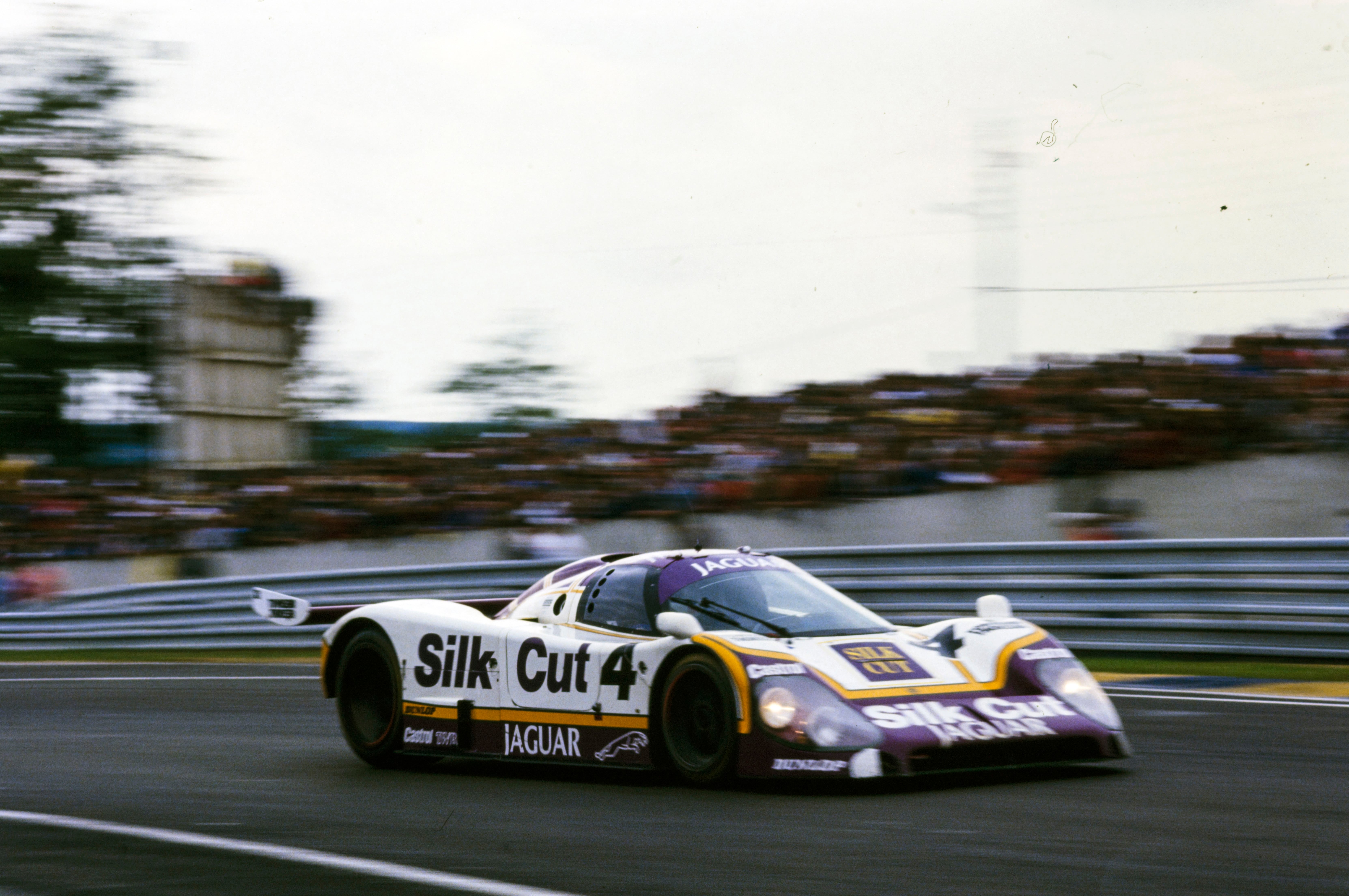
The XJR-8 went on to be one of the most successful British Group C cars of all time, but Jaguar had to go on quite the journey to reach that achievement.
Industrial disputes and general decline throughout the 1970s and early ‘80s had left Jaguar a long way from its previous racing glory. New boss John Egan wanted that to change and the catalyst would be Tom Walkinshaw, who had caught Egan’s attention after the TWR Jaguar XJS won the European Touring Car Championship in 1984.
Walkinshaw knew he needed a car that could take on the all-conquering Porsches, which had dominated the Championship for the previous five years, so he recruited former BRM and Lotus designer. Tony Southgate. Southgate had already penned the XJR-6 and it was from this that the XJR-8 evolved, reportedly with only 64 changes between them.
Up against the Porsche 962, Jaguar’s upper hand was hidden in the centre of the car. Southgate combined carbon fibre with Kevlar to build a tub that was stiffer and lighter than the XJR-6’s, helping keep the target weight under 900kg. The car also had to run with a race-prepared version of Jaguar’s road-going V12; its higher-pitched wail instantly distinguishable from the lion-like roar of the Porsches.
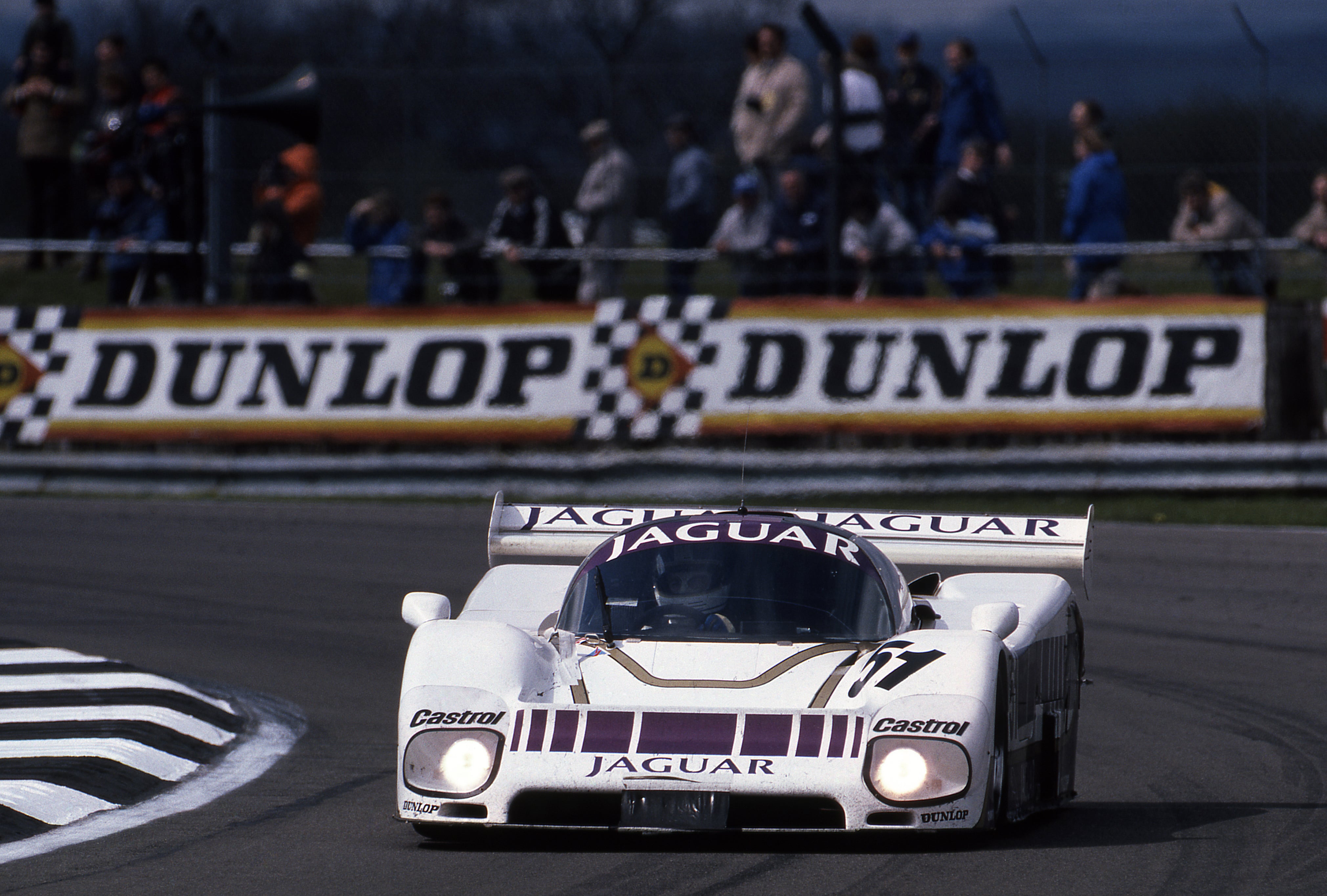
For the Jaguar XJR-6, its only victory in the 1986 World Sportscar Championship came for Derek Warwick and Eddie Cheever at Round 2 at Silverstone.
Image credit: Sutton Images via Getty ImagesA rocky start saw the XJR-6 pick up only one win in 1986, so hopes for improvement were high the following year. Up against the Porsche 962, the Silk Cut Jaguars made an ideal start. The no.5 car driven by Jan Lammers and John Watson won the opening round at Jarama, followed a week later by a win for the no.4 XJR-6 of Eddie Cheever and Raul Boesel. Wins at Monza and Silverstone added to the tally, before the time came for a trip to the Circuit de la Sarthe.
Despite the strong form in the lead up to Le Mans, the race brought a series of misfortunes for the TWR team, with only one of its three entrants finishing the race. The surviving XJR-8, driven by Cheever, Lammers and Boesel, ran as high as second after 18 hours and recorded a top speed of over 220mph before gearbox trouble dropped it into fifth.
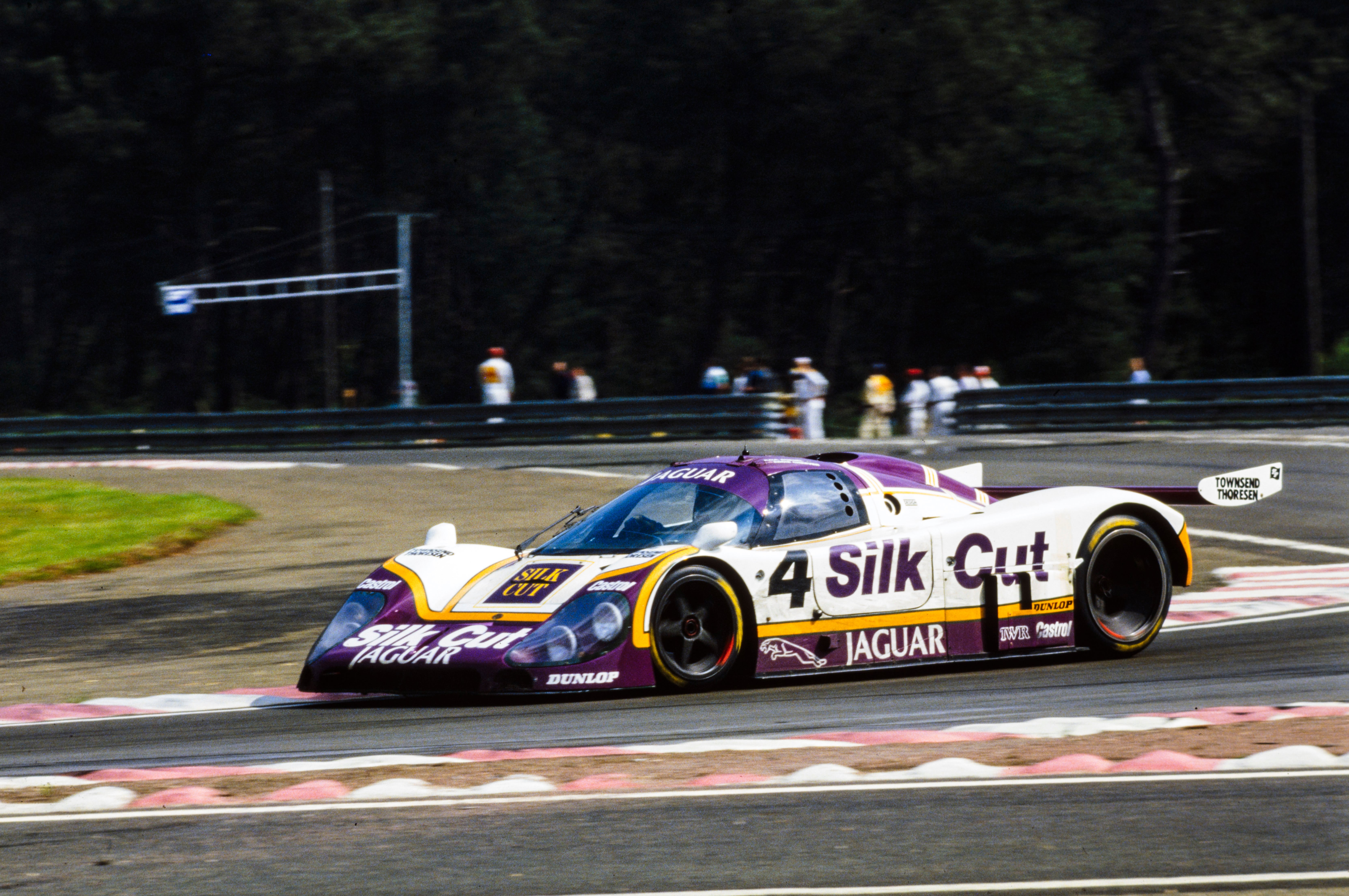
The XJR-8 was enjoying a strong season in the 1987 World Sportscar Championship, but the best TWR Jaguar could achieve at that year’s Le Mans 24 Hours was fifth with Eddie Cheever, Raul Boesel and Jan Lammers.
Image credit: LAT Images/Stringer via Getty ImagesWhile Porsche relished its 12th victory at the famous fixture, courtesy of Derek Bell, Hans-Joachim Stuck and Al Holbert, it proved a rare success for the German outfit in the World Sportscar Championship that year. With added fuel to their fire, TWR Jaguar scored four more victories in the second half of the season to achieve eight wins out of ten rounds. Jaguar won the Constructors’ Championship ahead of Brun Motorsport and Porsche’s works team, with Raul Boesel taking home the Drivers’ Championship.
The XJR-8 raced for a single season but was one of the most successful British Group C cars of all time. And ultimately, its lasting success was what it taught TWR Jaguar as it began its journey back to the pinnacle of motorsport.
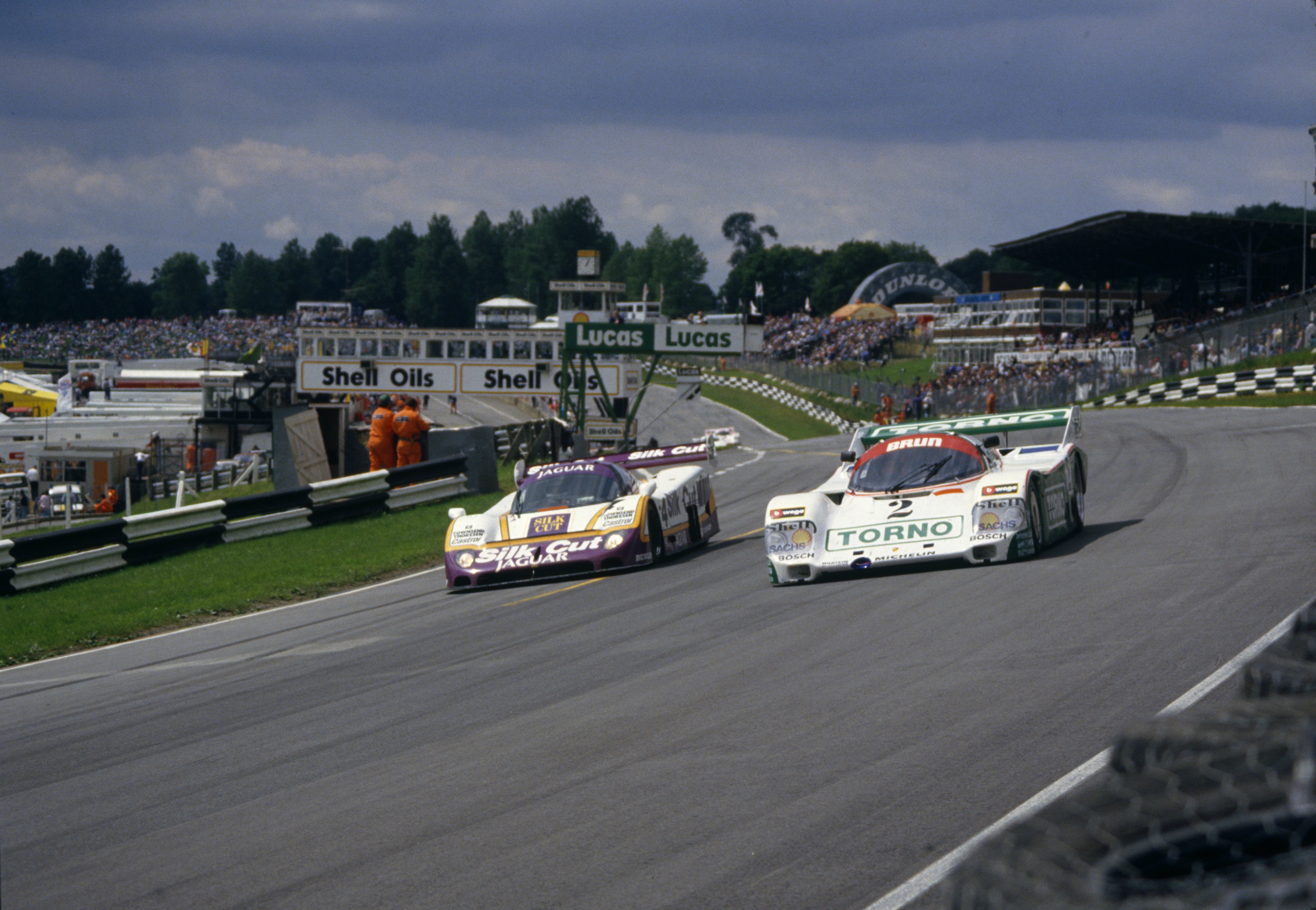
Jaguar won eight out of ten rounds in the 1987 World Sportscar Championship, four achieved after the disappointment at Le Mans. Here, the XJR-8 of Boesel and Nielsen overtakes the Mass/Larrauri Porsche 962C for the lead at Brands Hatch.
Image credit: LAT Images/Stringer via Getty ImagesThis car was the foundation for its successor, the XJR-9, which did manage to break Porsche’s grip and win Le Mans for Jaguar in 1988 — its first victory there in over 30 years. A testimony to Jaguar’s evolutionary process, of the six XJR-8s ever built three were converted XJR-6 chassis and three were all-new models. By the end of 1987 only one chassis had not been converted to the following XJR-9 specification.
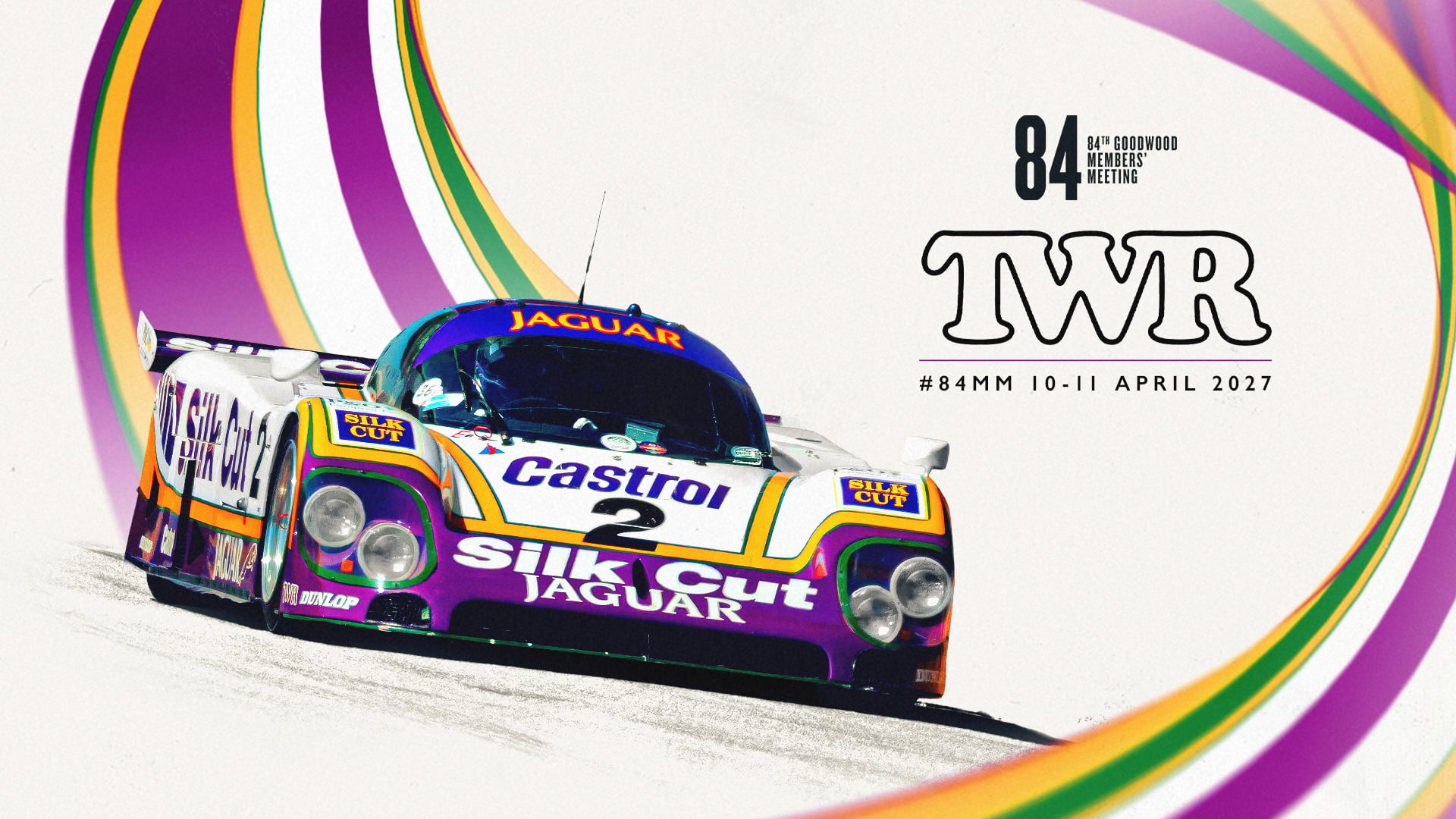
The XJR-9 may hold the ultimate accolade of the Le Mans 24 Hours, but this was its origin story. That is why the XJR-8 is a central part of TWR Jaguar’s racing history, and why it is worthy of its place as part of our celebrations of TWR Jaguar at the 84th Members’ Meeting presented by Audrain Motorsport.
Main image courtesy of LAT Images/Stringer via Getty Images.
The 84th Members' Meeting takes place on 10th and 11th April 2027. Tickets are now on sale to GRRC Members and Fellowship Members at the early bird price.
If you’re not already part of the GRRC, you can sign up to the Fellowship today to save ten per cent on your 2027 tickets and grandstand passes, as well as enjoying a whole host of other on-event perks.
race
historic
jaguar
xjr-8
TWR Jaguar
TWR celebration